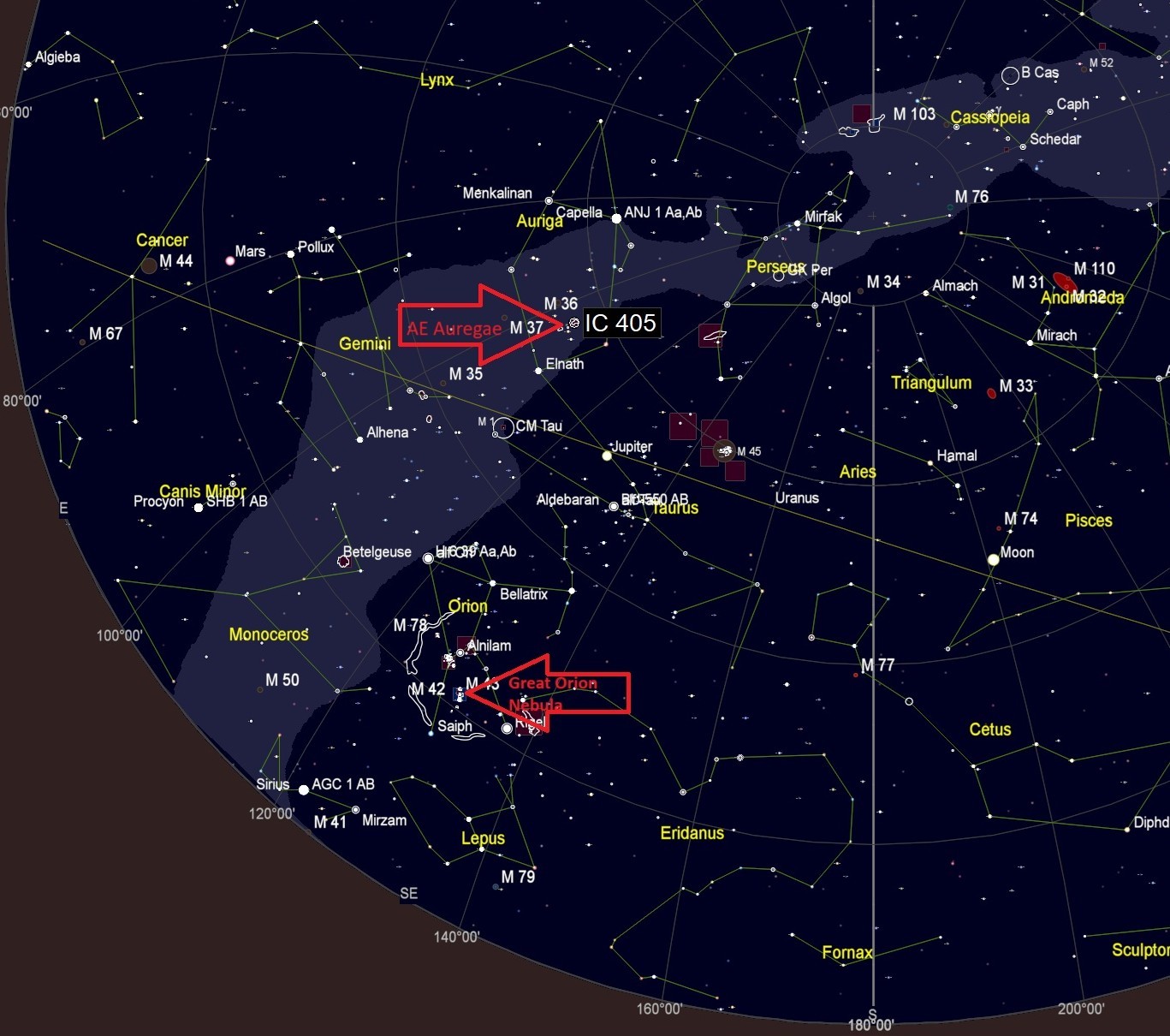
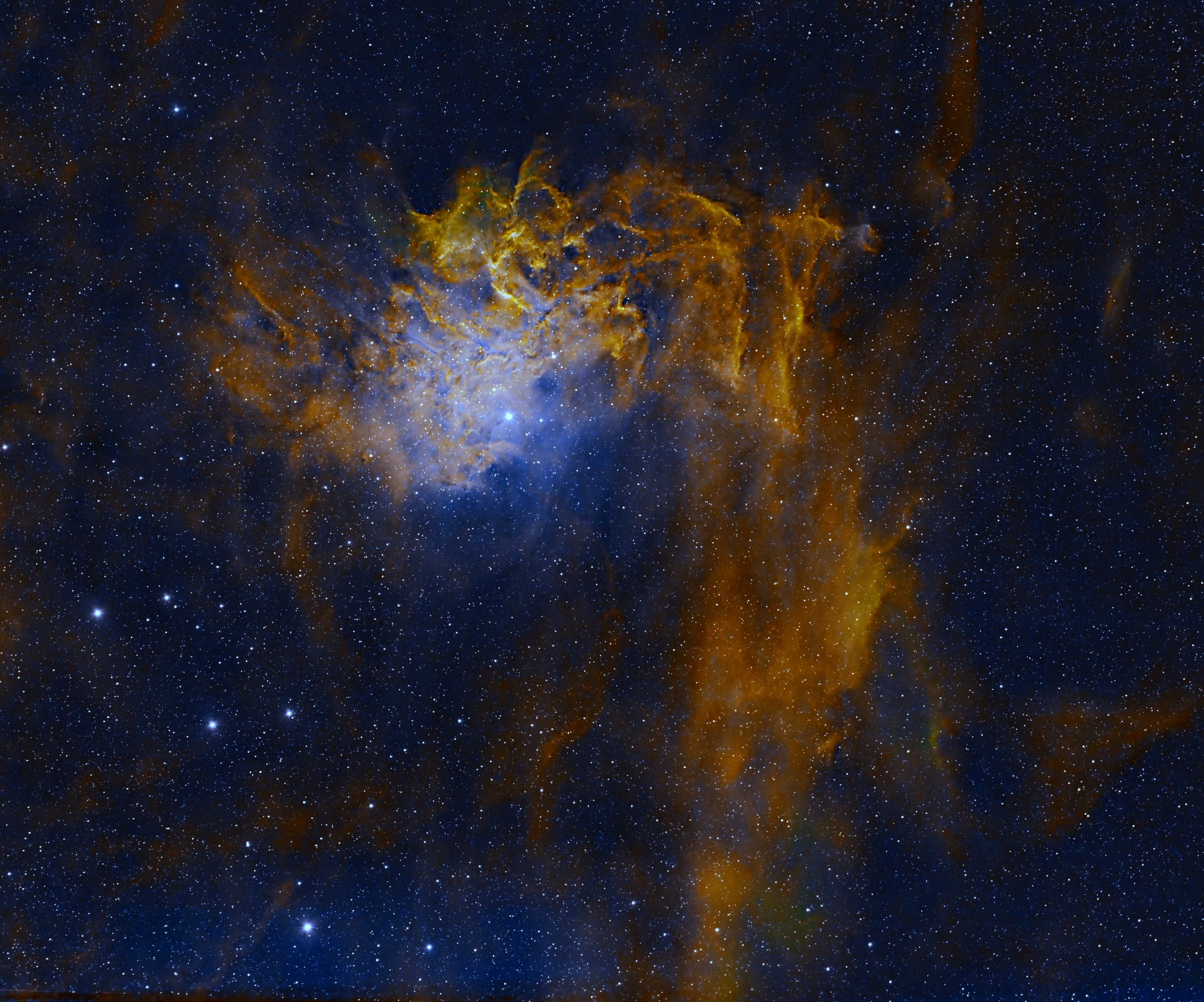
At this time of the year various objects within the Orion Constellation are perhaps the most popular astrophotography targets. Notwithstanding, a few days after imaging The Great Orion Nebula myself early in the New Year, I slewed my camera some 65o further north to the Auriga constellation, location of many other fascinating objects, some of which two years ago I captured in a two panel widefield mosaic. This time it was time to concentrate on just one of those objects, the exciting IC405 AKA the Flaming Star Nebula.
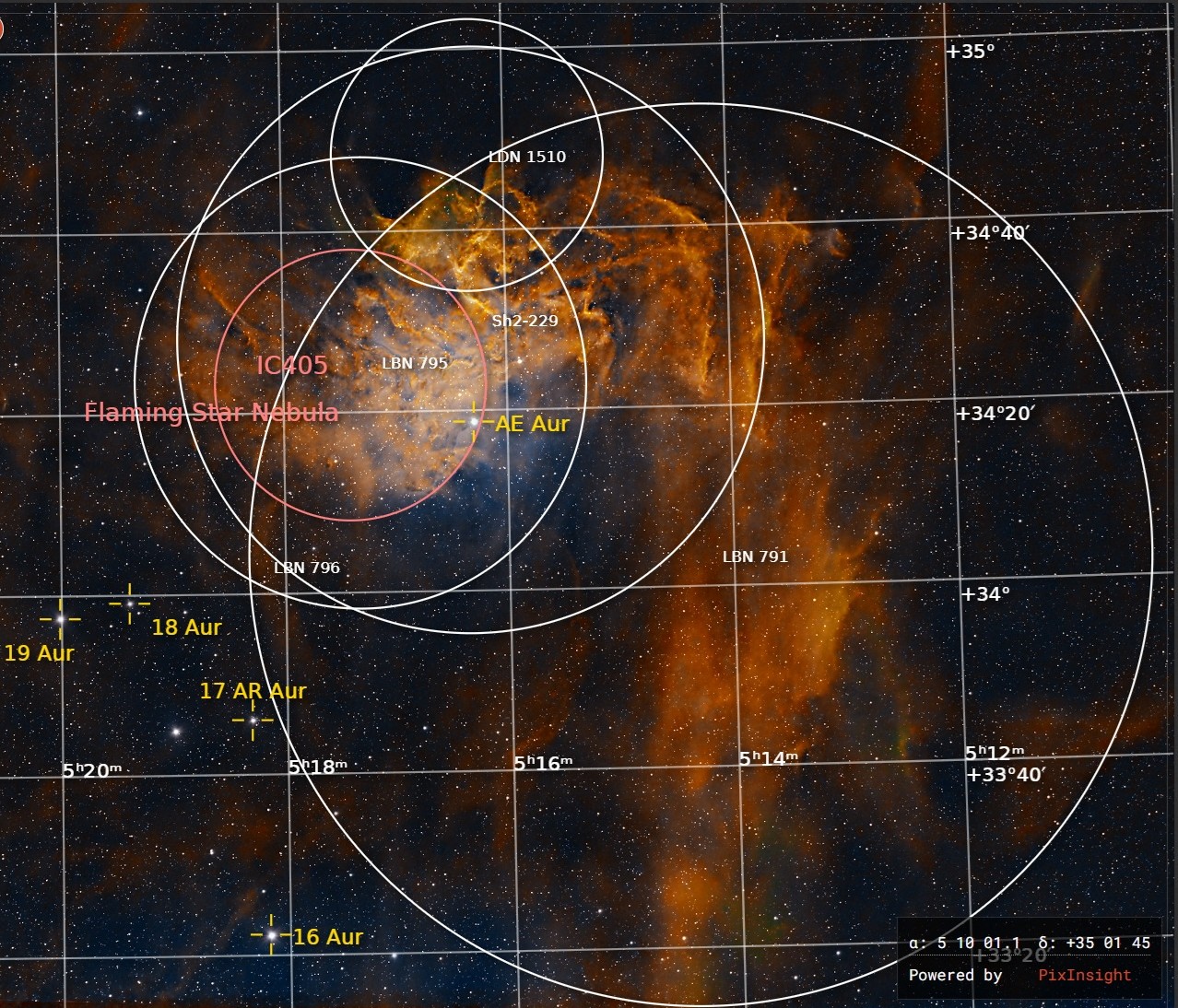
This emission and reflection nebula is a glowing cloud of gas and dust that is illuminated by a powerfully bright blue variable star, AE Aurigae. The object’s epithet arises from the brightly lit ripples of gas and dust at the top of the image, illuminated by the aforesaid AE Aurigae and glowing hydrogen emission. By reducing the dominant reddish hydrogen glow in the image, the full impact bright blue light from AE Aurega can be better appreciated (see image below).
Though some considerable distance from Orion, studies now indicate that the star AE Auriga was probably itself ejected after a collision two million years ago from the Triangulum region of The Great Orion Nebula and, as a runaway star has now made its way to Auriga – what a small world!
IMAGING DETAILS
Object
IC405 Flaming Star Nebula – Emission / Reflective Nebula
Constellation
Auriga
Distance
1,500 light-years
Size
37 x 10 arc min
Apparent Magnitude
+6.0
Scope
William Optics GT81 + Focal Reducer FL 382mm f4.72
Mount
ZWO AM5 + ASIair plus
Guiding
William Optics 50mm guide scope
ZWO120MM mini
Camera
ZWO ASI294MM CMOS sensor
FOV 2.87o x 1.96o Resolution 2.50”/pix Max. image size 4,144 x 2,822 pix
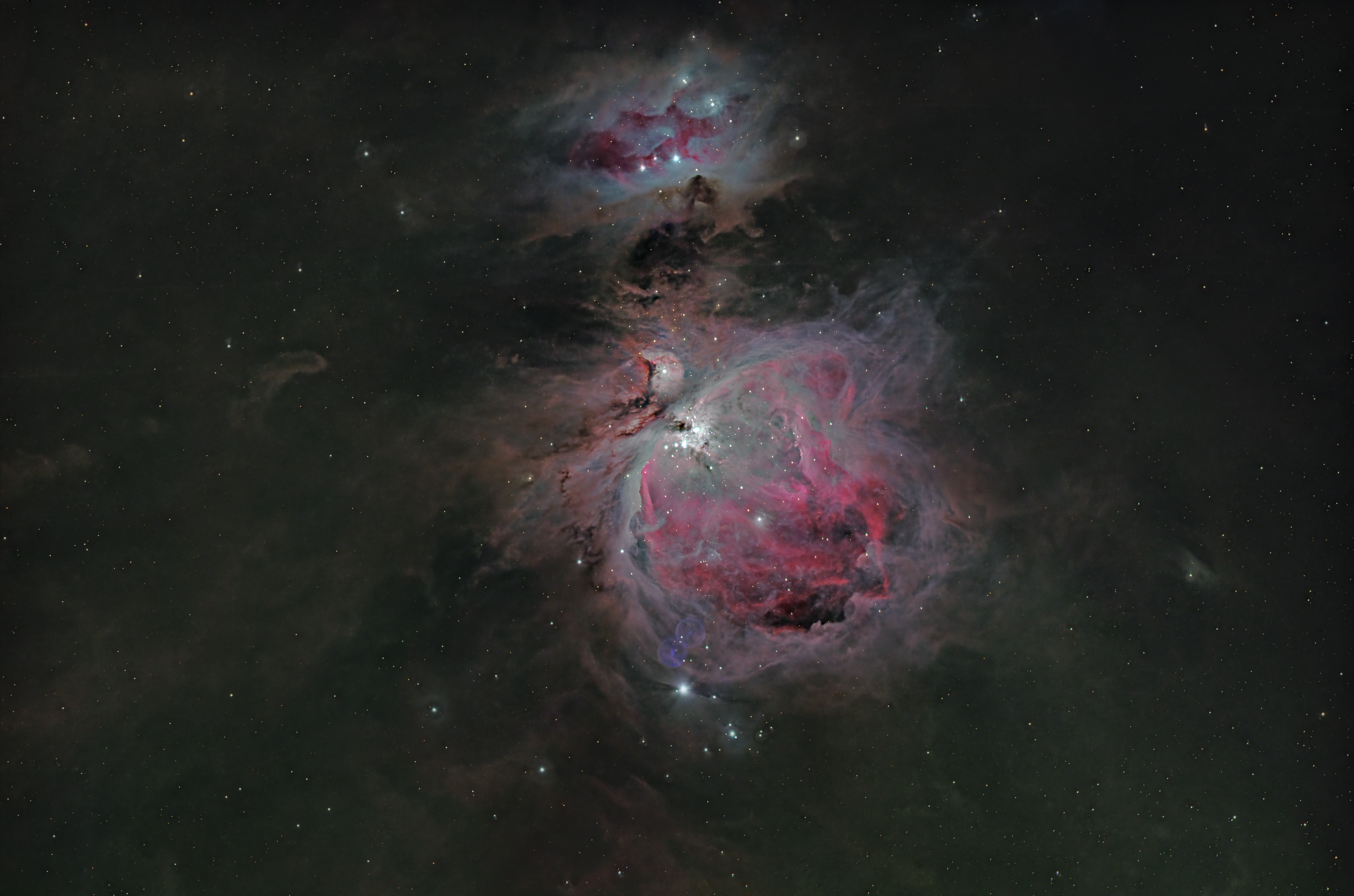
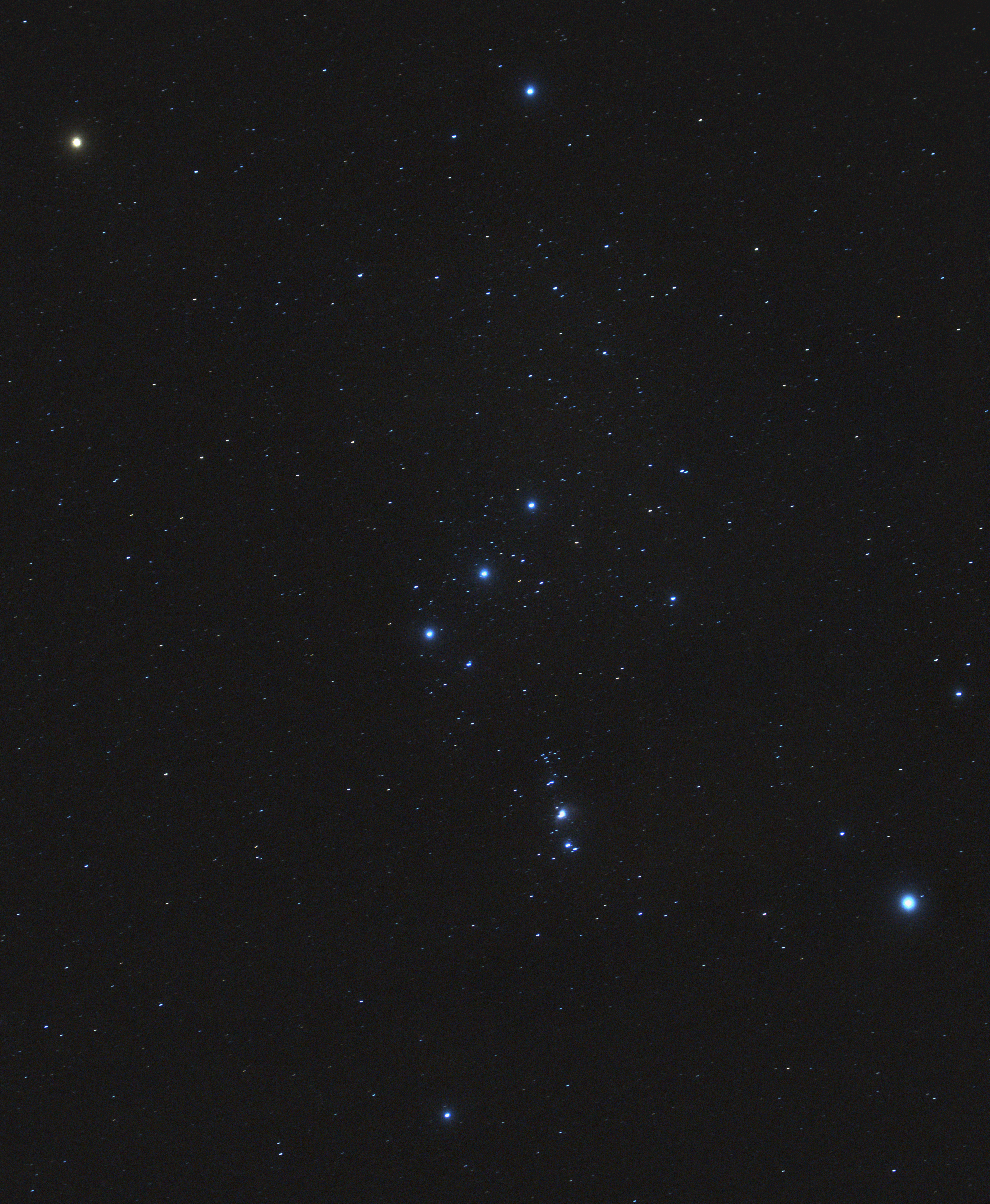
I get a warm feeling at the first view of the Orion constellation each year. Just viewed with the naked eye, late at night against a clear black sky it is a wonderful sight that somehow seems strangely reassuring but for the astronomer and especially astrophotographers, there are many exciting targets that hold great promise, principal of which is M42 the Great Orion Nebula. This winter my first view of Orion was last October, rising from the eastern horizon in the early morning, just as I was about to go to bed after a late-night imaging session. Unfortunately, it was more than two months before the weather relented and I was finally able to snatch an albeit brief image of the said Orion Nebula.
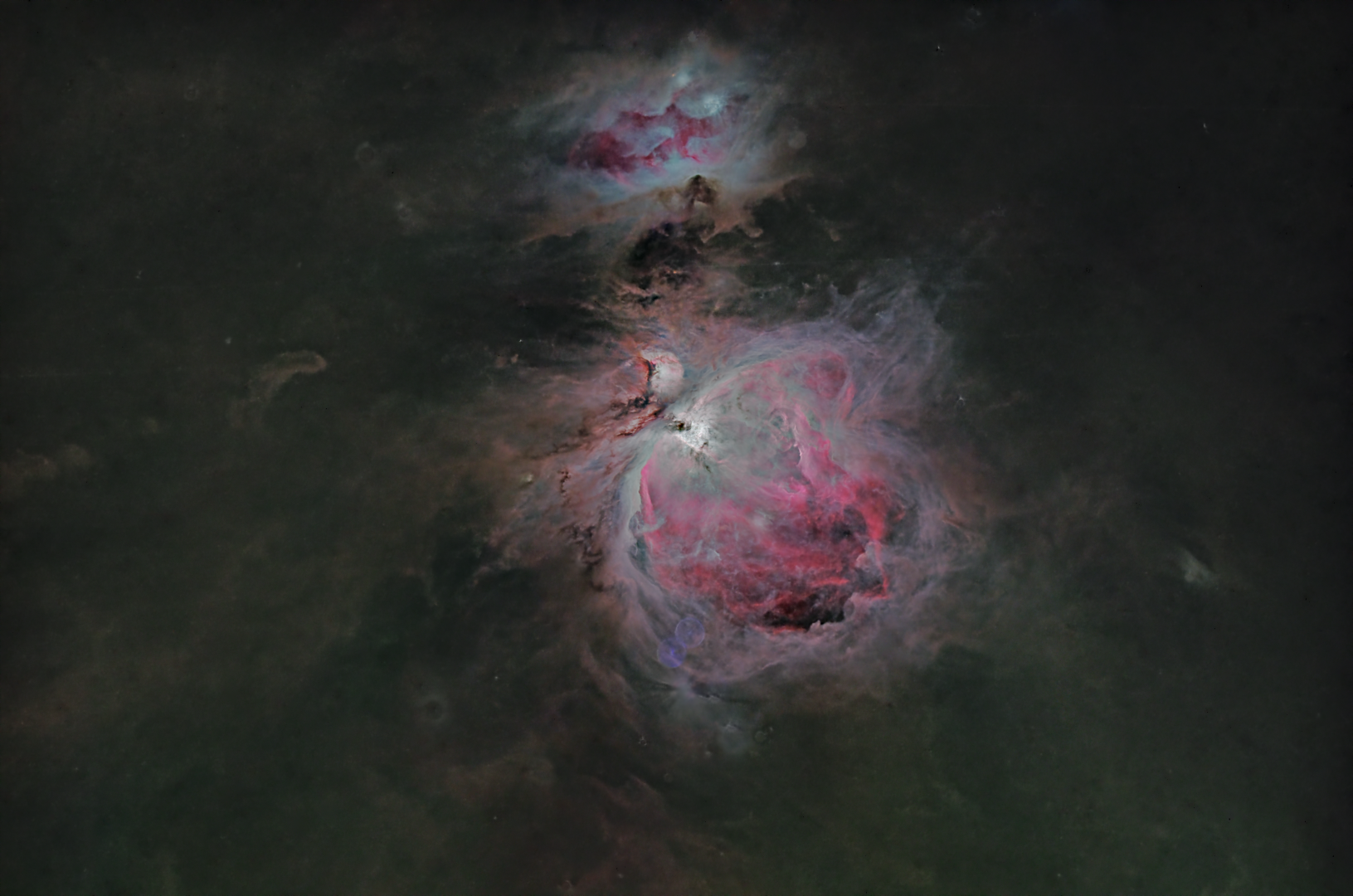
M42 and other nearby diffuse & reflection nebula (M43 & NGC1975 AKA the Running Man Nebula) is one of the most famous star-forming regions, which being the brightest nebula in the northern hemisphere and just over 1,300 light years distance from Earth, can itself also been seen with the naked eye on a clear night. To my surprise, I hadn’t imaged this beguiling object for 6-years, during which much had changed: a new mount, camera & filters + I had learned a few more processing tricks.
Left – Orion constellation from Fairvale Observatory, Redhill; Right – NB image from same location
The Orion Nebula is a gigantic cosmic cloud of interstellar dust and gas, which is the basis for the birth of numerous new stars or a “star nursery” (see starless image below) . Moreover, these powerful, young stars unleash vast streams of ultraviolet radiation that sculpt the nebula into a myriad of fantastic shapes, further highlighted by a red tint that arises due to the presence of hydrogen gas. For astronomers, such activities reveal much about the processes of how stars and planetary systems are formed from collapsing clouds of gas and dust.
Known as the Trapezium, four stars tightly located at the centre of M42 are very difficult to image, because of the overpowering bright white light that obscures this area from sight. However, for astrophotographers the elusive nature of the Triangulum is therefore considered to be the ultimate measure of a good Orion Nebula image. To overcome this problem, the key is to image the nebula across a range of exposures, from very short to long, which can then be compiled into a single final photograph that equally captures details of bright and darker areas alike.
Although poor weather conditions limited the shoot to a relatively short integration time, I’m pleased to say that the subsequent application of various new processing techniques (*see footnote for details) has created an exciting final image, full of detail and colour, as well as the aforesaid Triangulum, that I believe does justice to this magnificent object that is surely the real star of the winter night sky.
Processing Footnotes:
In addition to using the conventional LRGB processing workflow, to uncover the exciting detail that lies within the Great Orion Nebula on this occasion it was necessary to apply some additional processes. First, after ensuring perfect star alignment of all images, the three 180, 60 & 15 second exposure stacks are combined using HR Composition. At first the bright areas of the combined image still look blown-out but, as if by magic, careful application of HDR Multiscale Transformation then reveals the underlying details such as the Triangulum. Thereafter it’s all downhill, except in this case I was further assisted by the use of three new scripts that I can highly recommend:
Blemish Blaster by Seti Astro– helps remove inevitable blemishes of the starless image created by StarXTerminator process, which I found much easier to use than PixInsight’s Clone Stamp mostly with better results too;
Star Stretch also by Seti Astro – Makes the often-tricky action of stretching star images from StarXTerminator a complete doddle;
Astro Image Detail by Hidden Light Photography – An excellent script that makes a great job of teasing out detail from the nebula, that results in a really exciting final image.
IMAGING DETAILS
Object
M42 & more
Constellation
Orion
Distance
1,344 light-years
Size
65 x 60 arc minutes excluding The Running Man
Apparent Magnitude
+4.0
Scope
William Optics GT81 + Focal Reducer FL 382mm f4.72
Mount
ZWO AM5 + ASIair plus
Guiding
William Optics 50mm guide scope
ZWO120MM mini
Camera
ZWO ASI294MM CMOS sensor
FOV 2.87o x 1.96o Resolution 2.50”/pix Max. image size 4,144 x 2,822 pix
EFW
ZWOx8 EFW & 31mm Chroma LRGB filters
Capture & Processing
ASIair plus, Deep Sky Stacker & PixInsight v1.9.2
Image Location & Orientation
Centre = RA 05:35:26.25 DEC -05:25:21.10 Top = North
Exposures
L x25, R x14, G x14, B x10 @ 180 sec = 3hr 9min L x16, R x5, G x8, B x8, @ 60 sec = 20 min L x24, R x12, G x 12, B x12 @ 15 sec = 15 min Total lntegration Time: 3hr 44 min
@ Gain 120 @ -15oC
Calibration
10 x 180 sec Darks 20 x BB Flats & Dark Flats @ ADU 32,000
Location & Darkness
Fairvale Observatory – Redhill – Surrey – UK Typically Bortle 5-6
Long periods of bad weather made 2024 one of the most difficult years for my astrophotography but, I am pleased to say that this, the 11th calendar is another belter! Purchased in 2014, I continue to use a William Optics GT81 telescope for most images taken from home, but this means that I’m running out of suitable targets for this equipment. Part of the answer has been to upgrade related equipment and improve my processing, which I hope you will see reflected in this year’s images. Moreover, I have used new skills and techniques to process the better-quality data in new ways – I hope you like the results?
Below is a brief summary of the calendar images used this year but for other pictures and more detailed information, please refer elsewhere to this website, my Flickr page or Astrobin page. In addtion, a video of the calendar can be viewed HERE on YouTube, which is best accessed on a PC or smart TV screen. The background music this year is from Jean-Michel Jarre’s Oxygène album.
COVER
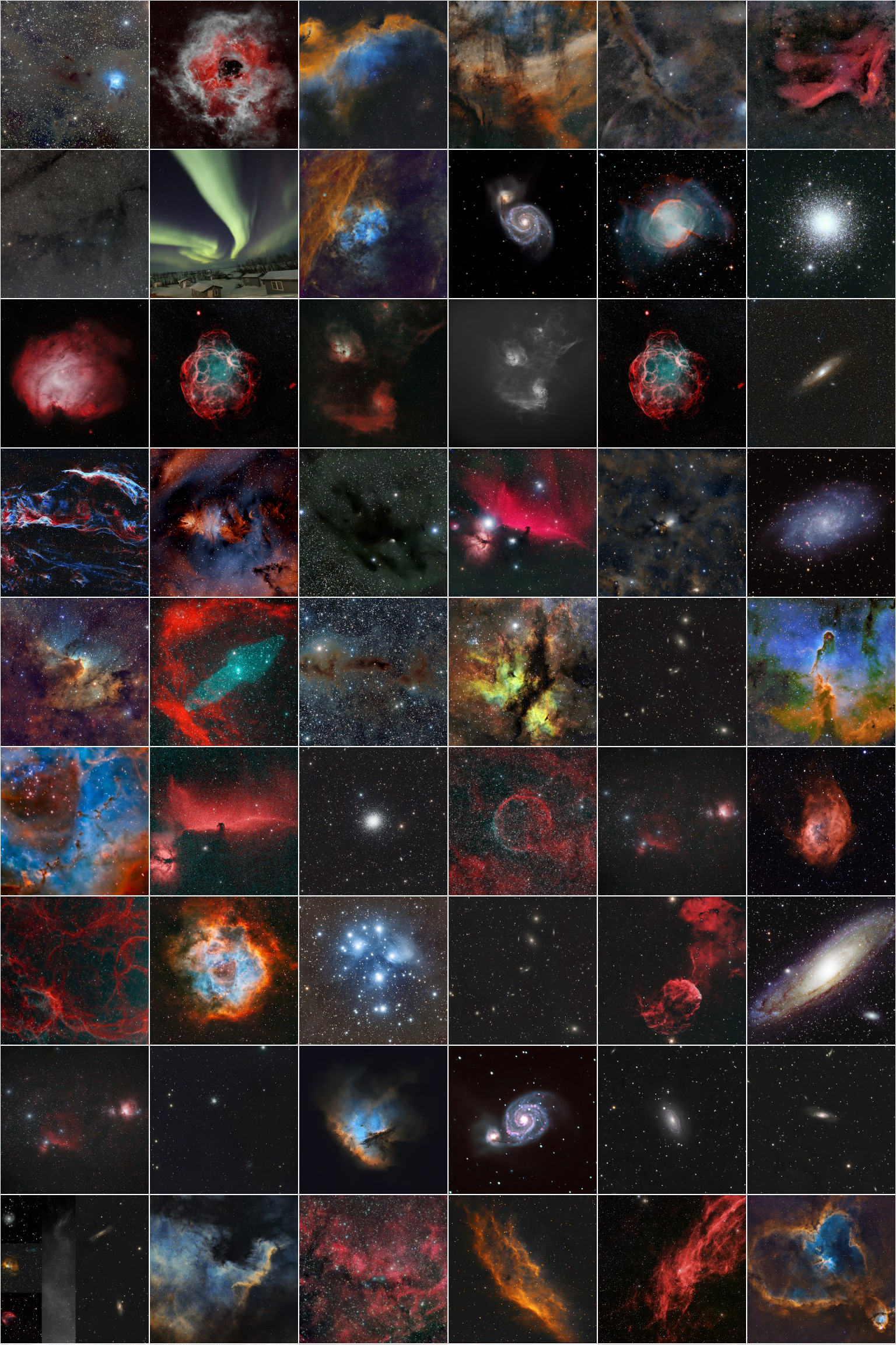
ASTRO IMAGING MONTAGE: This colourful splash is a random selection of images, mostly taken from Redhill over the past +10-years of my astrophotography.
JANUARY
SEAGULL NEBULA, IC 2177: Located 3,650 light-years from Earth is the emission and reflection nebula complex of the so-called Seagull Nebula, some 200 light-years in size. It’s been 8-years since imaging this object and for good reason. From my location, the bird flies very low on the southern horizon and thus spends much of its time behind houses, trees, and tall hedges!
FEBRUARY
TAURUS MOLECULAR CLOUD: Located northeast of the Pleiades, below (south) the California Nebula (see November), spanning more than 30o of the night sky is the Taurus Molecular Cloud (TMC), a rich area of dark nebulae punctuated by bright areas of new star formation. The TMC is thought to be the nearest star forming region to Earth which, if you look carefully, includes numerous complex dark and reflection nebulae and the odd galaxy.
MARCH
HIND’S VARIABLE NEBULA & HYADES, NGC 1555*: Discovered by the English astronomer John Russell Hind in 1852 this nebula is situated 400 light-years away in the constellation of Taurus, between the stars of Aldebaran and the Pleiades. The nebula is a Herbig-Haro object – a bright patch of nebulosity in which new stars are forming – which often change in apparent size and brightness.
APRIL
LEO GALAXY CLUSTER: With few exceptions, galaxies are located very far from Earth, making them very small from our perspective and a challenge for my equipment. However, here I imaged the spectacular Leo Galaxy Cluster, a mere 330 million light-years from Earth. Containing at least 70 major galaxies, the Leo Cluster unusually consists mostly of spiral galaxies. The bright elliptical galaxy near the centre of the image, has one of the largest known black holes in the universe, which is about 10 billion times more massive than our sun!
MAY
IRIS NEBULA, NGC 7023*: While the focus of the image is the alluring bright blue reflection nebula, careful processing reveals that this celestial flower is enveloped within a vast region of interstellar dust.
JUNE
SOMBRERO GALAXY, MESSIER 104: Seen from Redhill, the Sombrero galaxy is even lower in the summer sky than the aforesaid Seagull, transiting between the trees and along the top of our +15-foot hedge! An unbarred galaxy, its bright bulbous centre is encircled by dark dust lanes, which viewed side-on from Earth creates the appearance of a sombrero hat or perhaps a flying saucer?
JULY
PuWe-1*: Is a very faint planetary nebula in the Lynx constellation, discovered in 1980 by Purgathofer & Weinberger. It is one of the largest planetary nebulae visible, with a diameter like the full moon and at 1,200 light-years, is one of the closest to Earth. A planetary nebula is a region of cosmic gas and dust formed from the cast-off outer layers of a dying star; despite the name, planetary nebulae have nothing to do with planets.
AUGUST
NORTH AMERICA & PELICAN NEBULAE: It’s at this time of the year (August) I usually turn my attention to the Cygnus constellation and the plethora of imaging opportunities it provides, which inevitably tend to be narrowband targets. Interstellar dust illuminated by large bright areas of star formation are responsible for the formation of both these popular objects.
SEPTEMBER
FORSAKEN NEBULA, IC 5068: This complex area is known for the graphically shaped streaks of cold, dark dust clouds that criss-cross the dense, brightly coloured gas regions of nebulosity. Situated within the adjacent Cygnus molecular cloud just below the Pelican Nebula and close to other more famous objects, this low emission nebula is unfortunately known as the Forsaken Nebula!
OCTOBER
THE CHINESE CHARACTER, LDN 673*: It might seem paradoxical but often it is the absence of light that makes an image interesting. About 600 million light-years from Earth, within the Aquila constellation, is Lynd’s Dark Nebula (LDN) 673. Some 7-light years in size, this fragmented dark molecular cloud complex contrasts against the colourful molecular clouds and stars of the Milky Way, which is reminiscent of a Chinese character.
NOVEMBER
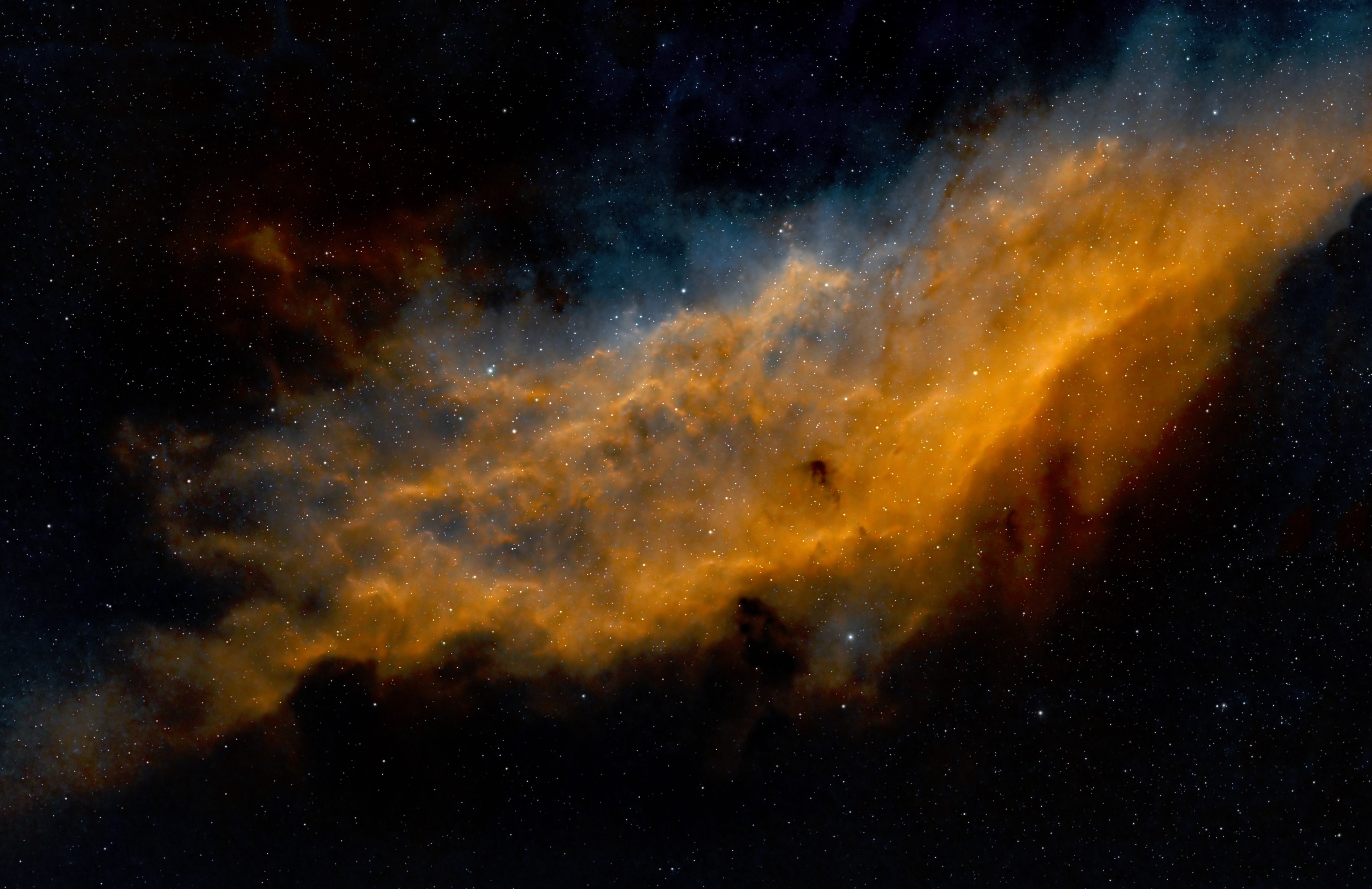
CALIFORNIA NEBULA, NGC 1499: Located in the Perseus constellation, in the Orion arm of the Milky Way 1,000 light-years from Earth, NGC 1499 is a large emission nebula about 100 light-years long. First imaged in 2016, new improved data and processing now discloses the full grandeur of this object.
DECEMBER
ROSETTE NEBULA, NGC 2244: Approximately 5,000 light-years away, the vast cloud of gas and dust had been sculpted into the distinctive rose-like shape, while meanwhile a central star cluster has blown-away a large hollow within the molecular cloud. Revisiting this old favourite for the fourth time since 2015, here I have experimented with an unusual colour palette combination that has produced an exciting alternative image of the night sky’s rose.
Footnote: All images taken from Redhill, Surrey or at a dark sky site in New Mexico,USA shown by an asterisk*
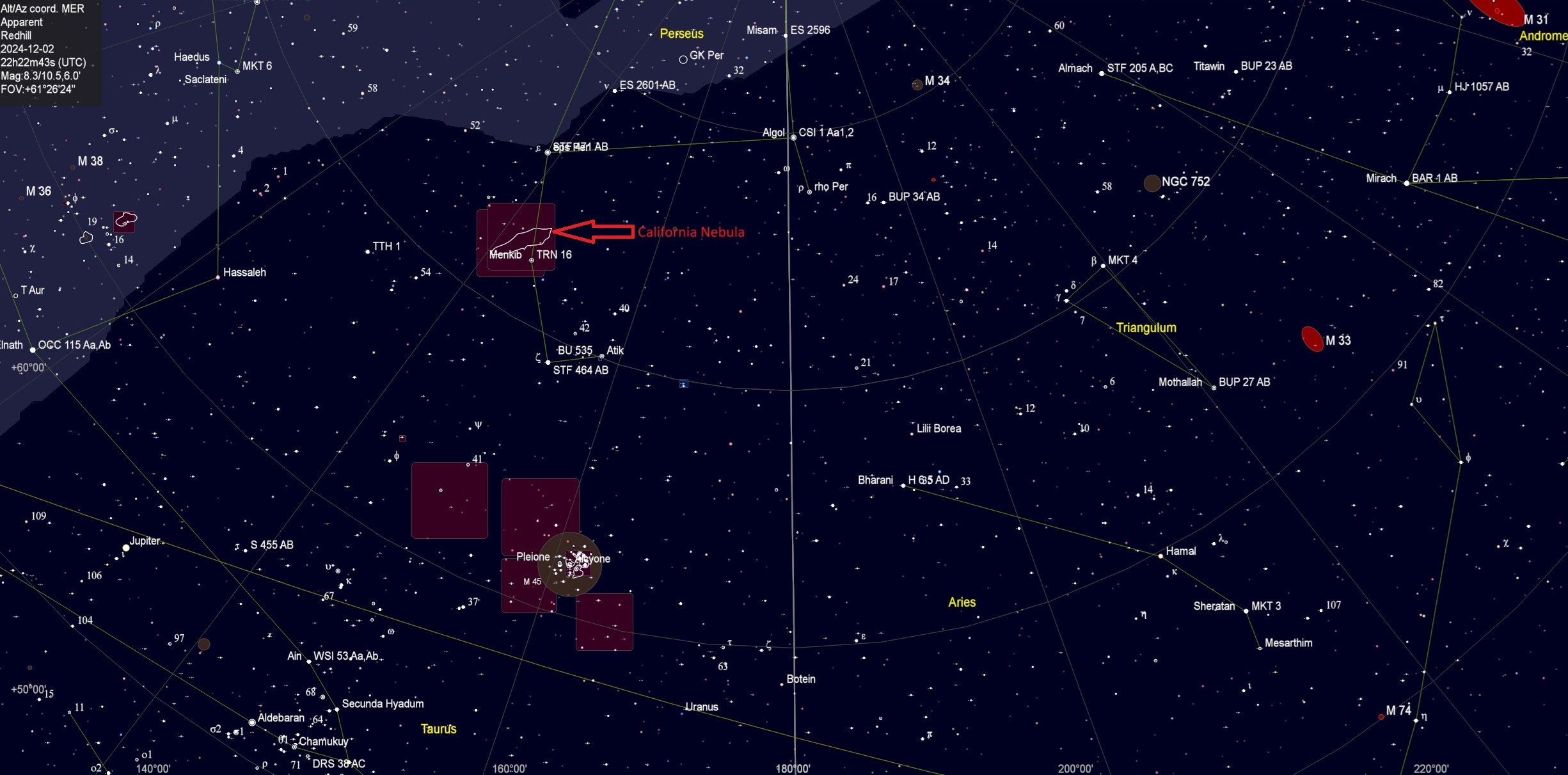
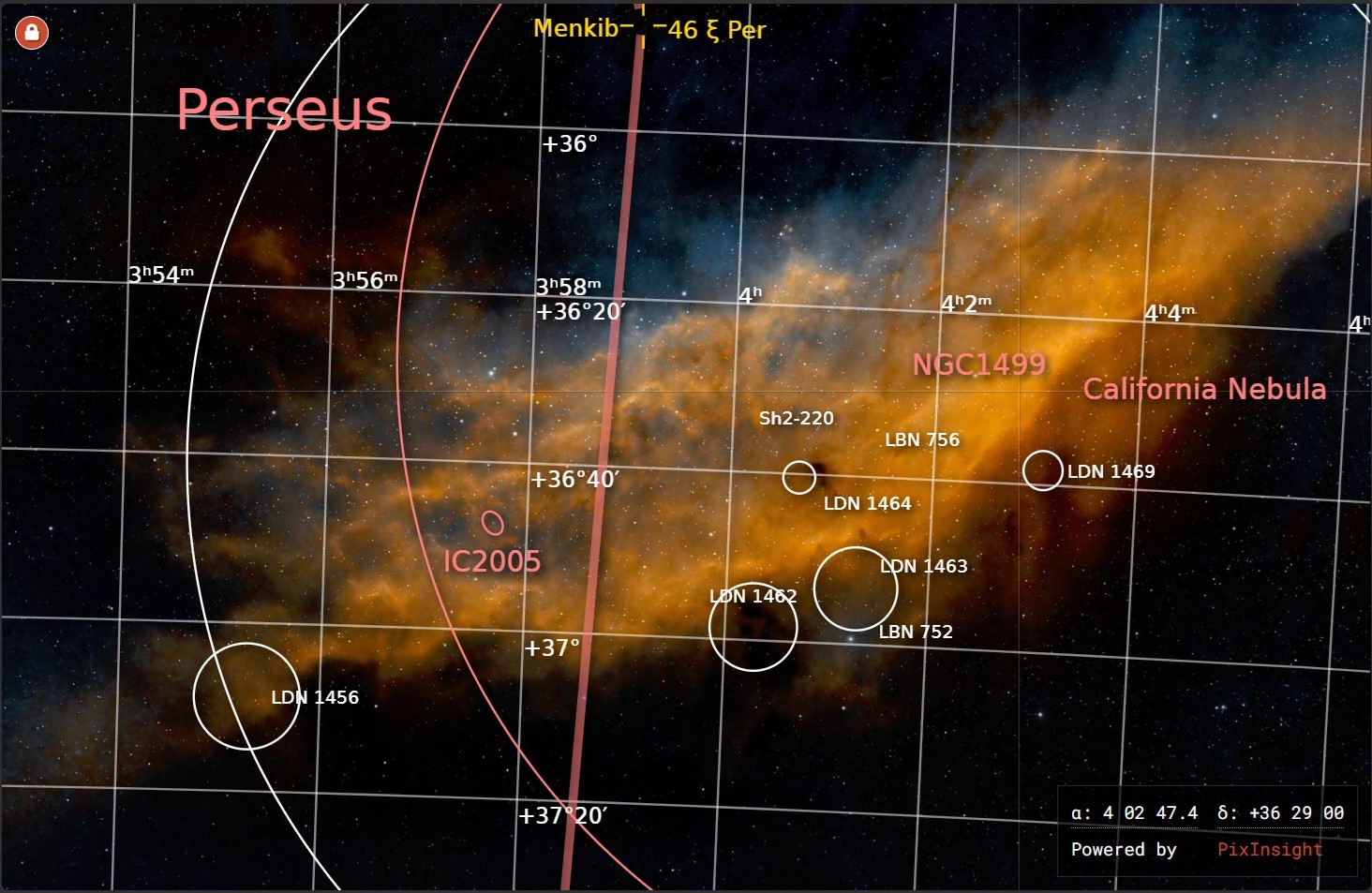
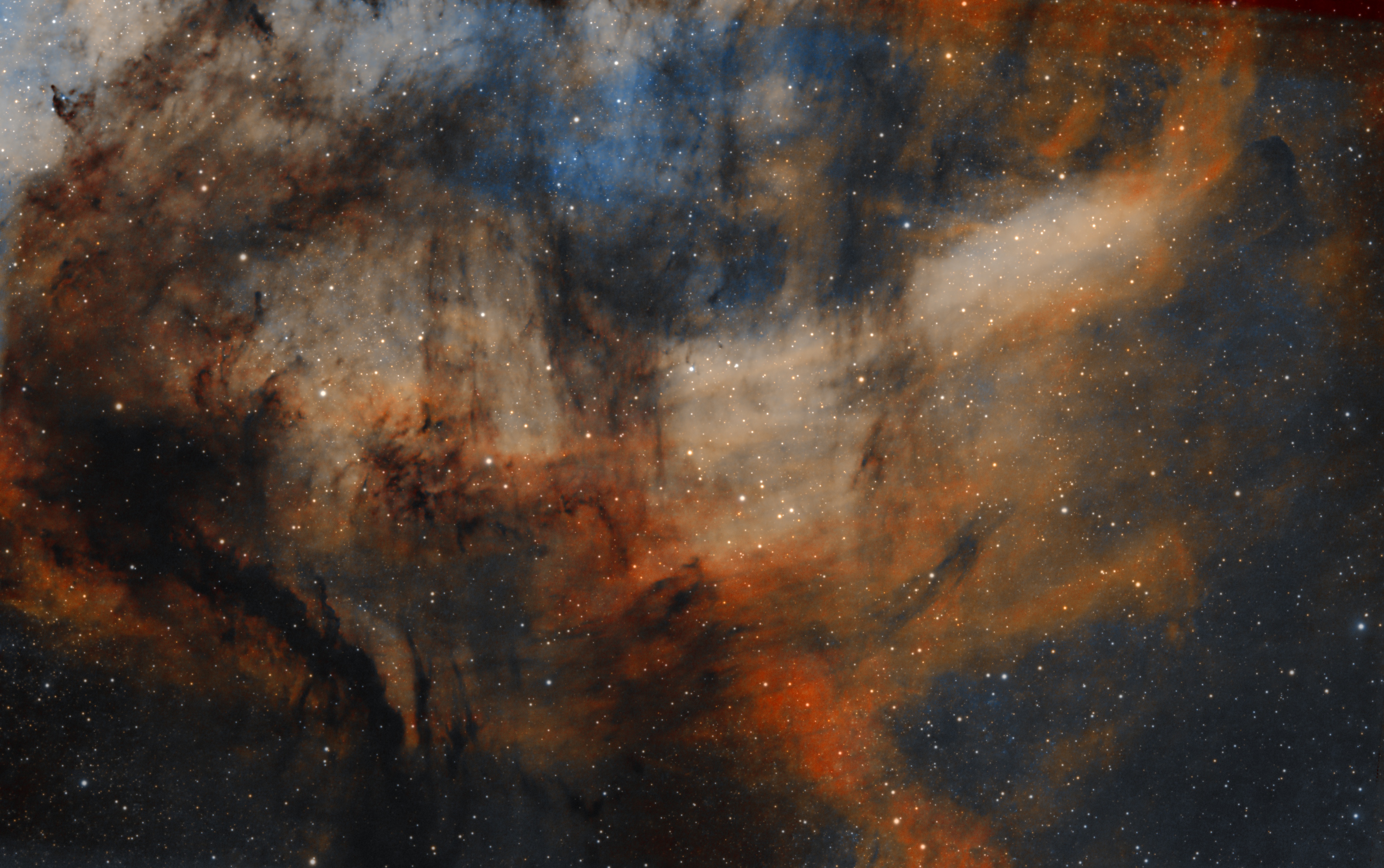
Curving across the Autumn night sky somewhat alone in the Perseus constellation, is the large (100 light-years ~ 2.50o) California Nebula. Being something of a prelude to the arrival of Orion and all its exciting objects, I have somewhat neglected this astronomical behemoth, only imaging it for short periods from time to time in the past. Despite continuing poor conditions and with some difficulty, on this occasion I manged nearly 8-hours integration, which with careful processing has brought out the true majesty of this exciting feature.
The final image has been flipped 180 degrees, which for some reason seems to enhance the depth?
An emission nebula located some 1,000 light years from Earth, the billowing clouds of hydrogen and sulphur gases and dust, and the faint, wispy veil of oxygen are clearly evident in this powerful SHO image. The intense ultraviolet radiation from the nearby massive star Menkib – with a surface temperature of about 37,000 K and radiation 330,000 times greater than our Sun – plays a key role in ionizing the gasses of the nebula, which ultimately brings this majestic monster to life.
IMAGING DETAILS
Object
NGC 1499 AKA California Nebula
Constellation
Perseus
Distance
1,000 light-years
Size
2.50o ~ 100 light-years
Apparent Magnitude
Various
Scope
William Optics GT81 + Focal Reducer FL 382mm f4.72
Mount
ZWO AM5 + ASIair plus
Guiding
William Optics 50mm guide scope
ZWO120MM mini
Camera
ZWO ASI294MM CMOS sensor
FOV 2.87o x 1.96o Resolution 2.50”/pix Max. image size 4,144 x 2,822 pix
EFW
ZWOx8 EFW & 31mm Chroma Ha, OIII, SII filters
Capture & Processing
ASIair plus, Deep Sky Stacker & PixInsight v1.8.9-3
Image Location & Orientation
Centre = RA 03:59:32.52 DEC +36:37:20.1 Bottom = North
Exposures
Ha x32 + OIII x33 + SII x28 x 300 sec Total Integration Time: 7hr 45 min
@ Gain 120 @ -20oC
Calibration
5 x 300 sec Darks 10 x NB Flats & Dark Flats @ ADU 32,000
Location & Darkness
Fairvale Observatory – Redhill – Surrey – UK Typically Bortle 5-6
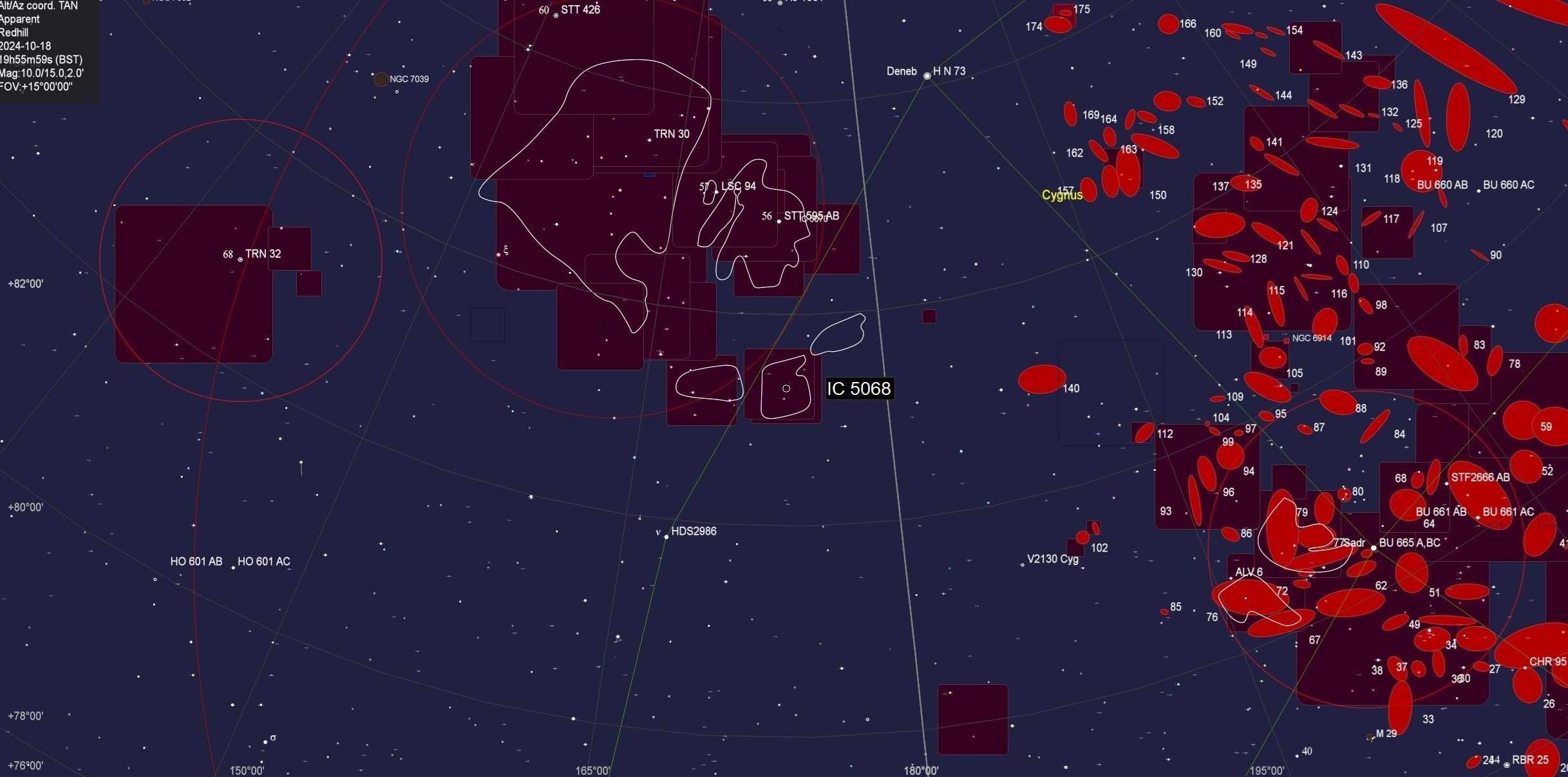
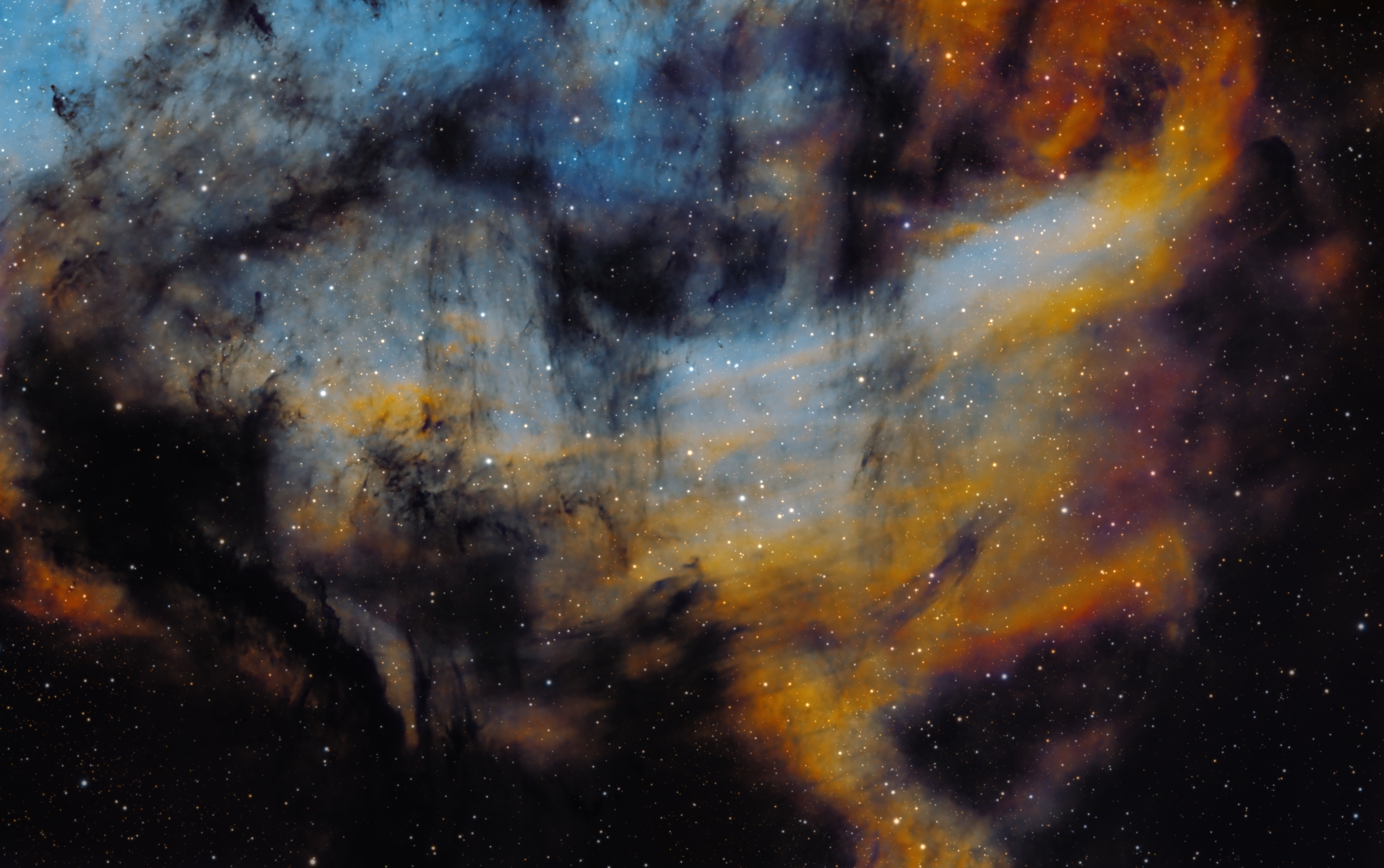
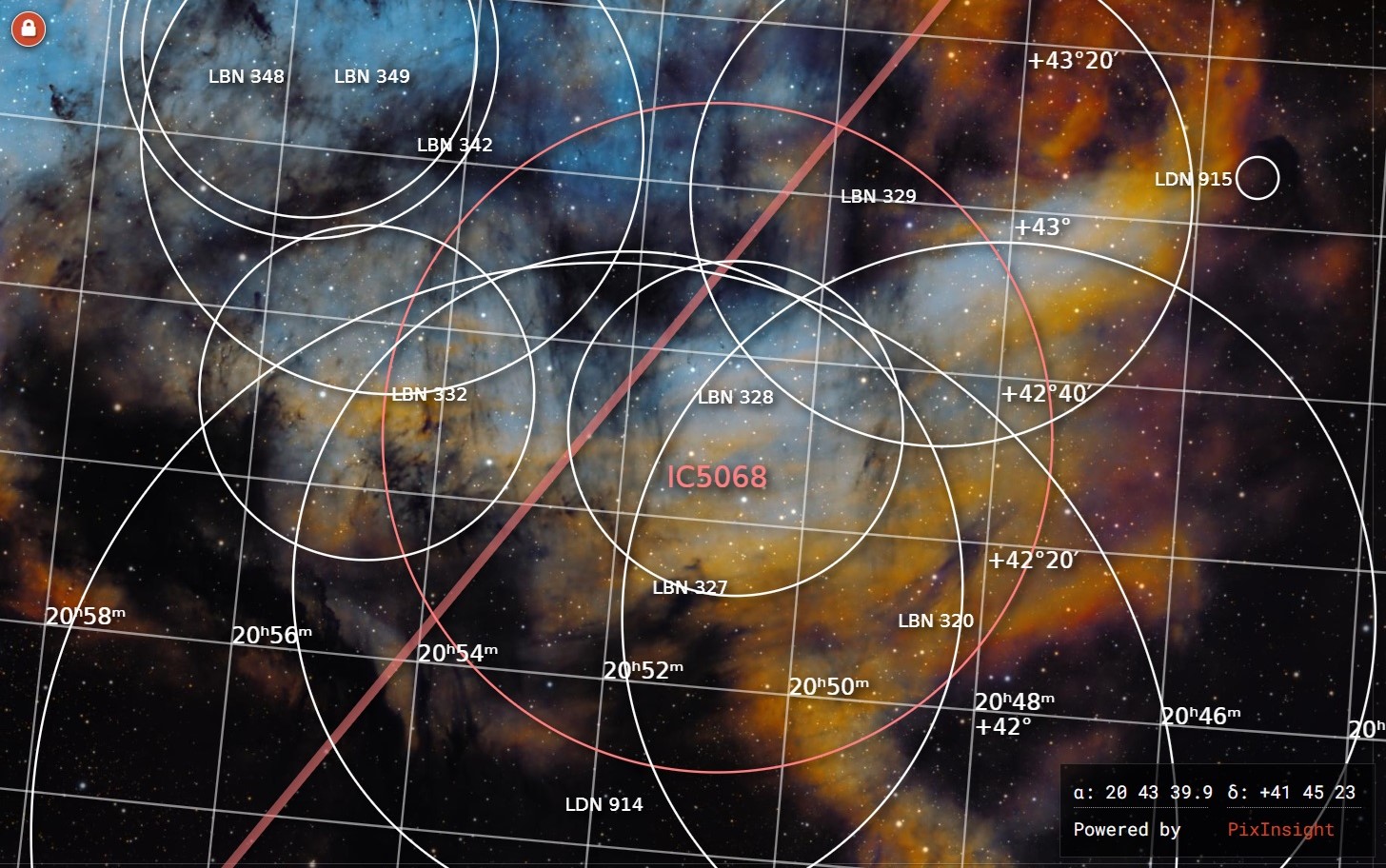
It’s at this time of the year I turn my attention to Cygnus and the plethora of imaging opportunities it provides, which inevitably tend to be narrowband targets. This year it is IC 5068, a low emission nebula often overlooked because of its location near the more popular North American and Pelican nebulae, as well as many other fabulous targets within the adjacent Cygnus molecular cloud, and as a result is unfortunately known as the Forsaken Nebula!
Located just below the Pelican Nebula and close to the blue supergiant Deneb star (see above), this complex area is known for the graphically shaped streaks of cold, dark dust clouds that criss-cross the dense, brightly coloured gas regions of nebulosity.
As a narrowband target my initial choice of image processing was the traditional Hubble Palette SHO configuration, which as envisaged, resulted in an exciting and colourful rendition of the busy IC 5068 (see image below). Notwithstanding, having recently discovered some other, fairly new Pixinsight processing techniques (NB Color Mapper & NB Image Blend), I decided to give them a try to produce an alternative blended HOO–S image. Though still very much recognisable as IC 5068, the resulting (warm) colours and details reveal a very different and perhaps more dynamic image (see image at the top of the page).
Narrowband images leave much to the imagination when processing and often take on a stirring look when completed. In the case of IC 5068, each of the images produced seem to have the feel of abstract art, whilst at the same time posing many questions regarding the origin of many unusual features. I believe this exciting region deserves much greater attention and should belong in the pantheon of popular Cygnus objects such as the North American, Pelican & Veil nebulae. Moreover, the so-called Foresaken Nebula warrants a name more befitting of its exciting beauty.
IMAGING DETAILS
Object
IC5068
Constellation
Cygnus
Distance
1,600 light-years
Apparent Magnitude
Various
Scope
William Optics GT81 + Focal Reducer FL 382mm f4.72
Mount
ZWO AM5 + ASIair plus
Guiding
William Optics 50mm guide scope
ZWO120MM mini
Camera
ZWO ASI294MM CMOS sensor
FOV 2.87o x 1.96o Resolution 2.50”/pix Max. image size 4,144 x 2,822 pix
EFW
ZWOx8 EFW & 31mm Chroma Ha, OIII, SII filters
Capture & Processing
ASIair plus, Deep Sky Stacker & PixInsight v1.8.9-3
Image Location & Orientation
Centre = RA 20:51:16.50 DEC +42::30 : 05.30 Top = North
Exposures
Ha x56 + OIII x46 + SII x44 x 300 sec Total Integration Time: 12hr 10 min
@ Gain 120 @ -20oC
Calibration
5 x 300 sec Darks 10 x NB Flats & Dark Flats @ ADU 32,000
Location & Darkness
Fairvale Observatory – Redhill – Surrey – UK Typically Bortle 5-6
Date & Time
14th 18th 19th September + 3rd & 10th October 2024 +20.15h
My astrophotography journey started just over 10-years ago and looking back, it’s clear that my timing was fortuitous, as over this period we have seen several developments that have completely transformed the hobby for amateurs.
Wide availability of high-quality telescopes for relatively modest prices
Development of CMOS sensor cameras
Major advances of image capture and processing software
Introduction of AI to image processing
And the changes just keep coming.
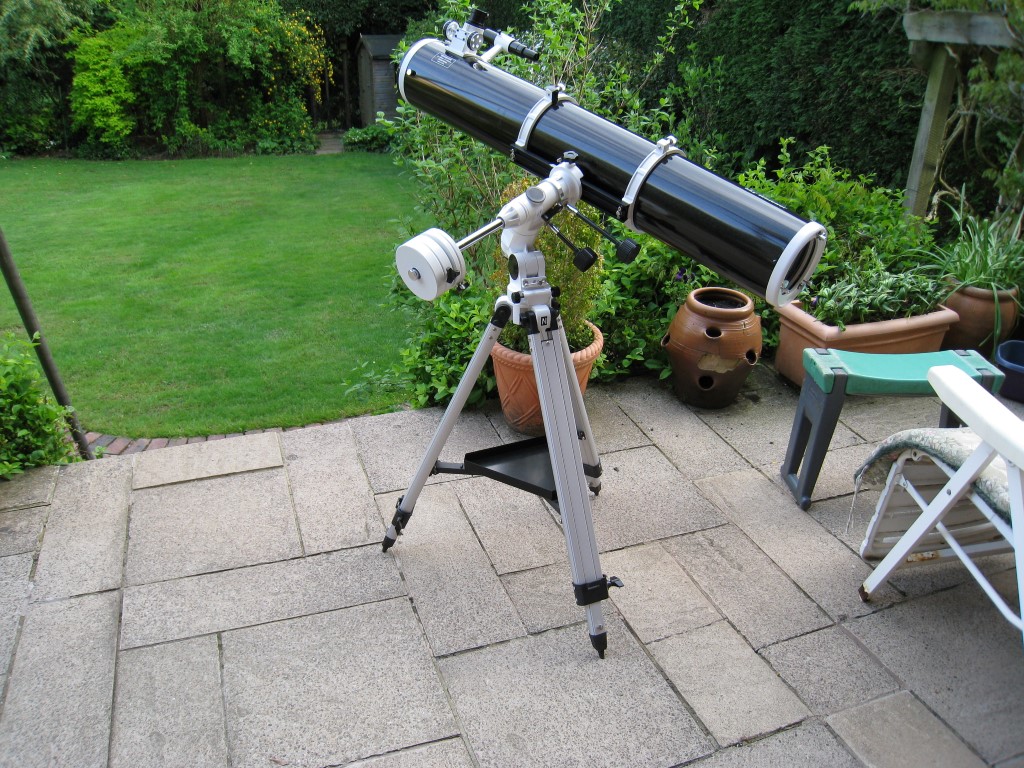
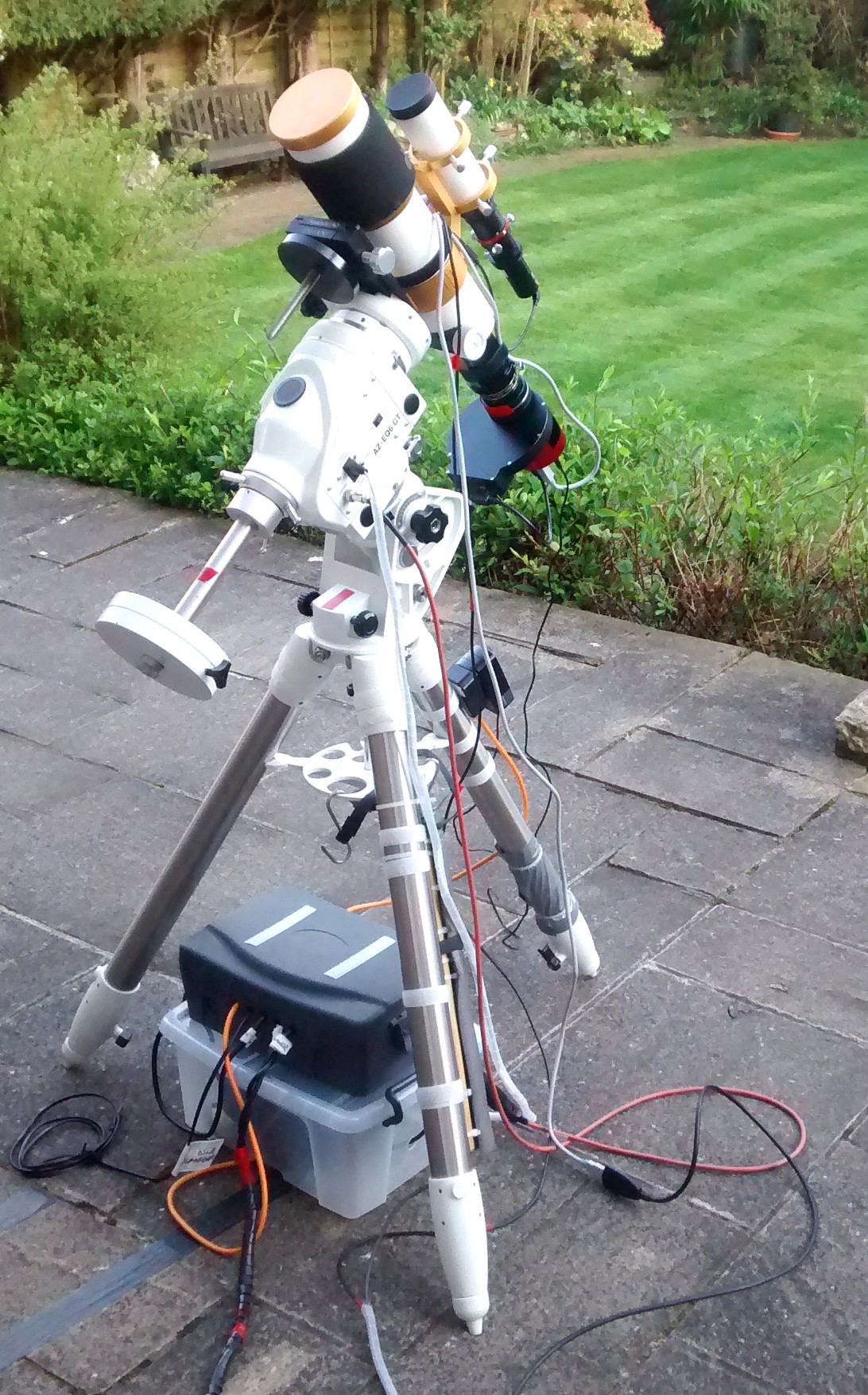
When not imaging or processing, I’m sure that many astrophotographers spend too much time looking online at new equipment, particularly telescopes and cameras! However, when my journey started in about 2014, it didn’t take long to discover that perhaps the mount is the most important piece of equipment. I started observing with a Skywatcher 150PL on a EQ3-2 mount ( see above ) but soon thereafter discovered astrophotography, which required the addition of a small motor for tracking. It was fun but completely inadequate for good imaging, so then moved onto a William Optics GT81 triplet refractor on a Skywatcher AZ-EQ6 GT mount ( see below ), which completely changed everything and, more importantly, gradually resulted in better images.
My trusty, but oh so heavy AZ-EQ6 GT mount
I continue to use the AZ-EQ6 GT, which technically remains an excellent mount, but it is very heavy and frankly has become more and more tedious to set-up and take down each time, whilst moreover, my back is finding it too much hard work. It is said that necessity is the mother of invention and so a completely new type of mount slowly emerged on the market last year, that is now becoming nothing less than a revolution. It seems too good to be true, but its features are:
Small & light weight
High load capacity that doesn’t require counterweights
No need to be balanced
High torque
Low if any backlash
Apart from the weight issue, commonly used GEM mounts are based on worm gears, which inevitably suffer from backlash, that can be a major problem for astrophotography. Although this can be minimised with good set-up and various software, it will always remain a problem. The new harmonic drive or strain wave mounts are based on completely different technology, that surprisingly has been used for many years in avionics and robotics, making it tried and tested technology. A strain wave mount uses a flexible spline and a rotating elliptical plug to transmit motion and achieve high precision and torque, which allows for large payloads in a compact and portable package ( see images immediately below ) . Click HERE for more technical information. Initially there were only a few manufacturers of Harmonic / Strain Wave mounts but now the word’s out and all manufacturers are rushing to join the game.
Over the past decade the Chinese technology company ZWO Optical have emerged as a dominant force and leading innovator in astrophotography; I’ve been using various excellent ZWO CMOS cameras since 2015. It was therefore no surprise that ZWO were amongst the first to launch a Harmonic Drive mount, initially the AM3 then the AM5 which is what I purchased earlier this year; the main difference between the two is capacity, the AM5 being greater. For various reasons, personal and being busy imaging with the AZ-EQ6 GT, I only got round to using the AM5 in August ( see below) and have not been disappointed.
One of ZWO’s quirks is that, where possible, their equipment is often only compatible with other ZWO products. It can be a bit of a problem but given the quality of their equipment I’m not usually put off. Notwithstanding, the AM5 will fit some other tripods but in this case, I chose to purchase the excellent and super lightweight ZWO TC40 carbon fibre tripod, together with the ZWO PE200 pier extension, which reduces the likelihood of the OTA / camera colliding with the tripod. Like my previous experience of ZWO equipment, everything is well designed and exceptionally well made. Moreover, it is substantially lighter than my AZ-EQ6 mount!
Although not essential, to reduce the set-up / take-down time as well as provide convenient integrated control and capture software, I also chose to get ZWO’s well tested and popular ASIair Plus, which can easily be attached either to the mount or scope. Basically, it is a very small astrophotography computer / controller, which can also help manage various power requirements such as cameras and dew straps. Finally, and because for now I wanted to piggyback my existing William Optics GT81 scope which uses a Lodestar X2 guiding camera that is incompatible with the ZWO equipment, I added a dedicated 50mm William Optics 50mm guide scope with a ZWO ASI120MM mini guide camera.
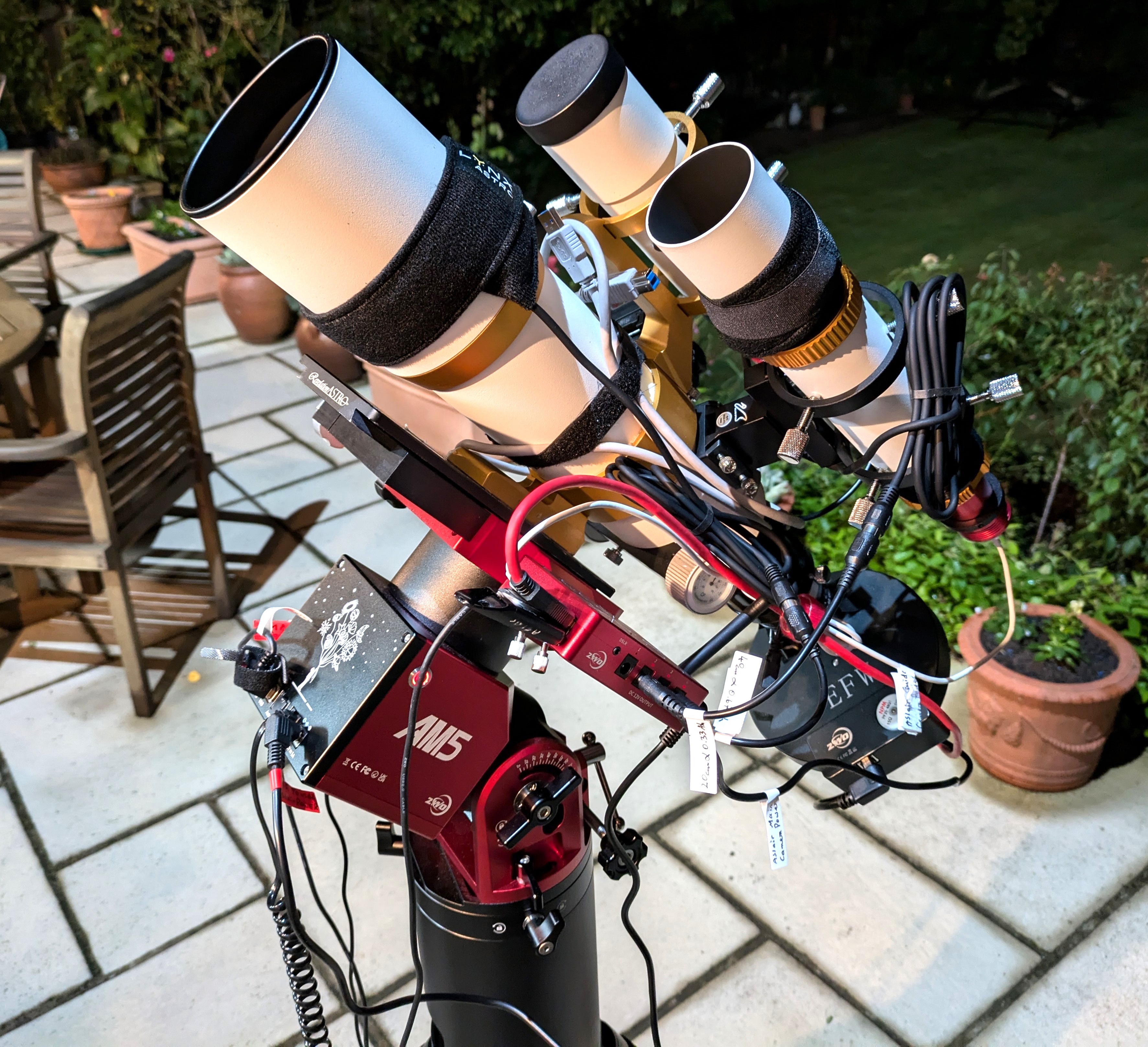
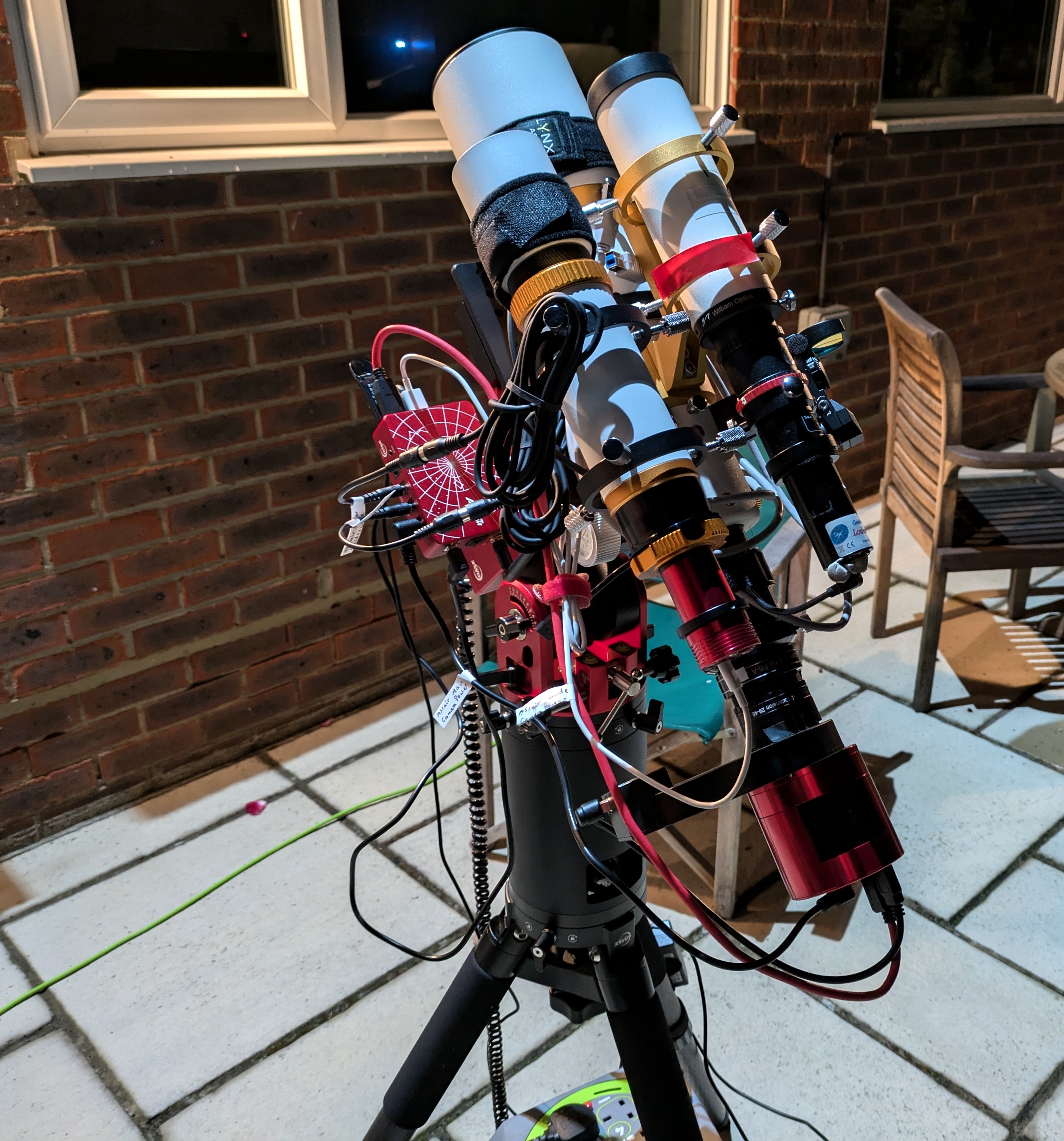
The AM5 mount, ASIair plus (on the left) and OTA rig. It looks busy but once the rig is established it just lifts into place and connects in less than 5 minutes and you’re ready to go!
Finally, only in recent weeks have I had the chance and weather conditions to set-up and try out this new equipment. The early results have been good so far and I hope the limited integration time of the image here will be just a taster of what is to come. The AM5 itself has been a breeze to use and its light weight and set-up is clearly going to revolutionise my astrophotography but the ASIair plus is also a significant game changer that I’m still getting to grips with.
The ASIair plus delivers an excellent and mostly, easy-to-use experience, which with time I’m sure I’ll get to love but to miniaturise and streamline operating compared to my current set-up and control equipment and software, I find it lacking in finesse. Notwithstanding, it is an incredible piece of equipment that works very well with the AM5 mount. I am particularly impressed by the Polar Alignment and Meridian Flip functions, of which the latter is just amazing!
All-in-all the weight and convenience of the AM5 together with the other ZWO equipment is likely to result in a better and importantly, fun time when imaging. In particular, with a truly portable set-up I’m hoping to revisit the end of my garden, from where I can see the north sky and all its objects, hitherto obscured by my house, and maybe even get to image at some dark sites, we shall see – these are certainly changing times, which so far I’ve really enjoying.
IMAGING DETAILS
Object
NGC 7000 North American & Pelican Nebulae
Constellation
Cygnus
Distance
2,590 light-years
Size
120 x 100 arc mins
Apparent Magnitude
Various
Scope
William Optics GT81 + Focal Reducer FL 382mm f4.72
Mount
ZWO AM5 + ASIair plus
Guiding
William Optics 50mm guide scope
ZWO120MM mini guide camera
Camera
ZWO ASI294MM CMOS sensor
FOV 2.87o x 1.96o Resolution 2.50”/pix Max. image size 4,144 x 2,822 pix
EFW
ZWOx8 EFW & 31mm Chroma Ha, OIII, SII filters
Capture & Processing
ZWO ASIair plus, Deep Sky Stacker & PixInsight v1.8.9-3
Image Location & Orientation
Centre = RA 20:55:42.97 DEC +44:20:53.80 Top = North
Exposures
Ha x11 + OIII x13 + SII x13 x 300 sec Total Integration Time: 3hr 05 min
@ Gain 120 @ -20oC
Calibration
5 x 300 sec Darks 10 x NB Flats & Dark Flats @ ADU 32,000
Location & Darkness
Fairvale Observatory – Redhill – Surrey – UK Typically Bortle 5-6
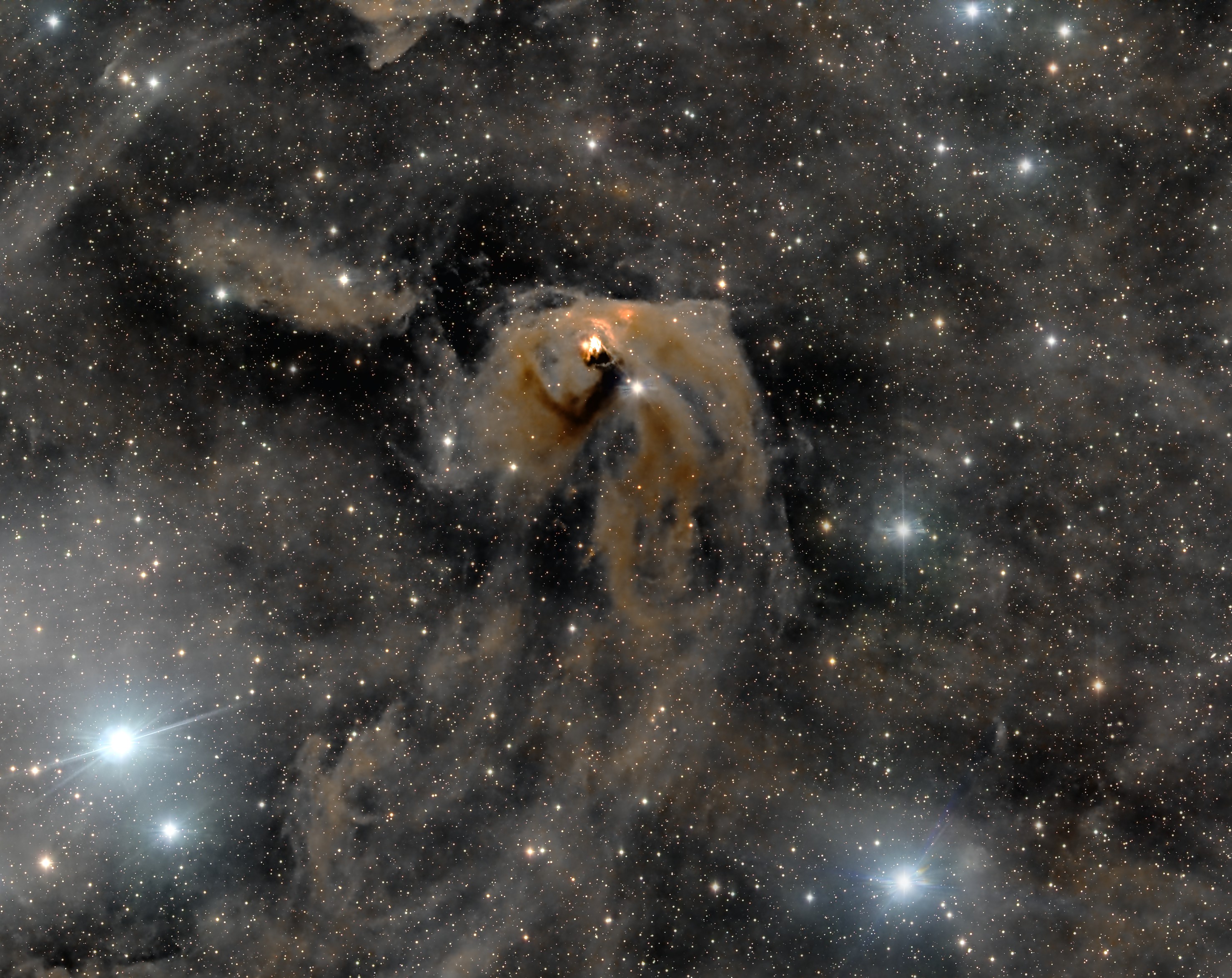
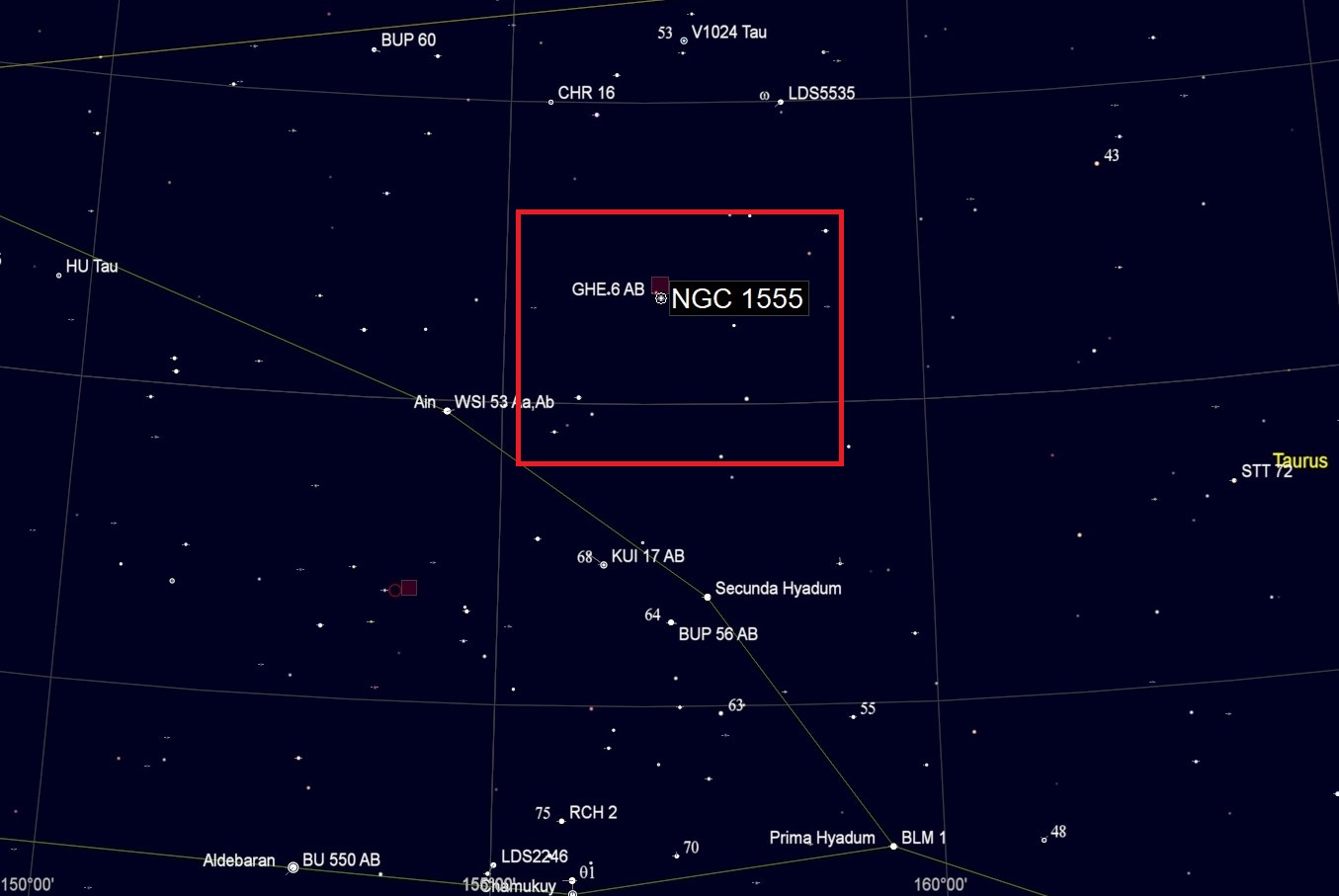
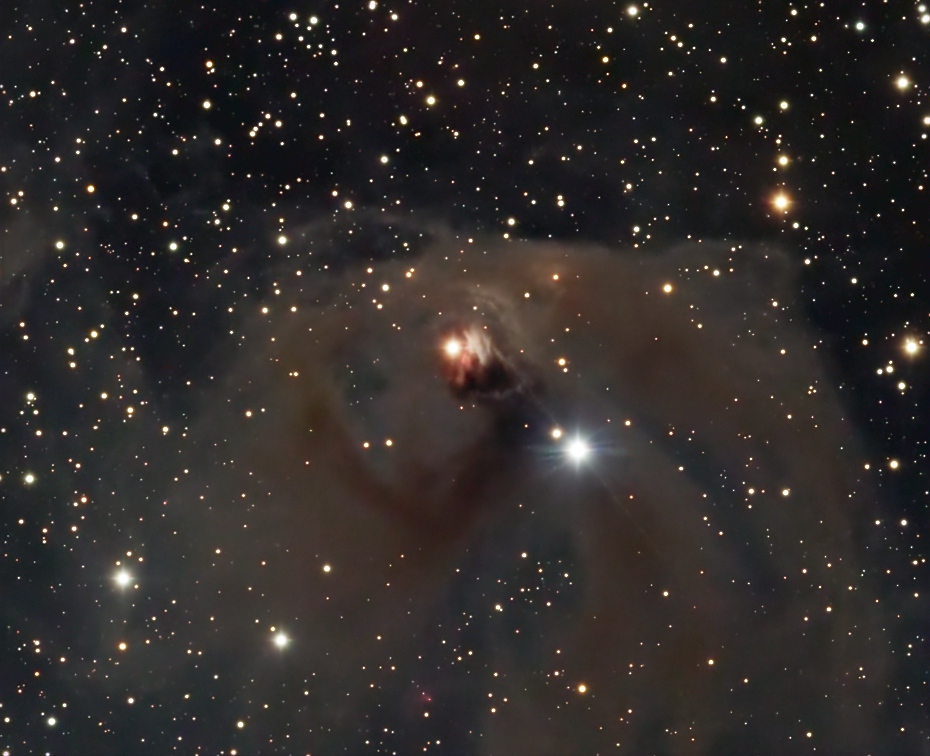
Hind’s Variable Nebula (NGC1555) is situated 400 light-years away in the region between Aldebaran and the Pleiades, in the constellation Taurus, in the same area as the Hyades (see below). The nebula is a Herbig-Haro object – a bright patch of nebulosity in which new stars are forming – which changes in apparent size and brightness. It is illuminated by the young pre-main sequence triple star system T-Tauri and was discovered by the English astronomer John Russell Hind in 1852.
Close-up (cropped) version of Hind’s Variable Nebula
The data for this image was obtained from the Deep Sky West (DSW) site in New Mexico using a Takahashi FSQ 106 paired with a QSI 683-WSG8 camera, which provides a widefield view of the nebula (see top of the page), thereby including many colourful bright stars that dominate this area. The addition of Ha data further highlights the complex nature of the region which is not fully seen in an LRGB image.
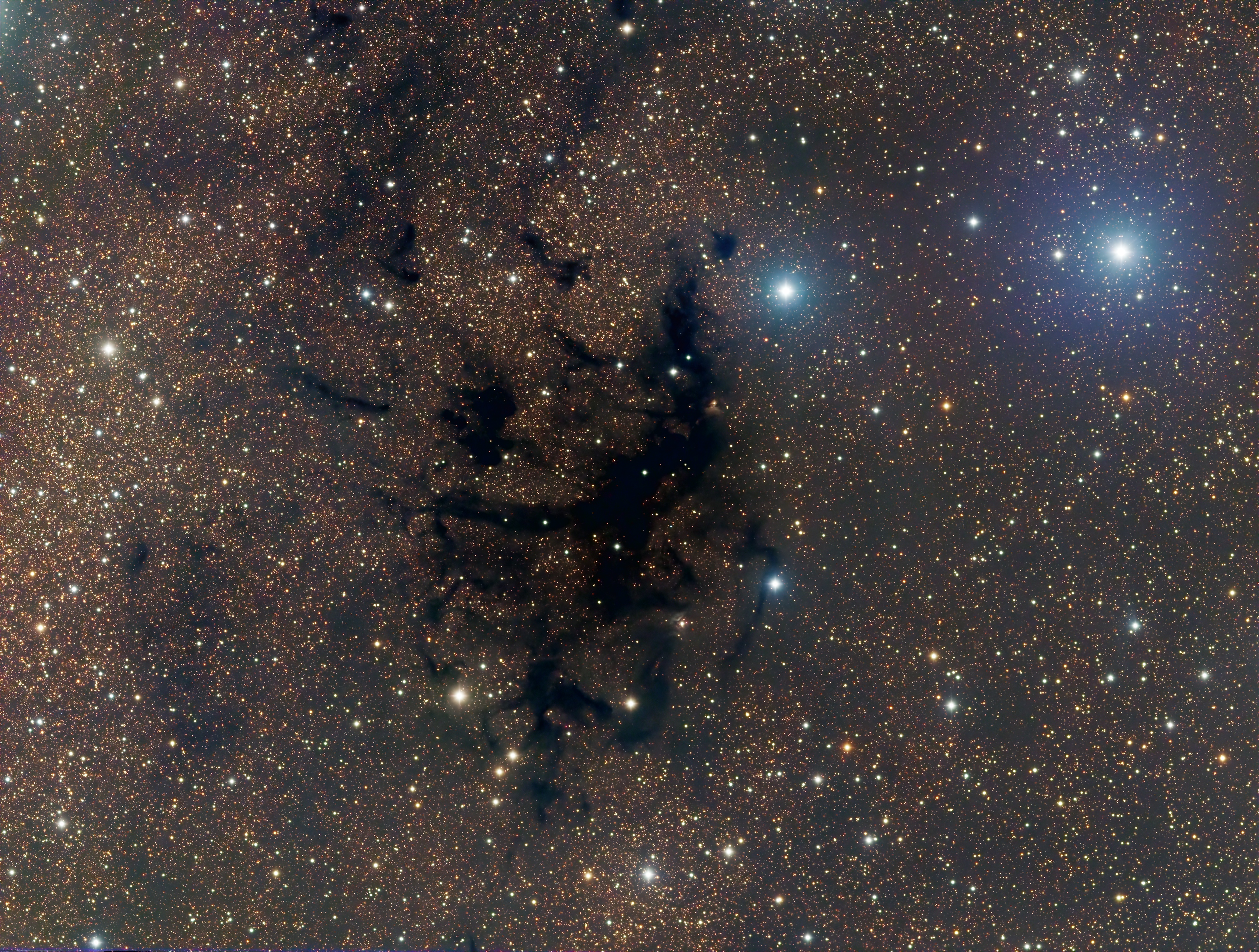
It might seem paradoxical but sometimes it is the absence of light that makes an astrophotography image interesting. Such a feature is the so-called Aquila Rift, a vast, dark interstellar cloud that spans the constellations of Aquila (Eagle), Serpens Cauda and eastern Ophiuchus. Towards the central section of the rift, about 600 million light-years from Earth, within the Aquila constellation and not far from the Summer Triangle’s Altair star, is Lynd’s Dark Nebula (LDN) 673.
Some 7-light years in size, this fragmented dark molecular cloud complex contrasts well against the colourful molecular clouds and stars of the Milky Way; the very dense dust of the dark nebulae scatters the blue light of the surrounding stars, producing a yellow-red bias. In places the density within the nebula that energetic outflows can be seen in the form of the red nebulosity of RNO 109 and Herbig-Haro object HH-32.
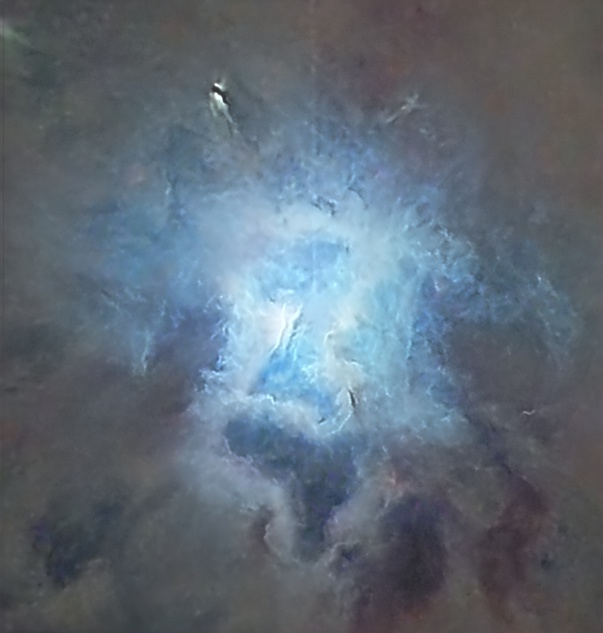
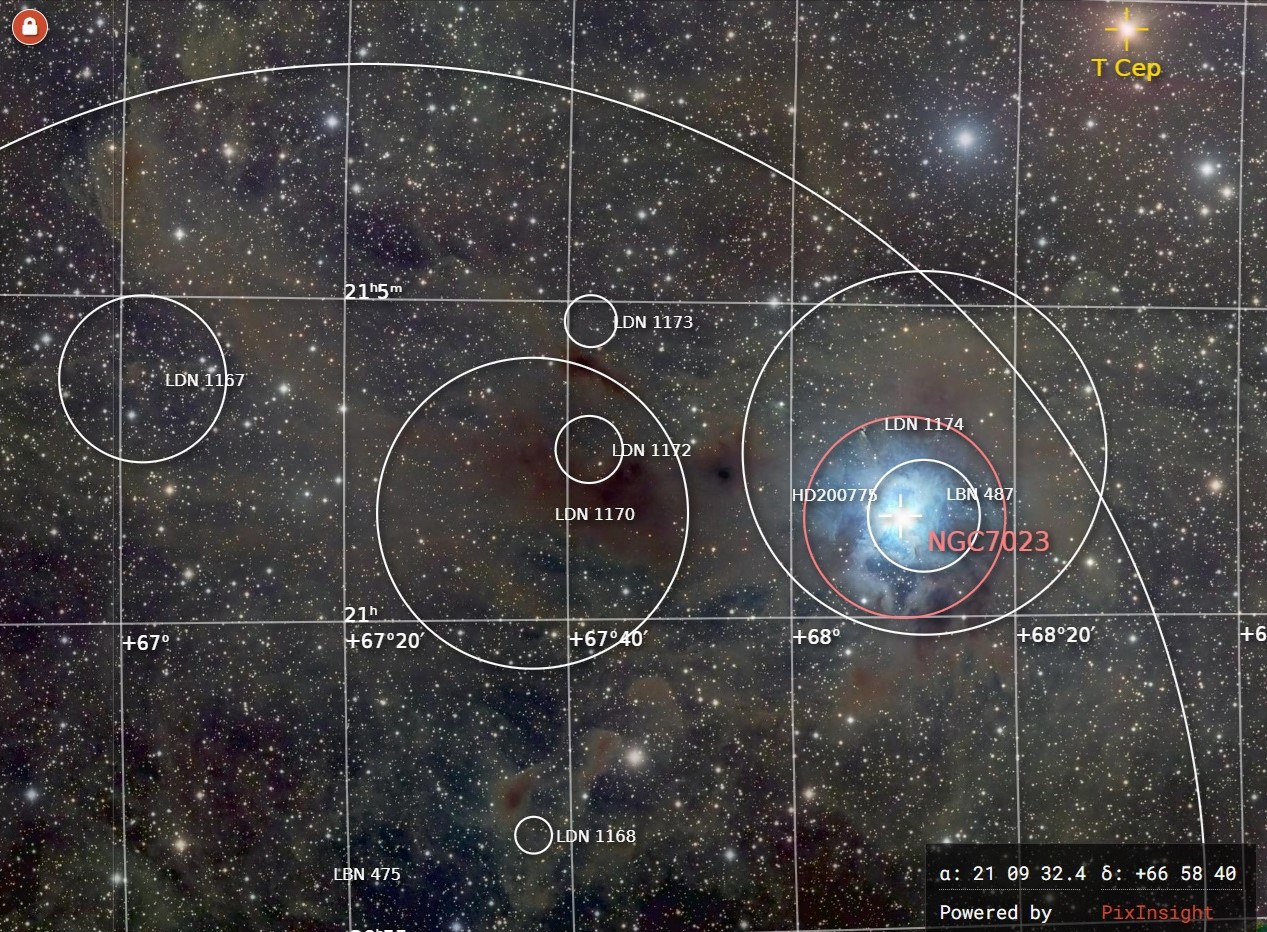
Whilst the highlight is the alluring bright blue reflection nebula NGC 7023 AKA Iris Nebula, careful processing reveals that this celestial flower is enveloped within a vast region of interstellar dust, altogether making for a spectacular image. Strictly speaking NGC 7023 refers to an open cluster within the reflection nebula, which is itself illuminated by a magnitude +7.4 star designated HD 200775 – the cropped starless image shows the beautiful detail that makes up the Iris ‘flower’.
The first galaxies were identified in the 17th Century by the French astronomer Charles Messier, although at the time he did not know what they were. It was only when in 1924 American astronomer Edwin Hubble measured the distance to the Andromeda galaxy using cepheid variables, that the existence of other galaxies was finally established. One hundred years on it’s now estimated that there are between 200 billion and 2 trillion galaxies in the Universe; as Douglas Adams said in the Hitchhikers Guide to the Galaxy, “Space…….is really big”!
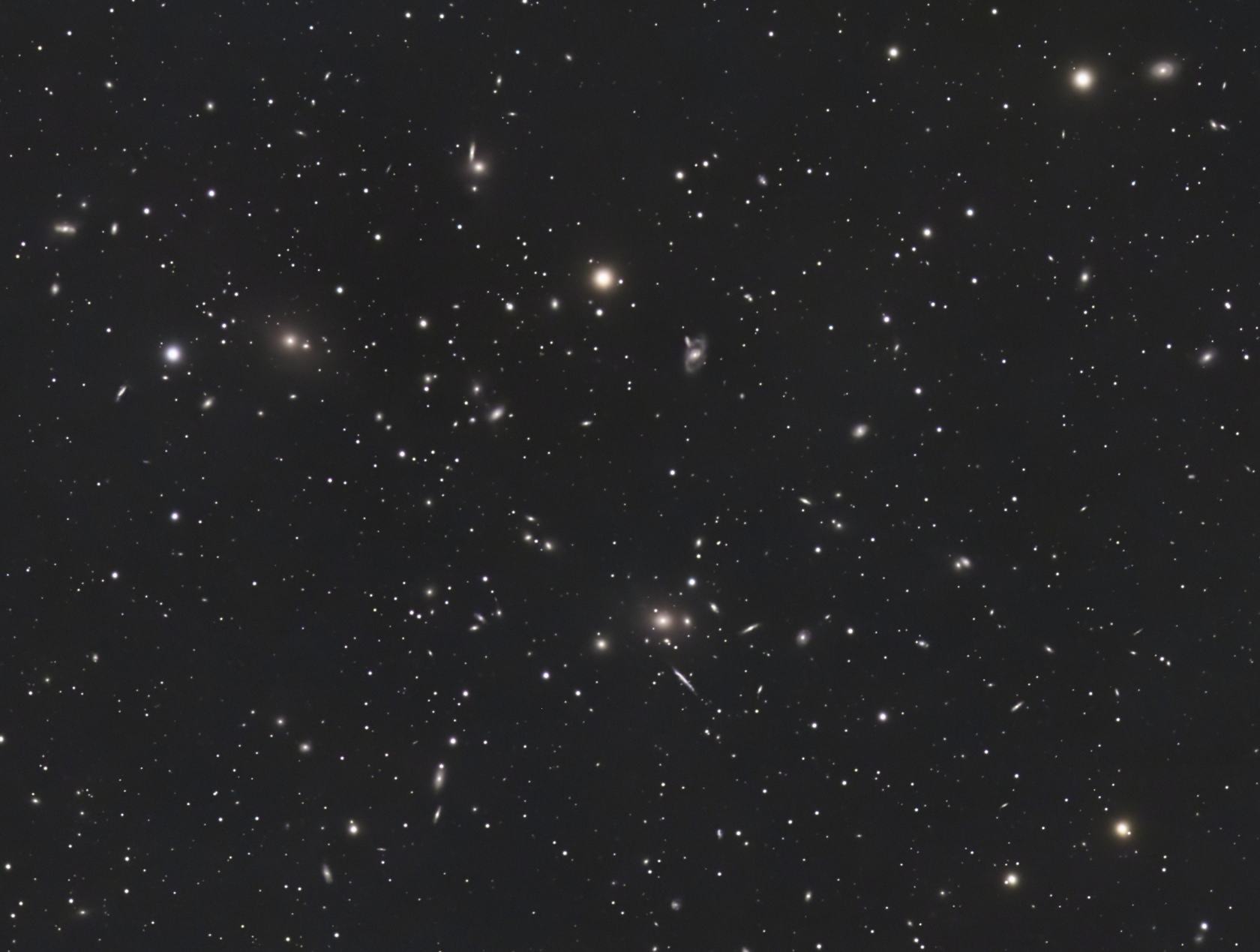
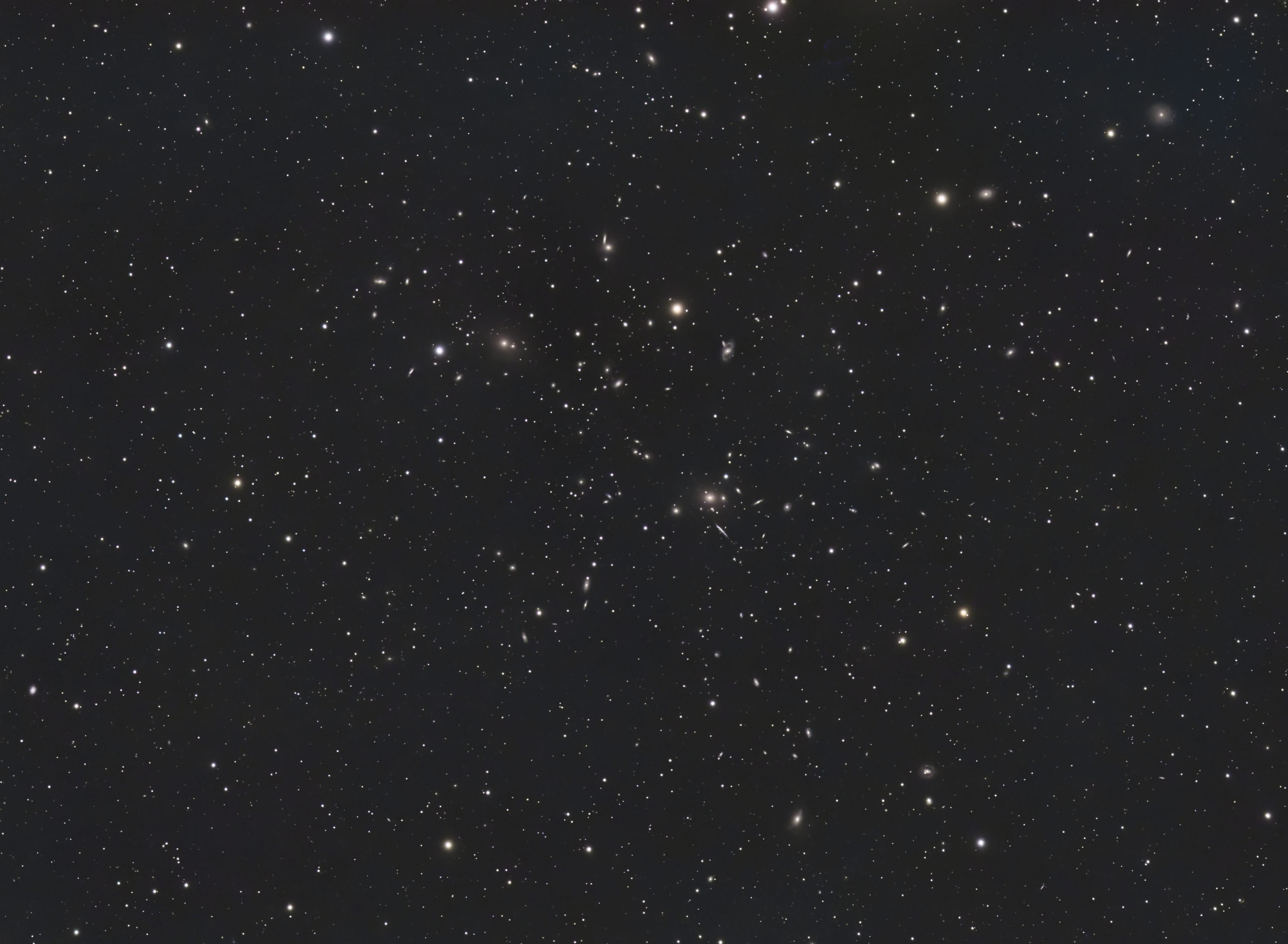
For astronomers this time of the year is generally referred to the ‘Galaxy Season’, as our view of the Milky Way from Earth changes from the winter sky of the Orion Spur and Perseus Arm to the summer view with Cygnus overhead down to Sagittarius in the south, in between we’re looking into deep space. With very few exceptions, galaxies are located very far from Earth, which from our perspective makes them small and therefore a challenge for my imaging equipment. However, this Spring I’ve been imaging the spectacular Leo Galaxy Cluster, a mere 330 million light-years from Earth (see cropped version of cluster at the top of the page).
Containing at least 70 major galaxies, the Leo Cluster unusually consists mostly of spiral galaxies, which are best seen here cropped from the original widefield image. The bright elliptical galaxy near the centre of the image, NGC 3842, has one of the largest known black holes in the universe, which is about 10 billion times more massive than our sun!
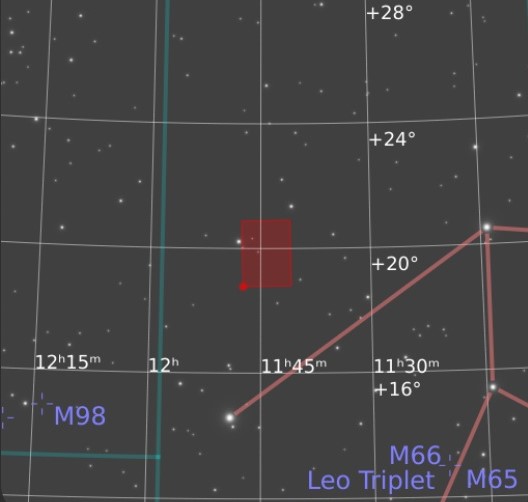
We have come a long way since Galileo Galilei published his astronomical treatise Sidereus Nuncius AKA Starry Messenger in 1610, the first scientific publication based on observations made through a telescope. Galileo’s work completely changed the way humanity understood the night sky and, by extension, our place in space, later leading to the acceptance of the heliocentric model of the planets. Profound as that was, our understanding of the Universe since 1924 has even greater implications. Moreover, the ability for an amateur to image something like the Leo Cluster from my back garden is exciting and very rewarding (see widefield version above+ image location + orientation where the red dot = top left of image).
IMAGING DETAILS
Object
Leo Galaxy Cluster
Constellation
Leo
Distance
330 million light-years
Size
Various
Apparent Magnitude
Various
Scope
William Optics GT81 + Focal Reducer FL 382mm f4.72
Mount
SW AZ-EQ6 GT + EQASCOM computer control & Cartes du Ciel
Guiding
William Optics 50mm guide scope
+ Starlight Xpress Lodestar X2 camera & PHD2 guiding
Camera
ZWO ASI294MM CMOS sensor
FOV 2.87o x 1.96o Resolution 2.50”/pix Max. image size 4,144 x 2,822 pix
EFW
ZWOx8 EFW & 31mm LRGB filters
Capture & Processing
Astro Photography Tool (APT), Deep Sky Stacker & PixInsight v1.8.9-2
Image Location & Orientation
Centre = RA 11:44:12.40 DEC +19:50:25.70 Right = North
Exposures
L x30 + R x31 + G x31 + B x 31 @ 180 sec Total Integration Time: 6hr 9min
@ Gain 120 & 30 Offset 21 @ -15oC
Calibration
10 x 180 sec Darks + 10 x BB Flats & Dark Flats @ ADU 32,000
Location & Darkness
Fairvale Observatory – Redhill – Surrey – UK Typically Bortle 5-6