Howling Wolf

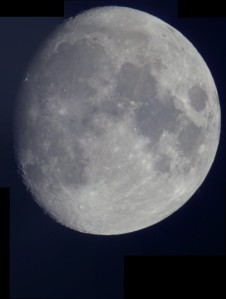
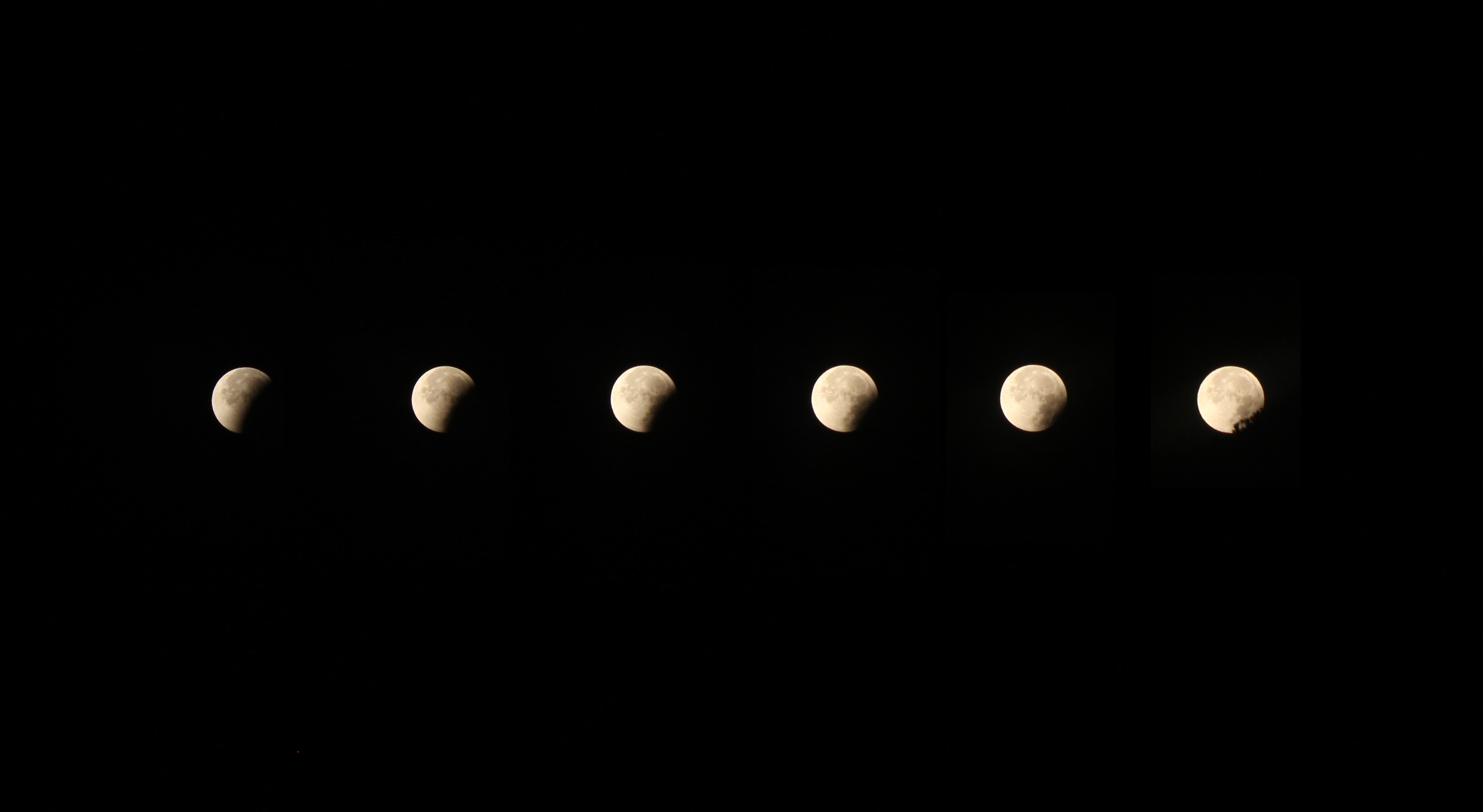
lunar eclipse mosaic 210119x

I have a theory that at or about the time of each full moon the night sky is almost always clear, I don’t have the data but it just seems that way most of the time.  As an astrophotographer I am more than usually aware of the full moon as it makes all except narrowband imaging impossible, when it floods the night sky with its brilliant white light.  Apart from a brief and somewhat futile attempt on 14th December – the Moon and mixed cloud curtailed imaging on that occasion – my last astronomy at Fairvale Observatory was on the 17th October, thereafter being plagued by persistent cloud and bad weather; after a promising start at Les Granges Observatory in early November no further astronomy was possible during the rest of the week due to cloud and poor weather conditions.  I’m beginning to think I need a new hobby, one that is not weather dependent at least!

Given the disappointing lack of astronomy conditions I paid little attention to the upcoming lunar eclipse on the early morning of 21st January.  However, as the day approached various weather forecasts were inevitably mixed but at least two out of five held some promise of clear skies during part of the eclipse.  I therefore started to at least undertake some preliminary planning, only to discover that much of the eclipse might be obscured by houses and tall trees to the west of my location; Plan-B was to travel to nearby Reigate Priory Park which has a decent westerly outlook closer to the horizon.

As it turned out on the 20th a clear, sunny but cold and clear day preceded a clear evening and at about 3 a.m. on the 21st shortly before the action was due to start, the sky was still clear, thankfully proving my theory correct on this occasion.  Furthermore, my concerns over obscured views turned out to be mostly unfounded, with the Moon higher in the sky than envisaged and good sightlines up until the end of totality, at which time the cloud eventually rolled in anyway.  As a result I was able to enjoy over two hours viewing and imaging time, which encompassed the entire penumbral and totality stages of the eclipse.

Having obtained excellent images of the last lunar eclipse on 28th September 2015, tracking with a DSRL and the William Optics GT81 + another static, tripod fitted DSLR and 250mm zoom lens, this time I decided to adopt a different, more mobile set-up, in case Plan-B was necessary.  In 2017 I purchased a Canon 300mm f/4 L-Series telephoto lens to use for astronomy and wildlife photography.  The Canon’s Series-L lenses are a high quality, professional line especially made for APS-C cameras such as the 700D.  With no less than 15 lens elements and a fixed focal length, the picture quality for terrestrial imaging is fantastic, further assisted by a very accurate and quite image stabilizer.

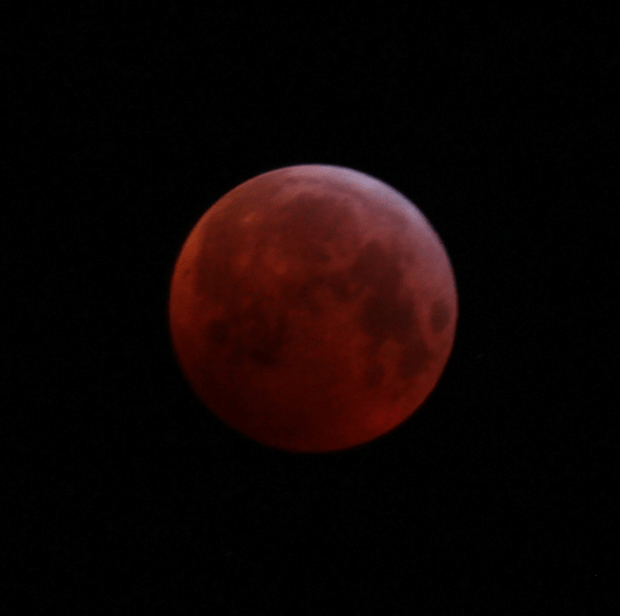
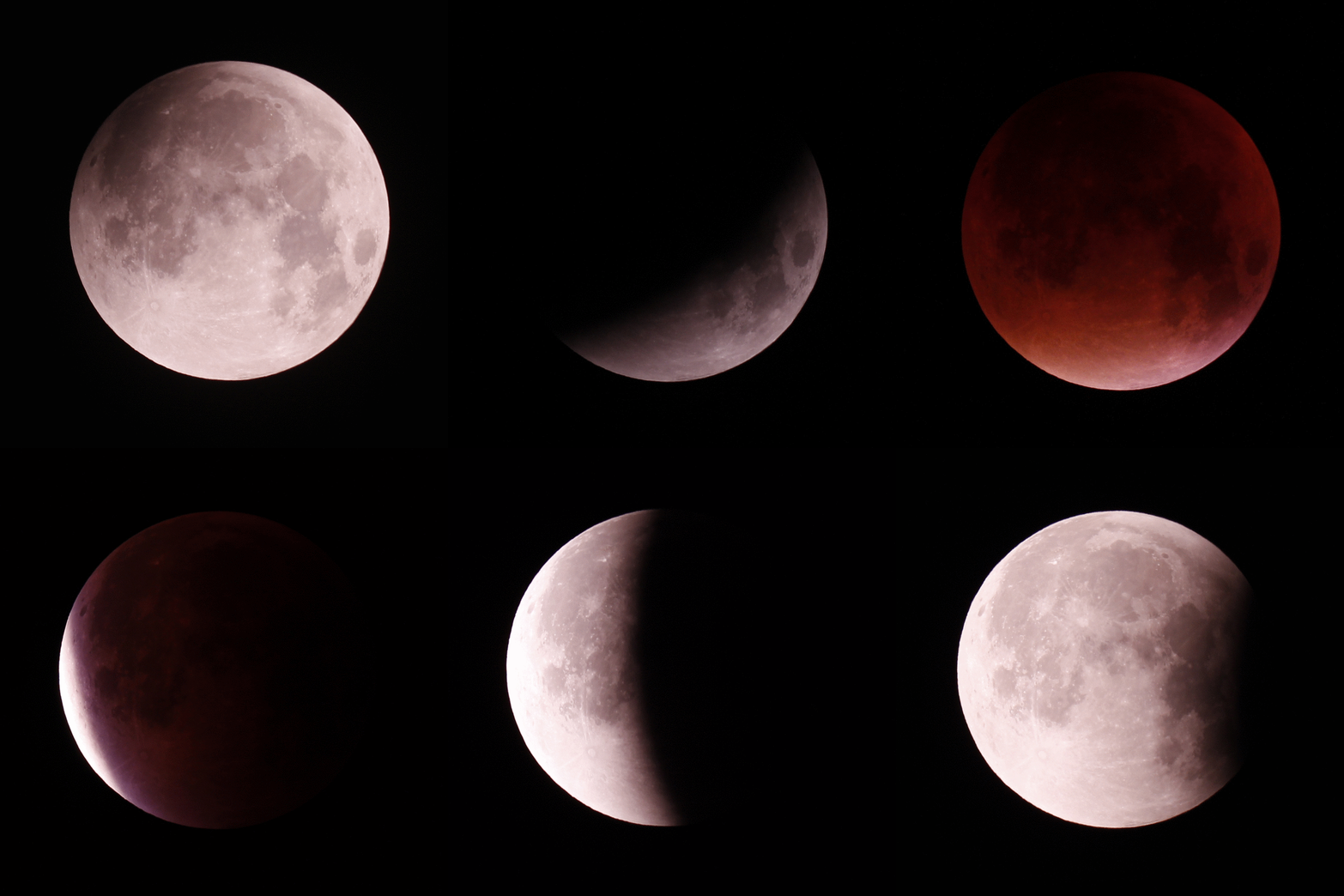
This time I mounted the lens directly onto the tripod, with the camera further back so as to provide good balance between the two components.  As the autofocus and IS functions cannot be used in a dark sky for astrophotography, focus can be tricky and a compromise is required between the aperture setting for sharpness and a low ISO for quality.  As I discovered last time, the light quality diminishes significantly whilst the eclipse progresses across the face of the Moon and the aforesaid settings need to be constantly adjusted to compensate, especially during totality.  In the end I was pleased with the outcome of imaging the so-called Super Blood Wolf Moon (see mosaic above and image below).

img_1235x

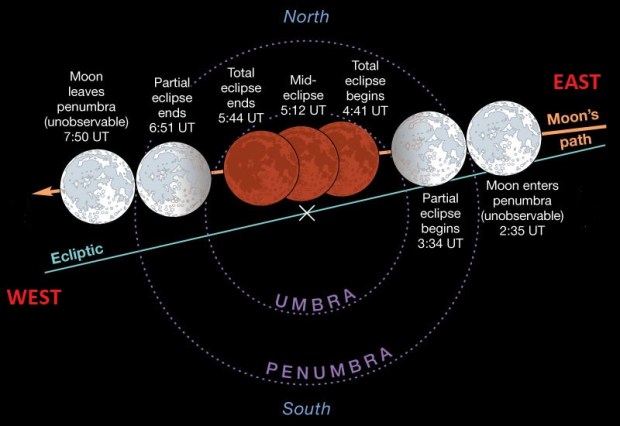
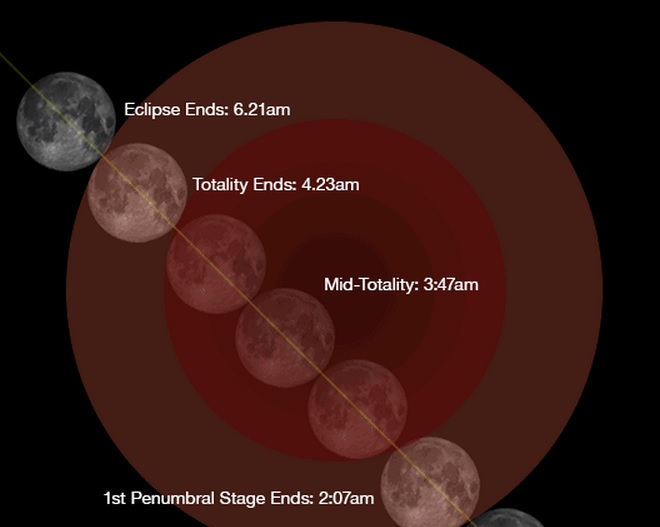
As pleasing as imaging the eclipse is, like a solar eclipse viewing is an entirely different experience.  It is a pleasure to just watch the whole phenomena play out but the dramatic changes of light also has a profound effect on both the night sky itself and, in particular, the very nature of the Moon as perceived by the naked eye. On a clear night the full moon floods the night sky with its very bright light, thereby effectively hiding all but the very brightest of stars from view.  As the penumbral stage progresses (see diagram below) for about an hour the dark night sky is slowly revealed in all its glory, it’s as if someone has pulled the curtains and a new world has appeared.

total-lunar-eclipse-jan-2019-plot

Furthermore, as the moon darkens and eventually enters totality it takes on a completely different and eerie feeling, as well as a red hue caused by Raleigh scattering.  As is often the case with astrophotography the camera sensor is able to capture much greater colour and detail than the naked eye can see, thus producing beautiful images of one of nature’s best shows.  However, to the naked eye the moon takes on a different, somewhat strange nature during totality – something of a 3D effect occurs as it seems to float in the night sky like a big red balloon – something that an image cannot ever capture, making the night time adventure more exciting and worth all the effort.

Lunar eclipses are not that rare but we now have to wait 10-years for the next one in the UK which will take place on 20th December 2029, with or without cloud!

IMAGING DETAILS
Object Lunar eclipse – Super Blood Wolf Moon
Distance <238,000 miles (30,000 miles closer than usual)
Size 31’or 1/2o  
Apparent Magnitude -12.74  @ mean full moon
 
Scope / Lens  Canon L-Series 300mm f/4
Mount Manfrotto tripod
Camera Canon 700D  
Capture & Processing Manual, Photoshop CS3- Extended
Exposures x50:  Penumbral f/8   1/125’   ISO 100     Totality f/5.6  0.80’   ISO 400    
    
Location & Darkness Fairvale Observatory – Redhill – Surrey – UK        Typically Bortle 5
Date & Time 21st January 2019 @ approx. 03.30h  
Weather <= 1oC   RH <=95%                  🌙   Eclipse

Overspill

images-1

After months of cloud followed by 3-months of lost imaging time due to a mysterious camera / mount control problem, I was on the verge of throwing in the towel by August.  But then I sorted the problem, started guiding and as if by magic, with a prolonged spell of good weather managed 7-nights of astronomy between 23rd August and 13th September; such was the intensity I was able to work over consecutive nights and by the end quite exhausted but happy.

Under clear skies and warm nights I could operate in just shorts and a T-shirt, a hitherto unknown experience at Fairvale Observatory.  In such comfort I was also able to experiment and optimize the equipment set-up further – oh, if it could only be like this always.  Of course I did not miss the opportunity to chase some night sky objects as well, imaging 11 targets all-in-all, sometimes on more than one occasion.  It was a glorious time which has since taken time to organise and process.

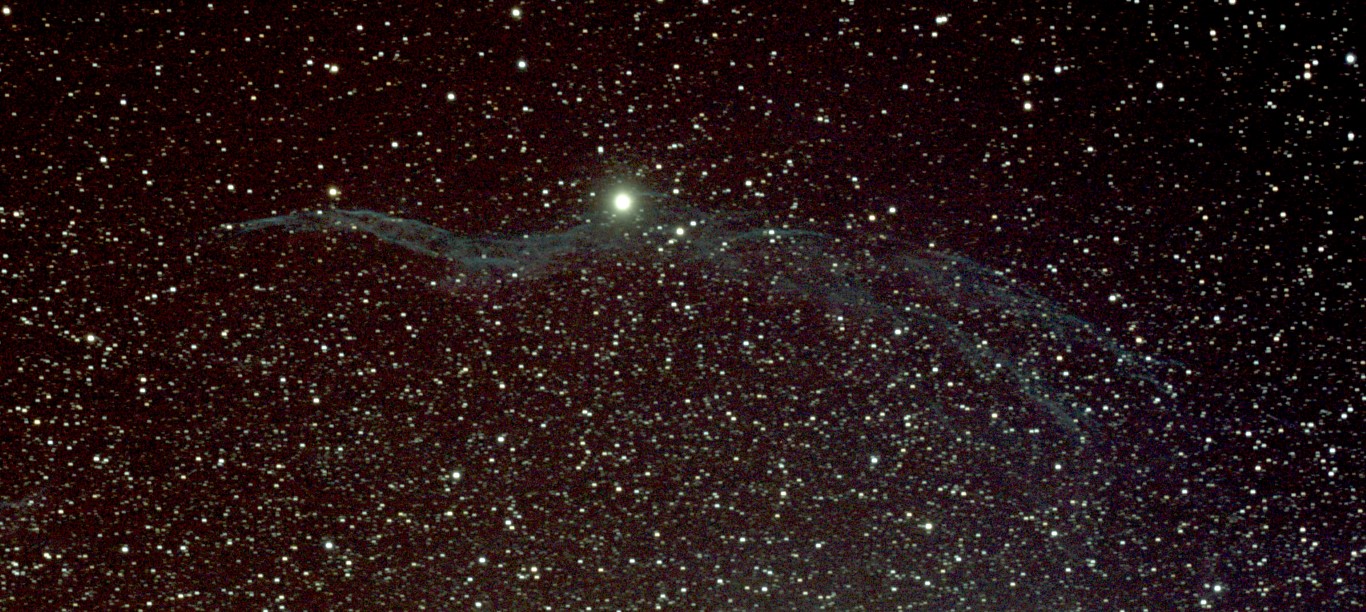
Top left – NGC 6905 Blue Flash Nebula in Delphinus constellation 42″ x 35″ mag +11 26th August; Bottom left – NGC 6781 planetary nebula in Aquila constellation 1.8′ +mag 11.8 23rd August; Middle M57 Ring Nebula Lyra constellation 1.4′ x 1.1′ mag +8.8 13th September; Right M57 23rd August

A number of these images have already been reviewed in Forbidden Fruit and The future is not what it used to be but, such was productivity that for the record I’ve collected the overspill here.  Inevitably targets reflected what was about and in sight from this location at the time but were nonetheless diverse in nature, ranging from the Witch’s Broom to planetary nebulae, the Andromeda galaxy and, making use of the otherwise frustrating monthly occurrence, the Moon.  Features such as M57 and NGC 6781 are intrinsically too small for the William Optics GT81 and Canon 550D, filling significantly less than 1% of the original image but after cropping both are evident in the final picture.

Top Left – M15 Globular cluster Pegasus constellation 29th August; Top Right – Q1 Moon 23rd August; Middle Right – NGC 6960 Witch’s Broom Western Veil Nebula; Bottom – M31 Andromeda Galaxy 26th August

These images are not particularly memorable but it was a fun time and I will remember the enjoyable experience for a long while.  Of course, the cloud has now returned and since passing the autumn equinox night temperatures have plunged into single figures.  On the plus side, Orion is on its way together with all the other photogenic objects that characterize the winter night sky – can’t wait!

Talk The Talk

“He who can, does. He who cannot, teaches.” 1903, George Bernard Shaw

At the end of last year I was contacted by a member of the Aperture Club, a photography group based in Purely – Surrey, who had come across this website and asked if I could give a presentation to the club’s members on astrophotography.  Ordinarily I might have rejected the request – after all what do I know about astrophotography after only 18-months – but then again why not? Once I sat down and compiled some initial thoughts it was surprising just how far I had come and learnt already, albeit with still a long way to go.  In the end I agreed and decided to take a two-fold approach to the talk: (i) a basic overview of astrophotography, and (ii) in this context my personal journey so far.

TTT Cover

The final structure adopted was like this, which I hoped would be both technically and aesthetically engaging and provide some insight into the challenges for astrophotography when compared to their day-to-day terrestrial pursuits:

  • Types of astrophotography
  • Astrophotography Methods
  • Light
  • Telescopes
  • Imaging
  • Cameras
  • Image Capture
  • Processing
  • Post Processing

I gave my talk to the club at the end of March, which lasted about 1-hour and I believe was well received; there was a good turn-out and subsequent Q&A session – which is always a good sign.  I had also been asked to compile some related tasks for the members to undertake afterwards and after a break presented a second, shorter talk on some possible assignments.  Copies of the talks can be accessed via the links here:

Astro Lecture PDF

Astro Assignments PDF

I would not be so arrogant to undertake such a presentation to other astrophotographers, at least not yet, but enjoyed introducing members of the Aperture Club to my hobby.  Furthermore, through compiling the presentations I benefited from the process, which required me to think and understand the subjects more thoroughly than I might otherwise have done, making me think that Shaw was wrong.  Good teaching requires a good understanding of the subject, the skill to impart that knowledge to the audience and the ability to apply the knowledge. I’ve previously walked the walk and in this instance I’d like to think I was able to talk the talk – I found the experience rewarding and I hope members of The Aperture Club did too?


The Sky’s The Limit

IMG_6235 (Large)

Imaging the Milky Way is a popular objective that has so far eluded me, mainly as I suffer from bad light pollution here at Fairvale Observatory.  Embarking on a trip to the Southwestern USA recently where dark skies abound, I therefore had high hopes of at last achieving this goal but alas it was not to be and will have to wait for another day.

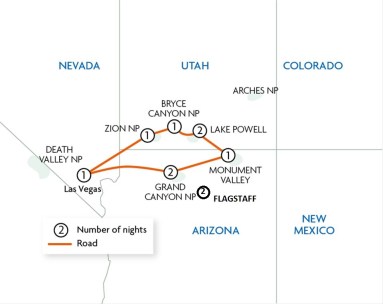
The Grand Circle p76 1280302

The trip of a lifetime

As a geologist I have often visited parts of Nevada, Colorado, Utah and California but never the famous sites of the Grand Canyon, Monument Valley, Glen Canyon (Lake Powell), Bryce Canyon and Zion National Park, which this time formed the trip of a lifetime.

IMG_20160407_152942 (Large)

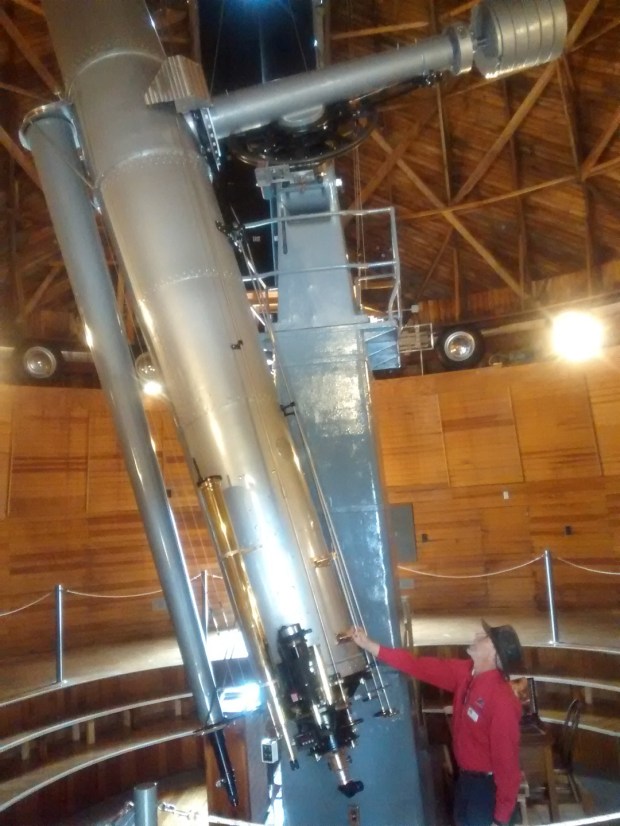
Alvan Clark & Sons 24″ refractor telescope at Lowell Observatory, Flagstaff, Arizona

First stop was after flying into Las Vegas was Flagstaff, home of the Lowell Observatory, where Pluto was first discovered and amongst others houses a magnificent 24-inch Alvan Clark & Sons refractor telescope built in 1895, which I hoped to use for viewing at the observatory’s nightly public sessions.  Unfortunately this was not to be as the sky remained resolutely overcast throughout the evening, despite good conditions earlier in the day.  Notwithstanding, the observatory is a fascinating place and still remains an important centre of modern astronomy studies; the adjacent town of Flagstaff is also home to the Department of Physics and Astronomy at the Northern Arizona University.

IMG_20160407_161022 (Large)

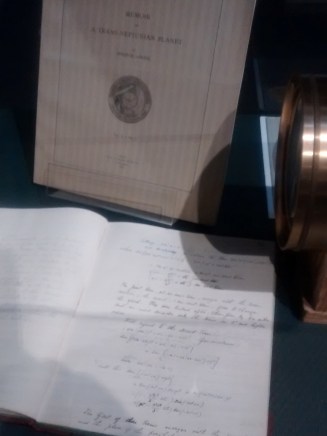
Final notes and paper published by Percival Lowell postulating the existence of a Planet X beyond Neptune, later confirmed by Clyde Tombaugh at Lowell Observatory in 1930 and named Pluto

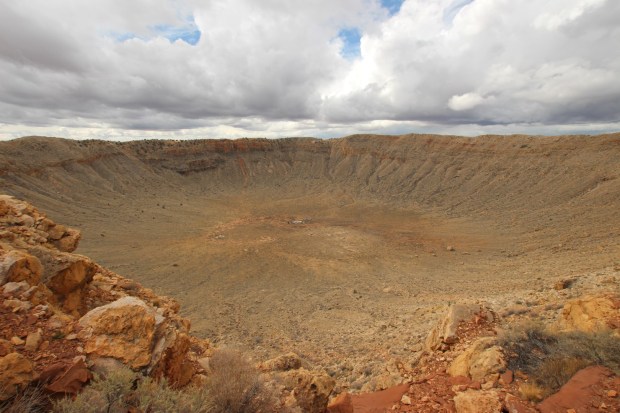
About 40-miles east of Flagstaff is the site of Meteor Crater, the best preserved meteorite impact crater on Earth.  Nearly one mile in diameter and over 500 feet deep, the 50,000 year old crater is very big and very impressive. There’s a lot to like about Flagstaff if you’re into astronomy!

IMG_5940 (Large)

Meteor Crater, Arizona, USA

IMG_5930 (Large)

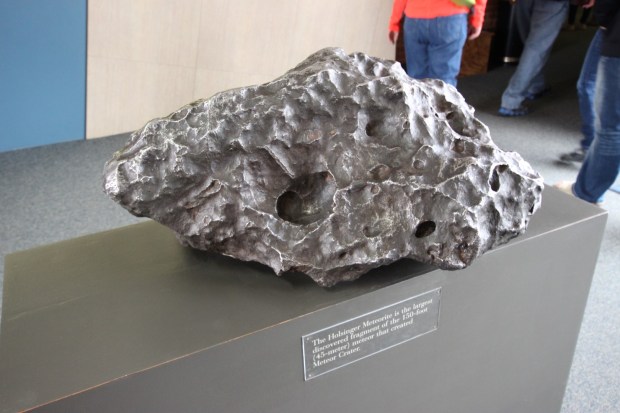
The Holsinger Meteorite: the largest remaining fragment of the 45 metre meteorite that created Meteor Crater

Moving on to the next stop at the Grand Canyon did not disappoint but staying just outside the park the location suffered some light pollution, compounded by cloud during the evening, thus prohibiting any imaging.

IMG_5974 (Large)

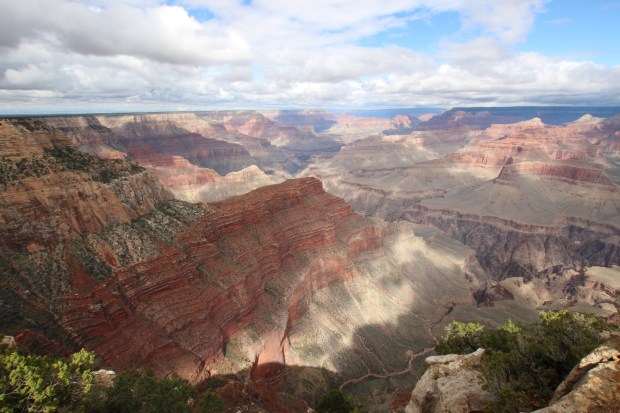
The incomparable Grand Canyon by day. Whilst we stayed around for sunset, unfortunately light pollution and cloud later prevented further nightscape imaging.

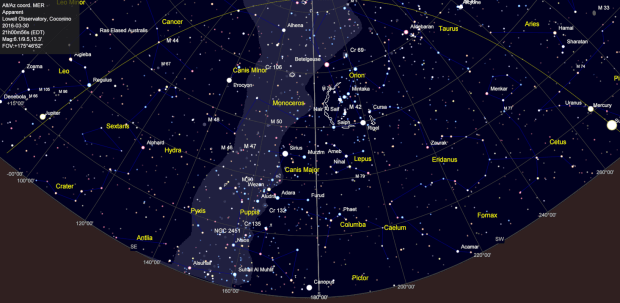
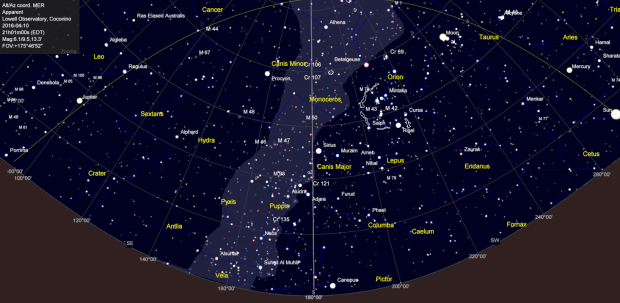
As a more remote location I had always envisaged that next stop at Monument Valley would be my first real opportunity to undertake some night imaging, for which purpose I had taken along the Vixen Polarie and a tripod.  In preparation I had previously studied the sky in this part of the world using Cartes du Ciel, which indicated that the Milky Way would be well positioned during my visit; being 35o latitude and 5,000 miles west of Fairvale Observatory meant that the sky was similar to that viewed in the UK three months ago and therefore included my favourite constellation Orion.  Unfortunately I had overlooked one problem and my long-time nemesis, the moon.

lowell south 9pm

The night sky from Lowell Observatory on 30th March 2016 – no Moon.

Lowell Obsy 100416

10-days later: night sky from Lowell Observatory on 10th April 2016, now with the Moon!

I was in the USA from 5th to 17th April but for some reason had modelled the sky in Flagstaff on 30th March.  It turned out that between then and 10th April, when I was in Monument Valley, the by now half-moon had moved into the night sky and ruled out any chance of seeing or imaging the Milky Way.  Of course, even if I had correctly identified the problem beforehand there was nothing I could do about it but it was still frustrating.  Notwithstanding, it was a clear sky and not to be defeated turned to Plan-B, which instead took advantage of the moon’s position and in my opinion turned out quite well.

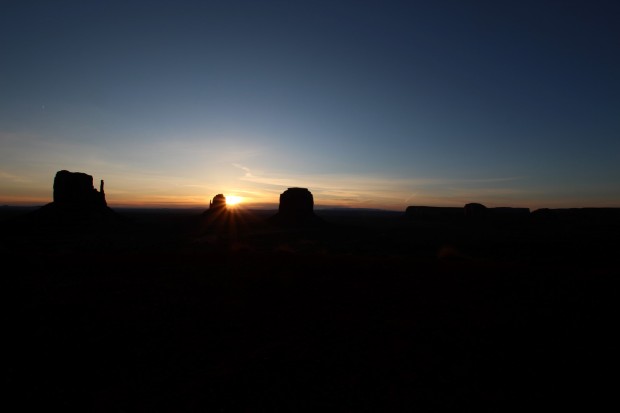
IMG_6242 (Large)

Monument Valley by Day: left to right – West Mitten, East Mitten & Merrick Buttes

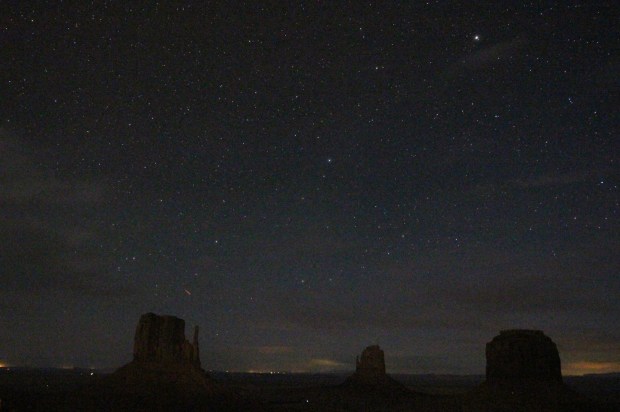
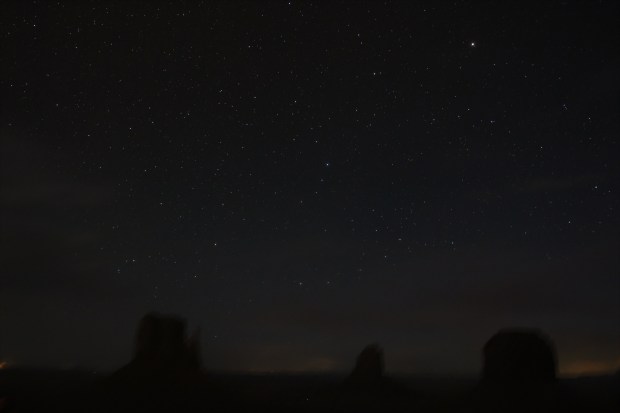
Despite the remote location at Monument Valley there was noticeable light pollution from the hotel and ancillary facilities.  However, being on the ground floor it was possible to set-up adjacent to the room’s balcony looking east, which was fortunately in the building’s own shadow, thus enabling a sequence of images to be taken of the night sky set against the buttes that typify this region.  UnfortunateIy I overlooked setting the Vixen Polarie to half-sidereal tracking speed, which subsequently resulted in a blurred landscape when stacked but the original subs capture the buttes in some detail, themselves illuminated by the moon’s light = result!

IMG_6219L1C1 (Large)

Monument Valley by Night; order of buttes same as above.  Canon 700D + Sigma 10mm wide-angle lens | 15secs @ ISO 6,400 | 10th April 2016

Picture saved with settings embedded.

Monument Valley at Night – mulitple stacked shots:  Sidereal tracking results in better sky but blurred landscape. Canon 700D & 10mm Sigma wide-angle lens | 20 x 15 secs @ ISO 6,400

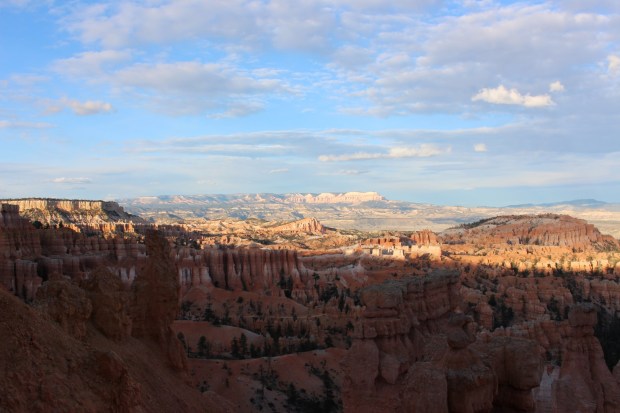
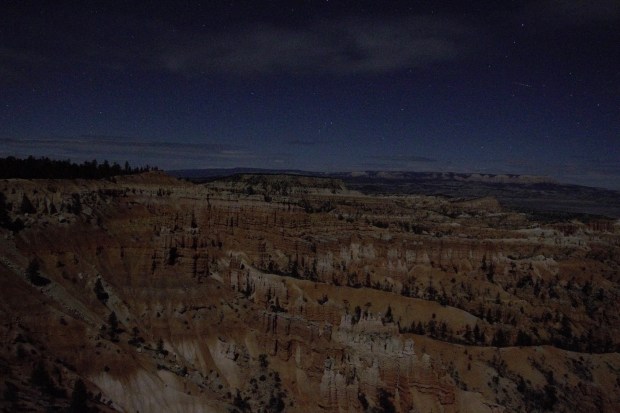
Three days later I was in Bryce Canyon, the location of extraordinary geological features called hoodoos, which are the result of unusual and extreme weathering of the limestone cliffs found there.  The land forms consist of thousands of various sized pillars of white and red limestone, seemingly lined up like soldiers along miles of the east facing limestone cliff face.   Once again I used the moon to illuminate and capture the scene, this time using half-sidereal tracking.  The result is somewhat haunting in nature but shows almost as much detail into the far distance as during daytime; I still find it incredible how sensitive the camera’s sensor is in gathering available light at night when extending exposure times and / or turning up the ISO setting.

IMG_6452 (Large)

Bryce Canyon at Sunset Point by Day

IMG_6525 (Large)

Bryce Canyon at Sunset Point by Night: Canon 700D + Sigma 10mm Wide-angle lens | 15 secs @ ISO 3,200 | 13th April 2016

It is clear I have much to learn about the deceptively simple nightscape photography using the Vixen Polarie but it is equally clear that the equipment provides significant potential and I look forwards to catching the Milky Way one day when the sky is clear and the moon absent.  Notwithstanding the disappointment of missing out on the Milky Way this time, in the spectacular big country of Southwestern USA the sky’s the limit and I hope to go back again one day.

DSC03151 (Large)

Too much light pollution perhaps? Even in the Big Country of the Southwestern USA getting the right conditions for astrophotography remains a gamble!

Harvest Time

Thanks to Copernicus and Kepler et al, astronomical events are highly predictable; unfortunately the same cannot be said about the weather.  Since taking up astronomy and despite favourable predictions of clear skies, I have frequently been thwarted by incoming cloud or worse.  When communicating with each other astronomer’s often use the closing of “Clear Skies”, no wonder given the continuous battle we have just to see the sky at night, let alone image it!

Such was my experience in 1982.  At the time I lived and worked in northern South Africa, close to the border with Botswana and the Kalahari Desert.   A lunar eclipse was forecast and in this part of the world there was usually a good chance of a clear sky.  Unfortunately, it was not to be this time either.  We saw glimpses of the eclipse through brief gaps in the otherwise thick cloud that was blowing across the sky.  I’ve missed other eclipses for the same reason, lunar and solar, and as a result have developed a somewhat resigned mindset towards such events, with the probability that the sky would most likely not be clear.  And so despite encouraging forecasts, my expectation for this week’s lunar eclipse was more of the same.

The lunar eclipse of 28th September was very unusual.  At mid-eclipse the Moon was just one hour past its closest approach to Earth in 2015, creating an effect now popularly termed a ‘Supermoon’.  Moreover, the rare combination of this and a full eclipse at the same time results in a distinctive red moon at totality.

I have learnt the hard way that in astronomy Rule-1 is perseverance.  I therefore carried out all the necessary research on the eclipse, undertook a dry run the previous evening and set-up all the equipment in the early evening before heading for forty winks – it was after all hopefully going to be a long night.  The weather had been clear and sunny earlier in the day but was forecast to cloud over shortly after midnight, just before umbral contact!  The sky was clear when I went out later but ominously there were clouds in the west.  Notwithstanding, the sky remained clear all night and the eclipse was nothing less than spectacular.

Total Lunar Eclipse 18th September 2015

Total Lunar Eclipse 18th September 2015

The precision with which astronomical events are plotted is incredible and, guided by various articles and charts all was in place well before the end of the penumbral stage at 2.07am.  Shortly before darkness started to show on the top, eastern edge of the Moon and then exactly at 2.07am the eclipse shadow touched and then crept inexorably across the Moon’s surface.  This was the main phase of the eclipse when the Moon enters the central, dark part of the shadow called the umbra, eventually reaching totality at 3.11am.

Totality lasted 1 hour 12 minutes, during which I just watched through a pair of 10 x 50 binoculars, which probably was the best way of actually viewing the Moon throughout the eclipse.  Of course, with the brightness of the full Moon obscured by the eclipse during this time, the rest of the night sky was plunged into blackness, thus bringing the stars, nebulae and galaxies back to life.  As the Moon was passing through the lower part of the Earth’s umbral shadow, the southerly edge appeared relatively bright during much of totality.  Totality finished promptly at 4.23am as the light started to move across the Moon’s surface once again like an unstoppable wave.  The Moon finally exited the umbra at 5.27am and the show was over until October 2033, on which occasion the Supermoon eclipse will unfortunately not be visible from the UK – I did say it was rare.   However, there will be another total lunar eclipse in July 2018, so it’s not all bad news.

Given my history, this was naturally my first time imaging a lunar or any other eclipse and I am very pleased with the results.  Other than requiring a clear sky, as usual preparation was the key: understanding the timing and dynamics of the event and considering the imaging possibilities.  The most obvious problems to overcome were the Moon’s tracking and movement of the eclipse itself, with its associated impact on changing brightness and contrast for imaging.

The previous evening had also been clear, so I tested a basic DSLR + tripod set-up using an intervalometer to trigger the shots at 5-minute intervals.  With the 200mm telephoto lens 8 pictures were successfully recorded as the Moon tracked across the image frame, at 100mm this increased to 12 pictures; however, the track tended to move out of the side of the frame early as the Moon follows an inclined rather than horizontal track.  Altogether it was a successful and useful experiment for the next evening.

On the night I used the William Optics GT81, with a Canon 550D camera and field flattener, which continuously tracked the Moon and eclipse,  imaging at 1-minute intervals throughout the period inward and outward of the umbra and manually during totality.  Using a fixed ISO 100, it was necessary to continually change the exposure time every five or so minutes in order to compensate for the aforesaid changing light conditions.  In addition, I again used the intervalometer with the Canon 700D and the 55- 250 mm telephoto lens on a camera tripod.

Eclipse: Inward sequence from umbral contact to totality WO GT81 + Canon 700D + FF | 1/500 to 1/3 sec @ ISO 100 | 18th September 2015

Eclipse: Inward sequence from umbral contact to totality
WO GT81 + Canon 550D + FF | 1/500 to 1/3 sec @ ISO 100 | 28th September 2015

Eclipse: Exit sequence to full Moon Canon 550D + tripod | >=1/160 sec @ ISO 400

Eclipse: Exit sequence to full Moon
Canon 700D + tripod | >=1/160 sec @ ISO 400

Eclipse animation

Eclipse animation

The results from both methods turned out well.  With superior optics and tracking, the WO telescope images were naturally better in quality and magnification.  However, the alternative simple camera set-up also produced a pleasing record of the eclipse, perhaps in some way capturing the mood better?

The entire event lasted just over 3-hours, during which found it necessary to look away from the imaging process at times just to enjoy this unusual and exciting spectacle.  The name Harvest Moon is given to the full moon closest to the Autumn Equinox, recognising the time of year at which the crops have been gathered and can itself be an attractive sight.  The coincidence with an eclipse makes for a rare and dramatic occasion, which this time I was able to enjoy completely cloud free from beginning to end – well that’s a first.

Harvest Moon at Totality WO + Canon 700D + FF | 1/3rd Sec @ ISO 400 | 28th September 2015

Harvest Moon at Totality
WO + Canon 550D + FF | 1/3rd Sec @ ISO 400 | 28th September 2015

Fly me to the dark side of the Moon

I am still struggling to return to astronomy – no longer hampered since July recovering from my knee operation, which though stiff and painful is slowly improving, but now by the weather, a one-eyed cat, my own incompetence and inevitably the Moon.

Taking care of my daughter’s cat in early August, ruled out astronomy as the unfortunate one-eyed cat is not allowed outdoors, thus making the movement of equipment freely in and out the house very difficult.  The weather then turned bad before it was time for the full Moon at month end, itself an imaging opportunity, except once more for the presence of thick cloud cover.  Shortly afterwards clear nights were forecast but twice after setting-up the equipment under a clear sky the clouds rolled in again.  Finally a week ago under a moonless clear sky, I completed the equipment set-up and turned on the mount in order to start the alignment and camera set-up sequences.

I’ve owned the current equipment since last July and after months of busy use felt I was now familiar with all the basic procedures – wrong.  Because of my operation it’s been five months since using the equipment and after going through the initial SynScan sequence I started the alignment routine, only to find that each time the scope slewed to exactly 900 east of the target star.  I diligently repeated the start-up routine a number of times but with the same result – bizarrely on switching to EQMOD linked with Carte de Ciel, the scope moved correctly to the chosen star.  It seemed there was an obvious answer to the problem but I could not work it out and in the end had to give up, missing a great opportunity as the sky continued clear all night – talk about frustrating!

The next morning I went through the complete mount set-up and SynScan start-up routine again, with a clear head and some guidance from SGL members, it took me about 10-seconds to find the problem – I had input the date as day-month-year instead of month-day-year; in this case 06/09/15 was exactly three months or one quarter earlier than the correct date input of 09/06/15, the sky equivalent of 90o.  Why is it in the 21st Century that an advanced technologically advanced country such as the USA, uses an uncommon date format and imperial units, they even mix-up themselves and as a result lost the Mars Climate Orbiter in 1999!  Notwithstanding, from frequent use I already knew the correct format but after 5-months absence couldn’t see the problem right in front of me, obvious though it was.

In the absence of ‘real’ astronomy I’ve been playing with simple camera-tripod imaging, with some rewarding results; it’s got me thinking about purchasing a smaller, simpler Vixen Polarie or equivalent tracking mount head – watch this space!  The same morning after sorting out the aforementioned date format problem, I took the opportunity to take a look at the sun in the east before turning round to see a beautiful waning crescent Moon in the western sky – who needs the night sky?

Fly me to the Moon

Fly me to the Moon

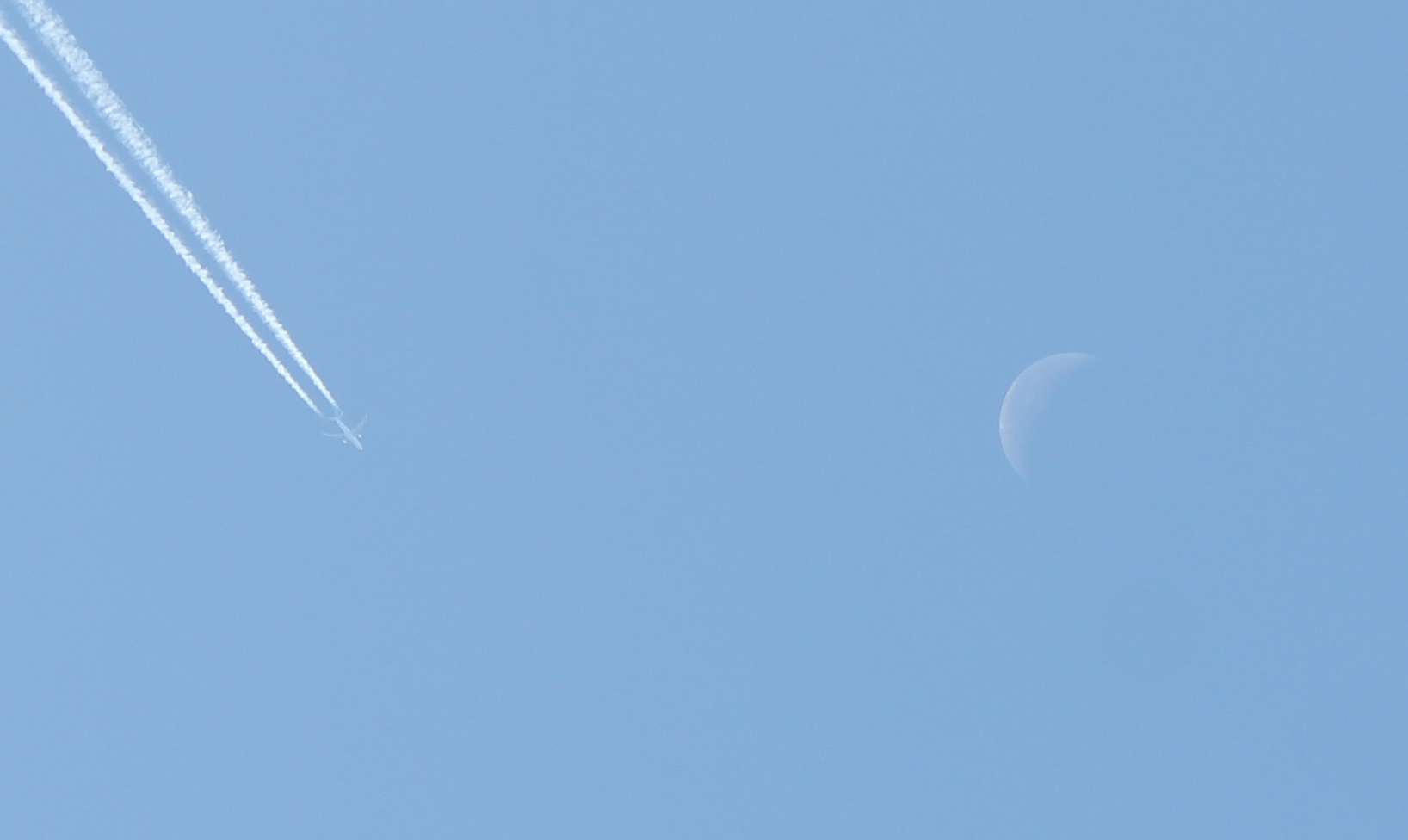
Too good to miss and after the previous evening’s disaster, I managed to get a pleasing sequence of images tracking an aircraft flying past the Moon – this being a case of making the best of what you have: daytime, the Moon and frequent overflying planes from nearby Gatwick airport and further afield.  Being approximately 42,000 further away from Earth the Moon only looks about 4-times larger than the aircraft.

Flight animation

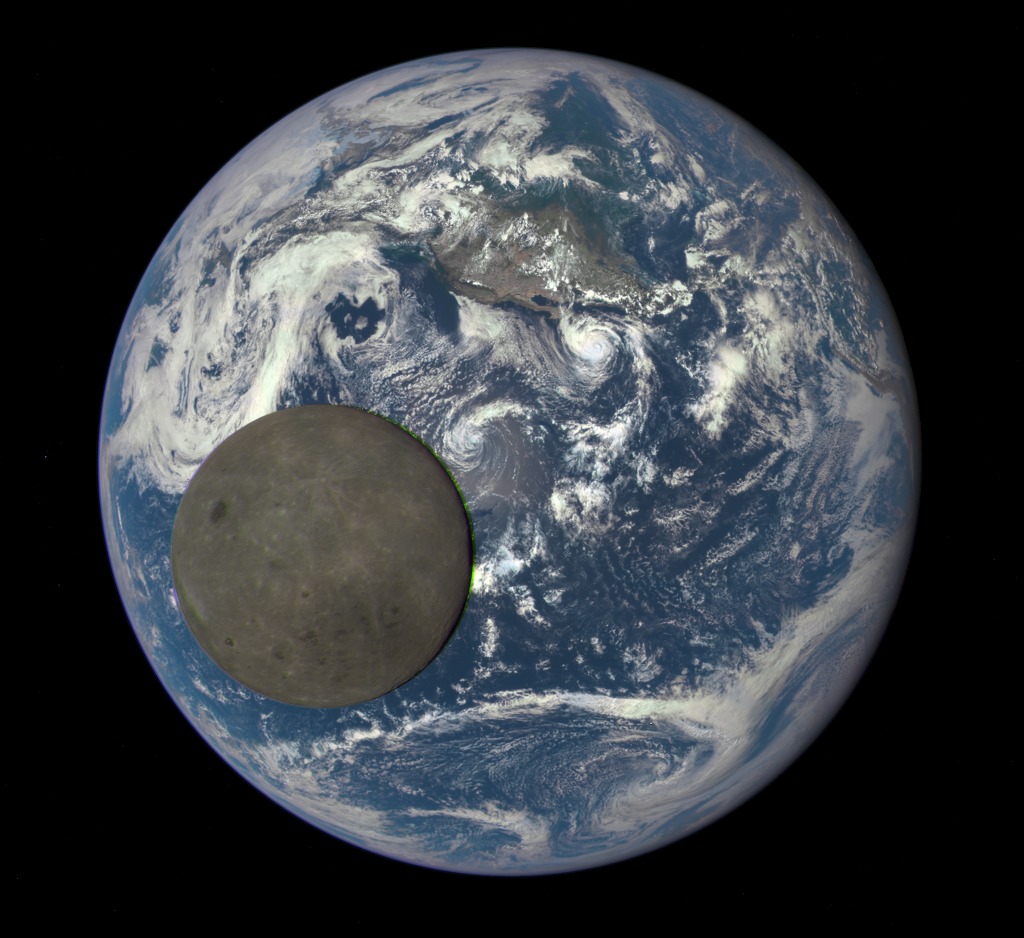
Changing the perspective completely, I was fascinated by last month’s image of the Moon passing in front of Earth, thus also presenting a fabulous view of what we call the dark side of the Moon.  The transit was taken from the Deep Space Climate Observatory orbiting at 930,000 miles from Earth, or nearly four times greater than the Moon.

16th July 2015: The so-called dark side of the Moon, seen from the Deep Space Sky Observatory, as it passes across Earth. From our perspective that day it was a New Moon.

16th July 2015: The so-called dark side of the Moon, seen from the Deep Space Climate Observatory, as it passes across Earth. From our perspective that day it was a New Moon.

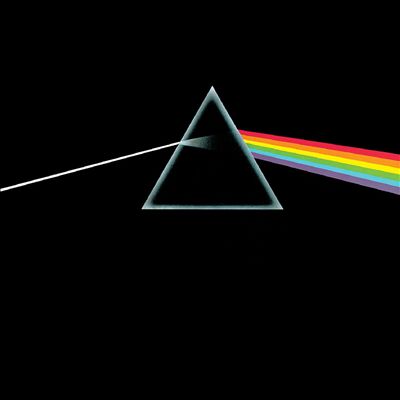
Pink Floyd take note – surely this image needs to replace the iconic cover from their 1973 album – it’s all about changing perspective; apart from being a spectacular photograph the image demonstrates the other side of the Moon is anything but dark!

Pink Floyd's 1973 album cover, now surely obsolete?

Pink Floyd’s 1973 album cover, now surely obsolete?

Moons

I am currently halfway through an Open University course on moons. Truth be told, after a less than satisfactory OU course on Orion (actually more a beginner’s guide to the Universe) recently, I had not intended to enrol for the moons course but at the last moment signed up.  In comparison, the experience this time has been outstanding: the quality, content and organisation of the course has been exceptional and moons have turned out to be much more interesting than I had expected.

ou_moon_art_2108_exploring_what_makes_a_moon

The combination of space travel and much improved earth-based astronomy, has recently led to an explosion in our knowledge of and about moons.  As a result there are now at least 176 known moons in the Solar System, with every possibility that this will continue to grow.  I have been surprised to learn that the largest moons even exceed the size of some planets.  Numerous space missions have provided amazing close-up pictures which show that many of these moons are far more interesting than previously thought, often with the presence of liquid which may even host life and in some cases volcanic activity is evident, including so-called cryo-volcanism – which is a new term to me.

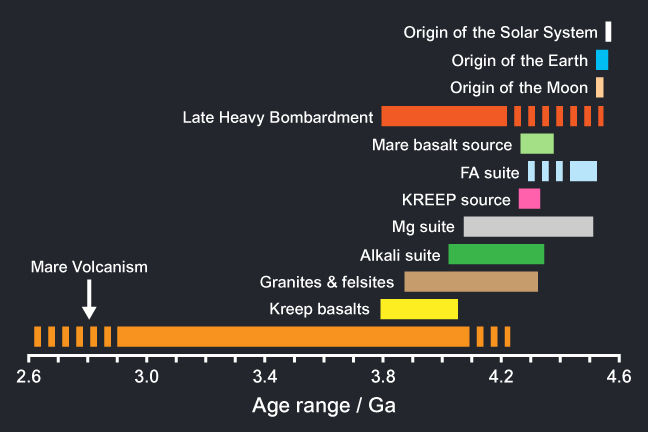
Geological history of the Moon

Geological History of the Moon

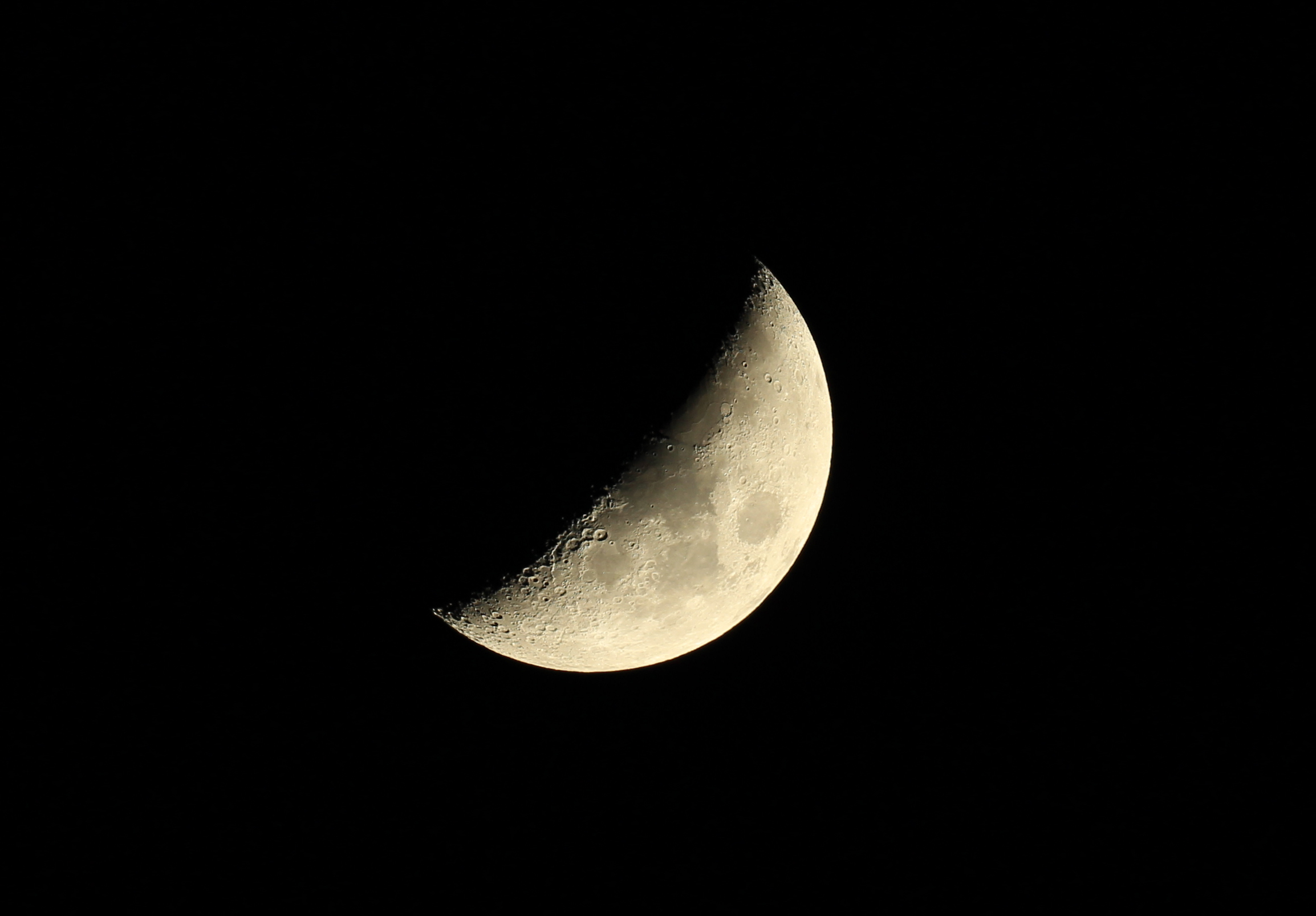
Since starting DSO imaging in August I have somewhat neglected the Solar System but as last week we eventually started to study The Moon itself, it seemed like a good time to image our nearest neighbour once again.  Being just one day before reaching First Quarter, the detail along the Lunar terminator remains very good and I believe has made a beautiful picture.  With the Moon now in its waxing gibbous phase, DSO photography will be ruled out for at least another week, so it’s time to catch up with other matters of astronomy and the like and just enjoy our Moon, clear skies permitting.

IMG_4746crop

The Moon | WO GT81 + Canon 700D & FF | 1/100th sec @ ISO 100 | 24th February 2014

Reflections – 2014

2014 has been my first full year of astronomy and I thought it would be useful (for me) to recap, thereby hopefully providing some encouragement and momentum for 2015. It’s been a good year which I have enjoyed but it only gets a little easier, slowly, and I can see many challenges ahead.

reflect2

JANUARY TO MARCH

IMG_2431 Stitch (Medium)

At the start of the year I was still getting to grips with my original basic equipment, purchased in 2013 as an introduction to astronomy to see if I liked it: EQ3-2 mount, Skywatcher 150PL telescope and two basic Plössl eyepieces and Barlow.  Though good, the shortcomings of the equipment quickly became apparent even for modest viewing tasks, so I soon made some important additions.  In no particular order these were: RA and DEC motor drives, a Telrad finder and two better quality, wide-angle eyepieces.  All of these items made a noticeable improvement to my astronomy and eventually my growing interest in astrophotography.

As a result, at the start of the New Year I decided to purchase a Canon 700D DSLR camera, which has since opened up a whole new world, literally.  I have considerable SLR experience and had been using a compact digital camera for some years but the need to understand and use the technology embodied in a DSLR for astrophotography is, as they say, a whole new ball game.

At this stage, my approach to astronomy was to try and learn the basics first by using basic equipment, thereby understanding the nuts and bolts of astronomy before moving on to more technical processes and software driven equipment. Moreover, I hoped such an approach would provide a good, long-term foundation of knowledge to undertake more ambitious tasks one day; walk before you run.

Although a member of the Flamsteed Society, its location at Greenwich does not lend itself to regular, on-the-ground astronomy from which I might otherwise learn first-hand from other members. Unfortunately more local clubs are also absent, so the learning curve has been steep and mostly personal and hands-on, though I must recognise the extensive and generally excellent help gleaned from the internet and various astronomy blogs, noteworthy of which has been Stargazers Lounge.  I have often been disappointed by some of the retailers who, in my experience don’t relate well to customers and / or provide clear, helpful guidance or adequate aftersales support.  My interpretation is that they consist of persons who have probably started astronomy shops as an extension of what was previously a hobby and often lack the commercial and personal skills required for such a business. Thankfully there are exceptions and it is they who I shall return to with my business in the future, whenever possible.

  Date Object* Feature  / Name
Feb Jupiter Afocal Images
Moon DSLR mosaic
Greta Orion Nebula Afocal Images

*Record of photographic images taken in 2014

APRIL TO JUNE

By now I knew I wanted to pursue astronomy as a hobby and, in order to fast track my learning process and experience the subject at a higher level, I undertook a one week astronomy course at the private Tacande observatory in La Palma. The equipment there was outstanding and so was the night sky and guidance provided by the owner, Joan Genebriera.  Afterwards I was hooked and my aspirations were sky high, literally.
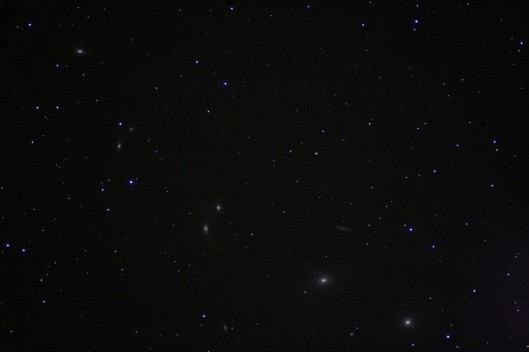
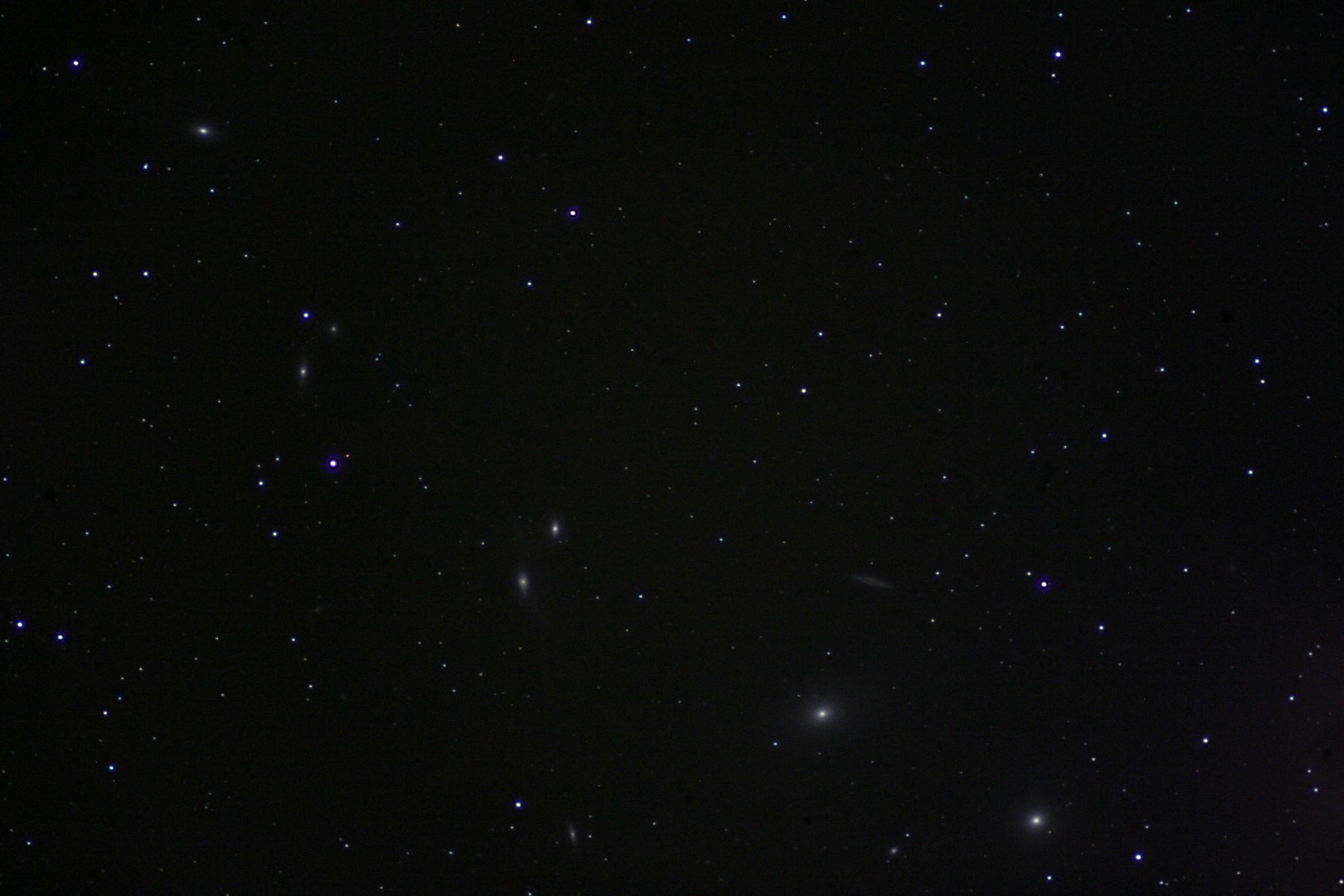
Virgo Group

Virgo Group – Galaxy Supercluster| Canon 350D from Tacande Observatory, La Palma

Returning from La Palma brought me back down to Earth, however, undeterred I felt it was time to try my hand at webcam planetary imaging. On the face of it easy but, as usual, looks can be deceiving. Online advice indicated that it was possible to adapt and rig-up an old webcam for such purposes but my attempts to do so using a spare Logitech webcam only ended in misery.  I therefore decided to bite-the-bullet and purchase a more suitable, off-the shelf one. The Holy Grail for entering webcam imaging is apparently the Philips Toucam but alas it is no longer made and finding one second-hand is very difficult.  I therefore soon realised that it would be necessary to purchase a new webcam and, furthermore, it made sense to get one which was specifically made for astrophotography, the theory being it would work out-the-box.  As a result I purchased the ZWO ASI 034 MC colour webcam but, despite my best efforts was unable to get a picture and decided to visit the retailer in person, determined to find out if it was me or the camera; as it turned out it was neither.

The first problem turned out to be the camera software SharpCap, which despite assurances, would not work with the camera.  Next, for reasons I still don’t understand, the alternative FireCapture software would also not work until a more up-to-date version was downloaded.  Notwithstanding, it also became evident that the camera would not work through a USB 3.0 port – though at the time this was not specified anywhere in the accompanying literature.  Finally, with the camera plugged in to the USB 2.0 port and the up-to-date version of FireCapture, it worked!  Getting to this point took me countless hours at home, a long trip to the retailer (who was very helpful) and then still some 2-hours to get it working.  So much for working out-the box!  This again seems to be a feature of astronomy.

From this and other experiences with equipment, software and manufacturers I have concluded that the world of astronomy is fraught with unnecessary problems often arising from just inadequate advice (see previous comment). It is assumed, by others: manufacturers, retailers or more technically minded astronomers, that the user will possess similar skills to make things work but, as many /most of us are newcomers this is, to say the least, an unhelpful assumption.  I have therefore learned that the internet is your friend.  Through the use of various online sites and blogs, other astronomers have given their very helpful and often not inconsiderable time and advice, for which I am eternally grateful.

Whilst this was all happening at the retailer, I took the time to review the camera I had purchased more closely and at the last moment decided to exchange it for the inevitably more expensive ZWO ASI 120 MC version, which unlike the 034 MC version can be used for autoguiding – I hoped futureproofing the purchase, time will tell.  It is interesting to note that the current version of this camera (a) comes with different software and (b) has been upgraded to work with USB 3.0 – well why wouldn’t it in the first place, as most computers now use this specification?  This suggests to me: did they really think about the camera’s design and operation properly at the beginning?  However, following this breakthrough using the webcam for imaging was still to provide its own problems, which I am still grappling with.
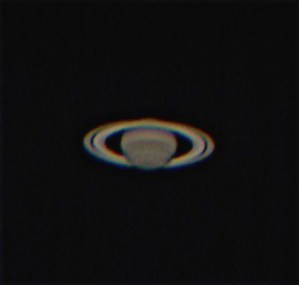
SW 150PL x2 Barlow & ZWO ASI 120 MC

SW 150PL x2 Barlow & ZWO ASI 120 MC

Using the ZWO ASI 120 MC I first started imaging Saturn, with some success. However, using the EQ3-2 mount to find, focus and image was very difficult, especially when I tackled Mars. In this case the size of the planet makes all the aforementioned issues even more difficult but, after lots of attempts I managed to get an image – altogether with plenty of room for improvement but satisfying nonetheless. I subsequently discarded the webcam in favour of the DSLR, with which I am more comfortable and due to the lack of suitable, mostly planetary objects through the summer period.  With the return of Jupiter in recent weeks and the prospect of using the ZWO webcam for autoguiding, I have returned to using it again but given the time that has since elapsed, I need to relearn its use all over again!

At this point I had concluded that I wanted to pursue astronomy and astrophotography.  I was also drawn inexorably towards astroimaging DSO objects; they provide numerous, albeit more difficult targets at all times of the year and I have found their combination of otherworldly beauty and science fascinating – I am now on a slippery slope that I feel will last for years!  The implications of this conclusion and based on what I had learned over the preceding year about my basic equipment had only one consequence, I needed better equipment.  There are astronomers who will say this hobby can be done cheaply, frankly I don’t believe it.  Even buying second hand and generally making-do, the need for another piece of equipment never seems to stop – ask my wife.

Resigned to this course of action and the inevitable extensive analysis of what equipment was best suited, I reached a conclusion of what equipment I needed surprisingly quickly, though still prevaricating over innumerable makes and models available.  In the end I purchased an AZ-EQ6 GT mount and William Optics GT81 FPL3 triplet achromatic refractor.  I could have shaved £400 to £500 off the cost by purchasing other very good but cheaper makes and models but the WO is a beautifully tactile piece of obviously very well made equipment, which is a pleasure to own and use.  I had originally intended to purchase an HEQ5 mount but on taking the long view (no pun intended) and considering the superior and critical payload capacity decided to move up to the EQ6, which then became the AZ-EQ6 GT for its superior belt driven mechanism and even better payload.

Date Object* Feature / Name
April M104 Sombrero Galaxy
M1 Crab Nebula
M3 Globular Cluster
M84 Lenticular Galaxy
M95 & M96 Group Spiral Galaxy
Virgo Group Supercluster of Galaxies
NGC 4435/38 The Eyes (Nonet) Galaxies
May The Moon
Mars
Saturn

JULY TO DECEMBER

The absence of good astronomical darkness approaching the Summer Solstice at the end of June and onwards until later in August, makes imaging difficult at this time of the year.  Furthermore, the summer skies are generally less interesting and altogether provide limited opportunities.  As a result the one object remaining, that hopefully dominates the sky at this time of the year, is the Sun.  It was therefore time to start solar astronomy.

Given the obvious dangers I approached the task carefully, getting a made-to-measure Baader Astro Solar filter for use with the Skywatcher 150PL.  Rightly or wrongly, at this initial stage I decided to use the 150PL as I figured the larger, open design of the Newtonian reflector would help cooling.  The result was fascinating, with sun spots and general surface granulation clearly visible. However, the set-up has two drawbacks: (i) the resulting FOV is small and requires six or more images to cover the whole of the Sun, and (ii) such a filter only produces a view of white light, not allowing the more spectacular features evident at a other wavelengths, such as prominences, to be viewed.  For this a considerably more expensive solar telescope or highly specialized filters are required – such is the fascination of our local star I can see the time I will want to pursue this branch of astronomy further.
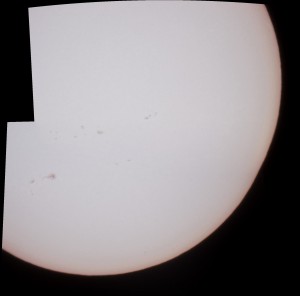
Sun Mosaic SW 150PL + Baader Astro Solar Filter + Barlow x2 | Canon 700D DSLR

Sun Mosaic
SW 150PL + Baader Astro Solar Filter + Barlow x2 | Canon 700D DSLR

Having since used the new equipment for nearly six months now I have no regrets – you get what you pay for.  However, as usual there have been problems to overcome.  The mount is very solid and was a real pleasure to use but from the outset I have faced one big problem – polar alignment.  With no view of Polaris or any of the northern sky, as my house is in the way, combined with restricted views to the south, east and west due to adjacent housing and trees, the only options were drift alignment or the polar alignment routine that I latterly discovered in the SynScan handset. For the moment the SynScan method has become my preferred technique but it can still be problematical, as it is quite fiddly and often the stars chosen by SynScan are not always visible e.g. it is not uncommon that at times all the alignment stars provided by Synscan are located in the northern sky and cannot be seen because of the aforementioned problems.  However, I am getting better and with diligence and patience can now get to within 30” or less of true polar alignment, which has allowed exposures of up to 180 seconds.  I have tried drift alignment a few times but have difficulty finding suitable stars on the horizon, as I basically don’t have an horizon! Going forwards I am considering the use of Alignmaster software, which looks very useful for this purpose, though the lack of a northerly view might still be a problem.  In addition, I hope the ultimate goal of autoguiding should further enhance tracking accuracy even without perfect polar alignment – we shall see.

The second problem initially encountered was achieving an image when using the William Optics field flattener / focal reducer.  Try as I may, I could not get an image with the William Optics GT81 + field flattener + camera combination and after a few evenings trying became desperate.  How could it be so difficult?  All this money for top-end equipment and not even a lousy image, let alone a good picture. With the help and encouragement from members of Stargazers Lounge, I had another go.  This time I was more diligent with the set-up and at first using a very bright, easy to see star, was at last able to achieve a camera image and good focus using a Bahtinov mask.  In a nutshell, the problem was that the point of focus is very, very critical, just a fraction of a millimetre out and the image disappears.  Now I know this it’s quite easy but nobody points this out, least of all the manufacturer or retailer, who provided little to no instructions – I am learning this is also something common in the world of astronomy, which I find quite unacceptable.

So, after some weeks of trials and tribulations, the new equipment is mostly working very well and I have been able to successfully image a wide variety of objects.  There’s plenty of room for improvement but I have obtained some enjoyable and often quite exciting photographs.  Now for the next challenge, which has just started: computer control and autoguiding.
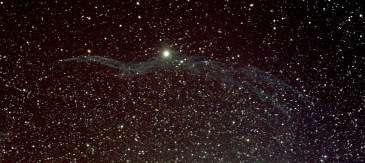
NGC 6960 AKA The Witch's Broom Canon 700D | 20x90 sec + darks.bias/ flats @ ISO 800

NGC 6960 AKA The Witch’s Broom
Canon 700D | 20×90 sec + darks.bias/ flats @ ISO 800

With DSLR or CCD / webcam imaging, processing is at least equally important as the original image capture.  In the later part of the year I have therefore also started to tackle this dark art.  Whilst compilation software such as Deep Sky Stacker and Registax requires some understanding to set-up, it is with post-processing that the final image can be made or lost.  As a result I am using the extra time indoors to try and master the various techniques, with mixed success.

I should also note that during this period my elder daughter, Alison, persuaded and then helped me set-up this website.  It has proved a useful discipline for organising my thoughts and images.  I am very grateful for her help and have surprisingly enjoyed recording my astronomy endeavours. Although intended as a personal record, I note from the underlying website provider that it has been read far-and-wide across the world – 36 countries this year – which is also gratifying.  I would love to hear from anybody via the WTSM site: questions, what are you doing, comments & feedback etc?

Date Object* Feature / Name
July M57 Ring Nebula
M13 Globular Cluster
M15 Globular Cluster
Aug M27 Dumbbell Nebula
M31 Andromeda Galaxy
M11 Wild Duck Cluster
ISS International Space Station
NGC 6888 Crescent Nebula
The Sun
Sept NGC 7000 North America Nebula
NGC 6960 Western Veil Nebula & Witch’s Broom
NGC 7380 Wizzard Nebula
M31 Andromenda Galaxy
IC 1396 Elephant’s Trunk Nebula
M2 Globular Cluster
Oct M45 Pleiades Open Star Cluster
Uranus
M33 The Pinwheel Galaxy
NGC 6992 Eastern Veil Nebula
NGC 6995 Bat Nebula
M42 & M43 Great Orion Nebula
NGC 7320 Stephen’s Quintet (Galaxies)
NGC 7331 Deer Lick Group (Galaxies)
NGC 7814 Spiral Galaxy
Nov NGC 1909 Witch Head Nebula
IC 434 Horsehead Nebula
NGC 2024 Flame Nebula
NGC 1973/75/77 Running Man Nebula
Dec M1 Crab Nebula
ISS International Space Station
NGC 2264 Christmas Tree Cluster & Cone Nebula etc.
NGC 2261 Hubble’s Variable Nebula
NGC 19818 Open Star Cluster
NGC 2244 Rosette Nebula
M35 Open Star Cluster
M78 Reflection Nebula

??????????????

Goals for 2015 are:

  • Transfer the mount to EQMOD computer control – I have already linked the equipment indoors, together with Cartes du Ciel, but have yet to use it outside live.
  • Upgrade camera control software – again I am already trialling Astrophotography Tool (APT) indoors, which looks good and provides lots of flexibility, though in some ways I still like the EOS Utility software, which uses more simple and therefore reliable control choices.
  • For astrophotography this is the Holy Grail and, if successful, should enable significantly longer exposures and thus better detail and sharper images to be achieved.  At the time of upgrading my equipment in the summer I also purchased a William Optics 50 mm guidescope – all I need to do is get it working! This will require two further pieces of software: (i) Push Here Dummy or PHD, which is responsible for controlling the interaction between the guidecope and the mount, and (ii) Astro Tortilla, which undertakes a process called ‘plate solving’, whereby using actual pictures taken at the time of set-up, it then recognises the section of the sky it (the telescope) is looking at, identifies the object in the field of view and using this information ensures that the telescope (and thus camera) are pointing exactly towards the chosen object by iteratively interacting with the other guiding software.  As a fan of the KISS principle, I must admit to being somewhat intimidated by all this but am assured by others that it is not so bad to use  (famous last words) and once up and running, will have a major impact.  We shall see!

Even at this stage, I can already see the need for additional equipment.  With numerous Ha-emitting nebulae a modified DSLR camera is beginning to seem essential and probably a more powerful computer for image processing.  I am sure this list will grow as the year progresses.

All-in-all, I am pleased with my progress during the past year, with a noticeable improvement since acquiring the new equipment.  There have been more highs than lows and, I suppose, that’s a result in itself.  It is very exciting when you first see Saturn, Jupiter or Mars and then image them but I have discovered that my metier and main enjoyment comes from DSOs, in particular nebulae.  I find their very nature beguiling; beautiful to view, challenging but very rewarding to image and scientifically fascinating.  I am therefore sure that in 2015 they will remain my main targets but, notwithstanding, there are many other objects worthy of attention, including in the UK a partial eclipse of the Sun in March.

Watch this space! 
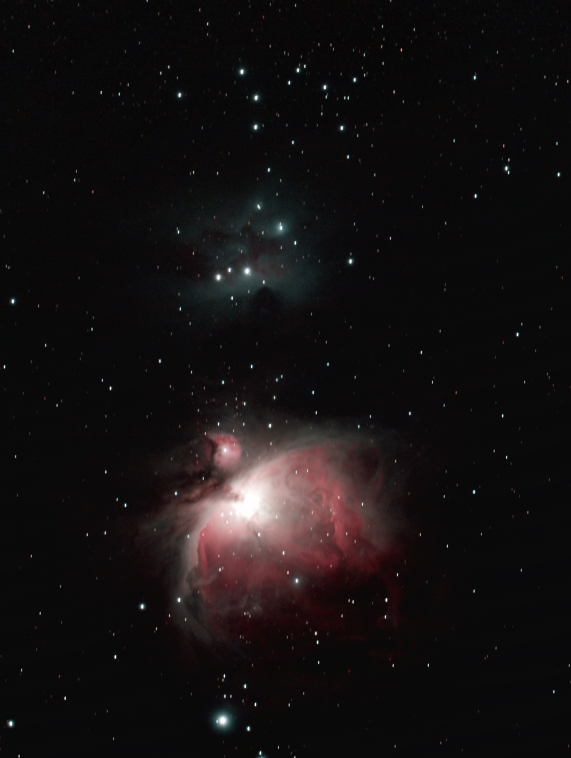
Orions Sword. Top to bottom: NGC 1981 Open Star Cluster, NGC 1973/75/77 Nebulae, M42 & M43 Great Orion Nebula & the binary star Hatsya. WO GT81, Canon 700D + FF | 30 x 120 secs + darks/bias/flats @ ISO 800

My picture of the year: Orions Sword. Top to bottom: NGC 1981 Open Star Cluster, NGC 1973/75/77 Nebulae, M42 & M43 Great Orion Nebula & the binary star Hatsya.
WO GT81, Canon 700D + FF | 30 x 120 secs + darks/bias/flats @ ISO 800
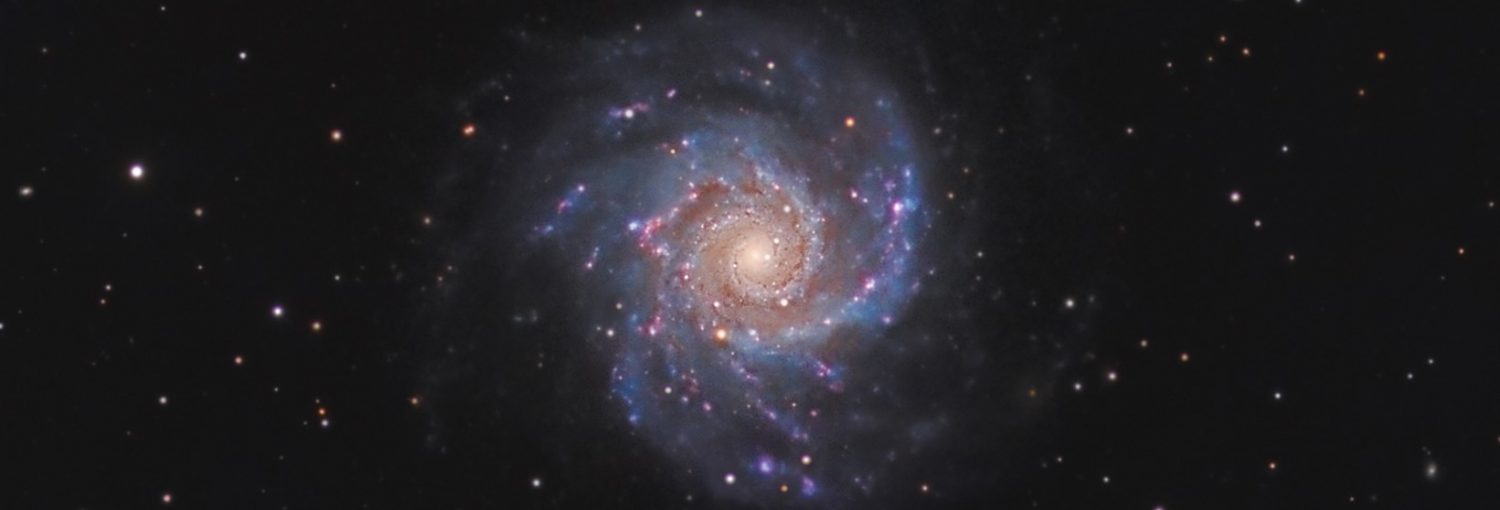
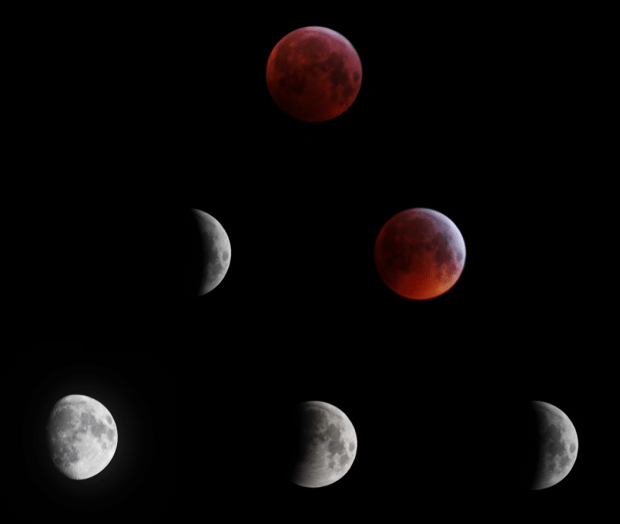
 

The Moon: Up close and personal

Last night was the so called “Supermoon” of 2014 as, in its eliptical orbit, the Moon passed at its closest point to Earth for this year. Its relative closeness to Earth, plus atmospheric lensing, caused by the Moon’s location in the southern part of the Zodiac, means that for observers in the higher latitudes of the Northern Hemisphere the Moon appears particularly large at Full Moon on 10th August. As a result it is possible to get good photographs without the use of a telescope so, in my case, I shot this using a 200mm telephoto setting:

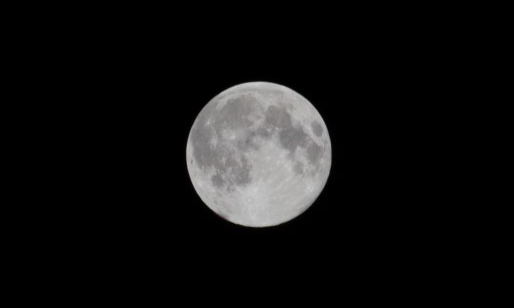
Supermoon from Fairvale Observatory 10th August 2014 Canon 700D | 200mm telephoto | 1/160th f11 ISO200
Supermoon from Fairvale Observatory 10th August 2014
Canon 700D | 200mm telephoto | 1/160th f11 ISO200
Of course, since getting my telescope last year the Moon has been a frequent subject for viewing and imaging, with some very close-up results in some cases almost seeming to take you there. Viewing the Moon is best during the early stages of a new “waxing” Moon, particularly along the edge where the dark section meets the light section – the so called “terminator”. Views of this can be stunning, with the WO GT81 and a x2 Barlow an 10mm eyepiece it almost seems like you are about to land on the surface!  Very soon after first looking at the Moon I got a Moon filter, which I have found essential as the Full Moon approaches and the light is almost otherwise blinding; the filter reduces the glare and makes observing more comfortable.

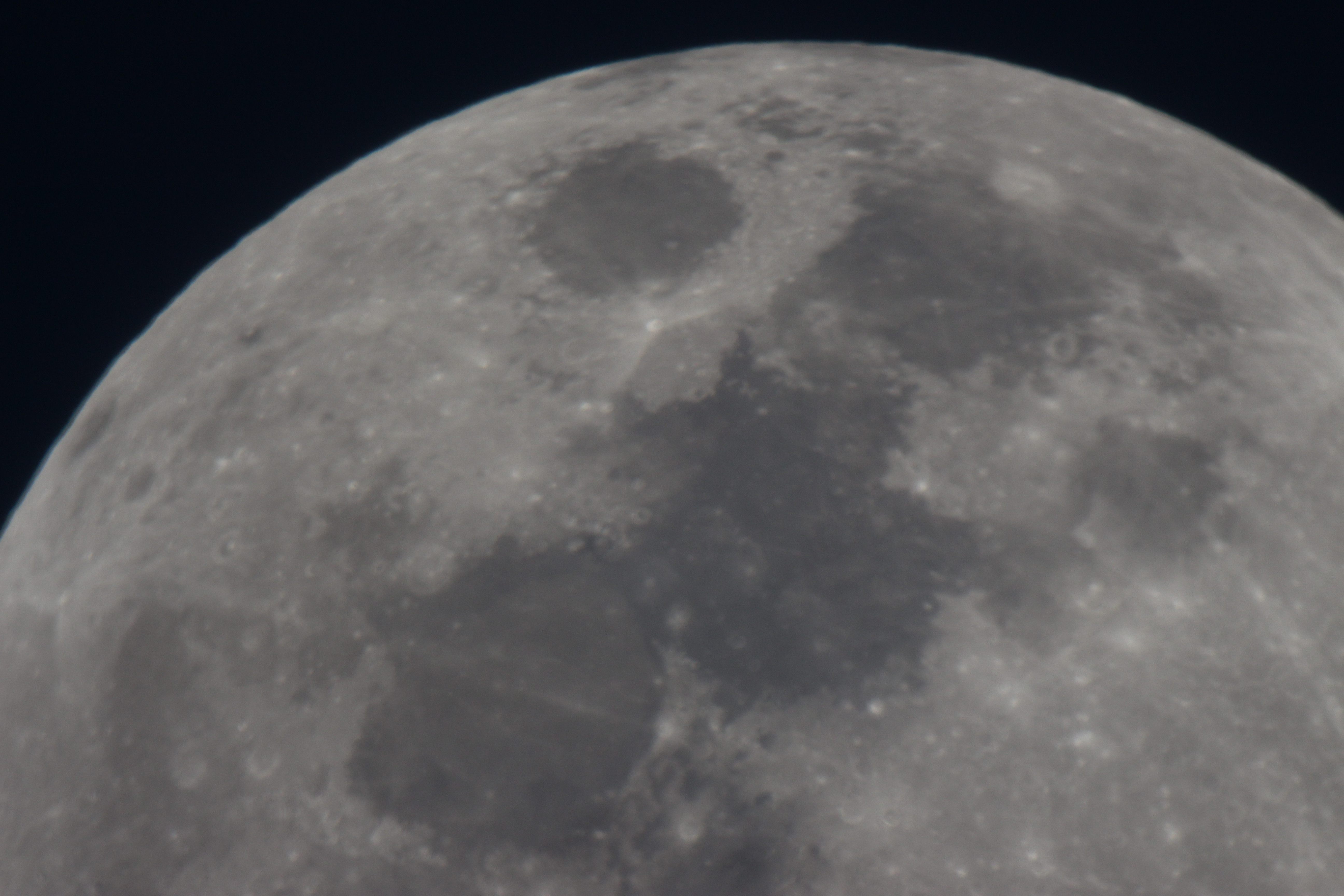
Whilst a good view of the entire Moon can be obtained, such is the optics of the 150PL (and I think the WO GT81) that to get focus the DSLR camera has to be used in conjunction with a Barlow lens. Unfortunately this results in such magnification that the Moon can only be imaged in parts, rather than as a whole but the image is nonetheless exciting:

The Moon 11th February 2014 Canon 700D | SW 150PL 2xBarlow | 1/100th ISO 400

The Moon 11th February 2014
Canon 700D | SW 150PL 2xBarlow | 1/100th ISO 400

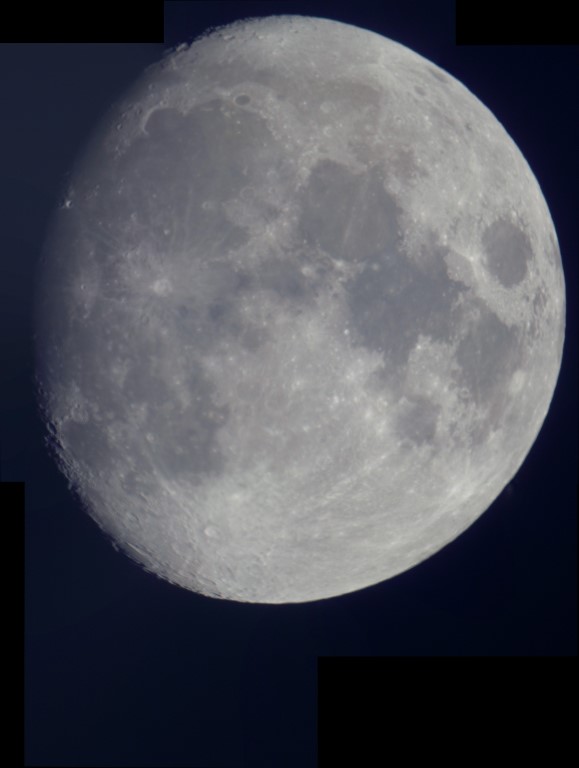
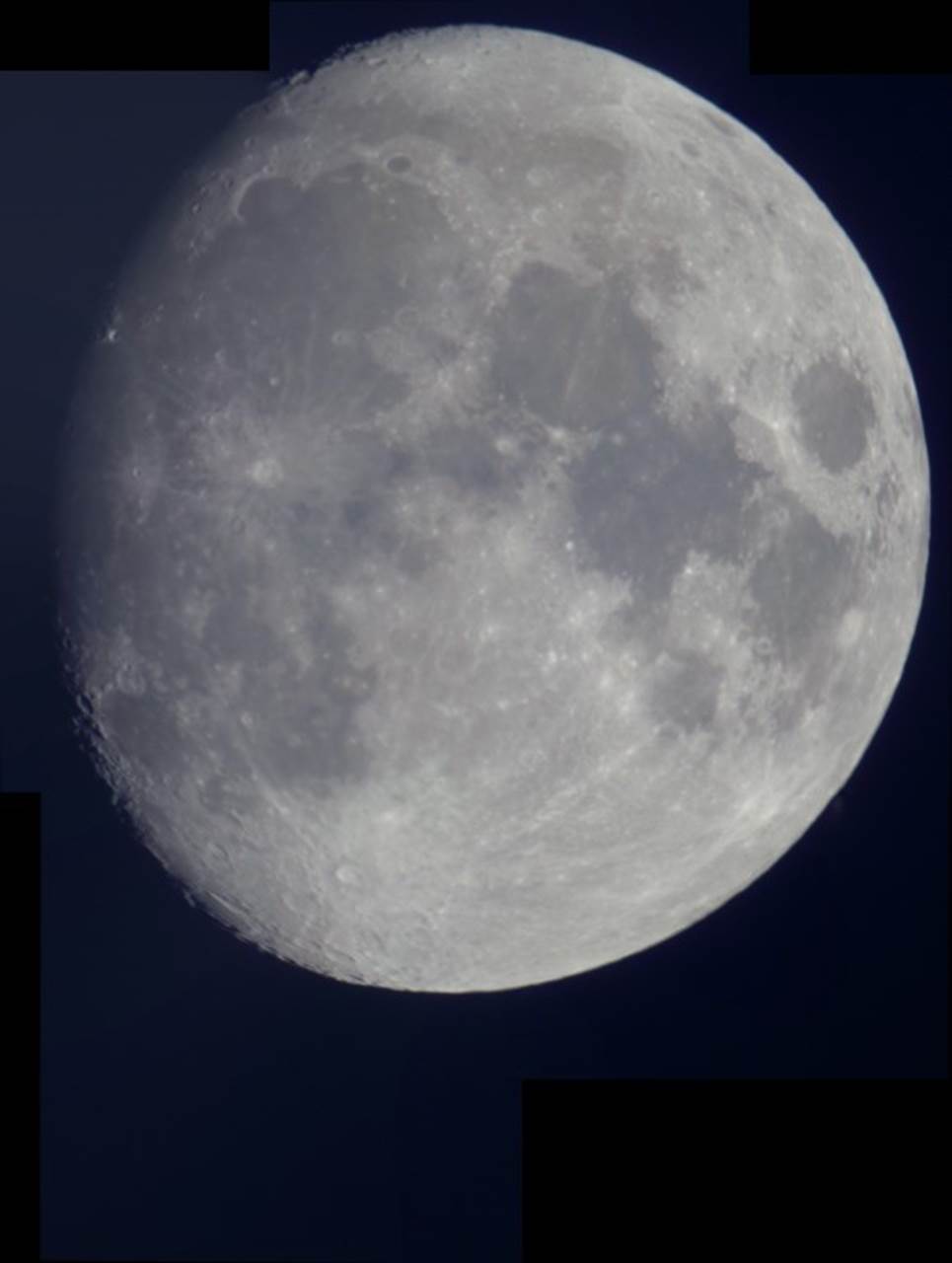
Notwithstanding, using a suitable computer programme these individual images can be stitched together to produce a photo mosaic, such as this one made from x6 separate sections of the Moon.  The result is impressive:

Photo mosaic 11th February 2014

Photo mosaic 11th February 2014

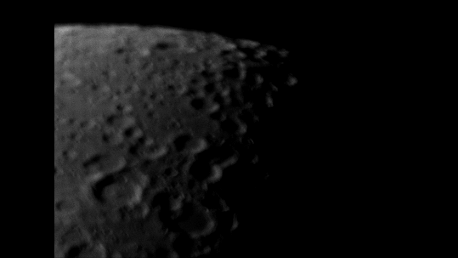
Finally and probably most amazing is using a webcam / CCD to video the Moon.  Once again this needs to be undertaken using a Barlow and the resulting magnification is even higher but with spectacular results as can be seen with this video taken with the ZWO 120 MC in May this year(the shimmering effect is the Earth’s atmosphere): https://www.youtube.com/watch?v=13Nb_lBBaxk&feature=youtu.be

Snapshot of Moon video (see above link) ZWO 120 MC

Snapshot of Moon video (see above link)
ZWO 120 MC