Surf’s Up! The California Nebula – NGC 1499

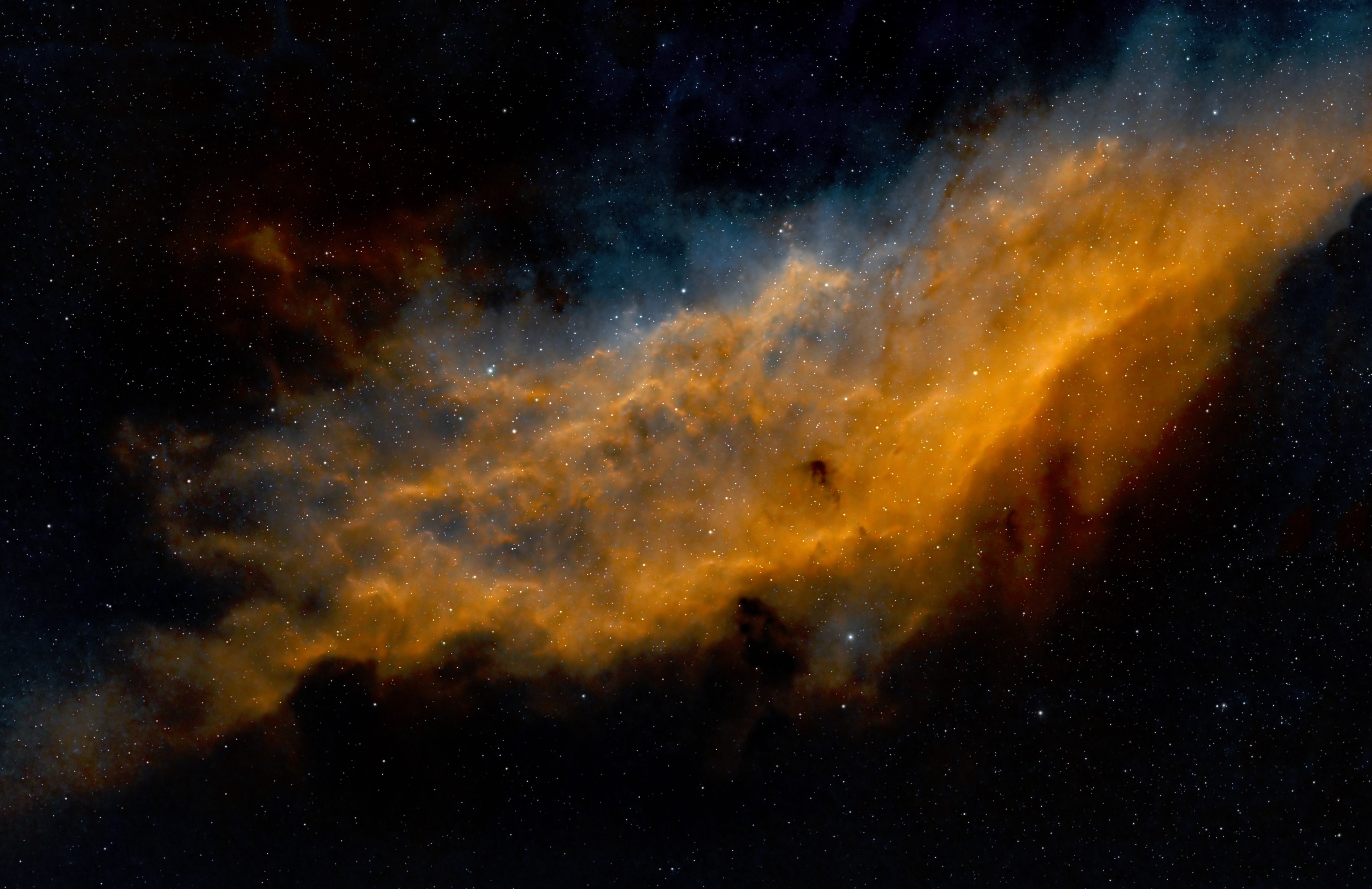
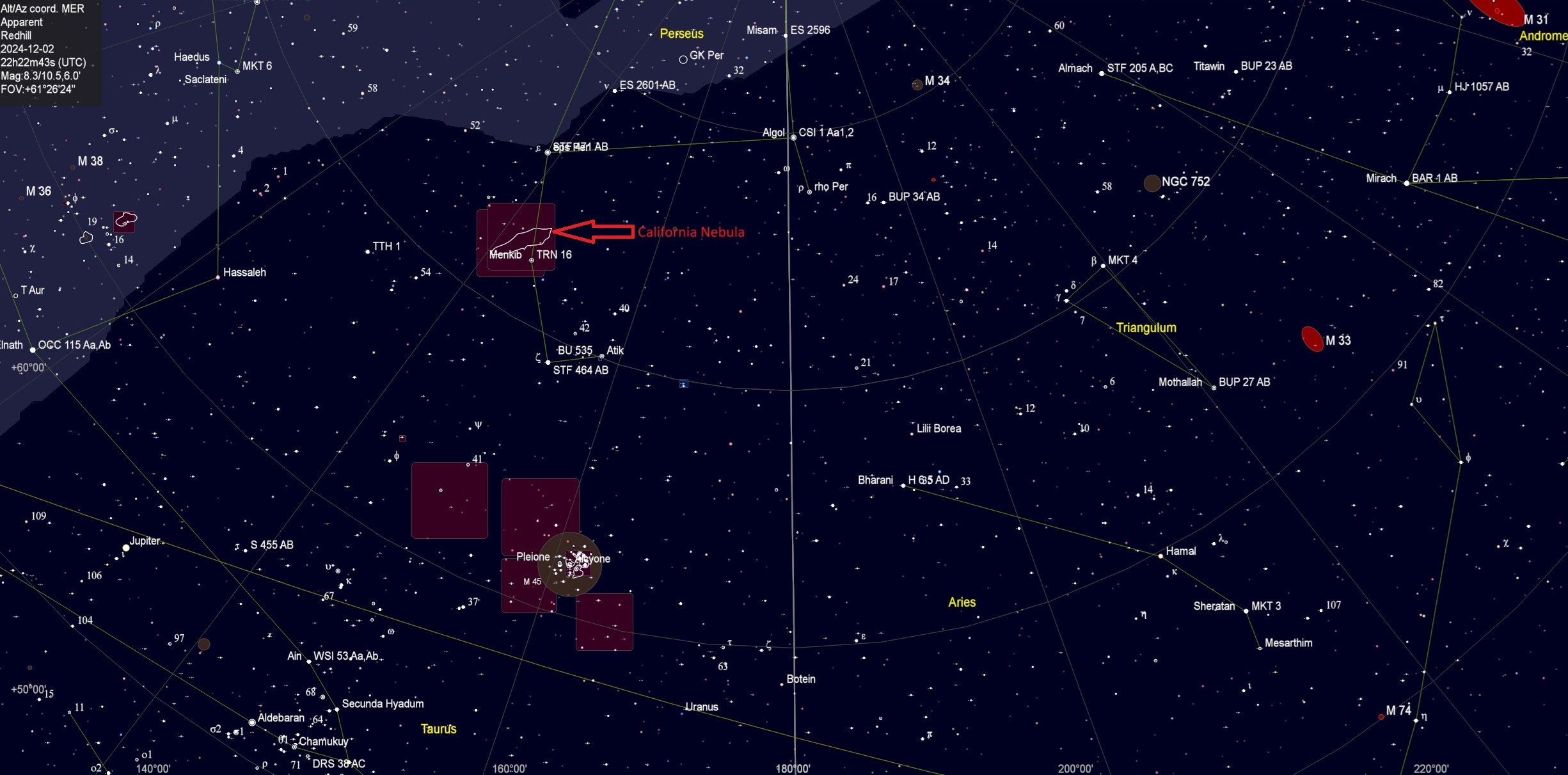
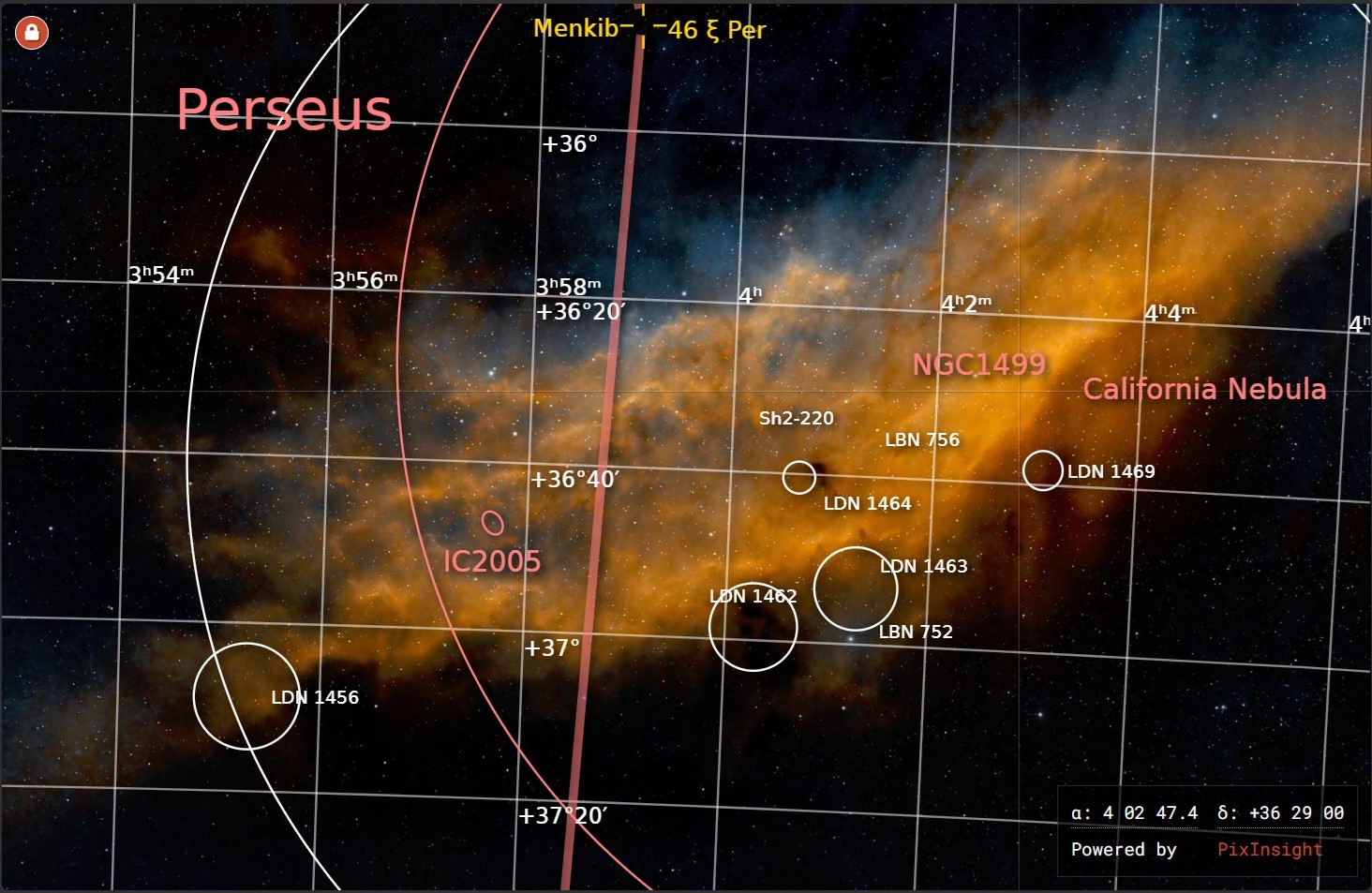
Curving across the Autumn night sky somewhat alone in the Perseus constellation, is the large (100 light-years ~ 2.50o) California Nebula.  Being something of a prelude to the arrival of Orion and all its exciting objects, I have somewhat neglected this astronomical behemoth, only imaging it for short periods from time to time in the past.  Despite continuing poor conditions and with some difficulty, on this occasion I manged nearly 8-hours integration, which with careful processing has brought out the true majesty of this exciting feature.

The final image has been flipped 180 degrees, which for some reason seems to enhance the depth?

An emission nebula located some 1,000 light years from Earth, the billowing clouds of hydrogen and sulphur gases and dust, and the faint, wispy veil of oxygen are clearly evident in this powerful SHO image.  The intense ultraviolet radiation from the nearby massive star Menkib – with a surface temperature of about 37,000 K and radiation 330,000 times greater than our Sun – plays a key role in ionizing the gasses of the nebula, which ultimately brings this majestic monster to life.  

Heavenly Art

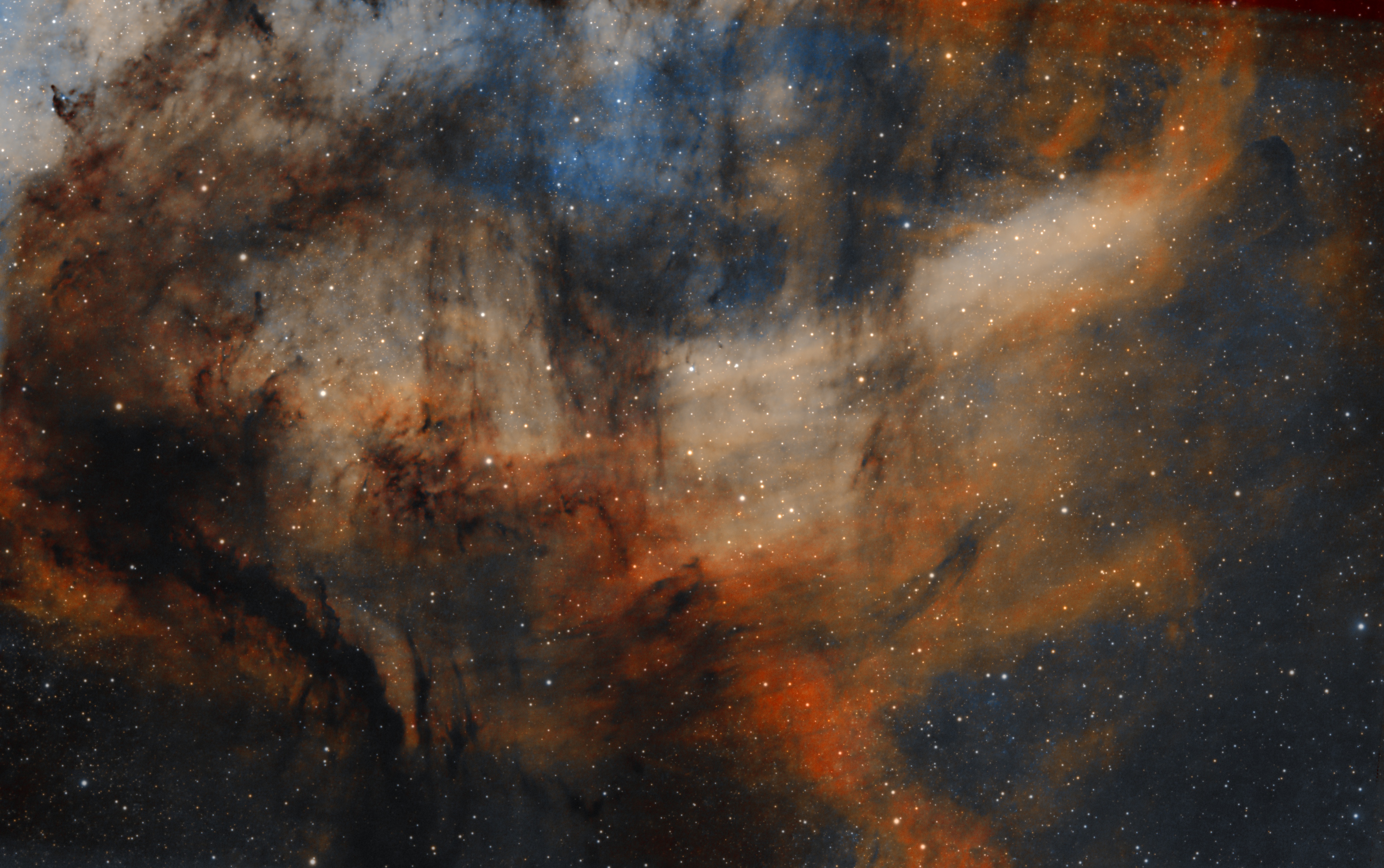
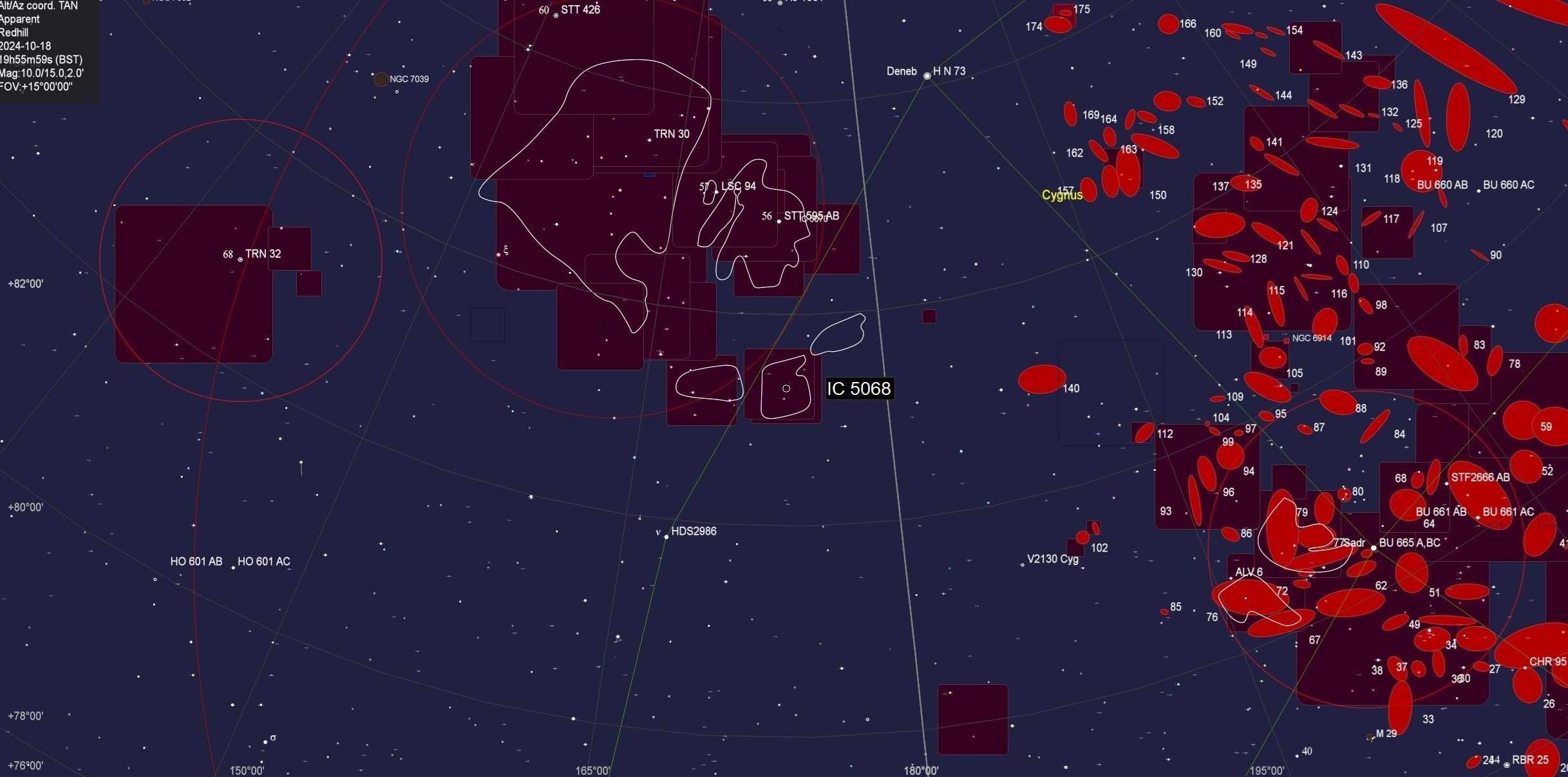
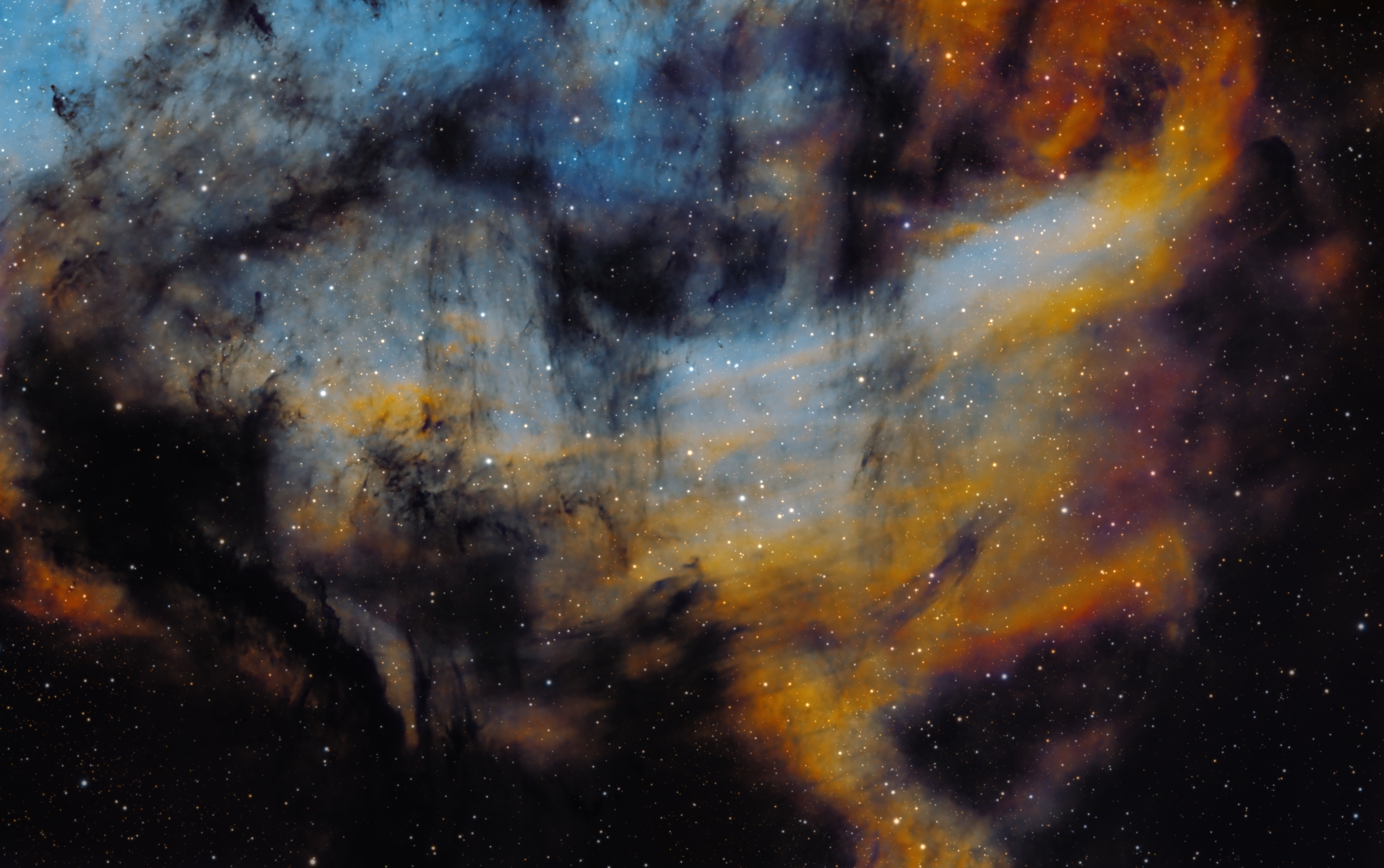
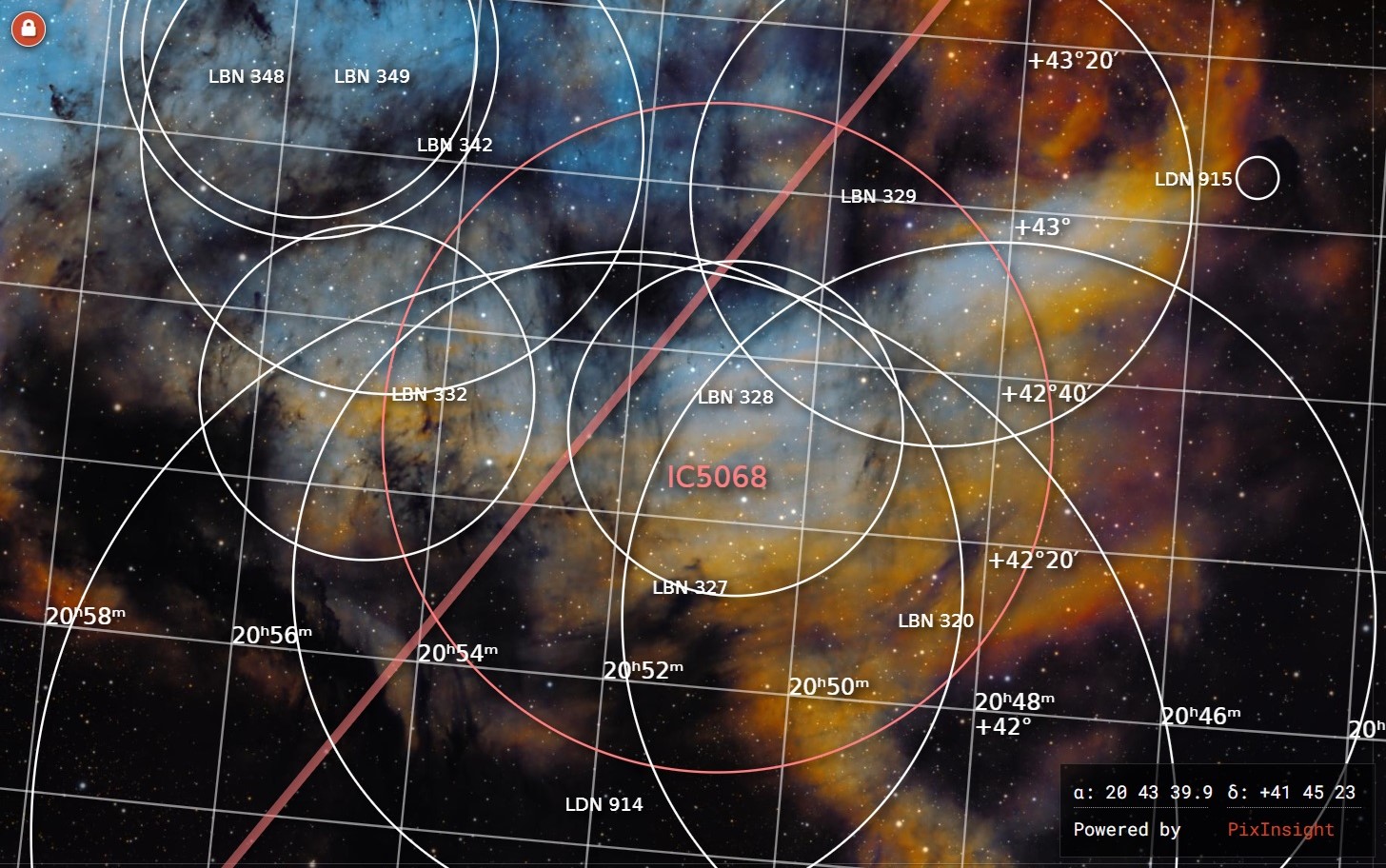
It’s at this time of the year I turn my attention to Cygnus and the plethora of imaging opportunities it provides, which inevitably tend to be narrowband targets. This year it is IC 5068, a low emission nebula often overlooked because of its location near the more popular North American and Pelican nebulae, as well as many other fabulous targets within the adjacent Cygnus molecular cloud, and as a result is unfortunately known as the Forsaken Nebula

Located just below the Pelican Nebula and close to the blue supergiant Deneb star (see above), this complex area is known for the graphically shaped streaks of cold, dark dust clouds that criss-cross the dense, brightly coloured gas regions of nebulosity.

As a narrowband target my initial choice of image processing was the traditional Hubble Palette SHO configuration, which as envisaged, resulted in an exciting and colourful rendition of the busy IC 5068 (see image below).  Notwithstanding, having recently discovered some other, fairly new Pixinsight processing techniques (NB Color Mapper & NB Image Blend), I decided to give them a try to produce an alternative blended HOO–S image.  Though still very much recognisable as IC 5068, the resulting (warm) colours and details reveal a very different and perhaps more dynamic image (see image at the top of the page).

Narrowband images leave much to the imagination when processing and often take on a stirring look when completed.  In the case of IC 5068, each of the images produced seem to have the feel of abstract art, whilst at the same time posing many questions regarding the origin of many unusual features.  I believe this exciting region deserves much greater attention and should belong in the pantheon of popular Cygnus objects such as the North American, Pelican & Veil nebulae.  Moreover, the so-called Foresaken Nebula warrants a name more befitting of its exciting beauty.


Changing Times: AM5 mount & more

My astrophotography journey started just over 10-years ago and looking back, it’s clear that my timing was fortuitous, as over this period we have seen several developments that have completely transformed the hobby for amateurs. 

  • Wide availability of high-quality telescopes for relatively modest prices
  • Development of CMOS sensor cameras
  • Major advances of image capture and processing software
  • Introduction of AI to image processing

And the changes just keep coming.

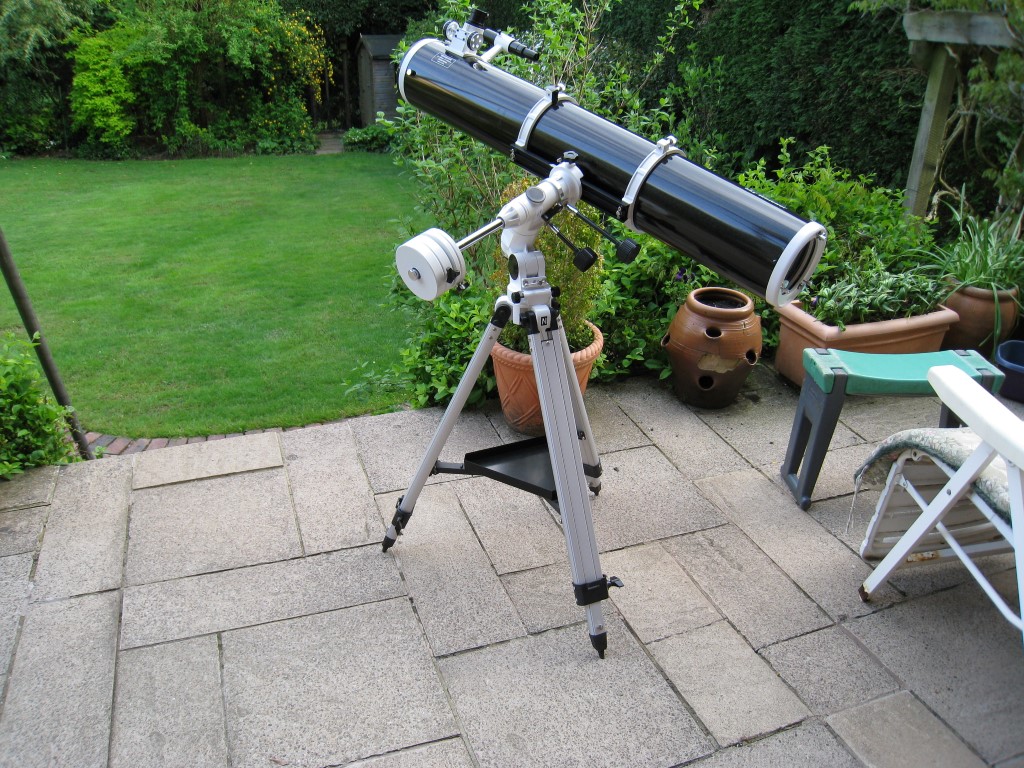
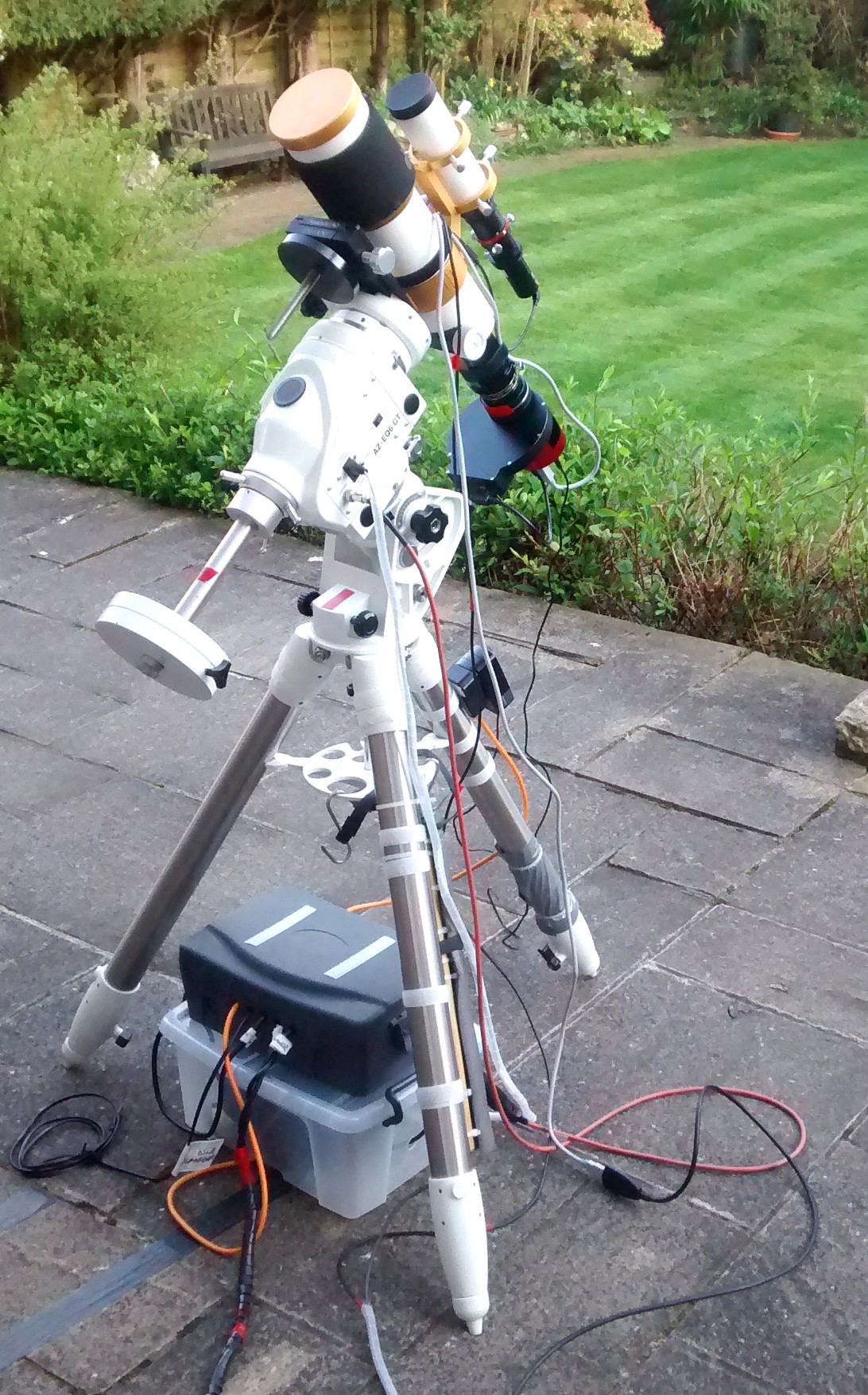
When not imaging or processing, I’m sure that many astrophotographers spend too much time looking online at new equipment, particularly telescopes and cameras!  However, when my journey started in about 2014, it didn’t take long to discover that perhaps the mount is the most important piece of equipment.  I started observing with a Skywatcher 150PL on a EQ3-2 mount ( see above ) but soon thereafter discovered astrophotography, which required the addition of a small motor for tracking.  It was fun but completely inadequate for good imaging, so then moved onto a William Optics GT81 triplet refractor on a Skywatcher AZ-EQ6 GT mount ( see below ), which completely changed everything and, more importantly, gradually resulted in better images.

My trusty, but oh so heavy AZ-EQ6 GT mount

I continue to use the AZ-EQ6 GT, which technically remains an excellent mount, but it is very heavy and frankly has become more and more tedious to set-up and take down each time, whilst moreover, my back is finding it too much hard work.  It is said that necessity is the mother of invention and so a completely new type of mount slowly emerged on the market last year, that is now becoming nothing less than a revolution. It seems too good to be true, but its features are:

  • Small & light weight
  • High load capacity that doesn’t require counterweights
  • No need to be balanced
  • High torque
  • Low if any backlash

Apart from the weight issue, commonly used GEM mounts are based on worm gears, which inevitably suffer from backlash, that can be a major problem for astrophotography.  Although this can be minimised with good set-up and various software, it will always remain a problem.  The new harmonic drive or strain wave mounts are based on completely different technology, that surprisingly has been used for many years in avionics and robotics, making it tried and tested technology.    A strain wave mount uses a flexible spline and a rotating elliptical plug to transmit motion and achieve high precision and torque, which allows for large payloads in a compact and portable package ( see images immediately below ) . Click HERE for more technical information. Initially there were only a few manufacturers of Harmonic / Strain Wave mounts but now the word’s out and all manufacturers are rushing to join the game.

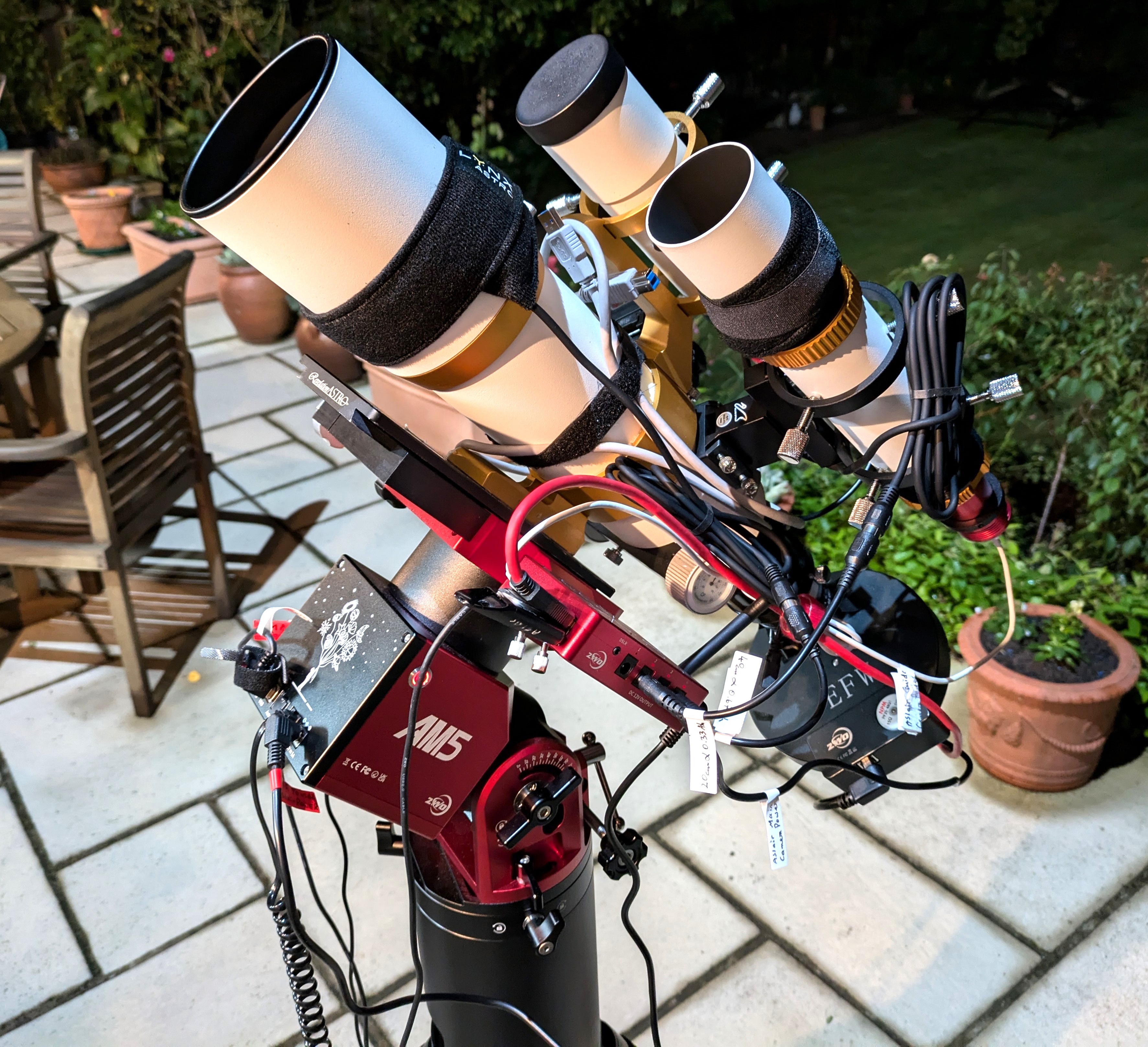
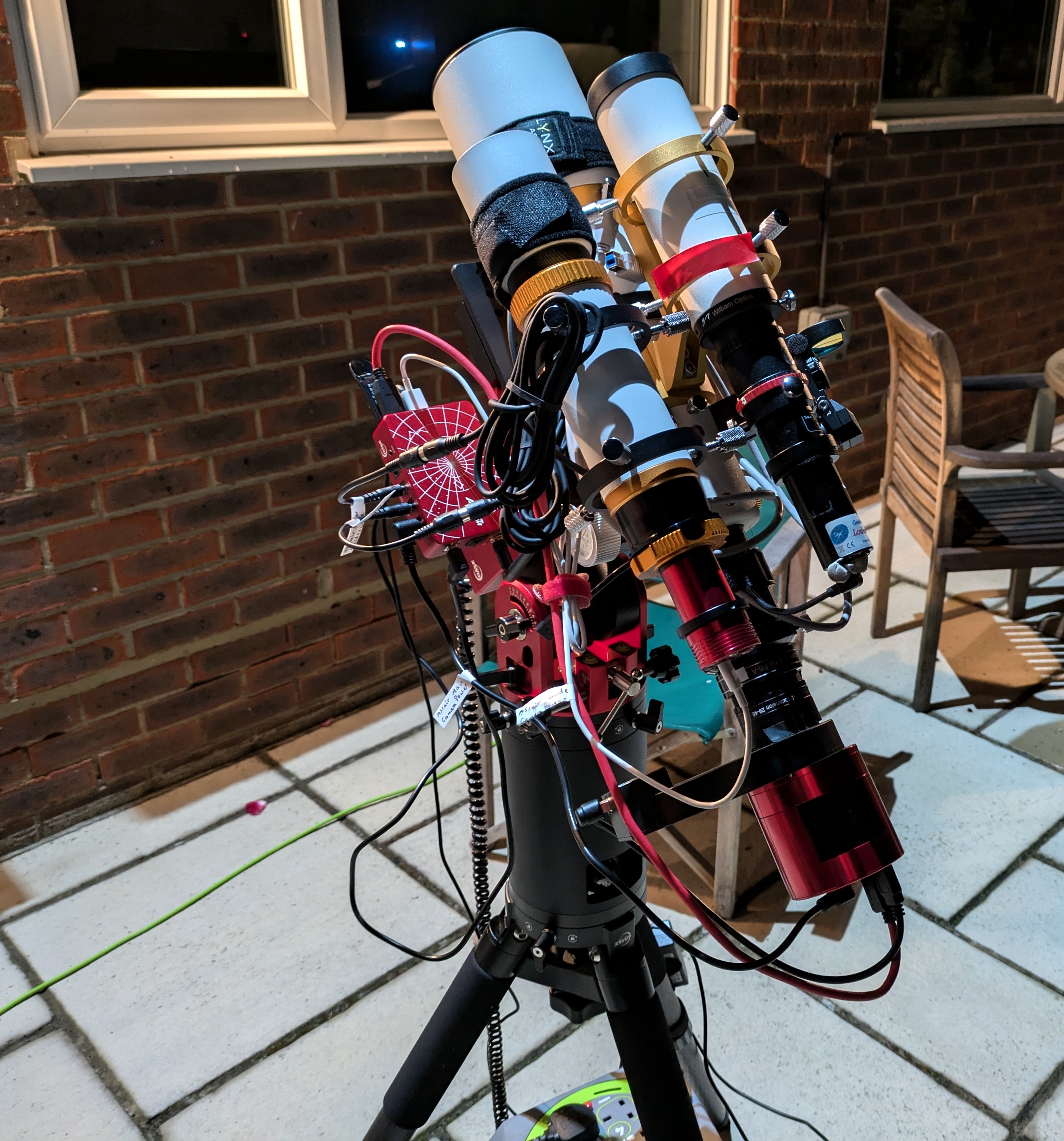
Over the past decade the Chinese technology company ZWO Optical have emerged as a dominant force and leading innovator in astrophotography; I’ve been using various excellent ZWO CMOS cameras since 2015.  It was therefore no surprise that ZWO were amongst the first to launch a Harmonic Drive mount, initially the AM3 then the AM5 which is what I purchased earlier this year; the main difference between the two is capacity, the AM5 being greater.  For various reasons, personal and being busy imaging with the AZ-EQ6 GT, I only got round to using the AM5 in August ( see below) and have not been disappointed.

One of ZWO’s quirks is that, where possible, their equipment is often only compatible with other ZWO products.  It can be a bit of a problem but given the quality of their equipment I’m not usually put off.  Notwithstanding, the AM5 will fit some other tripods but in this case, I chose to purchase the excellent and super lightweight ZWO TC40 carbon fibre tripod, together with the ZWO PE200 pier extension, which reduces the likelihood of the OTA / camera colliding with the tripod.  Like my previous experience of ZWO equipment, everything is well designed and exceptionally well made.  Moreover, it is substantially lighter than my AZ-EQ6 mount!

Although not essential, to reduce the set-up / take-down time as well as provide convenient integrated control and capture software, I also chose to get ZWO’s well tested and popular ASIair Plus, which can easily be attached either to the mount or scope. Basically, it is a very small astrophotography computer / controller, which can also help manage various power requirements such as cameras and dew straps.  Finally, and because for now I wanted to piggyback my existing William Optics GT81 scope which uses a Lodestar X2 guiding camera that is incompatible with the ZWO equipment, I added a dedicated 50mm William Optics 50mm guide scope with a ZWO ASI120MM mini guide camera.

The AM5 mount, ASIair plus (on the left) and OTA rig. It looks busy but once the rig is established it just lifts into place and connects in less than 5 minutes and you’re ready to go!

Finally, only in recent weeks have I had the chance and weather conditions to set-up and try out this new equipment.  The early results have been good so far and I hope the limited integration time of the image here will be just a taster of what is to come.  The AM5 itself has been a breeze to use and its light weight and set-up is clearly going to revolutionise my astrophotography but the ASIair plus is also a significant game changer that I’m still getting to grips with. 

The ASIair plus delivers an excellent and mostly, easy-to-use experience, which with time I’m sure I’ll get to love but to miniaturise and streamline operating compared to my current set-up and control equipment and software, I find it lacking in finesse.  Notwithstanding, it is an incredible piece of equipment that works very well with the AM5 mount.  I am particularly impressed by the Polar Alignment and Meridian Flip functions, of which the latter is just amazing!

All-in-all the weight and convenience of the AM5 together with the other ZWO equipment is likely to result in a better and importantly, fun time when imaging.  In particular, with a truly portable set-up I’m hoping to revisit the end of my garden, from where I can see the north sky and all its objects, hitherto obscured by my house, and maybe even get to image at some dark sites, we shall see – these are certainly changing times, which so far I’ve really enjoying.

Dark Eagle

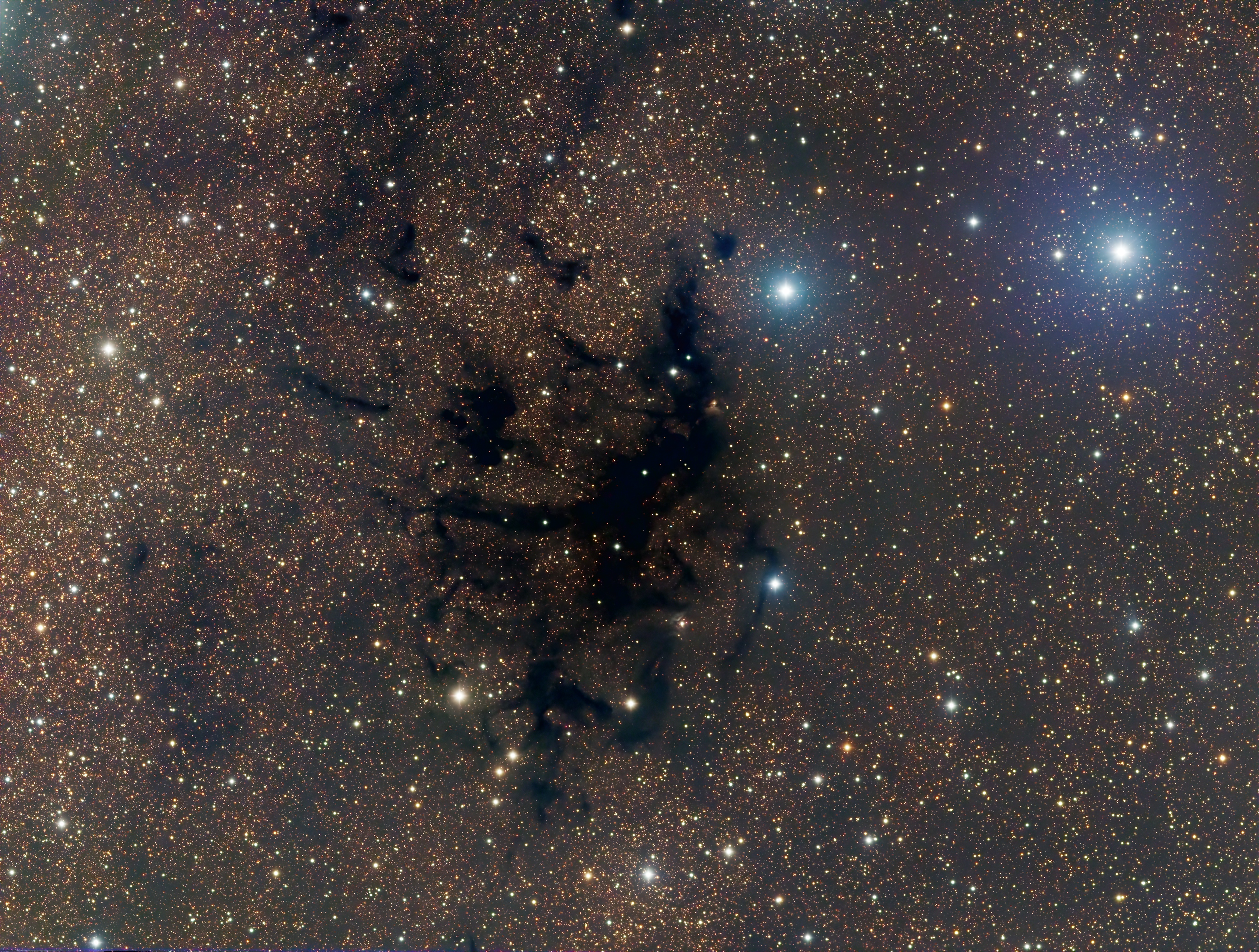
It might seem paradoxical but sometimes it is the absence of light that makes an astrophotography image interesting.  Such a feature is the so-called Aquila Rift, a vast, dark interstellar cloud that spans the constellations of Aquila (Eagle), Serpens Cauda and eastern Ophiuchus.  Towards the central section of the rift, about 600 million light-years from Earth, within the Aquila constellation and not far from the Summer Triangle’s Altair star, is Lynd’s Dark Nebula (LDN) 673.

Some 7-light years in size, this fragmented dark molecular cloud complex contrasts well against the colourful molecular clouds and stars of the Milky Way; the very dense dust of the dark nebulae scatters the blue light of the surrounding stars, producing a yellow-red bias.  In places the density within the nebula that energetic outflows can be seen in the form of the red nebulosity of RNO 109 and Herbig-Haro object HH-32.

Celestial Fleur-De-Lys

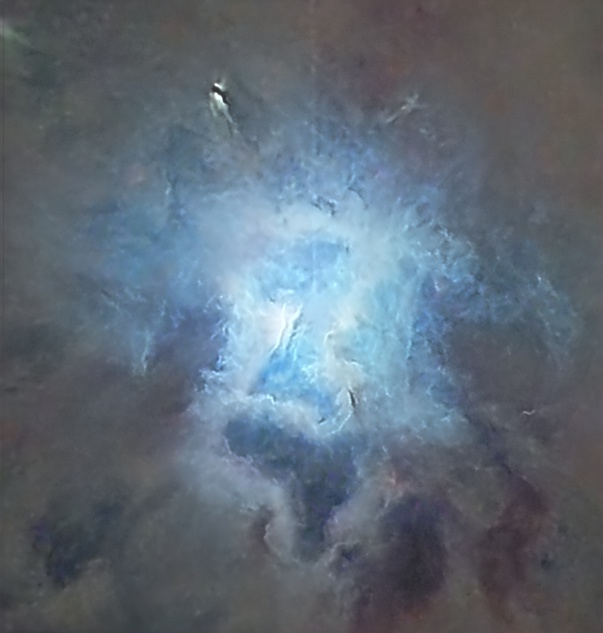
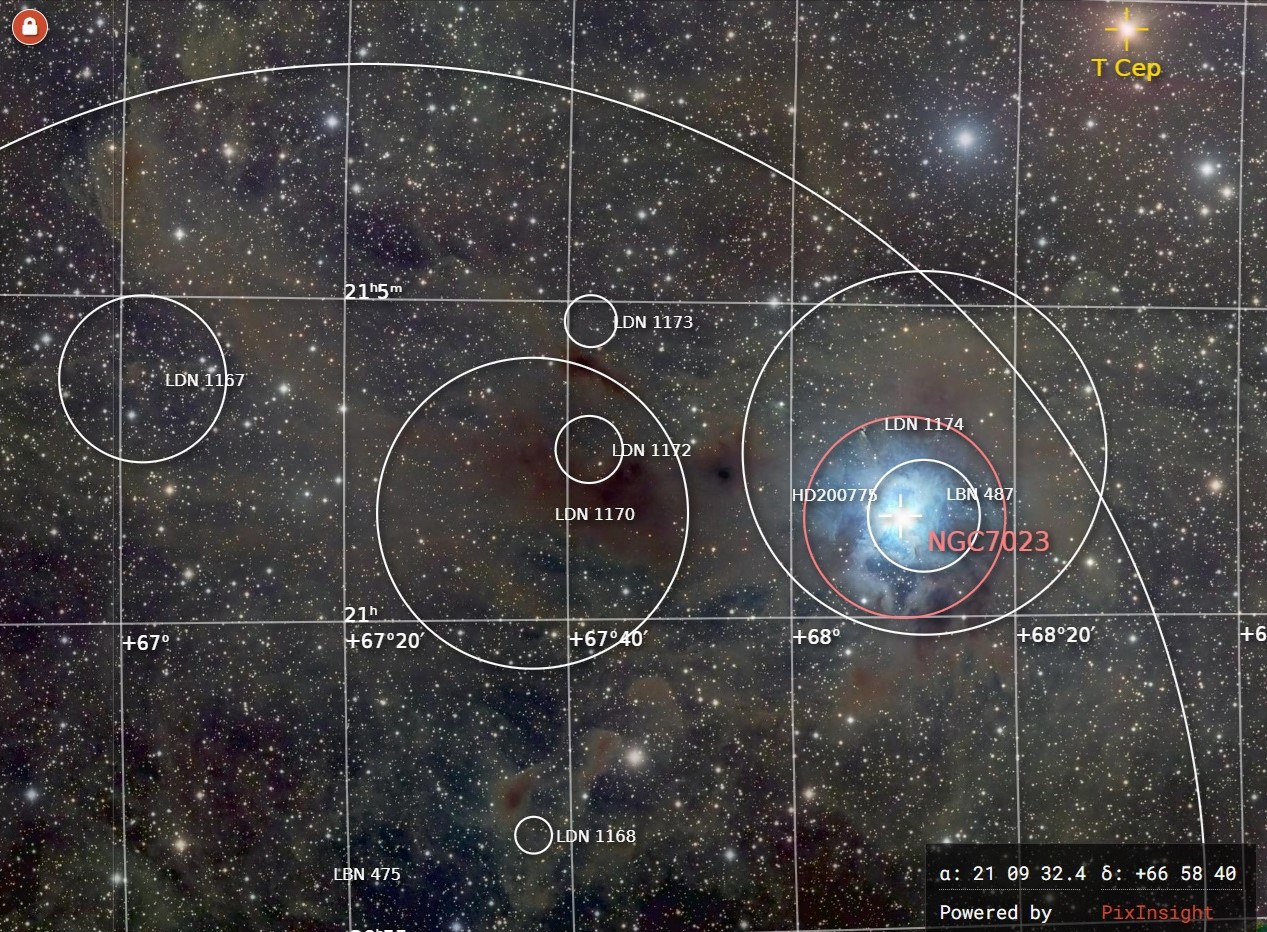
Whilst the highlight is the alluring bright blue reflection nebula NGC 7023 AKA Iris Nebula, careful processing reveals that this celestial flower is enveloped within a vast region of interstellar dust, altogether making for a spectacular image.   Strictly speaking NGC 7023 refers to an open cluster within the reflection nebula, which is itself illuminated by a magnitude +7.4 star designated HD 200775 – the cropped starless image shows the beautiful detail that makes up the Iris ‘flower’. 

Avian Astronomy: Seagull Nebula

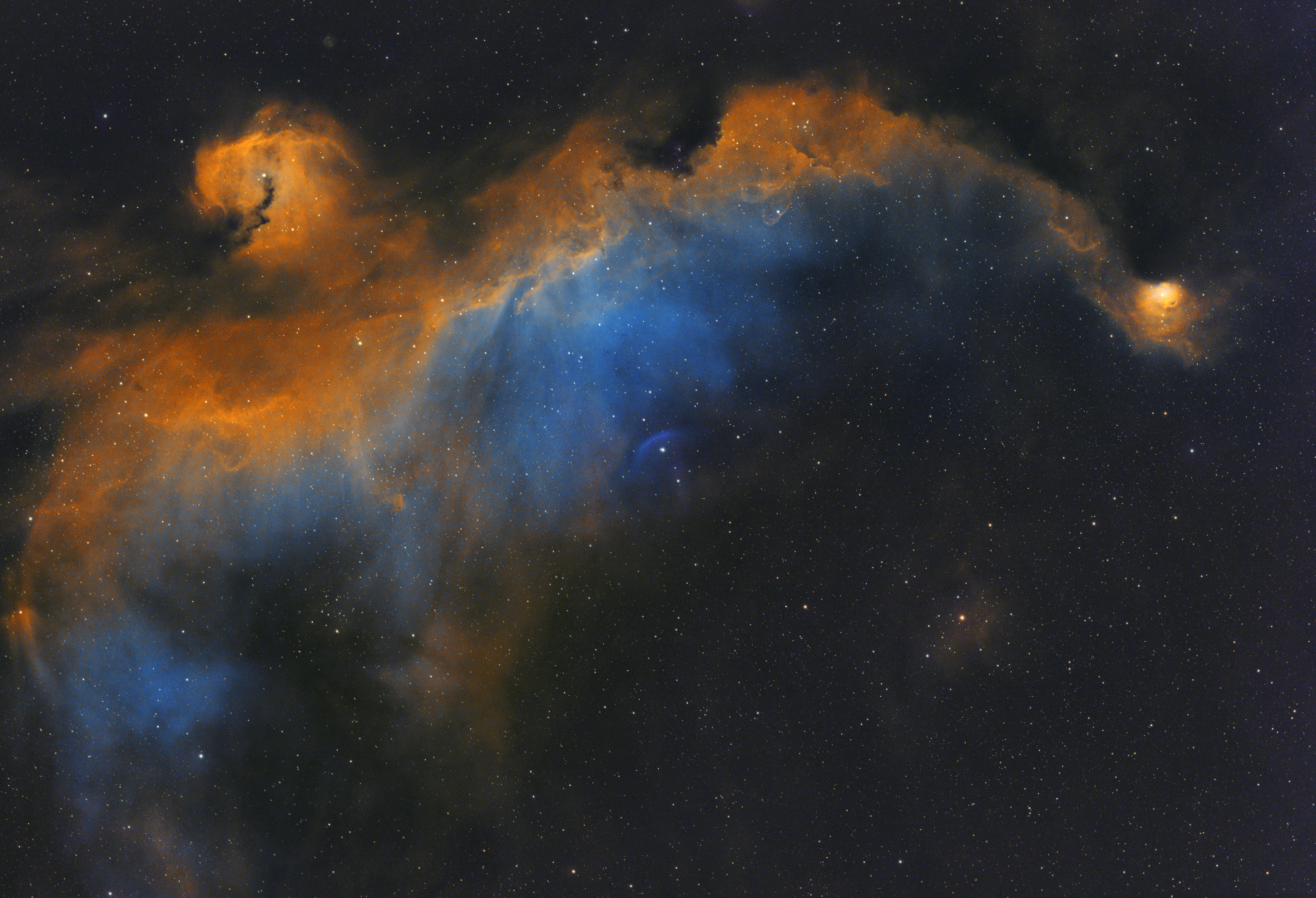
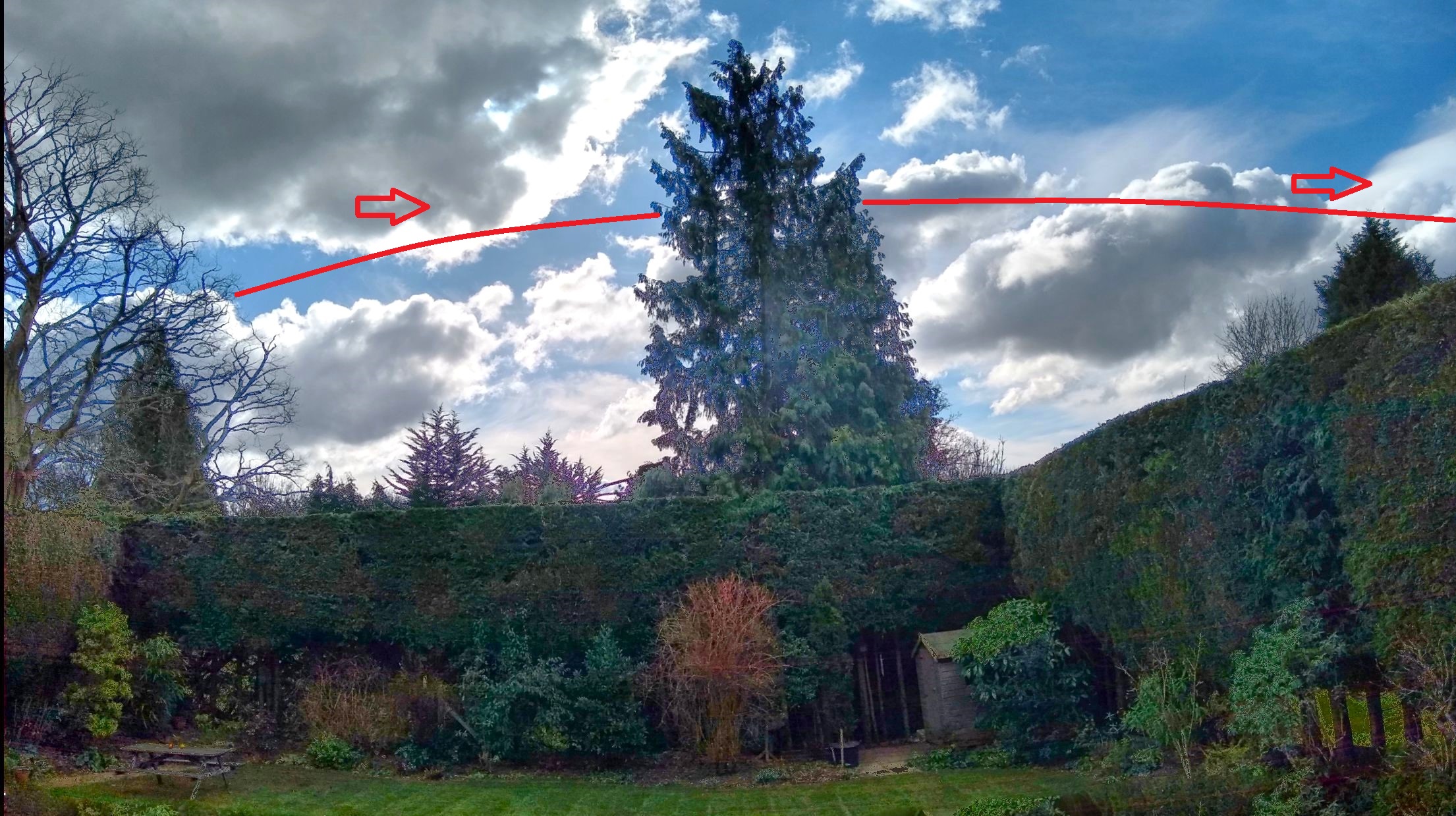
Located 3,650 light-years from Earth, in the area between the Monoceros and Canis Major constellations, is the emission and reflection nebulae complex of the so-called Seagull Nebula.  It’s been 8-years since I last briefly dabbled with imaging this exciting object and for good reason.  From my position, this bird flies at a maximum 28o above the southern horizon (-11 DEC) and, furthermore, spends much of its time behind houses, trees, and tall hedges, thus providing just two short windows for imaging; combined with this winter’s terrible weather it made for a tough but ultimately rewarding target. 


The Seagull’s approximate flight path seen from Fairvale Observatory makes imaging difficult

Whilst popularly known as the Seagull Nebula, the bird consists of a number of fabulous objects spanning some 200 light-years in their entirety: the Seagull’s head (SH2-292) and wings (IC 2177), the large open star cluster along the leading edge of the left wing (NGC 2335) and a smaller cluster on the edge of the right wing (NGC 2327), the nebula at the tip of the right wing (Sh2-297), as well as many other named features (Sharpless and LBN) that are highlighted in the following plate solved image (below).

Despite the difficulties posed by the low transit of the bird in the night sky, each of the Ha, OIII and SII wavelengths are strong, making for good data acquisition and a very pleasing final SHO image.      

Dark Art: Taurus Molecular Cloud

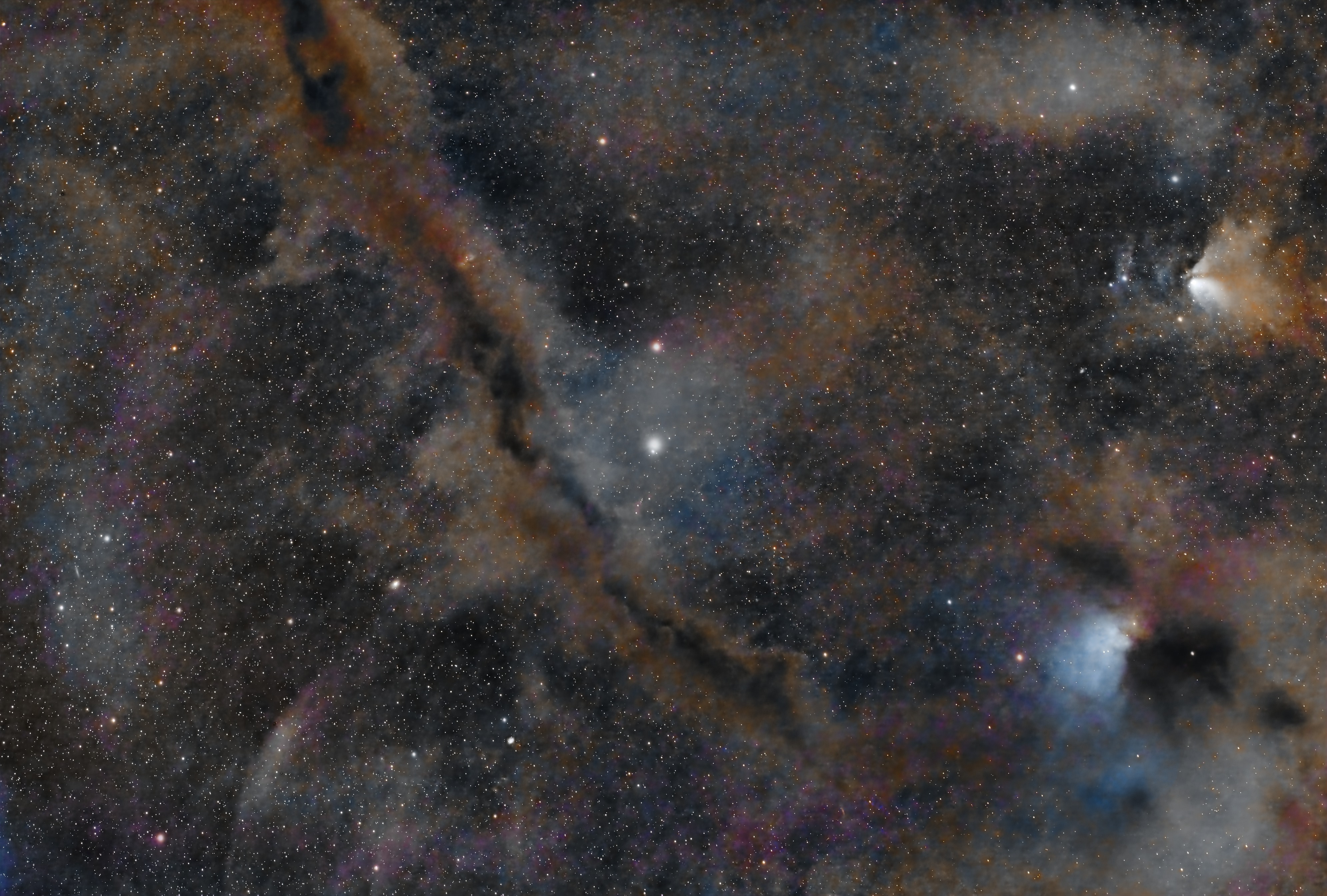
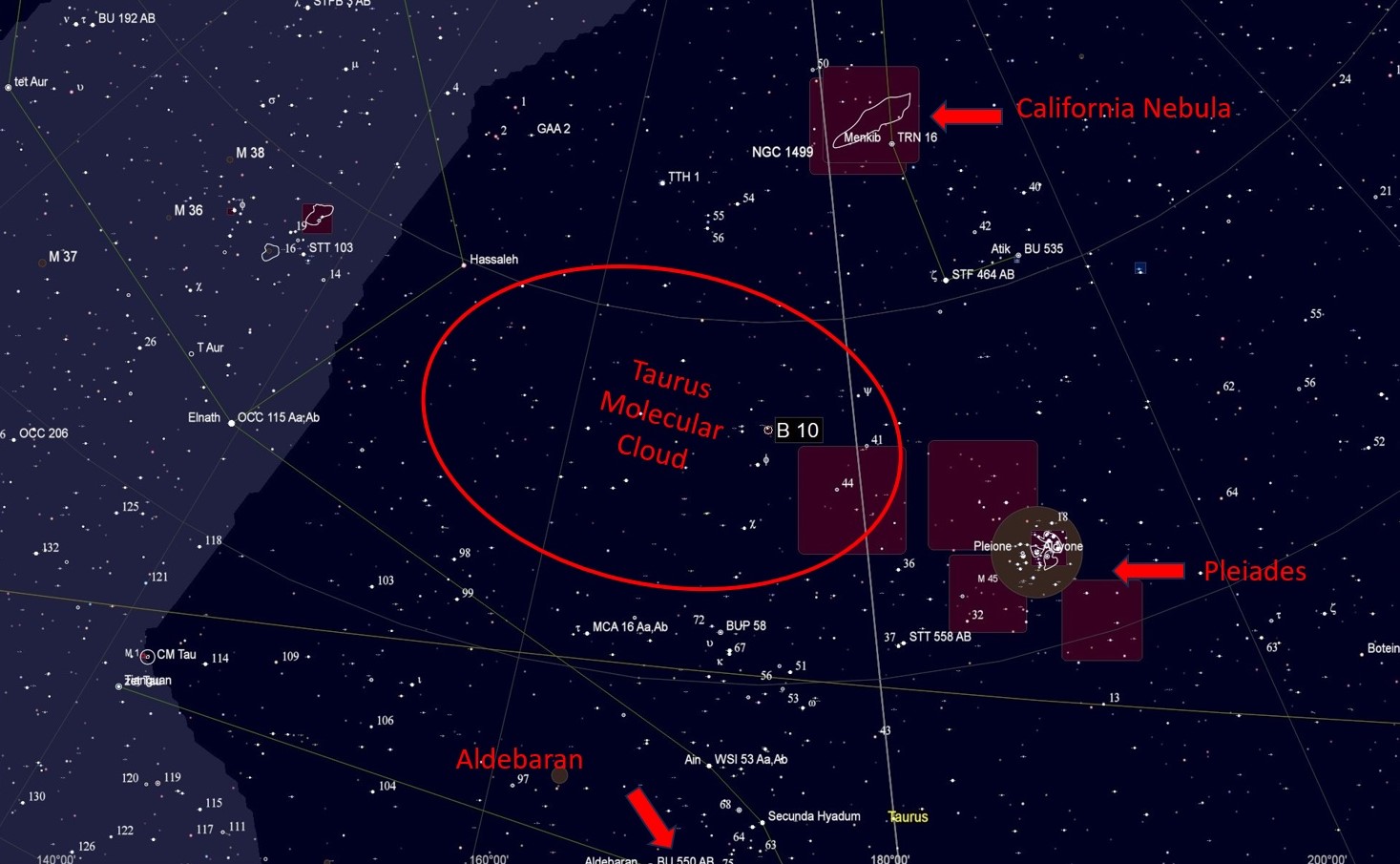
Located northeast (left) of Pleiades, south of California Nebula and north (above) of Aldebaran, spanning more than 30o of the night sky is the Taurus Molecular Cloud (TMC), a rich area of dark nebulae punctuated by bright areas of new star formation.  Moreover, the TMC is thought to be the nearest star forming region to Earth.

Herschel Space Observatory far-infrared’s view of the TMC & approximate image location

All-in-all, the very large TMC provides many promising imaging opportunities.  This image captures numerous, complex dark nebulae across the field-of-view, including Barnard 10 & 214, LDN 1495 & VdB 27, together with bright reflection nebulae LBN 782 & 785 and the odd galaxy – if you look carefully.


2021 The Year In Pictures

Every year since 2014 I’ve published a retrospective blog of my astrophotgraphy year just ending called Reflections. It’s been a useful task that enables me to bring together the best and sometimes the worst of my images, in order to consider the good and bad points + progress made + set some objectives for the coming year. Eight years on, after which I believe I’ve now reached at least a respectable level of imaging and processing, I’ve decided to stop this format for the time being.

Notwithstanding, at this time of the year I also produce an astrophotography calendar for members of my family, which consists of the better images from the year just ending; I think they like them and certainly all use the calendar during the coming year. Moreover, I also recently started to compile a video of the said calendar images set to appropriate music, which we all watch together prior to seeing the actual calendar. It’s a great way to present the images, which look really stunning on today’s large Smart TV’s and is fun to watch with the family too.

The video for this last year 2021 can be viewed on YouTube HERE and below is a brief very general overview of each image. More detailed background information and imaging details for those interested can be found in relevant blogs posted on this site during the past year.

2022 CALENDAR

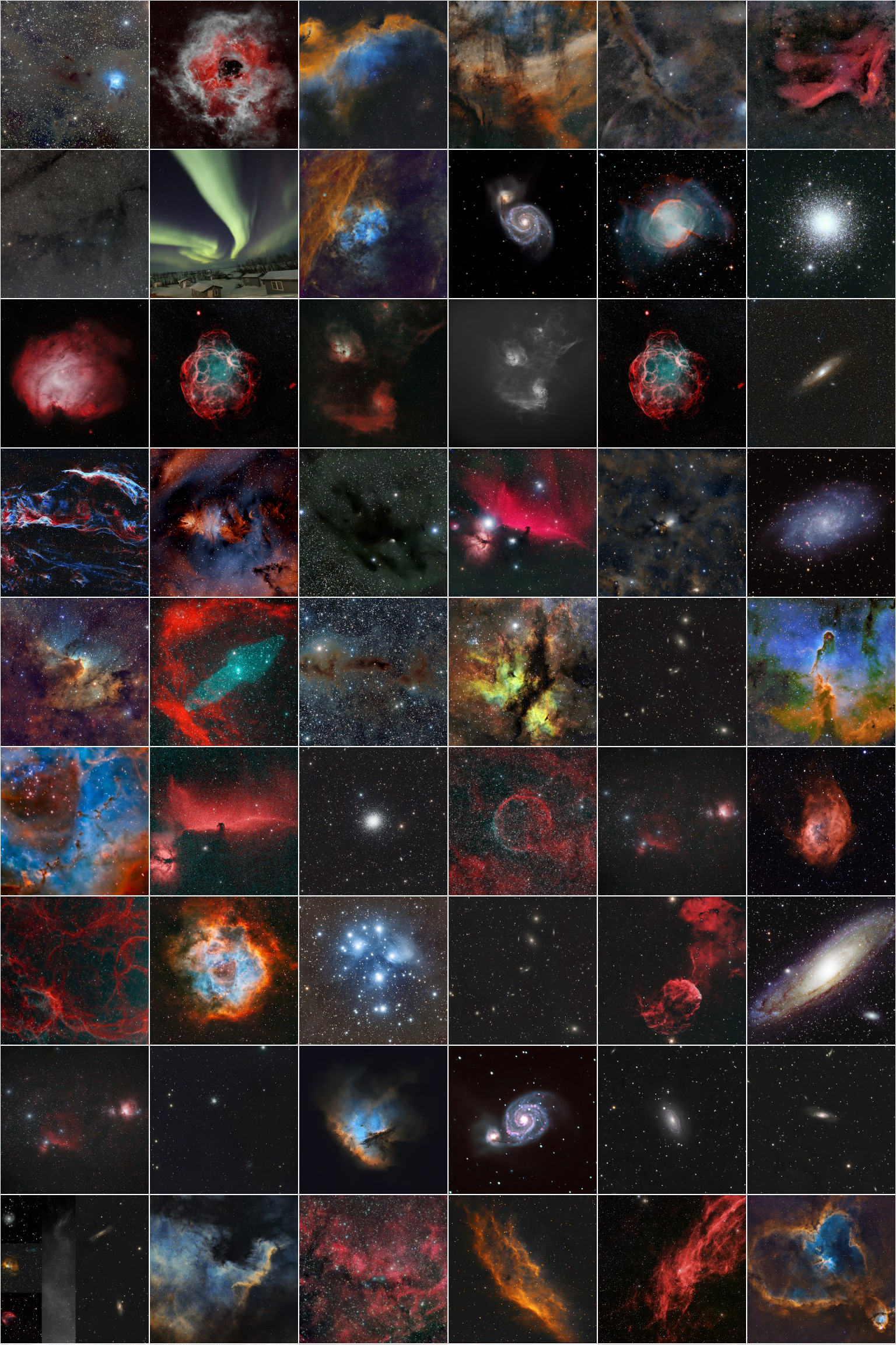
A new set of filters, improved processing techniques and access to data from a telescope at a dark sky site in New Mexico, USA (shown by an asterisk *) contributed to an exciting astrophotography year in 2021.                  

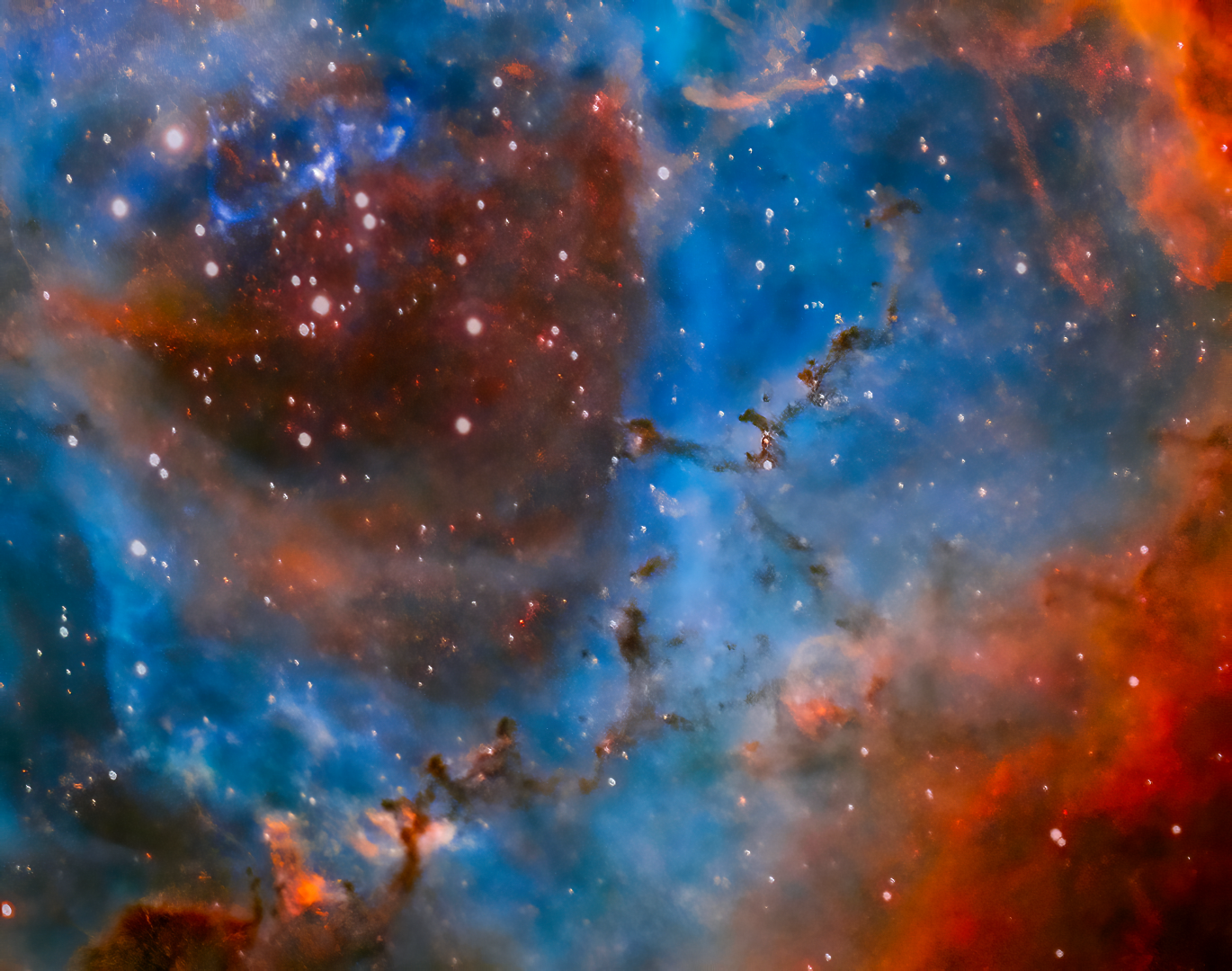
FRONT COVERThe Carnival of Animals: Special processing of the inner region of the Rosette Nebula highlights the ‘animals’ or Bok Globules – clouds of dust undergoing gravitational collapse as part of the process of new star formation.  
JANUARYLDN-1250 Dark Nebula*: Dark or absorption nebulae are a type of interstellar cloud which are so dense they obscure or absorb visible light emitted from objects behind or within and thereby contrast with the general light flux of the Universe as dark areas.  
FEBRUARYCTB-1 Supernova Remnant*: The overall structure of this supernova remnant is that of a circular shell, with a conspicuous rupture towards the north (lower right of image).  The main red Ha-shell is composed of multiple interlocking filament limbs, with a blue / green OIII arc along one side.  
MARCHJellyfish Nebula: Locatedin the Gemini constellation some 5,000 light years from Earth, this is a remnant of a supernova that took place during the past 30,000 years. With a diameter of 70 light-years, the object is visually speaking nearly twice the size of a full moon.     
APRILMarkarian’s Chain: The Virgo cluster consists of more than 2,000 galaxies, within which Markarian’s Chain forms a J-curve string of bright galaxies that share a common motion through space.    
MAYM13 Great Globular Cluster of Hercules*: Consisting of several hundred thousand stars and 145 light-years in diameter, M13 is considered to be the finest cluster in the Northern Hemisphere.  
JUNECave Nebula*: Located along the plane of the Milky Way is the diffuse emission nebula referred to as the Cave Nebula.  The Cave at the centre is critically located at the boundary of the Cepheus molecular cloud and the hot, young stars which ionize the surrounding gases to great effect.  
JULYOrion Widefield: Framed around the area of Orion’s Belt, the Horsehead Nebula and the Great Orion Nebula, look hard and the refection nebula M78 can also be seen in the lower left corner.    
AUGUSTElephant’s Trunk Nebula*: A very large emission nebula, the so-called Elephant’s Trunk Nebula is rightly viewed as one of astrophotography’s most iconic images. The ‘trunk’ itself dominates the centre of this image and is illuminated from behind by a bright star forming region.  
SEPTEMBERM31 Andromeda Galaxy: The full benefit of new filters, improved guiding, clear skies over 6-nights and extensive use of new processing techniques can be seen in my best image yet of Andromeda.      
OCTOBERButterfly Nebula: Situatedwithin the Orion Arm of the Milky Way is the Gamma Cygni nebula, a diffuse emission nebula surrounding the star Sadr.  Either side of the dark rift which divides the image from top to bottom are two large bright areas that together form the so-called Butterfly.  
NOVEMBERM33 Triangulum Galaxy: Like it’s neighbour Andromeda, better data and processing has produced an exciting new image of M33 this year, the red areas highlight Ha-rich star-forming regions  
DECEMBERFlying Bat & Giant Squid Nebula*: This very faint OIII emission nebula Ou4 required an imaging time of 40-hours.  For obvious reasons Ou4 has become known as the Giant Squid Nebula which, moreover, lies within the much larger SH2-129 HII emission region or the Flying Bat Nebula.     

HAPPY NEW YEAR + CLEAR SKIES IN 2022