Talk The Talk

“He who can, does. He who cannot, teaches.” 1903, George Bernard Shaw

At the end of last year I was contacted by a member of the Aperture Club, a photography group based in Purely – Surrey, who had come across this website and asked if I could give a presentation to the club’s members on astrophotography.  Ordinarily I might have rejected the request – after all what do I know about astrophotography after only 18-months – but then again why not? Once I sat down and compiled some initial thoughts it was surprising just how far I had come and learnt already, albeit with still a long way to go.  In the end I agreed and decided to take a two-fold approach to the talk: (i) a basic overview of astrophotography, and (ii) in this context my personal journey so far.

TTT Cover

The final structure adopted was like this, which I hoped would be both technically and aesthetically engaging and provide some insight into the challenges for astrophotography when compared to their day-to-day terrestrial pursuits:

  • Types of astrophotography
  • Astrophotography Methods
  • Light
  • Telescopes
  • Imaging
  • Cameras
  • Image Capture
  • Processing
  • Post Processing

I gave my talk to the club at the end of March, which lasted about 1-hour and I believe was well received; there was a good turn-out and subsequent Q&A session – which is always a good sign.  I had also been asked to compile some related tasks for the members to undertake afterwards and after a break presented a second, shorter talk on some possible assignments.  Copies of the talks can be accessed via the links here:

Astro Lecture PDF

Astro Assignments PDF

I would not be so arrogant to undertake such a presentation to other astrophotographers, at least not yet, but enjoyed introducing members of the Aperture Club to my hobby.  Furthermore, through compiling the presentations I benefited from the process, which required me to think and understand the subjects more thoroughly than I might otherwise have done, making me think that Shaw was wrong.  Good teaching requires a good understanding of the subject, the skill to impart that knowledge to the audience and the ability to apply the knowledge. I’ve previously walked the walk and in this instance I’d like to think I was able to talk the talk – I found the experience rewarding and I hope members of The Aperture Club did too?


Fairvale Observatory Part-3, Progress: modded DSLR, computer control, autoguiding etc.

It’s been a while since I last took a look at developments here at Fairvale Observatory (Part-1 & Part-2) and looking back it’s pleasing to see that progress has continued with positive results.  After acquiring the William Optics GT81 refractor and AZ-EQ6 mount in 2014 I have been experimenting and enjoying the equipment’s significant abilities until recently but have now embarked on some new, potentially important improvements that hopefully will result in significant breakthroughs.

At the start perhaps the biggest problem for imaging was polar alignment, made very difficult here as my house almost completely obscures Polaris.  It took some time but I’ve now overcome this by using the Synscan handset polar alignment technique, which now enables me to achieve an accuracy of just a few arc-seconds and has led to a significant increase in imaging times of at least 180 seconds.

With the short focal length of the fast William Optics this level of alignment error works well and I’ve been pleased to obtain decent images of larger DSO features such as the Great Orion, Rosette and Veil nebulae i.e. near / middle distance objects, ideally at least 1o in size with an apparent magnitude of +7 or better.  Once I’ve exhausted all these targets, and I have fortunately been discovering more and more, it’ll be time for another telescope!

The small things matter too and in this regard I’ve added a number of useful items:

  • Made a solar filter and finder tube for the WO GT81;
  • At last, I recently collected the cables together into two looms;
  • Purchased a 12mm reticle to aid alignment;
  • Astronomik CLS light pollution clip filter;
  • Photoshop – an old version but I’ve been successfully using it for processing.
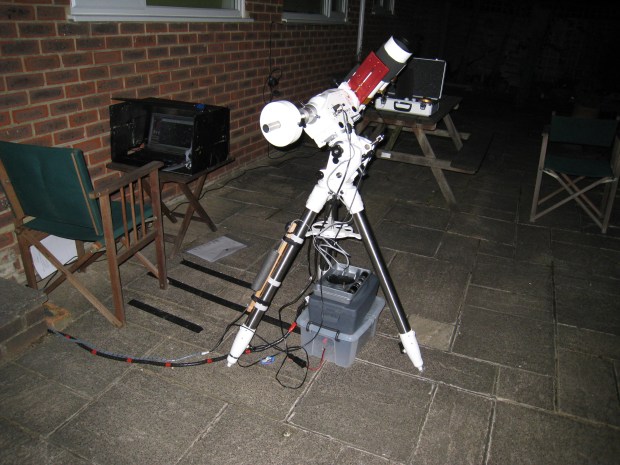
IMG_2292

The set-up has become a lot tidier and logistics made easier by collecting the power and camera cables into two separate looms (camera loom not shown) and permanently attaching the HiTec Astro control cable to the mount – why didn’t I do this before?

More significant additions that I’ve already reviewed include a modded Canon 550D DSLR, which together with improved tracking has revolutionised imaging and a recently a Vixen Polarie, that has transformed widefield photography and added a new dimension – transportability.  It’s early days and I have not really got to grips with the Vixen Polarie yet but initial use suggests it’s going to be a very useful addition and potential game changer.

At the end of last year in Reflections I outlined my goals for 2016 and I am pleased to say that I have at last just started to establish the equipment and software to start autoguiding, the holy grail of astroimaging that when fully working should enable me to achieve exposure times significantly greater than present – which is likely to be at least another couple of months.  For a while I have been successfully using EQMOD /ASCOM combined with Cartes du Ciel for tracking.  There were some initial connection problems but now using a HiTec Astro EQDIR adapter and a better quality USB cable seems to have improved this matter; I’ve also recently secured it to the tripod making the set-up more stable and aiding logistics.  I still polar align with Synscan before switching to EQMOD-Cartes du Ciel for additional star alignment, slewing and tracking.

Using EQMOD-Cartes du Ciel makes slewing to any chosen object much easier than Synscan but its use has introduced another operating problem.  After slewing to a chosen object or star it is never exactly centred and some manual fine alignment is almost always necessary at this point.  The problem is that this requires being at the eyepiece, which of course is not located by the computer, which means frequent toing and froing between the two locations and a lot of guesswork when adjusting the mount from the computer.  In reality this is not very practical and I have therefore just purchased a gamepad that links wirelessly to the computer and allows mount adjustments to be made when at the eyepiece.  It’s not quite set up yet but nearly and I’m impressed; ASCOM even allows you to add WAV files that speak to you when making changes – sounds like a gimmick but when in the dark with lots of items to attend to it is actually very useful and will hopefully reduce the possibility of making mistakes.

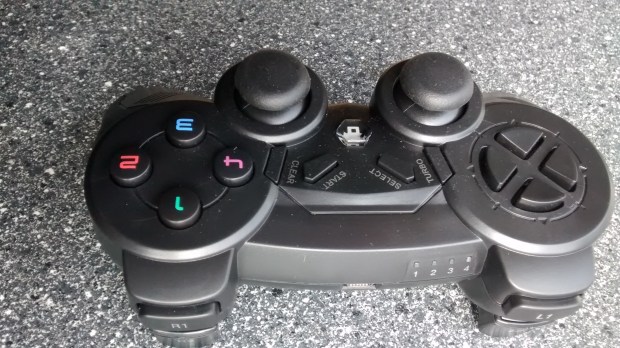
IMG_20160401_144602833

Wireless gamepad provides extensive control of critical alignment functions without being at the computer: front x4 buttons are assinged to set various slew rates, the mount-telescope can be directed either via the rear (shown right) joystick or POV buttons on the right, button-1 parks and button-2 syncs. Other buttons have yet to be allocated.

It had been my intention to use the ZWO ASI 120MC webcam for guiding, in fact I upgraded to this at the time of purchasing in 2014 for this very purpose as it has a specific port for ST4 autoguiding directly with the mount.  However, very recently a Starlight Express Lodestar X2 guide camera came up second-hand and being widely acknowledged as one of the best guider cameras available I couldn’t resist!  Of course, despite its pedigree like most things with astroimaging it has not been that simple to get working.

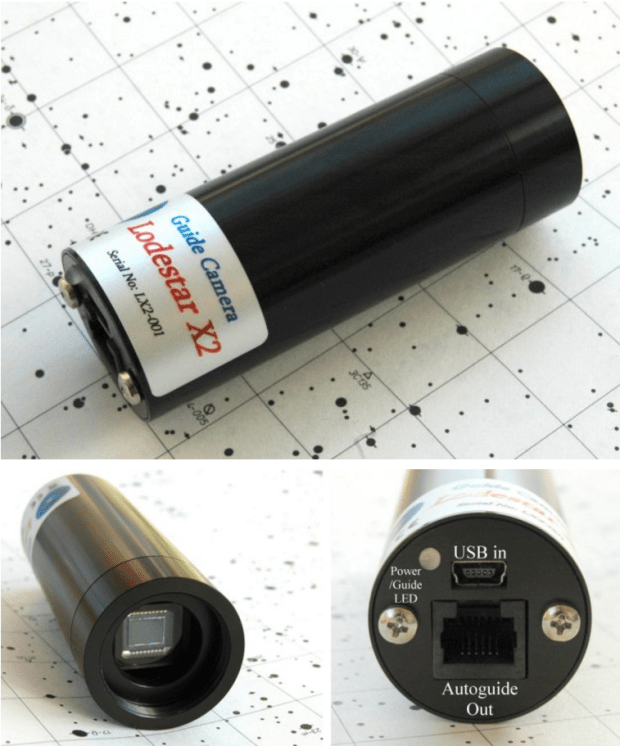
sx2

Starlight Express Lodestar x2 Guide Camera can be used either via the mount’s ST4 port or via ASCOM and the computer for pulse guiding – I’m doing the latter.

Despite being a dedicated guide camera with high operating specifications, at first I could not obtain any sort of image to prove it was even working but by transferring the lens from the ZWO camera and fiddling with the software I eventually got an image, phew!  It’s important to say here that for guiding it is also necessary to use suitable guiding software and I‘m inevitably using PHD2, which itself is full of wonderful features and mischief that I am at the early stage of learning and trying out with the camera.

IMG_20160316_233736210

William Optics 50mm x 200mm with focus tube and Lodestar guide camera – after lengthy experimentation, insertion of a x2 Barlow barrel eventually achieved focus.

At this early stage the other inevitable obstacle has been achieving focus.  The William Optics GT81 telescope conveniently comes with its own guidescope rings that elegantly form an integral part of the OTA shoe attachment.  With guiding as a long term goal, I therefore obtained the matching 50mm William Optics guidescope at the time of purchasing the main telescope, which until now has been sitting in its box as I built up the courage to put it all together and attempt guiding.

IMG_20160331_225626313

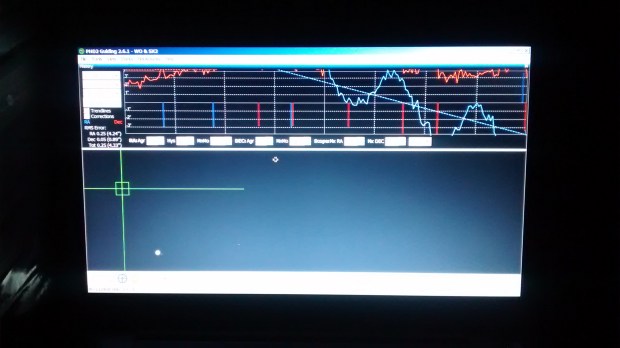
The black art of autoguiding and infamous PHD2 screen; I have just for the first time got the camera and PHD2 working together: focussed, calibrated and guiding. The nature of the blue (RA) and red (DEC) traces indicates there’s still much to learn but at least it’s working and holds much promise for future imaging!

As a matching guidescope and a dedicated top-of-the-range guide camera I assumed it would all fit together and with a little adjustment focus could be obtained, right?  Wrong.  I played with the camera’s position but failed to get any idea where the point of focus was.  Next time I initially had the same result but by now knew that the camera was working so persevered and by using the barrel from a x2 Barlow with the lens removed eventually found focus, about 2cm back from the maximum position achieved using just the guidescope + focus tube and camera.  I know that there are many makes of equipment and permutations but surely a matched guidescope and standard, best-in-class guide camera should be designed to work together from the outset?

So what’s next? I am hoping that after a few more sessions with the guide scope and PHD2 I will able to start autoguiding properly.  However, two years of astronomy and an early look at PHD2 tells me it probably won’t be that easy.  Notwithstanding, two years of astronomy also tells me that perseverance is essential and usually pays off.  Watch this space!

Reflections – 2015

Launched in August 2014, 2015 is the first full year of Watch This Space (Man) and despite some personal set-backs it’s been an interesting year astronomically, with much to write about.  Whilst I have made progress with my imaging, it was not what I would have wished for but nonetheless I have been pleased with the outcome.  Continuing on from last year, Reflections is a recap and thoughts on all that happened to me astronomically in 2015 and looks forward to the coming year.

Although this website is just intended as my record of A personal discovery of the Universe through astronomy and astrophotography, it has been pleasing to see that over the year the site has attracted 1,310 visitors from 77 countries around the world and over 2,700 views; you are all most welcome.  This was not the intention of the blog but I am humbled by the interest and would be very pleased to hear from anyone who would like to get in touch with queries, comments or just to say hello – contact details are in the About section.

Reflections 2015

JANUARY TO MARCH

The first quarter turned out to be my most active and successful period of the year for reasons that will become apparent later.  Strictly speaking my image of the Rosette Nebula posted on 5th January was taken on 29th December 2014 but what an image to start the year with, clearly I was doing something right by now.  Notwithstanding, from looking at pictures of the same object taken by other more accomplished photographers, it was evident that something was missing – red!  This was an easy to problem to solve and I immediately set out on a quest to find a suitably modified camera with the IR filter removed.  Soon thereafter I was lucky to find an excellent second hand modded Canon EOS 550D, which has now become my main imaging camera of choice and with all that extra red Ha-light has led to a quantum improvement of many images since.  Such cameras are very popular so I felt lucky to have secured this one.
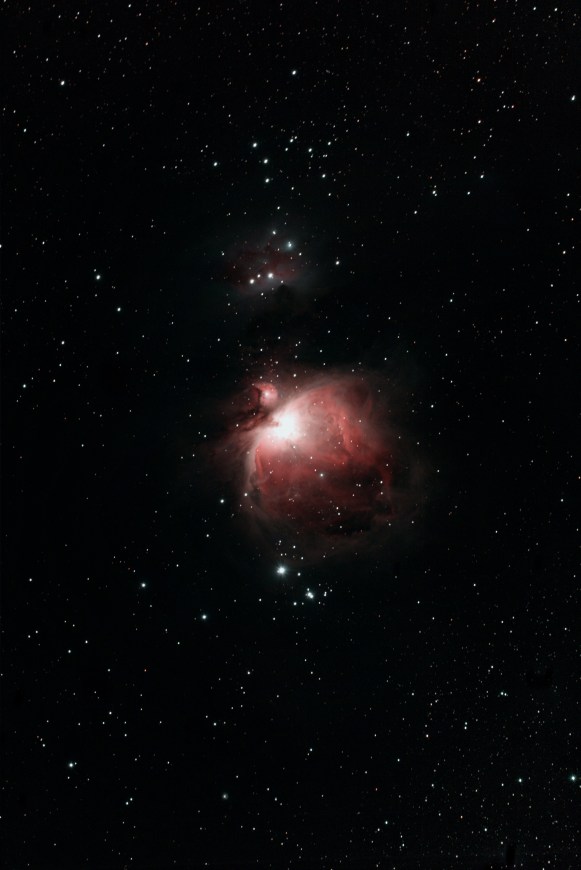
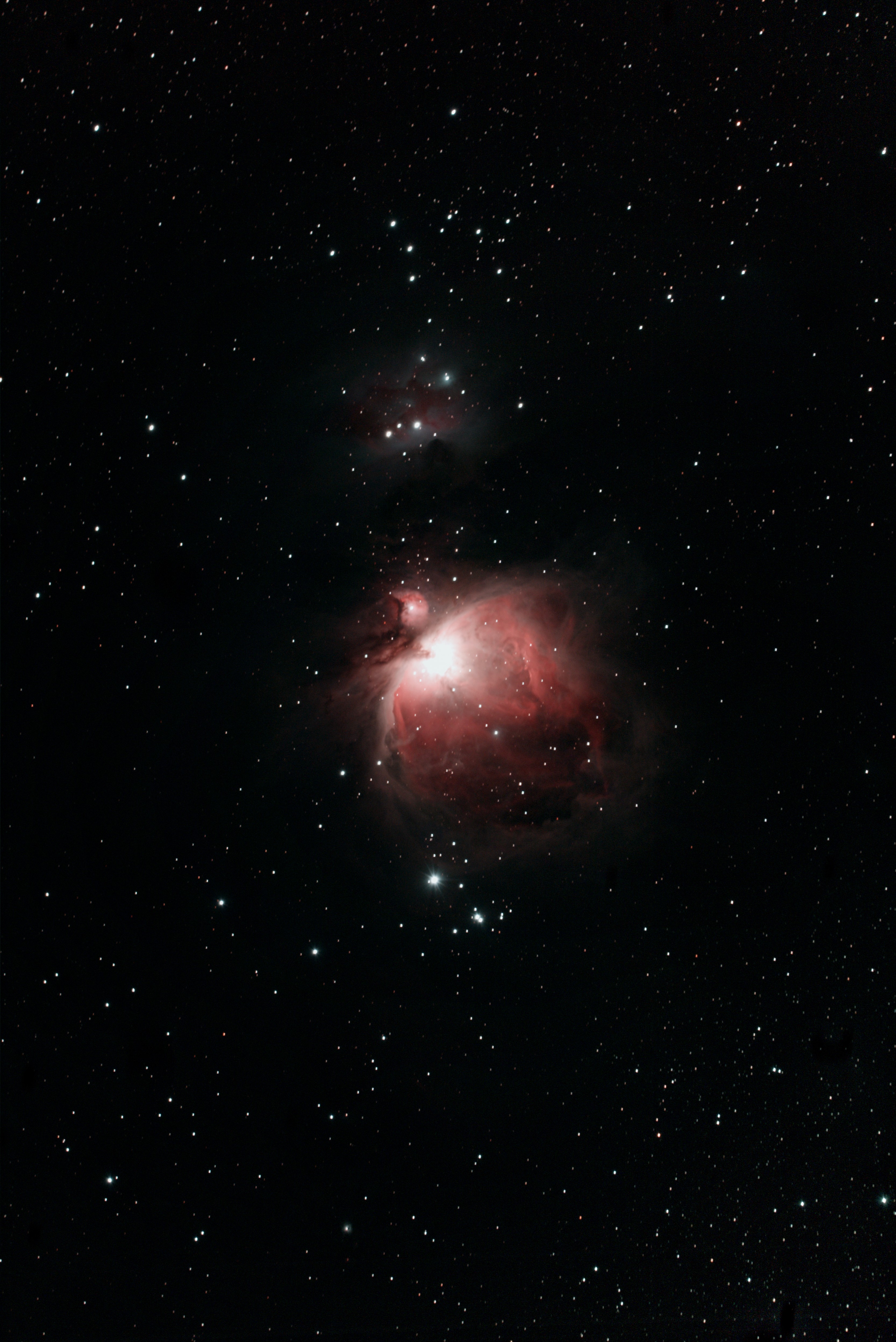
Orion's Sword: M42 The Great Orion Nebula, Running Man Nebula & NGC 1981 Star Cluster WO GT81 + modded Canon 550D & FF | 10 x 180 secs @ ISO 800 & darks calibration | 8th February 2015

Orion’s Sword: M42 The Great Orion Nebula, Running Man Nebula & NGC 1981 Star Cluster
WO GT81 + modded Canon 550D & FF | 10 x 180 secs @ ISO 800 & darks calibration | 8th February 2015.  Modification of the camera by removing the IR filter increased red Ha-light.

EQMOD / ASCOM is a popular free software project developed by amateurs that, amongst other things, provides computer and planetarium linked control of the mount; with other compatible linked programmes such as APT (Astrophotography Tool) and PHD (Push Here Dummy) control can be extended to cameras and for autoguiding.  At the start of the year I successfully started using Carte du Ciel planetarium linked with EQMOD for computer controlled alignment and mount control, which as expected was very useful – particularly when it got really cold and I was able to take the equipment indoors and operate the equipment remotely.  However, later in the year I have encountered connection problems which are, as yet, not fully resolved.

Whilst EQMOD is an excellent project which provides first class mount control when working, it requires additional faffing about and problems on a different level of scale, which with limited imaging conditions in the UK and having to set up outside from scratch each time is a pain.  For this reason and others I have not yet moved to autoguiding, which I know will be highly beneficial to imaging but for the moment has proved to be a step too far for me.  Such is the fickle nature of all this that I’m now considering other ways of achieving the same end, perhaps with professional software control and a stand-alone guider, such as the Lacerta M-GEN – of course a dedicated observatory would help a lot but seems unlikely at the moment!

I have previously found the early winter sky of Orion, Taurus, Pegasus and Monoceros very productive with beautiful imaging objects such as M42 and the Horsehead Nebula.  However, this year looking more closely at the late-winter / early spring skies turned out to be just as exciting, with a veritable playground of galaxies to choose from during February and March.  Notwithstanding, the highlight during the winter was successfully imaging Comet Lovejoy, a first for me that required changes to  normal DSO and planetary imaging techniques as this ephemeral object was speeding across the night sky at over 70,000 mph – post processing also turned out to be quite different.
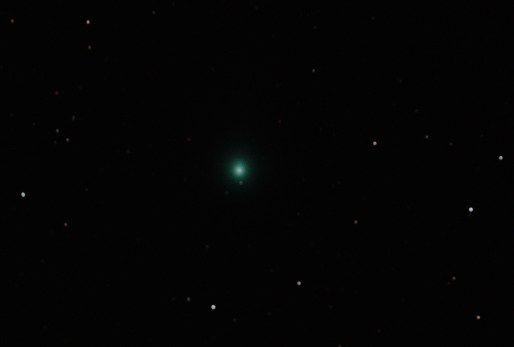
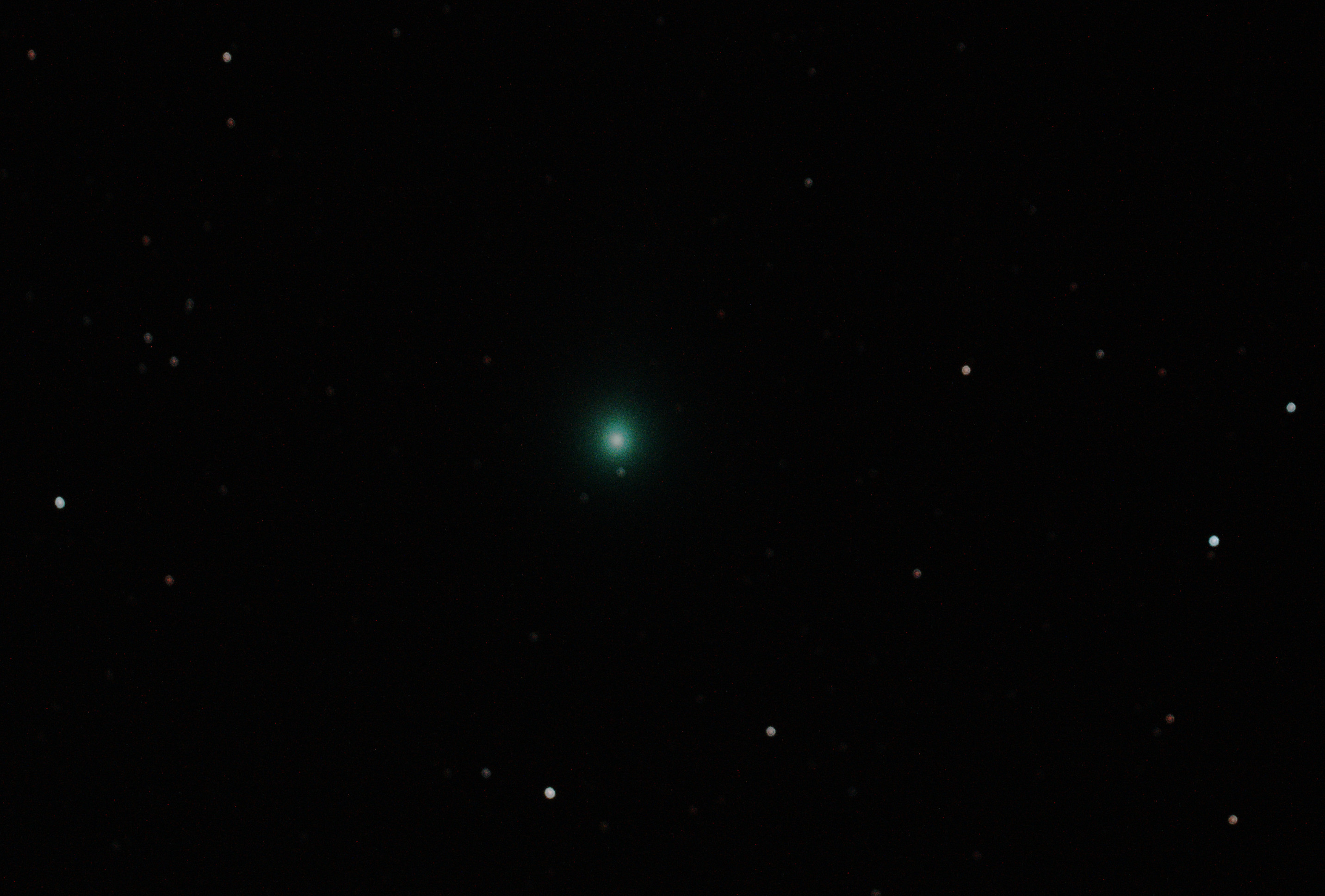
C/2014 Q2 Comet Lovejoy WO GT81 + Canon 550D (modded) & FF | 40 x 20secs @ ISO1,600 + darks | 16th January 2014

C/2014 Q2 Comet Lovejoy
WO GT81 + Canon 550D (modded) & FF | 40 x 20secs @ ISO1,600 + darks | 16th January 2014


No Date Object* Name
1 16/01/15 C/2014 Q2 Comet Lovejoy
2 16/01/15 C/2014 Q2 Comet Lovejoy
3 16/01/15 NGC 2244 Rosette Nebula
4 22/01/15 M42 etc Orion Nebula
5 22/01/15 M45 Pleiades
6 22/01/15 Comet Lovejoy
7 22/01/15 Comet Lovejoy
8 22/01/15 Banard’s Loop
9 22/01/15 Banard’s Loop
10 22/01/15 Orion Constellation
11 24/01/15 NGC 1909 Witch Head Nebula
12 24/01/15 NGC 2392 Eskimo Nebula
13 24/01/15 M44 Beehive Cluster
14 24/01/15 IC-443 Jellyfish Nebula
15 08/02/15 M42 Gt Orion Nebula etc
16 08/02/15 Barnard 33 Horsehead Nebula etc
17 21/02/15 M65 Leo Triplet (Galaxies)
18 21/02/15 M105 M96 Group (Galaxies)
19 24/02/15 Venus & Mars
20 25/03/15 NGC 2903 Spiral galaxy – Leo
21 25/03/15 NGC 3842 Galaxy cluster: Leo
22 25/03/15 M 88 Spiral galaxy: Virgo cluster
23 25/03/15 M100 Spiral galaxy: Virgo cluster
24 26/03/15 NGC 4438 Markarian’s Chain
25 26/03/15 M104 Sombrero
26 26/03/15 M53 Globular cluster


*Record of quarterly photographic images in 2015, excluding other widefield pictures

APRIL TO JUNE

Things took a turn for the worse in April when I went into hospital for a knee replacement operation.  All went well but it is a major operation and recovery has been slow and often painful, thus prohibiting any real astronomy until September.  It did however provide the time and opportunity to read about astronomy and pursue some MOOC astronomy courses.

After a period of convalescence, I did manage to obtain some widefield camera shots of the planets, the ISS and simple night sky images in the summer.  Whilst not as satisfying as prime focus photography, it was interesting and kept me sane during this otherwise difficult time.
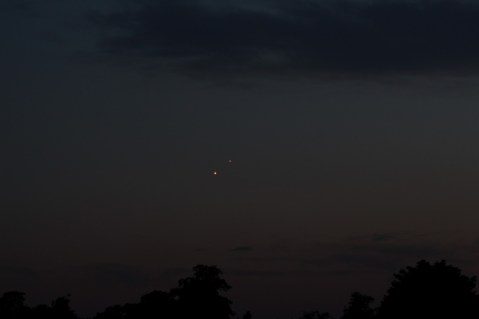
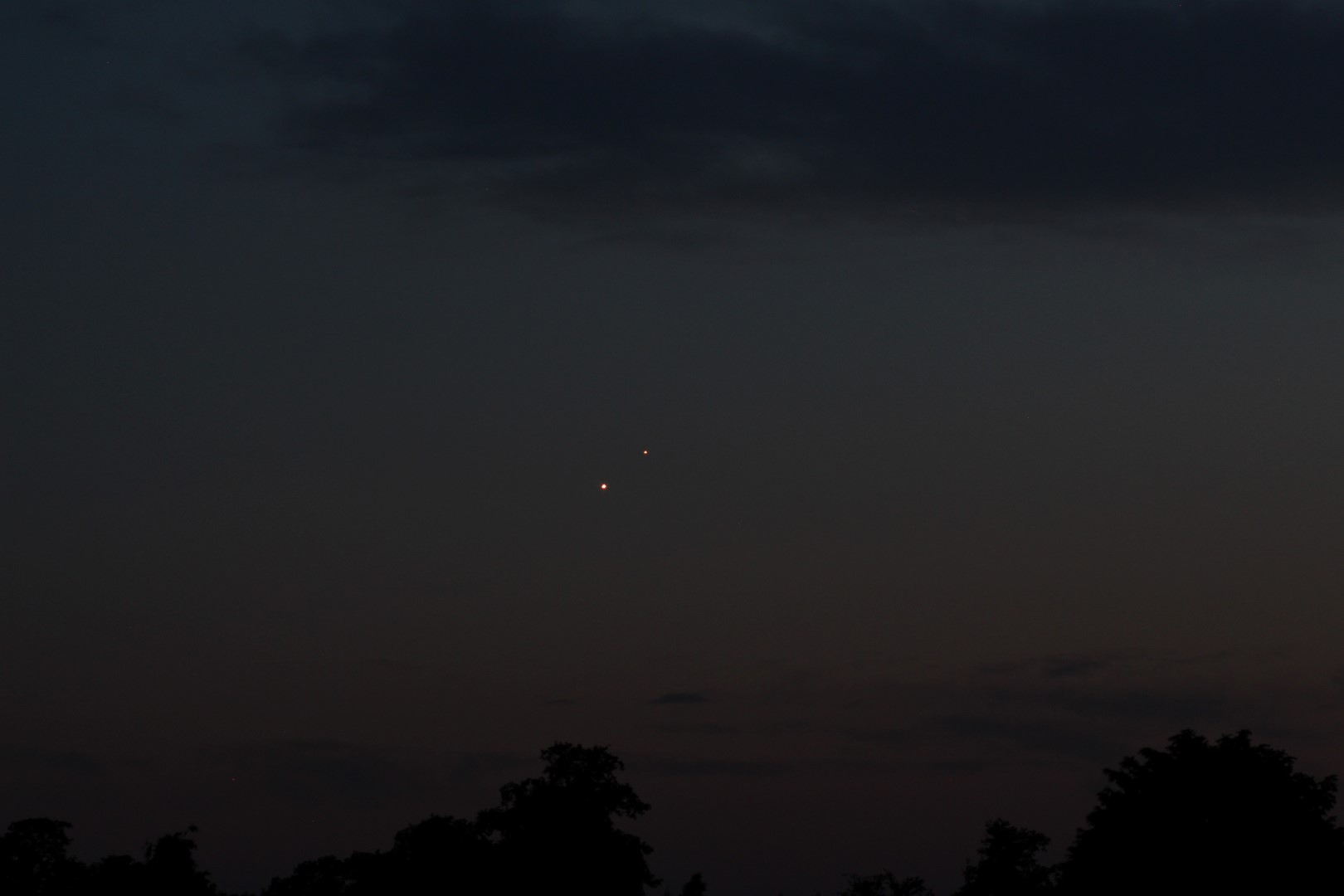
1st July 2015. Bingo = conjunction; though one day later Jupiter has now moved to the right of Venus.

1st July 2015. Conjunction of Jupiter to the right of Venus.

No Date Object Name
27 11/04/15 NGC 4438 Markarian’s Chain
28 11/04/15 NGC 4565 Spiral galaxy-side


JUNE TO SEPTEMBER

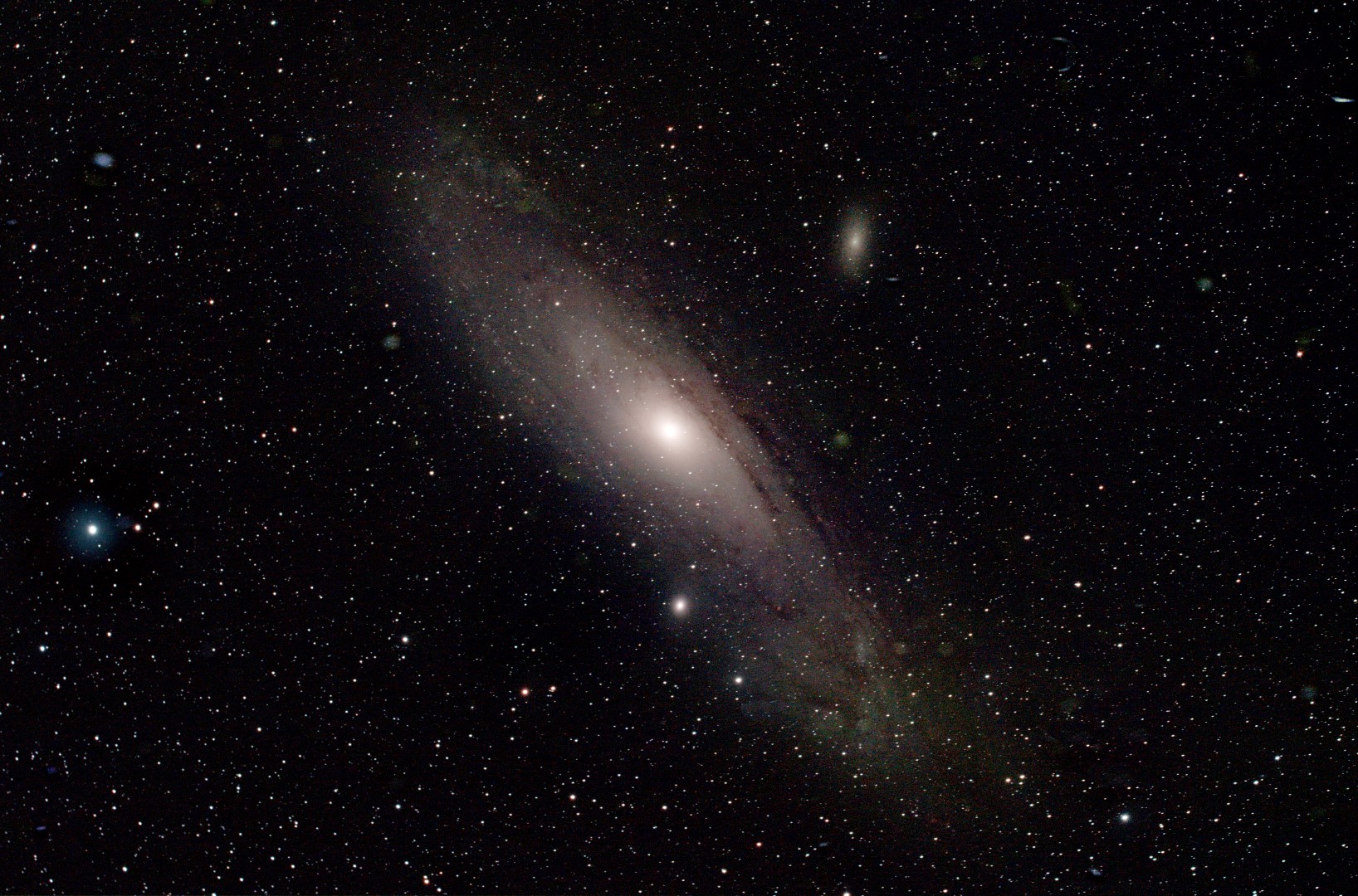
This period was more of the same until on 19th September, when at last I managed to set-up Fairvale Observatory for the first time since March, what a relief.  As a bonus I was particularly chuffed to achieve a good image of the Andromeda Galaxy but the highlight of this period and the year was the lunar eclipse at the end of the month on 28th September.

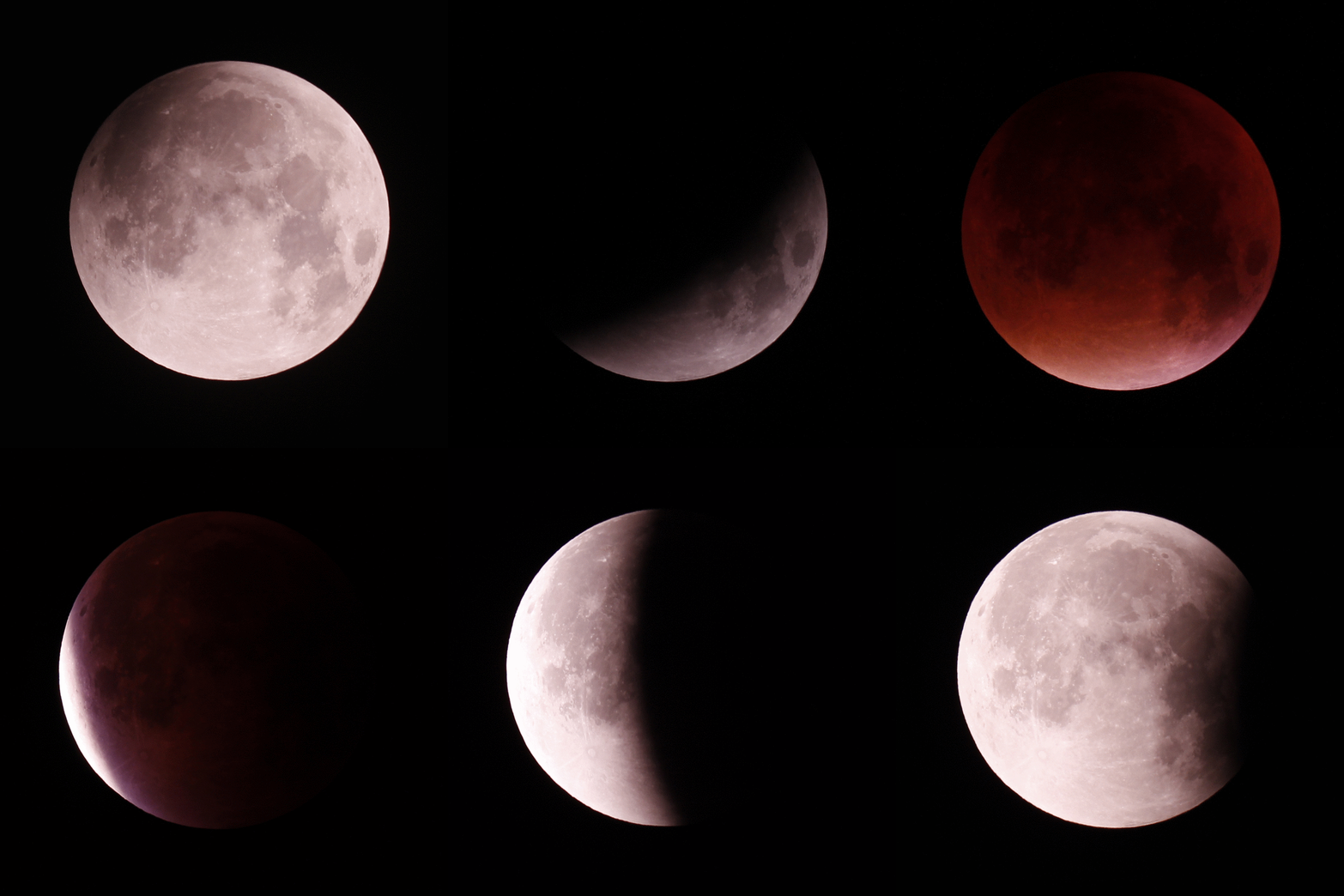
For once everything was perfect: a clear sky all night with a perfect view of the eclipse from start to finish.  I stayed up all night and would have to say it was one of the best, if not the best event I have so far experienced since taking up astronomy; apart from being an outstanding imaging opportunity, the ambiance throughout the eclipse was spellbinding.  I was therefore very pleased to obtain an excellent set of images of the entire eclipse, mainly using a prime focus camera set-up with the WO GT81 telescope but also with an alternative  camera and telephoto lens on a tripod.  The memory of that night will stay with me for a long while and, in part, helped to make up for the lost time since my operation in April.
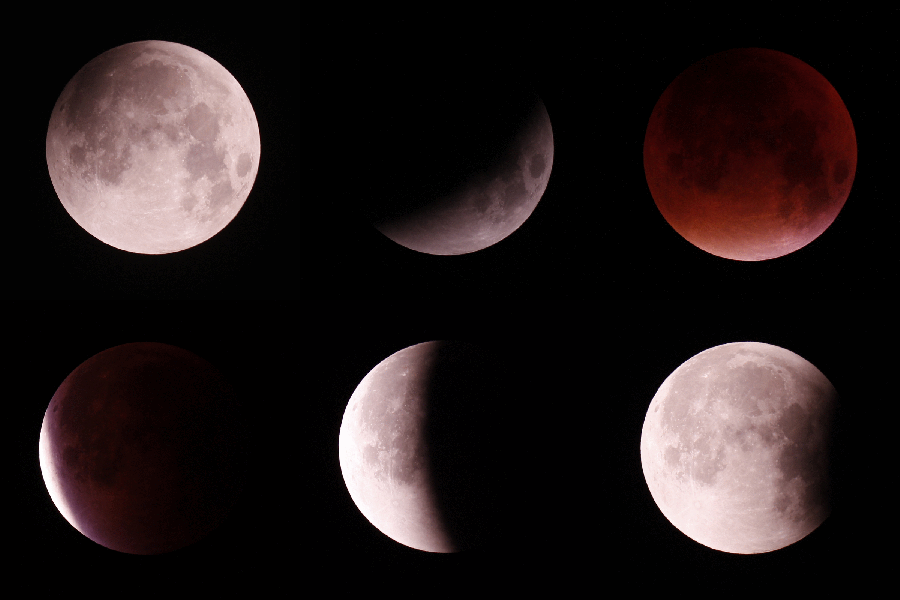
Eclipse Animation 28th September 2015

Eclipse Animation 28th September 2015

No Date Object Name
29 19/09/15 IC 5070 Pelican Nebula
30 19/09/15 NGC 6979 Pickering inc Veil Nebula
31 19/09/15 M15 Globular Cluster
32 19/09/15 M31 Andromeda
33 28/09/15 Lunar Eclipse Entry @ 1 sec intervals
  28/09/15 Lunar Eclipse Totality
  28/09/15 Lunar Eclipse Entry @ 1 sec intervals
34 28/09/15 Lunar Eclipse Exit – camera + tripod
35 30/09/15 IC 1318 Sadr Region (+NGC 6910)
36 30/09/15 IC 1318 Sadr Region – Pt2


OCTOBER TO DECEMBER

The final quarter of the year has been very frustrating due to the almost complete absence of suitable imaging conditions, mainly due to cloud cover but even when there was a few clear nights it was of course a full Moon – you can’t win!  I was particularly unhappy as this time marks the arrival of the constellation Orion and all its wonderful imaging opportunities, for which I had new plans.

Given the short focal length of the William Optics GT81 and relatively small aperture, used with a APS-C cropped sensor DSLR camera the resulting field-of-view is a quite large and, where possible, this year I’ve therefore concentrated on objects of 2.5o to 3.0o apparent dimensions.  Together with the modded camera this has resulted in some exciting new images of old and new objects.

However, large as the field-of-view is with this set-up, I have become increasingly aware of the simply enormous scale of some nebulous features such as Barnard’s Loop.  As a result I have become more interested in widefield imaging using just a camera and tripod.  Like prime focus imaging, widefield imaging will also benefit from achieving longer exposures through the use of tracking.  Early in this period I was fortunate to purchase a Vixen Polarie lightweight tracking mount for this purpose, but due to the aforementioned conditions I have unfortunately been unable to use it very much.  In fact it’s fair to say that other than some brief experimentation, it’s hardly been used at all so far.  Notwithstanding, I can see the potential and have high hopes for future imaging opportunities when the clouds part and the Moon is absent.

The year finished with a couple of other purchases that I hope will assist with imaging in 2016:

  • A new laptop – running Windows 10 with a core i7 Intel chip, 2 TB hard drive, 16 GB RAM, dedicated AMD graphics card and an HD 17.3” screen, which I hope will help improve post processing.  Running my preferred Windows 7 operating system, I will continue to use the smaller 13” i5 chip laptop for mount and camera control.
  • Ultra-Wide Angle lens – the truth is I’ve recently acquired this wonderful Sigma 10 – 22mm  f3.5 lens for a trip to the Grand Canyon in April, however, I will of course also be using it with the Vixen Polarie when the skies clear.
No Date Object Name
37 09/10/15 NGC 6888 Crescent Nebula
38 09/10/15 M 74 Spiral galaxy (near Pegasus)
39 09/10/15 NGC 7814 Little Sombrero
40 09/10/15 NGC 7479 Barred spiral galaxy
41 09/10/15 M 31 Andromeda galaxy
42 08/12/15 NGC 1499 California Nebula
43 08/12/15 IC 405 Flaming Star Nebula
44 08/12/15 NGC 2264 Cone Nebula
45 09/12/15 M42 Great Orion Nebula etc
46 08/12/15 Orion Constellation


Favourite Images

Despite the lack of activity this year I have been fortunate to obtain some good images and I can only hope 2016 will be just as rewarding.  Acting as judge and jury, my personal favourites in no particular order are:
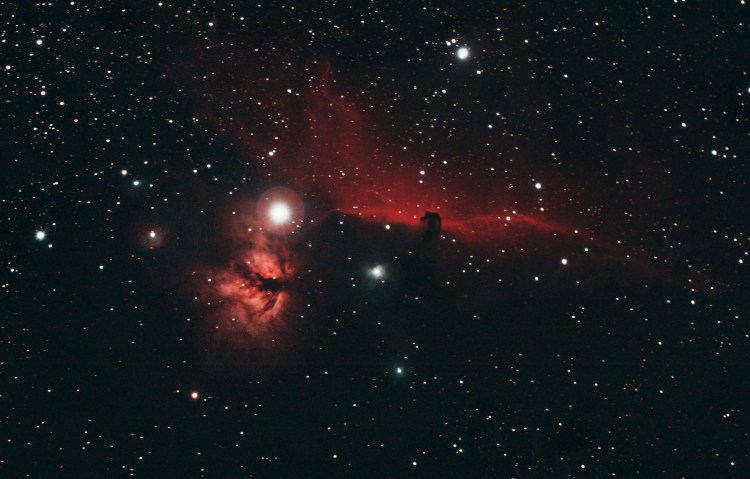
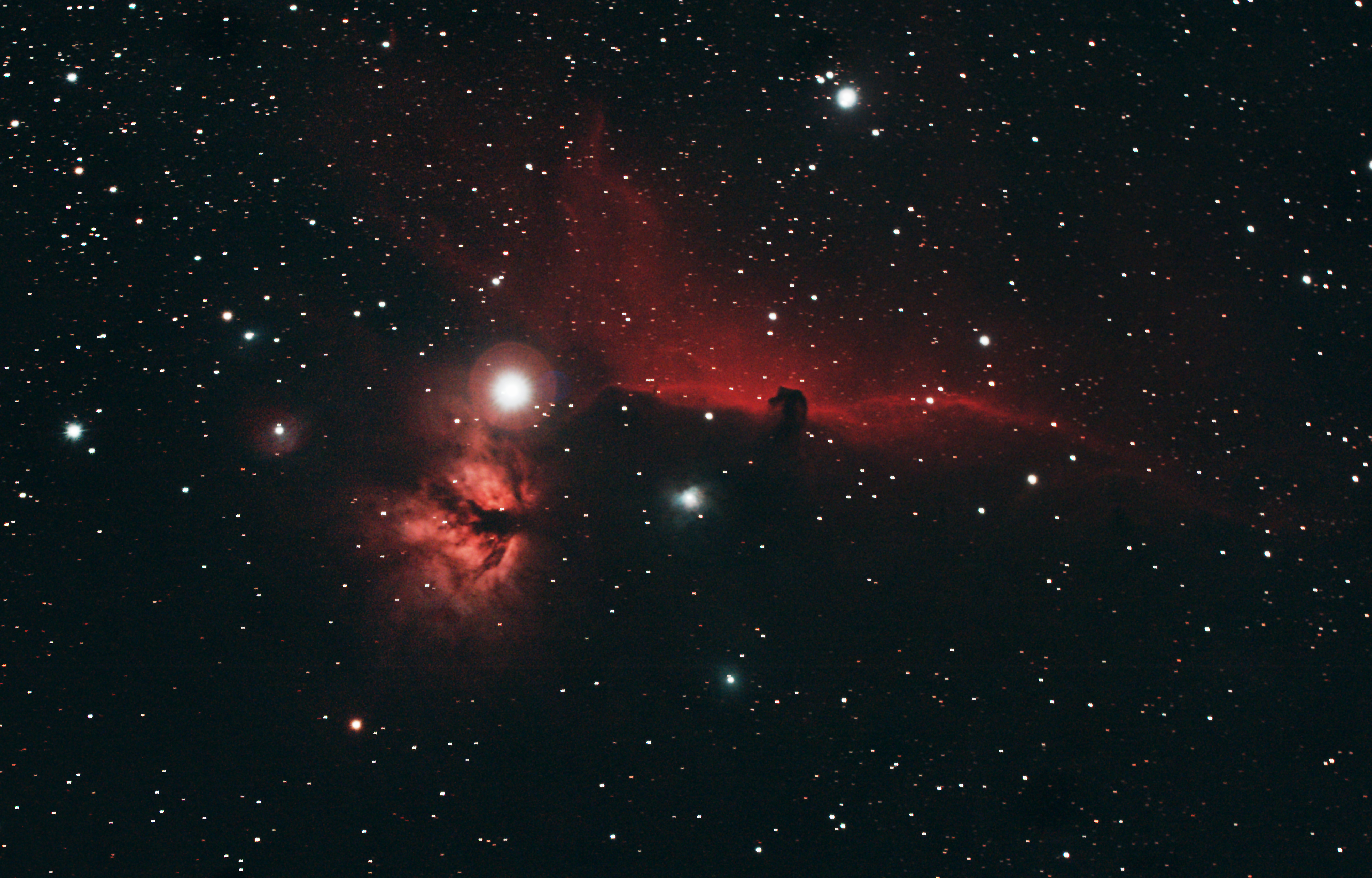
NGC 2024 Flame Nebula & Horsehead Nebula WO GT81 + modded Canon 550D & FF | 10 x 180 secs @ ISO 800 & darks calibration | 8th February 2015

NGC 2024 Flame Nebula & Horsehead Nebula
WO GT81 + modded Canon 550D & FF | 10 x 180 secs @ ISO 800 & darks calibration | 8th February 2015

 

Eclipse: Inward sequence from umbral contact to totality WO GT81 + Canon 700D + FF | 1/500 to 1/3 sec @ ISO 100 | 18th September 2015

Eclipse: Inward sequence from umbral contact to totality
WO GT81 + Canon 700D + FF | 1/500 to 1/3 sec @ ISO 100 | 18th September 2015
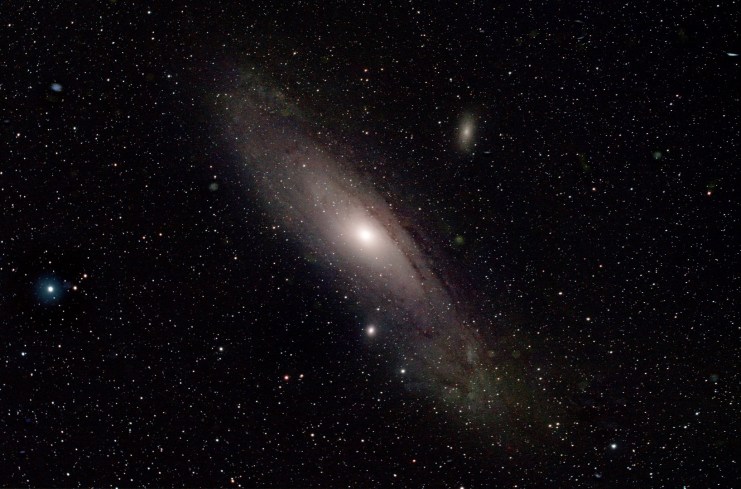
 

M31 Andromeda Galaxy WO GT 81 + modded Canon 550D + FF | 9 x 120 secs @ ISO 1,600 | 19th September 2015

M31 Andromeda Galaxy
WO GT 81 + modded Canon 550D + FF | 9 x 120 secs @ ISO 1,600 | 19th September 2015

 

??????????????

Goals for 2016

After the year that’s just finished I am reluctant to set out goals for 2016 but here goes:

  • Increase imaging exposure times: This is a euphemism for (a) improving equipment set-up and alignment, and (b) start autoguiding. As previously outlined, I have been struggling with both of these issues but one way or another I have to overcome the problems in order to obtain exposure times of at least 5-minutes and hopefully longer;
  • Improve processing: I was pleased to get to grips with Photoshop in 2015, albeit using a very old version, which together with other minor improvements to processing has added to the quality of the final images.  However, I know that even now there is more to be teased out of the existing imaging data for which I am already considering new software;
  • Start widefield imaging: First I just need clear skies in order to get out and start using the Vixen Polarie tracking mount from Fairvale Observatory, with the initial objective of imaging Barnard’s Loop, which has hitherto proved elusive to my current set-up.  However, one of the attractions of the Polarie-DSLR-Tripod combination is its portability, which I’d like to put to good use in 2016 by visiting dark sky areas in the UK.

There are other possible developments which at the moment seem unlikely to eventuate but you never know: a larger probably SCT telescope, a cooled CCD camera, and / or a permanent observatory (well I can dream can’t I?).


So all things considered 2015 was a good but not great year.  As a fundamental and important development I had really hoped to start autoguiding and thus increase exposure times but it was not to be.  Certainly the loss of astronomy time between April and September was a major set-back in many different ways.  Notwithstanding, during the remaining times available when I did manage to get outside I believe I achieved some of my best images to date and discovered many new and exciting objects in the night sky, which can’t be bad.  In particular, I am sure the lunar eclipse in September will remain a highlight of my astronomy experiences for many years to come.
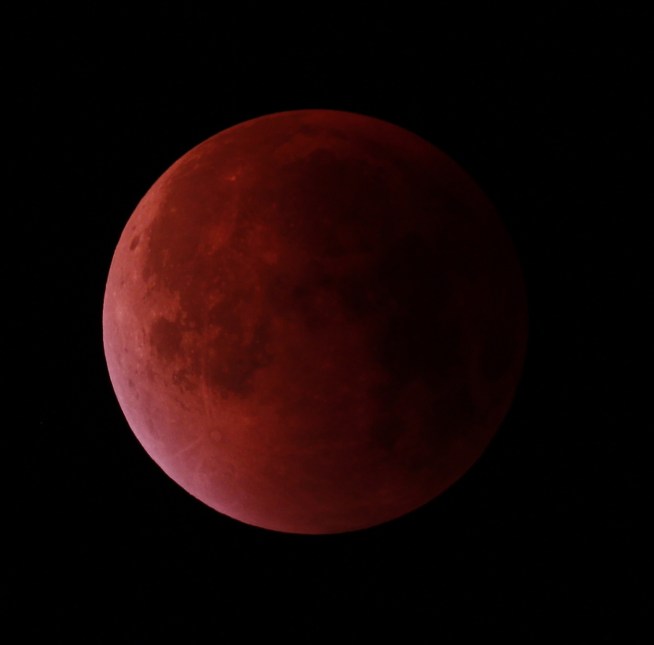
Harvest Moon at Totality WO + Canon 700D + FF | 1/3rd Sec @ ISO 400 | 28th September 2015

Harvest Moon at Totality
WO + Canon 700D + FF | 1/3rd Sec @ ISO 400 | 28th September 2015


I’m now looking forwards to 12-months of uninterrupted astronomy, clear skies and plenty to report in the WTSM blog at the end of 2016!

Watch this space!
Spaceship Earth

bbbb

I’m now into my second year of ‘serious’ astronomy and astrophotography, which accompanied by a greater knowledge of the Universe has brought an element of familiarity: with the equipment, with viewing & imaging techniques and space itself.  In the past I have worked underground as a geologist on mines and like to think that I have good spatial awareness.  Through this growing familiarity and knowledge of the night sky, I have become increasingly aware of our place in the Universe and how we on Earth are travelling through space; I also feel a growing empathy other peoples such as mariners who use and relate to the sky and space in a way ordinary people do not.

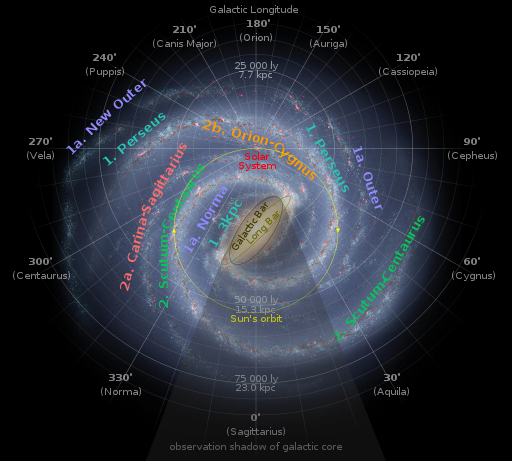
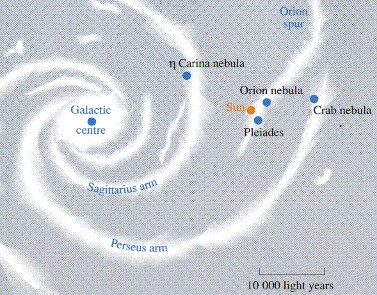
Whilst spinning on its axis at 1,037 mph at the equator (653 mph here at Fairvale Observatory’s higher latitude), the Earth is moving at about 70,000 mph round the Sun.  Furthermore, located in the Orion-Cygnus arm of the Milky Way, the Solar System is also moving around the spiral galaxy at 500,000 mph, resulting in a galactic year of nearly 250,000 Earth years .  Notwithstanding these complex and frankly mind boggling statistics, it thankfully all feels quite serene when outside at night with my telescope at Fairvale Observatory.

Milky_Way_Arms_ssc2008-10


Going back some 5,000 years the constellations might seem to describe the ‘shape’ of space and provide a sense of stability to the sky but this is misleading.  These and other asterisms are 2D patterns that mankind has created for practical use, whereas in reality most of the stars that make up these patterns bear little if any meaningful relationship with each other when viewed in 3D – like this animation showing the true shape of Orion.

spiralArms

Furthermore, under the force of gravity and other as yet unknown influences e.g. dark energy, these too are moving through space in their own way at vast speeds.  In reality the constellations are therefore anything but permanent and through the millennia their apparent shapes change and will eventually be destroyed as far as we on Earth are concerned.  As with my professional subject geology, this is the problem with space – it is very big and the timescales are very, very large, essentially beyond human comprehension, which result in otherwise unimaginable events; this animation wonderfully illustrates the scale and complexity of the known Universe.

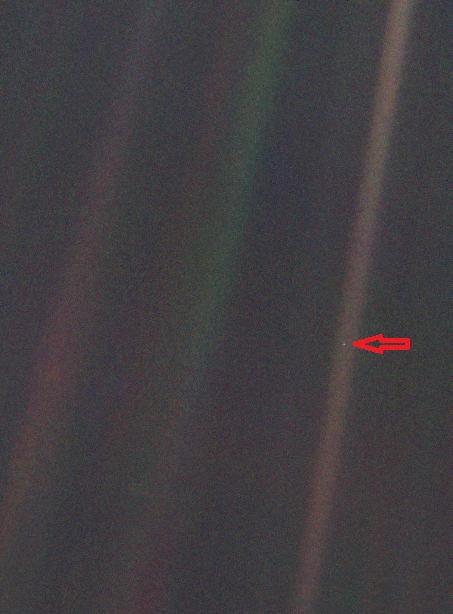
Space selfie - the insignificance of Earth. The Pale Blue Spot photograph of Earth (right side of picture) taken 6 billion kilometers (40.5 AU) away by Voyager-1 on February 14th 1990,

Space selfie = the insignificance of Earth.
The Pale Blue Spot photograph of Earth (right side of picture) taken 6 billion kilometers (40.5 AU) away by Voyager-1 on February 14th 1990,

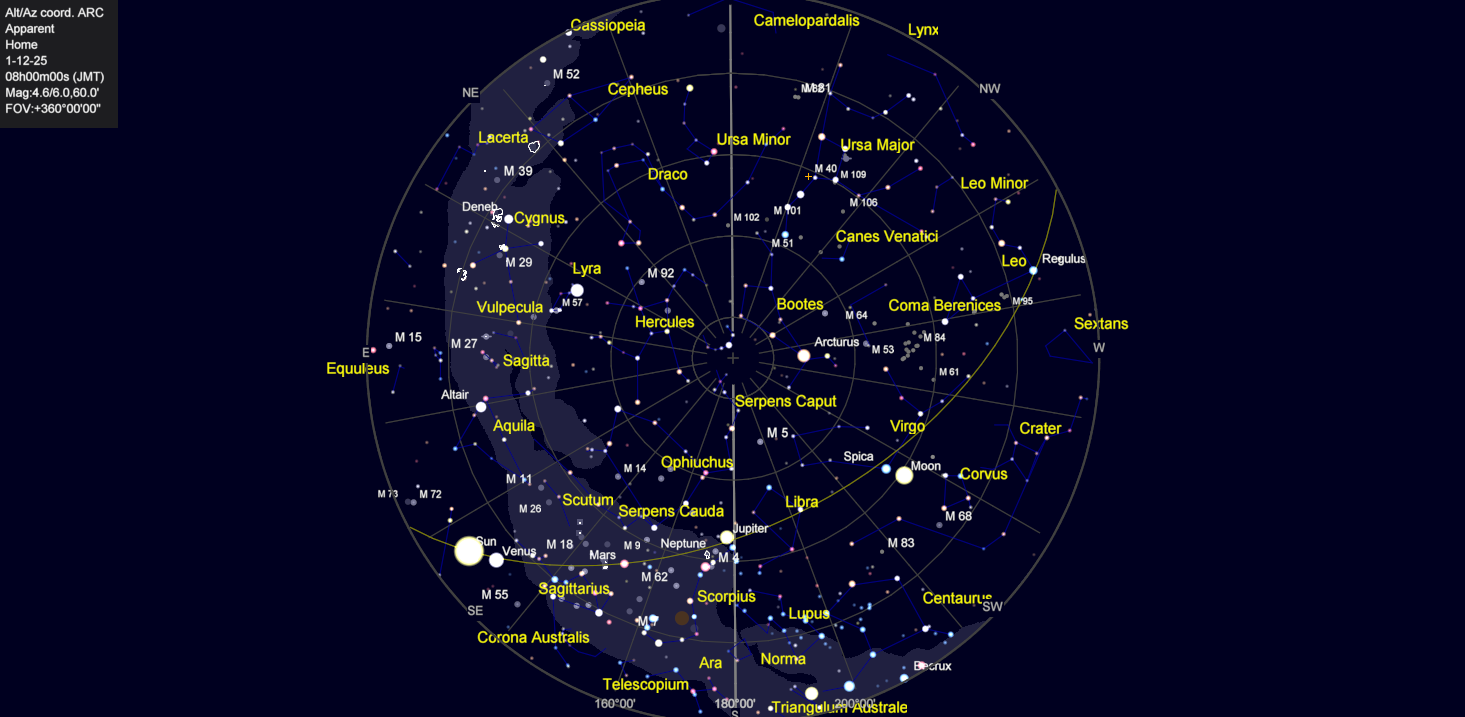
The beauty of such a system is that it can be modelled very accurately, from which it is possible to predict with great certainty the projected position of all these celestial objects, thus making spaceflight and the prediction of astronomical events possible.  Likewise using the same data modelling it is possible to look backwards at past events.  Such computerisation is no longer just the preserve of NASA and University academics but is at our fingertips using a computer based planetarium, in my case Carte du Ciel – incredible!

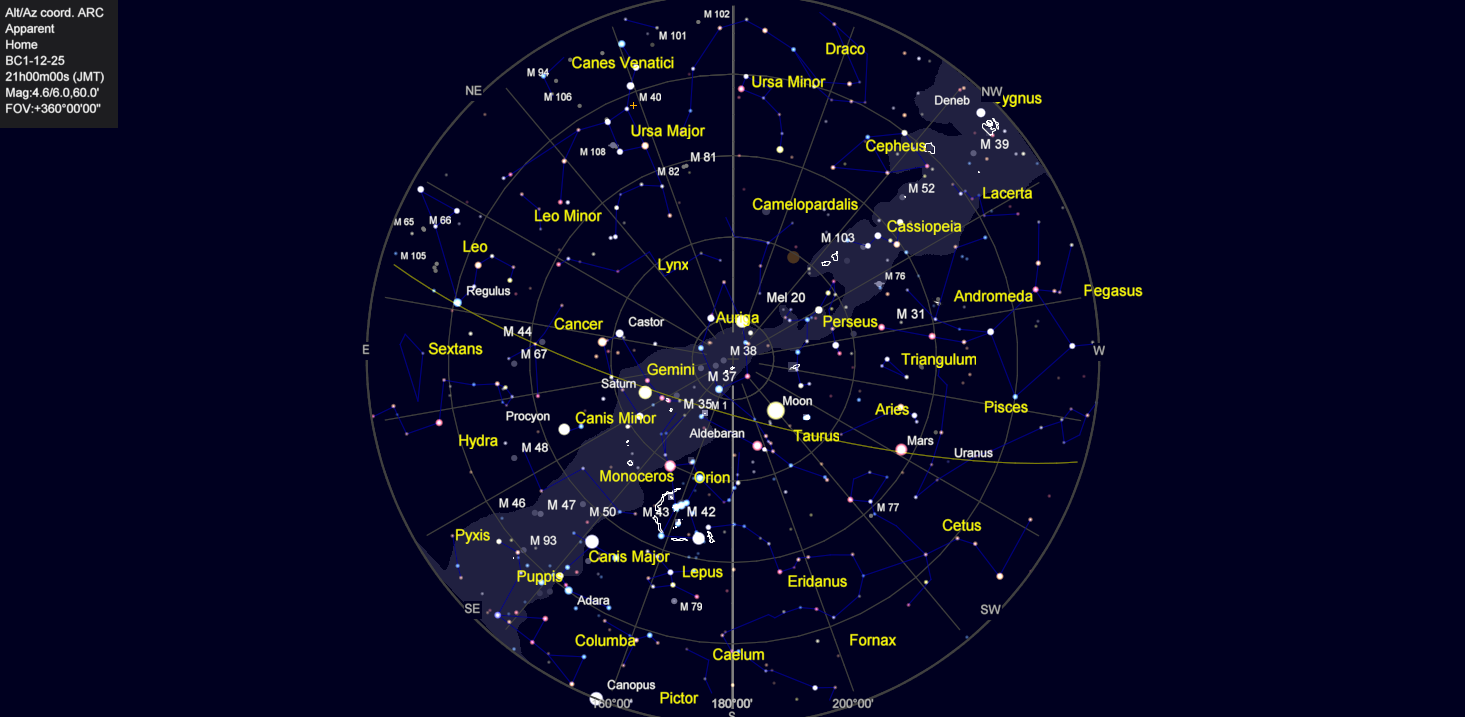
Given the time of year I have therefore used the aforesaid programme to generate a view of the night sky from Bethlehem 2015 years ago on the morning and evening of 25th December.  Even then differences can be seen in the shape of the constellations compared to now.  If we are to believe the story of the Three Wise Men following a bight ‘star’ at this time, it seems it would be most likely to be in the morning when first Jupiter and then Venus are present.  Either way it’s fascinating to be able to model the night sky in this way for any chosen moment in time.

xmas.cdc5


xmas.cdc3


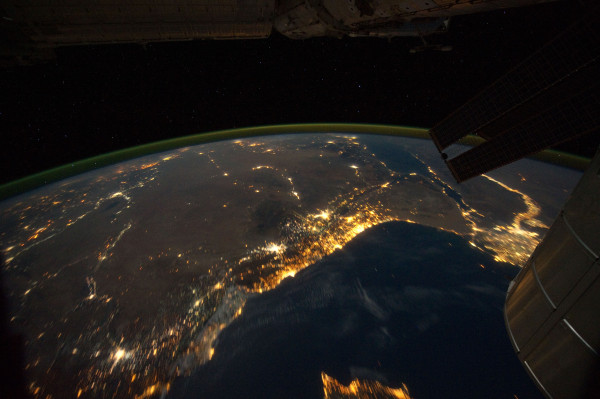
Santa's view of Bethlehem - actually from the ISS on 24th December 2011

Santa’s view of Bethlehem from the ISS on 24th December 2011

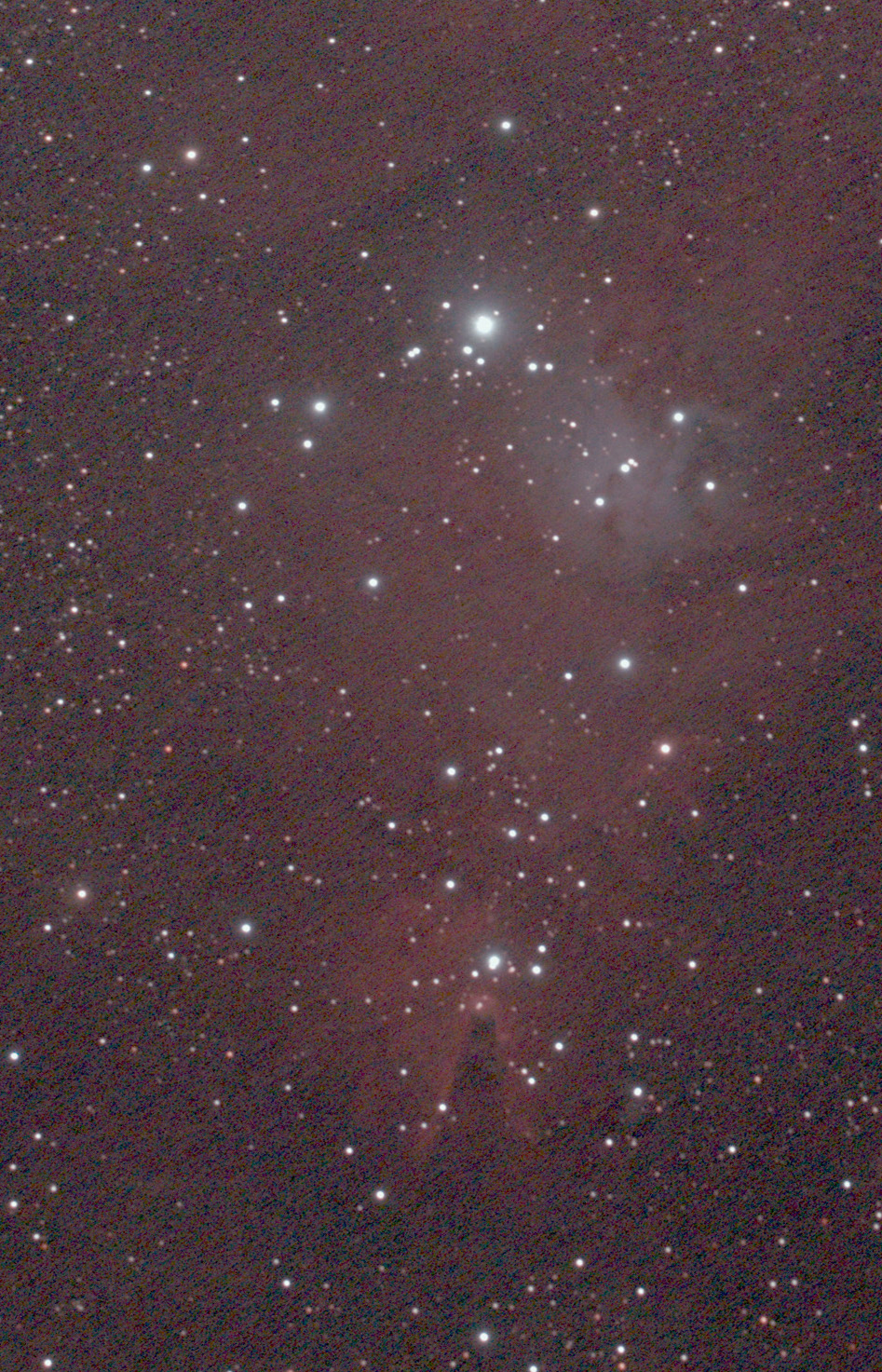
After weeks of cloud cover I recently managed to get outside again for what turned out to be a wonderfully clear night, from dawn to dusk, furthermore there was no Moon!  As a result imaging was productive and included some exciting new objects.  However, again given the time of year for the moment I am repeating an object used last Christmas.  One year on the difference is that this time I have used a  modded Canon 550D DSLR camera and thus improved (I think) the red Ha-light detail.

Cone Nebula & Christmas Tree Cluster WO GT81 + Modded Canon 550D & FF | 15 sec @ ISO 1,600 + calibration | 8th December 2015

Cone Nebula & Christmas Tree Cluster – right of centre
WO GT81 + Modded Canon 550D & FF | 15 sec @ ISO 1,600 + calibration | 8th December 2015


Cone Nebula (bottom centre) & Christmas Tree Cluster (inverted)

Cone Nebula (bottom centre) & Christmas Tree Cluster (inverted)

NGC 2264 or Christmas Tree cluster and its neighbour the Cone Nebula are located within the Monoceros AKA Unicorn constellation, which being part of the Milky Way are therefore inextricably linked to a similar destiny as spaceship Earth as it makes its way through space.  Being some 2,700 light-years away we are unlikely to meet, though you never know with space and time!

HAPPY CHRISTMAS

HAPPY CHRISTMAS


Parting Shot

I thought I was finished with Orion for this winter but a high pressure system and clear weather provided an unexpected opportunity on Sunday evening that I couldn’t resist.  The good news: as Orion is passing the Meridian by 8.00 pm it provides an early start.  The bad news: being near Gatwick Airport, at this time of the evening the sky is full of aeroplanes at Fairvale Observatory, most of them flying directly through the Orion field of view!

With such good weather, I also decided to try out computer control for the first time.  I installed EQMOD before Christmas and have since been reading and watching tutorials on its use and experimented operating with it indoors.  Frankly I am somewhat intimidated by the large collection of software that is required to go to the next level with imaging and EQMOD is just the first step.  However, eventually I just have to do it and this would be the night to start!

EQMOD is a software project written and run by enthusiasts which provides computer control to the mount, thus dispensing with the SynScan handset. It also does much, much more and in general provides far superior control and flexibility, in particular linking control with a chosen planetarium programme – usually either the excellent Stellarium or Carte du Ciel, all of which is free!

Notwithstanding, I still have the major problem of polar alignment as my house completely obstructs all views of the northern sky. For the moment I adopted a belt-and-braces approach, first achieving polar alignment using the SynScan routine before switching to EQMOD control; once comfortable using EQMOD I plan to try out alignment software called Alignmaster, which I hope will allow me to completely dispel with SynScan.  On this occasion EQMOD worked a treat.  For alignment, just clicking on the object you want to see in the planetarium software (with which EQMOD is linked), the telescope slews and after accurately aligning the scope with the star you press a sync button. It’s so quick that it is easy to rapidly establish five or six (or more) star alignment points, thereby constructing a triangular matrix from which the mount can then track more accurately.  There are many other features I have yet to use but so far I like what I see and am in awe of those who have written and maintain the system.

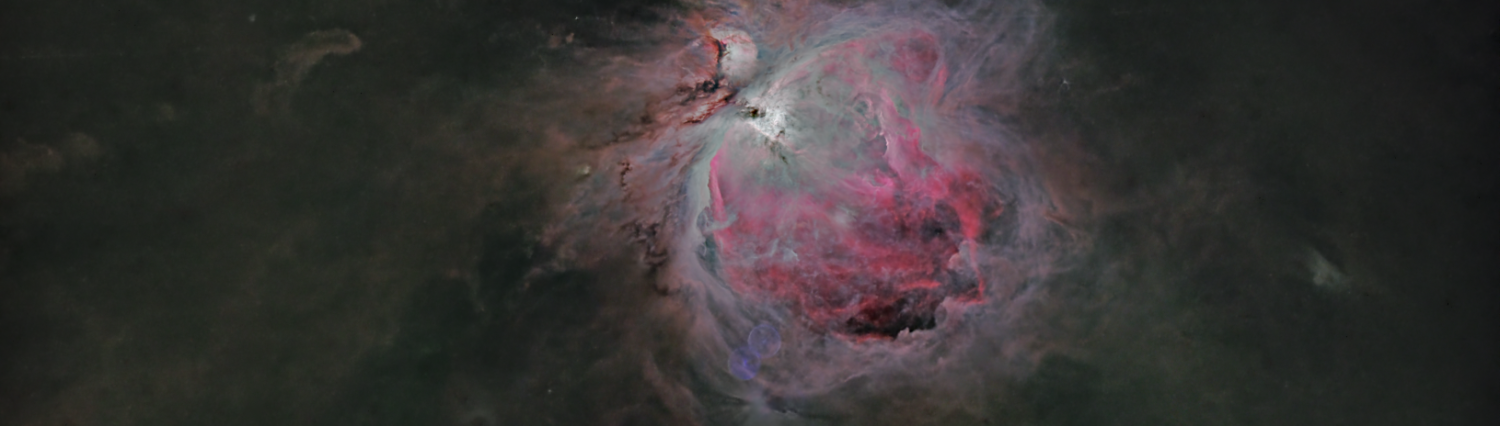
With EQMOD computer control thus established successfully, I set out to image some old ‘friends’ in Orion.  Having only recently acquired a modded Canon 550D, it seemed only right to take another look at M42 the Great Orion Nebula and The Flame and Horsehead nebulae.

The impact of modification was immediately evident with M42, it now being much redder than before and with greater detail exhibited in the nebulosity.  The tracking also looked OK, though a few stars looked a little bloated, suggesting there’s still work to do on another day i.e. autoguiding.

Orion's Sword: M42 The Great Orion Nebula, Running Man Nebula & NGC 1981 Star Cluster WO GT81 + modded Canon 550D & FF | 10 x 180 secs @ ISO 800 & darks calibration | 8th February 2015

Orion’s Sword: M42 The Great Orion Nebula, Running Man Nebula & NGC 1981 Star Cluster
WO GT81 + modded Canon 550D & FF | 10 x 180 secs @ ISO 800 & darks calibration | 8th February 2015

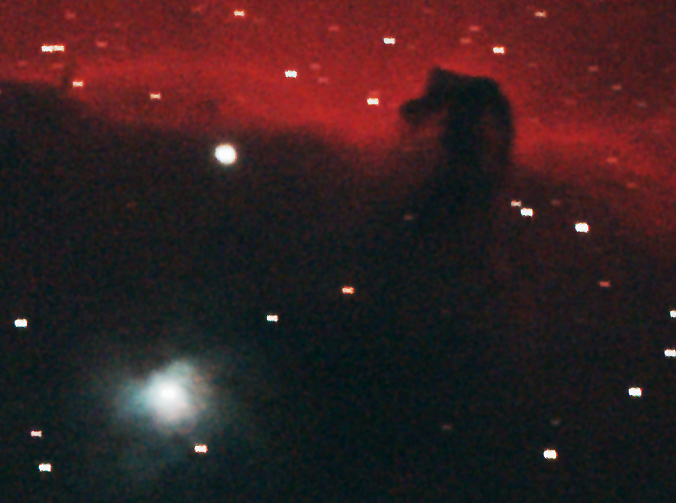
The Flame and Horsehead nebulae also show similar improvements and, in the case of the Horsehead, the actual ‘head’ is much clearer than before.

NGC 2024 Flame Nebula & Horsehead Nebula WO GT81 + modded Canon 550D & FF | 10 x 180 secs @ ISO 800 & darks calibration | 8th February 2015

NGC 2024 Flame & Horsehead Nebula; NGS 2023 relection nebula just below/left of the Horsehead  
WO GT81 + modded Canon 550D & FF | 10 x 180 secs @ ISO 800 & darks calibration | 8th February 2015

With Orion by now well past the Meridian and the weather holding up well I then decided to try my luck once again with Jupiter, which by now is well located high in the south east sky.  Unfortunately like sport, astronomy is a game of two halves.  Following the success using EQMOD my experience with Jupiter was a complete failure.

I had previously encountered significant problems with my webcam last year, that mostly stemmed from problems with the capture software and it was here that I was to stumble (fall more like it) once again.  Initially Firecapture seemed to boot up OK and recognised the camera, though try as I may I could not see Jupiter on the screen; I knew it was there as I had previously centred and focussed it there.  I therefore decided to reboot the software, which was a big mistake.  This time Firecapture would not recognise the camera and on trying to de-bug the problem I ended up with the dreaded ‘black screen of death’.  Here was the downside of computer control, with the black screen going nowhere I also lost all control of the mount!  I therefore retreated to SynScan, parked the telescope and deliberately crashed the computer; I have not yet investigated the problem further since then – watch this space!
It was therefore something of an ignominious end to the evening.  However, I was still buoyed by the earlier success of EQMOD and more than happy with what may be my parting shot of Orion for this winter. Au revoir.

Horsehead Nebula with the NGC 2023 reflection nebula, bottom left

Horsehead Nebula with the NGC 2023 reflection nebula, bottom left