Seeing Stars

Of all the incredible features that constitute the Universe, located relatively close to home, I always marvel at the nature of globular clusters.  Largely unknown by the lay person and myself until I took-up astronomy, more than 150 of these incredible objects orbit around the Milky Way in the form of a spherical halo both above and below the galactic disc.  Between galaxy season (March – April) and the appearance of the Sagittarius arm of the Milky Way in the summer, is the globular so-called cluster season, which is heralded by the arrival of M3, one of the brightest and most popular of the clusters.

M3 was discovered by Charles Messier in 1764 but only correctly identified as a globular cluster twenty years later by William Herschel.  Consisting of more than 500,000 million stars, of which at least 274 are variable stars, it is estimated to be over 11-billion years old, thus being some of the oldest stars in the Universe.

Using data gathered remotely from a Takahashi 106 FSQ situated in the dark skies of New Mexico, USA, the resulting image shows this spectacular object in all its glory.  Apart from the marvellous star details within the cropped version of M3 (see top of the page), there’s also much to see and enjoy in the original widefield image (see above), that is also bountiful of colourful stars as well as several galaxies.  Altogether I’m very pleased with the final image, which is probably my best globular cluster so far.

 IMAGING DETAILS
ObjectM3 Globular Cluster AKA NGC 5272
ConstellationCanes Venatici
Distance34,000 light-years
Size 18 arc minutes, which spans approx. 180 light-years
Apparent Magnitude+6.2
  
Scope Takahashi FSQ 106  FL 530mm  f/5  +  Moonlight Nightcrawler focuser  
MountParamount MyT
GuidingYes
CameraQSI 683-WSG8    KAF-8300 full frame CCD sensor   5.4nm pixels  
 FOV 1.94o x 1.46o   Resolution 2.1”/pix.   Image array 3326 x 2,507 pix   
ProcessingDeep Sky Stacker,  PixInsight v1.8.9-1
Image Location              & OrientationCentre – RA 13:42:12.768      DEC +28:23:5.03                       
ExposuresL x12, R x12, G x19, B x12 x 300 secs  @ -20C Total Integration Time: 4hr 35min     
Calibration30 x 300 secs Darks   x56 Bias & x20 LRGB Flats   
Location & DarknessDeep Sky West – amateur hosting facility near Rowe, New Mexico  – USA    SQM Typically >= 21.7
Date & TimeMay 2018    

Nice But Dim

Abell 21 Combo All 2018 2020 RGB FINAL CROP (Large)

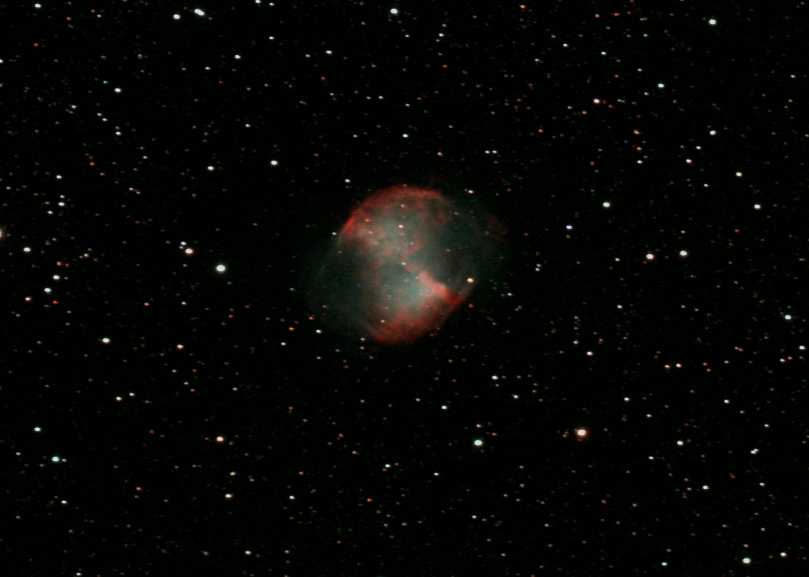
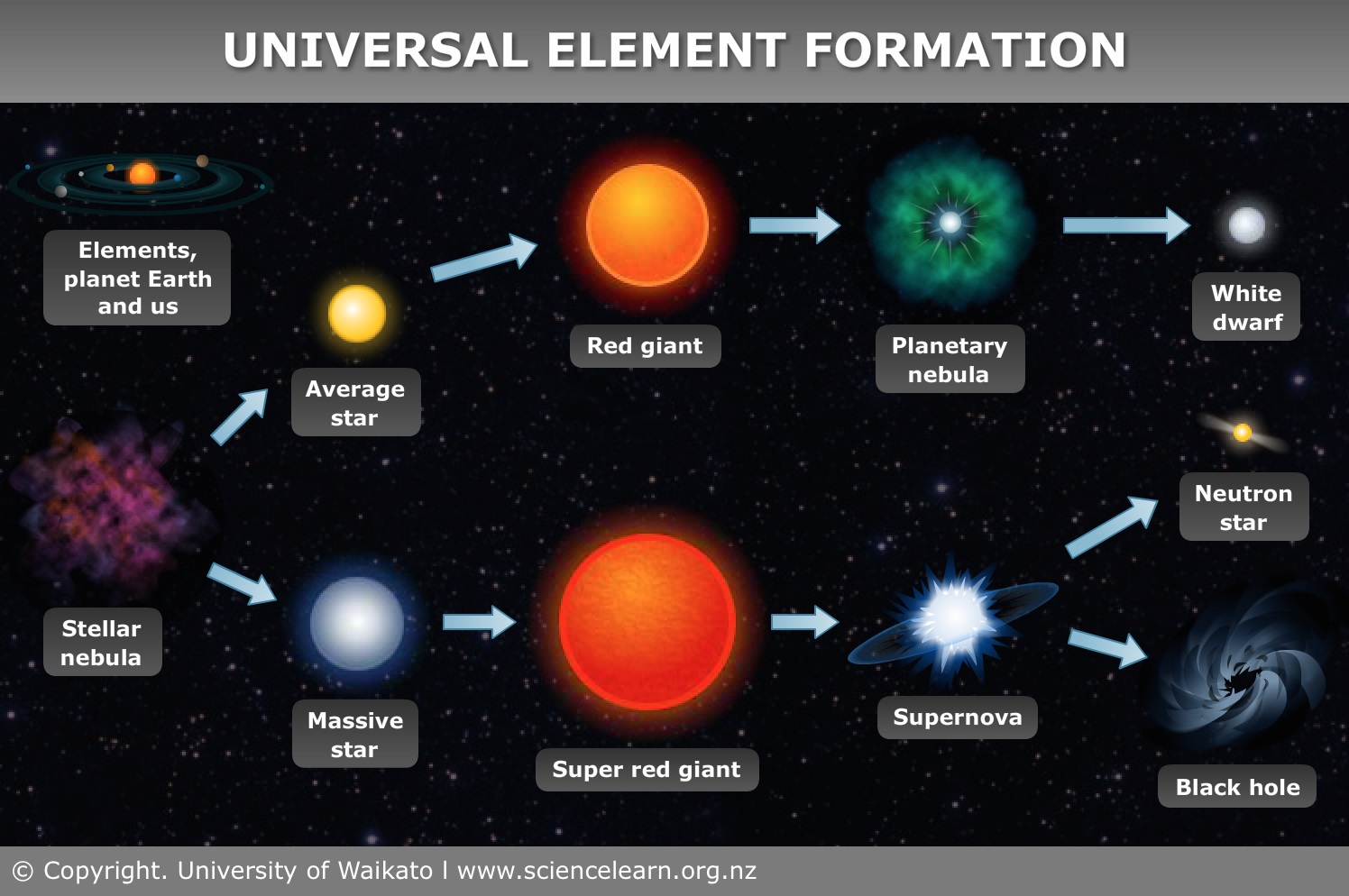
Contrary to appearance, a planetary nebula is not a planet but a emission nebula, an expanding shell of glowing ionized gas discharged from a red giant star at the end of its life.  At this late stage of stellar evolution the star runs out of fuel to burn, with the result that the outer layers are blown away and expand into space typically in the shape of a ring or bubble.  At the centre of the planetary nebula is the remnant of the star, which is left as a White Dwarf.

JEL_ITV_ElementFormation_BG-Plate_Updated_23Oct17

The term “planetary” nebula is therefore completely misleading and derives its name from none other than William Herschel, in an era when such objects were thought to look like planets.  We now believe some 10,000 planetary nebulae exist throughout the Milky Way, though only 1,500 have been identified (see NASA HST images below), including M57 the Ring Nebula and M27 the Dumbbell Nebula both popular amongst astrophotographers.

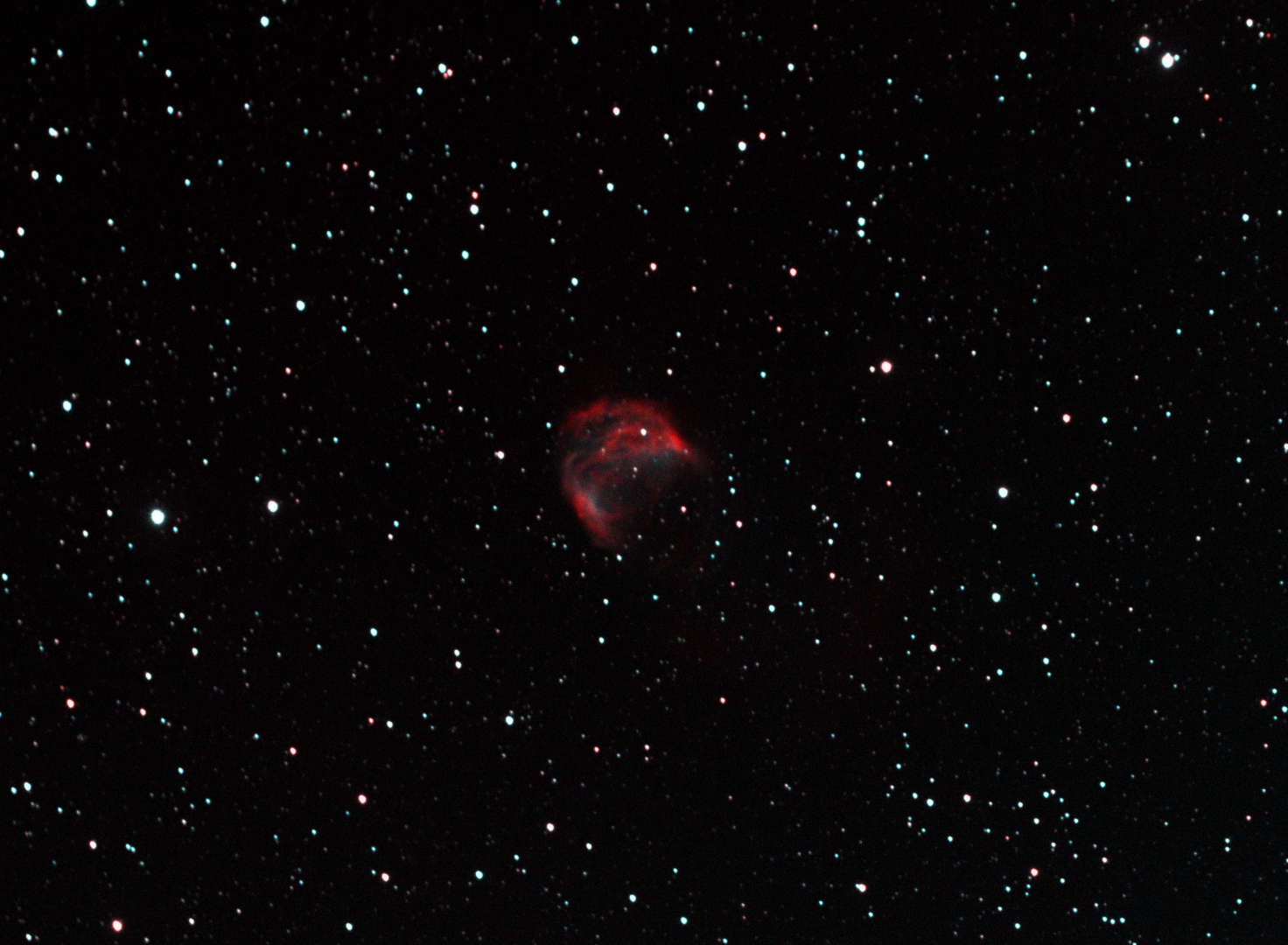
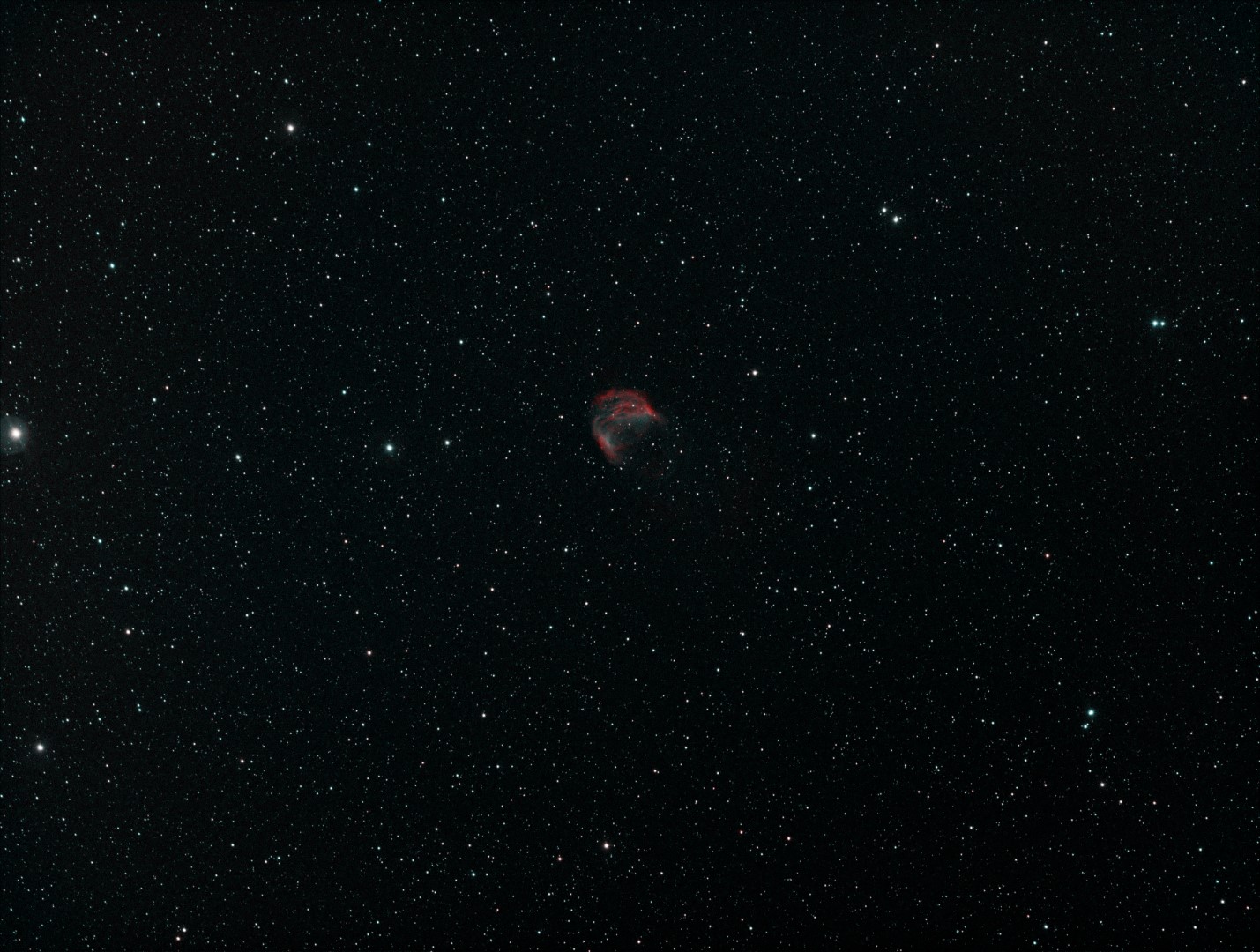
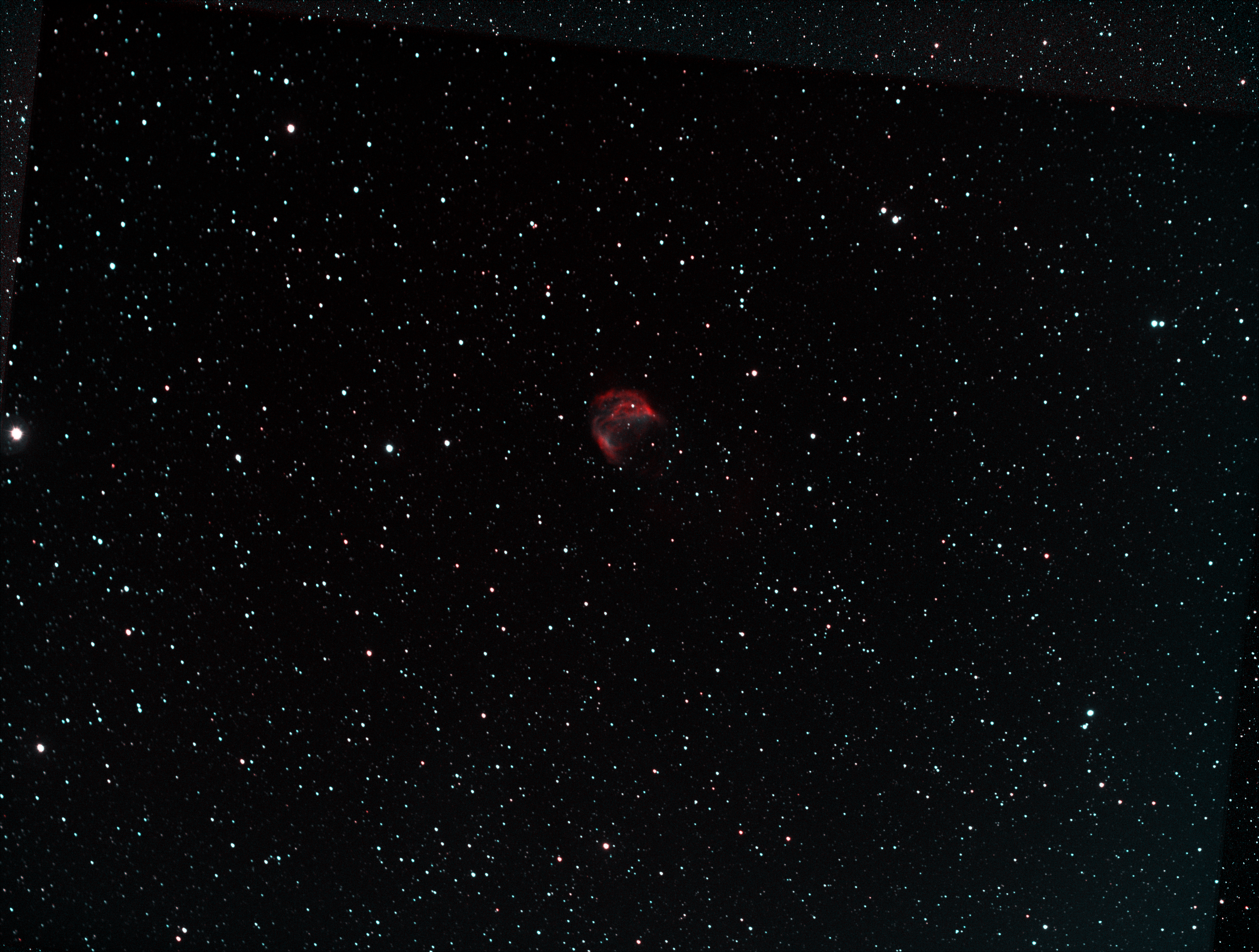
HST PNSuch objects are usually short lived and unfortunately small and faint, making them a challenge for smaller telescopes and Bortle 5-6 skies, such as I have at Fairvale Observatory.  However, I recently decided to return to the Medusa Nebula, a planetary nebula which I previously had imaged as a test in February 2018.  On that occasion the integration time was limited to only 75 minutes (see below), now the objective was to build on the previous data and thereby hopefully improve the image quality.

Abell 21 RGB 2018 Final (Large)

Combining the data from 2018 with that of 2020 resulted in a significant increase in total integration time to just over 5-hours, with the impact on the final image clearly noticeable (see top-of-the-page cropped and below uncropped – showing the difference in alignment between pre-plate solving 2018 & 2020 data), mainly in the form of reduced noise and better colour saturation.  I am a little surprised that the improvement was not greater but perhaps it’s a case of either (a) considerably more time is still required, particularly in the weak OIII wavelength,  or (b) it’s really too much of a challenge for my equipment?

However, looking at other images of the Medusa Nebula and considering its size and very low surface brightness, it’s obvious this is one of the more difficult planetary nebula objects to image and all things considered I’m happy with outcome new of this new version.

Abell 21 Combo All 2018 2020 RGB FINAL

IMAGING DETAILS
Object The Medusa Nebula  AKA Abell-21,  Sharpless 2-274 or PK205+14.1
Constellation Gemini
Distance 1,500 light-years
Size Approx.. 12’ x 9’
Apparent Magnitude +15.99
 
Scope  William Optics GT81 + Focal Reducer FL 382mm  f4.72
Mount SW AZ-EQ6 GT + EQASCOM computer control & Cartes du Ciel
Guiding William Optics 50mm guide scope
  + Starlight Xpress Lodestar X2 camera & PHD2 guiding
Camera ZWO1600MM-Cool mono  CMOS sensor
  FOV 2.65o x 2.0o Resolution 2.05”/pix  Max. image size 4,656 x 3,520 px   
EFW ZWOx8 + ZWO LRGB & Ha OIII SII 7nm filters 
Capture & Processing Astro Photography Tool + PHD2 +  Deep Sky Stacker & Photoshop CS3
Image Location              & Orientation Centre  RA 05:55:38      DEC 01:59:40  @20.49h                     

Image rotated 180o for presentation Top = South     

Exposures 37 x 300 sec  Ha, 25 x 300 sec RGB

Total Time 5hr 10 min   

  @ 139 Gain   21  Offset @ -20oC    
Calibration 5 x 300 sec Darks  20 x 1/4000 sec  Bias  10 x  Ha & OIII Flats  

@ ADU 25,000

Location & Darkness Fairvale Observatory – Redhill – Surrey – UK        Typically Bortle 5-6
Date & Time 11th February 2018  + 2nd &  3rd March 2020  @ +21.00h  
Weather Approx. 5oC   RH <=75%                  🌙 +29% waxing

Other Worlds

LRGB Image FINALX2 (Large)

Being galaxy season it was appropriate that the BAA spring meeting this year on 27th April was all about – galaxies.  This was my first BAA meeting and I’m pleased to say it was well attended and very worthwhile, I especially enjoyed the following presentations:

  • Prof. Richard Ellis: The Quest for “Cosmic Dawn”;
  • Prof. Chris Impey: Einstein’s Monsters: Black Holes at the Heart of Galaxies;
  • Stewart Moore: Galaxies: A Brief History of Discovery, and
  • Owen Brazell: Observing Galaxy Clusters.

It seems incredible that just 100-years ago the prevailing view was that Universe consisted entirely of the Milky Way, though that was soon about to change.  Whilst Immanuel Kant had proposed the possibility of galaxies outside our own as long ago as 1755, it was not until Edwin Hubble’s work at the Mount Wilson Observatory, California that the existence of other worlds, in the form of galaxies, was proven and accepted during the period between 1924 and 1929.

Following Copernicus’s controversial theory in 1543 that the Earth orbited the Sun, the evidence this time that there was much, much more beyond the Milky Way was equally profound in its implications, if not more so.  However, I was surprised to learn that it was Vesto Slipher and not Hubble who discovered the redshift of galaxies that was fundamental to understanding that galaxies existed outside the Milky Way that were moving away from us – it would seem to me that he deserves much greater credit as well as Hubble for this work.  The current estimate is that there are some 100 to 200 billion galaxies in the observable universe but new research now estimates that the total number is likely to be at least ten times greater!  Either way there are many other worlds out there.

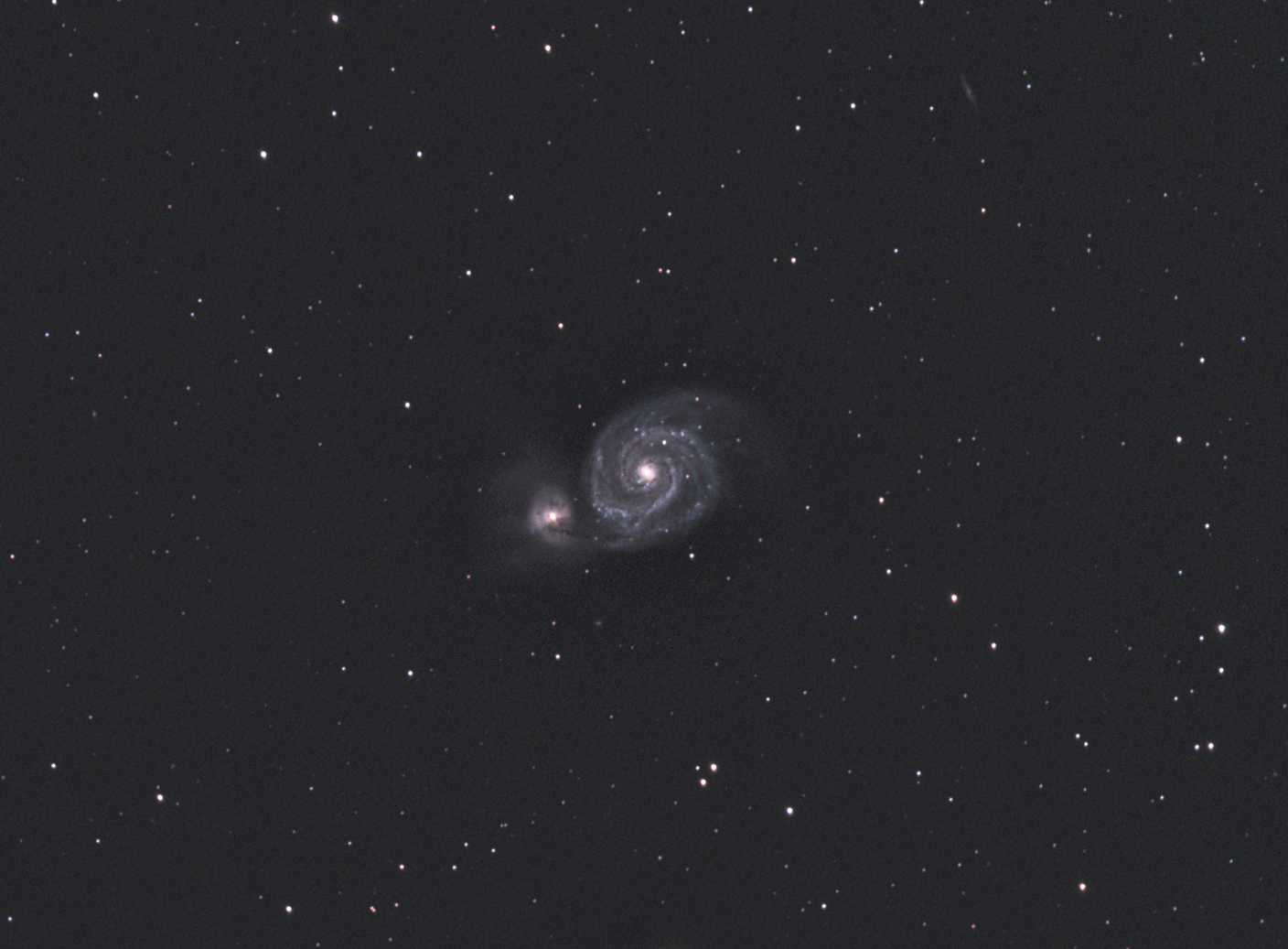
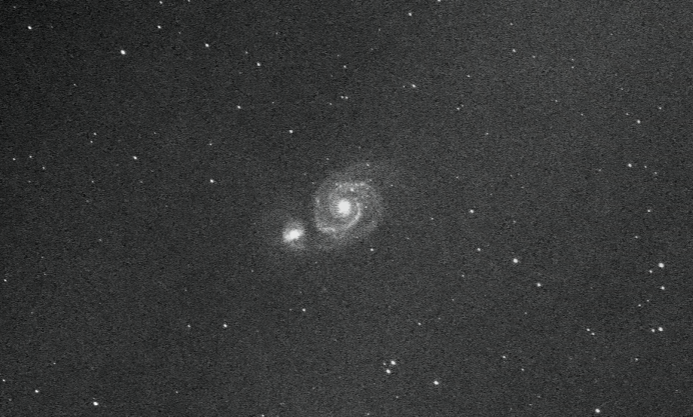
After recently learning that I could after all see and image a few larger galaxies from Fairvale Observatory  in-and-around the Ursa Major constellation, it was to my great delight when I then discovered that one of them was M51 AKA the Whirlpool Galaxy.  I’ve seen many images of this wonderful object and was frustrated that it seemed to be completely out of sight from here but thankfully that is not the case.  Armed with this knowledge, following an imaging session of M101 at the end of March, I therefore went on and immediately grabbed a single Luminance test sub of M51 (below) before it disappeared behind the roof of my house, (a) because I could, and (b) to see how it looked with my equipment.  The answer was that it was almost certainly a viable target for another night when more time was available.

M51 KStar

While located just above the star Alkaid in Ursa Major, M51 is now included within the nearby constellation Canes Venatici; created by Johannes Hevelius in the 17th Century, M51 was previously in Ursa Major.  One of the more famous grand-design spiral galaxies i.e. with prominent well-defined spiral arms, the Whirlpool Galaxy forms a striking image as it interacts and distorts the dwarf galaxy NGC 5195 located at the tail of its outer second arm.  The exquisite structure of M51 is further enhanced by large star-forming regions along the spirals, which are picked out by the associated hydrogen alpha gases.

CdC M51 location 100419 10pm

Timing is everything: M51 is in a tricky position seen from Fairvale Observatory, obscured for much of the time at the north viewing location by the house and from the south location by a 20ft hedge – in between there’s a maximum window of no more than 2.5 hours for imaging!

The smaller dimensions of the M51 galaxy would normally place it at the limit of my equipment for imaging but is helped by its aforementioned clear-cut features, strong colours, favourable apparent magnitude and its location towards the zenith immediately above my observatory.  This has long been in my top-10 ‘must-do’ imaging list but hitherto was thought to be out of view.  Unlike M101, which lies below Alkaid i.e. south, being further north the imaging time of M51 from Fairvale Observatory North is even shorter before it too retreats behind the rooftop.  However, this year I decided to move early to the summer location at the bottom of the garden – Fairvale Observatory South – where it was possible to gain a slightly longer view, though still only just over two hours before it disappears for the night, this time behind the adjacent 20-foot hedge!

It’s clear that the final LRGB image would be greatly enhanced with further integration time and the addition of Ha-wavelength but for now I’m content that at last I’ve managed to capture this spectacular object on camera.  Skies permitting I hope to return to the Whirlpool and its companion NGC 5195 as soon as possible.

IMAGING DETAILS
Object M51 The Whirlpool Galaxy & NGC 5951
Constellation Canes Venatici
Distance 23 million light-years
Size 11.2’ x 6.9’  or 43,000 light-years (M51 only)
Apparent Magnitude +8.4
 
Scope  William Optics GT81 + Focal Reducer FL 382mm  f4.72
Mount SW AZ-EQ6 GT + EQASCOM computer control & Cartes du Ciel
Guiding William Optics 50mm guide scope
  + Starlight Xpress Lodestar X2 camera & PHD2 guiding
Camera ZWO1600MM-Cool mono  CMOS sensor
  FOV 2.65o x 2.0o Resolution 2.05”/pix  Max. image size 4,656 x 3,520 pix   
EFW ZWO x8 ZWO LRGB & Ha OIII SII 7nm filters 
Capture & Processing Astro Photography Tool + PHD2 +  Deep Sky Stacker & Photoshop CS3
Image Location              & Orientation Centre  RA 13:30:03      DEC 47:11:43                     

Top  = South  Bottom = North 

Exposures (A)    L 18 x 180 sec  RG 9×180 sec  B 10 x 180                                                        (Total time: 2hr 18 minutes)   
  @ 139 Gain   21  Offset @ -20oC    
Calibration 10 x 180 sec  Darks  20 x 1/4000 sec Bias  10 x  HaLRGB Flats                                        @ ADU 25,000
Location & Darkness Fairvale Observatory – Redhill – Surrey – UK        Typically Bortle 5-6
Date & Time 10th April 2019 @ +22.00h  
Weather Approx. 6oC   RH 60%                  🌙 ¼ waxing

Hunting Orion

Combined +180 degrees 3+5min HaLRGB (Large)

In Greek mythology it is said that Zeus, the god of thunder, placed a giant huntsman amongst the stars as the constellation Orion.  Today it is one of the most recognizable of the 88 constellations in the night sky and certainly one of the most popular amongst astronomers.  Towards its extremities it is defined by the red supergiant star Betelgeuse at the top-left and the massive blue supergiant Rigel lower-right, divided in the centre by Orion’s so-called ‘belt’ formed by the line of bright stars from left-to-right: Alnitak, Alnilam and Mintaka.  These and the other stars that make up the constellation of Orion are of great interest to astronomers and also make an attractive widefield image with a standard camera.  But the more serious astrophotographer is mainly interested in the panoply of exciting DSOs that lie within and around Orion that I have therefore been pursuing myself since late January.

My quarry started with the Horsehead and Flame nebulae imaged in narrowband processed using the Hubble Palette technique in SHO to great effect.  Much to my surprise a spectacular period of warm weather and clear skies four weeks later then allowed me to capture the Great Orion Nebula over three nights in HaLRGB with an equally good result.  Such was the fine weather conditions that I was then able to continue over a further two nights – five consecutive nights of imaging in the UK in late February, unprecedented in my experience – with the objective now being the reflection nebula M78.

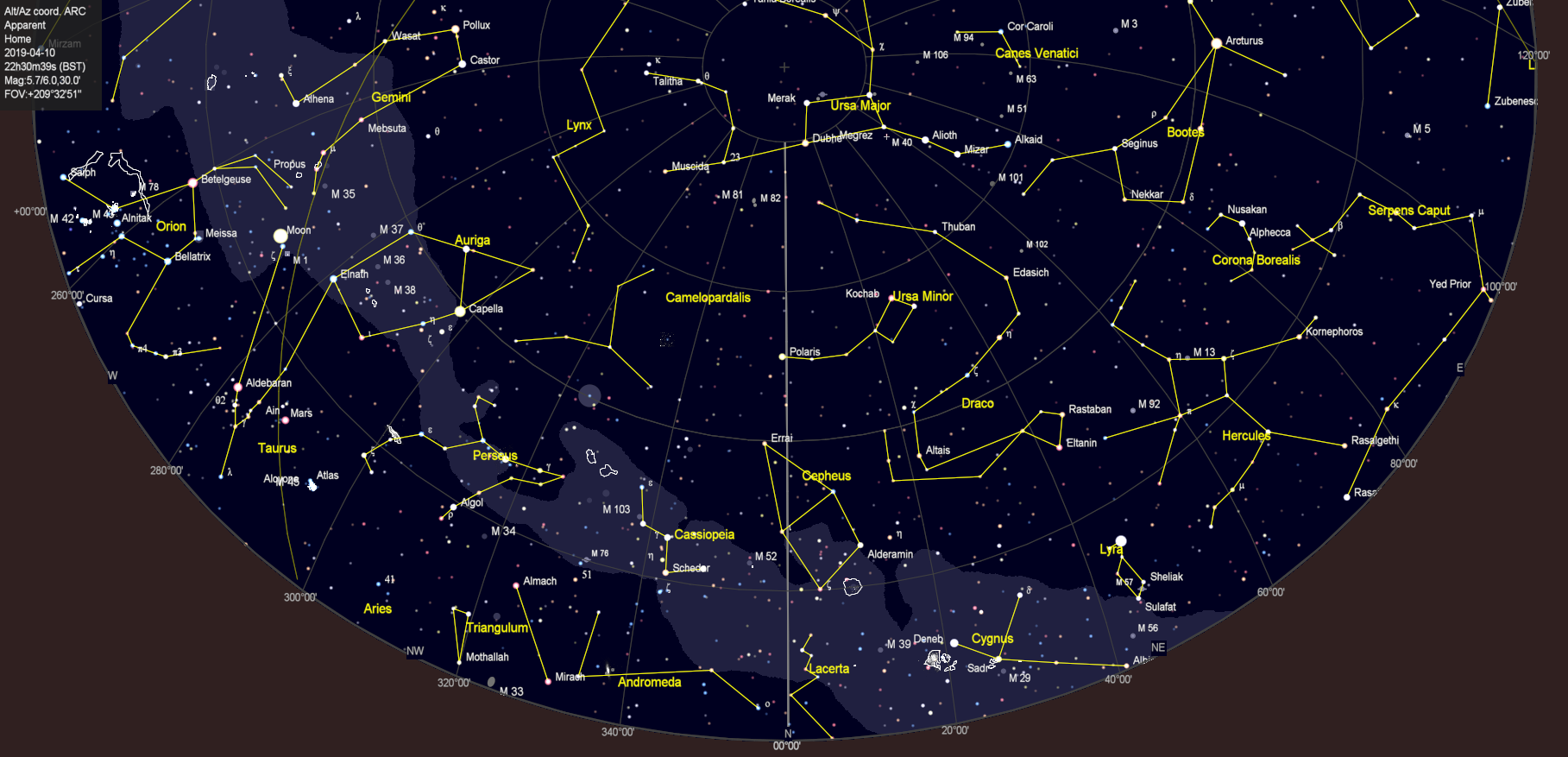
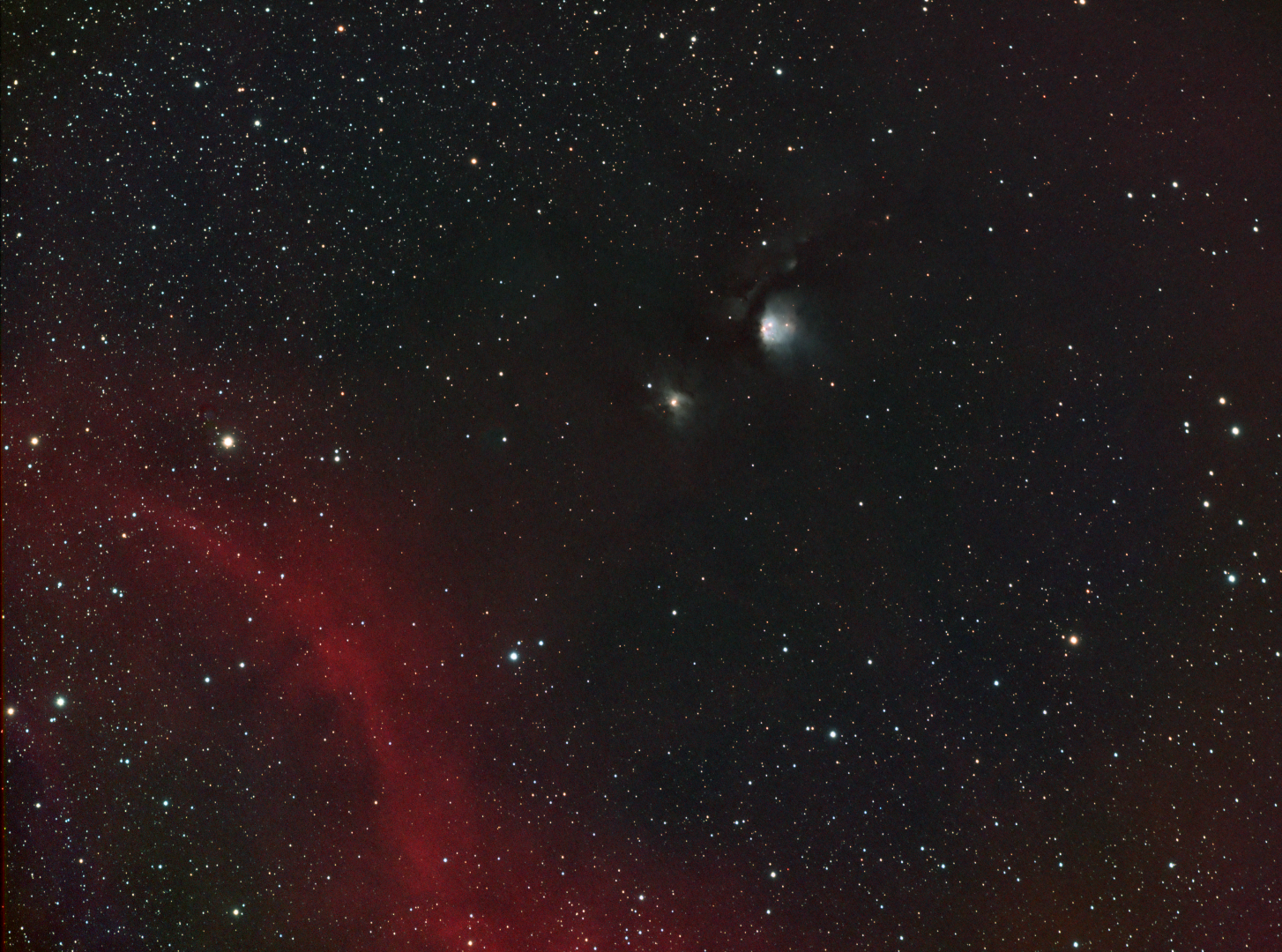
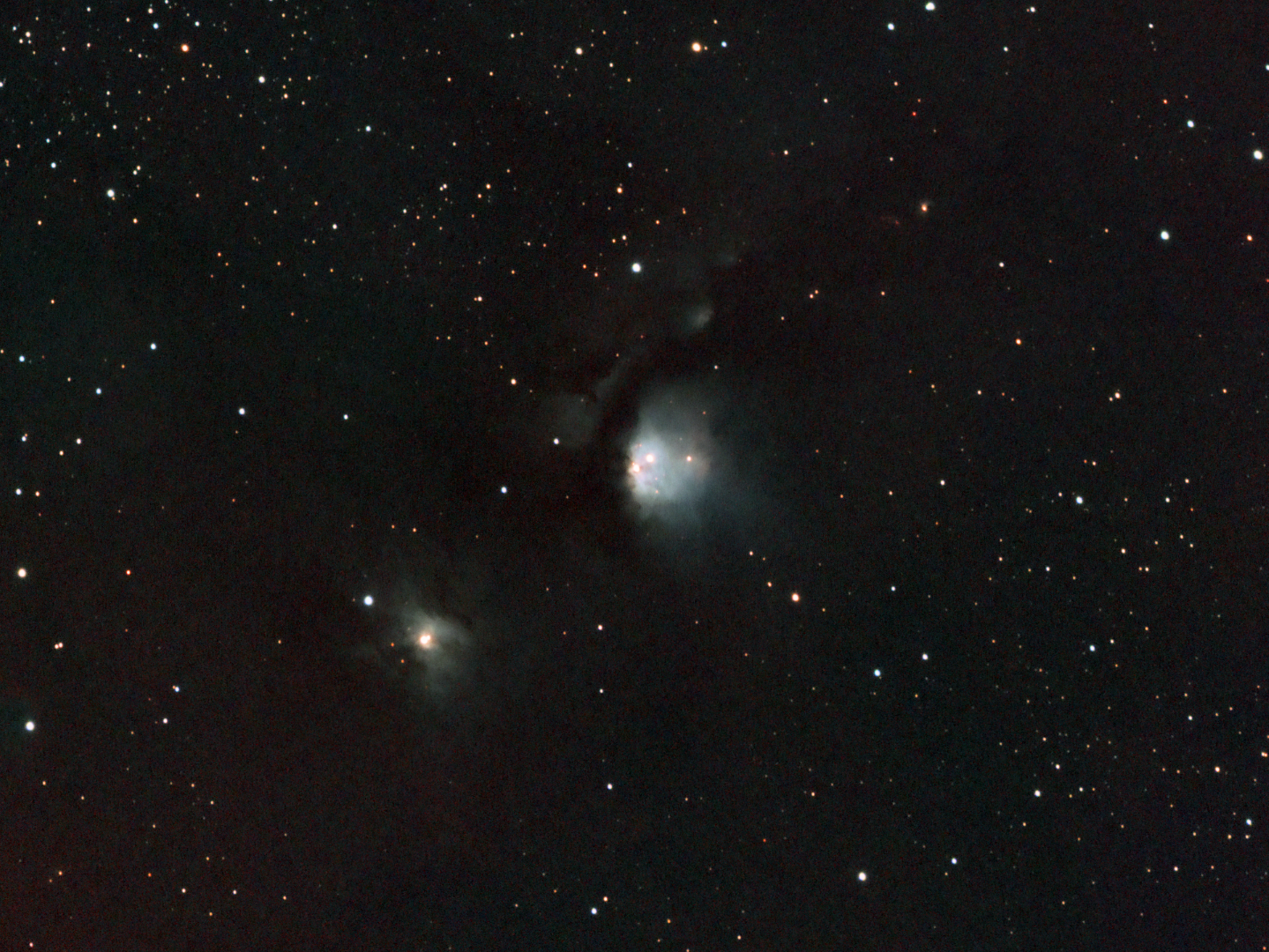
M78 is the brightest diffuse reflection nebula of a group that belongs to the Orion B molecular cloud complex but with an apparent size of 8 x 6 arc seconds it is a something of a challenging target with my equipment.  Notwithstanding, with the mono CMOS ZWO camera and the opportunity of obtaining increased integration times I considered it worth a try and was not disappointed with the outcome.

I generally like to present images in their natural orientation but this time I’ve chosen to rotate the it 90o anticlockwise, thus allowing the wider horizontal framing to better show M78 and the dramatic red Ha-light of nearby Barnard’s Loop together.   As with M42 previously, I first stacked and processed two exposure sets, short 60 second and long 300 second subs, before then combining them so as to tease out subtleties within the reflection nebula itself and provide greater control of the otherwise dominant Barnard’s Loop.  Despite my concerns about equipment and scale, I’m very pleased with the outcome of the main image (top-of-the-page), which beautifully shows off both the aforementioned objects to great effect and has even extracted some of the colour and detail of associated star clusters within and around the nebula.  Not surprisingly the cropped version of M78 itself starts to look a little noisy but is nonetheless interesting (below).

Combined crop 3+5min HaLRGB (Large)

After a very unpromising few months, the weather, Orion and my astroimaging took a surprising turn for the better from the end of January.  As a result of much longer integration times using plate solving over multiple sessions, combined with varied exposure times and more complex processing, I successfully managed to bag three classic deep sky objects of the Orion constellation – what’s not to like?

IMAGING DETAILS
Object M78 Orion reflection nebula
Constellation Orion
Distance 1,350 light-years
Size 8’ x 6’   
Apparent Magnitude +8.3
 
Scope  William Optics GT81 + Focal Reducer FL 382mm  f4.72
Mount SW AZ-EQ6 GT + EQASCOM computer control & Cartes du Ciel
Guiding William Optics 50mm guide scope
  + Starlight Xpress Lodestar X2 camera & PHD2 guiding
Camera ZWO1600MM-Cool mono  CMOS sensor
  FOV 2.65o x 2.0o Resolution 2.05”/pix  Max. image size 4,656 x 3,520 pix   
EFW ZWOx8 + ZWO LRGB & Ha OIII SII 7nm filters 
Capture & Processing Astro Photography Tool + PHD2 +  Deep Sky Stacker & Photoshop CS3
Image Location              & Orientation Centre  RA 05:47:37      DEC 00:20:59                     

Top Left = North  Bottom Left = East 

Exposures (A)    LRGB 8 x 180 sec  Ha 10 x 180sec       (Total time: 1hr 24 min.)

(B)    HaLRG 12 x 300 sec B 17 x300 sec      (Total time: 5hr 25 min.)   

  @ 139 Gain   21  Offset @ -20oC    
Calibration 10 x 180 sec & 5 x 300 sec Darks  20 x 1/4000 sec Bias  10 x  HaLRGB Flats               @ ADU 25,000
Location & Darkness Fairvale Observatory – Redhill – Surrey – UK        Typically Bortle 5-6
Date & Time 25th  26th 27th February  2019 @ +19.45h  
Weather Approx. 8oC   RH 60 to 80%                  🌙  ½ waning

What Comes Around Goes Around

RGB HaOO XXX2

It’s nearly 4-years since I started astronomy, like so many inspired after observing Saturn through a telescope.  Not just any telescope but the 13” Astrographic Refractor at the Observatory Science Centre in Herstmonceaux.  Built in 1890 specifically to make use of the then new technique of astrophotography, the telescope was first employed as part of the worldwide Carte Du Ciel project to map the entire night sky by photography and subsequently for a crucial test of Einstein’s then new theory of General Relativity.  Soon thereafter I was to view the aforesaid planet once again with my first, newly purchased Skywatcher 150PL Newtonian telescope.  Inevitably something of a lesser view than that at Herstmonceaux it was nonetheless just as exciting, if not more so.  I was hooked!

I then attempted afocal imaging using a compact camera held up to the telescope eyepiece but with poor results, except in one respect.  By clamping the camera onto the front of the eyepiece and achieving longer exposures, nebulosity otherwise unseen with the naked eye was revealed in the resulting image, in this case Orion’s Nebula.  As crude as the image was, for me the penny had dropped and I’ve been pursuing images of the hidden beauty of the night sky ever since.

rosette map

ngc2237map

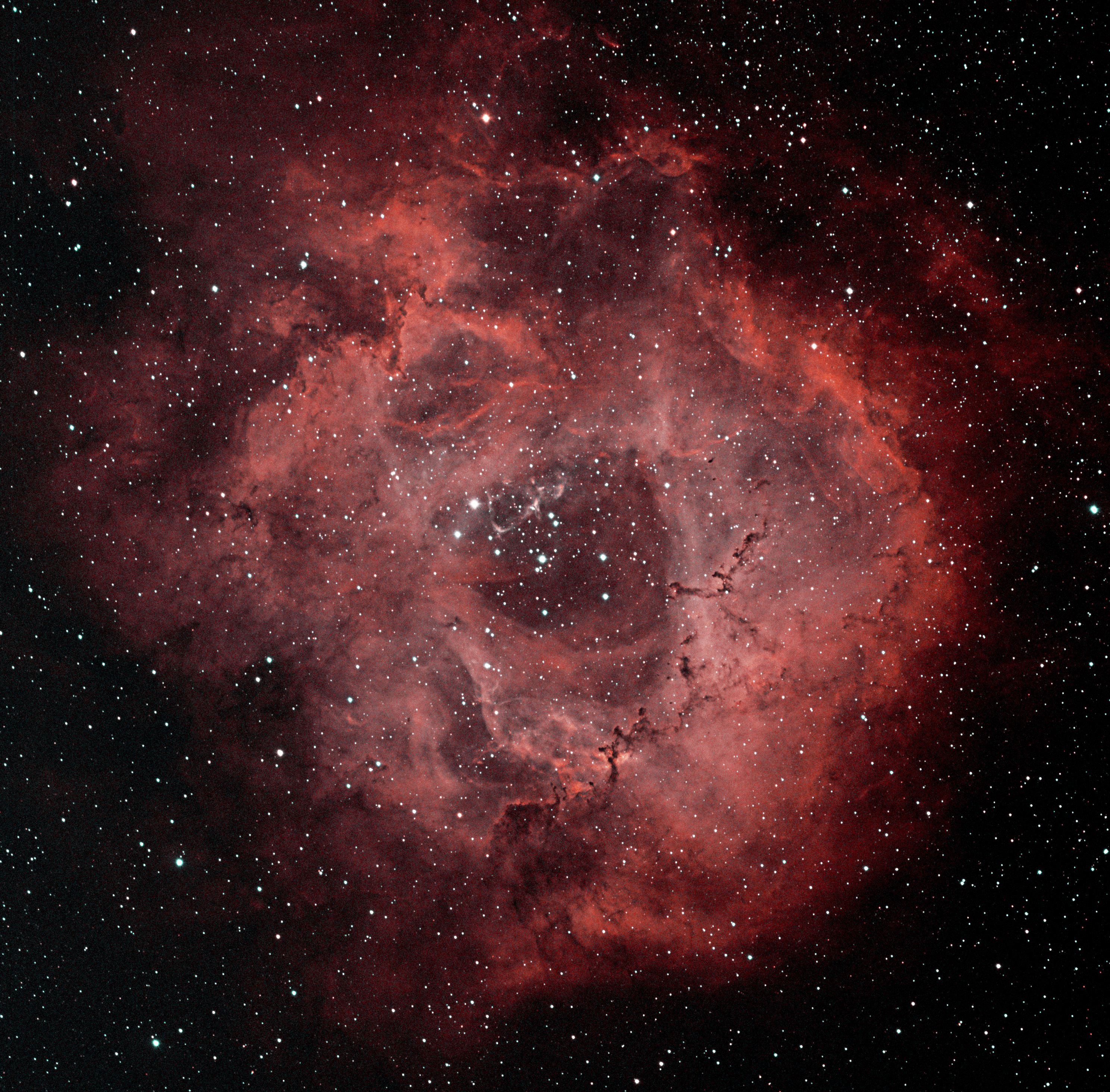
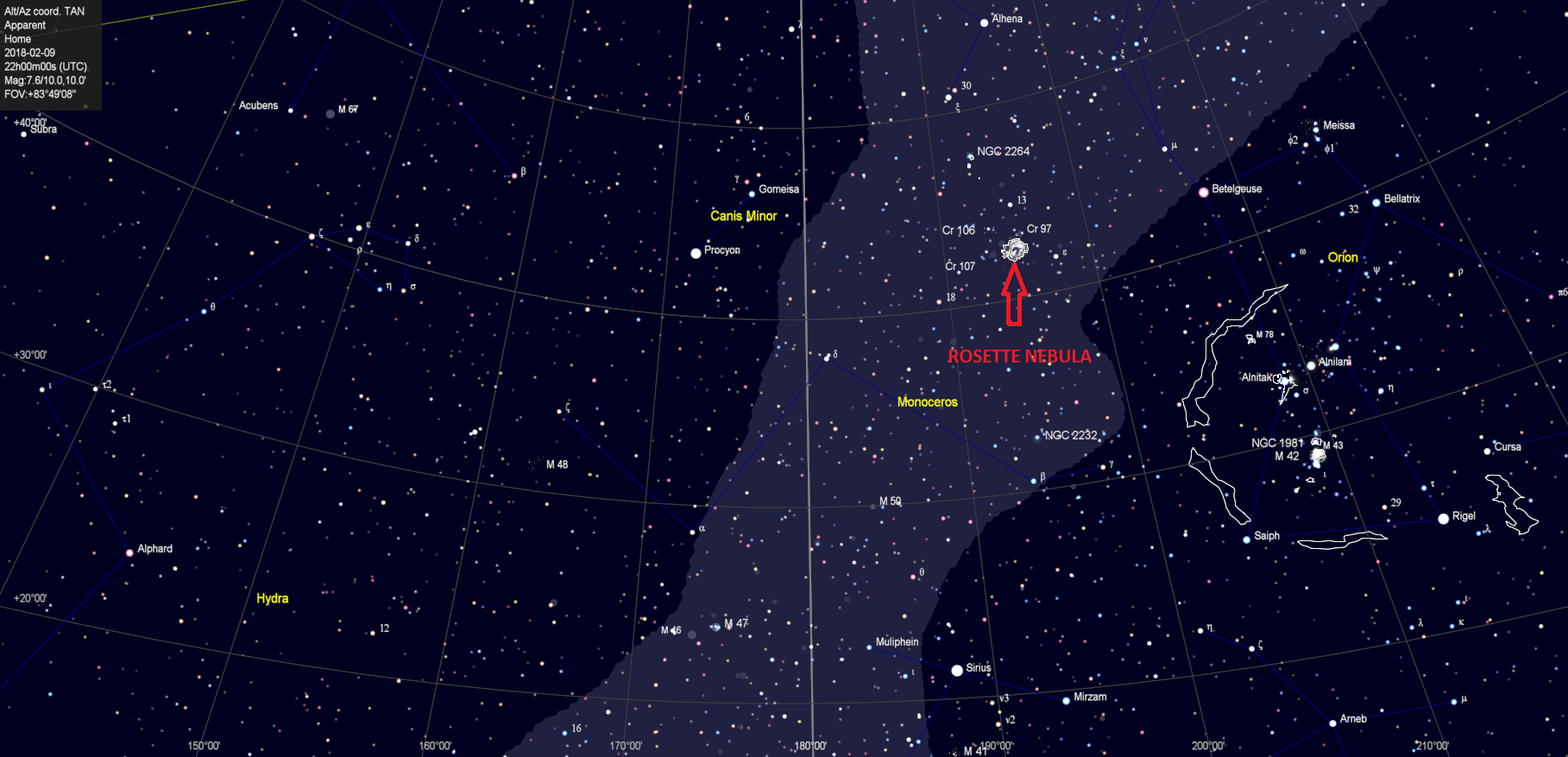
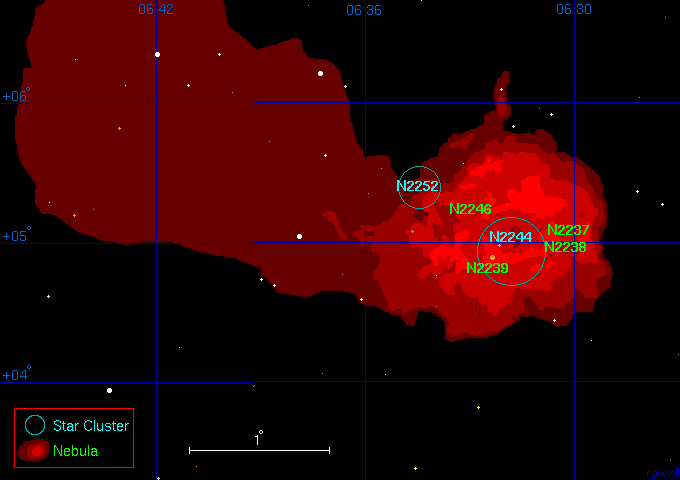
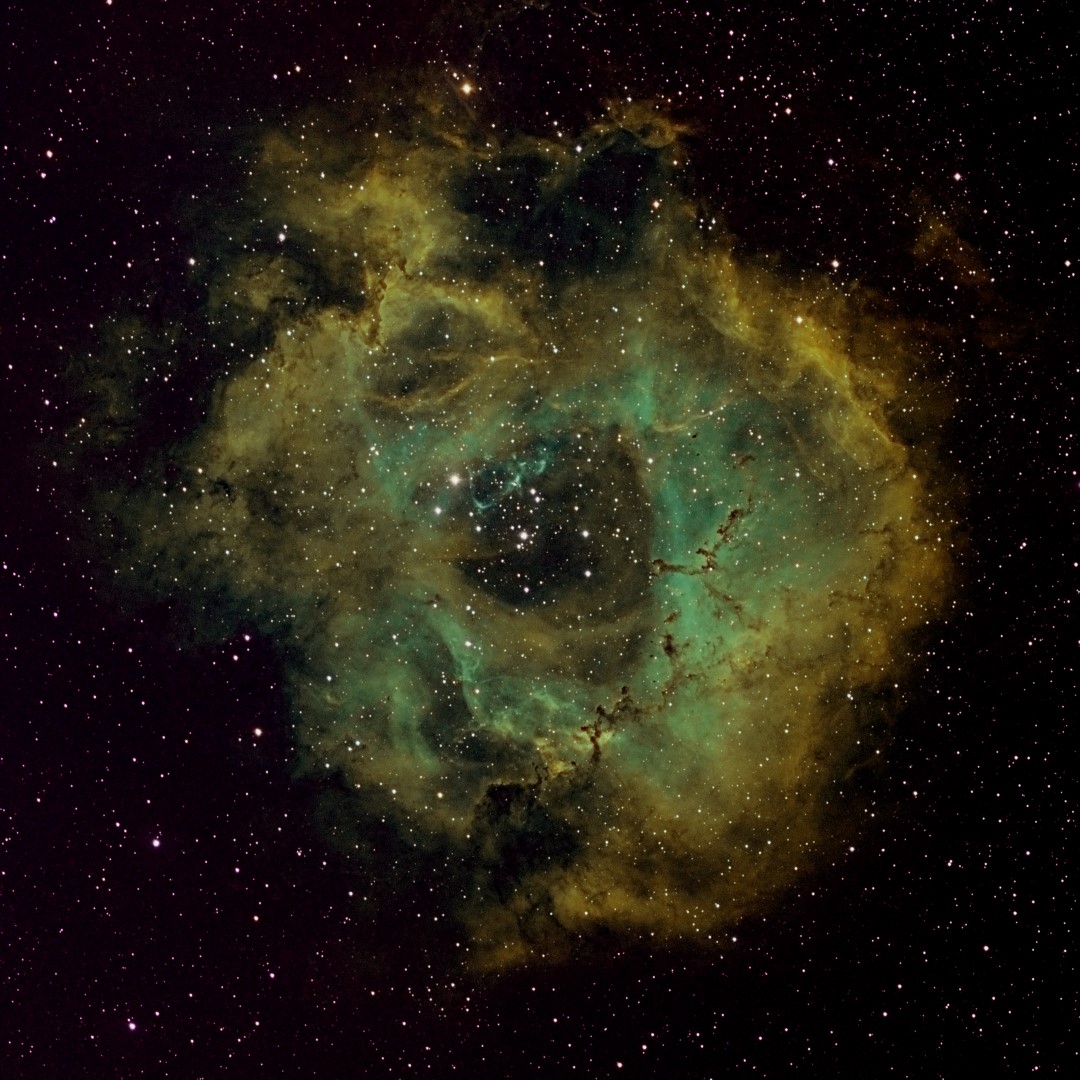
Like mariners, through astronomy I have by now become accustomed to the seasonal procession of the night sky wonders throughout the year, none more so than the Rosette Nebula.  About 100 light-years across and 5,000 light-years from Earth, the Rosette Nebula is surely one of the annual highlights for most astrophotographers?  Located just east of Orion, the Rosette is at its best between December and February, so that I was first able to image this beautiful object myself at the end of 2014.

As a very large HII region the Rosette Nebula emits light mainly at narrowband wavelengths, which produces wonderful but mainly red colours when imaged with a modded DSLR camera.  As my astrophotography and equipment have since developed, it has become a pleasure and challenge to image objects as they return each year such as the Rosette, thereby also charting my own improvements or otherwise from year-to-year.  Its size makes the Rosette an especially attractive target for smaller telescopes such my own with an 81mm aperture, which nicely fills much of the sensor of an APS-C camera.

Despite having purchased a new ZWO1600MM-Cool mono camera at the end of 2016, by the time I was ready to use it at the end of the following March, the Rosette Nebula had almost disappeared over the western horizon for another year.  Notwithstanding, in the limited time remaining I managed to capture a few Ha-OIII-SII subs, thus marking first light for the camera, which ironically resulted in one of my favourite images for 2017.  Using narrowband for the first time it was immediately possible to see the potential of the new camera when imaging this type of object.

Returning from an extended overseas trip at the end of January this year, 10-months had passed since my last encounter with the Rosette Nebula last March and I found myself with the first real opportunity to image the nebula properly with the ZWO1600MM-Cool camera.  Since last year I’d acquired more knowledge and experience with the camera, plus this time the Rosette was now in the south eastern quadrant and provided significantly more imaging time than before.

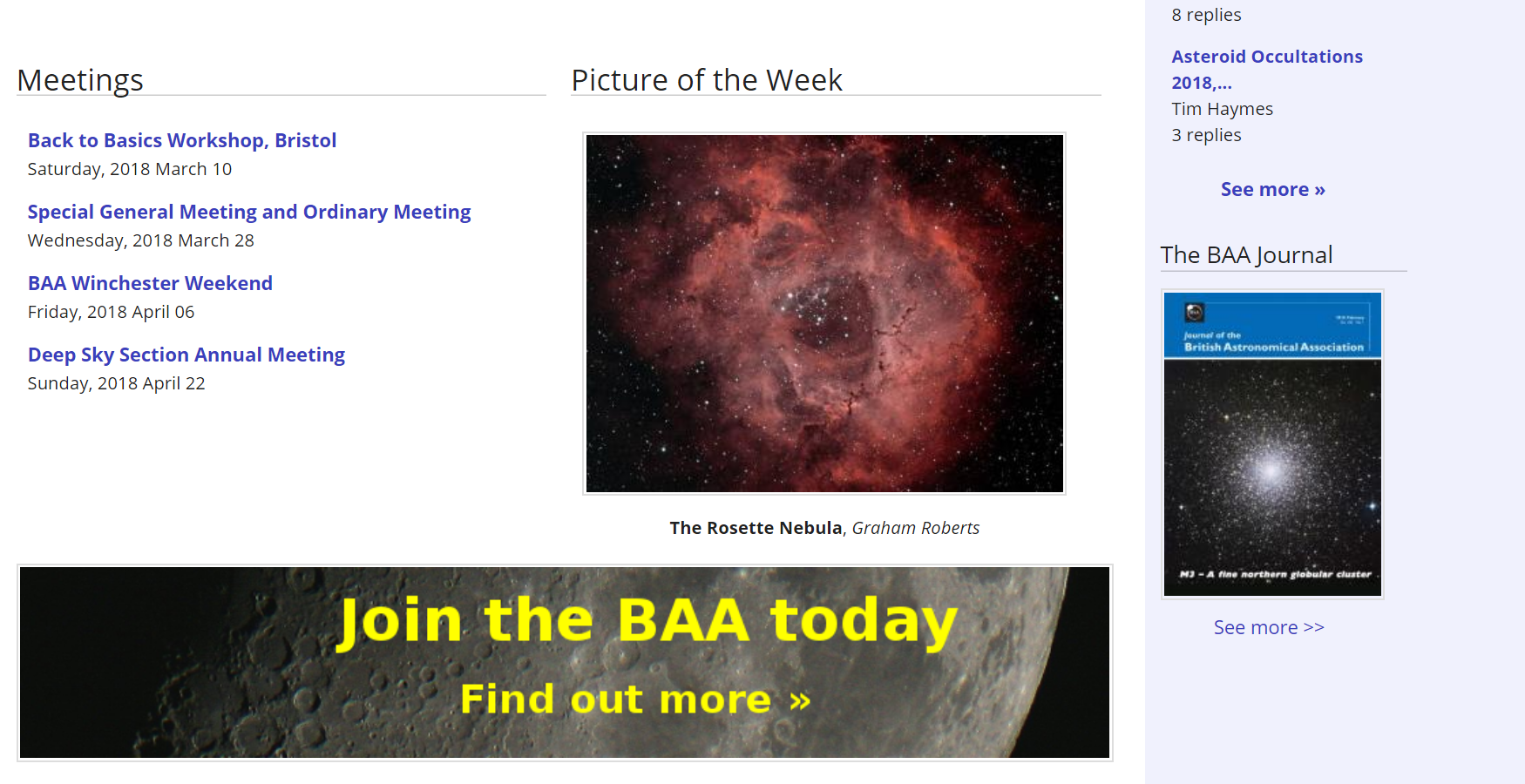
After a break of nearly two months I needed to sort out the equipment, refocus the camera and start a new alignment model in EQASCOM.  For the first time I also decided to use longer exposure times of 300 seconds, which altogether produced a good Ha+OIII Bi-Colour image (top of page – awarded BAA Picture of the Week 4th March 2018); whilst much longer exposures are used with conventional CCD sensors, such is the sensitivity of the CMOS mono sensor in the ZWO camera that 5-minute exposures provide exceptionally good quality data.  Overall the impact of longer exposure, good focus, tracking and much longer total integration time had a noticeably positive impact on noise and overall image quality, though there’s still room for improvement – there always is!

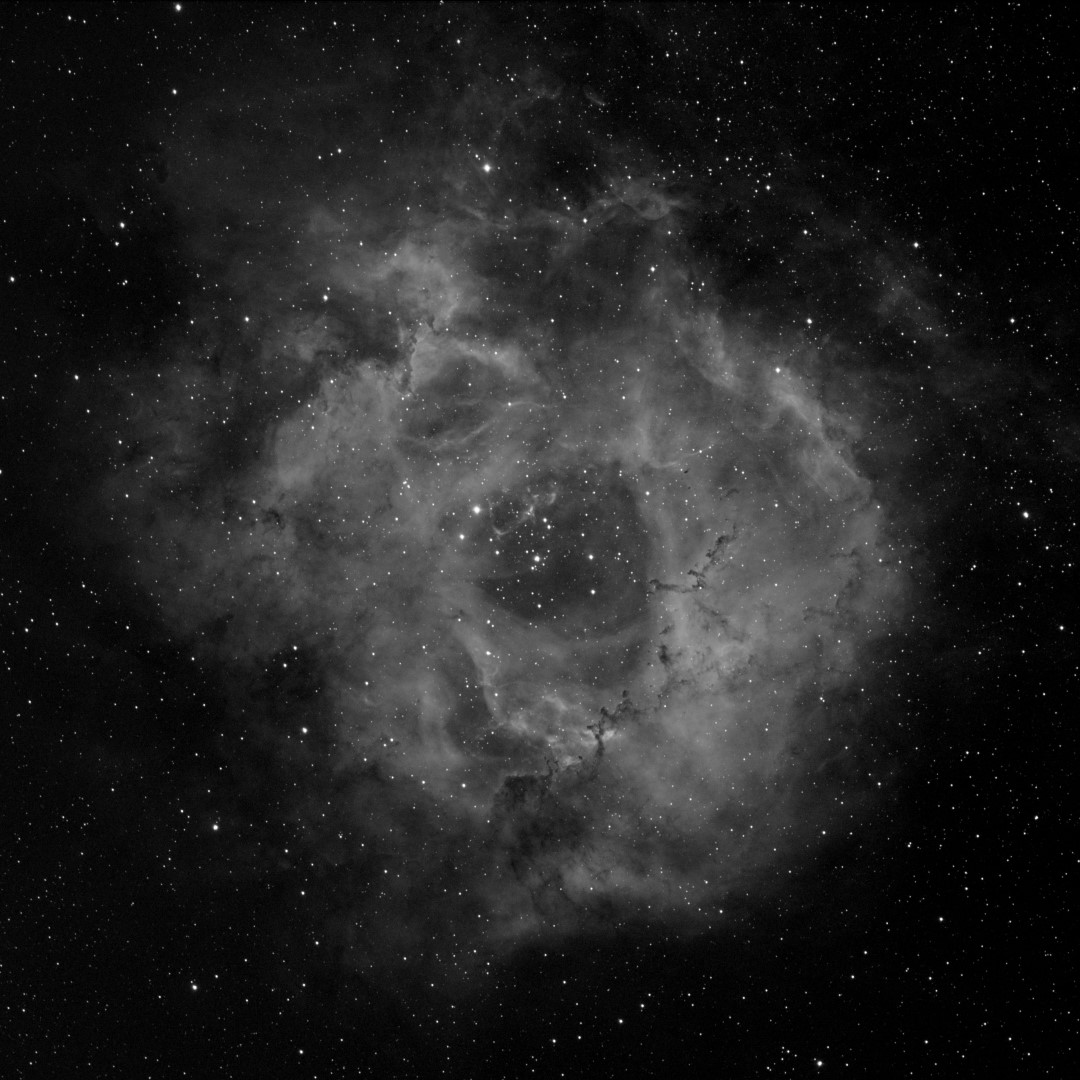
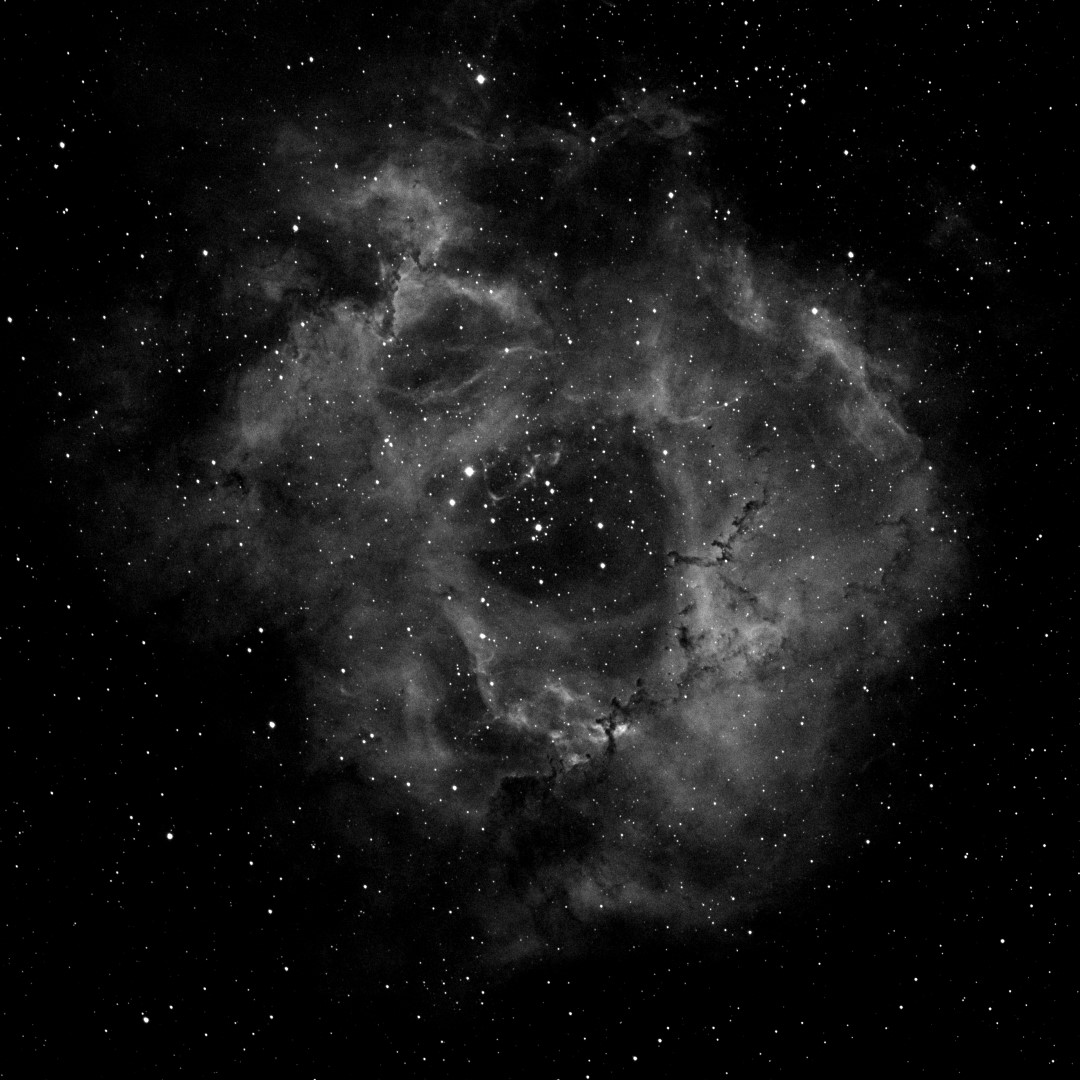
To some extent, even after a year I’m still in the experimental phase with this camera.  For most of 2017 I used a high gain setting of 300 but this time I chose the Unity gain setting of 139 and for interest also imaged at a shorter exposure of 180 seconds.  Comparison between the two settings for Ha images – Unity gain at 300 and 180 seconds – shows that for such a nebulous type of feature as the Rosette, Unity gain works very well at the longer 300 second exposure (first image below) but not 180 seconds (second image below), which is too short to collect sufficient data.

Picture saved with settings embedded.

Picture saved with settings embedded.

Notwithstanding, in the past I have found shorter exposures at Unity or less have generally been more suitable for brighter objects such as star clusters or galaxies like Andromeda.  An alternative SHO Hubble Palette image below of the Rosette Nebula at Unity gain and 300 second exposure also compares more favourably with the same image taken last year using less subs, higher gain and shorter exposure time.

Untitled-2 Crop2 (Large)When the object is right, such as the Rosette Nebula, narrowband imaging using the ZWO camera produces exceptional results.  This is evident in these recent images where it’s now possible to clearly see structural elements of the nebula, as well as the star fields located within.  Frankly I am very excited by these new images and can’t wait for next year to come around again!

Postscript: Research at Leeds University just published suggests that the Rosette Nebula is a disc but I believe my eyes and this image and many others which says otherwise!

IMAGING DETAILS
Object Rosette Nebula     NGC 2244 + 2237, 2238, 2239 & 2246   
Constellation Monoceros
Distance 5,000 light-years
Size Approx. 100 light-years or 1.3o
Apparent Magnitude +9.0
 
Scope  William Optics GT81 + Focal Reducer FL 382mm  f4.72
Mount SW AZ-EQ6 GT + EQASCOM computer control
Guiding William Optics 50mm guide scope
  + Starlight Xpress Lodestar X2 guide camera & PHD2 control
Camera ZWO1600MM-Cool (mono)   CMOS sensor
  FOV 2.65o x 2.0o    Resolution 2.05”/pix   Max. image size 4,656 x 3,520 pix   
EFW ZWOx8 + ZWO LRGB & Ha OIII SII 7nm filters 
Capture & Processing Astro Photography Tool,  Deep Sky Stacker & Photoshop CS2
Exposures 12 x 300 sec Ha, 6 x 300 sec  OIII & SII  (Total time: 120 minutes)
  @ 139 Gain  21 Offset @ -20oC  
Calibration 5 x 300 sec Darks  20 x 1/4000 sec Bias  10 x Flats Ha, OIII & SII @ ADU 25,000  
Location & Darkness Fairvale Observatory – Redhill – Surrey – UK        Typically Bortle 5
Date & Time 9th February 2018 @ 22.00h


Reflections – 2016

2016 was the second full year of Watch This Space Man (WTSM) and once again it’s been something of a mixed period.  Faced with a major, apparently insoluble problem, by mid-year I actually thought of giving up but by year-end it’s all come good again, in fact very good.   Reflections is a look back at the ups-and-downs of the past year, astronomically speaking and a peek into the next twelve months, which one way or another could determine the future of my astrophotography.
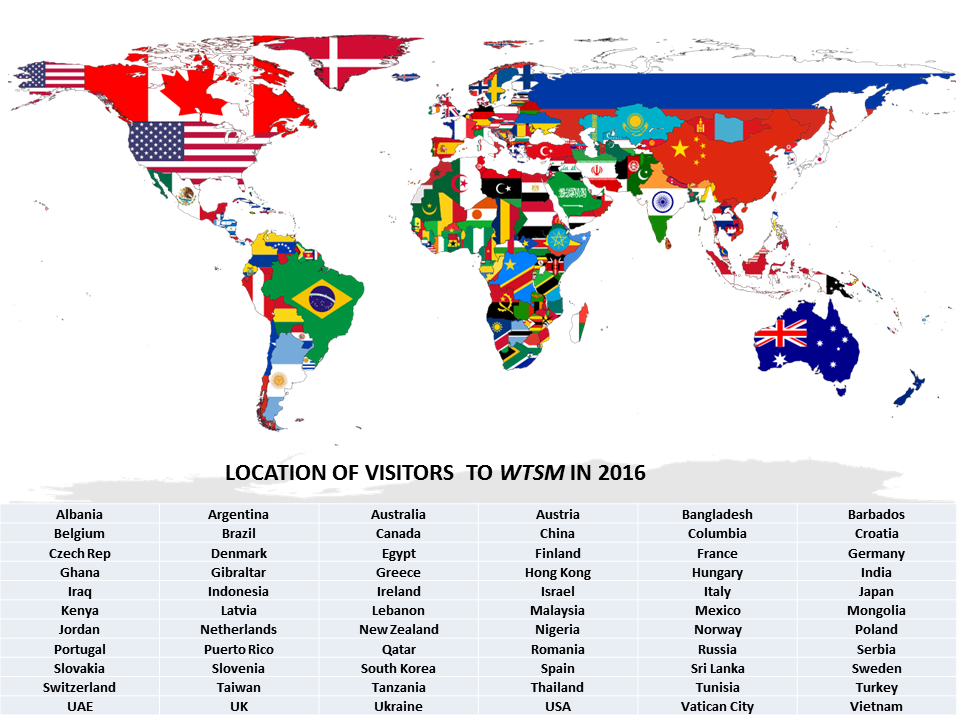
wtsm-visitor-map

I have been astonished by the interest in this website, with some 7,000 visits and 14,000 page views from more than 65 different countries during the year, the list is quite amazing.  Though I write this blog for myself, I am increasingly aware of this unsolicited readership – you are all most welcome and I would be very pleased to hear from anyone who would like to get in touch with queries, comments or just to say hello – contact details are in the Contact drop-down section of the About main menu.

reflections-2016

JANUARY TO MARCH

The year started poorly, got much worse, then finally improved. Using my recently acquired Vixen Polarie I was pleased to start the year with an image of Barnard’s Loop, something notoriously difficult to photograph and had previously eluded me.  Sadly I was not so successful with the Milky Way and have reluctantly come to the obvious conclusion that this can only be imaged in much darker skies than I’m ever likely to experience located just to the south of London and close to Gatwick airport!

As Orion starts to move on after Christmas and especially from February, I struggle to find suitable imaging targets; Coma Berenices and other constellations at this time contain numerous galaxies but they’re mostly too small for my William Optics GT81 and otherwise what might be doable I have already done before.  Notwithstanding, after looking carefully I came across two HII nebulae still lurking in the early evening.  The size and Ha-light of NGC 2174 Monkey Head Nebula and IC 2177 Seagull Nebula, provided just what I was looking for.  Located close to Gemini and Monoceros constellations, both these DSOs are within the part of the Milky Way section of the sky, an area that thankfully produces many other similar opportunities at this time of the year for a modded DSLR camera.
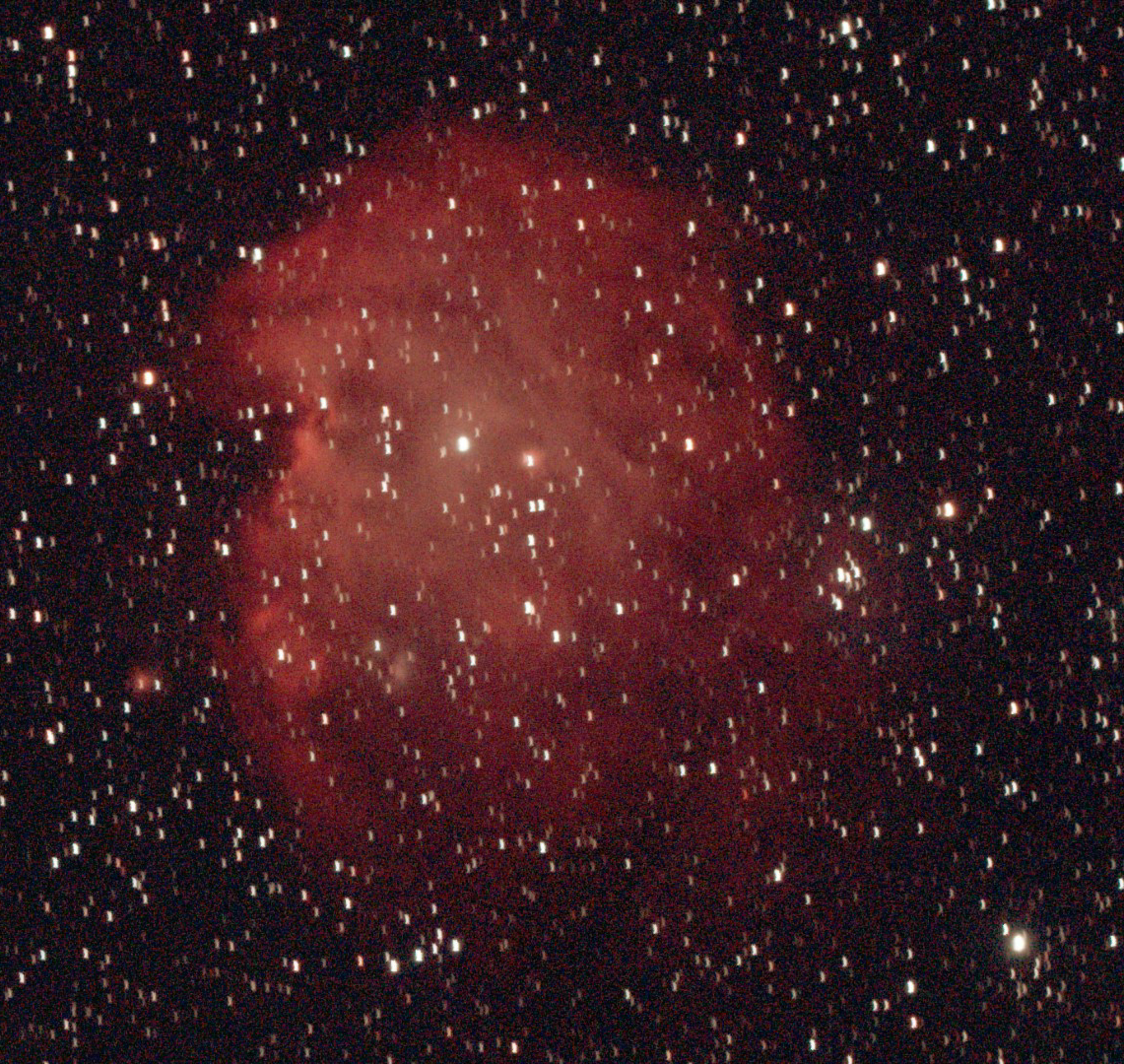
Picture saved with settings embedded.

Monkey Head Nebula

It’s often the small things that either alone or cumulatively can help transform the outcome with astrophotography.  The quarterly period finished by acquiring two new pieces of equipment, one which could help improve the set-up and operation of the mount, the other which I hoped would help me move to the next level of imaging.

  • When working in the dark and worse still in the cold, the ergonomics and general convenience of operating the equipment becomes paramount.  Since starting to use EQMOD-ASCOM and Cartes du Ciel for mount control and tracking, I encountered the problem of having to be in two places at the same time; in this case co-ordinating adjustments at the mount and the computer, in particular when making and syncing star alignments.  The answer to this conundrum was a gamepad, which I purchased for a nominal sum on eBay and after watching the inimitable Chris Shillito’s video on setting up and using a gamepad with EQMOD-ASCOM, have never looked back.  By using the gamepad the telescope can now be manually slewed, centred and synced on any object whilst remaining at the scope, thereby making the process of alignment much quicker and convenient.

  • At the end of 2015 it was my intention to start guiding in the coming year, a prerequisite for the long exposures necessary to increase data capture and thus hopefully improve image quality.  I had originally intended to use my ZWO ASI120 MC camera together with a William Optics 50mm guidescope for this purpose but there always seemed to be other problems to overcome first and to be honest, I was somewhat intimidated about tackling the black art of guiding.  I was finally prompted to do something about this when in March a second-hand Starlight Express Lodestar X2 autoguide camera came up on the UK Astronomy Buy & Sell.  From previous research I knew this was considered to be a very good and popular guiding camera, so as it had only just been posted on the website, I immediately went for it and was successful – timing is everything.  Inevitably I had problems setting-up and in particular getting the camera to focus – which was my own fault – but by the end of March I was guiding!  Truth is my guiding at this stage was not very good and I needed to look further into using the PHD2 guiding software but nonetheless, the equipment was at least now working together!

No

Date Object*

Name

1 07/01/16 Orion Barnard’s Loop
2 14/01/16 Orion Barnard’s Loop
3 02/02/16 Catalina Comet
4 02/02/16 Milky Way  
5 10/02/16 IC 2087 Dark nebula
6 NGC 2174 Monkey Head Nebula
7 IC 2177 Seagull Nebula

*Record of quarterly photographic images taken in 2016

APRIL TO JUNE

After finishing the previous quarter on something of a high note by getting PHD2 working for the first time, I was now hopeful that from herein my exposures and thus images would show improvement – unfortunately I was soon to be very disappointed.

In April we went on a trip to the Southwestern USA – something of a geological pilgrimage for my wife and I (we are both geologists) – to see the Grand Canyon, Monument Valley, Bryce Canyon and Zion National Park as well as many other similar areas.  Prior to going I had purchased a Sigma 10mm-20mm wide-angle lens in anticipation of all the big views that are characteristic of the region and was not disappointed by the lens or the scenery.

Being largely an uninhabited wilderness area, I also took the Vixen Polarie with a plan to at last capture images of the Milky Way.  Unfortunately, whilst I had checked the sky beforehand on Cartes du Ciel, I think I must have made an error with the dates.  We did get clear skies but unfortunately it turned out to be a full moon whilst there, which ruled out any hope of seeing, let alone imaging the Milky Way; oh well there’s always another day and it’s not going anywhere in the meantime.  Notwithstanding I did manage some pleasing nightscapes at Monument Valley and Bryce Canyon.
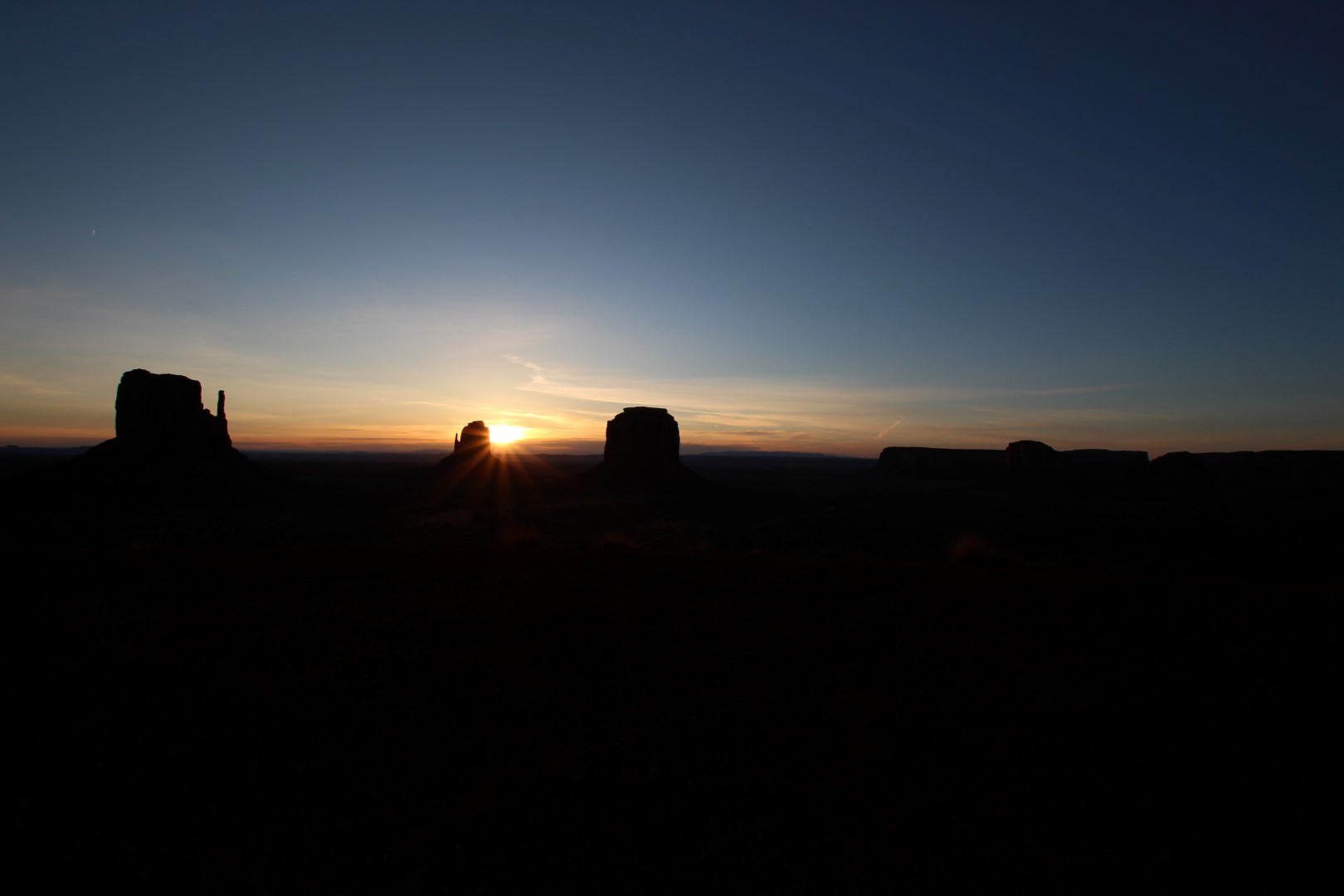
IMG_6235 (Large)

Given my initial guiding success prior to visiting the USA, I had been looking forwards to getting to grips with improving guiding and imaging on my return.  Furthermore, on 6th May there was a rare solar transit of Mercury and in preparation, the week before I set up and tested all the equipment and then successfully took some test images of the Sun using a Baader solar filter.  All was well on the appointed day which was also fortunately clear and sunny, so that shortly before contact I was all set and ready to try and capture the movement of a small black dot (Mercury) across the face of the Sun.  Unfortunately it was not to be and the weeks that followed almost marked the end of my still nascent hobby of astrophotography!

In short, EQMOD crashed when I turned on the DSLR camera to image the transit!  I tried re-booting and checked every other piece of equipment numerous times but to no avail.  I subsequently spent weeks trying to track down the problem, checking and re-checking every cable, piece of equipment and updating or reinstalling all the relevant software without success.  The nature of the problem strongly suggested there was a conflict between EQMOD-ASCOM and the camera and I therefore turned to the EQMOD forum for help, without success.  Somewhat late in the day and by now desperate, I posted the issue on SGL and quickly received a reply from someone who had had a very similar problem, which though also very difficult to identify, turned out to be a very small break in the outer cover of the DSLR AC/DC power adapter cable.  It’s not clear to me why this matters but I bought a new adapter and as they say, Bob’s your uncle, it worked!  I have looked very carefully at my adapter and cable and can see nothing wrong but am very thankful for the advice.
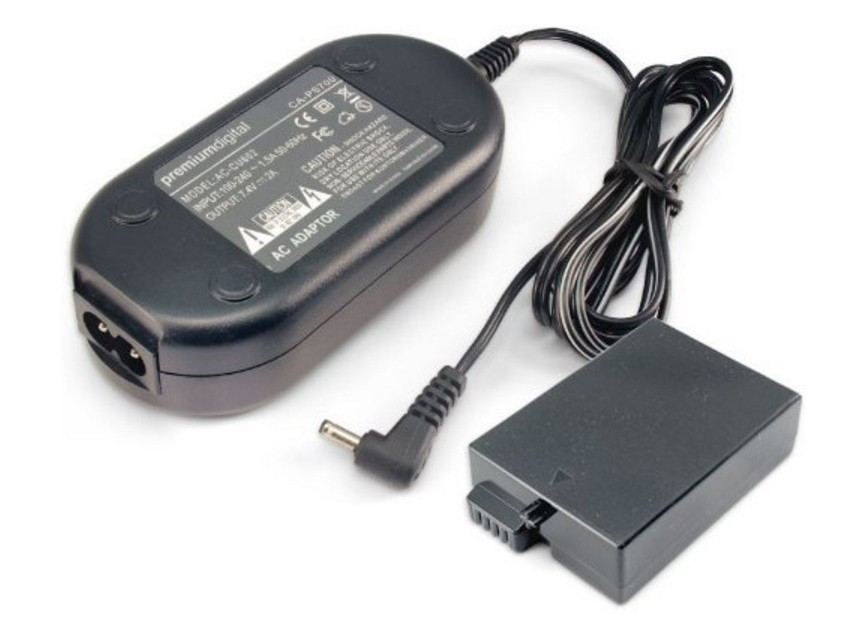
acdc

AC/DC Adapter: How can something as basic as this cause so much disruption?

It seems ridiculous that this very minor problem was nearly terminal but just in case it happens again I have since bought another spare power adapter.  Together with my daughter’s wedding in early June and the adapter meltdown, imaging for two of the three months during this period was almost non-existent.  Still by July I was ready to start again but by then there was no astronomical darkness!

No

Date Object

Name

8 April USA Monument Valley etc
9 06/06/16 M5 Globular cluster
10 M13 Globular cluster
11 M57 Ring Nebula

JULY TO SEPTEMBER

After the carnage of the last quarter, I was then unable to resume imaging in July due to travel commitments.  So I used what time was available to improve my knowledge of PHD2 and once again, check everything was now working ready for the return of astronomical darkness and better night skies from 20th July; I am of course now paranoid of another similar breakdown.  At the start of August I manged to obtain a just passable image of the Eagle Nebula for the first time.  Then shortly afterwards on the evening of 11th / 12th August, clear skies produced a decent night for viewing and imaging a few of this year’s Perseids meteor shower.  But it was at month-end and continuing into September that my imaging in 2016 finally took off.
m27-comps-paintfile

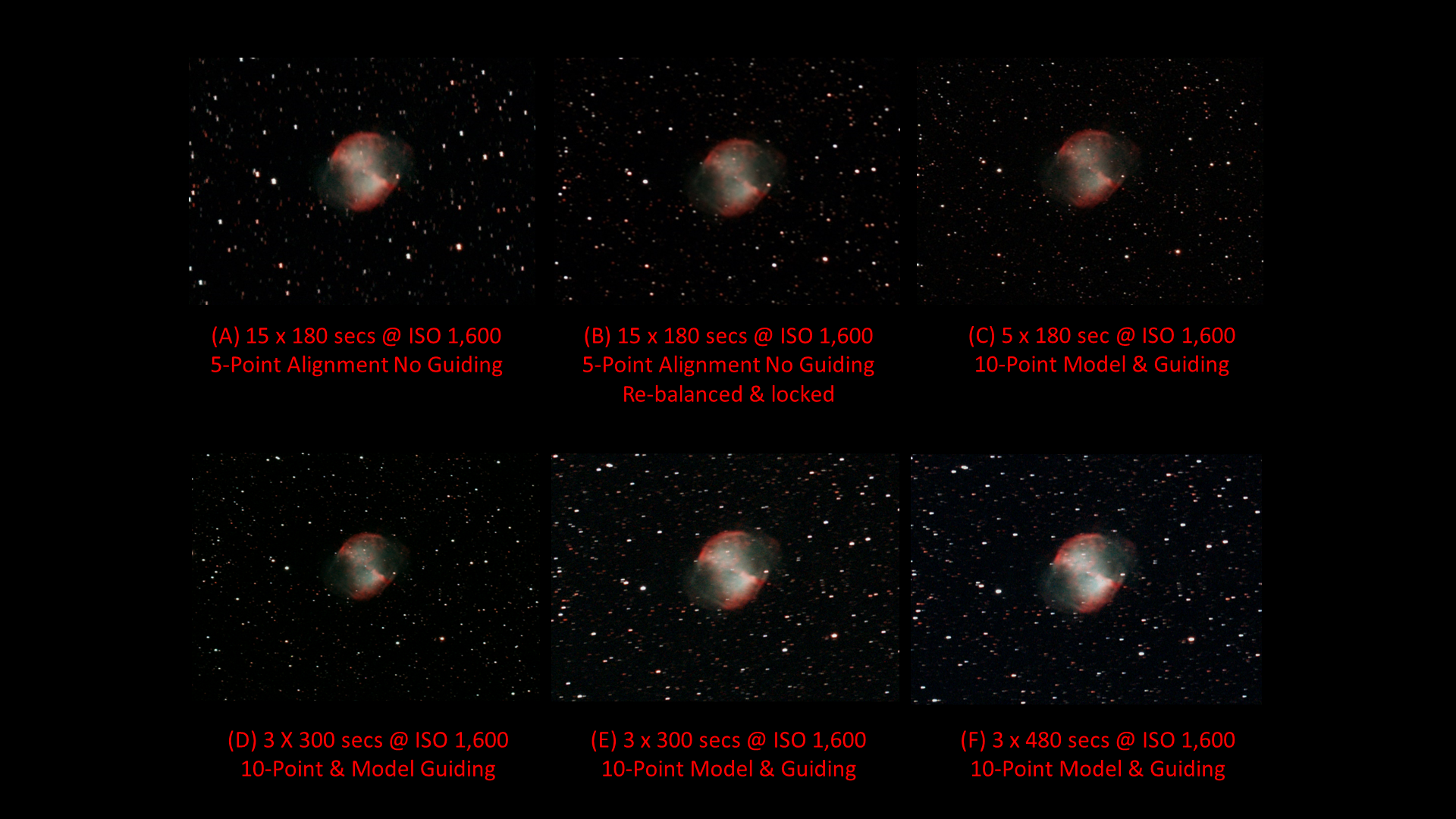
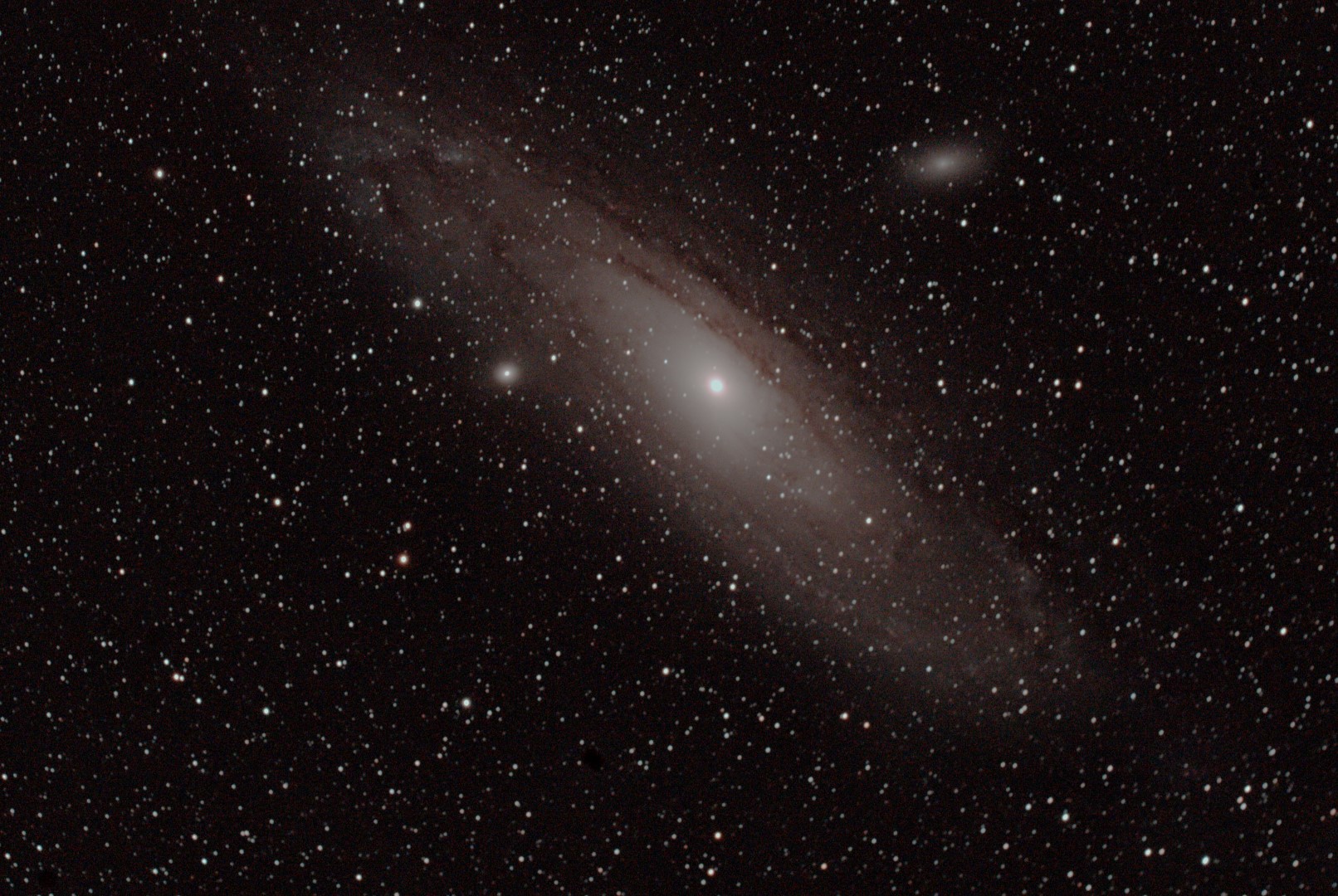
At that time the weather was consistently dry and warm, providing more than a week of clear skies and almost nightly imaging.  Dark nebulae are interesting features I’d hitherto not recognised as imaging opportunities and was therefore intrigued to successfully image the E-Nebula at this time.  Thereafter I used the opportunity of the weather window to experiment with PHD2 by using M27 the Dumbbell or Apple Core Nebula as a control imaging object.  Of course, each year is different but I’ll try to use any similar conditions in the future to sort out and develop old and new techniques, such unusual moments are precious for UK astronomers.  At the end of nearly two tiring weeks I had PHD2 working quite well and have not looked back since.  As a result of this work soon thereafter obtained good images of the Andromeda Galaxy, as well as the Veil, Crescent and Ring Nebulae.

No

Date Object

Name

12 07/08/16 M16 Eagle Nebula
13   M11 Globular
14   B142-3 Dark E-Nebula
15 11/08/16 Perseids  
16 23/08/16 LDN 673 Dark Nebula
17   NGC 6781 Planetary Nebula
18   M27 Dumbbell Nebula
19   Albireo Double star
20   Moon  
21 28/08/16 M11 Globular cluster
22   NGC 6905 Blue Flash Neb
23   Albireo Double star
24   15 Aquilea Double star
25   NGC 6960 W Veil / Witch’s Broom
26   M32 Andromeda Galaxy
27 29/08/16 M27 Dumbbell Neb
28   NGC 6960 W Veil / Witch’s Broom
29   NGC 7814 Pegasus galaxy
30   M15 Globular
31   M27 Dumbbell Nebula
32   M27 Dumbbell Nebula
33 08/0916 M27 Dumbbell Nebula
34   M27 Dumbbell Nebula
35   NGC 6960 W Veil / Witch’s Broom
36   NGC 6960 W Veil / Witch’s Broom
37   M31 Andromeda Galaxy
38 11/09/16 NGC 6888 Crescent Nebula
39   NGC 6992 Eastern Veil  (NGC 6995)
40 13/09/16 M57 Ring Nebula

OCTOBER TO DECEMBER

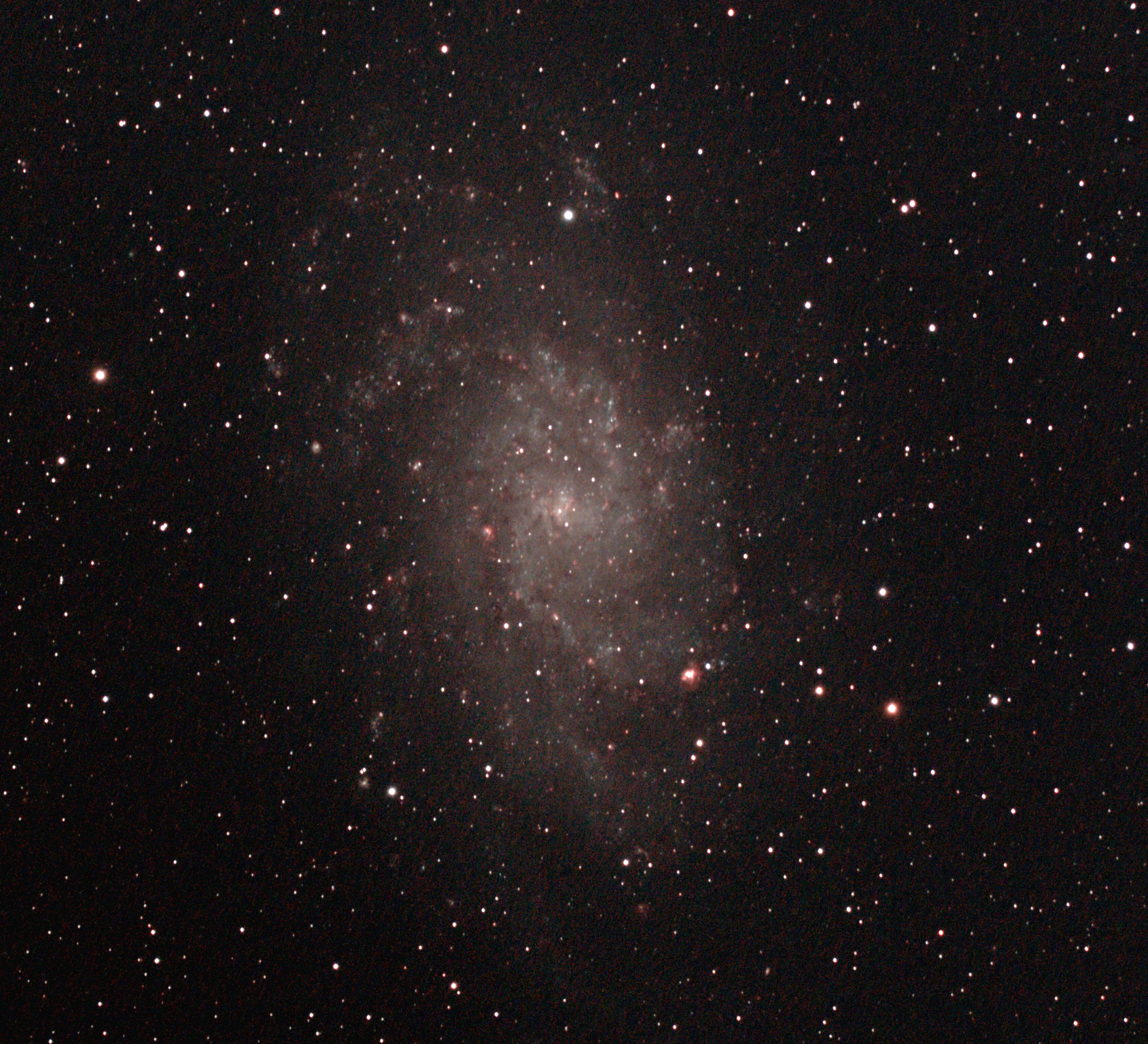
Normal conditions resumed later in September and into the final quarter in the form of overcast skies.  A minor break in the weather allowed a crack at the M33 Triangulum Galaxy towards the end of October but only in late November did another clear period occur, by which time the winter sky had arrived and temperatures had fallen to nearly 0oC.
Picture saved with settings embedded.

M33 Triangulum Galaxy – consisting of some 40-billion stars, the photons in this image have travelled 3-million light years in order to reach my camera sensor! | WO GT81 + modded Canon EOS 550D & FF guided | 18 x 300 secs @ ISO 800 & full calibration | 22nd October 2016

Unfortunately I am unable to establish a permanent observatory here at Fairvale and have to take-out the bring-in all the astronomy equipment each time.  Apart from being inconvenient this has two practical disadvantages: (i) it can be uncomfortable even unpleasant working outside in such temperatures, and (ii) it is necessary to polar and star align every time; on occasion when using SynScan and EQMOD-ASCOM it can take up to 2-hours before starting imaging.  Fortunately, I think I have now sorted out both these problems which should greatly help in the future.

By re-configuring the computer, mount and camera wiring, combined with establishing a wireless link between my tablet and the computer, once set-up I can now control most of the functions from indoors.  The comfort of being indoors benefits operating in general and especially thinking, which can be quite difficult when astroimaging and made even harder when it is cold.

With prolonged periods of clear weather in the second-half of the year, I was sometimes able to set-up and leave the equipment for a few days under a waterproof cover, which meant that from day-to-day I could be up-and-running each time in less than 30 minutes!  However, I expect this will only rarely be possible and nightly set-ups are likely to continue to be the norm.  Fortunately, I have also recently discovered two techniques that should help both streamline and improve star and polar alignment in the future.

In addition to guiding, PHD2 has a very good polar alignment facility that eliminates the use of the SynScan handset and enables the procedure to be carried out from the computer; it can also be undertaken without sight of the Polaris star, which is a major problem at Fairvale Observatory where it is totally obscured by my house.  At times when the mount can be left outside, I can also save and subsequently re-use the star-alignment model in EQMOD-ASCOM.  All-in-all these and other procedures have made a very positive impact on my astronomy and astroimaging.  The outcome of these changes led to a decent sequence of imaging with which to finish the year and, furthermore, hopefully provides a strong foundation for continuing improvements in 2017.

No

Date Object

Name

41 22/10/16 M15 Globula cluster
42   M33 Triangulum Spiral Galaxy
43 28/11/16 M45 Pleiades
44   NGC 2024 Horsehead Nebula
45   M42 Orion Nebula
46 29/11/16 Hyades Open star cluster
47   NGC 2244 Rosette Nebula
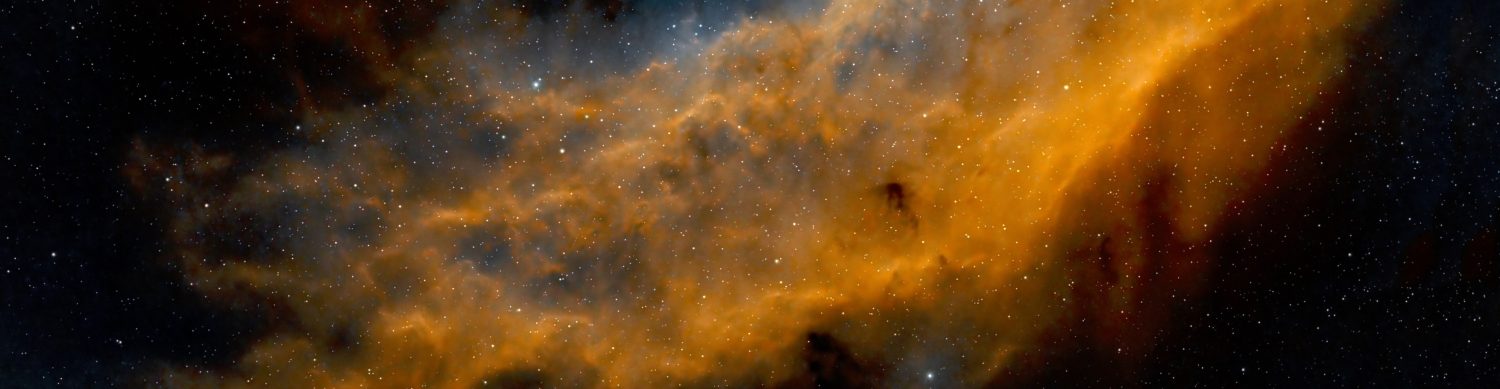
48 30/11/16 NGC 1499 California Nebula
49   IC 405 Flaming Star Nebula
50 03/12/16 M74 Spiral Galaxy
51   M77 Spiral Galaxy
52   M1 Crab Nebula
53   IC 2118 Witch’s Head
54   M78 Reflection Nebula
55 04/12/16 SH2-264 Lamda Orionis
56   SH2-261 Lower’s Nebula

ETCETERA

A few other astronomy and imaging related matters helped shape the past year for me. After  coming across WTSM, I was surprised to be contacted by the Purley Photography Camera Club to give a lecture on astrophotography in March.  I’m pleased to say the event went very well and, furthermore, the process of compiling the presentation beforehand helped expand my own knowledge of the subject too.
TTT Cover

In May I received a sun dial installed on a carved Purbeck Stone plinth as a retirement present.  As a time piece it’s accuracy is limited but it is a beautiful addition to my garden and solar astronomy for which I am very grateful.  By coincidence, later in the year I also came across a simple but charming sun dial set into the ground by the upper lake at Earlswood Common, a short walk from my home and  Fairvale Observatory.  Intriguingly it works by standing on a central stone, located depending on the season, and then uses your own shadow to read off the time – clever.

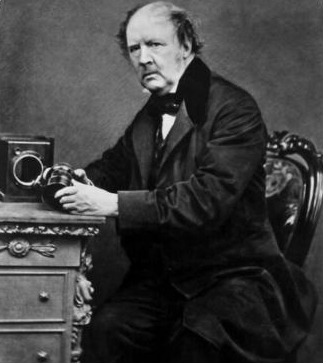
In September we visited Lacock Abbey in Wiltshire, home of William Fox Talbot in the 19th Century – photography pioneer and notable for developing photographic fixing and printing.  The photography museum there is very good and it was fascinating to see his place of work in the house, where the very first photographic print is also displayed.  His contribution to photography  is unique and today he is generally recognised as the father of modern photography.
william-henry-fox-talbot-with-camera-141697035181903901-141210123557

As  a Londoner born and bread, I like to think I know the city well and over my lifetime have visited most of its unique sites, old and new.  However, for some inexplicable reason I had never been to Westminster Abbey, so decided to put that right in November.  It is, of course, a building of unparalleled history, with numerous graves and memorials of centuries of kings & queens, as well as scientists, explorers, poets, actors etc.  Noteworthy amongst these for the astronomer is the physicist and mathematician Sir Isaac Newton and  Second Astronomer Royal, Edmond Halley.

I must next give mention to the man who throughout the year dominated my reading, learning and thinking – Albert Einstein.  His work during the early part 20th Century still dominates today’s physics and astronomy.  We continue to make ground breaking discoveries that substantiate and build on his ideas that were originally postulated over 100-years ago.  Pictures only recently obtained using the the Hubble telescope have spectacularly demonstrated the effect of gravitation lensing and in 2016 for the first time ever the existence of gravitational waves was confirmed.  This year I therefore decided to understand the man and his work better.  During the first half of the 2016 I read Walter Isaacson’s excellent biography of Einstein and have recently completed and 8-week Stanford University course on the Special Theory of Relativity.  They were both very enjoyable, immensely interesting and time well spent.

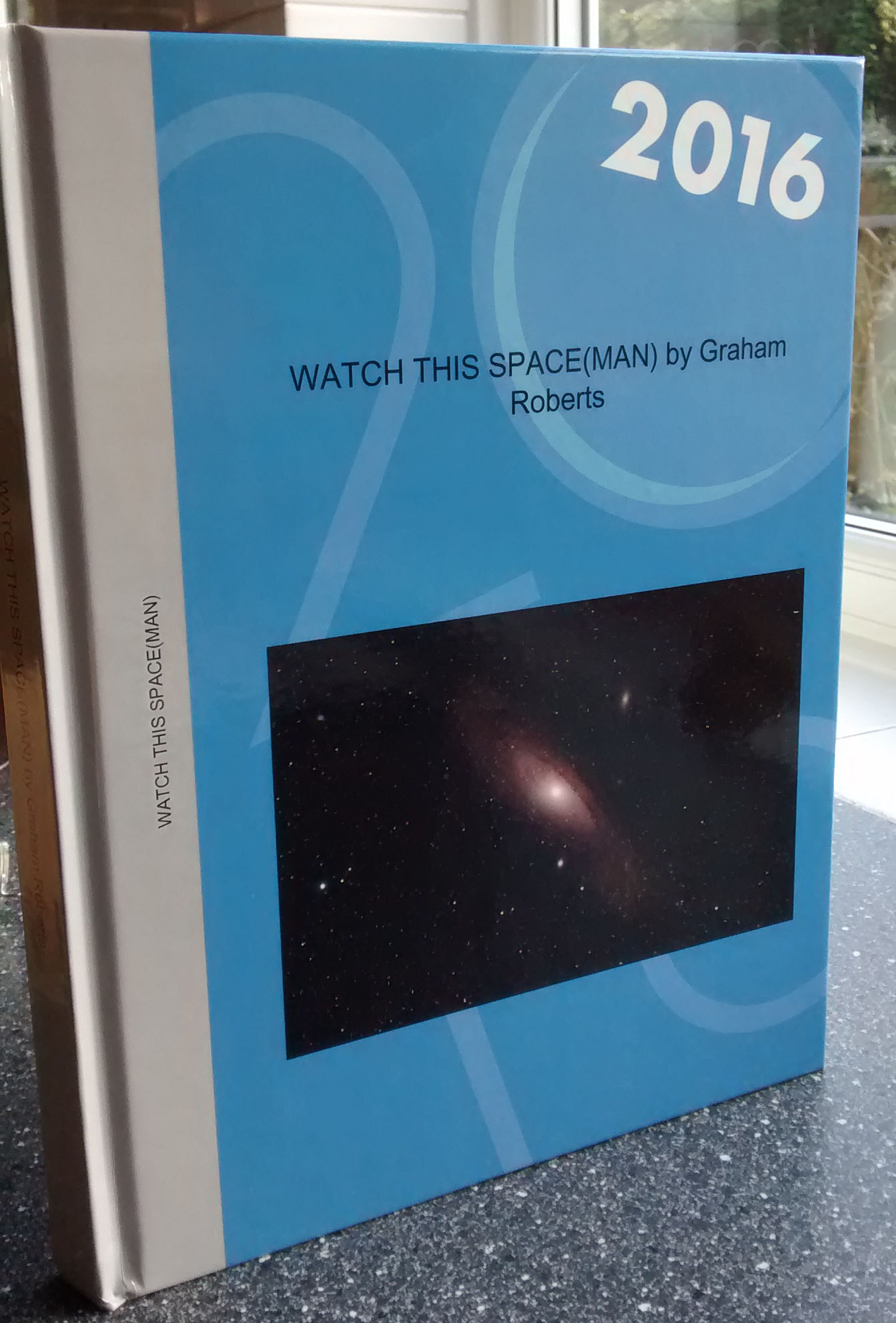
Finally, this Christmas I was surprised and very pleased to receive a printed, bound copy of the WTSM blog for the period since its inception on 5th August 2014 until 10th November 2016.  A lot of work has gone into producing this blog and I’ve always been concerned that somehow something might go wrong with the website or internet and it would all be lost. This book now safely preserves in print all the blogs and images posted during the aforementioned period.  The production is generally very good and I have already enjoyed re-reading some of my blogs once again.
img_20161227_122915516

WTSM: The Book!

Favourite Images

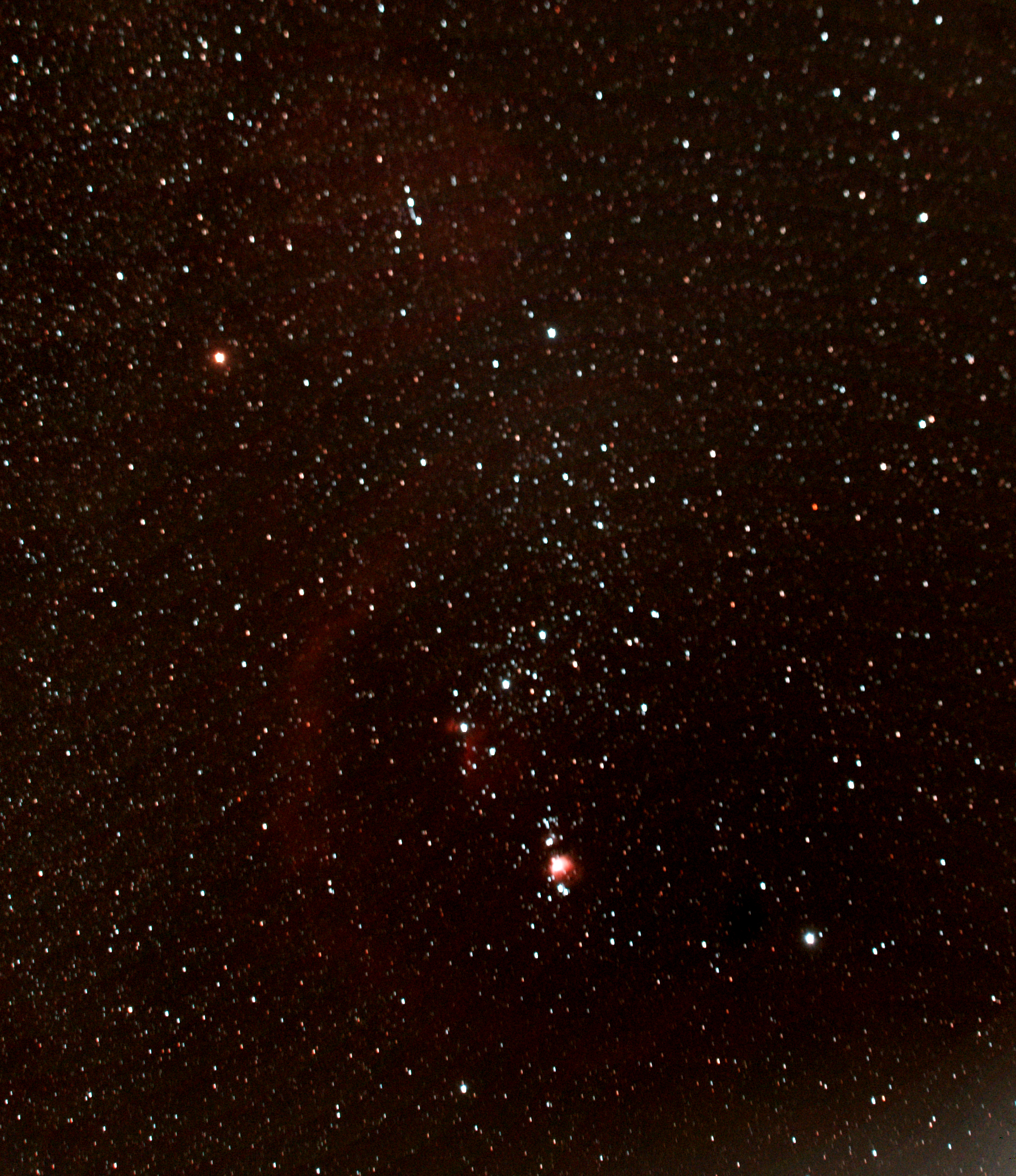
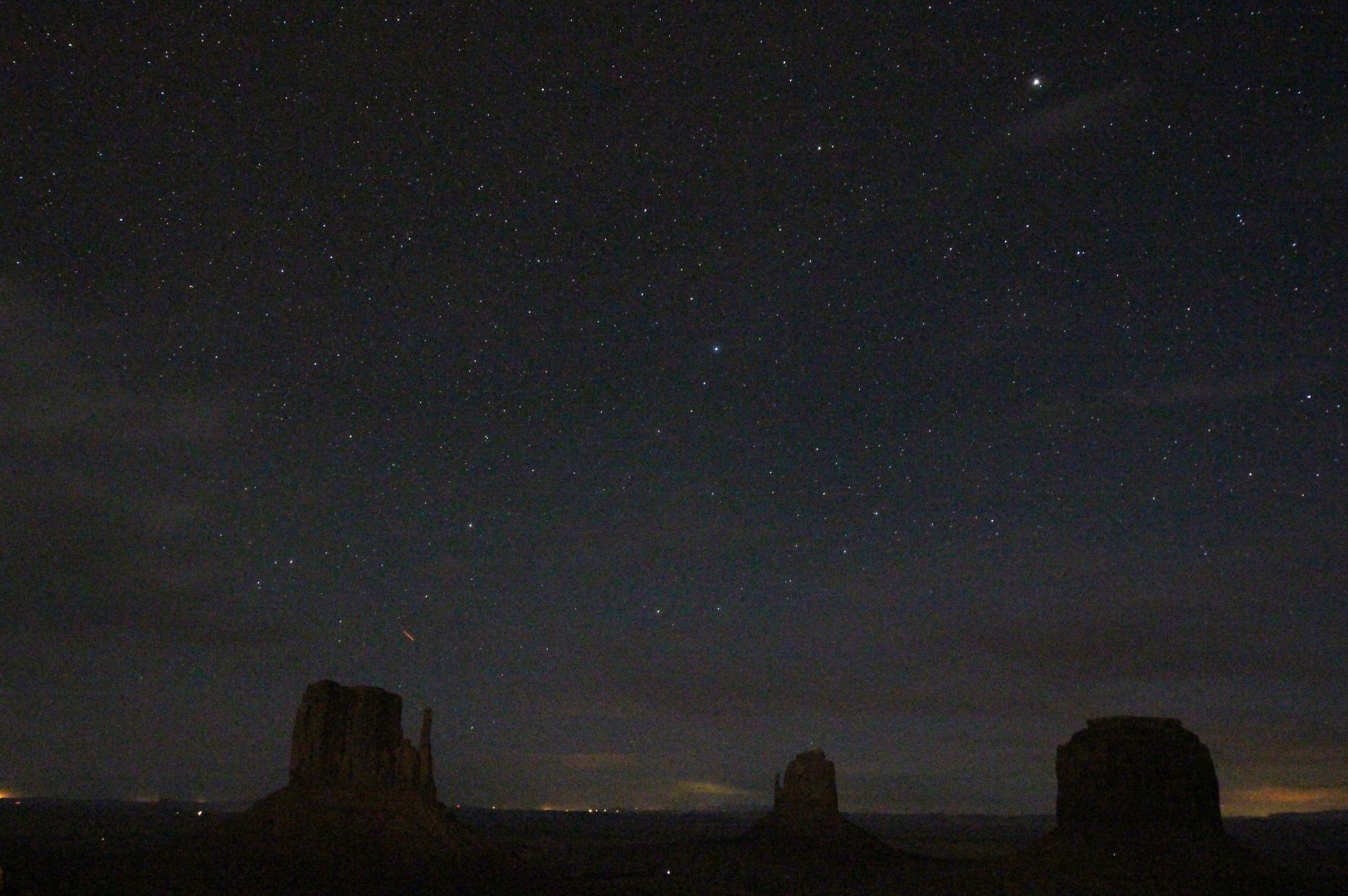
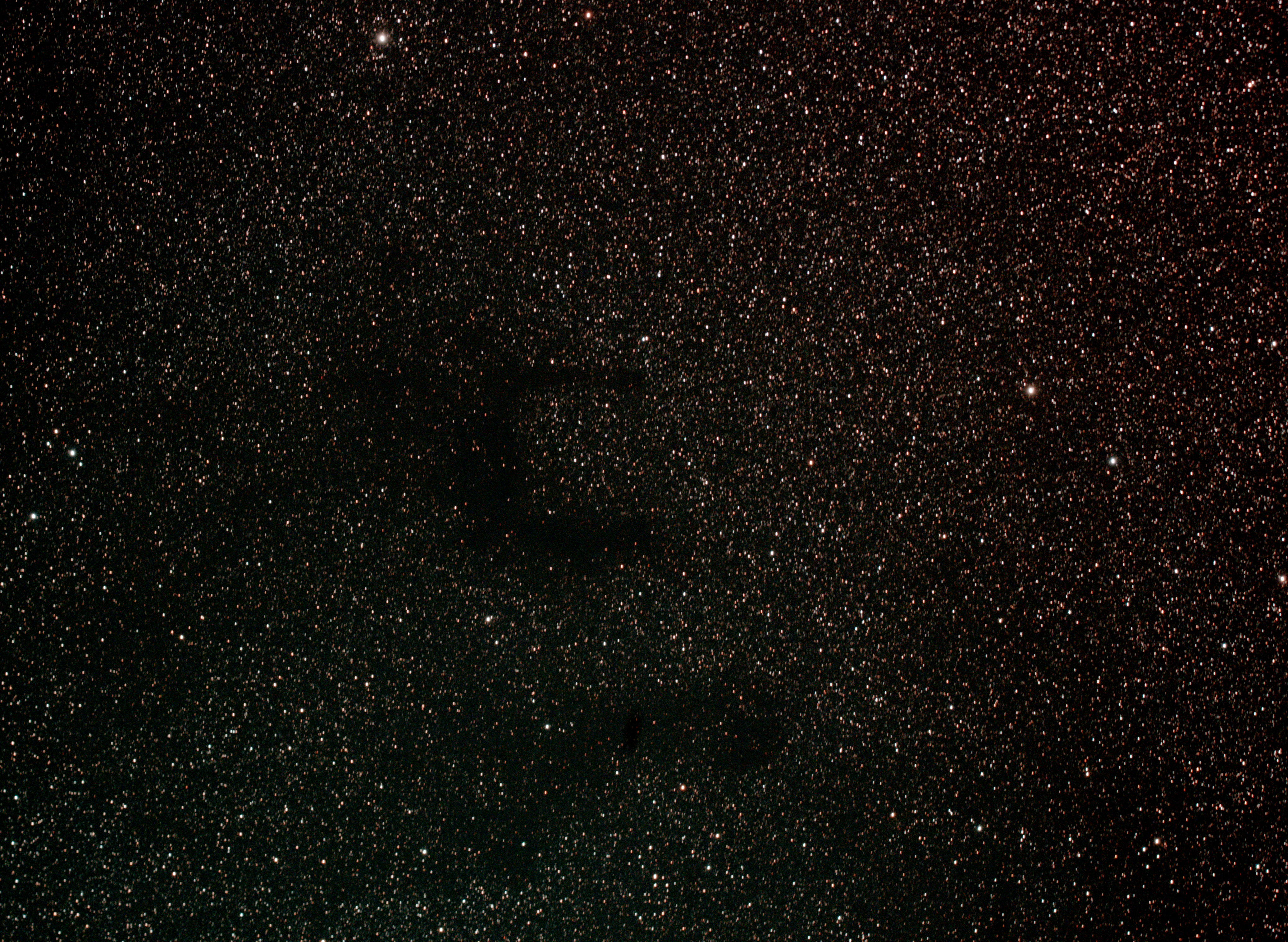
As a result of the aforementioned issues, 2016 has certainly been a year of two halves.  Having resolved the equipment problem and started to employ some very useful new techniques and software, I was eventually able to obtain some good images. My personal favourites in no particular order are shown here below:
Picture saved with settings embedded.

Barnard’s Loop & Lamda Orionis Nebula : Vixen Polarie & modded Canon 550D + Sigma UWA @ 20mm | 11 x 240 secs @ ISO 1,600 + darks | 7th January 2016
IMG_6219L1C1 (Large)

Monument Valley by Night: order of buttes same as daytime photo above. Canon 700D + 10mm Sigma wide-angle lens | 20 x 15 secs @ ISO 6,400 | 10th April 2016
Picture saved with settings embedded.

B142/3 Barnard Dark E-Nebula

Picture saved with settings embedded.

M27 Apple Core Nebula | William Optics GT81 + 50mm Guide Scope & 10-point EQMOD-ASCOM alignment model | modded Canon 550D + Field Flattener | 3 x 300 secs @ ISO 1,600 & full calibration, 90% cropped | 30th August 2016
Picture saved with settings embedded.

M31 | WO GT81 + modded Canon 550D & FF | 10 x 300 secs @ ISAO 1,600, darks + flats | 8th September 2016


Round-up & goals for 2017

Despite the frankly awful start to the year, astronomically speaking 2016 finished on something of a high.  Furthermore, contrary to initial indications I was in the end partially successful in achieving some of my objectives set out at the beginning of last year:

RECORD CARD – 2016
Goal Specifics / Results Outcome
Increase imaging exposure times Improved equipment set-up and alignment and successfully started autoguiding with exposure times of up to 8-minutes. DONE


Improve processing Started using newer version of Photoshop CS2 + other related software. Improvement with post-processing using online tutorials and Nik Syzmanek’s booklet Shooting Stars. GETTING THERE


Start widefield imaging Purchased Vixen Polarie, with portability put to use in the USA but did not make UK dark sky sites as planned. GETTING THERE


img_20161130_234303293

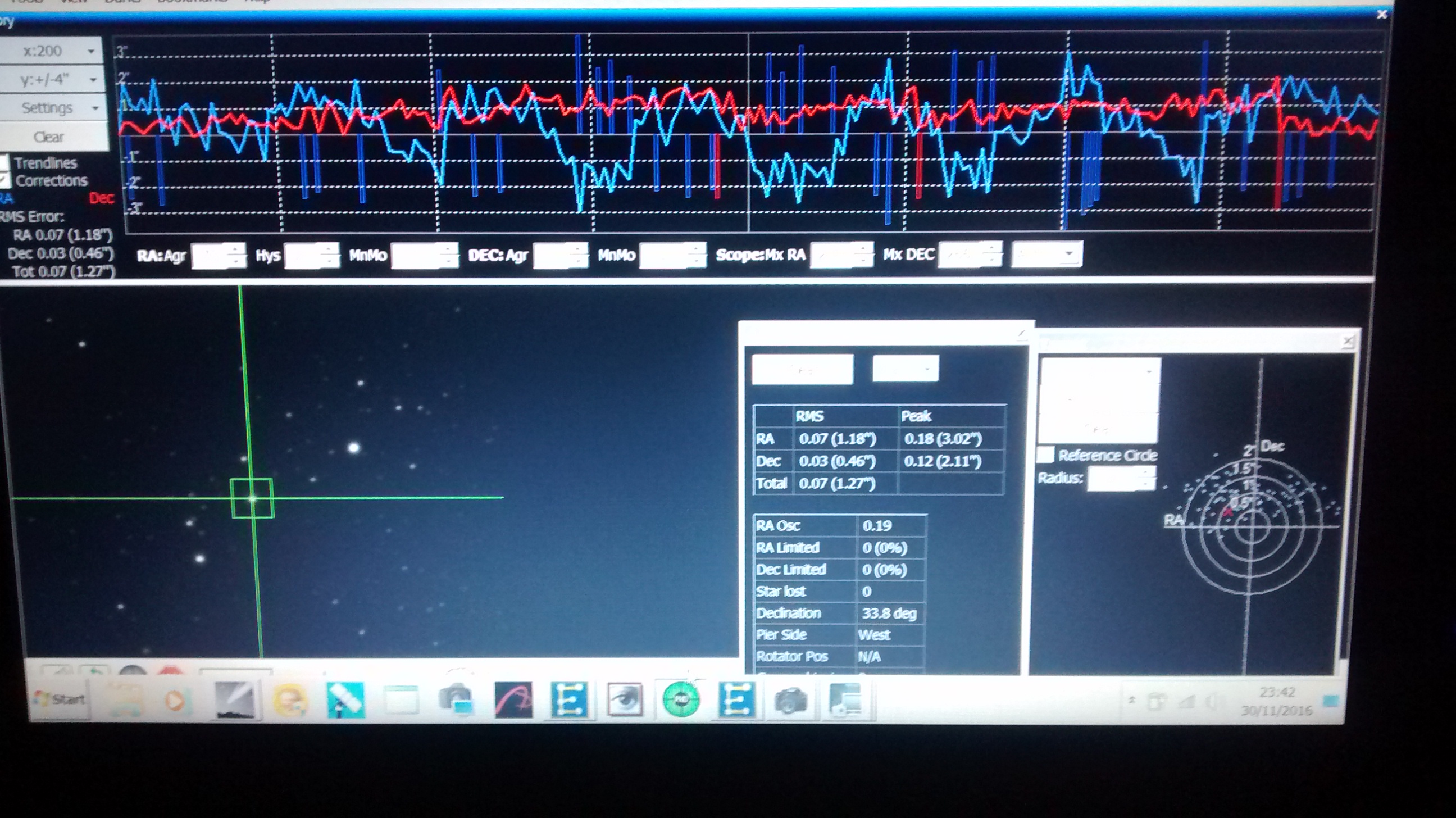
Getting better: PHD2 working screen 30th November 2016, DEC is good but room for improvement with the RA settings. Notwithstanding, the impact of tracking and image quality is noticeable.

download

I’m concerned about setting more goals or the forthcoming year but I think it helps, so here goes:

  • Improve processing: As the headmaster’s report would say “room for improvement” and I will try.  I have purchased Warren Keller’s book Inside PixInsight, considered by many to be the gold standard of post-processing software but is a nightmare to learn – this may be a step too far for now, we’ll have to see – maybe 2018?
  • Expand and improve widefield imaging: First – use the Vixen Polarie as had been intended last year to obtain nightscape images at UK dark-site locations.  Second – look at ways of using a widefield set-up with the mount more successfully.
  • Start LRGB imaging: I spent a lot of time in 2016 considering the question – what next? I am keen to image smaller DSO objects, in particular galaxies and was on the verge of purchasing a larger telescope – probably another refractor.  However, after attending a talk by Nik Syzmanek, one of Britain’s foremost astrophotographers, I have come to the conclusion that the next step should probably be a move to LRGB imaging, which if successful probably has the greatest potential to improve my pictures – let’s hope so.

Looking back 2016 was a funny old year, which for me was defined by three experiences:

Despite two wonderful periods at the end of August and November the weather for astronomy was mostly awful, with cloud cover for weeks on-end and when it was clear, it was a full moon – frustrating or what?

I had already learned that patience and perseverance are required in large quantities for astroimaging but the equipment break-down in May and June was so severe and apparently insoluble that, together with the aforementioned cloudy skies, I really thought of giving up.

However, this time there is a happy ending: after I finally solved the equipment problem and started autoguiding, I feel I have eventually made some great strides with my imaging in 2016 which, furthermore, holds much promise for the coming year and I hope can record in WTSM’s Reflections at the end of 2017.

Watch this space!
 

Photons & Photography

william-henry-fox-talbot-with-camera-141697035181903901-141210123557

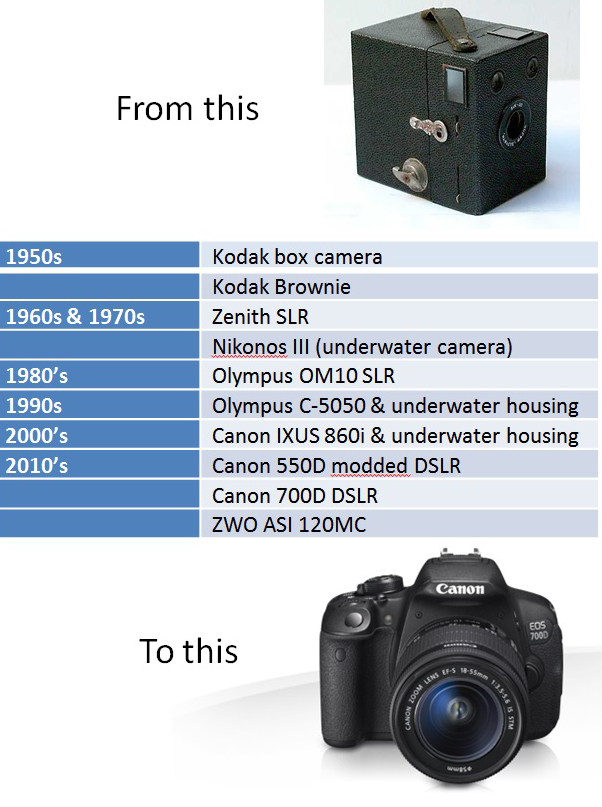
I’ve been interested in photography from a young age.  As I child I played with my parent’s Kodak box camera and, as far as I can remember, my first camera was a Kodak Brownie at the age of about nine. It’s a wonderful medium that I have now experienced for over 50-years, on land, underwater and now for astrophotography.

cameras

My cameras

I’d like to think I know a thing or two about photography by now; underwater photography and digital astrophotography have been particularly challenging in different ways but the latter is a real eye opener that has expanded my knowledge of digital imaging significantly.  Capturing images of distant objects that can only be seen with the use of sophisticated equipment and complex processing also requires an in-depth understanding of light itself.

Having spent the first half of this year reading Einstein’s biography, I have recently started an online course at Stanford University on his ground-breaking Special Theory of Relativity.  Einstein’s many insights into the physical world are profound, which more than 100-years on still challenge most of us to understand.  Light was at the core of his famous 1905 paper, in particular it’s duality as a waveform and light quanta, or photons – defined as a quantum of electromagnetic radiation.  His concept of the photoelectric effect has enabled the development of today’s digital camera sensors and CCDs.  The core principal is the production of electrons as light shines onto a material, whereby the light (photon) knocks out an electron which can then be collected electronically – the basis of digital photography.

In September I visited Lacock Abbey in Wiltshire, initially a 13th century nunnery which is now run by the National Trust.  Today it is better known as the home of William Henry Fox Talbot (1800 – 1877) – mathematician, astronomer and archaeologist but most famously the inventor and pioneer of photography, notably developing, fixing and printing.  The window photograph below (left) was taken at Lacock Abbey in August 1835 and is recognised as being from the oldest ever camera negative produced by Fox Talbot, on the right is the same window in 2016.

In the early 19th century Thomas Wedgwood had made photograms – silhouettes of leaves and other objects – but these faded quickly. In 1827, Joseph Nicéphore de Niepce produced pictures on bitumen, and in January 1839, Louis Daguerre displayed his ‘Daguerreotypes’ – pictures on silver plates – to the French Academy of Sciences. Three weeks later, Fox Talbot reported his ‘art of photogenic drawing’ to the Royal Society, which subsequently became the de facto basis of modern film photography.

img_2566-medium

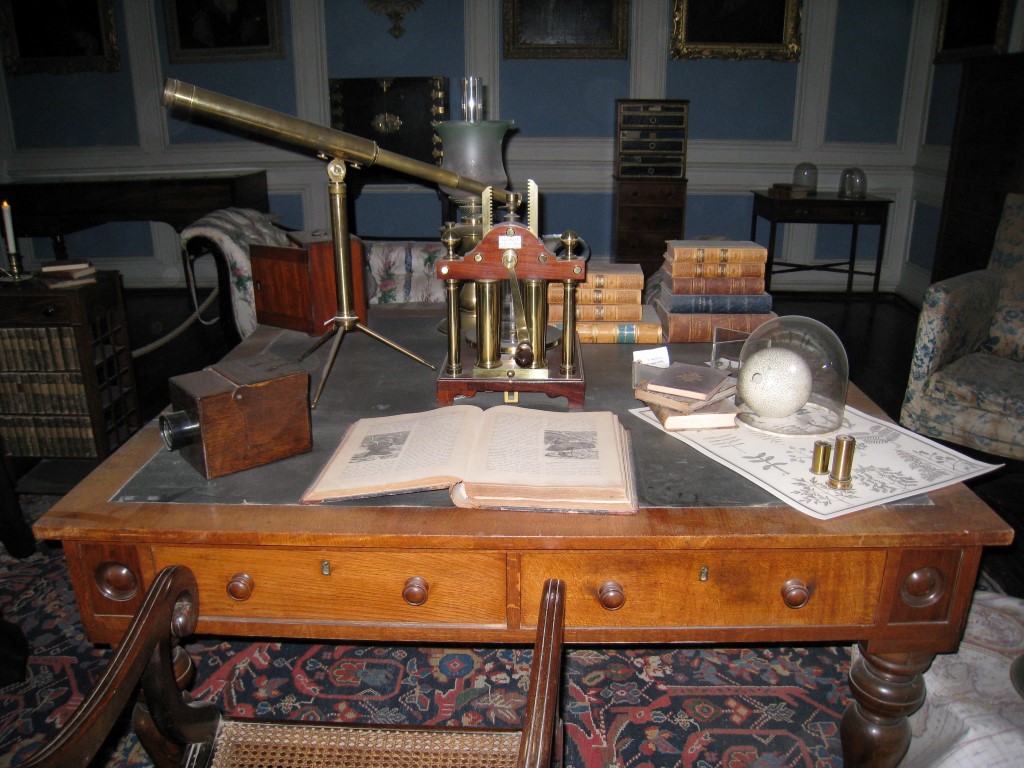
Fox Talbot’s desk in his study at Lacock Abbey

Fox Talbot lived and worked at the Abbey for most of his life.  As well as an excellent museum, which details the history of photography and photographic processes, the house contains his rooms where he developed (no pun intended) the aforementioned inventions and is surely a ‘must do’ visit for any keen photographer.  Like many at that time he was a polymath, with notable friends and accomplices who worked in similar and other scientific fields:

Sir John Herschel – astronomer, mathematician, botanist & chemist, Gold Medal winner and founder of the Royal Astronomical Society, son of William Herschel who discovered Uranus.

Charles Babbage – mathematician, philosopher, mechanical engineer, considered “the father of the computer”;

William Whewell – leading 19th century scientist, recognised in the fields of architecture, mechanics, mineralogy, moral philosophy, astronomy, political economy, and the philosophy of science;

Sir Charles Wheatstone – physicist, inventor of stereoscopic photography, the telegraph & accordion;

Sir David Brewster – physicist specialising in optics, mathematician, astronomer & inventor of optical mineralogy and the kaleidoscope;

Peter Roget – physician, theologian, lexicographer and publisher of Roget’s Thesarus.

This particular group are now remembered by a table setting in the Abbey’s dining room, where they gathered for dinner; the mind boggles at the conversation!

Fox Talbot’s pioneering photography work preceded the early 20th century understanding of light that arose from Einstein and its more recent application in semi-conductors as camera sensors, of which I am sure he would have approved.  At that time the Universe outside of our galaxy was also unknown and he would have marvelled further at the thought of imaging other such distant galaxies such as M33 below; like photons, photography has come a long way since his death in 1877.

Picture saved with settings embedded.

M33 Triangulum Galaxy – consisting of some 40-billion stars, the photons in this image have travelled 3-million light years to reach my camera’s sensor! | WO GT81 + modded Canon EOS 550D & FF guided | 18 x 300 secs @ ISO 800 & full calibration | 22nd October 2016