Suits you sir

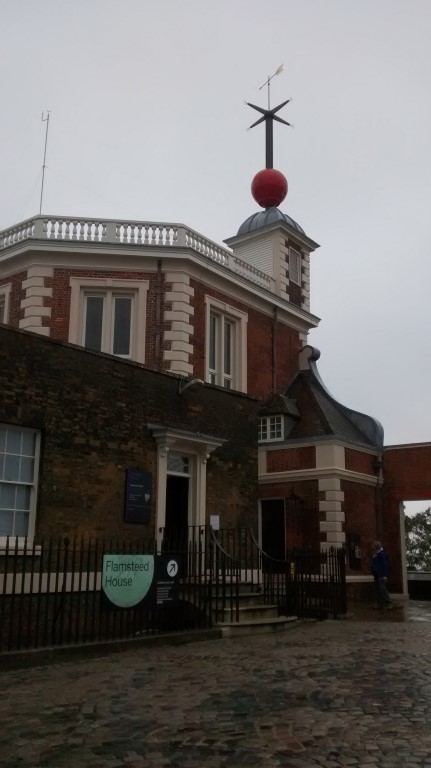
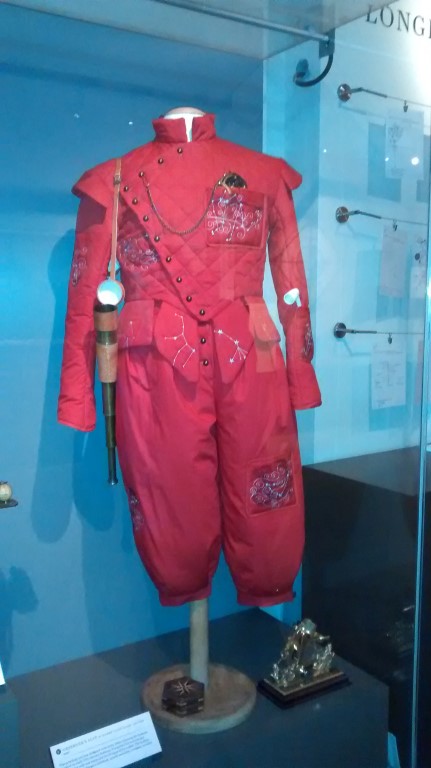
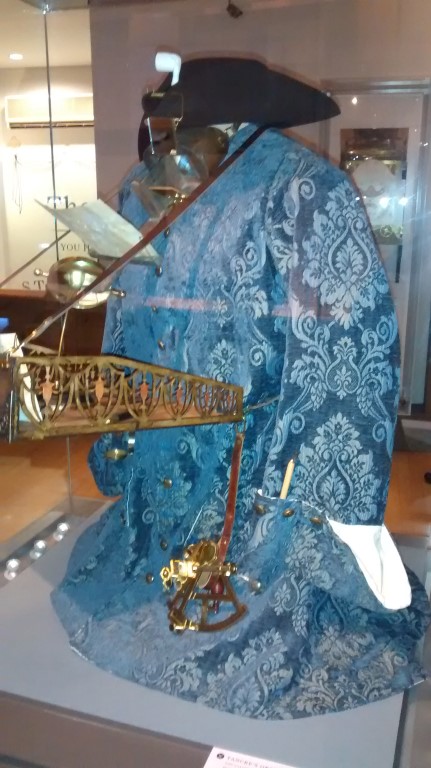
This year’s Indian summer is now just a memory; the weather is cold and wet and the skies overcast – no astrophotography then at the moment!  Notwithstanding, it’s time to think about the forthcoming winter skies, imaging possibilities, plans and what to wear?  Winter is generally recognised as a better time for astronomy (when it is dry and clear) – darker skies, exciting objects to view and image – but it does get cold.  Normally this would require more and thicker clothes but after a visit to the Longitude Punk’d exhibition at The Royal Observatory yesterday, I realise I need to raise my game.

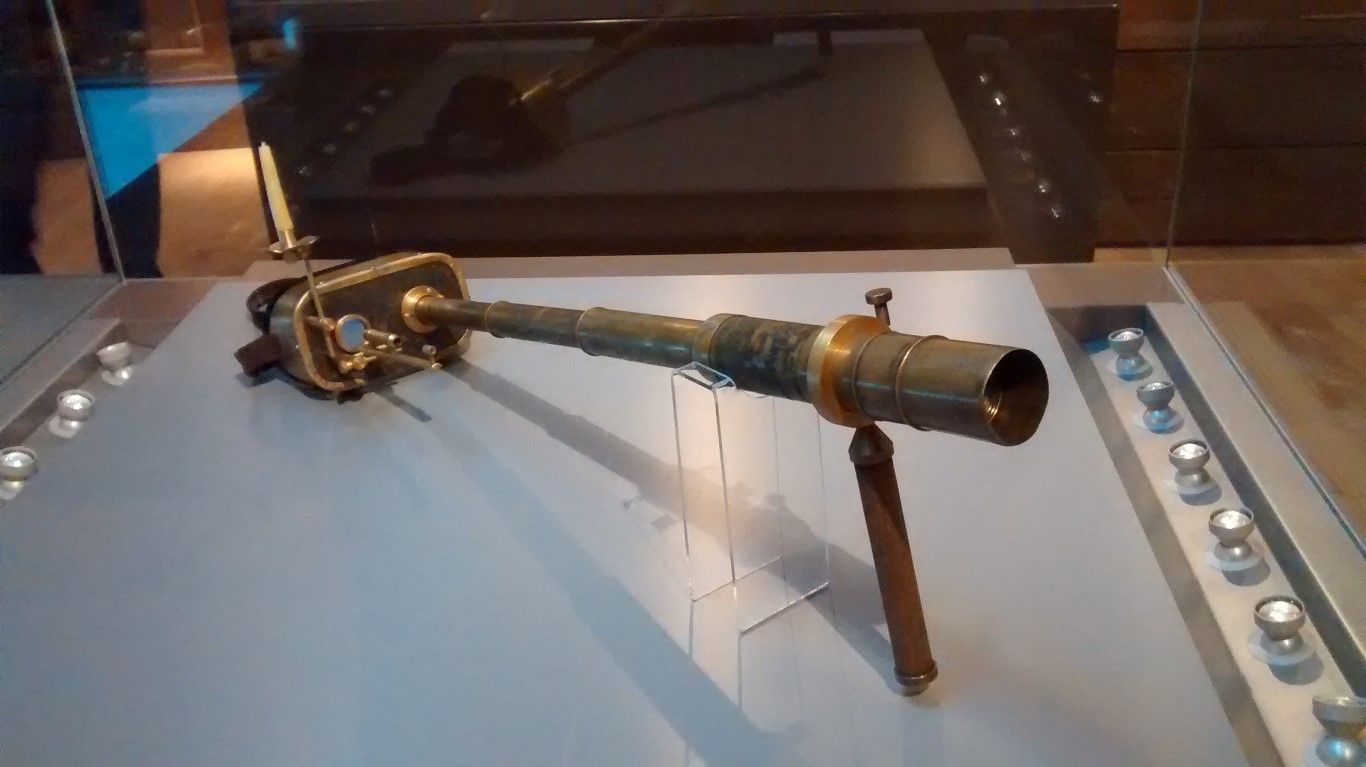
Two fetching astronomer’s outfits show that astronomy can be about style as well as substance.  A natty red observing suit particularly caught my eye or a less flamboyant but nicely eccentric blue silk jacket and brass work tray with accompanying gadgets (hand lens, mirror, sextant, candle and pipe) for recording observations etc.  Time to speak to my tailor!

IMG_20141013_144325789 (Medium)

IMG_20141013_144618128 (Medium)

Smoke and mirrors

My brain hurts! The Talking Point section of the recent October edition of the Astronomy Now magazine really poses a serious problem for astronomers, if not the Universe itself; matters don’t get much bigger. The matter being, Is the Universe a Hologram?  It transpires that one of the theoretical consequences of quantum physics and, in particular, very small matter, is that at the smallest scale the Universe may be two dimensional.  The third dimension, emerging in the same sense that an impressionist painting is the macroscopic effect of thousands of spots of coloured paint that, when viewed close up, gives no clue to the overall scene.  I am not making this up.   So serious is this question that Fermi National Laboratory Accelerator Laboratory (Fermilab) in the USA is currently undertaking an experiment to assess the answer; what happens if it is a hologram, do we disappear?  As a result of this devastating possibility, I have read around but frankly am battling to fully understand the concept and its consequences.   http://www.smithsonianmag.com/science/what-universe-real-physics-has-some-mind-bending-answers-180952699/?no-ist

In the event that the answer is in the affirmative, then what have I been photographing out there?

Astrophotography seems to consist of many black arts, not the least of which, in my case, is Polar Alignment. Since getting into this astronomy malarkey I have, wherever possible, taken the easy route – unfortunately this is no longer compatible with my ambitions and I must deal with my astronomy fears: polar alignment, computer control and using a guide scope.  All are essential if I am to improve my pictures and bag some of the more elusive DSOs as well as more mundane objects.  Initial use of the AZ-EQ6 GT mount has already been rewarding through the use of star alignment but without good polar alignment too, a critical piece of information for finding and tracking objects is missing.  In order to track objects across the celestial sphere using an equatorial mount, it is essential to line up the axis of the mount with the Polaris star, which marks the central point around which the celestial sphere effectively rotates.

The AZ-EQ6 GT mount does have a polar scope through which to look directly at the Polaris star and line up the mount.  Alas I cannot use it as my house is directly in the way of Polaris and I don’t really feel like knocking it down, though you never know.  However, there are cunning ways to overcome this problem (i) using another sequence programmed into the mount’s SynScan control handset to achieve polar alignment without a polar scope (see manual #11.3) or (ii) drift alignment, a technique of iterative realignment of the altitude and azimuth by linking the telescope to specific computer software (I believe it can also be undertaken by just using a star trace obtained by a DSLR or CCD camera).

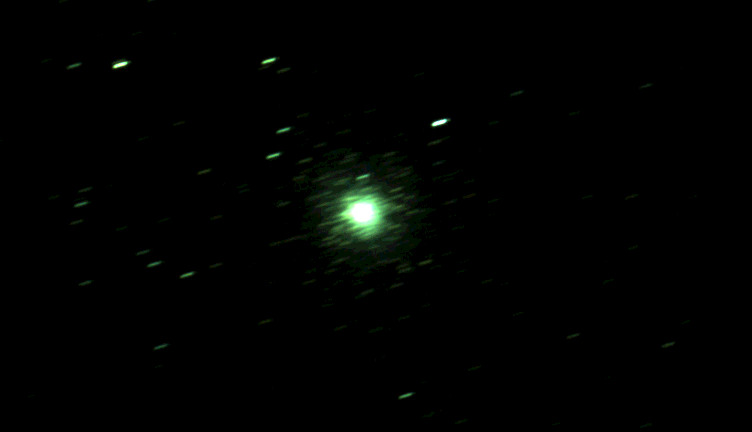
For the moment I am having great difficulty attempting to use the SynScan routine.  Having spent much of Sunday studying the technique, subsequent hours of practice at night brought little success; despite my best attempts, the SynScan handset routine does not seem to be the same as that outlined in the Manual – not a good start.  Sometimes the operation of this complex equipment seems elusively to be driven by smoke and mirrors, let’s hope the Universe fairs better at Fermilab.

M2 Star Cluster; after hours of preparation and attempts to apply the Synscan polar alignment routine, with the P{olar Scope, success proved elusive and tracking poor. Canon 700D | 15x30 sec @ ISO 400

M2 Star Cluster; after hours of preparation and attempts to apply the SynScan polar alignment routine, without the Polar Scope, success proved elusive and tracking was poor.
Canon 700D | 15×30 sec @ ISO 800

Moving through space

Astrophotography is difficult, very difficult but probably one problem stands out above all others.  The platform we are taking the images from, Earth, is moving at about 67,000 mph on its way around the sun every 365 days and just over 1,000 mph rotating on its axis every 24 hours, which is tilted at approximately 23o relative to its orbit around the sun.  Over a year the annual journey around the sun, combined with the planet’s tilt provides us with the seasons and the astronomer with a different views of the universe, which despite the overall velocity does not unduly affect imaging over short periods measured in seconds or even minutes.  However, the rotation of the Earth every 24 hours is another matter, particularly when photographing objects over any period of time greater than a few seconds, which is required for most objects, especially more distant DSO.

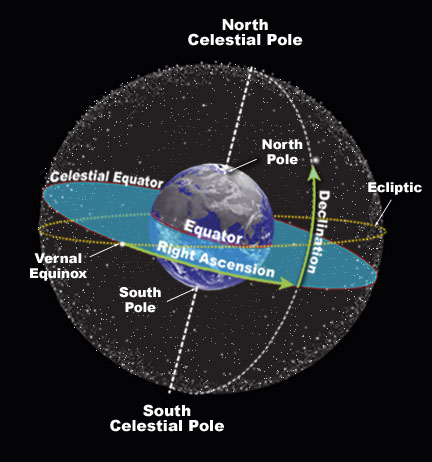
In understanding how this last movement impacts on the nature of the sky we see and in order to photograph objects – as well as forming a basis for navigation around the night sky – we have developed a system that is analogous to that used for navigating across the globe i.e. Longitude and Latitude but now called Right Ascension or RA and Declination or DEC.

For the purpose of establishing lines of RA and DEC a celestial sphere must be imagined of an arbitrarily large radius, concentric with a celestial body – in this case Earth.  In a similar way to Earth, a celestial equator is likewise established, this being in the same plane as the Earth’s equator but projected upwards onto the celestial sphere – as a result if the Earths tilt, it too is inclined at 23.4o with respect to the elliptical plane.  Having established the sphere and the equator, RA is then described as the angular distance along the celestial equator and DEC measures the distance above or below the celestial equator along any RA line in degrees.  This imaginary framework can then be used to describe the positon of any object or its relative position over time in space in the sky that we see from Earth.

The Celestial Sphere - a grid of RA & DEC lines across the sphere can be used to define the position of objects in the sky. Looking south in the Northern Hemisphere, the Celestial Equator is inclined across the sky from east to west and bisected vertically due south by the Meridian line -  the optimal RA line for astromimaging

The Celestial Sphere – a grid of RA & DEC lines across the sphere can be used to define the position of objects in the sky. Looking south in the Northern Hemisphere, the Celestial Equator is inclined across the sky from east to west and bisected vertically due south by the Meridian line (not shown) – the optimal RA line for astroimaging

In order to follow an object for imaging it is necessary to hold the telescope / camera in a stationary position relative to the movement of the object; remember that we are at the same time spinning at 1,000mph relative to space.  This is very difficult but in astrophotography is usually achieved by the means of an Equatorial Mount which, through some very sophisticated software that computes the relative movements of the object and the telescope, gently slews the mount-telescope-camera combination using gears and belts in such a way that the telescope and hence camera, remain fixed upon the chosen object.  The result, when undertaken with care, will be a wonderful sharp image of an almost endless number of features in the night sky, which is the subject of many of the posts on this website

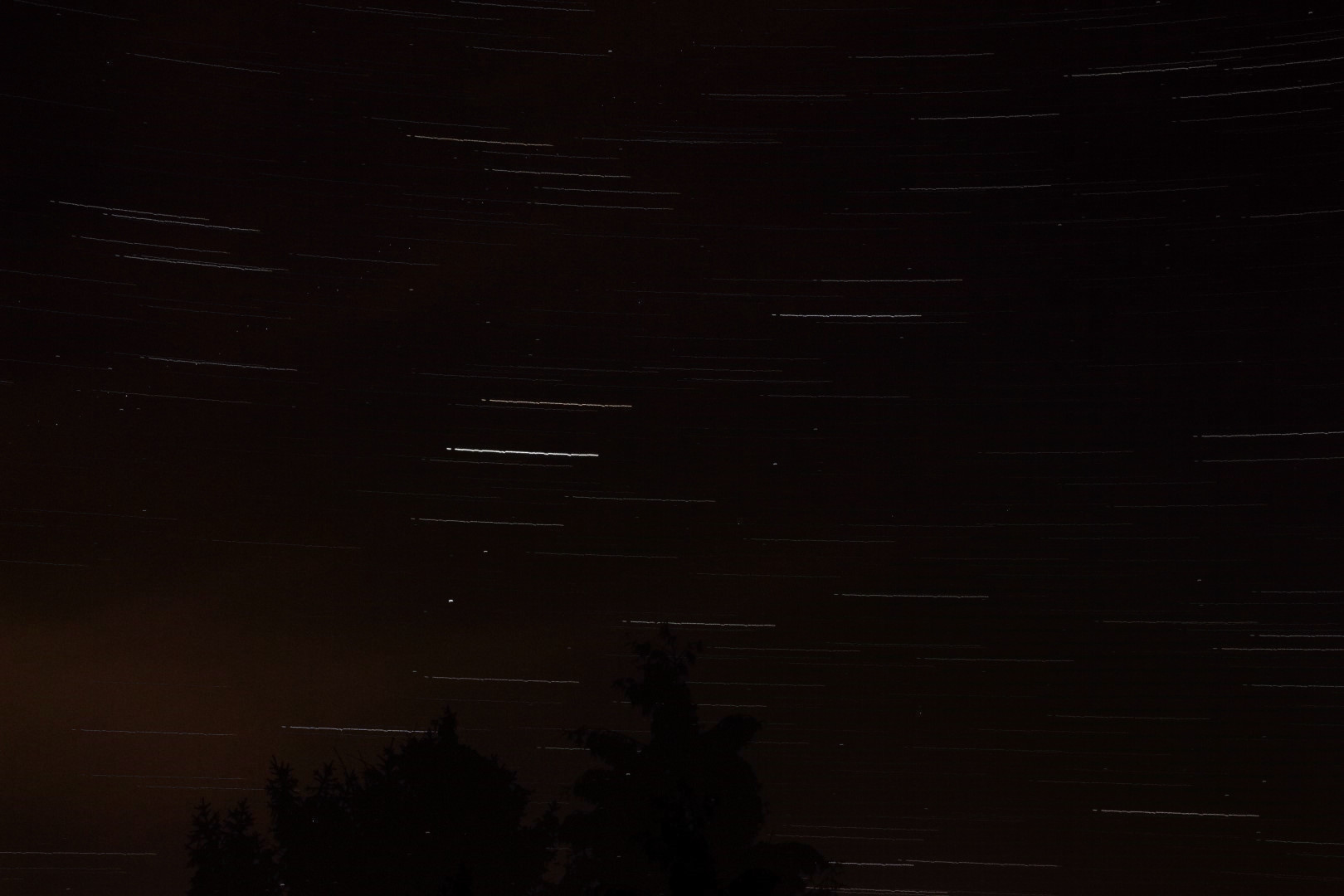
Conversely, what happens if we deliberately do not follow the sky’s objects in this way but hold the camera effectively still relative to the sky’s movement, created by Earth’s daily rotation.  The answer is Star trails, which I set out to obtain the other evening.  In order to achieve such a picture, the DSLR camera is fixed on a tripod and using an intervalometer, a long exposure of the night sky above is taken; alternatively a large series of shorter exposures can be made over a long period of time and then stacked to produce a better quality final image.  As a result the stars trace their respective paths of light across the camera’s sensor, as the Earth moves at 1,000 mph on its axis.  Such movement is normally indiscernible over short periods of time but through this process it is clear to see in the form of wonderful star trails.  Of course the stars haven’t moved at all (at least not in a normal visual sense) it’s us that are moving, very fast.  It is beautiful and clear evidence that we on Earth are continually moving through space!

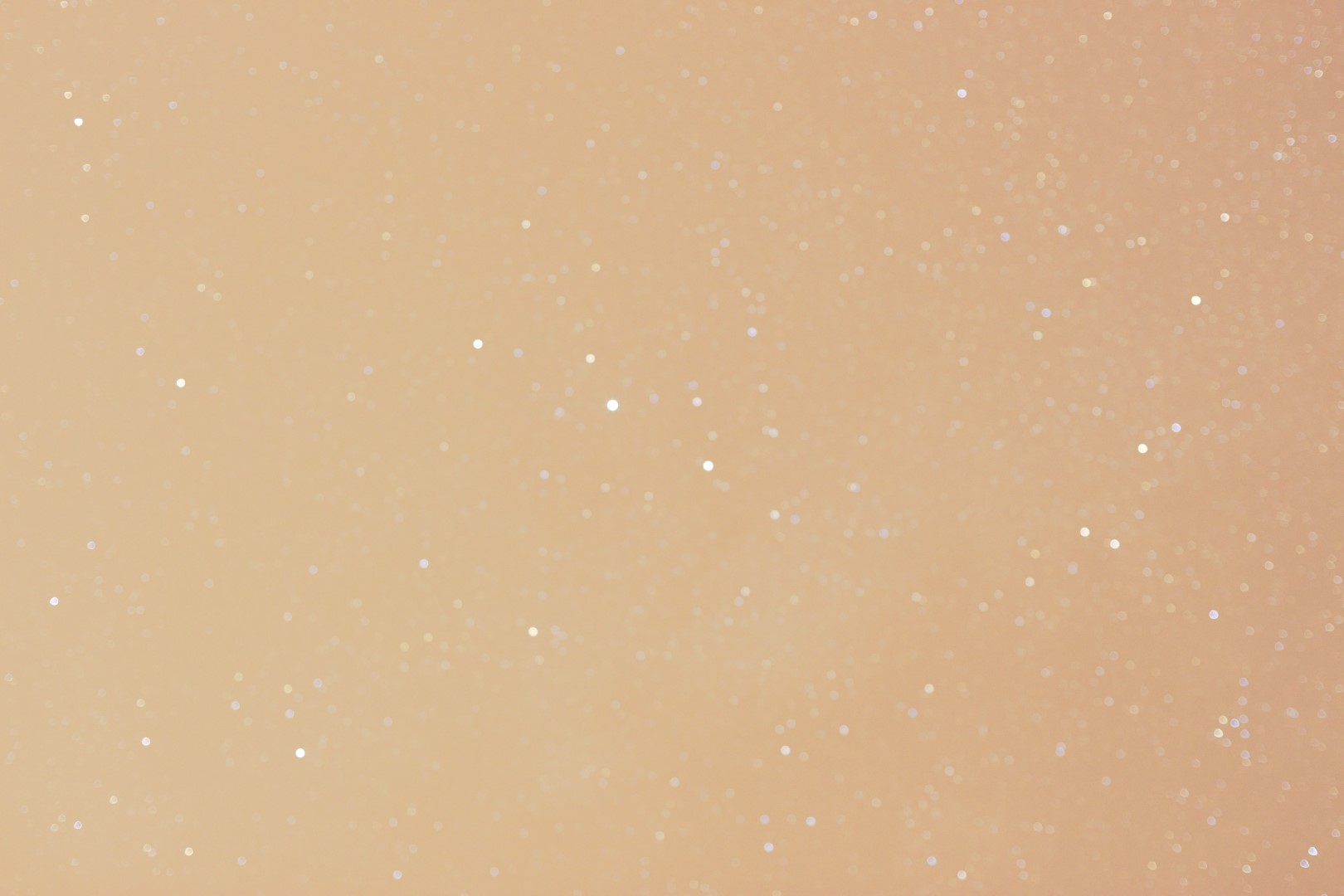
Startrail Canon 700D | 20 minutes  f4 @ ISO 800

Star trails (inverted colour)
Canon 700D | 20 minutes f4 @ ISO 800

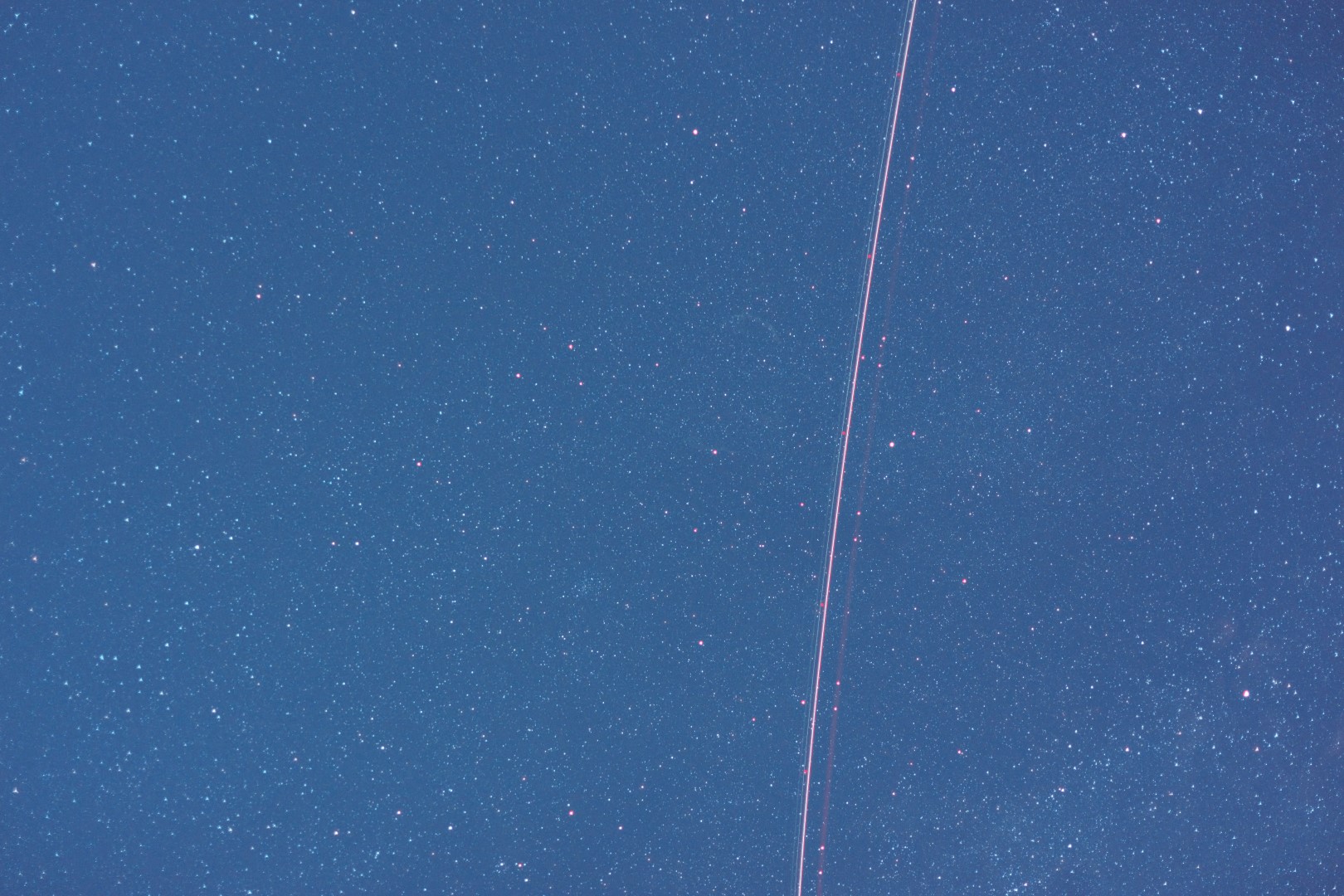
Startrail Canon 700D | 39x30secs f4 @ ISO 400

Star trails
Canon 700D | 39x30secs f11 @ ISO 400