The absence of light

“Light thinks it travels faster than anything but it is wrong. No matter how fast it travels, it finds that darkness has got there first, and is waiting for it.”  Terry Pratchet, Reaper Man.
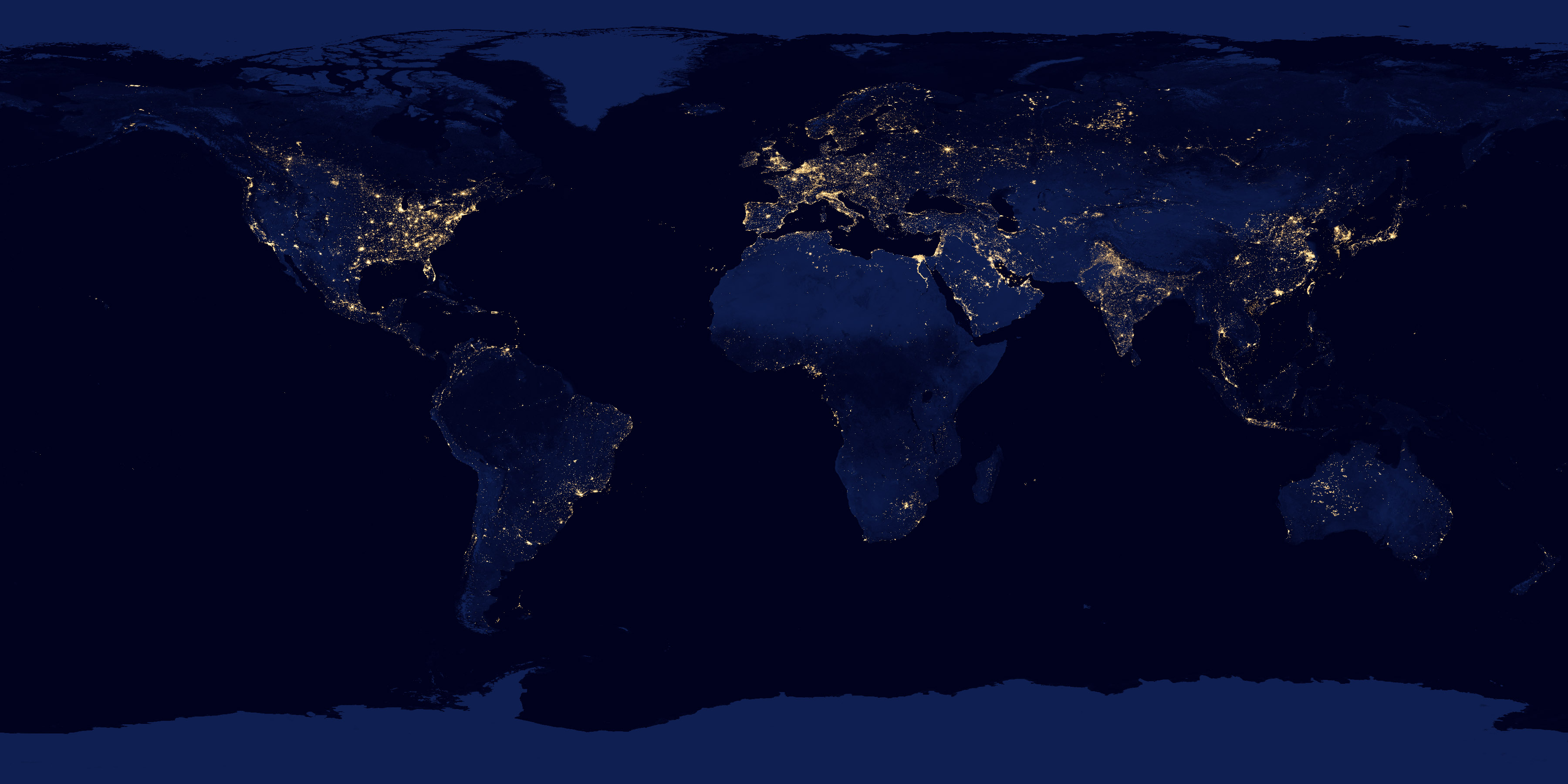
dnb_land_ocean_ice.2012.3600x1800

It may seem something of a contradiction that as astronomers we seek very dark places and skies in order to see light, light that may have travelled millions of light years to get here – light travels 6 trillion miles in one year.  For human beings the perception of darkness differs with the mere absence of light, due to the effect of afterimages that are produced by the unstimulated (by light) part of the eye. Typically our eyes will take between 20 and 30 minutes to fully adjust to darkness, at which time the eye becomes between ten thousand and a million times more sensitive than in daylight.

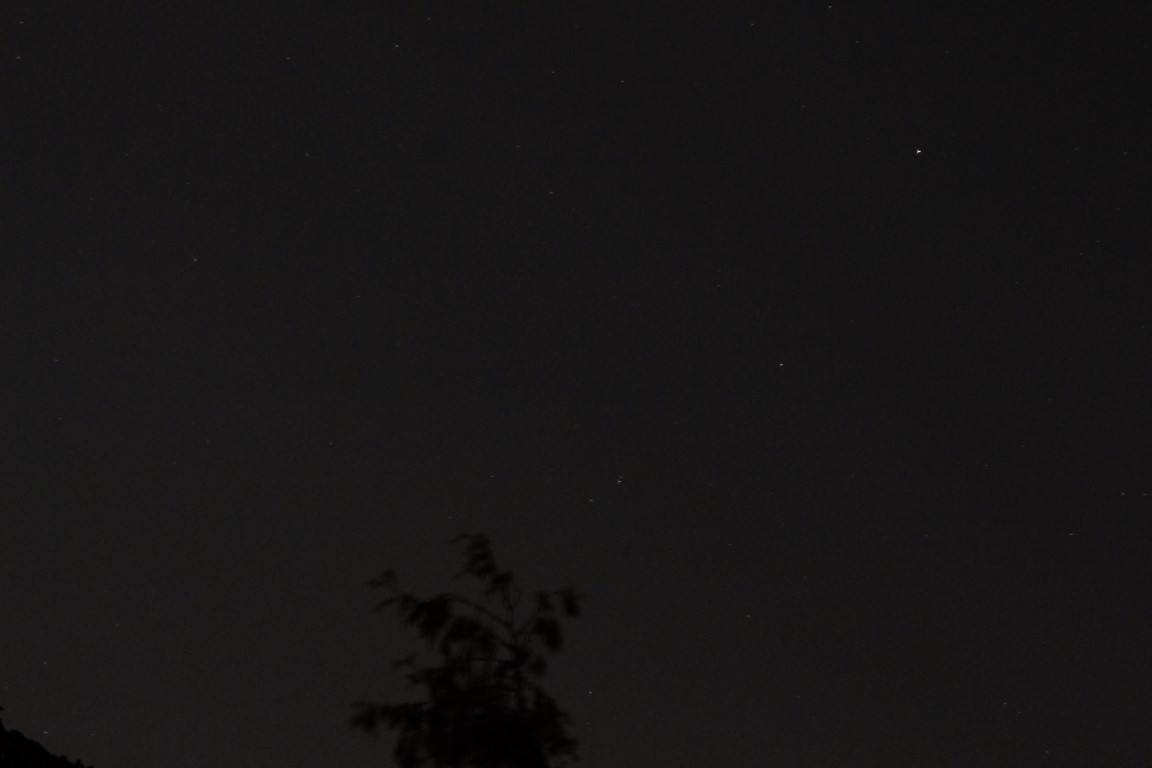
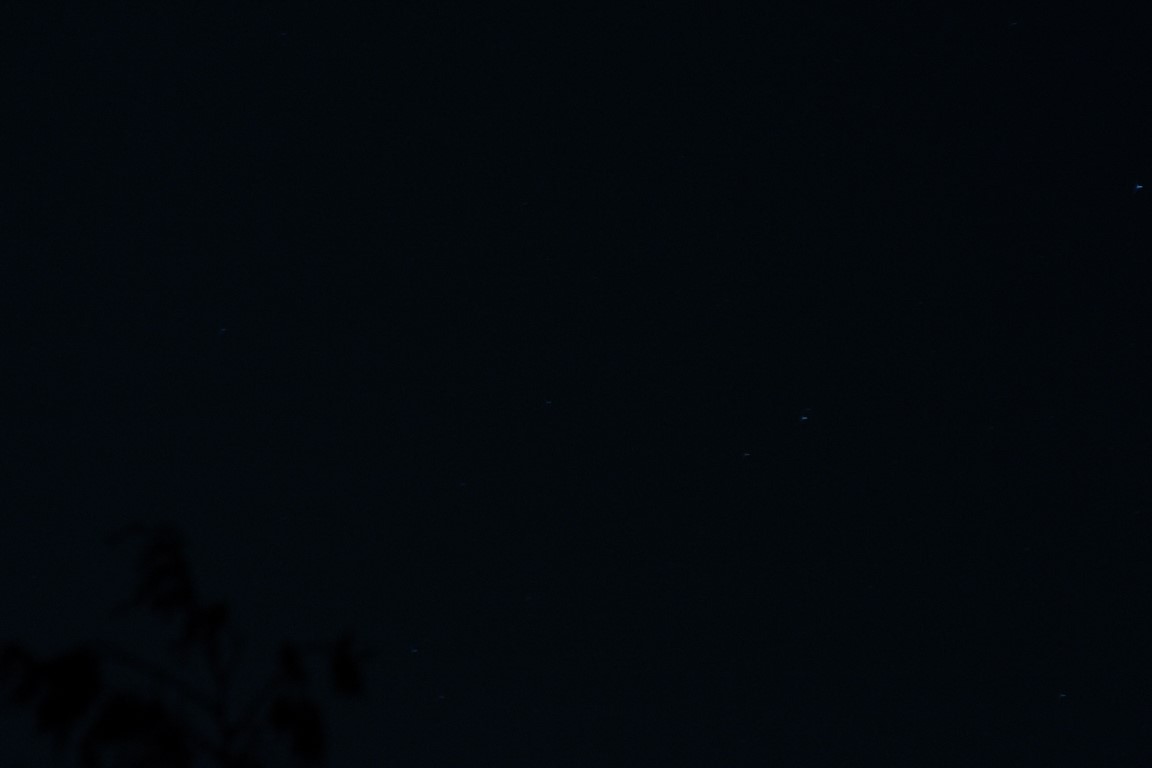
Objectively the Bortle Dark-Sky Scale describes nine levels of darkness and thereby quantifies the astronomical observability of celestial objects and impact of light pollution http://en.wikipedia.org/wiki/Bortle .  With digital photography the colour of a point is described on the camera’s sensor by three RGB (red, green, blue) values, each ranging from 0 to 255.  Thus when each pixel is fully illuminated each colour component measures 255 or for an RGB image 255,255,255.  Conversely when all values are zero or 00,00,00, it appears black.  However, the night sky is not black but measures somewhere between 10 and 30 when imaged.

Night sky image (Eastern Veil) with dark point set at  0,0,0
Night sky image (Eastern Veil) with dark point set at 0,0,0

Dark sky image (Eastern Veil) with dark point set at 20,20,20.  This approximates best to the natural darkness of the night sky.

Dark sky image (Eastern Veil) with dark point set at 20,20,20. This approximates best to the natural darkness of the night sky.

There are even four subdivisions to describe approaching darkness at night:

Civil Twilight: begins at sunset and ends when the sun is 6o below the horizon or more practically, it can be described as the period after sunset during which terrestrial objects can still be clearly distinguished. Normally the end of civil twilight is usually 20 to 30 minutes after actual sunset.

Nautical Twilight: describes the period when the sun is between 6o and 12o below the horizon, during this time it is now possible to take reliable star sightings at sea.  It may more commonly be described as nightfall but it is still not strictly dark yet.

Astronomical Twilight: defined as the period when the sun is now between 12o and 18o below the horizon.  To the casual observer this may be considered dark but it’s not, only when Deep Sky Objects such as nebulae and galaxies can be viewed is it fully dark.

Therefore, only after this sequence is completed, which takes almost two hours after sunset here at Fairvale Observatory at this time of the year, does true astronomical night or darkness occur. The excellent FLO Clear Outside weather forecast website, which is linked on the front page of this website, shows the current timings for each of these periods every day along the top horizontal bar, just below the hourly sub-division headings.

Obviously this has a major bearing for astronomers and perhaps more so for astrophotography.  So sensitive is the camera’s sensor that when using long exposures the cumulative light recorded, even in a dark-sky environment, may result in a bright image that will need to be corrected during processing. Notwithstanding, the holy grail for astronomers is a dark, clear sky and the biggest enemy (other than bad weather and cloudy skies) is light pollution, which is spreading inexorably across the globe.

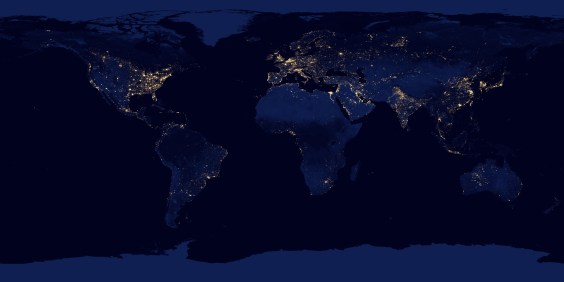
At the beginning of this post is a NASA picture of the Earth at night, produced as a composite of image data from the Suomi National Polar-orbiting Partnership (NPP) satellite, taken in April and October 2012 over a period of 312 orbits.  NPP passes over any given point on Earth’s surface twice every day,  flying 824 kilometres (512 miles) above the surface in a polar orbit, circling the planet about 14 times a day http://earthobservatory.nasa.gov/Features/IntotheBlack/ .  Away from the cities much of the other light from wildfires, fishing boats, gas flares or mining operation is also visible.  Whilst undeniably a beautiful picture, for astronomers it highlights one of the major obstacles we are up against, light, or more accurately light present here on Earth.  The night sky before the invention of the commercial light bulb by Tomas Edison in 1878 must have been a wonderful sight; I doubt that Messier (1730-1817) would have successfully catalogued all his 110 objects as easily with today’s skies.
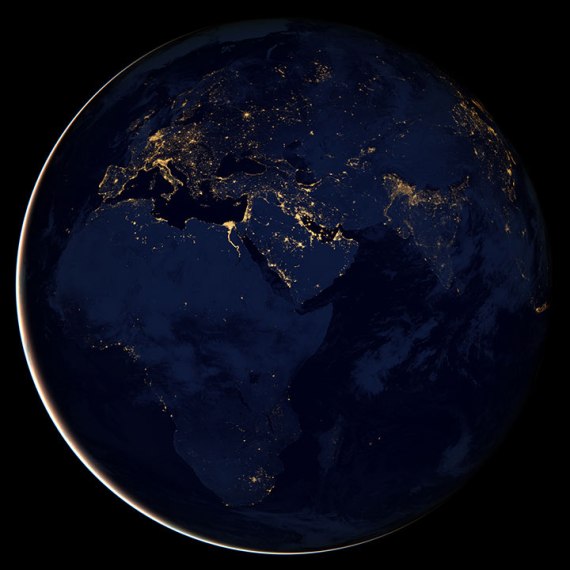
The dark side of the world: city lights of Europe, Africa, Middle East & Central Asia

The dark side of the world, with light just over the western horizon.
Rendezvous

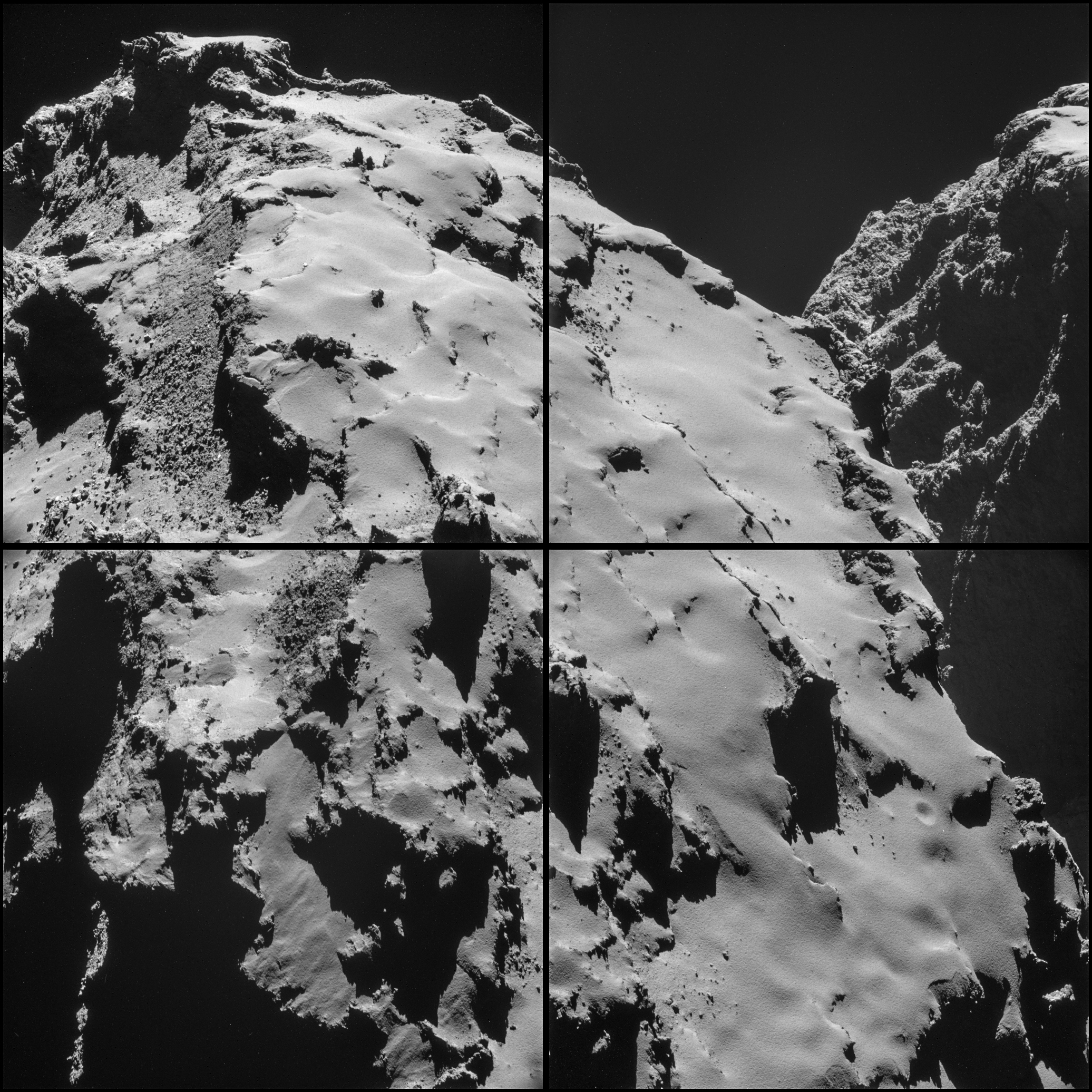
Comet_on_28_October_NavCam

At first this picture looks like something taken whilst walking in the Alps but, look again.  It is a composite photograph taken on 28th October by the Rosetta space probe, currently orbiting the 67P/Churyumov-Gerasimenko comet, approximately 7.7 km from the surface.  I must admit I had been somewhat doubtful about the nature and chance of success of this mission but there’s no denying the science and technology is amazing, almost, but not quite, as exciting as the first Moon landing on 29th July 1969.

The Rosetta probe was launched on 2nd March 2004 and has since taken a circuitous route through deep space to eventually rendezvous with the comet in August this year.  Initially approaching the comet at a maximum relative speed of 19,000 mph, the probe was put into orbit around the comet on 10th September, since when it has been mapping the comet’s surface and sending back some truly amazing photographs. This link provides real time tracking data from the probe, which locked together with the comet is currently travelling at 40,000 mph relative to the Sun. http://www.livecometdata.com/comets/67p-churyumov-gerasimenko/

Even now it sounds like science fiction and the best is yet to come.  In nine days, on 12th November, Rosetta is scheduled to send a lander to the comet’s surface.  After attaching itself to the comet, a scientific mission will be undertaken by the lander in order to study its nature, origin and possible implications for life on Earth itself. Wow, can’t wait!!!

http://www.esa.int/Our_Activities/Space_Science/Rosetta/Europe_s_comet_chaser

Taken on 7th October, Rosetta takes a 'selfie' whist imaging the comet 16 km away.

7th October: Rosetta takes a ‘selfie’ whilst imaging the comet 16 km away.

It’s all about the wavelength

For the moment, putting aside the duality of light as a wave-particle (quantum) form, the behaviour of light in the visible spectrum can be both fascinating and a problem for the astronomer.  As my tracking has improved (and hopefully will get even better) it has been possible to increase exposure times from a maximum of 40 seconds (and that was pushing it), to comfortably 90 seconds and sometimes more.  The impact is that more light is gathered by the camera’s sensor and the outcome is greater detail and more colours – this all helps, a lot, when the light may travel for thousands or even millions of light years before hitting the sensor.

Unfortunately Fairvale Observatory is located on the southern edge of London and about 8 miles north of Gatwick airport, the result is that all that lovely light that has travelled from distant objects in the Universe has to compete with man-made light pollution.  Last week I therefore invested in an Astronomik CLS filter http://www.astronomik.com/en/, which clips inside the camera, just behind the lens, and blocks the spectral lines of mercury and sodium-vapour lamps, letting the remaining part of the visible spectrum and H-alpha through.

  • The horizontal axisis the Wavelength in Nanometers (nm). 400nm is deep blue, at 520nm the human eye senses green and at 600nm red. At 656nm is the famous “H-Alpha” emission line of hydrogen.
  • The transmission in %is plotted on the vertical axis.
  • The redline shows the transmission of the filter.
  • Visual filters: The greyline in the background shows the relative sensitivity of the human eye at night. The maximum is at ~510nm and drops to longer and shorter wavelengths. You can easily see, that you can´t see anything of the H-alpha line at night (even if you can during daylight!) The sensitivity at 656nm is 0% at night!
  • Photographic filters: The grey line in the background shows the sensitivity of a typical CCD sensor.
  • The most important artificial emissionlines are shown in orange. The artificial light pollution is dominated by see mercury (Hg) and sodium (Na), which are used in nearly all streetlights.
  • The most important emission lines from nebulasare shown in green. The most important lines are from ionized Hydrogen (H-alpha and H-beta) and double ionized oxygen (OIII).

The major emission lines of artificial light pollution:
| Hg 435,8nm | Hg 546,1nm | Hg 577,0nm | Hg 578,1nm |
| Na 589,0nm | Na 589,6nm | Na 615,4nm | Na 616,1nm |

The major emission lines of nebulas:
H-β 486,1nm | OIII 495,9nm | OIII 500,7nm | H-α 656,3nm

Since my recent success imaging the Orion Nebula I’ve been frustrated by bad weather, cloudy skies and a full Moon.  With a brief gap in the clouds last night I therefore couldn’t resist the opportunity to try out the new filter with the camera but without using the telescope.  Shooting two sets of pictures, with and without the filter, and using a telephoto and 50 mm standard lens, the results were both successful and perplexing.

As expected it darkens the sky, a lot, but also skews the resulting image towards blue which subsequently has to be adjusted during processing, complicating the question of what is the right colour even more.  It is a known fact that despite the obviously very large distances of astrophotography subjects, some camera lenses need to be focussed just short of the lens‘s infinity position.  However, with the standard lens the focus point was very different when using the filter, noticeably less than without the filter.  This seems quite strange and I have not quite worked out why this should be so, except the loss of and therefore change in wavelength of the light?

It will be interesting to see how the filter works when imaging deep sky objects using the telescope once the weather clears but the preliminary tests are promising.  Certainly the ‘loss’ of light incurred will require longer exposures so I had better sort out autoguiding soon, my next challenge.

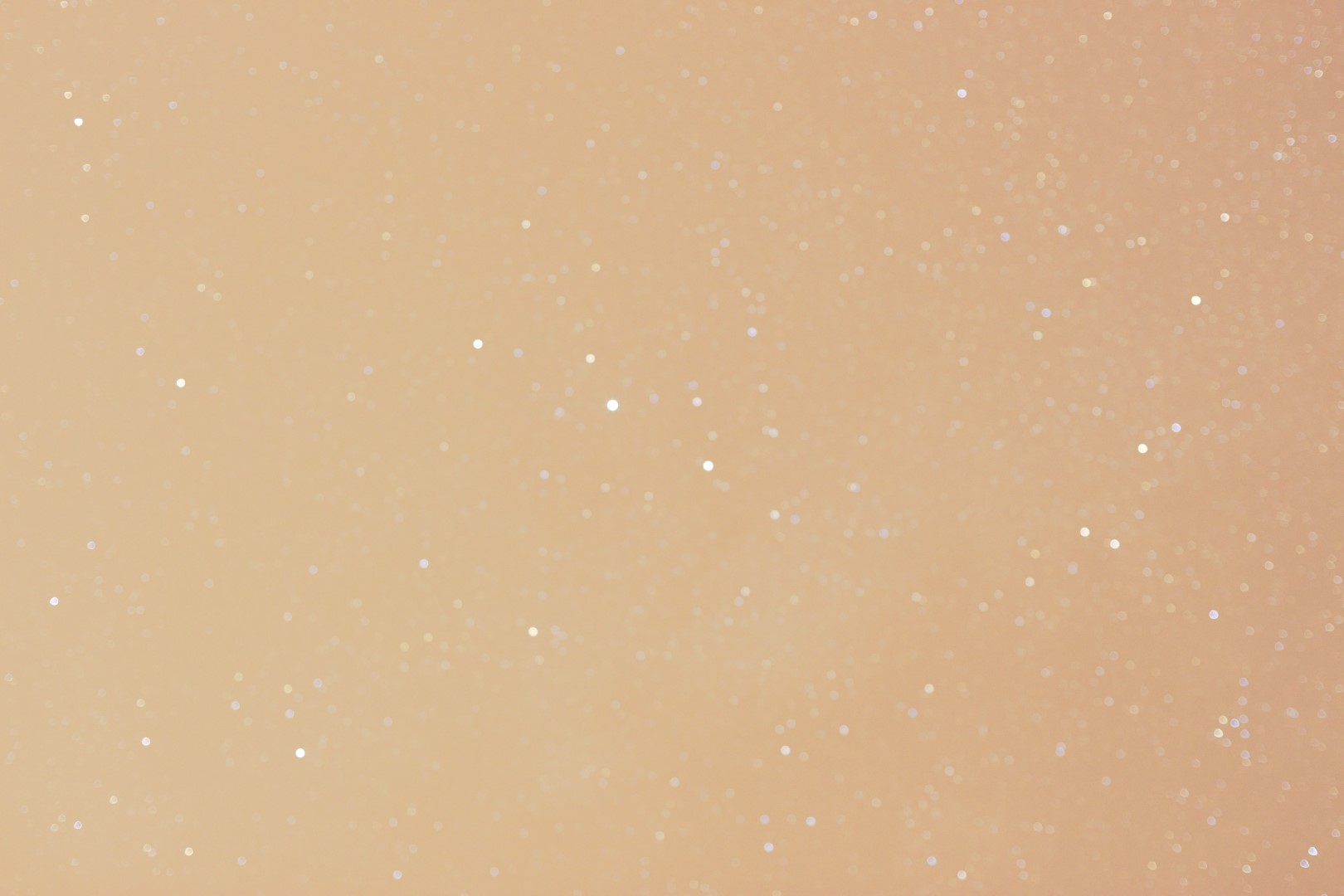
Without CLS filter, 8 secs @ ISO 800

Without CLS filter, 8 secs @ ISO 800

With CLS filter,  8 secs @ ISO 800

With CLS filter, 8 secs @ ISO 800

Milky Way - in the Tarazed region -  60 seconds (only!) @ ISO 800

Milky Way (Tarazed region) without CLS filter                        60 seconds (only!) @ ISO 800

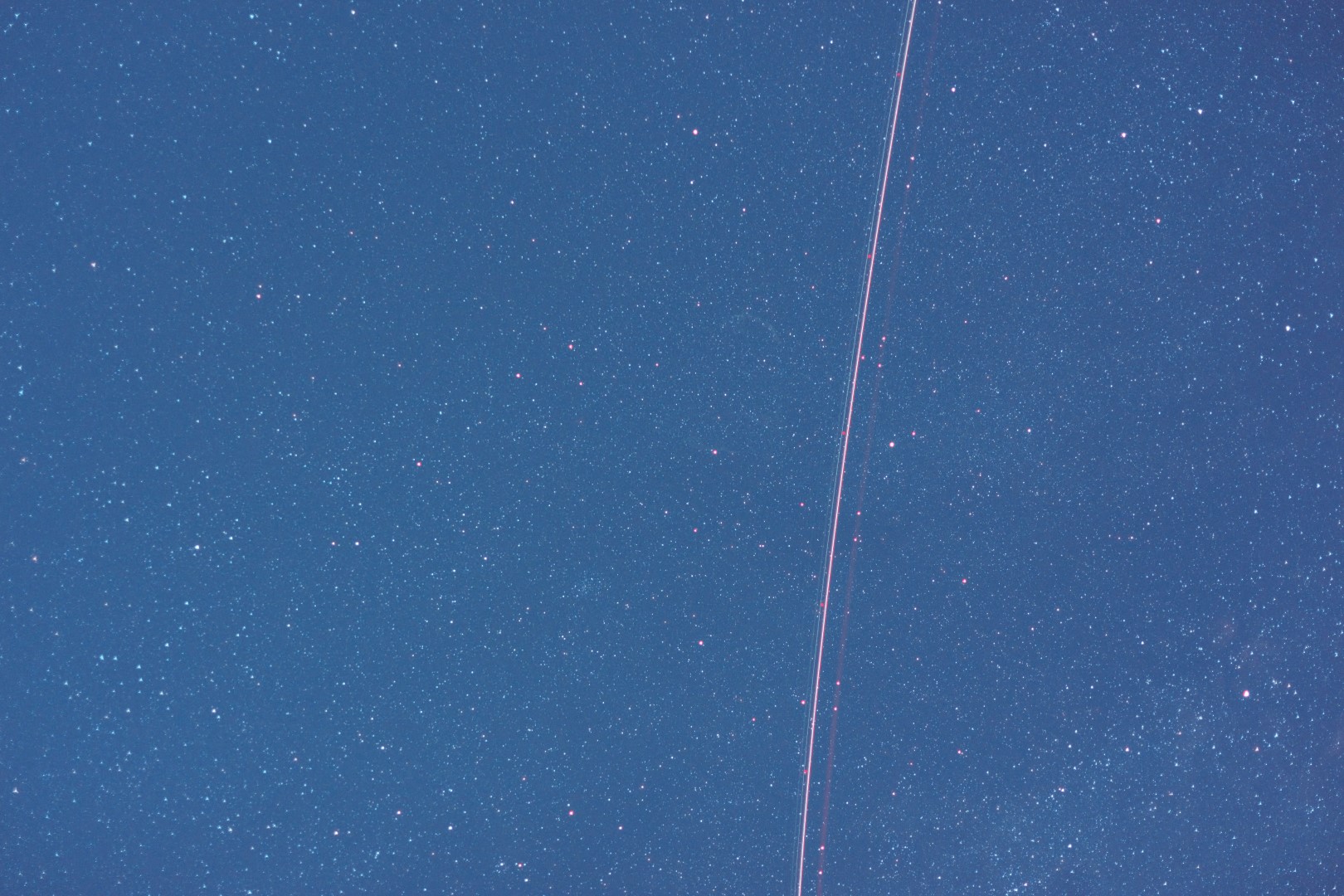
Veil Nebula, with CLS filter, 90 secs @ ISO 800 (+ plane trace!) - unprocessed

Veil Nebula (and aircraft trace!) with CLS filter              90 secs @ ISO 800  – unprocessed

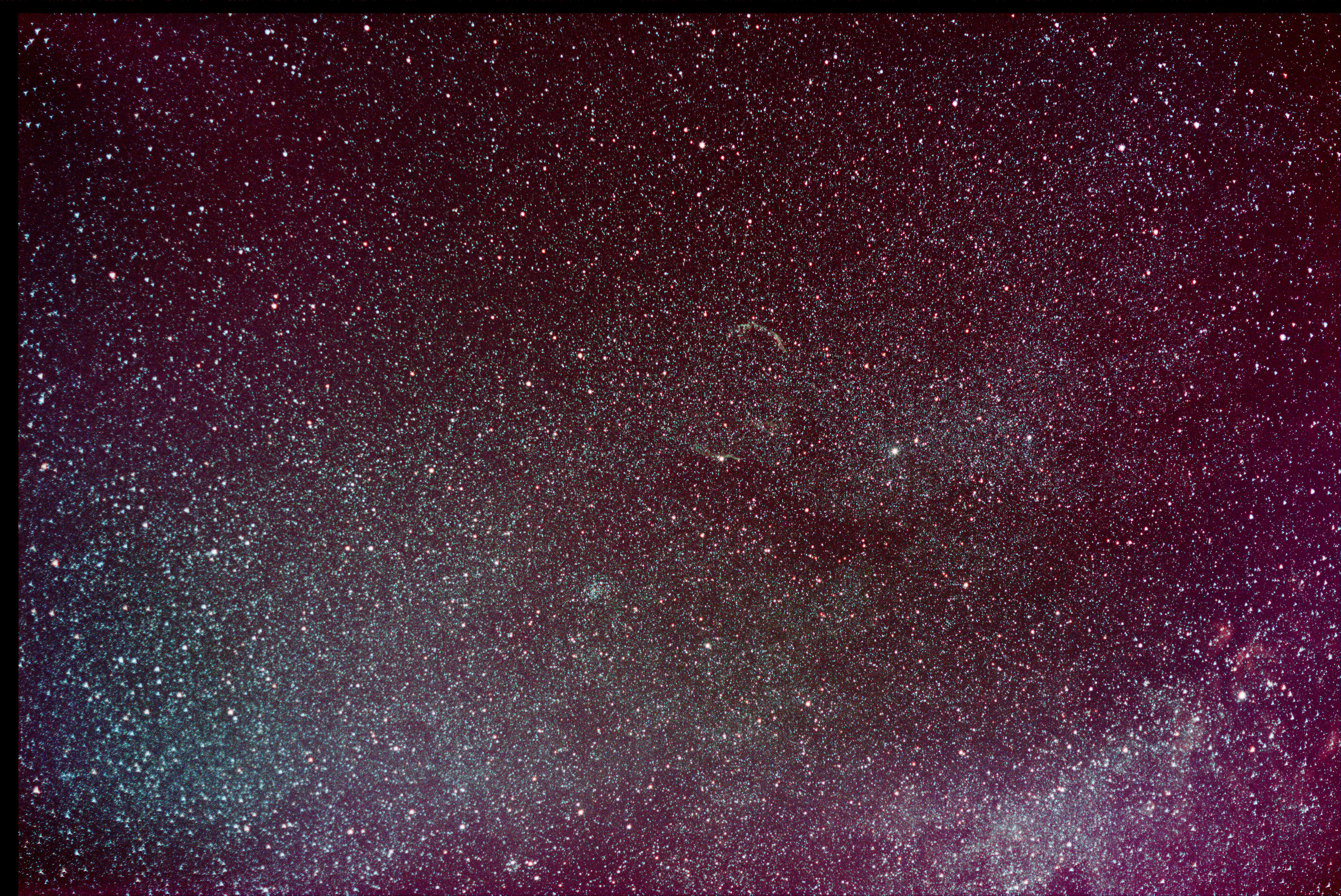
Veil Nebula Canon 700D + 50mm lens, with tracking, unguided & processed 15 x 90 secs @ ISO 800

Veil Nebula
Canon 700D + 50mm lens with CLS filter, tracking, unguided & processed 15 x 90 secs @ ISO 800

The centre of the world

As a geologist the centre of the world is very clear to me. Depending on where you are, on top of Everest, in the Mariana Trench but more relevant here at Fairvale Observatory in Redhill, the centre is approximately 7,900 miles beneath my feet.  Less geologically minded will argue this is the centre of the Earth and might instead therefore like to adopt Mr Wikipedia’s definition of the geometric centre of all land surfaces, which is  40°52′N 34°34′E (180 km northeast of Ankara, Turkey). However, for an astronomer and mankind in general wanting to navigate either the sky or the world it is the Prime Meridian, which passes just over 5 miles east of here at Fairvale Observatory – I often cycle across it, though you wouldn’t know it!

The notion of longitude was developed by the Greek Eratosthenes (c 276 – 195 BC) and Hipparchus (c 64BC – 24BC) but it was Ptolemy (c AD90 – 168AD) who first used a consistent meridian for his map in Geographia.  Subsequently various other ‘meridians’ were adopted over the following centuries by various cultures and map makers, located according to local, scientific and often political interests.

In the early eighteenth century the quest had become urgent to improve the determination of longitude at sea, leading initially to the development of the chronometer by John Harrison. But it was the development of accurate star charts, mainly by the first British Astronomer Royal , John Flamsteed, between 1680 and 1719 and continued by his successor, Edmund Halley, that enabled navigators to use astronomical methods of determining longitude more accurately.  Following the success of Neville Maskelyne’s Nautical Almanac between 1765 and 1811, today’s Prime Meridian was finally established by Astronomer Royal, Sir George Airy in 1851 at the Royal Observatory, Greenwich in London and has since formed the principal basis of all earthly (longitude) and celestial (right ascension or RA) navigation; these two are not the same but are both derived from the prime meridian as a starting point. The Prime Meridian established in 1851 passes through the Airy transit circle at 51° 28′ 40.1247″ North 0° 0′ 5.3101″ West at the Greenwich Observatory.

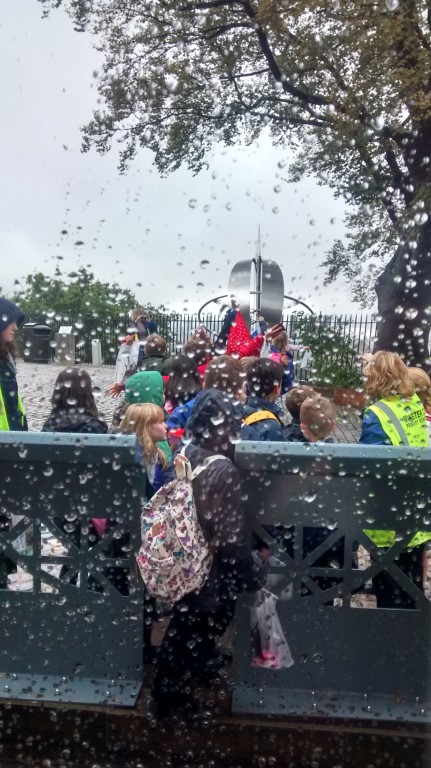
The Greenwich Meridian (marked by a stainless steel line and globe) viewed from behind Airy's transit telescope. School children line up along the line, which separates the west of the world on the left of the picture from the east of the world, on the right.

The Greenwich Meridian (marked by a stainless steel line and globe) viewed from just behind Airy’s transit telescope.  On a wet day school children line up along the meridian line, which separates the western hemisphere of the world on the left of the picture from the eastern hemisphere on the right.

I am currently a member of the Flamsteed Society, an amateur astronomy group based at the Royal Observatory and National Maritime Museum in Greenwich and earlier this week spent the day there to attend some astronomy shows and lectures, whilst also viewing exhibits, some of which I first saw as a teenager in the 1960’s. Professional British astronomy has long since ceased at the Observatory due to London’s light pollution; at first moving on to Herstmonceaux in East Sussex, then La Palma and now (I believe) Chile?  However, the site remains steeped with an unparalleled history of time, navigation and astronomy, which are fascinating and marvellous to behold – a must-see for any astronomer.

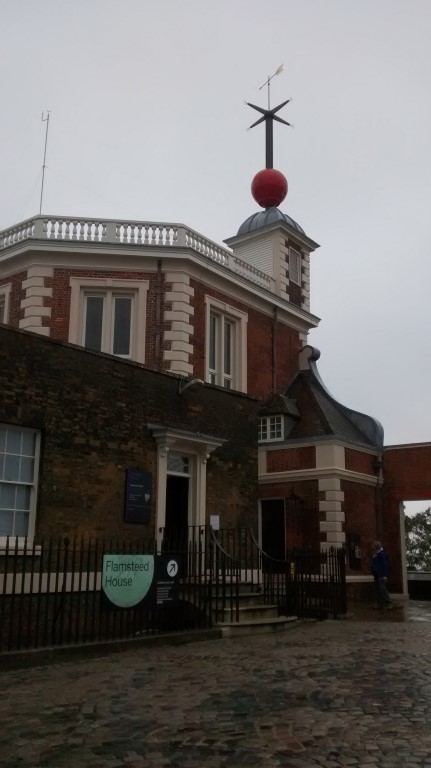
Flamsteed House designed by Sir Christopher Wren. First used in 1833, each day at exactly 12.55pm the red ball (Time Ball) on the roof rises half way up the mast and at 12.58 continues to the top, when at exactly 13.00 it drops.

Flamsteed House designed by Sir  Christopher Wren in 1675 – today the building houses various permanent and occasional exhibits related to time and astronomy.   First used in 1833, each day at exactly 12.55 the red ball (the Time Ball) on the roof rises half way up the mast and at 12.58 continues to the top, when at exactly 13.00 it drops so those around can tell the time accurately once a day.

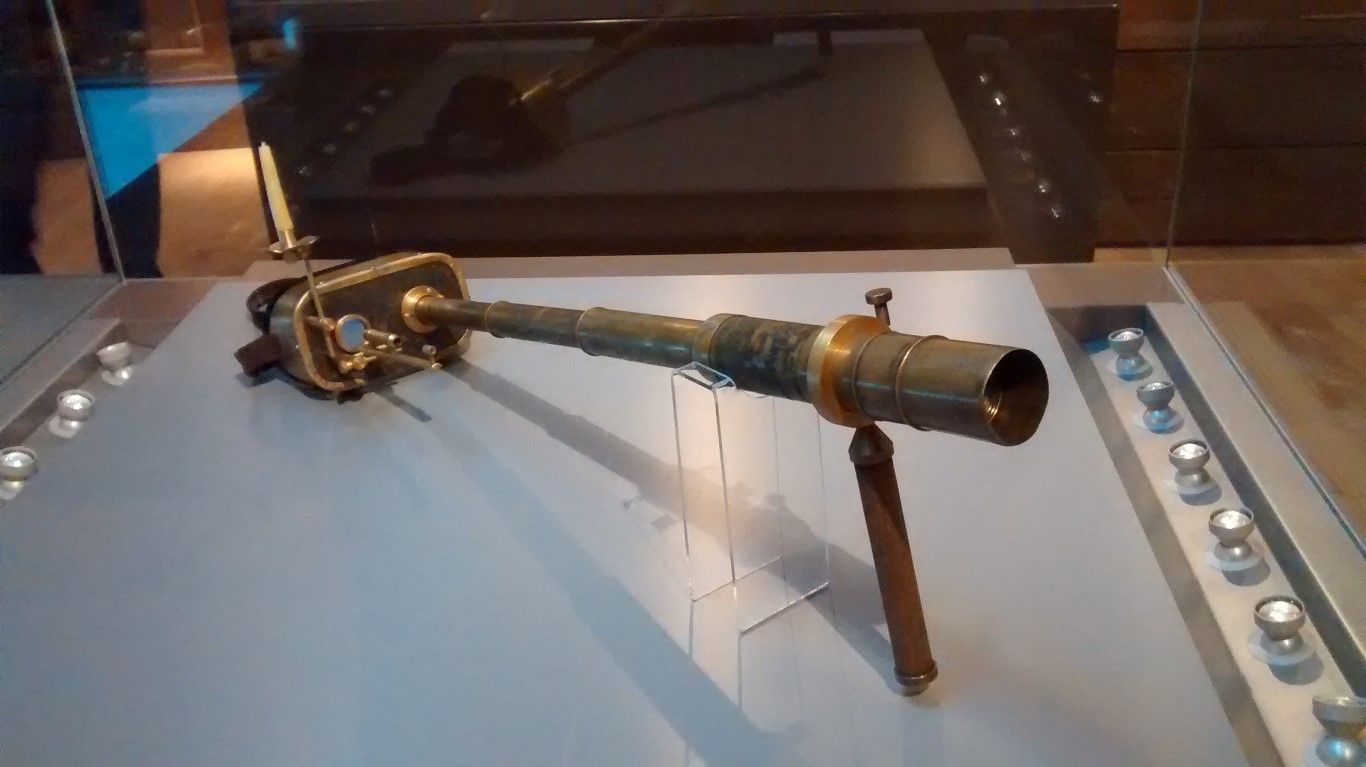
A telescope that is worn (note straps behind) and has a candle to assist with seeing where you are moving!

A telescope that is worn on the head (note straps) and has a candle to assist with seeing where you are!

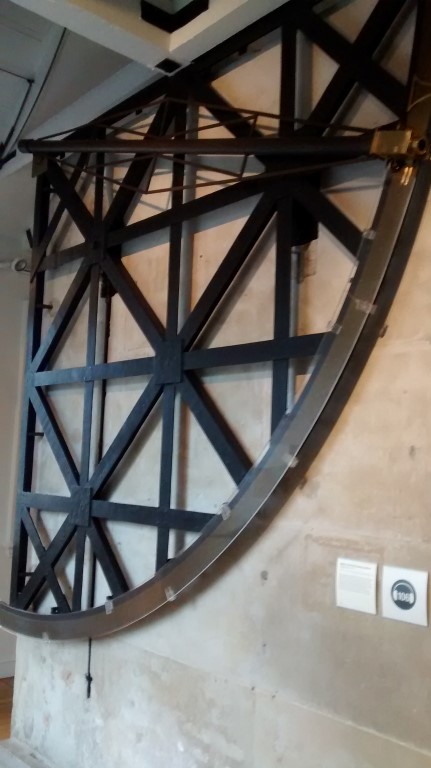
Edmund Halley's Quadrant, used to measure and record the transit of his eponymous comet.

Edmund Halley’s Quadrant, used to measure and record the transit of his eponymous comet.

I am proud of my nation’s achievements in the establishing The Prime Meridian and it is strangely of comfort that the Meridian passes close to my front door.  However, as a result of modern satellite navigation and a more accurate understanding of the Earth’s shape and gravitational effects, today’s Prime Meridian 0o 00’ 0.00” – or International Reference Meridian as it is now officially known – has shifted 5.3 arc seconds to the east of Airy’s original line (I make this a whopping 102.96 metres).  Furthermore, and pleasingly British in nature, the meridian used by the Ordnance Survey for its mapping is about six metres west of Airy’s meridian, known commonly as the Greenwich Meridian; having been previously established in 1801 by the third Astronomer Royal, James Bradley in a room adjacent to and therefore six metres away from the location of Airy’s transit instrument used to establish the Greenwich Meridian – the OS have simply continued to use Bradley’s Meridian to this day!

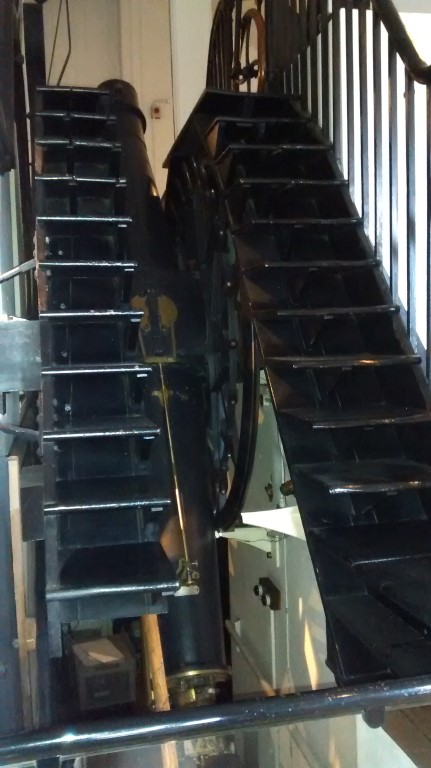
Airy's transit telescope, used to establish the Greenwich Meridian in 1851 - viewed from behind looking south i.e. east is left and west is right.

Airy’s transit telescope, used to establish the Greenwich Meridian in 1851 – viewed from behind looking south i.e. east is left and west is right.

Suits you sir

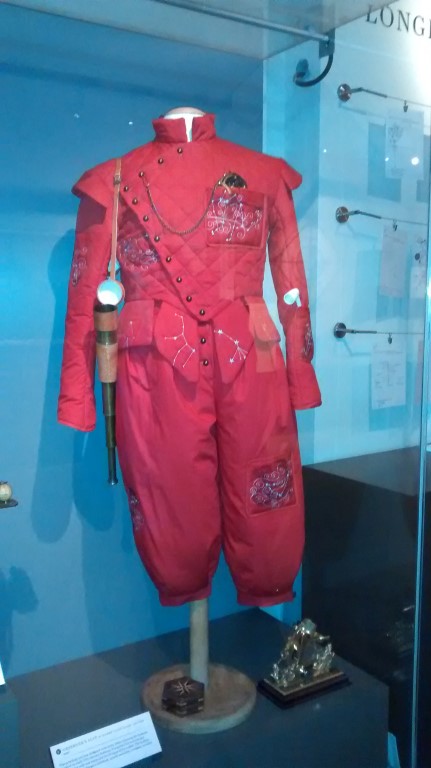
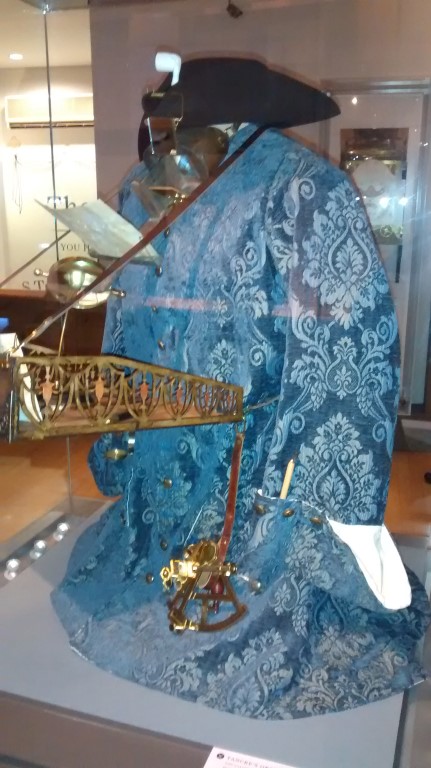
This year’s Indian summer is now just a memory; the weather is cold and wet and the skies overcast – no astrophotography then at the moment!  Notwithstanding, it’s time to think about the forthcoming winter skies, imaging possibilities, plans and what to wear?  Winter is generally recognised as a better time for astronomy (when it is dry and clear) – darker skies, exciting objects to view and image – but it does get cold.  Normally this would require more and thicker clothes but after a visit to the Longitude Punk’d exhibition at The Royal Observatory yesterday, I realise I need to raise my game.

Two fetching astronomer’s outfits show that astronomy can be about style as well as substance.  A natty red observing suit particularly caught my eye or a less flamboyant but nicely eccentric blue silk jacket and brass work tray with accompanying gadgets (hand lens, mirror, sextant, candle and pipe) for recording observations etc.  Time to speak to my tailor!

IMG_20141013_144325789 (Medium)

IMG_20141013_144618128 (Medium)

Smoke and mirrors

My brain hurts! The Talking Point section of the recent October edition of the Astronomy Now magazine really poses a serious problem for astronomers, if not the Universe itself; matters don’t get much bigger. The matter being, Is the Universe a Hologram?  It transpires that one of the theoretical consequences of quantum physics and, in particular, very small matter, is that at the smallest scale the Universe may be two dimensional.  The third dimension, emerging in the same sense that an impressionist painting is the macroscopic effect of thousands of spots of coloured paint that, when viewed close up, gives no clue to the overall scene.  I am not making this up.   So serious is this question that Fermi National Laboratory Accelerator Laboratory (Fermilab) in the USA is currently undertaking an experiment to assess the answer; what happens if it is a hologram, do we disappear?  As a result of this devastating possibility, I have read around but frankly am battling to fully understand the concept and its consequences.   http://www.smithsonianmag.com/science/what-universe-real-physics-has-some-mind-bending-answers-180952699/?no-ist

In the event that the answer is in the affirmative, then what have I been photographing out there?

Astrophotography seems to consist of many black arts, not the least of which, in my case, is Polar Alignment. Since getting into this astronomy malarkey I have, wherever possible, taken the easy route – unfortunately this is no longer compatible with my ambitions and I must deal with my astronomy fears: polar alignment, computer control and using a guide scope.  All are essential if I am to improve my pictures and bag some of the more elusive DSOs as well as more mundane objects.  Initial use of the AZ-EQ6 GT mount has already been rewarding through the use of star alignment but without good polar alignment too, a critical piece of information for finding and tracking objects is missing.  In order to track objects across the celestial sphere using an equatorial mount, it is essential to line up the axis of the mount with the Polaris star, which marks the central point around which the celestial sphere effectively rotates.

The AZ-EQ6 GT mount does have a polar scope through which to look directly at the Polaris star and line up the mount.  Alas I cannot use it as my house is directly in the way of Polaris and I don’t really feel like knocking it down, though you never know.  However, there are cunning ways to overcome this problem (i) using another sequence programmed into the mount’s SynScan control handset to achieve polar alignment without a polar scope (see manual #11.3) or (ii) drift alignment, a technique of iterative realignment of the altitude and azimuth by linking the telescope to specific computer software (I believe it can also be undertaken by just using a star trace obtained by a DSLR or CCD camera).

For the moment I am having great difficulty attempting to use the SynScan routine.  Having spent much of Sunday studying the technique, subsequent hours of practice at night brought little success; despite my best attempts, the SynScan handset routine does not seem to be the same as that outlined in the Manual – not a good start.  Sometimes the operation of this complex equipment seems elusively to be driven by smoke and mirrors, let’s hope the Universe fairs better at Fermilab.

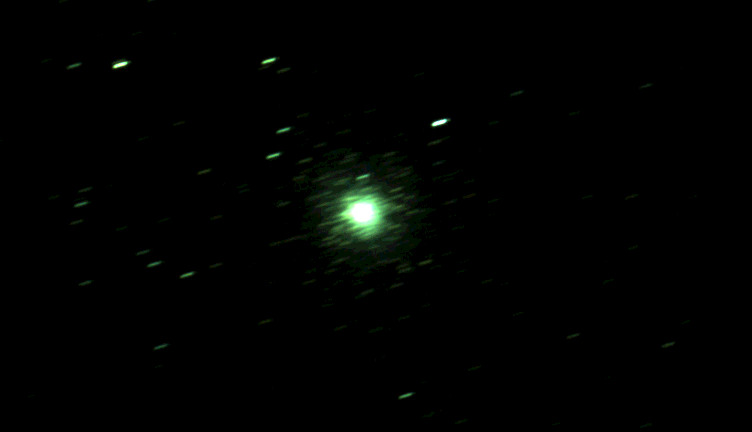
M2 Star Cluster; after hours of preparation and attempts to apply the Synscan polar alignment routine, with the P{olar Scope, success proved elusive and tracking poor. Canon 700D | 15x30 sec @ ISO 400

M2 Star Cluster; after hours of preparation and attempts to apply the SynScan polar alignment routine, without the Polar Scope, success proved elusive and tracking was poor.
Canon 700D | 15×30 sec @ ISO 800

Moving through space

Astrophotography is difficult, very difficult but probably one problem stands out above all others.  The platform we are taking the images from, Earth, is moving at about 67,000 mph on its way around the sun every 365 days and just over 1,000 mph rotating on its axis every 24 hours, which is tilted at approximately 23o relative to its orbit around the sun.  Over a year the annual journey around the sun, combined with the planet’s tilt provides us with the seasons and the astronomer with a different views of the universe, which despite the overall velocity does not unduly affect imaging over short periods measured in seconds or even minutes.  However, the rotation of the Earth every 24 hours is another matter, particularly when photographing objects over any period of time greater than a few seconds, which is required for most objects, especially more distant DSO.

In understanding how this last movement impacts on the nature of the sky we see and in order to photograph objects – as well as forming a basis for navigation around the night sky – we have developed a system that is analogous to that used for navigating across the globe i.e. Longitude and Latitude but now called Right Ascension or RA and Declination or DEC.

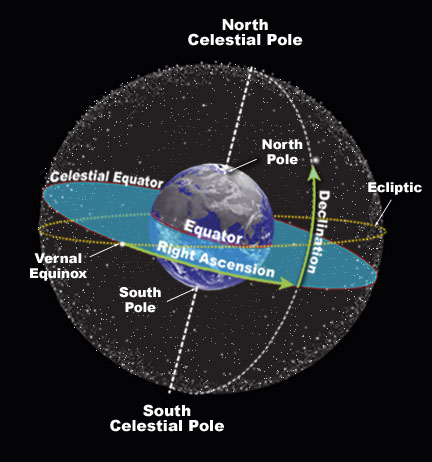
For the purpose of establishing lines of RA and DEC a celestial sphere must be imagined of an arbitrarily large radius, concentric with a celestial body – in this case Earth.  In a similar way to Earth, a celestial equator is likewise established, this being in the same plane as the Earth’s equator but projected upwards onto the celestial sphere – as a result if the Earths tilt, it too is inclined at 23.4o with respect to the elliptical plane.  Having established the sphere and the equator, RA is then described as the angular distance along the celestial equator and DEC measures the distance above or below the celestial equator along any RA line in degrees.  This imaginary framework can then be used to describe the positon of any object or its relative position over time in space in the sky that we see from Earth.

The Celestial Sphere - a grid of RA & DEC lines across the sphere can be used to define the position of objects in the sky. Looking south in the Northern Hemisphere, the Celestial Equator is inclined across the sky from east to west and bisected vertically due south by the Meridian line -  the optimal RA line for astromimaging

The Celestial Sphere – a grid of RA & DEC lines across the sphere can be used to define the position of objects in the sky. Looking south in the Northern Hemisphere, the Celestial Equator is inclined across the sky from east to west and bisected vertically due south by the Meridian line (not shown) – the optimal RA line for astroimaging

In order to follow an object for imaging it is necessary to hold the telescope / camera in a stationary position relative to the movement of the object; remember that we are at the same time spinning at 1,000mph relative to space.  This is very difficult but in astrophotography is usually achieved by the means of an Equatorial Mount which, through some very sophisticated software that computes the relative movements of the object and the telescope, gently slews the mount-telescope-camera combination using gears and belts in such a way that the telescope and hence camera, remain fixed upon the chosen object.  The result, when undertaken with care, will be a wonderful sharp image of an almost endless number of features in the night sky, which is the subject of many of the posts on this website

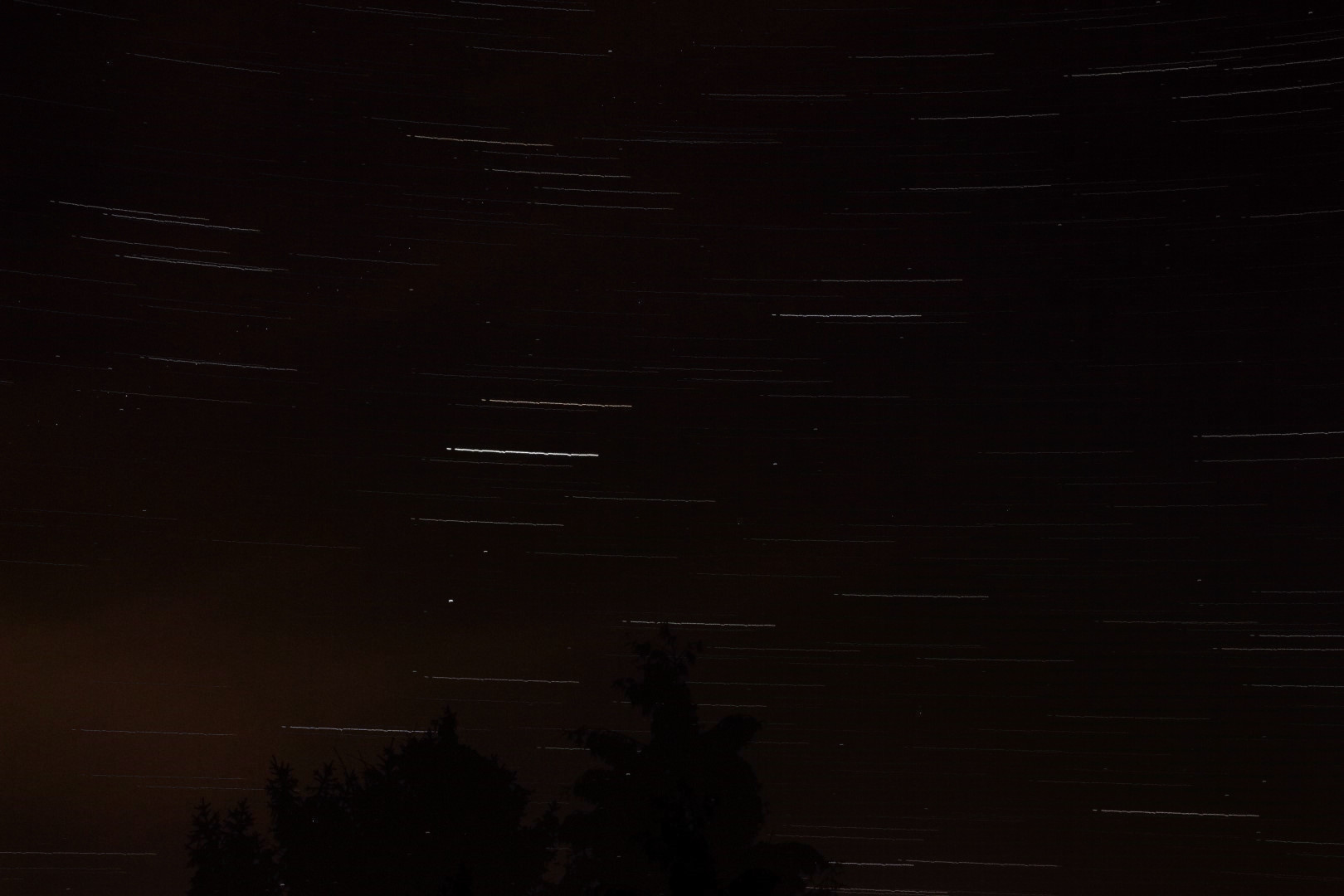
Conversely, what happens if we deliberately do not follow the sky’s objects in this way but hold the camera effectively still relative to the sky’s movement, created by Earth’s daily rotation.  The answer is Star trails, which I set out to obtain the other evening.  In order to achieve such a picture, the DSLR camera is fixed on a tripod and using an intervalometer, a long exposure of the night sky above is taken; alternatively a large series of shorter exposures can be made over a long period of time and then stacked to produce a better quality final image.  As a result the stars trace their respective paths of light across the camera’s sensor, as the Earth moves at 1,000 mph on its axis.  Such movement is normally indiscernible over short periods of time but through this process it is clear to see in the form of wonderful star trails.  Of course the stars haven’t moved at all (at least not in a normal visual sense) it’s us that are moving, very fast.  It is beautiful and clear evidence that we on Earth are continually moving through space!

Startrail Canon 700D | 20 minutes  f4 @ ISO 800

Star trails (inverted colour)
Canon 700D | 20 minutes f4 @ ISO 800

Startrail Canon 700D | 39x30secs f4 @ ISO 400

Star trails
Canon 700D | 39x30secs f11 @ ISO 400