WOW!

Preparation + perseverance = progress, and what progress.

Another clear night last Wednesday, so with my new found success of polar alignment, I started early in the evening in order to try and photograph NGC 7000, or the North America Nebula (it looks like North America).  I had been inspired by images of NGC 7000 on SGL and had already tried a few times to capture it but without success.  With the much improved polar alignment (I went through two star and polar alignment sequences this time) and therefore better tracking, I figured it was also time to increase the stakes overall: a larger set of x20 images (previously 10), speed increased to ISO 1,600 (previously ISO 800), increased exposure time to 90 seconds (previously 30 to 40 seconds) and shooting a full set of additional dark, bias and flat images in order to reduce hot pixels and sensor noise.

And so it was that I managed to successfully photograph the mighty NGC 7000. The very nature of the nebula meant that I did not know if I had the picture until late in the processing phase but it was there.  This emphasises the importance of preparation and the set-up in order to subsequently rely on the scope’s orientation, focus and tracking – you are literally working blind whilst taking a photograph of such an object this way.

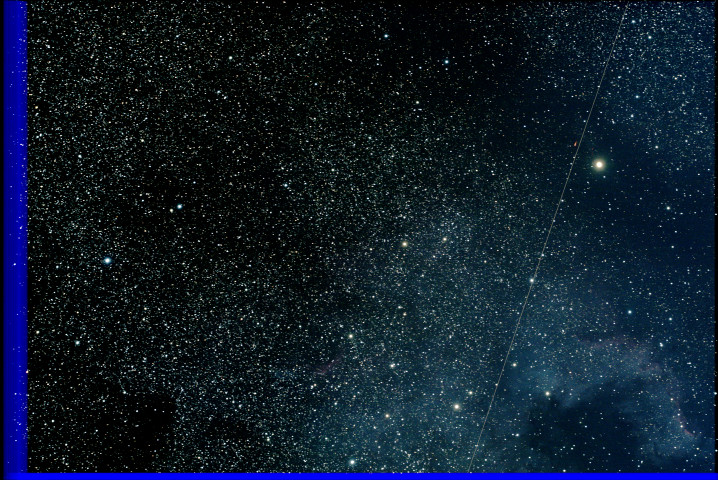
NGC 7000 or North America Nebula - after stacking and basic post processing in Photoshop (note aircraft trace).  Canon 700D ( unmodded) | 20x90secs @ ISO1,600 & darks + bias + flat frames, unguided

NGC 7000 or North America Nebula – after stacking and basic post processing in Photoshop (note aircraft trace, subsequently removed).
Canon 700D ( unmodded) | 20 x 90secs @ ISO 1,600 & darks + bias + flat frames, unguided

NGC7000 is located within the constellation of Cygnus, some 1,600 ly from Earth. The North America Nebula is an emission nebula and most of the light emitted is H-alpha (red), most of which is unfortunately filtered out by any normal camera, such as mine the Canon 700D DSLR, by an infra-red filter that is fixed over the sensor.  As a result the basic image captures predominantly OIII (Oxygen Three) light, which is a bluish green colour and is not removed by the camera’s filter.  Many DSO objects have such characteristics and I had been hoping to avoid this problem for a while.  There is a solution, which is to remove the filter, to modify or ”mod” the camera,  the resulting images would then reflect the full light spectrum.  The downside in doing this is twofold, which is why I have not done it to my camera: it’s not cheap to do and it renders the camera useless for normal, earth bound photography! Oh well, something else for the Christmas list.

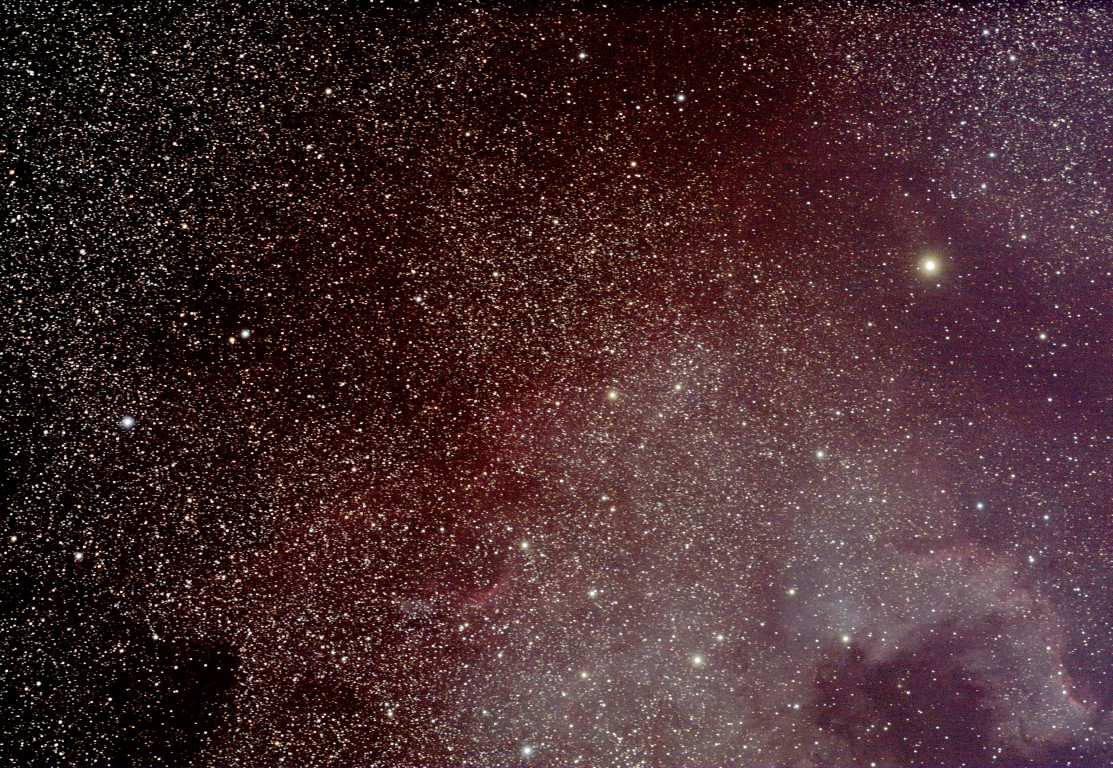
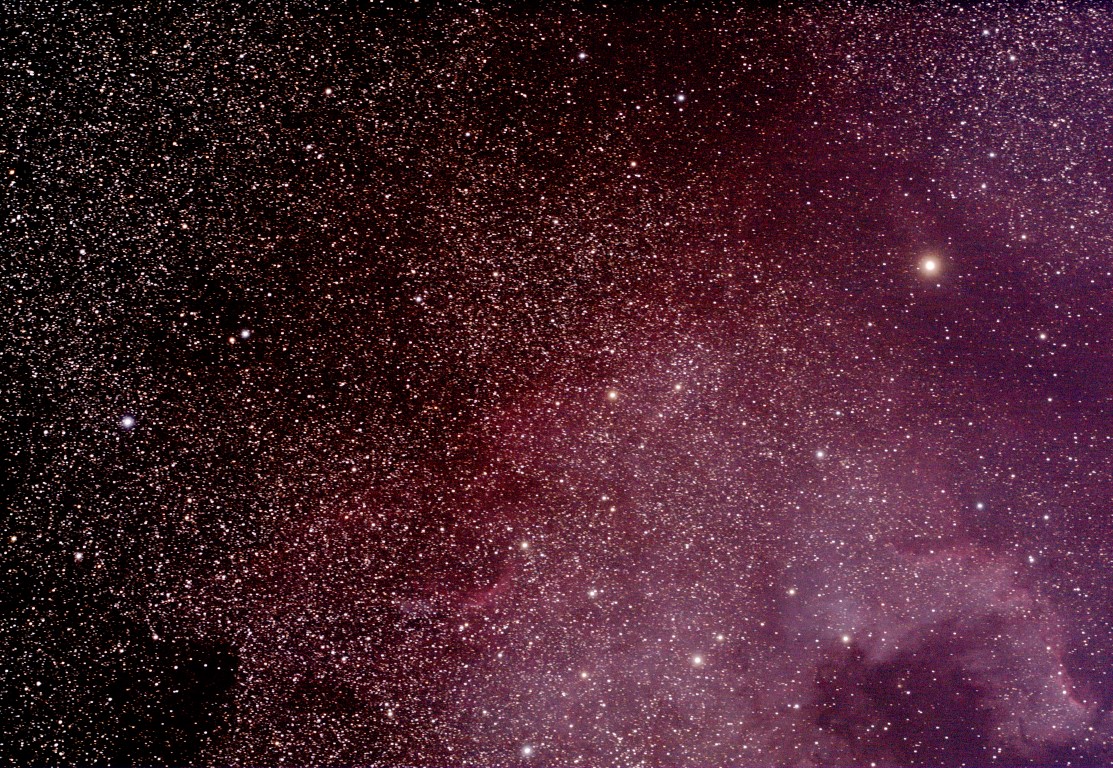
In the meantime, the red has been put back into the image by using Photoshop. Either way it’s a great image and I am thrilled. Wow indeed!

NGC 7000 North America Nebula, with curves & levels adjustment in Photoshop

NGC 7000 North America Nebula, with curves & levels adjustment in Photoshop

NGC 7000, North America Nembula, with curves, levels and colour balance Photoshop adjustment

NGC 7000, North America Nembula, with curves, levels and colour balance Photoshop adjustment

The devil’s in the detail

The process of DSLR astrophotography can be broadly divided as four main steps:

  1. Preparation – equipment, targets / photographic plan;
  2. Set-up – mount, telescope, camera, control (mount & computer);
  3. Capture – settings (exposure, ISO, f-stop), frames (Subs, darks, bias & flats), tracking;
  4. Processing – stacking & post-processing.

I am only just starting to delve into the final phase, which is another of those black arts and can, which if understood and used well, unlock detail otherwise hidden in each picture.  This is where the difference between film and digital photography becomes most evident.

A digital photo is made up of a series of pixels. Each of the pixels in a digital photo corresponds to a photosite (also called a pixel) on the camera’s sensor.  When hit by light (a photon) the photosite generates a small electric current, which is measured by the camera and recorded in a file – commonly as JPEG or in DSLR astrophotography the RAW format.

JPEG files record the colour and brightness information for each pixel with three eight bit numbers, one for each of the red, green and blue channels.  DSLR cameras (like computers) use the binary system number system (a series of two digits – I or 0); the highest number in 8-bit notation is therefore 11111111.  As a result each eight bit channel records on a colour scale of 1 to 255, or a theoretical maximum of 16,777,216; the human eye can detect between 10 and 12 million colours maximum.

RAW files dedicate more bits to each pixel, which does not equate to more colours but greater tonal graduation – the image is said to have more colour or bit depth.  The theoretical number of tones recorded by my 700D 14bit DIGIC sensor is therefore 4.39 trillion!!!  Post processing such RAW files     therefore has potential access to vast amounts of information, resulting in the possibility of greater detail and subtlety.

At the moment my DSLR processing software is quite basic (relatively, it’s still very sophisticated):

Deep Sky Stacker – used to compile the sequence of original RAW images in order to produce a single, optimized picture containing the ‘best’ data set possible from all the images.  Other correction images may be also combined in this process to reduce such problems as sensor noise but, for the moment, I have limited these to just ‘darks’ (taken with the lens cap on) to help eliminate so-called hot pixels.

GIMP – free online post processing software use to finish the stacked image, by ‘stretching’ the colour ranges levels and adjusting tones and sharpness hitherto unseen detail emerges, often transforming the original photograph; the detail was originally captured by the camera in the RAW file but must be processed in this way to ‘release’ detail that would not otherwise be seen .

Through the application of these techniques modern astrophotography is able to reveal new and transform details of old wonders of the Universe.

Whilst GIMP is very good, a better (more detailed and expensive) post-processing software used in astrophotography and by photographers and graphic designers is Photoshop. Mrs G uses an old version of Photoshop and taking the previous images of M27 and M57 has teased further detail, in particular colour, from these images with great effect. With 4.39 trillion potential colour tones the devil is in the detail and is always worth looking for.

M57 - additional Photoshop post-processing brings out more colour (see previous blog for comparison)

M57 – additional Photoshop post-processing brings out more colour (see previous blog for comparison)

M27 - Photoshop post processing has also 'found' more colour in this image too

M27 – Photoshop post processing has also ‘found’ more colour in this image too

Dialling up the Universe

What a difference a day makes. Following the difficulties of polar alignment the previous day and faced with another great night of clear sky, the only thing to do was to get back on the horse and try again.  I was a little more careful with the basic set-up using two star alignment (Vega & Markab) before attempting the polar alignment again (without the polar scope) using Rasalhague; with the sight-lines at Fairvale Observatory blocked by houses, hedges, trees and the inevitable light pollution, even finding suitable stars is proving difficult and requires some pre-planning.  Following the previous confusion between the Manual and the SynScan handset on this matter, this time I decided to ignore the Manual sections dealing with separate adjustment of latitude and azimuth and, as the SynScan handset instruction prompted, carry out both procedures at the same time.

Having not previously owned the mount’s more basic brother, the EQ6, I am not able to say what all the differences are but, having read reviews of the AZ-EQ6 GT before purchasing, it is my impression that the T-bolt altitude combined with the more traditional azimuth knobs are a new invitation, making simultaneous adjustment of both easier.  For this reason I also suspect that the procedure has been changed in the SynScan firmware (V 3.33), which is not reflected in the Manual; Skywatcher and others please note – these apparently small anomalies can cause great confusion for leaners such as me.  And so it was that this time the polar alignment worked, reducing the error from about +/-3 to less than 10.  Furthermore and notwithstanding my previous point on ignoring the Manual, having re-read the final part of the instructions, it is made clear that on repeating the process the accuracy can be reduced even more.  Therefore after two alignment routines – star and polar alignment – the latitude (MEL) and azimuth (MAZ) polar errors were reduced to a mere few seconds.  This was by far the best I have ever achieved, which was subsequently reflected in the operating accuracy of the mount’s search function (so-called GOTO) and tracking.

I had already experienced the wonder of punching in search objects using the AZ-EQ6 mount – solar, Messier, NGC etc – but with mixed results due to poor alignment.  Now, for the first time with very good alignment, having entered in the desired object the mount slewed gracefully to its location so that on a test camera exposure the object was dead centre in the resulting picture and perfectly focussed.  Another seminal moment in my pursuit of astronomy and imaging the Universe and all its wonders.  I was thrilled, and still am.

Having established this set-up and with a clear sky overhead most of the night, what else was there to do but dial up the Universe using SynScan and start taking pictures, lots of them.  SynScan has an object database of over 40,000, so it might take a while.

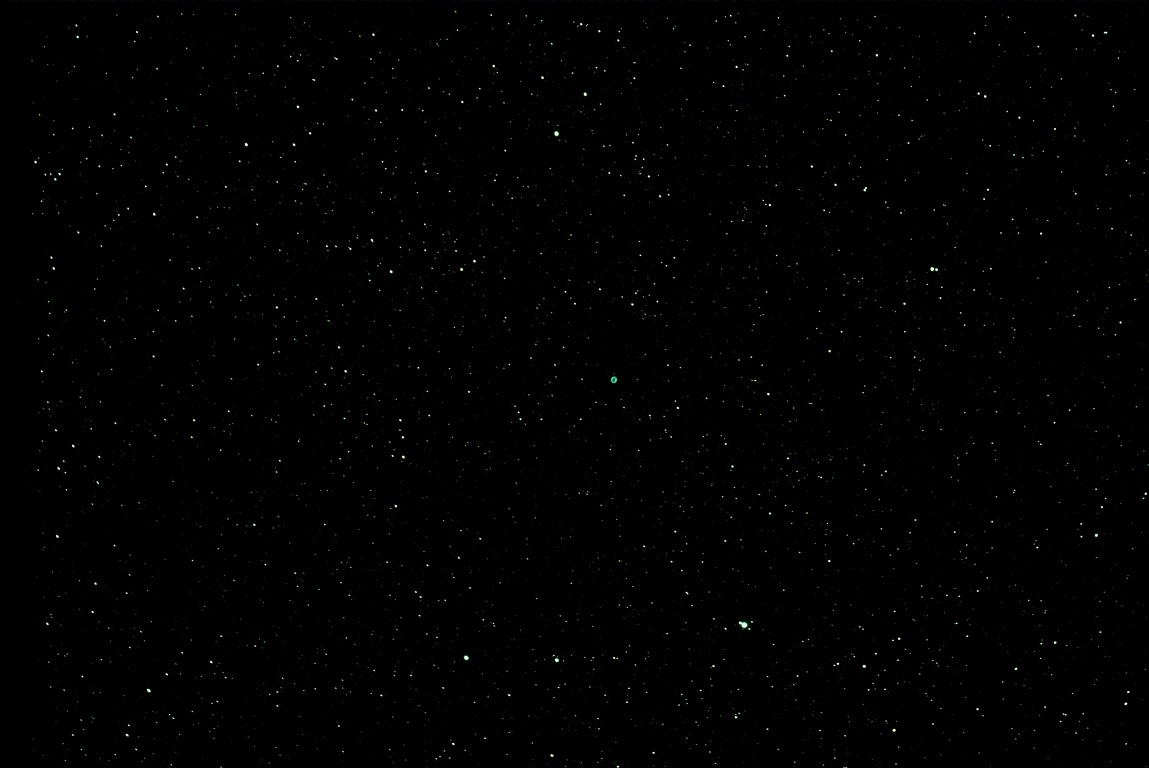
M57 Ring Nebula, wide-field view, with polar alignment. Canon 700D | 24x30sec @ ISO1600

M57 Ring Nebula, wide-field view, with polar alignment.
Canon 700D | 24x30sec @ ISO1600

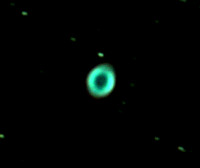
M57 Ring Nebula, close-up with polar alignment. Canon 700D | 24x30sec @ ISO 1,600

M57 Ring Nebula, close-up with polar alignment.
Canon 700D | 24x30sec @ ISO 1,600

M57 The Ring Nebula, cropped from the main image above.

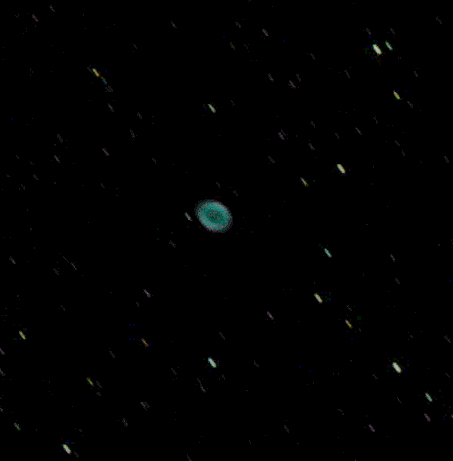
M57 The Ring Nebula, without polar alignment.

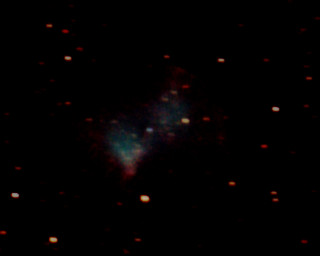
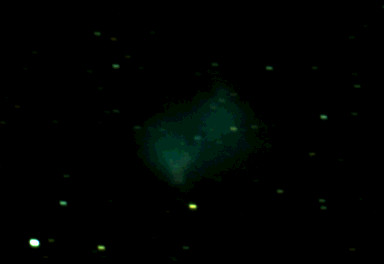
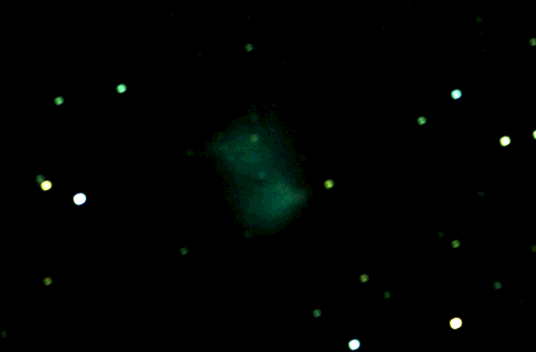
M27 Dumbbell or Apple Core Nebula, with polar alignment. Canon 700D | 20x40secs @ ISO800

M27 Dumbbell or Apple Core Nebula, with polar alignment.
Canon 700D | 20x40secs @ ISO800

M27 cropped from previous photograph; it will be interesting to see how much clearer pictures can eventually be obtained with better alingment and longer exposures

M27 without polar alignment

Smoke and mirrors

My brain hurts! The Talking Point section of the recent October edition of the Astronomy Now magazine really poses a serious problem for astronomers, if not the Universe itself; matters don’t get much bigger. The matter being, Is the Universe a Hologram?  It transpires that one of the theoretical consequences of quantum physics and, in particular, very small matter, is that at the smallest scale the Universe may be two dimensional.  The third dimension, emerging in the same sense that an impressionist painting is the macroscopic effect of thousands of spots of coloured paint that, when viewed close up, gives no clue to the overall scene.  I am not making this up.   So serious is this question that Fermi National Laboratory Accelerator Laboratory (Fermilab) in the USA is currently undertaking an experiment to assess the answer; what happens if it is a hologram, do we disappear?  As a result of this devastating possibility, I have read around but frankly am battling to fully understand the concept and its consequences.   http://www.smithsonianmag.com/science/what-universe-real-physics-has-some-mind-bending-answers-180952699/?no-ist

In the event that the answer is in the affirmative, then what have I been photographing out there?

Astrophotography seems to consist of many black arts, not the least of which, in my case, is Polar Alignment. Since getting into this astronomy malarkey I have, wherever possible, taken the easy route – unfortunately this is no longer compatible with my ambitions and I must deal with my astronomy fears: polar alignment, computer control and using a guide scope.  All are essential if I am to improve my pictures and bag some of the more elusive DSOs as well as more mundane objects.  Initial use of the AZ-EQ6 GT mount has already been rewarding through the use of star alignment but without good polar alignment too, a critical piece of information for finding and tracking objects is missing.  In order to track objects across the celestial sphere using an equatorial mount, it is essential to line up the axis of the mount with the Polaris star, which marks the central point around which the celestial sphere effectively rotates.

The AZ-EQ6 GT mount does have a polar scope through which to look directly at the Polaris star and line up the mount.  Alas I cannot use it as my house is directly in the way of Polaris and I don’t really feel like knocking it down, though you never know.  However, there are cunning ways to overcome this problem (i) using another sequence programmed into the mount’s SynScan control handset to achieve polar alignment without a polar scope (see manual #11.3) or (ii) drift alignment, a technique of iterative realignment of the altitude and azimuth by linking the telescope to specific computer software (I believe it can also be undertaken by just using a star trace obtained by a DSLR or CCD camera).

For the moment I am having great difficulty attempting to use the SynScan routine.  Having spent much of Sunday studying the technique, subsequent hours of practice at night brought little success; despite my best attempts, the SynScan handset routine does not seem to be the same as that outlined in the Manual – not a good start.  Sometimes the operation of this complex equipment seems elusively to be driven by smoke and mirrors, let’s hope the Universe fairs better at Fermilab.

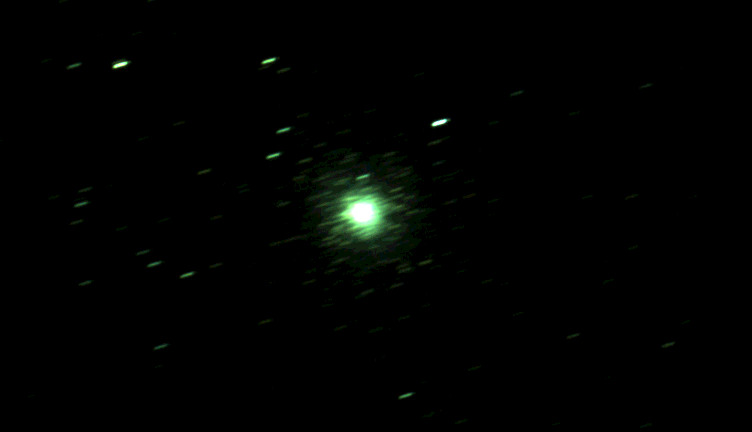
M2 Star Cluster; after hours of preparation and attempts to apply the Synscan polar alignment routine, with the P{olar Scope, success proved elusive and tracking poor. Canon 700D | 15x30 sec @ ISO 400

M2 Star Cluster; after hours of preparation and attempts to apply the SynScan polar alignment routine, without the Polar Scope, success proved elusive and tracking was poor.
Canon 700D | 15×30 sec @ ISO 800

Fool’s paradise

Off today to discover what the skies of France are like – cycling to the Loire.  The Loire is littered with château the building of which, despite their undeniable beauty, reflected the detached world of the French aristocracy that ultimately ended in the French Revolution between 1787 and 1799; nice for some but ultimately unsustainable and dangerous for all.

We are faced today by a dichotomy that is equally dangerous, society’s dependence on the benefits of a science without (broadly speaking) an understanding of science.  A recipe for catastrophe that is playing out through day-to-day life, education, religion, the media, politics and policies – a fool’s paradise – neatly summarised by astronomer Carl Sagan:

“We live in a society absolutely dependent on science and technology and yet have cleverly arranged things so that almost no one understands science and technology.  That’s a clear prescription for disaster.”

http://www.csicop.org/si/show/why_we_need_to_understand_science

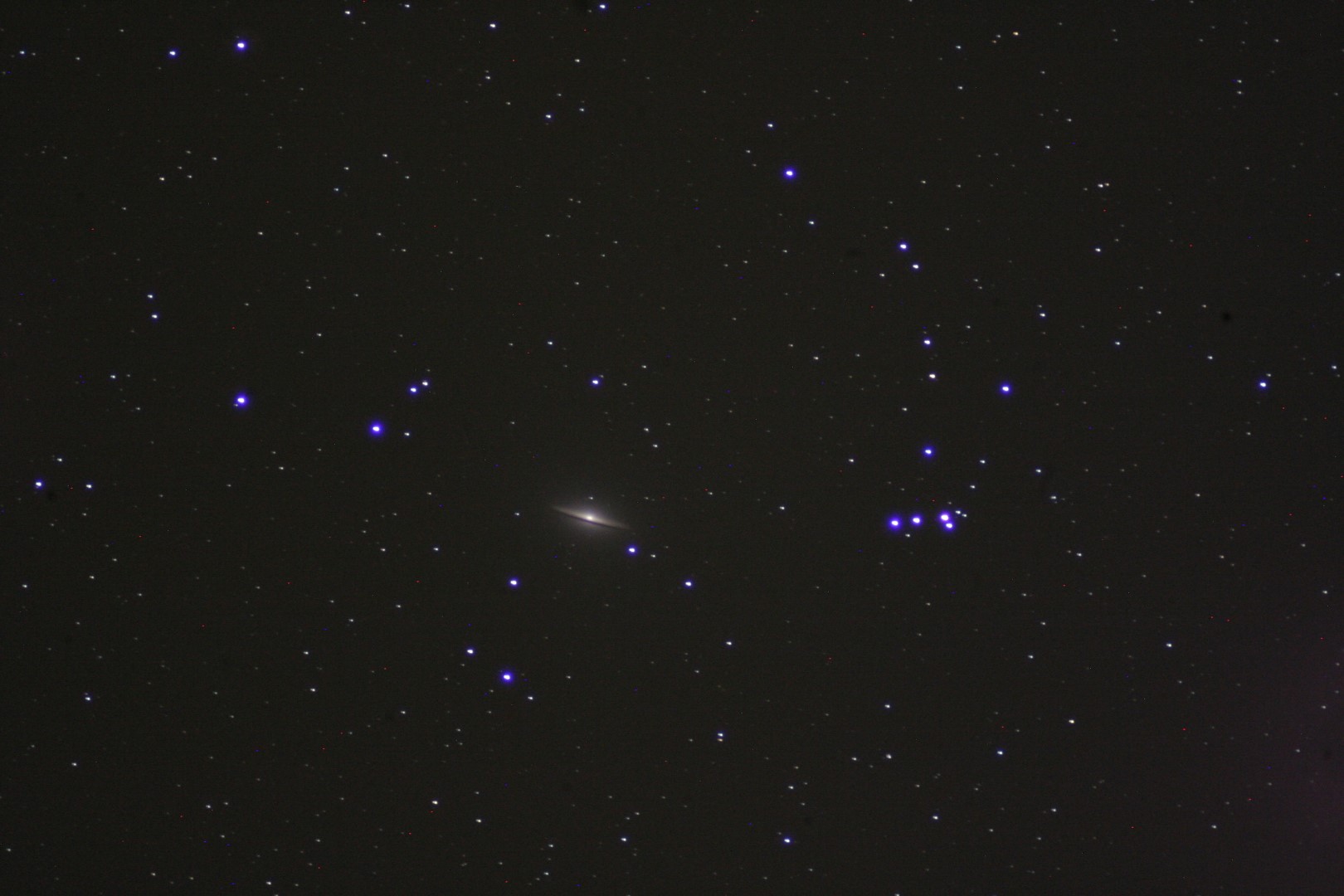
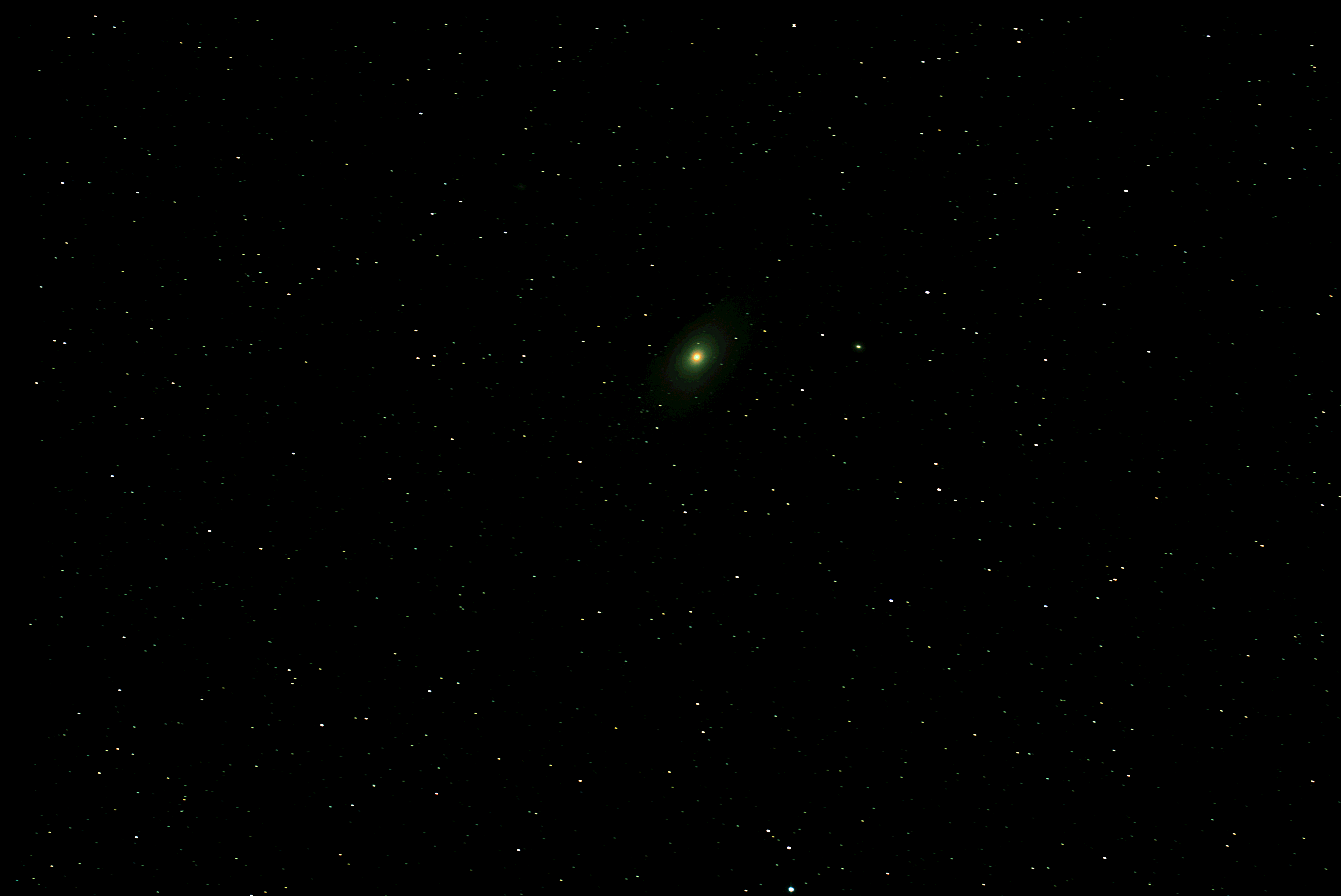
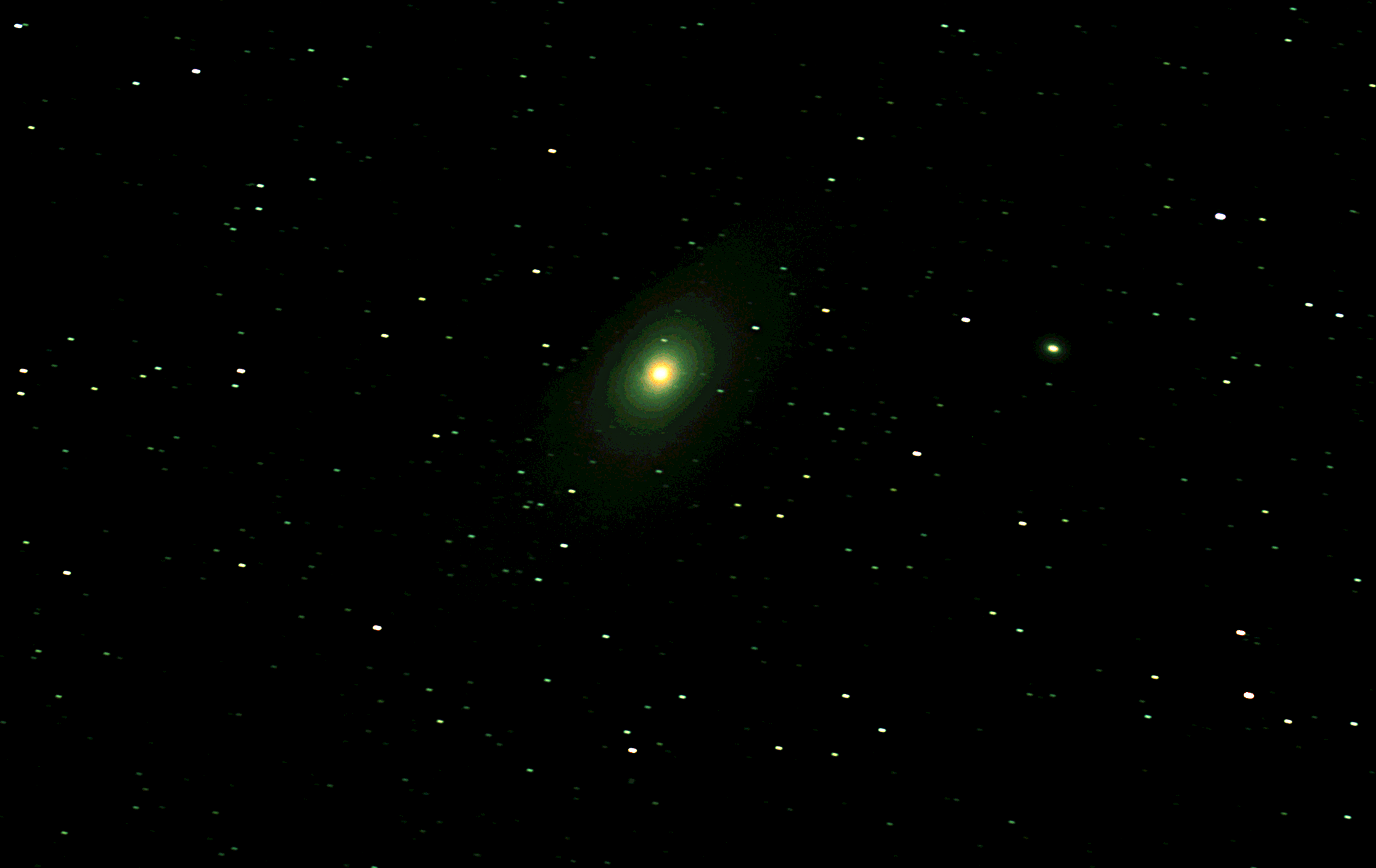
Gratuitous picture of M104, the Sombero Galaxy taken in La Palma this year, to brighten things up!

Gratuitous picture of M104, the Sombero Galaxy taken in La Palma this year, to lighten things up!

Perspective: A wider view of the Universe

Earlier this year we went to the island of La Palma in the Canary Islands, which is recognised as the best astronomy site in Europe, where more than twelve major observatories have been built at an altitude of 2,396 meters on Roque de los Muchachos http://en.wikipedia.org/wiki/Roque_de_los_Muchachos_Observatory.  One of the engineers responsible for building and maintaining some of these observatories was Joan Genebriera, who subsequently went on to build his own private observatory on the island, which I reviewed in an earlier post https://watchthisspaceman.wordpress.com/2014/08/06/la-palma-nice-one-joan/.  Our trip was in order to undertake a week-long astronomy course with Joan and as part of this, develop (no pun intended) and fast track our knowledge of astrophotography.

Joan’s basic telescope and imaging set-up is, as you would expect, spectacular, with equally outstanding tracking:

  • Catadioptric Cassegrain-Relay 400mm telescope f5.6 (Larrose)
  • APO 120mm refractor f6.5 (Vixen)
  • Camera SBIG ST8300M
  • Camera SBIG CCD ST8XE
  • Camera Starlight Xpress CCD MX716 for use with spectrograph
  • Camera Canon 350 D DSLR

Of course this is just a list of equipment – it is what you do with it that matters and Joan’s expertise more than matched the quality of the equipment.  Over a number if evenings we undertook a series of photographic exercises using the 400mm Cassegrain-Relay telescope and the SBIG ST8XE CCD camera with RGB filters.  At the same time we rigged a Canon 350D camera on the refractor telescope to produce a contrasting, wide-field photograph to compare with the higher powered SBIG configuration.  We brought some of the unprocessed data / images back from La Palma but have unfortunately been unable to process the SBIG ones yet as they as FITS format, for which I have not yet found suitable software (more on this another time).  However, the Canon 350 D photographs are of equal but different beauty, which through the wide-field format show larger areas of sky, sometimes revealing vast groups of galaxies – amazing!

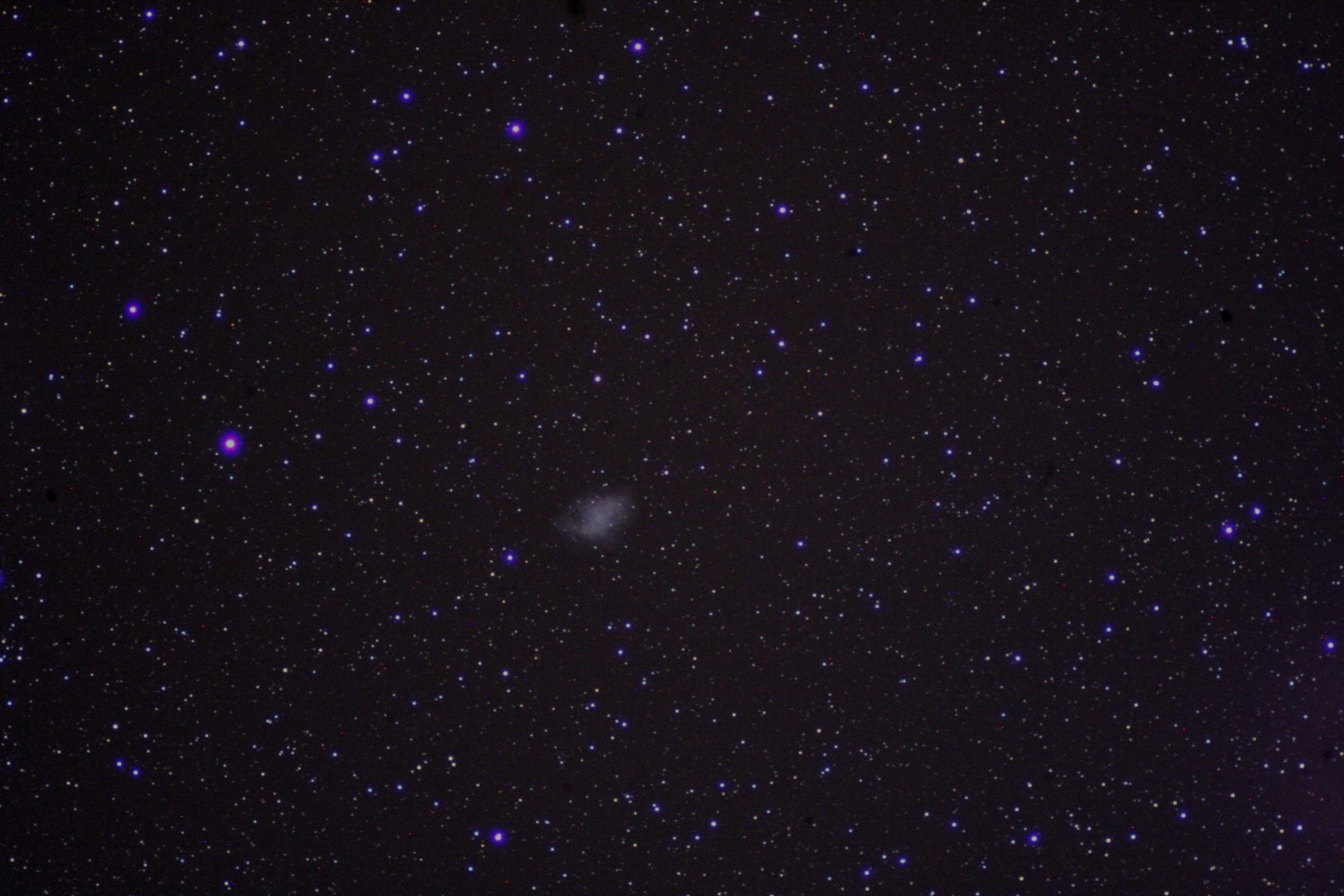
M1 The Crab Nebula Canon 350 D  | 240 secs @ ISO800

M1 The Crab Nebula
Canon 350 D | 240 secs @ ISO800

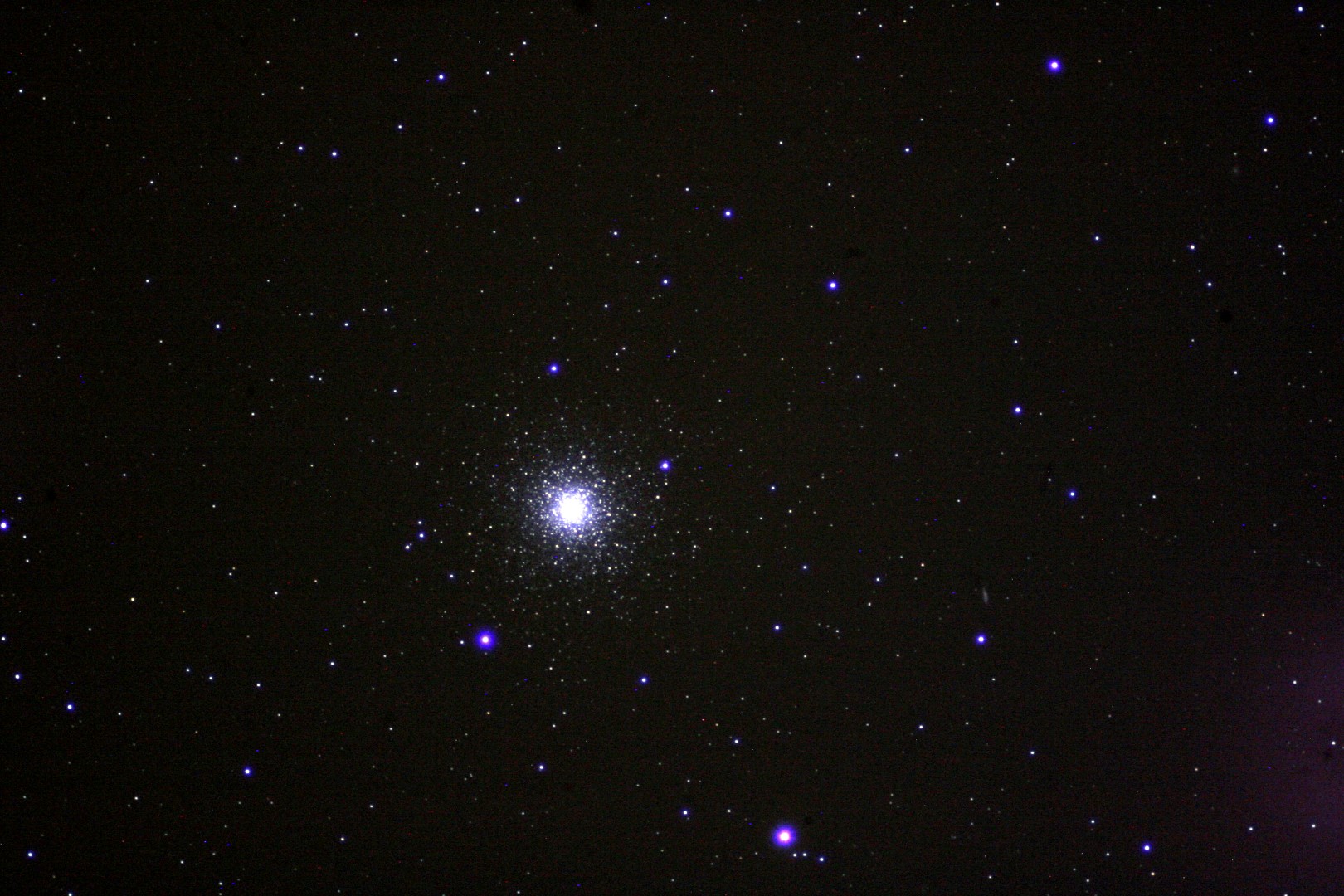
M3 a globular cluster in the constellation of Canes Venatici Canon 350 D | 240 secs @ ISO800

M3 a globular cluster in the constellation of Canes Venatici
Canon 350 D | 240 secs @ ISO800

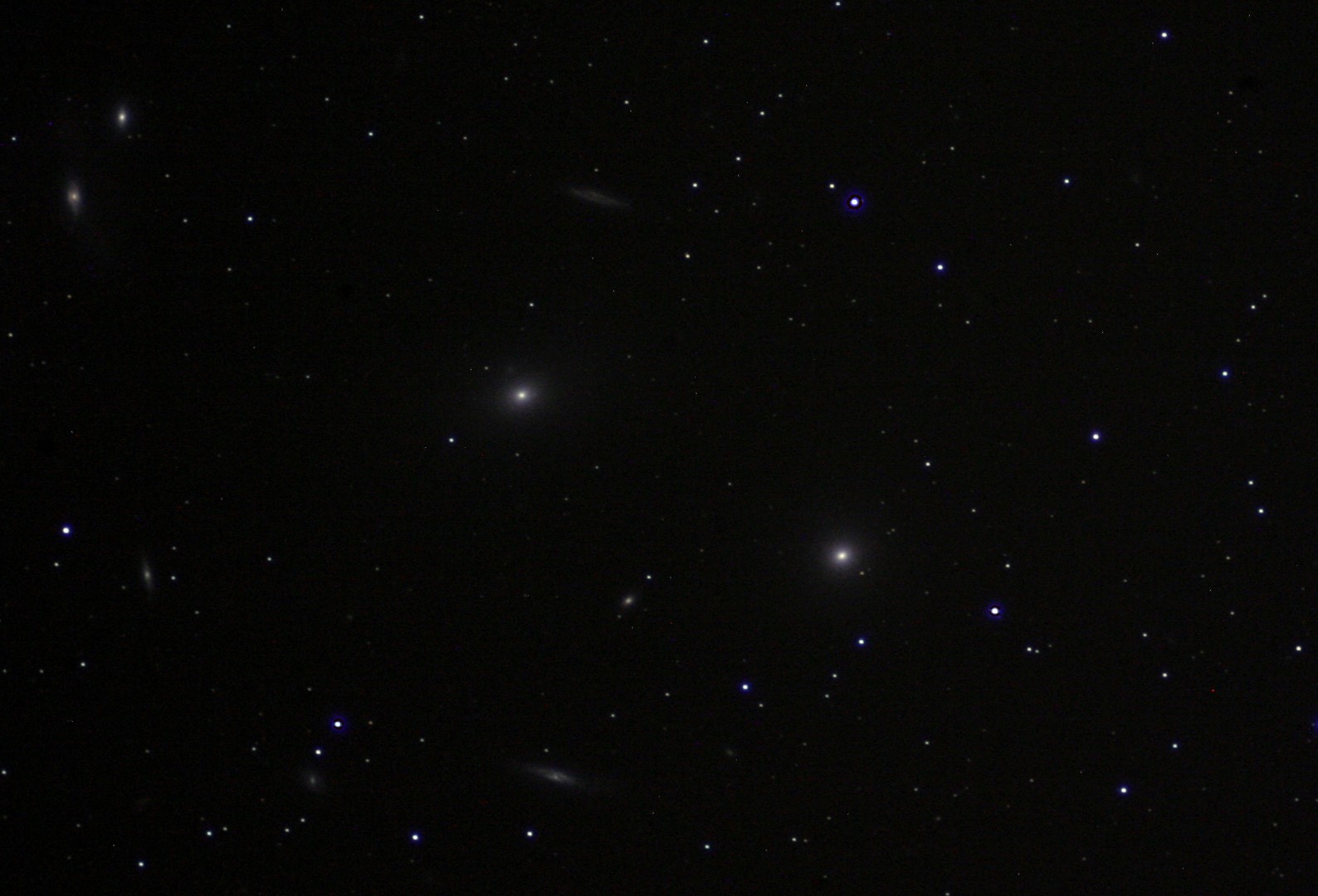
M84 a lenticular or elliptical galaxy located in the inner core of the Virgo Cluster of Galaxies Canon 350 D | 240secs @ ISO 800

M84 a lenticular or elliptical galaxy located in the inner core of the Virgo Cluster of Galaxies
Canon 350 D | 240secs @ ISO 800

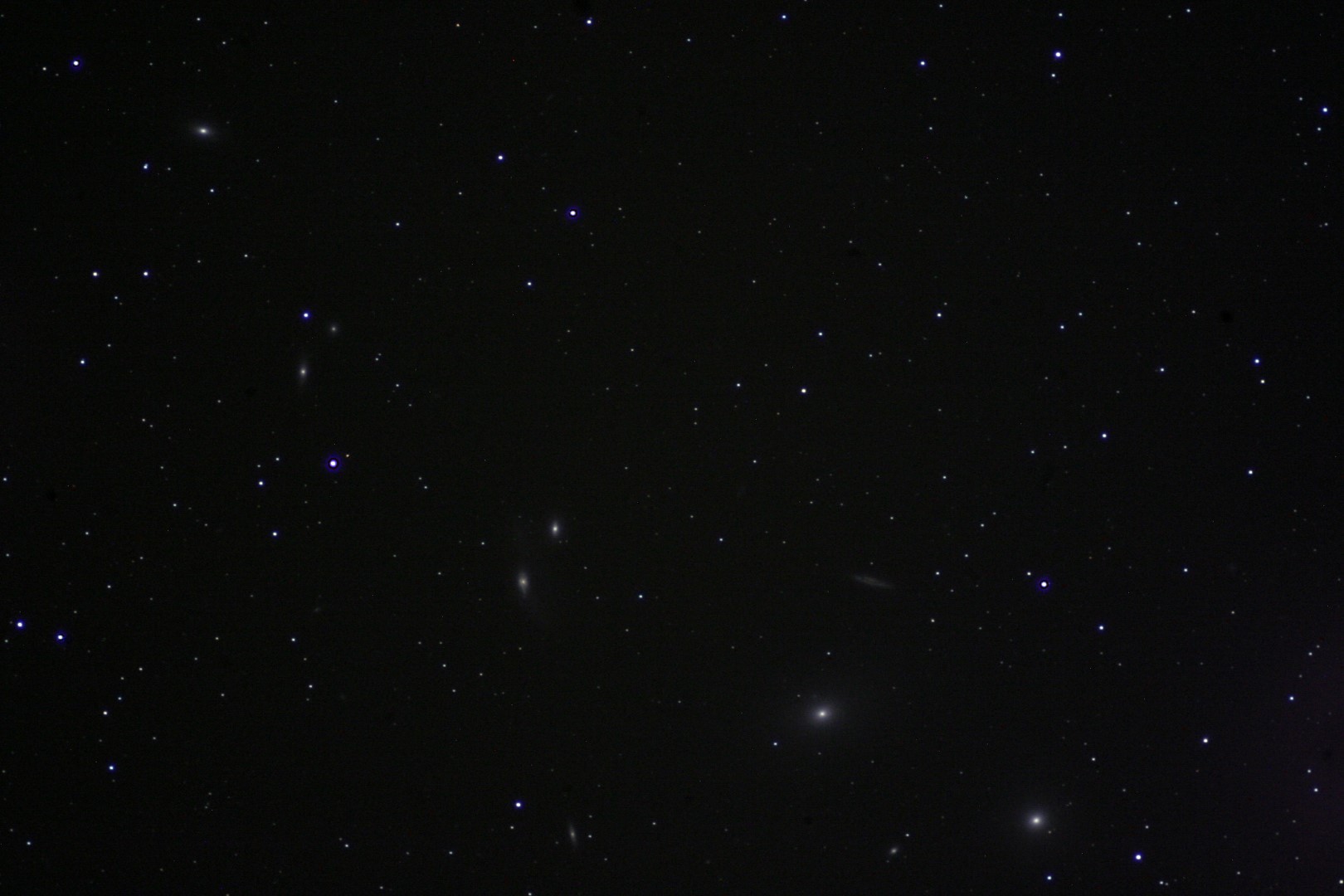
Virgo Group of Galaxies - a field of nine galaxies in the western part of the cluster group of over 2,000 galaxies! Canon 350 D | 240secs @ ISO800

Virgo Group of Galaxies – a field of nine galaxies in the western part of the cluster group of over 2,000 galaxies!
Canon 350 D | 240secs @ ISO800

Meet the neighbours

Earlier this week we were fortunate to have good sky conditions at Fairvale Observatory and I was therefore able to locate and image a new nebula, M27 the Dumbbell or Apple Core Nebula https://watchthisspaceman.wordpress.com/2014/08/20/astronomers-do-it-in-the-dark/ and for the first time, a galaxy.  As the birthplace of stars nebulae are almost beyond our comprehension, with their almost ethereal nature making them somewhat intangible to mere humans.  By comparison a galaxy has taken on what might seem a corporeal form, something that strangely seems more familiar and it should do, it is where we live.

It is for this this reason that I have been keen to capture a picture of my first galaxy from Fairvale Observatory; the picture at the top of the Home page on this site, which shows the Sombrero Galaxy, was taken in La Palma earlier this year so doesn’t count https://watchthisspaceman.wordpress.com/2014/08/06/la-palma-nice-one-joan/.  I’m not sure why but despite my enthusiasm for galaxies they have until now proved elusive; maybe the 150PL just wasn’t up to it or more likely, I was just finding them difficult to locate in the sky.  The Synscan feature on my new AZ-EQ6 mount has put an end to that, just dial it up!  And so it was that this week I got to meet the neighbours, in this case the closest spiral galaxy to our own Milky Way Galaxy, the Andromeda Galaxy.

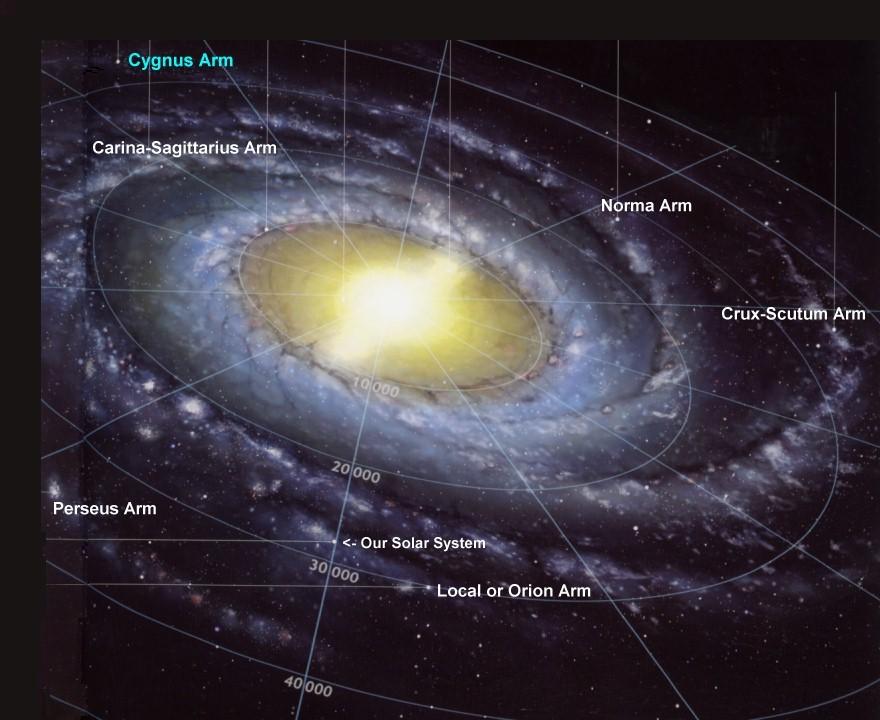
As previously discussed, Earth is located on the edge of the spiral Orion Arm of the Milky Way, about 25,000 light-years from the centre. 

The Milky Way & Location of the Solar System i.e Earth

The Milky Way & Location of the Solar System i.e Earth

Some 2.5 million light-years away is the similar and beautiful spiral form of Andromeda, or M31.  Andromeda is the largest spiral galaxy of the so-called Local Group, a group of 54 galaxies, with its gravitational centre somewhere between the Milky Way and Andromeda and herein lies a problem.  Andromeda is approaching the Milky Way at 110 k per second or 300 k per second relative to our Sun i.e. us, due to its orbit around the centre of our galaxy – thus also making it one of the few blueshifted galaxies we observe on Earth.  As a consequence we are destined to get to know our neighbour Andromeda a lot better in the future, as both galaxies are likely to collide and merge in about 4 billion years, forming a giant elliptical galaxy.

M31 - Andromeda Galaxy Canon 700D | WO GT81 + FF | 10x30sec @ ISO800

M31 – Andromeda Galaxy                                                                         Canon 700D | WO GT81 + FF | 10x30sec @ ISO800


In the meantime enjoy this great spectacle in the night sky.  From Fairvale Observatory Andromeda has only just become visible in the eastern night sky at about midnight, so I am hopeful that as it moves across the sky over the coming months I will get even better opportunities to image the galaxy; by which time I have hopefully improved my alignment, tracking and exposure abilities and thus can obtain greater photographic detail of this beautiful galaxy.

M31 Andromeda Galaxy - Cropped & 'stretched' in GIMP from main picture

M31 Andromeda Galaxy – Cropped & ‘stretched’ in GIMP from main picture

Astronomers do it in the dark

We are lucky to have dark sky parks in the UK, which are defined as: an area, usually surrounding a park or observatory that is kept free of artificial light e.g. Exmoor National Park, Galloway Forest Park and Kielder Forest, Northumberland.  The transformation of the sky through the absence of man-made light is truly incredible – apart from the greatly increased clarity with which the stars can be better seen, it is the emergence of otherwise feint or nearly invisible DSO objects experienced in these conditions that is exciting for astronomers.

During my life I have been fortunate to see a number of really exceptional ‘dark skies’ around the world, which in my opinion significantly beat the dark sky parks here in the UK.  The most memorable were in the Kalahari Desert and the middle of the Red Sea during a scuba diving trip, which were to use a phrase straight from the sixties (I was there but can’t remember it!) – mind blowing!  Living on Earth probably the most striking feature of a dark sky is the ability to look clearly through the Milky Way galaxy in all its wonder, which thus appears as a creamy band crossing the sky – we are in fact looking edge-on through the millions of stars that make up our galaxy.  Without wishing to overly digress at this point, our Solar system within which we live is on the edge of the spiral Orion Arm, located about two thirds of the way from the centre of the galaxy – 25,000 light years away. http://www.universetoday.com/65601/where-is-earth-in-the-milky-way/

Given such an amazing setting it is disappointing to live in South East England here at Fairvale Observatory, with London just to the north and Gatwick airport to the south, thus significantly reducing the light quality of the sky and making astronomy hard work.  Just to make matters worse, I have to contend with houses and trees obscuring the sightline in almost every direction, passing aircraft (see previous blog on the ISS) and the ubiquitous street light.  Furthermore, even on a clear night for much of the month the Moon poses a significant obstacle to astronomy as it floods the sky with its reflected sun light.

Notwithstanding, good nights (relatively) do occur and last Sunday was one of them.  It was completely clear from dusk until late in the night, the Moon (last quarter) obligingly did not rise until almost midnight and, thanks to the aforementioned houses and trees, did not impact on Fairvale Observatory until after 1.00 a.m.  Furthermore, as the temperature was unseasonably cool as a result of dominant northerly winds, the air was still; which all added up to a great night for astronomy and imaging in particular.  And so it was that I set about trying to image my next set of targets with mixed but generally good results.  I have learnt that planning is everything in astrophotography, so using Stellarium I previously sought out those objects that would be high in the sky and were located on or about the celestial meridian; such a position reduces the thickness of the Earth’s atmosphere through which the light has to pass on its way to the camera sensor and thus improves the image quality.

I tried, once again unsuccessfully, to image NGC 7000, the North American Nebula – not through lack of photographic prowess but, I think, because I had not located it properly in the sky – another day then? Similarly I failed to capture NGC 6888, the Crescent Nebula.  However, against what was a good, dark sky at Fairvale Observatory I had better luck with M27, the Dumbbell Nebula and, photographed my first galaxy, at last! I will deal with the galaxy in my next blog so, for now, will focus (pun intended!) on M27.

My first image of a nebula taken by DSLR was only a couple of weeks ago, M57 or the Ring Nebula.  This time the target M27 was another Planetary Nebula (nothing to do with planets) of similar size but at 1,360 ly distance is almost 1,000 ly closer to Earth than M57, providing better imaging conditions; that’s 1,000 ly the light does not have to travel before reaching the camera.  At the moment I am still experimenting with the new equipment and seeking out new objects just for fun and, as a result, mostly taking a small set of short exposures (<=60 seconds) subs (pictures) and darks before stacking  and processing – in this case about 10 each.  The resulting picture quality leaves plenty of room for improvement when I eventually get the guide scope working, together with other planetary and alignment software but in the meantime I am very happy and excited by these results.  The wider, original photograph perhaps shows the Nebula best, which is also known as the Apple Core Nebula, a form that is just discernible from these images.  For the moment, my quest to capture new objects is going well, assisted greatly by the dark skies we are fortunate to have at the moment here at Fairvale Observatory.
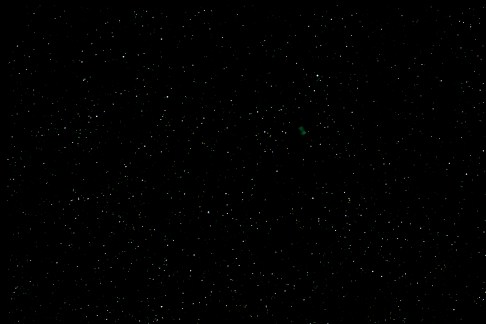
Wide sky view - M27 the Dumbbell or Apple Core Nebula is located just off-centre at about 2 o'clock

Wide sky view – M27 the Dumbbell or Apple Core Nebula is located just off-centre at about 2 o’clock  Canon 700D | EO GT81 + FF | 10x40secs @ ISO 800
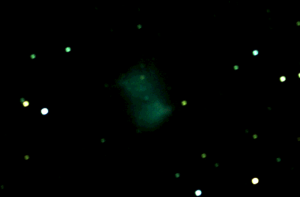
M27 cropped from previous photograph; it will be interesting to see how much clearer pictures can eventually be obtained with better alingment and longer exposures

M27 cropped from previous photograph; it will be interesting to see how much clearer pictures can eventually be obtained with better alignment and longer exposures
ISS: Gotcha!

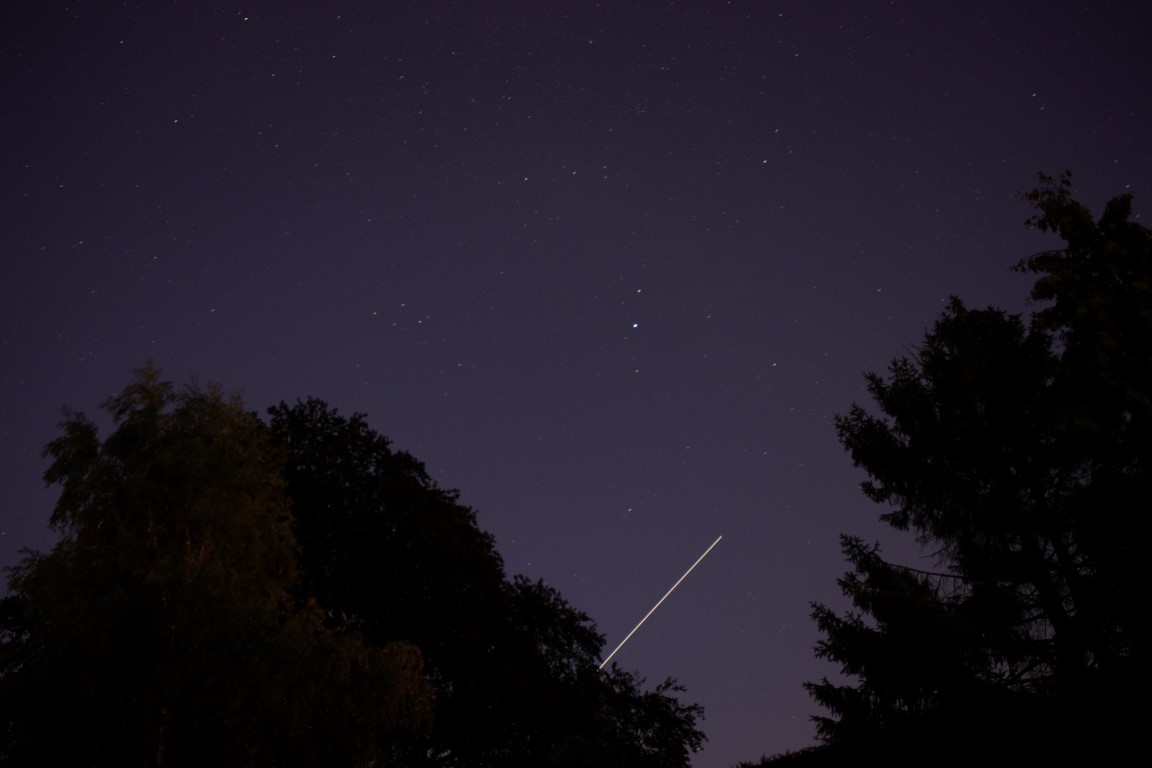
For the past couple of weeks the International Space Station (ISS) has been orbiting close to my house.  This great App, the ISS Detector Satellite Tacker, provides a forecast (date, time, and trajectory) of when the ISS will pass close to your location and a graphical guide, operating in real time, indicating where to look https://play.google.com/store/apps/details?id=com.runar.issdetector&hl=en.  I have been using this App for over a year and it is excellent, the only thing it can’t help with is cloudy skies!  As a result of cloud and rain I have been struggling to photograph the satellite during this period, until last night when we had great viewing conditions from dusk until late in the night (more on that in a later blog).  At just past 9.30 p.m. last night the ISS passed nearby again, so that I was at last able to record its path on my camera.

Of course nothing is straight forward and living close to Gatwick airport doesn’t help.  In the first two exposures the ISS track was interrupted by aircraft crossing its path – at a much lower altitude of course.  However, it makes for some interesting pictures.

ISS track intersected by a passing aircraft

ISS track intersected by a passing aircraft                                                                                   Canon 700D | 200mm telescopic lens | 46secs @ ISO200           

And again!!

Better

The ISS is an amazing achievement.  Constructed in modular form by the USA and Russia since 1998, it measures approximately 73m x 109m x 20m, with a crew of 6, to date drawn from fifteen different countries.  The ISS travels around the Earth in a circular orbit between an altitude of 205 miles and 255 miles, at a speed of 17,227 mph, thus orbiting the Earth every 93 minutes!  As a result of this orbit it passes over or close to all the Earth’s surface, which means we all get a chance to see it (clouds permitting) every now and again – this is made possible by the Sun’s reflection off the station producing a bright golden flash as it passes.

At last, a clean shot of the ISS as it heads on its way towards the south east and out of view - back again in 93 minutes having traveled around the world!

At last, a clean shot of the ISS as it heads on its way towards the south east and out of view – back again in 93 minutes having travelled around the world!

Last night’s pass was from the west to the south east, at an inclination of about 45o, producing a very good view for about 5 minutes.  Similar views of other manmade satellites are also common but, of course, they don’t carry people.  What a great human achievement and an awe inspiring sight which I never tire of.  Fortunately, once the aircraft had passed I was able to get a ‘clean’ shot of the ISS, unfortunately this will be the closest I’ll ever get to travelling in space.

Copernicus was right!

OK it’s not news but a tribute to the man who opened our eyes to the way the Solar System works.

Like most newcomers to astronomy viewing and imaging starts at home and that is the Solar System. So it was with my Skywatcher 150PL Newtonian scope last year – first the Moon (of course) and then on to the planets, in this case it had to be Saturn – surely the most exciting / beautiful planet? Despite my growing years it was only in April 2013 I got to see Saturn for the first time through the 13″ Astrographic Refractor at Herstmonceaux  http://www.the-observatory.org/telescopes. WOW I am hooked and following much previous prevarication over what to buy now rapidly sought to purchase my first telescope in the form of the aforementioned 150PL with a basic EQ3-2 mount.

The early summer of 2013 was very good for viewing Saturn and so it was I spent many late nights and early mornings gazing at this wonderful planet. Of course I had to get a photograph but this was easier said than done. Despite years of SLR photography I did not own a DSLR, considering them too bulky and inconvenient for day-to-day use, I therefore resorted to my trusty Canon Ixus 860IS to try my hand at afocal photogrpahy i.e. holding the camera up to the eyepiece.  The results were awful so I purchased a camera bracket that clamped to the eyepiece and held the camera more steady, unfortunately this too was little better. I came to the conclusion that this wasn’t going to work and in some shape or other I would need to take a video instead, with subsequent processing through Registax (more about this another time) which is able to sort and stack the best frames to produce a final, single image.

I tried the cheap route first by adapting an old Logitech webcam I already had (this involves removing the front lens so the light fall directly on the sensor) but could not get an image and therefore in the end decided to purchase a ZWO 120 MC http://www.365astronomy.com/zwo-asi120mc-colour-13-cmos-usb20-camera-with-autoguider-port-p-3536.html which also provides an autoguiding function, as yet not tested. Again I encountered major problems getting an image but after visiting the retailer Zoltan at 365 Astronomy, who also had great difficulty getting it to work by using a more up-to-date version of Firecapture, I was finally up and running – all I needed was a clear sky and an object to image. Of course, it had to be Saturn.

As I have now learnt every facet of astrophotography is difficult and this was no exception. The problems this time fell into two categories: the general capture settings and that old thorn in the side, focus.  It took a while but eventually I had Saturn  on film which, after some Registax processing I successfully turned into a picture.

ZWO 120MC

ZWO 120MC

Still plenty of scope for improvement but it is clearly Saturn and to my eyes looks great.

With this success under my belt, earlier this year I tried Mars which, as I was to find, is a notoriously difficult subject – the problem being size i.e. it is small. Depending on their respective orbits relative to Earth, the angular diameter  http://en.wikipedia.org/wiki/Angular_diameter of Saturn varies from 14.5″ to 20.1″, with Mars 3.5 to 25.1″.  Notwithstanding, I eventually managed to capture some video, which looked awful, but thanks to Registax emerged looking like, well ….Mars!  It has been described as ‘pizza looking’ but for the moment I’m happy.

223242_castr

ZWO 120 MC + Registax

I had hoped to get Jupiter too but for various reasons (which I can’t remember) it didn’t happen, so that’s on the ‘to-do’ list next time it comes around.  And thanks to Nicolaus Coperincus we will be able to predict when that is.