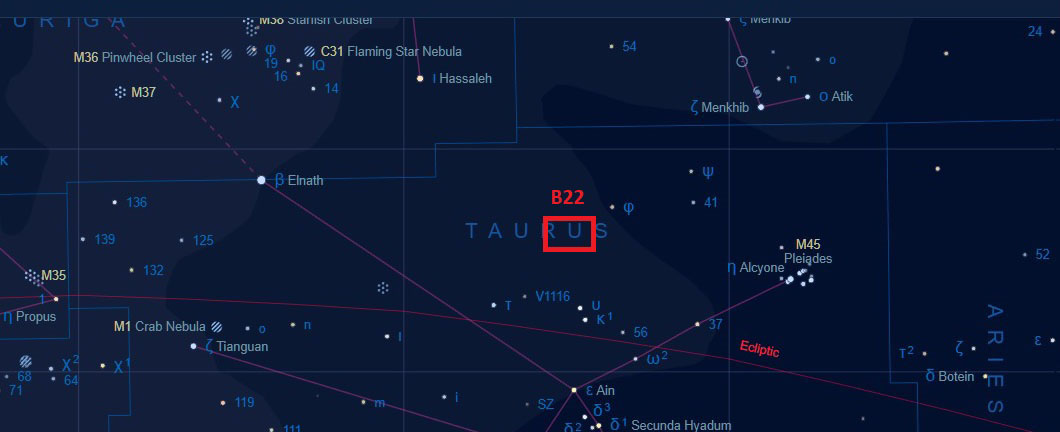
Just northeast of the Pleiades star cluster within the northern Milky Way, lies the dark region of the Taurus Molecular Cloud (TMC), which at 430 light years is the nearest star-forming region to Earth. Consisting of hundreds of solar masses of primordial hydrogen and helium gas, as well as heavier elements, this vast area of dense stardust obscures almost all light from behind. As such it forms an alluring target for astrophotography, with the complex rift-like dark structure of the TMC set against the broad starry background of the Taurus constellation.
Approximate Image Location
Notwithstanding, perhaps because of the more popular objects that abound throughout its neighbour the Orion constellation, the TMC is somewhat neglected by astronomers; to be fair the TMC is also a more challenging imaging target than many of those found in Orion. Early this year, for the first time I decided to image the dark nebula Barnard 22, an iconic section of the TMC formed by a complex mass of dark stardust that appears to hang within the vast surrounding starfield.
Approaching the new moon in late January I obtained almost 11 hours of LRGB subs, though sadly was unable to incorporate another 6-hours of 10-minute luminance exposures which proved to be too bright to use: note-to-self– check settings for new objects before embarking on long imaging programme! To achieve a balance between the large black smudge that is B 22 and the brilliance of the surrounding stars processing was tricky but the final outcome satisfying. Also noteworthy in the image, just off centre is the small flame-shaped reflection nebula IC 2087, the light from which just manages to emerge from behind the otherwise dominant, though beguiling form of Barnard 22, which like night itself seems to casts a dark veil over the cosmos.
IMAGING DETAILS
Objects
Barnard 22 dark nebula & IC 2087 reflection nebula
Constellation
Taurus
Distance
Approx.. 430 light years
Size
–
Apparent Magnitude
Varies
Scope
William Optics GT81 + Focal Reducer FL 382mm f4.72
Mount
SW AZ-EQ6 GT + EQASCOM computer control & Cartes du Ciel
Guiding
William Optics 50mm guide scope
+ Starlight Xpress Lodestar X2 camera & PHD2 guiding
Camera
ZWO1600MM-Cool mono CMOS sensor
FOV 2.65o x 2.0o Resolution 2.05”/pix Max. image size 4,656 x 3,520 pix
EFW
ZWOx8 EFW & 31mm Chroma LRGB filters
Capture & Processing
Astro Photography Tool + PHD2 + Deep Sky Stacker, PixInsight v1.8.8-12, Photoshop CC, Topaz AI DeNoise
Image Location & Orientation
Centre RA 04:39:00.365 DEC +26:00:13.426 Lower Left = North
Exposures
120 x 180 sec L, 19 x 300 sec R, 20 x 300 sec G & B Total Integration Time: 10hr 55 min
@ 139 Gain 21 Offset @ -20oC
Calibration
10 x 60 sec Darks 15 x LRGB Flats & Dark Flats @ ADU 25,000
Location & Darkness
Fairvale Observatory – Redhill – Surrey – UK Typically Bortle 5-6
Date & Time
27th 29th 31st January + 4th & 6th February 2022 @ +18.30h
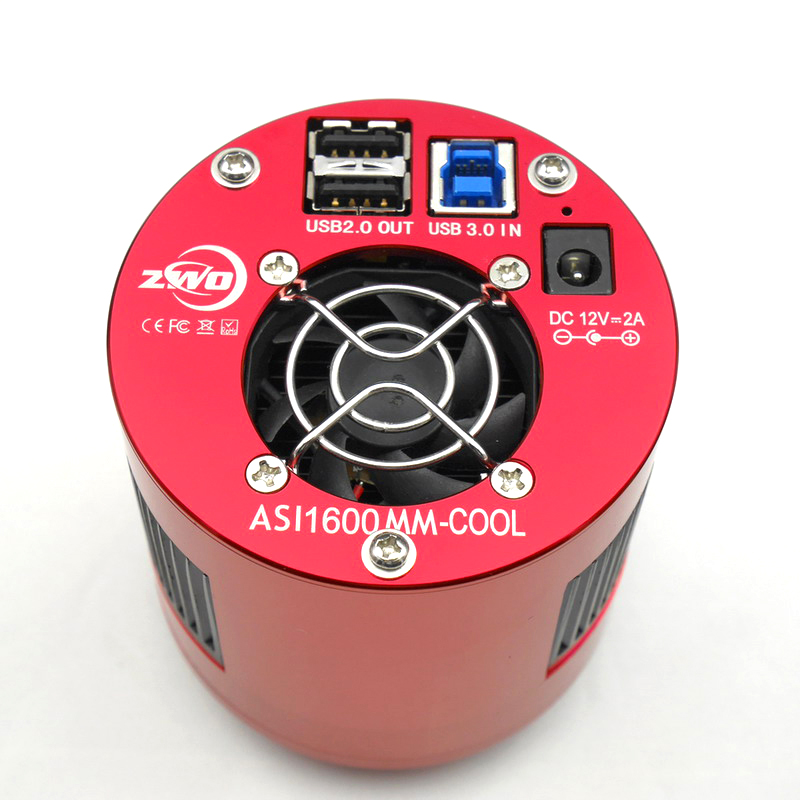
It’s been over 5-years since I acquired the revolutionary ZWO ASI1600MM-Cool camera, which went on to completely transform my astrophotography. In the real world such iconic products come along only very occasionally, such as the Mini, Nokia mobile phone, computer mouse & GUI, iPod & Dyson Vacuum cleaner, all have characteristics which redefine a product and went on to literally change the world. Although by comparison astrophotography is something of a niche hobby the development of the ZWO1600 camera has had a similar impact, so much so that it too has redefined the way forwards for astrophotography cameras.
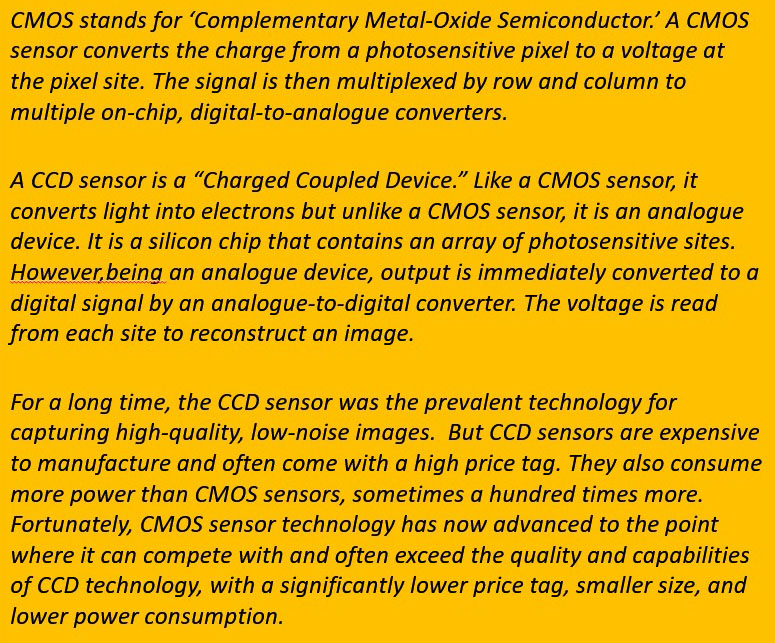
With the move from film to digital, CCD-sensors became the definitive mono camera of choice for “serious” astrophotography but the arrival of the ZWO ASI600MM-Cool camera in 2016 was set to change all that, so what made it so important? At the heart of this transformation is the CMOS sensor. Common to most conventional digital cameras CMOS technology is well proven but for the purist the CCD maintained the edge in astrophotography, until the ZWO1600 and eventually other similar cameras like it came along (see box below for CCD v CMOS background information). Perhaps three features underpin the success of CMOS-based astrophotography cameras, of which the ZWO1600 is considered the first and most successful to-date.
Very low read noise and good well depth both contribute to much shorter exposure times than CCD cameras require, which for the amateur with limited time and light pollution to tackle was a game changer. Moreover, because CMOS-based sensors were already being made for the mass market they cost much less than CCD sensors and therefore so were the cameras, making them a viable choice based on their technology and cost.
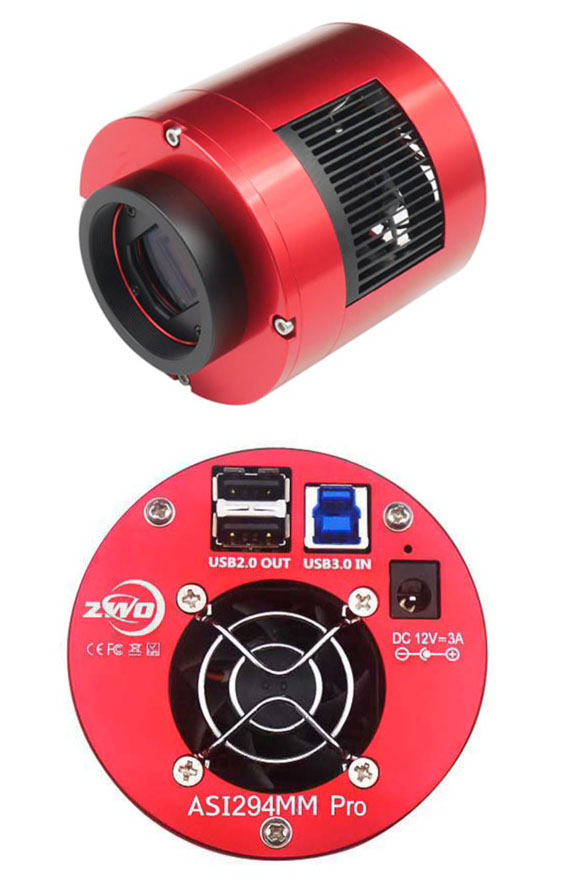
It was fortunate that when I was looking to move from DSLR to a mono astrophotography camera at the end of 2016 I was able to purchase a ZWO ASI1600-Cool, just 7-months after its initial release (See First Light for more information). Although an experienced photographer, including +30-years of underwater photography, the difference between what might be called conventional photography and mono astrophotography cameras was like night and day, which took some time to understand and eventually pick-up. Notwithstanding the learning curve, it’s been worth the effort as the impact on my images has been profound. During the intervening period since I brought my camera only a few minor developments have been made (now sold as the Pro version), until in September 2020 a much-anticipated successor to the ZWO ASI1600MM-Cool camera was finally released, the ZWO ASI294MM Pro (see images below).
I waited until now to purchase this camera because at the time I just didn’t need it (the ZWO1600 served my needs very well and still does) and I also wanted to see how the new camera worked out with early users. Apart from a few niggles, the overwhelming response has been very positive and as I now have another use for my ZWO1600, I finally purchased a ZWO ASI294MM Pro and obtained First Light in early April.
CAMERA
ZWO ASI1600MM-Cool*
ZWO ASI294MM Pro
Sensor – CMOS 4/3”
Sony IMX492
Panasonic MN34230ALJ
Sensor Size + Diagonal
19 x 13mm 23.1mm
18 x 13mm 21.9mm
Pixel Size
4.63nm (Bin2) or 2.135nm (Bin1)
3.80nm
Resolution
4144 x 2822 px Bin1 8288 x 5644 px Bin2
4656 x 3520 px
ADC
14bit
12bit
Full Well Capacity
66,000
20,000
QE Peak
90%
60%
Readout Noise
1.2 -7.3e
1.2 – 3.6e
Sensor Illumination
Back Lit
Front Lit
Cooling
-35C
-40C
Data Buffer
No
Yes
File Size
22MB (bin1) 85MB (bin2)
32MB
Back Focus
6.5 / 17.5mm
6.5 / 17.5mm
Before commenting on my albeit limited experience of this new camera so far, it’s worth comparing the main features of each camera that are summarised in the accompanying table. Not surprisingly there are many similarities, which make for an easy swap of the two cameras when using the same optical train but there are also some important new developments which make this camera a real step-up from the ZWO1600.:
Greater quantum efficiency (QE) means that 90% of the total light that reaches the sensor is converted into data, compared with 60% with the ASI1600. Thereby for the same integration time the ASI294MM Pro will gather 50% more light than the ASI1600 or put another way in half the time!
Increased full well capacity from 20ke to 66ke means longer exposures without saturation.
Higher 14bit ADC provides more dynamic range of two more stops compared with the ZWO1600.
A choice of Bin1 or Bin2 changes the equivalent pixel size from the basic 4.63nm (Bin2) to 2.315nm.
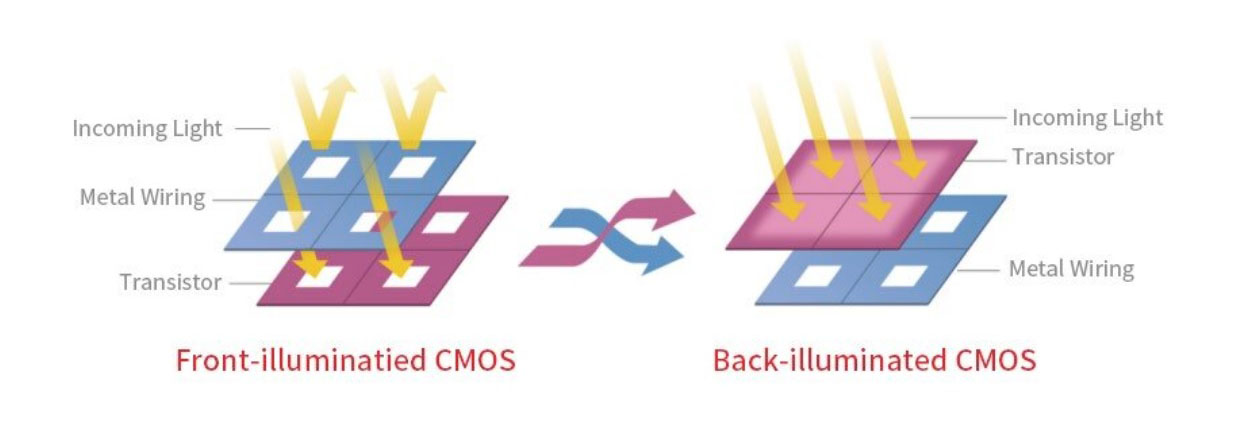
Sony’s back-illuminated CMOS image sensor (see below) improves sensitivity and noise reduction but perhaps more importantly stops microlens diffraction artifacts of bright stars which has been one of the biggest bugbears of the ZWO1600, particularly when using ZWO’s own filters.
Physically the new camera is identical to the ZWO1600 and changing the cameras over is essentially just a swap, in my case using the same setup of a William Optics GT81 & 0.80 focal reducer + ZWO x8 EFW & 31mm Chroma Filters + just a minor focus adjustment. Using the excellent Astro Photography Tool (APT) for image capture I did encounter some issues setting up the new camera but after some liaison with other users and the APT developer Ivo it was sorted quickly and ready to run!
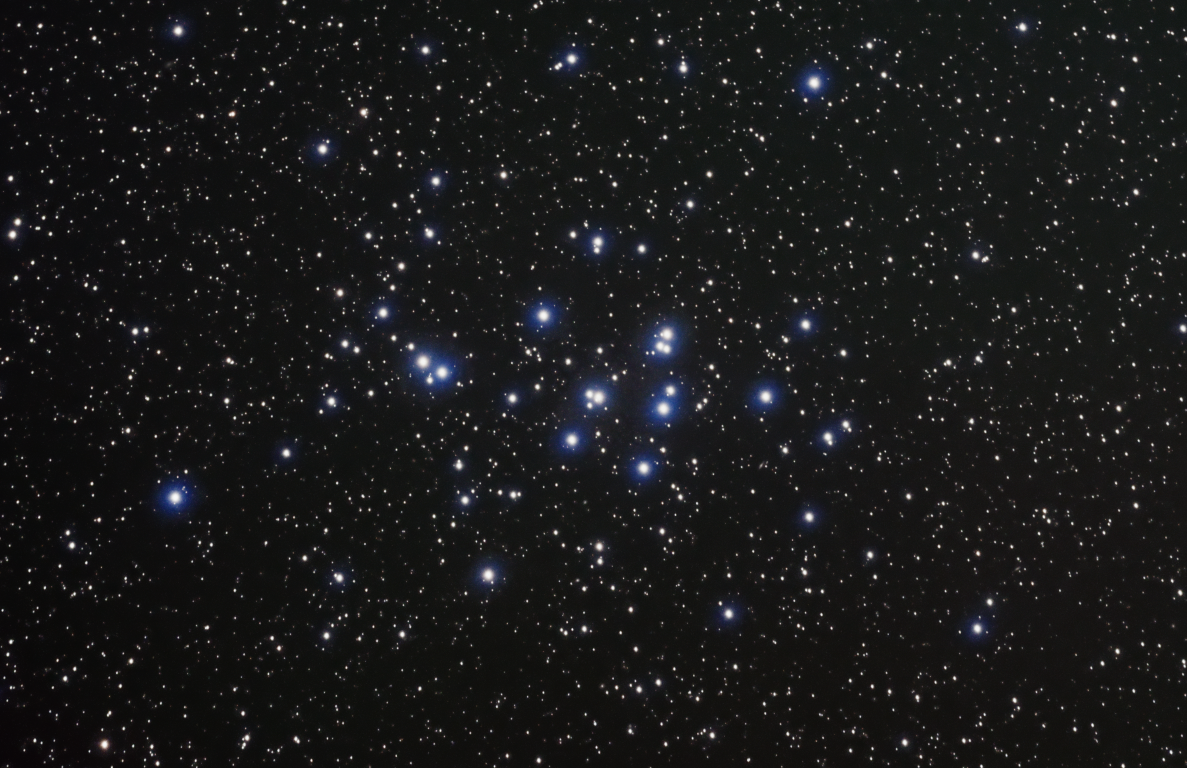
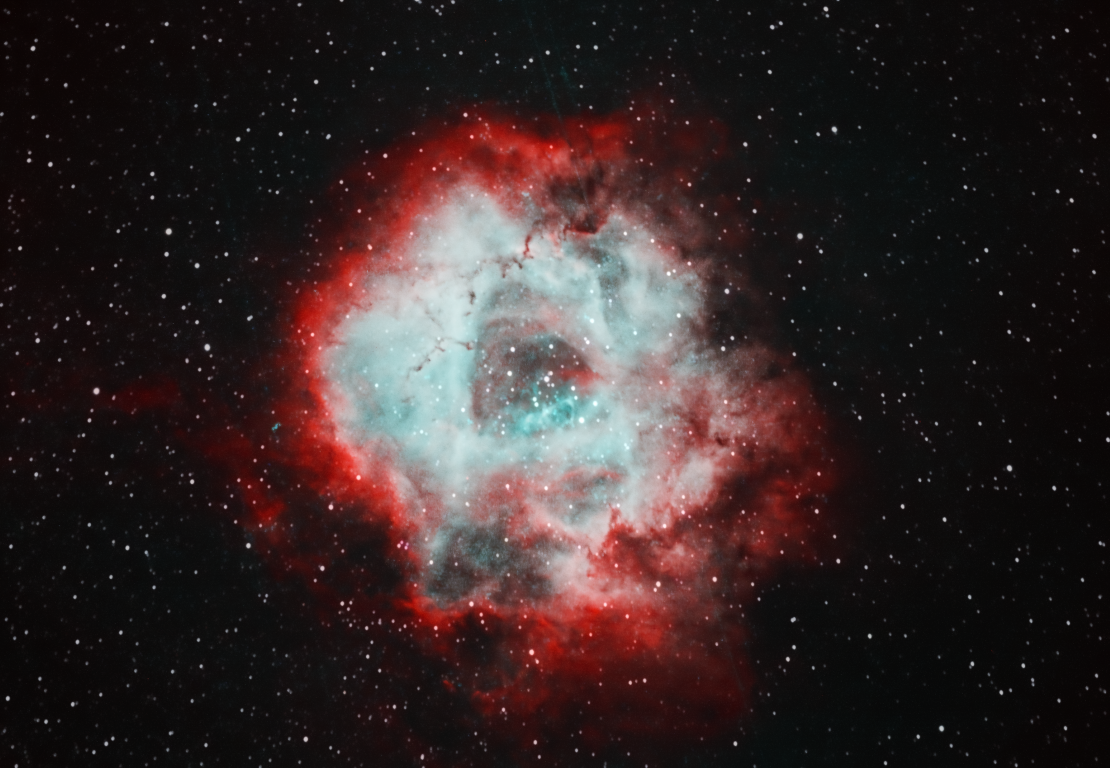
Unfortunately, by late March / early April most of winter’s exciting objects have moved on but I did manage to quickly grab 60 minutes of the Rosette nebula (HOO + dark calibration only, below) and later the M44 Beehive open cluster (top of the page: 40mins 10x 60secs LRGB + fully calibrated ), the results of which were good clean images that did not disappoint and hold great promise when better objects become available again.
Because of the subsequent seasonal change of clocks and diminishing presence of astronomical darkness as we approach the summer solstice, I’ve been unable to continue using the ZWO ASI294MM for now but at least I know it all works well. As has become normal in recent years, I’m therefore taking a short break from imaging, though have a plan to repurpose the ZWO1600 which I’m working on but that’s for another day – Watch this Space!
First light with the ZWO ASI294MM Pro – 6 x 5mins Ha & OIII + dark calibration
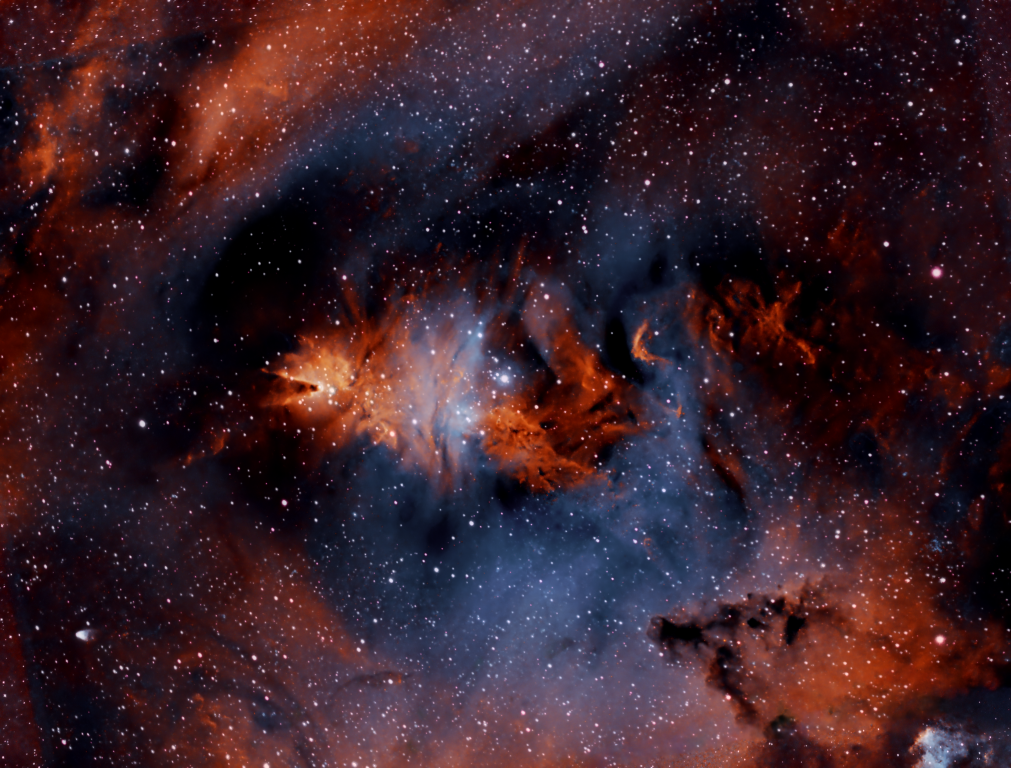
Projecting a line from Bellatrix to Betelgeuse a similar distance beyond to the east (left) by eye, to the northern extremity on Monoceros is one of late winter’s treats. Located about 2,500 light years from Earth is the star forming region NGC 2264, consisting of the Christmas Tree Cluster (an open cluster), the nearby so-called Cone Nebula and in between the Fox Fur nebula. I first imaged these objects in 2014 and again in 2018 but now armed with better skills and equipment, a return to this rich area of the night sky which is full of HII, reflection and dark nebula was long overdue + I had a plan to obtain greater detail and colour than was hitherto achieved.
Location of NGC 2264 Christmas Tree Cluster et al based on Wikisky image
Key to the plan was greater integration time and with 13h 25minutes obtained over three nights at the end of February, this established a solid data foundation. As ever with all broadband images, there’s an endless choice of permutations combining wavelengths to form a final image and inspired by the work of others, I used the popular SHO Hubble Palette but adapted here by using synthetic SII and OIII channels in PixInsight’s Pixel Math to enhance the related colours: SII = (Ha*0.30+SII*0.70) & OIII (Ha*0.40+SII*0.60+OIII). The resulting final image has exceeded my expectations, as the colours and details here now successfully highlight the aforesaid central objects as well as the wider complexity and beauty of flowing dust and gases that abounds in this region, which also includes NGC 2261 Hubble’s variable nebula, NGC 2259 open cluster and the emission nebula LBN 902.
NGC 2264 starless version shows detail more clearly
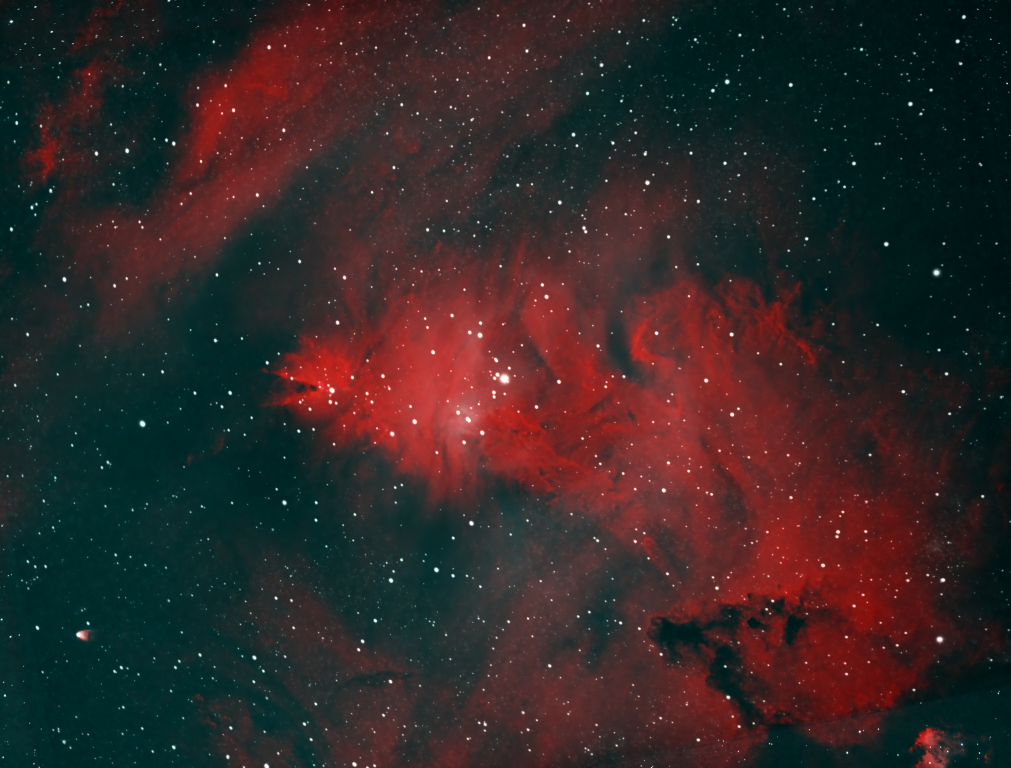
Conventional HOO image version of NGC 2264 widefield
IMAGING DETAILS
Objects
NGC 2264 – Christmas Tree Cluster, Cone Nebula, Fox Fur Nebula + NGC 2261 Hubble’s variable nebula, LBN 902 emission nebula & NGC 2259 open star cluster
Constellation
Monoceros
Distance
2,500 light-years
Size
~2.5o total
Apparent Magnitude
Varies
Scope
William Optics GT81 + Focal Reducer FL 382mm f4.72
Mount
SW AZ-EQ6 GT + EQASCOM computer control & Cartes du Ciel
Guiding
William Optics 50mm guide scope
+ Starlight Xpress Lodestar X2 camera & PHD2 guiding
Camera
ZWO1600MM-Cool mono CMOS sensor
FOV 2.65o x 2.0o Resolution 2.05”/pix Max. image size 4,656 x 3,520 pix
EFW
ZWO x8 EFW & 31mm Chroma Ha, SII & OIII filters
Capture & Processing
Astro Photography Tool + PHD2 + Deep Sky Stacker, PixInsight v1.8.8-12, Photoshop CC
Image Location & Orientation
Centre RA 06:40:55.725 DEC +09:53:45.407 Top is 280o E of N i.e. Right = approx. North
Exposures
x39 Ha , x83 OIII, x39 SII @ 300 sec Total Integration Time: 13hr 25 min
@ 139 Gain 21 Offset @ -20oC
Calibration
5 x 300 sec Darks + 15 x Ha, OIII, SII Flats & Dark Flats @ ADU 25,000
Location & Darkness
Fairvale Observatory – Redhill – Surrey – UK Typically Bortle 5-6
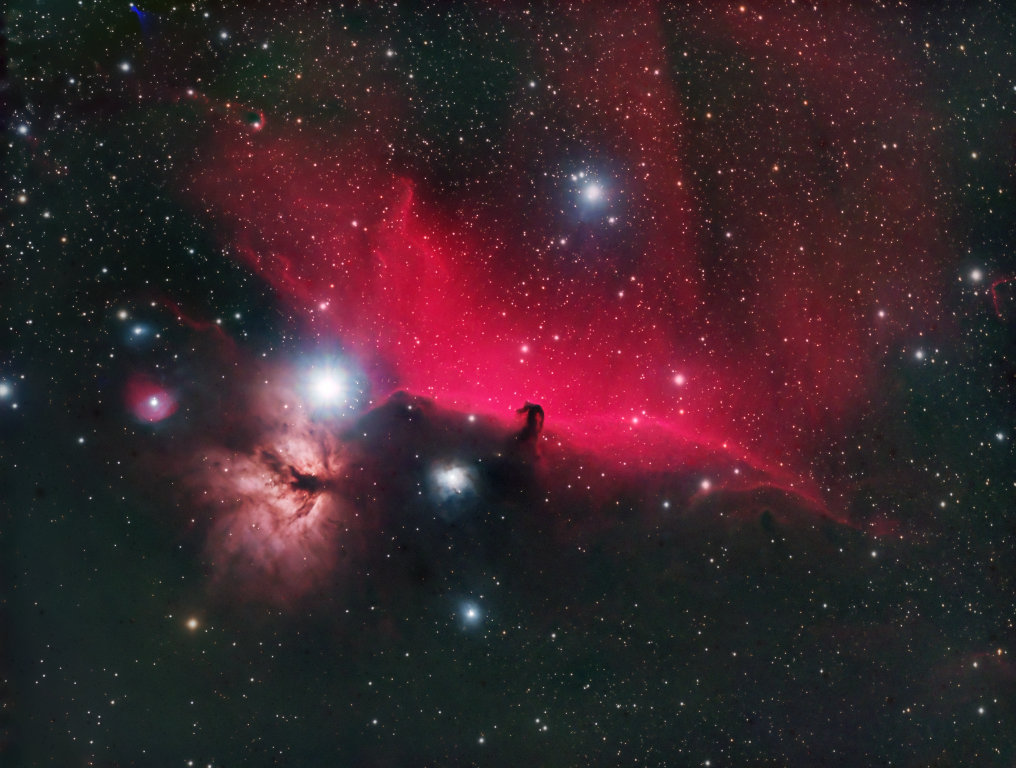
The dark silhouette of the Horsehead Nebula against the surrounding rich HII-region, is one of astronomy’s most iconic images. Surprising then that I’ve never imaged this object in broadband wavelengths before with my mono camera: the first image was in February 2015 using a modded Canon 55OD camera, then in January 2019 with the ASI1600MM + narrowband filters and most recently in January 2021 using a widefield Samyang 135/f2 rig and modded Canon DSLR. Therefore, somewhat belatedly and with the benefit of unusually long spells of clear skies, this February I set out to rectify this omission from my astrophotography repertoire.
Whilst B33 the Horsehead Nebula gets most of the attention, this large HII-region contains many other exciting objects which a broadband image shows off well, aided here by additional Ha-data (see below) to enhance the breath-taking detail that abounds across the area. Situated in close proximity to Orion’s Belt, controlling bright stars such as Alnitak is key to achieving a good image and in this regard my new Chroma filters proved helpful. The final image shows a good rendition of the Horsehead at the centre, framed against the striking red curtain of Ha-rich nebulosity and two other interesting objects nearby.
Within the large molecular cloud, located just below and to the left of the Horsehead, is the emission and reflection nebula NGC 2023. Discovered by William Herschel in 1785, at 10 x 10 arcminutes it is one of the largest reflection nebulas, illuminated at its centre by the Herbig Ae/Be starHD 37903 (a pre-main-sequence star). Then, just to the left (north) of NGC 2023 is the dramatic NGC 2024 Flame Nebula, an emission nebula energised by the adjacent and very bright Alnitak star and a cluster of young stars within. I was keen to preserve its more natural colour during processing and am very satisfied with the outcome, which captures its relationship with Alnitak to best effect.
Overall, I’m very happy with the resulting HaLRGB broadband image of the Horsehead and its neighbours. Armed with better filters, guiding, integration and processing I feel the long wait was perhaps worth it, so that this image does justice to one of winter’s most spectacular views. As the Horsehead now moves out-of-sight over the western horizon for another year, I trust my next image of these objects will be sooner than it took this time!
IMAGING DETAILS
Object
B33 Horsehead Nebula + NGC 2023 & Flame Nebula
Constellation
Orion
Distance
1,375 light-years
Size
Horsehead only approx..8.0’ X 6.5’
Apparent Magnitude
Varies, Horsehead +6.8
Scope
William Optics GT81 + Focal Reducer FL 382mm f4.72
Mount
SW AZ-EQ6 GT + EQASCOM computer control & Cartes du Ciel
Guiding
William Optics 50mm guide scope
+ Starlight Xpress Lodestar X2 camera & PHD2 guiding
Camera
ZWO1600MM-Cool mono CMOS sensor
FOV 2.65o x 2.0o Resolution 2.05”/pix Max. image size 4,656 x 3,520 pix
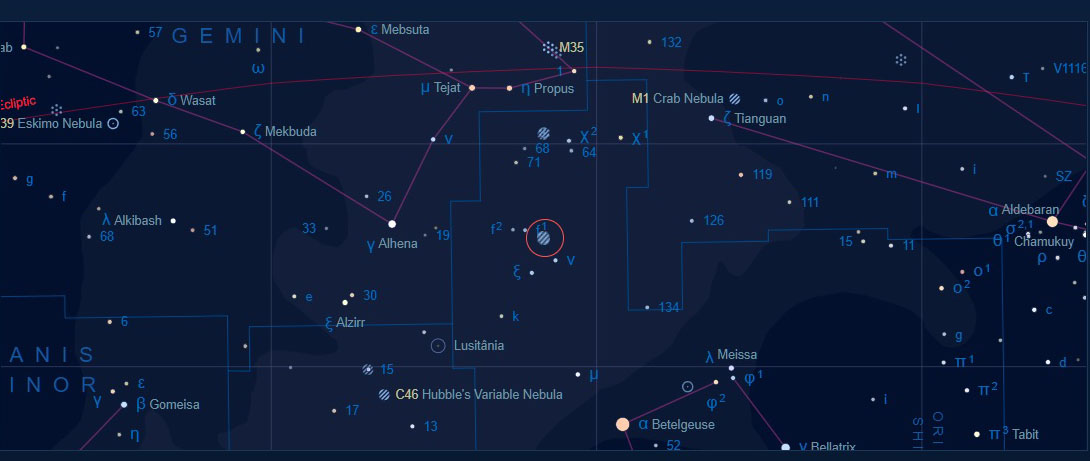
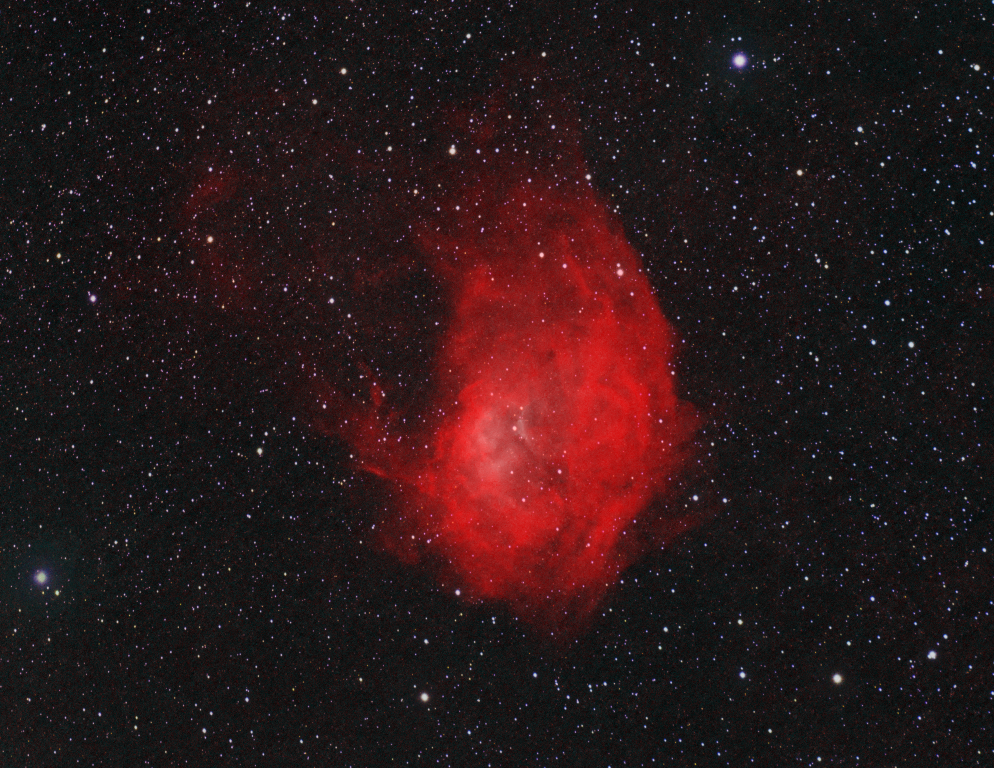
Discovered by Harold Lower and his son Charles in 1939, SH2-261 or Lower’s Nebula is located in the outer regions of the Orion constellation, which is visually between Betelgeuse and Propus in Gemini, on the border of the galactic region between the Orion and Perseus arms of the Milky Way. Mainly consisting of ionized hydrogen, it’s surprising that this interesting, quite large but faint object does not get more attention from astrophotographers, who are perhaps too busy collecting photons from the more famous objects of Orion elsewhere?
Lower’s Nebula Location (from eSky)
Unusually clear skies were plentiful here at Fairvale Observatory during January, which allowed for some 17-hours integration time, albeit mostly accompanied by a waxing to full moon. The data lends itself to various processing approaches and I played around for a long while with different combinations, in the end favouring an SHO + HOO blend as the main image (see top of the page) and am pleased with the very interesting result; for comparison other bassic versions (HOO & Ha) are shown below.
The aforesaid HII ionized gas is thought to be energised by the runaway bright star HD41997 situated at the centre, adjacent to a mysterious small bluish triangular object and a much fainter blue bubble, seen better elsewhere in higher resolution images. Moreover, catalogued and encompassed within SH2-261 are LBN 862 and LBN 864 and several dark nebulae, which would also require greater magnification (focal length and aperture) to achieve finer detail.
Like most astronomers I’m routinely drawn towards Orion’s famous and rightly popular objects such as M42 the Great Orion Nebula, the Flame Nebula and B33 the Horsehead Nebula, M78 reflection nebula, Barnard’s Loop and other jewels found in and around the central region of the Orion constellation. However, taking a wider perspective, literally and figuratively, the area contains other riches that are too easy to overlook and form good alternative imaging targets at this time of the year – time taken to identify such hidden treasures can be rewarding – in this case thanks to the Lower’s family.
IMAGING DETAILS
Object
SH2-261 Lower’s Nebula
Constellation
Orion
Distance
3,200 light-years approx..
Size
Apparent 50 x 30 arc minutes ~ 25 x 13 light years
Apparent Magnitud
+10
Scope
William Optics GT81 + Focal Reducer FL 382mm f4.72
Mount
SW AZ-EQ6 GT + EQASCOM computer control & Cartes du Ciel
Guiding
William Optics 50mm guide scope
+ Starlight Xpress Lodestar X2 camera & PHD2 guiding
Camera
ZWO1600MM-Cool mono CMOS sensor
FOV 2.65o x 2.0o Resolution 2.05”/pix Max. image size 4,656 x 3,520 pix
EFW
ZWO x8 EFW & 31mm Ha OIII SII 3nm filters
Capture & Processing
Astro Photography Tool, PHD2, Deep Sky Stacker, PixInsight v1.8.8-12, Photoshop CC v23.2.1, Topaz Denoise
Image Location & Orientation
Centre RA 06:09:25.245 DEC +15:45:10.754 Right = North
Exposures
Ha x44 OIII x33 SII x28 @ 600 secs Total Integration Time: 17hrs
@ 139 Gain 21 Offset @ -20oC
Calibration
5 x 600 sec Darks 15 x Ha, OIII, SII Flats & Flat Darks @ ADU 25,000
Location & Darkness
Fairvale Observatory – Redhill – Surrey – UK Typically Bortle 5-6
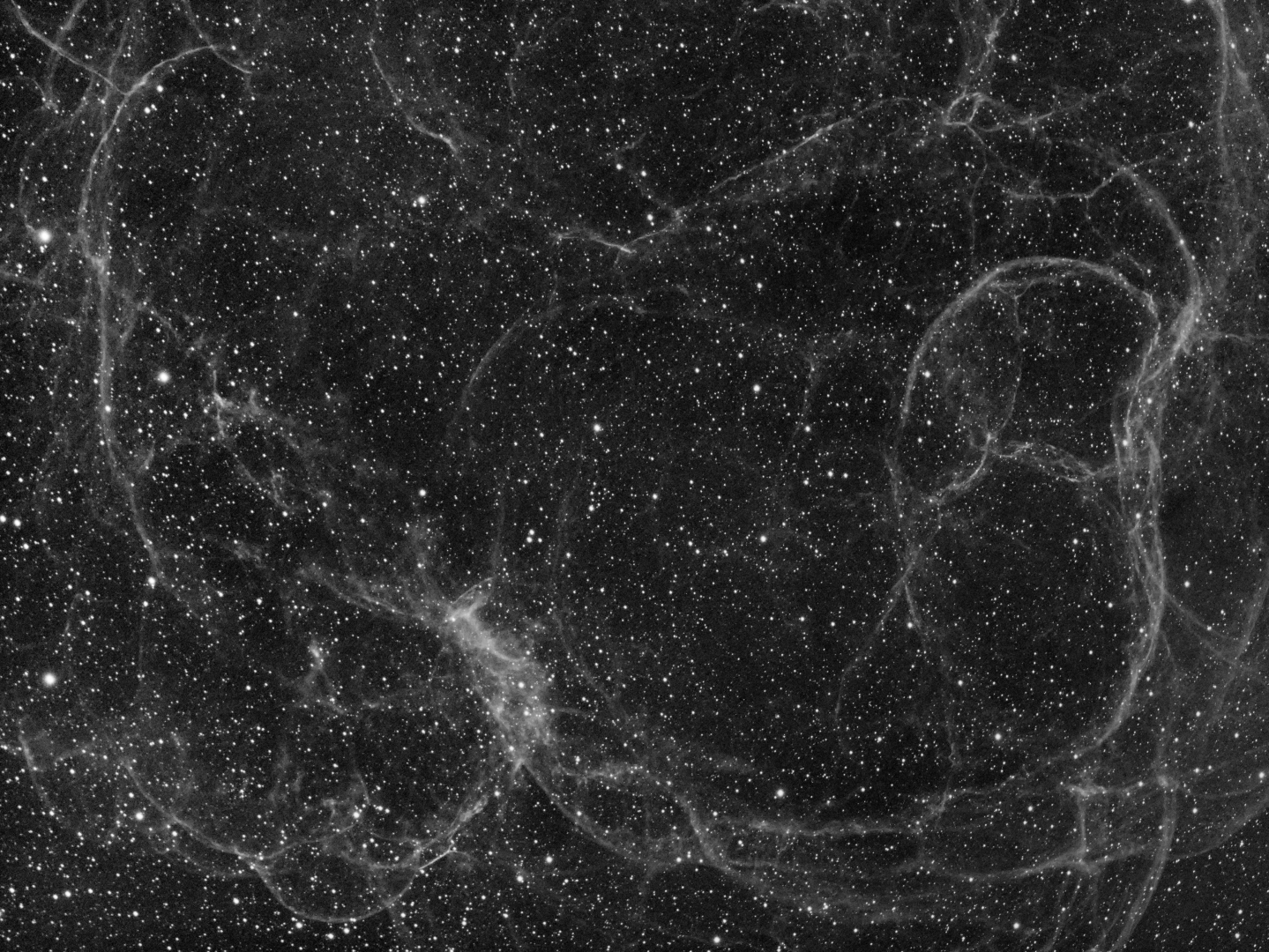
Long on my to-do list has been the spectacular Simeis 147, also known as SH2-240 or the Spaghetti Nebula. A large supernova remnant (SNR) spanning the border between the Taurus and Auriga constellations, which despite its size is one of the faintest objects in the night sky and therefore not an easy astrophotography target. Moreover, given my equipment’s field-of-view the large size of the SNR would require a mosaic to fully image, which is generally out of the question here at Fairvale Observatory with the limited clear sky conditions that prevail here. Therefore, for the moment I’ve concentrated on a close-up area of the southern lobe, imaged and processed in HOO narrowband to highlight the beautiful complexity of this cosmic cataclysm that is the product of a massive stellar explosion that took place some 40,000 years ago.
Simeis 147 Location
Furthermore, imaging was not helped by the presence of a waning full moon and even with 10-minute exposures, only very limited detail was evident in the Ha wavelength and none in OIII, thus also making framing tricky. However, with over 12-hours integration time eventually obtained over four nights and very careful processing, my first image of this wonderful SNR does not disappoint. I hope to return to this magnificent object again in the future to add more exposures – you really cannot have too many – and perhaps eventually capture this bowl of cosmic spaghetti in its entirety one day too.
Ha Stack 6-hours 30 mins OIII Stack 5-hours 40 mins
IMAGING DETAILS
Object
Simeis 147 AKA SH2-240 or Spaghetti Nebula
Constellation
Taurus
Distance
3,000 light-years
Size
Total object +3.0o
Apparent Magnitude
Extemely faint
Scope
William Optics GT81 + Focal Reducer FL 382mm f4.72
Mount
SW AZ-EQ6 GT + EQASCOM computer control & Cartes du Ciel
Guiding
William Optics 50mm guide scope
+ Starlight Xpress Lodestar X2 camera & PHD2 guiding
Camera
ZWO1600MM-Cool mono CMOS sensor
FOV 2.65o x 2.0o Resolution 2.05”/pix Max. image size 4,656 x 3,520 pix
Every year since 2014 I’ve published a retrospective blog of my astrophotgraphy year just ending called Reflections. It’s been a useful task that enables me to bring together the best and sometimes the worst of my images, in order to consider the good and bad points + progress made + set some objectives for the coming year. Eight years on, after which I believe I’ve now reached at least a respectable level of imaging and processing, I’ve decided to stop this format for the time being.
Notwithstanding, at this time of the year I also produce an astrophotography calendar for members of my family, which consists of the better images from the year just ending; I think they like them and certainly all use the calendar during the coming year. Moreover, I also recently started to compile a video of the said calendar images set to appropriate music, which we all watch together prior to seeing the actual calendar. It’s a great way to present the images, which look really stunning on today’s large Smart TV’s and is fun to watch with the family too.
The video for this last year 2021 can be viewed on YouTubeHERE and below is a brief very general overview of each image. More detailed background information and imaging details for those interested can be found in relevant blogs posted on this site during the past year.
2022 CALENDAR
A new set of filters, improved processing techniques and access to data from a telescope at a dark sky site in New Mexico, USA (shown by an asterisk *) contributed to an exciting astrophotography year in 2021.
FRONT COVER
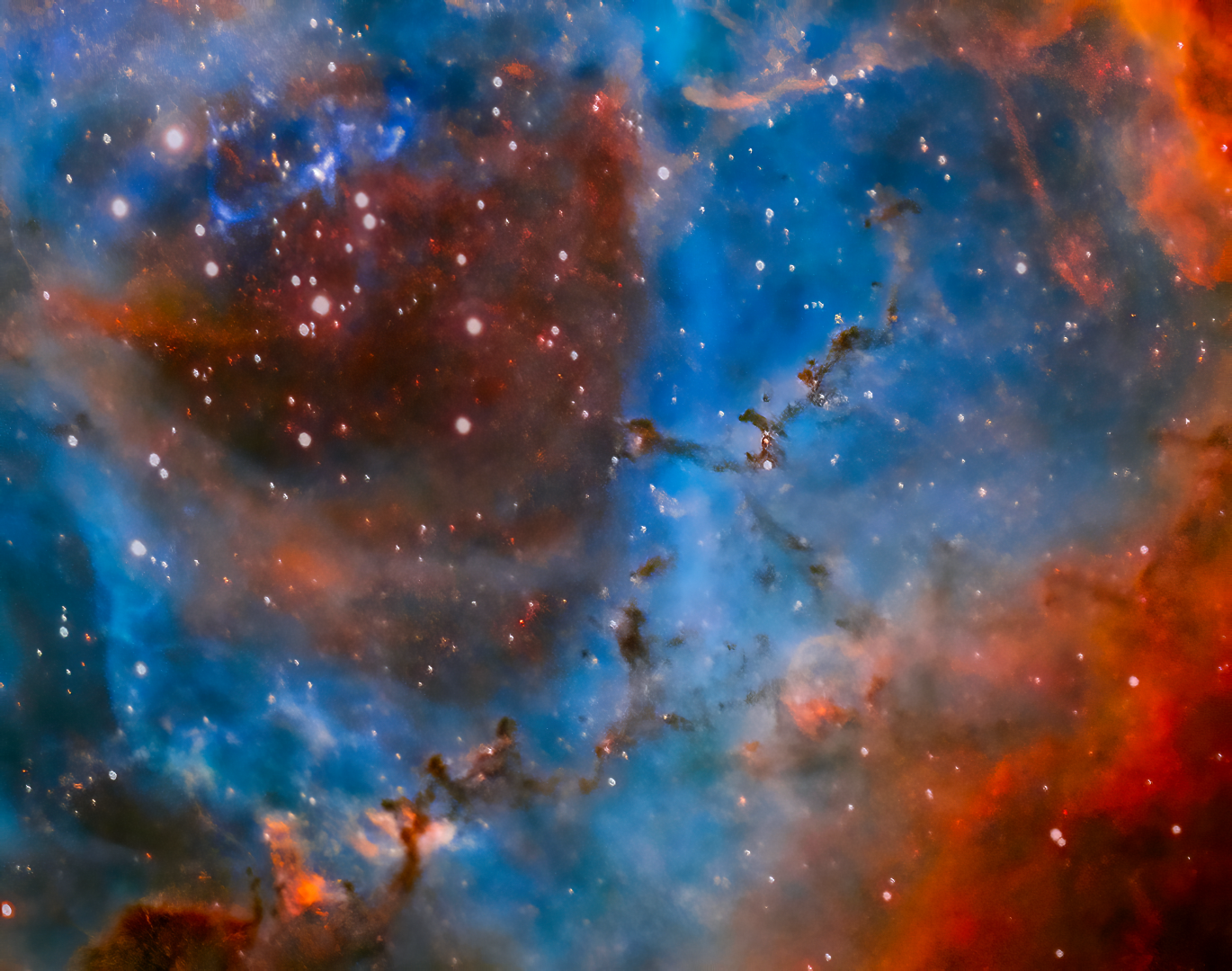
The Carnival of Animals: Special processing of the inner region of the Rosette Nebula highlights the ‘animals’ or Bok Globules – clouds of dust undergoing gravitational collapse as part of the process of new star formation.
JANUARY
LDN-1250 Dark Nebula*: Dark or absorption nebulae are a type of interstellar cloud which are so dense they obscure or absorb visible light emitted from objects behind or within and thereby contrast with the general light flux of the Universe as dark areas.
FEBRUARY
CTB-1 Supernova Remnant*: The overall structure of this supernova remnant is that of a circular shell, with a conspicuous rupture towards the north (lower right of image). The main red Ha-shell is composed of multiple interlocking filament limbs, with a blue / green OIII arc along one side.
MARCH
Jellyfish Nebula: Locatedin the Gemini constellation some 5,000 light years from Earth, this is a remnant of a supernova that took place during the past 30,000 years. With a diameter of 70 light-years, the object is visually speaking nearly twice the size of a full moon.
APRIL
Markarian’s Chain: The Virgo cluster consists of more than 2,000 galaxies, within which Markarian’s Chain forms a J-curve string of bright galaxies that share a common motion through space.
MAY
M13 Great Globular Cluster of Hercules*: Consisting of several hundred thousand stars and 145 light-years in diameter, M13 is considered to be the finest cluster in the Northern Hemisphere.
JUNE
Cave Nebula*: Located along the plane of the Milky Way is the diffuse emission nebula referred to as the Cave Nebula. The Cave at the centre is critically located at the boundary of the Cepheus molecular cloud and the hot, young stars which ionize the surrounding gases to great effect.
JULY
Orion Widefield: Framed around the area of Orion’s Belt, the Horsehead Nebula and the Great Orion Nebula, look hard and the refection nebula M78 can also be seen in the lower left corner.
AUGUST
Elephant’s Trunk Nebula*: A very large emission nebula, the so-called Elephant’s Trunk Nebula is rightly viewed as one of astrophotography’s most iconic images. The ‘trunk’ itself dominates the centre of this image and is illuminated from behind by a bright star forming region.
SEPTEMBER
M31 Andromeda Galaxy: The full benefit of new filters, improved guiding, clear skies over 6-nights and extensive use of new processing techniques can be seen in my best image yet of Andromeda.
OCTOBER
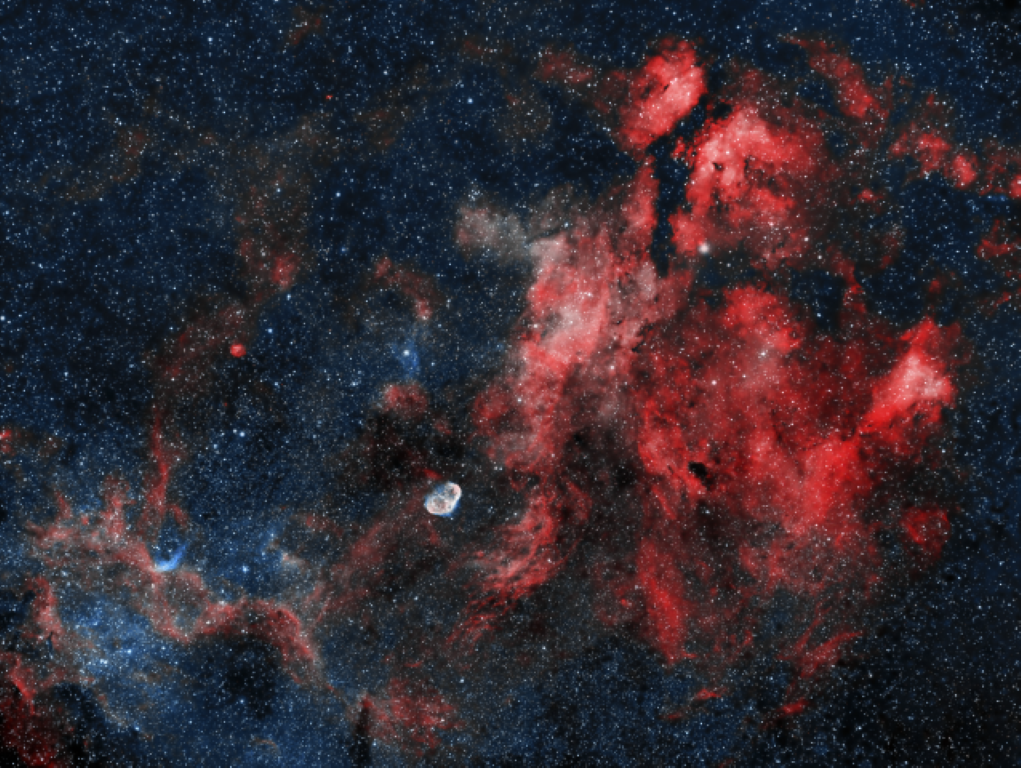
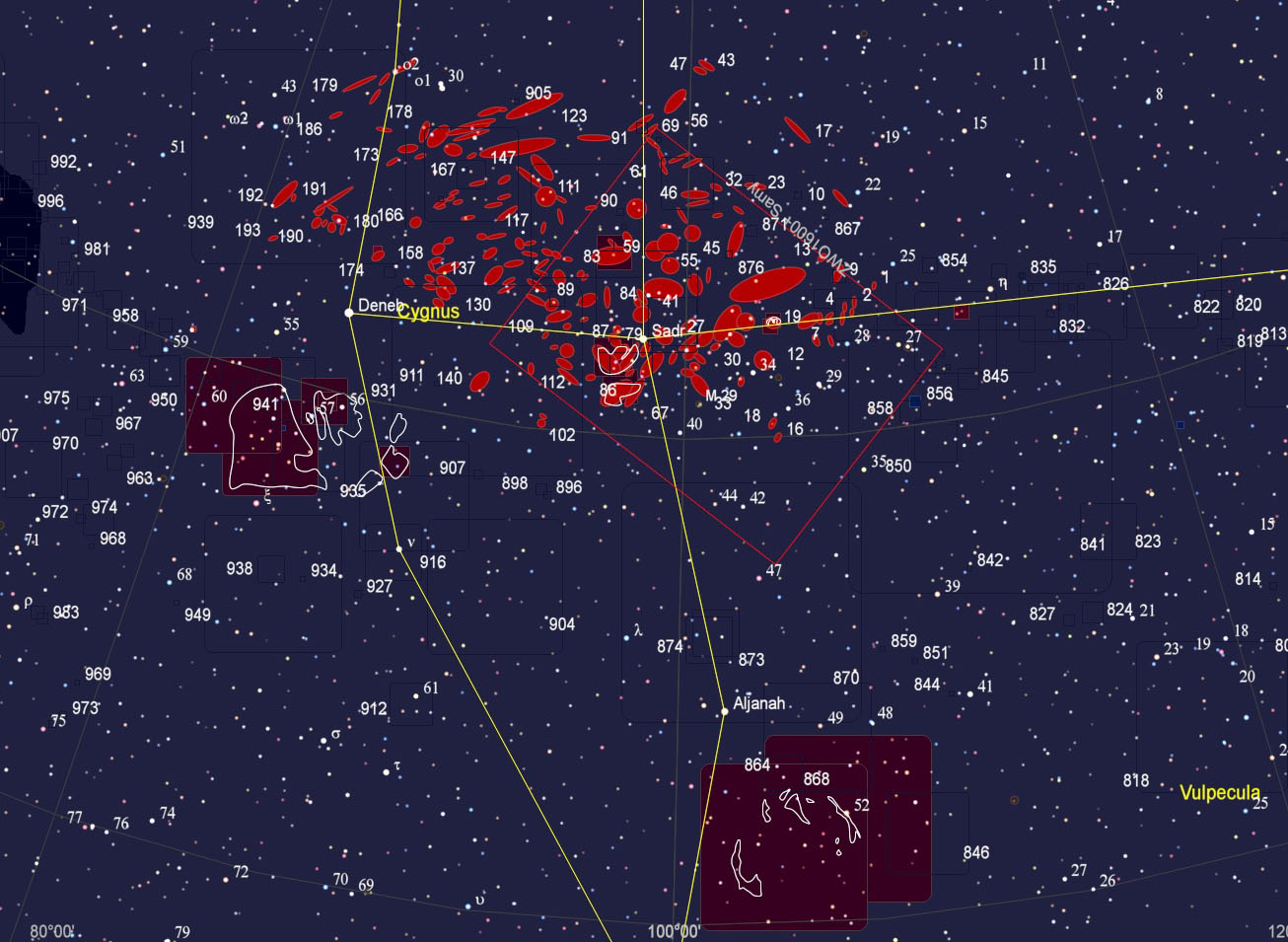
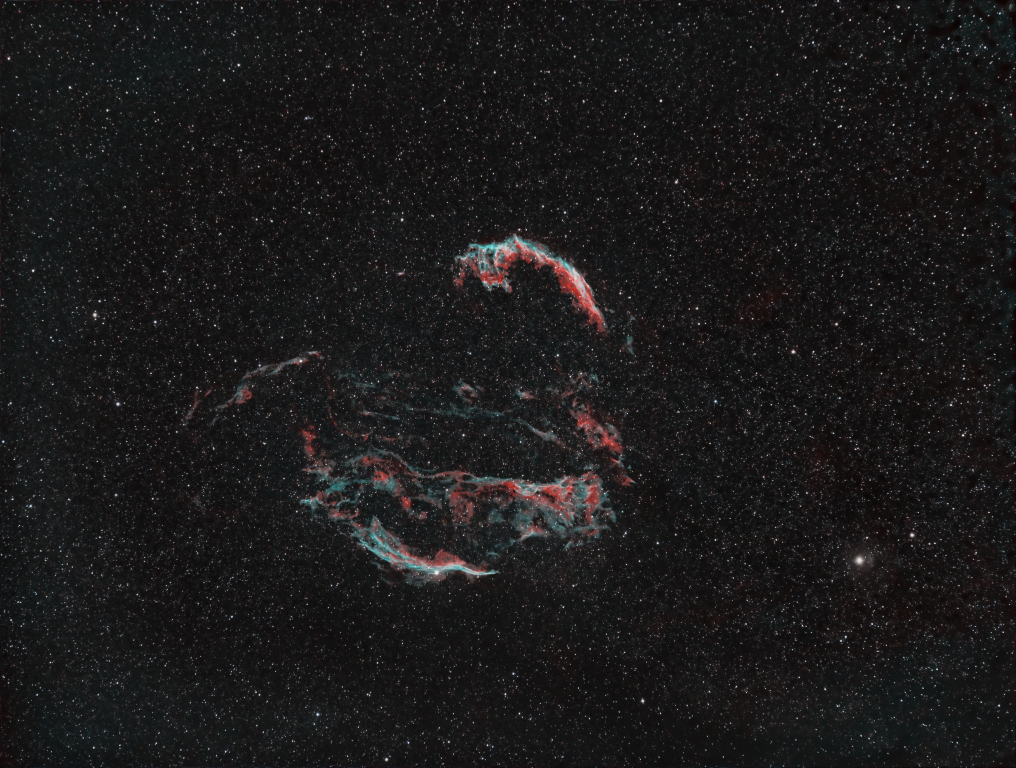
Butterfly Nebula: Situatedwithin the Orion Arm of the Milky Way is the Gamma Cygni nebula, a diffuse emission nebula surrounding the star Sadr. Either side of the dark rift which divides the image from top to bottom are two large bright areas that together form the so-called Butterfly.
NOVEMBER
M33 Triangulum Galaxy: Like it’s neighbour Andromeda, better data and processing has produced an exciting new image of M33 this year, the red areas highlight Ha-rich star-forming regions
DECEMBER
Flying Bat & Giant Squid Nebula*: This very faint OIII emission nebula Ou4 required an imaging time of 40-hours. For obvious reasons Ou4 has become known as the Giant Squid Nebula which, moreover, lies within the much larger SH2-129 HII emission region or the Flying Bat Nebula.
Preceding the arrival of what is for many astronomers the highlight of the year, the Orion constellation and all it’s objects, is the appearance of the majestic Pleiades open star cluster (Messier 45) in the constellation of Taurus. The so-called Seven Sisters consists of hot blue luminous stars that formed during the past 100 million years, which are expected to last another 250 million years and can be easily observed with the naked eye even here at Fairvale Observatory (Bortle 5/6).
I have imaged this exciting star cluster before but with astrophotography and especially iconic objects such as the Pleiades, one is always drawn back for another try. Now armed with Chroma filters and a growing list of PixInsight skills acquired since last imaged late in 2018, I wanted to tease out more details of the fine wispy dust cloud through which the Sisters are passing and forms the signature of all good Pleiades’ images. Furthermore, with longer exposures and total integration time greater than before, maybe I could also capture something of the abundant interstellar dust that is present across the wider background?
I am therefore very pleased that the final image (top of the page + cropped version above) which has more than achieved these objectives and marks a significant improvement on my previous attempts – it’s always worth trying that little bit more.
IMAGING DETAILS
Object
M45 The Pleiades AKA Seven Sisters
Constellation
Taurus
Distance
444 light-years
Size
110’
Apparent Magnitude
+1.6
Scope
William Optics GT81 + Focal Reducer FL 382mm f4.72
Mount
SW AZ-EQ6 GT + EQASCOM computer control
Guiding
William Optics 50mm guide scope
+ Starlight Xpress Lodestar X2 guide camera & PHD2 control
Camera
ZWO1600MM-Cool (mono) CMOS sensor
FOV 2.65o x 2.0o Resolution 2.05”/pix Max. image size 4,656 x 3,520 pix
EFW
ZWO x8 EFW & Chroma 31mm LRGB filters
Capture & Processing
Astro Photography Tool + Deep Sky Stacker PixInsight v 1.8.8-11, Photoshop CS3, Topaz AI Denoise
Image Location & Orientation
Centre: RA 03:47:03 DEC 24:03:08 Top = North Right = West
Exposures
12 x 300 sec LRGB Total time: 4 hours
@ 139 Gain 21 Offset @ -20oC
Calibration
5 x 300 sec Darks 15 x Flats & Dark Flats LRGB @ ADU 25,000
Location & Darkness
Fairvale Observatory – Redhill – Surrey – UK Typically Bortle 5
After successfully imaging M31 the Andromeda galaxy at new moon in early October, I was lucky that the next moon cycle in early November also provided good conditions and it seemed appropriate to just shift attention to Andromeda’s closest neighbour, which at this time of the year occupies a favourable part of the eastern sky in the early evening. Only 15o from M31, M33 AKA the Triangulum Galaxy is the third-largest member of the Local Group of galaxies after Andromeda and the Milky Way. Although very faint, in very good dark night sky conditions M33 can apparently be viewed with the naked eye. Along with our own Milky Way, this group travels together in the universe, as they are gravitationally bound.
Andromeda is eight times brighter and nearly four times larger than Triangulum, which for various reasons I have previously found difficult to image, despite its relative proximity to us. On this occasion I was therefore very pleased to obtain a good data set over three nights that included 3-hours of 10-minute Ha exposures. The result is definitely my best image yet of this tricky but attractive target, which in particular highlights the numerous red star-forming regions that abound throughout the galaxy’s arms. I’ll almost certainly be back again another day but for now I am at last satisfied with the result.
IMAGING DETAILS
Object
M33 Triangulum Galaxy
Constellation
Triangulum
Distance
Approx. 2.7 million light-years
Size
71’ x 42’ ~ 60,000 light-years
Apparent Magnitude
+5.72
Scope
William Optics GT81 + Focal Reducer FL 382mm f4.72
Mount
SW AZ-EQ6 GT + EQASCOM computer control
Guiding
William Optics 50mm guide scope
+ Starlight Xpress Lodestar X2 guide camera & PHD2 control
Camera
ZWO1600MM-Cool (mono) CMOS sensor
FOV 2.65o x 2.0o Resolution 2.05”/pix Max. image size 4,656 x 3,520 pix
EFW
ZWO x8 EFW & 31mm LRGB + 3nm Ha Chroma filters
Capture & Processing
Astro Photography Tool, Deep Sky Stacker, PixInsight v 1.8.8-9, Photoshop CS3, Topaz Ai Denosie
Image Location & Orientation
Centre: RA 01:33:53.6 DEC 30:39:18.9 Top = North Right = West
Exposures
15 x 300 sec LRGB + 18 x 600 sec Ha Total time: 8 hours
@ 139 Gain 21 Offset @ -20oC
Calibration
5 x 300 sec & 5 x 600 sec Darks + 15 x LRGBHa Flats & Dark Flats @ ADU 25,000
Location & Darkness
Fairvale Observatory – Redhill – Surrey – UK Typically Bortle 5
A year after taking up astronomy as a hobby, at the behest of my elder daughter I started this blog in 2014. Describing the objective and content of the blog I adopted the strapline “A personal discovery of the Universe through astronomy and astrophotography”, which could also be described as a journey. In reality it’s been an adventure consisting of two threads: the knowledge and related science of astronomy and the challenge of astrophotography. As we on Earth pass through space whilst at the same time rotating 360o each year around the sun our view of the night sky changes month-by-month, inevitably returning to the same perspective each 365-days. Against this background I therefore often return to certain objects every few years hopefully armed with new astrophotography skills in pursuit of an even better image.
Following such a path I’ve already imaged M31 the Andromeda Galaxy on four separate occasions since 2015, each time enthralled by the majesty and beauty of this barred spiral galaxy. Notwithstanding, it was clear to me that there was significant scope for improvement of the previous images with both better data and processing. Since the last attempt in October 2019 a myriad of positive developments have taken place of which perhaps three stand out: multi-star guiding, the purchase of Chroma filters and in particular the use of PixInsight image for processing – all have been game changers, so much so that reprocessing that image now also looks good – see below.
However, whilst the said progress has already been transformative to my astrophotography during the past year, inevitabky it is imaging conditions that play the most critical role, especially in England. Fortunately during this autumn in both October and November for once the new moon coincided with clear skies, providing no less than six nights over which I was able to obtain almost 12-hours of some of perhaps my best ever data. Based on this I’ve been careful to apply my best new processing skills and am thankful that the final HaLRGB image has turned out very well. In particular, the dust lanes stand out against the bright core and surrounding blue intergalactic dust and gases, which are themselves punctuated by the bright red regions rich in Ha light.
In the blogs that accompanied previous Andromeda images I’ve often referred to the galaxy as a neighbour of the Milky Way but really we are part of the same family known as the Local Group. Some 10-million light years in diameter, more than 30 galaxies form two collections around the two largest galaxies of Andromeda and the Milky Way. Gravitational forces play the central role in controlling this group, especially Andromeda which is itself moving towards the Milky Way at about 70 miles per second and is destined to merge in about +/- 4 billion years; recent studies indicate that an outer halo of stars extending up to 2-billion light years from Andromeda may be in the influence of the galaxy, suggesting this event may already have started!
Thereby my personal journey of astrophotography is set to continue somewhat in parallel with that of Andromeda, which will I am sure lead to further hopefully even better images of this exciting deep sky object that is perfect for my equipment – after all we’re getting closer at the rate of 2,207,520,000 miles each year!
IMAGING DETAILS
Object
M31 the Andromeda Galaxy.
Constellation
Andromeda
Distance
2.5 million light-years
Size
3.2o x 1o or 220,000 light-years
Apparent Magnitude
+3.44
Scope
William Optics GT81 + Focal Reducer FL 382mm f4.72
Mount
SW AZ-EQ6 GT + EQASCOM computer control & Cartes du Ciel
Guiding
William Optics 50mm guide scope
+ Starlight Xpress Lodestar X2 guide camera & PHD2 guiding
Camera
ZWO1600M M-Cool mono CMOS sensor
FOV 2.65o x 2.0o Resolution 2.05”/pix Max. image size 4,656 x 3,520 pix