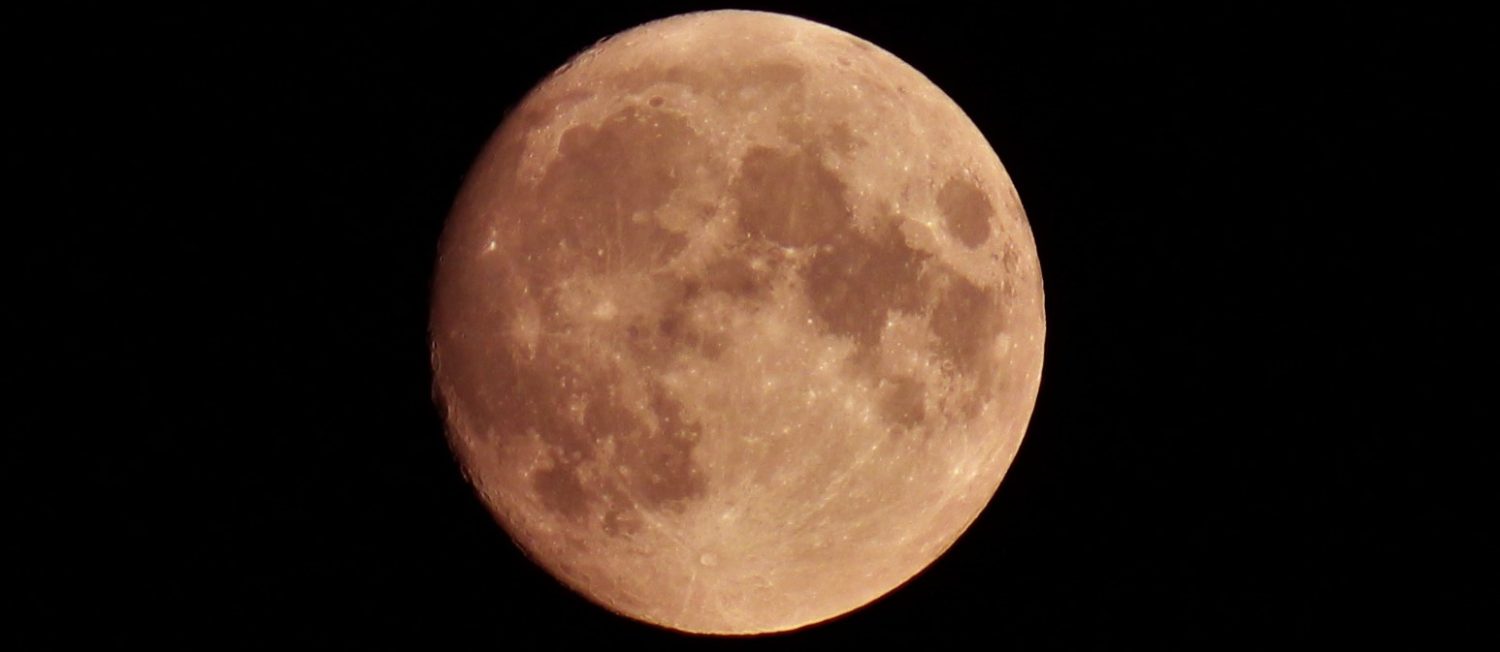
By Jove

As a visual and photographic spectacle, in my opinion Jupiter comes a close second to Saturn among the planets.  The so-called ‘King of the Planets’, Jupiter is more than twice as massive as all the others combined. Notwithstanding its size, Jupiter has the shortest ‘day’ of any planet, rotating fully in just 9-hours and 50 minutes – as a result creating a significant equatorial bulge that measures 88,760 miles in diameter and 83,082 miles from pole-to-pole.  However, as a gas giant the planet does not rotate en masse, with the outer regions moving slower than the equatorial region leading to a series of distinctive belts and zones, most notable of which is the Great Red Spot – a massive storm on the edge of the South Equatorial Belt.

Partly because of its vast size and resulting gravitational field, Jupiter is thought to have played a dominant role in shaping the present Solar System.  The planet we see today is not alone, with 67 moons so far identified, the four largest discovered by Galileo 400 years ago being easily visible from Earth.  In order of distance from Jupiter the moons of Io, Europa, Ganymede and Callisto are extremely diverse in nature – ranging from the highly volcanic Io to the frozen world of Europa, whilst Ganymede and Callisto may have sub-surface oceans and are bigger than the planet Mercury.


Despite being by far the largest planet in the Solar System and the fourth brightest object after the Sun, Moon and Venus, my attempts to image Jupiter and its Jovian neighbours have so far met with only mixed success.

Most people’s first view of Jupiter is likely to be through binoculars or a basic telescope, which will   show the very bright planet accompanied by a number of its Gallilean moons, depending on their orbital position i.e. when located behind the planet they will, of course, not be visible.  Having viewed Jupiter a few times like this, my first attempt to image the planet and its moons was just such a view simply using the William Optics 81mm refractor, a x2 Barlow and my Canon 700D DSLR.  Compared to Jupiter the moons are not as bright and to capture their presence it is necessary to boost either the ISO or exposure time, which then overexposes the bright planet resulting in loss of detail – in this case the distinctive coloured gas bands. Conversely, with a lower ISO or exposure this detail once again becomes apparent but some or all of the moons are then lost in the image.  The way round is to combine two sets of images taken at different camera settings, thus obtaining the best of both worlds, literally.  For the moment however this remains work in progress.
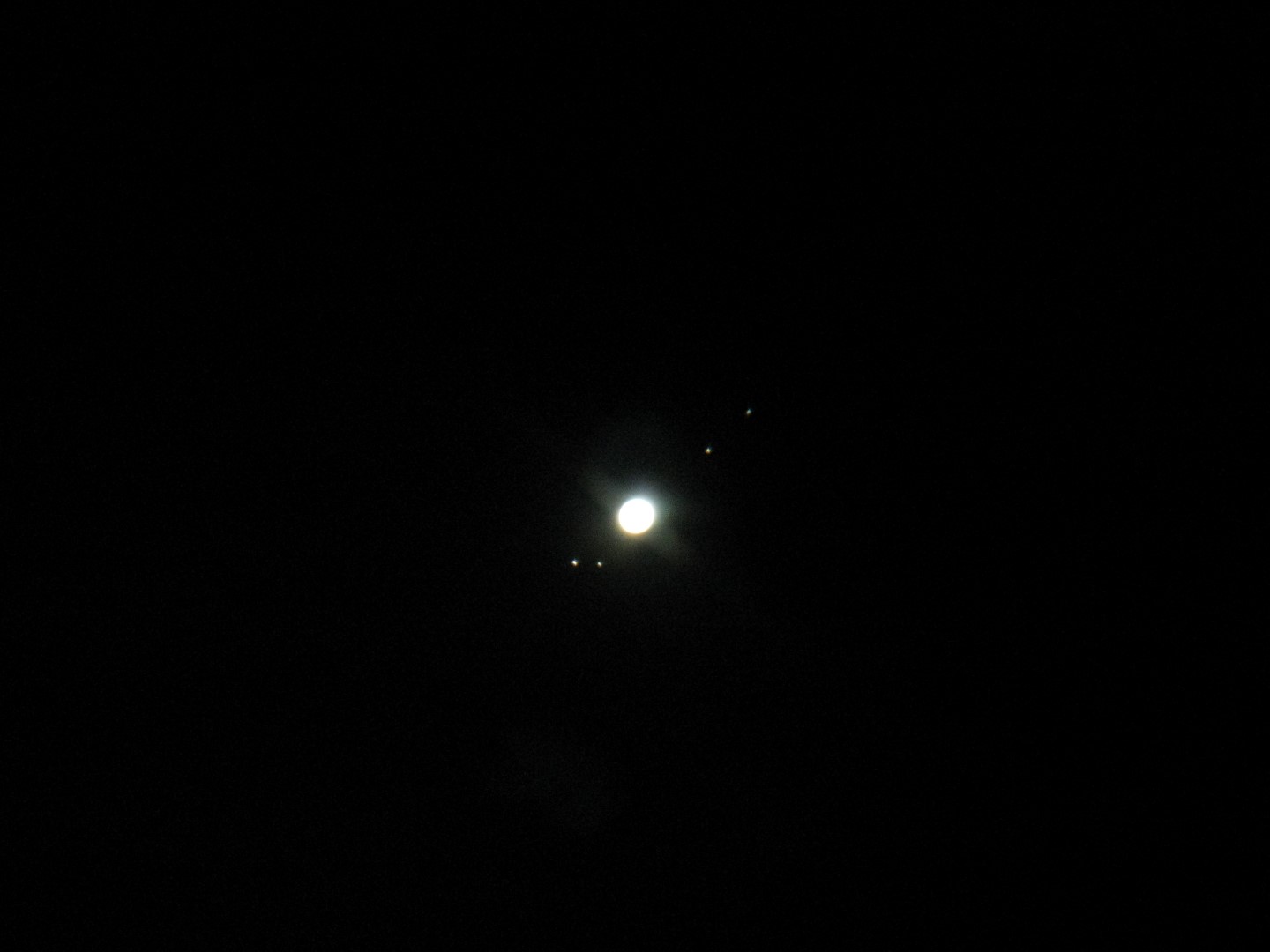
Jupiter  - overexposed but  shows all four Gallilean moons.

January 2014, Jupiter – overexposed but shows all four Gallilean moons | 1 sec @ ISO 400
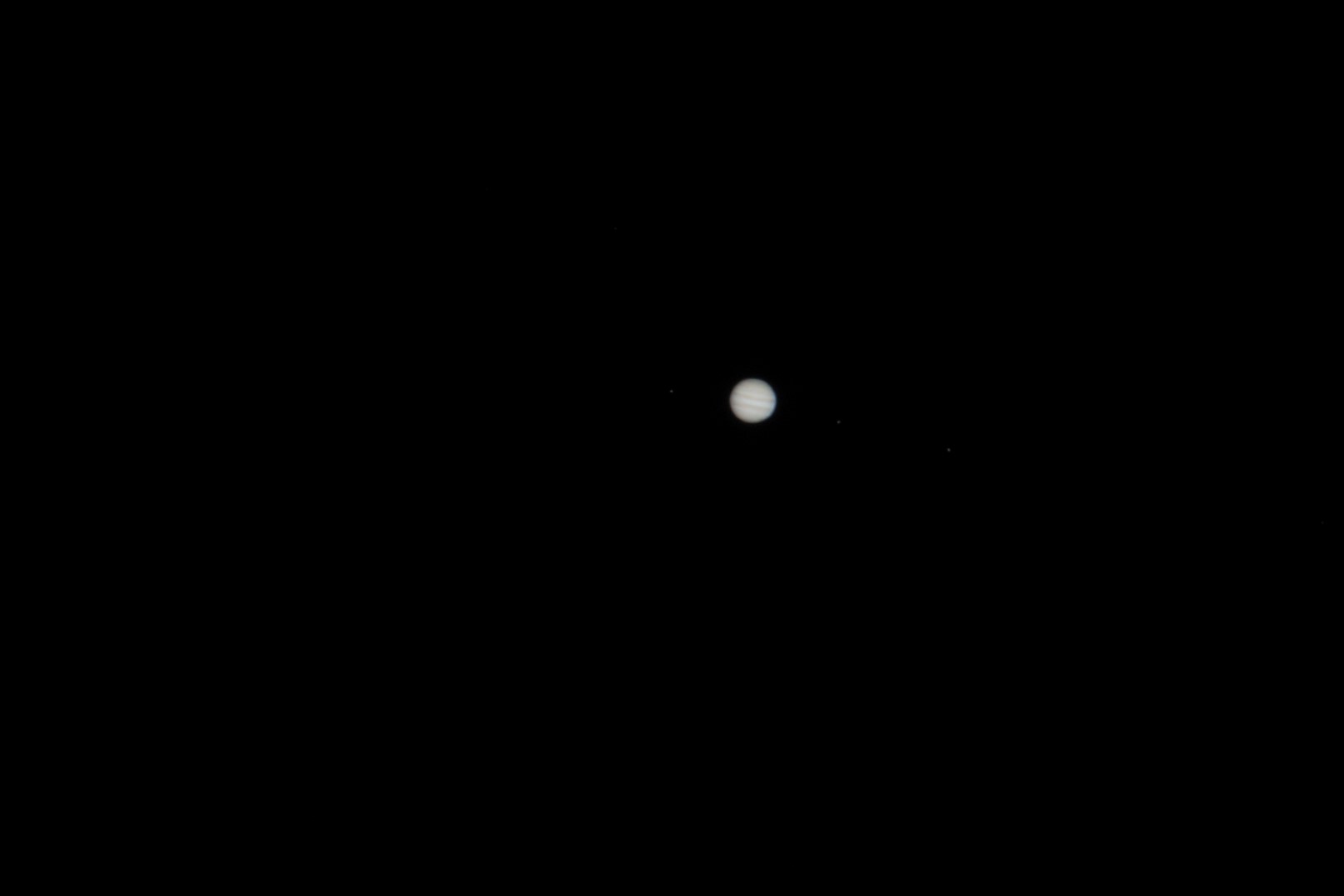
 

upiter - lower exposure shows the gas belts but the moons, though there, are now very difficult to see.  1/3rd sec @ ISO 800

Jupiter – lower exposure shows the gas belts but the moons, though there, are now very difficult to see. 1/3rd sec @ ISO 800

Personally I like the wider view of Jupiter and its moons but inevitably the holy grail has to be a close-up image showing details of the planet’s characteristic gas belts, which requires the use of a CCD video, in my case a ZWO ASI 120MC camera.  Having mostly concentrated on DSO photography to-date using a DSLR, my use of the ZWO camera is limited and with mixed success.  Using this camera and the Skywatcher 150PL reflector telescope I have previously managed images of Saturn, Mars and the Moon but this time I used the William Optics refractor instead.

CCD imaging is a very different technique to DSLR and it’s fair to say that I still have much to learn. Notwithstanding, using Registax for processing I obtained some reasonable first-time Jupiter images but will need more practice to improve the detail; the quality might also be improved using WinJUPOS software during processing, which applies a de-rotational programme to the fast moving planet thus reducing blur – however, I have yet to understand let alone master this software.  Also, whilst the quality of the William Optics telescope is far superior to the Skywatcher 150PL, it is obvious that its relatively short focal length is not really adequate for good planetary imaging.
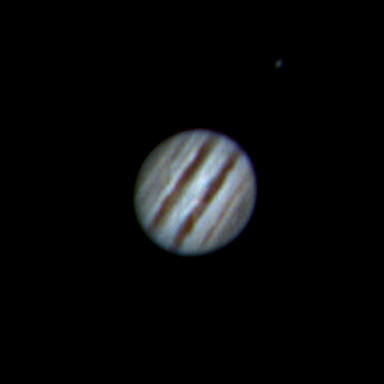
21st February 2015. Jupiter up close WO 81GT81 | ZWO 120 MC

21st February 2015. Jupiter up close
WO 81GT81 | ZWO 120 MC

So far this year Jupiter had already provided a number of different opportunities for imaging.  Between February and April the planet moved across the southern sky in all its glory, whilst more recently it moved into close conjunction with Venus at the end of June and there’s more to come.

On 26th August from our vantage point on the Earth, Jupiter will appear very close to the Sun in the sky as it passes around the far side of the solar system from the Earth.  At closest approach, Jupiter and the Sun will appear at a separation of only 0°52′, making Jupiter totally unobservable for several weeks while it is lost in the Sun’s glare.  At around the same time, Jupiter will also be at its most distant from the Earth – receding to a distance of 6.40 AU – since the two planets will lie on opposite sides of the solar system.  Over following weeks and months, Jupiter will re-emerge to the west of the Sun, gradually becoming visible for ever-longer periods in the pre-dawn sky. After around six months, it will reach opposition, when it will be visible for virtually the whole night, by which time I have hopefully mastered some new techniques for imaging this Jovian King of the Planets.

Canon Koppernigk’s Conjunction

This time of the year is something of a fallow period for astronomers: short nights combined by with the complete absence of astronomical darkness and fewer DSOs.  I have personally found this year more difficult than usual as since April 25th, following an operation to replace my left knee, I have been physically unable to set-up Fairvale Observatory and undertake astronomy of any sort.  Notwithstanding, once over the initial few weeks of pain, I have tried to use the extra time afforded me usefully.

download

I have been reading Arthur Koestler’s excellent book The Sleepwalkers, which charts the history of man’s understanding of the universe and astronomy.  Speaking of fallow periods, in the book I’m just past the very long period of inactivity and general superstition regarding the cosmos that occurred during the Middle Ages, which followed the more enlightened thinking of the Greeks, particularly Pythagoras; taking account of the Greek’s progress in understanding the Universe, our astronomical knowledge might have been 1,500 years more advanced today were it not for this prolonged medieval hiatus!  Fortunately Copernicus (his better known Latin name) finally initiated what has become today’s heliocentric model of the Solar System, although his seminal work On the Revolutions of the Heavenly Spheres was only published just a few hours before his death after a delay of 30-years, such was his reluctance to put forwards such thoughts at that time.

Next, I have just completed the 6-week AstroTech MOOC course organised by Edinburgh University, which covered the scientific logic behind astronomical discoveries and the technology that lies behind them.  This was my third astronomy MOOC and provided some interesting insight into telescope and imaging technology, as well as filling time during my recovery.

Finally, as my (limited) mobility has slowly started to improve, the night sky has recently provided a fascinating show of its own that did not require the observatory’s paraphernalia and, furthermore, beautifully demonstrated the principles originally outlined by Copernicus in 1543.

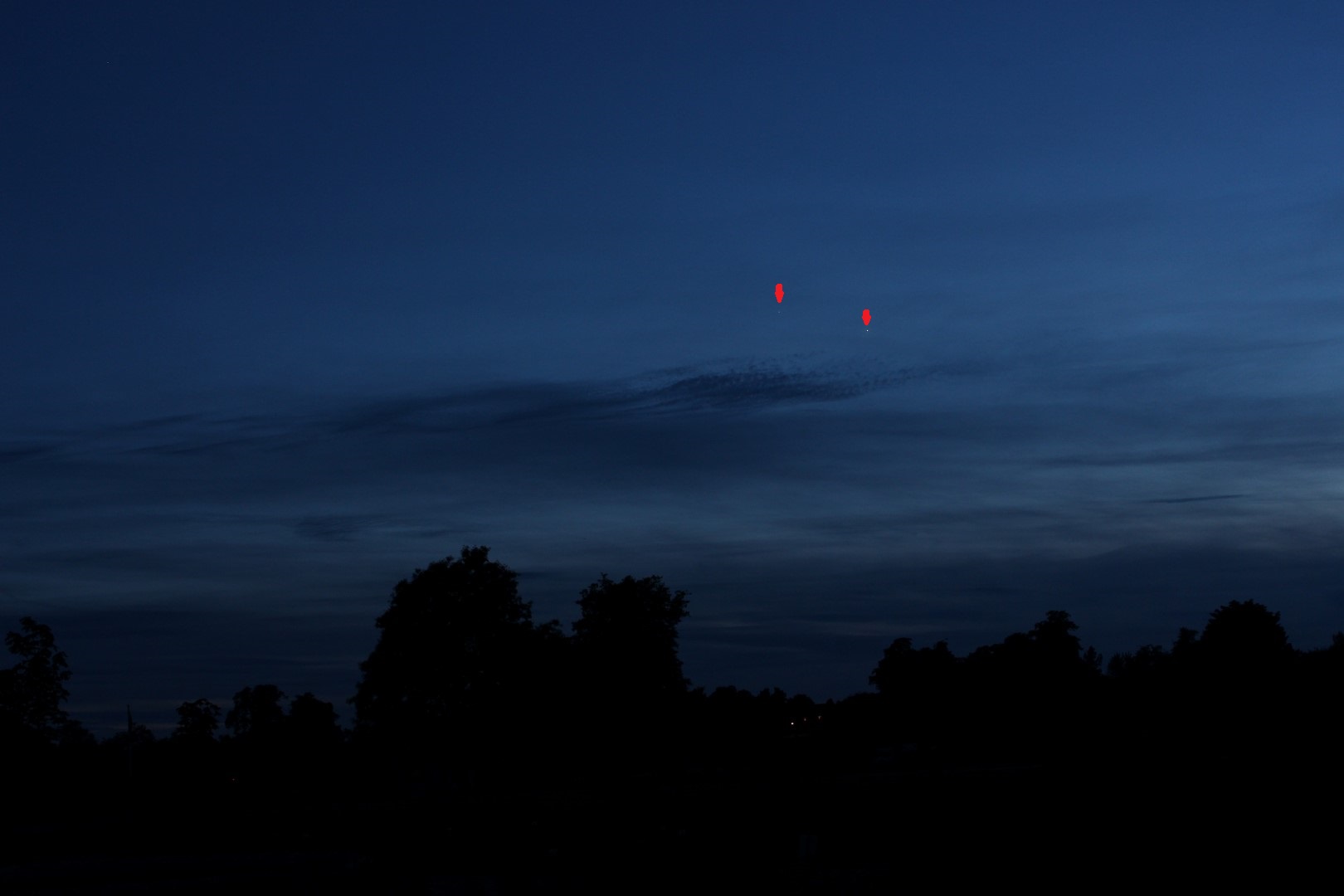
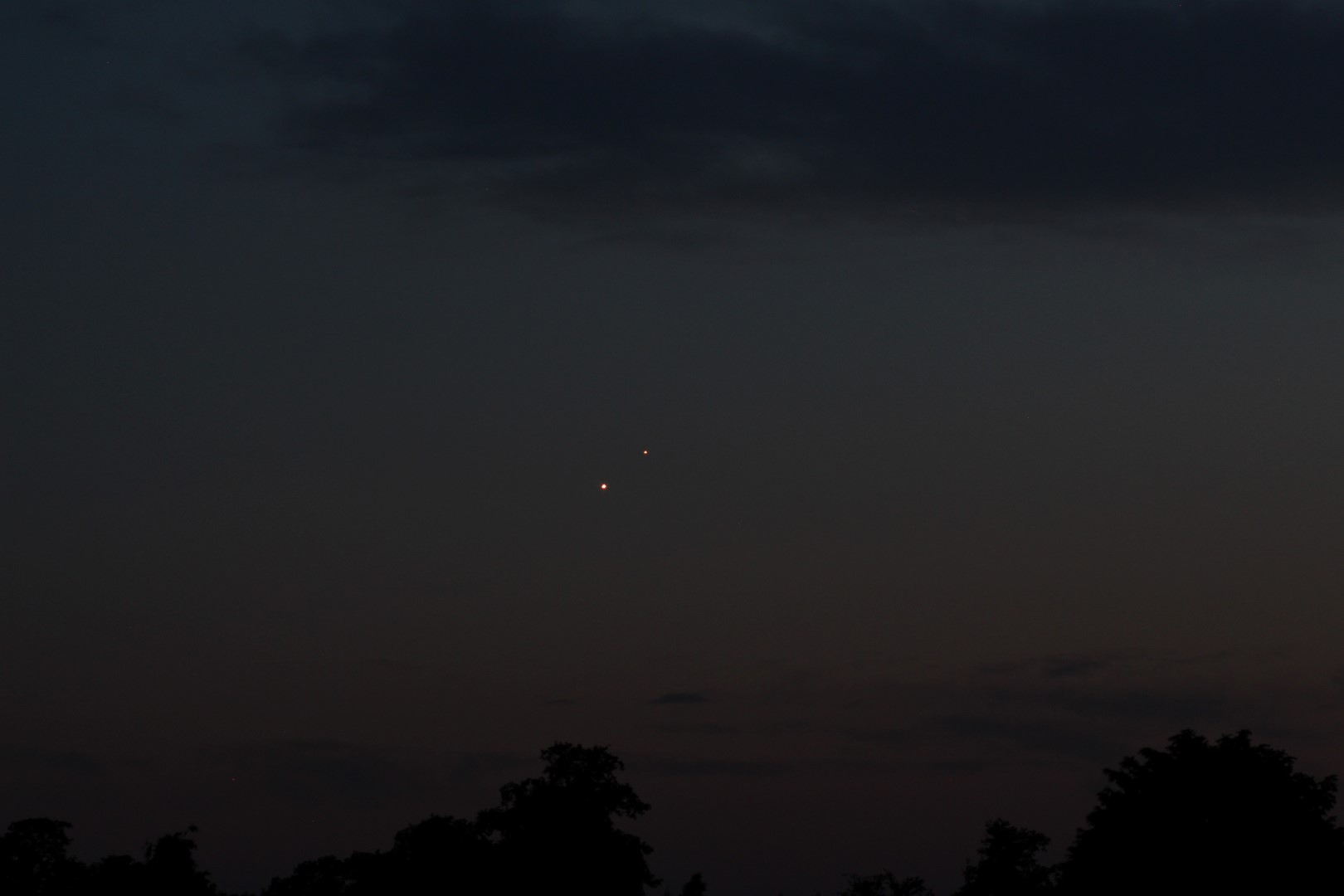
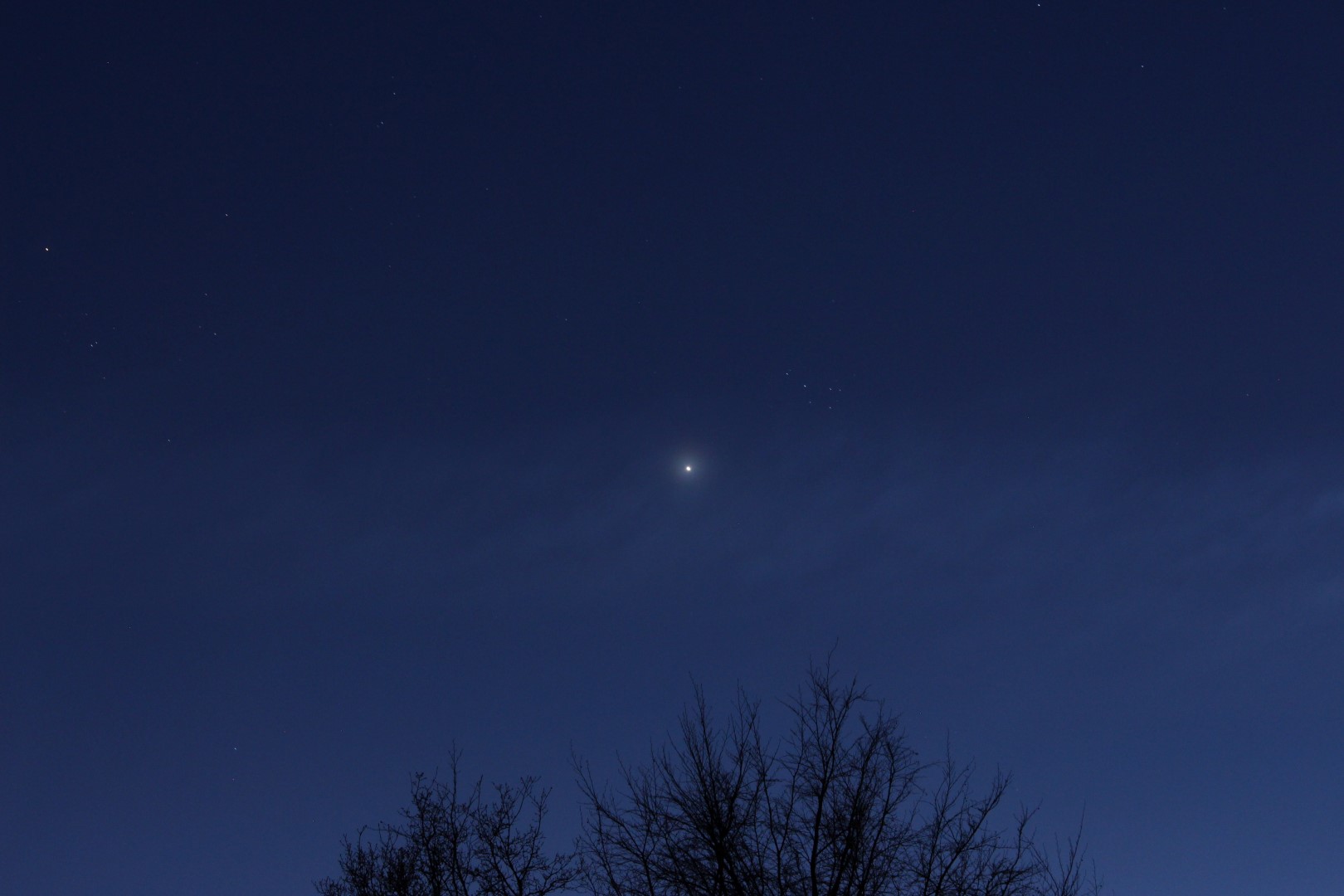
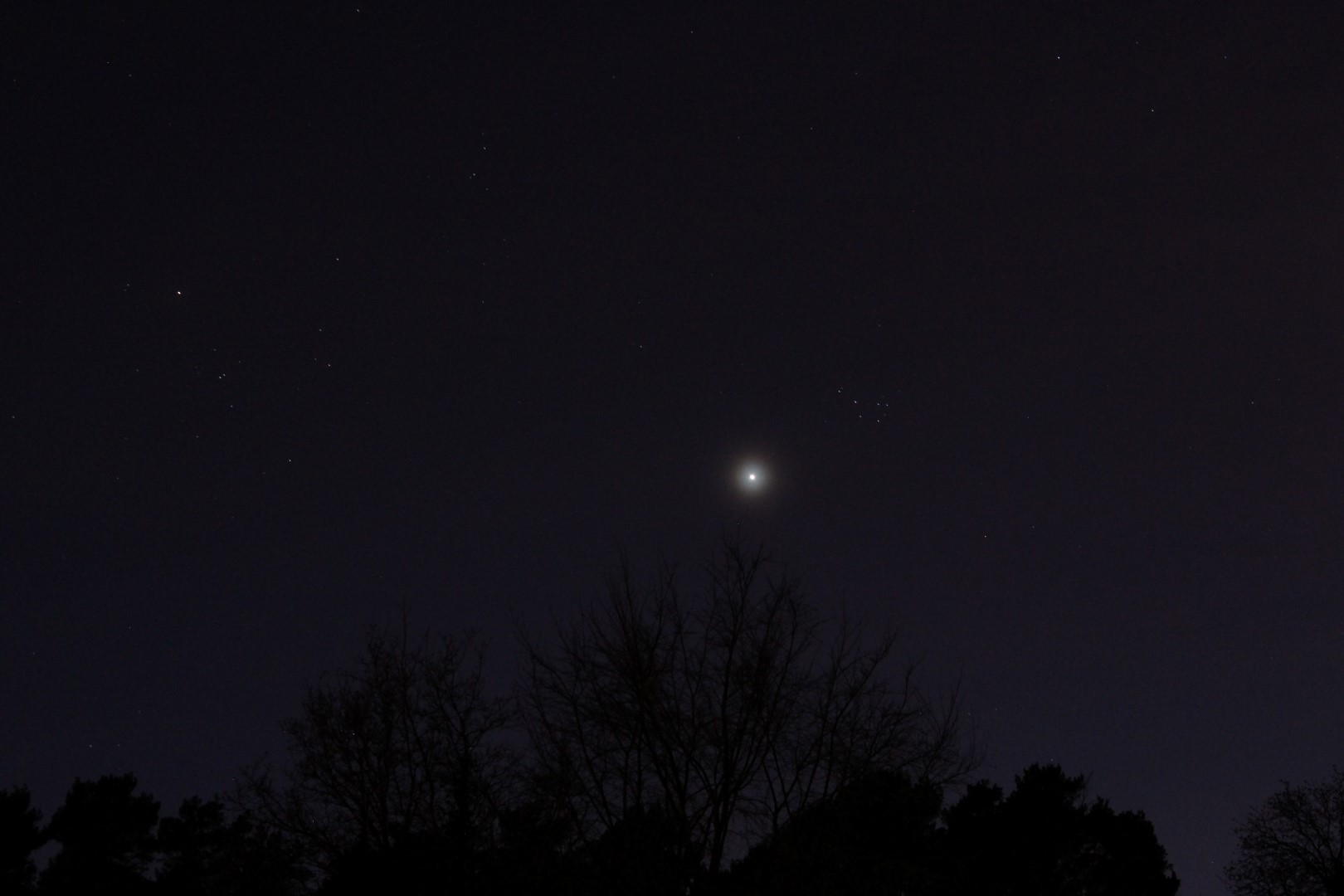
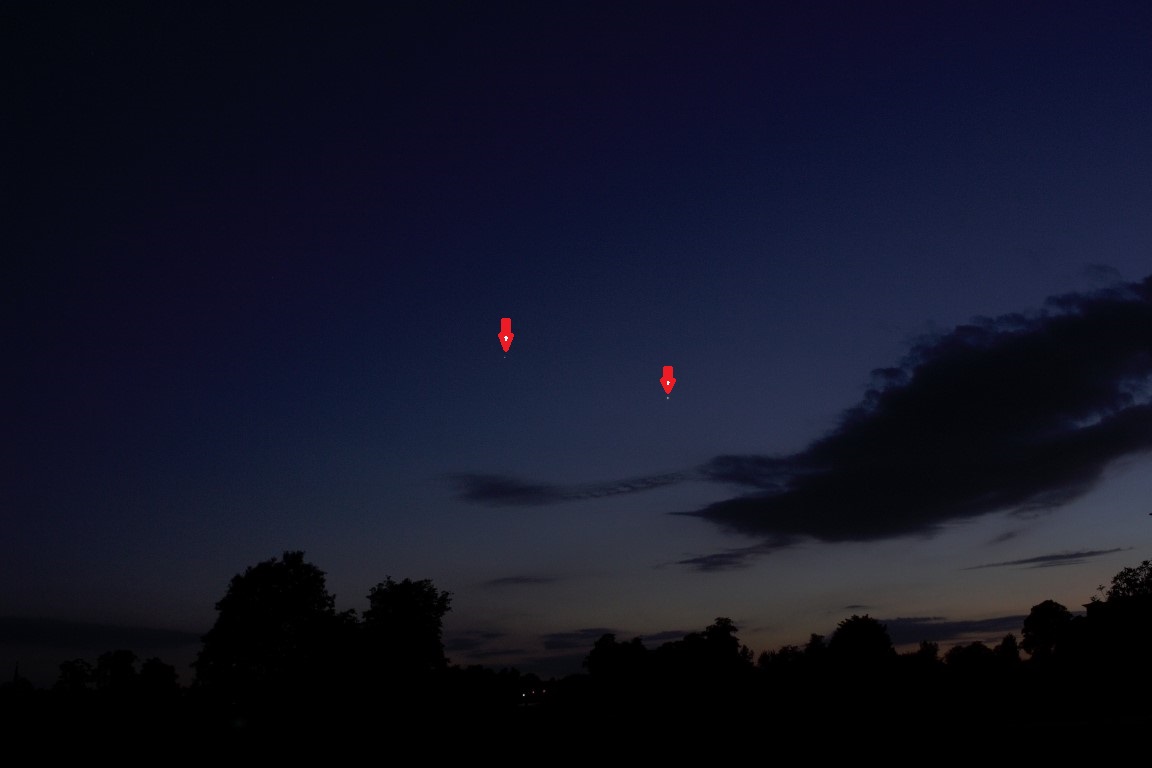
During the latter part of June Venus and Jupiter moved inexorably towards very close conjunction by the end of the month.  Reaching just under ¾ of a degree separation on 30th June and 1st July this is a rare event, which with a clear sky could be easily viewed with the naked eye.  Better still, I set out to photograph the two planet’s journey during the preceding 12 days, thus illustrating Copernicus’ revolutions around the sun of these two heavenly spheres.  Whilst any school child will today understand this process, it is a frightening thought that belief in such a mechanism could once have led to the death penalty!

Obscured from view at Fairvale Observatory as Venus was just 17 ½o above the western horizon, I had to travel to a nearby location which provided a clearer westerly viewpoint of both planets at their low attitude.  In order to obtain a series of comparable images and thus show the real spatial changes occurring up to conjunction, all pictures were taken from exactly the same location.  With my Canon EOS 700D fixed on a photographic tripod I shot a series of images over a 50 minute period using either the 18mm or 55mm telephoto settings, playing with ISO and speed settings as darkness progressed; this was roughly the time the two planets took to disappear below the Earth’s horizon after achieving Civil Darkness.

The resulting photographs show Jupiter apparently advancing on Venus before at conjunction ‘passing’ close by on the aforementioned days.  Whilst Jupiter is the third brightest object in the night sky (after the Moon & Venus) and nearly 12 times the size of Venus or 1,400 times by volume, the planet looks very small by comparison to Venus.  This of course is the effect of perspective, with Jupiter currently some 565 million miles distance from Earth, whereas Venus is only 48 million miles; furthermore although at -1.8 the apparent magnitude (brightness) of Jupiter is high, at -4.4 Venus is much brighter.

18th June 2015: Jupiter left, Venus right - trees on the horizon provide a reference scale as the planets move towards each other during the month in subsequent photographs

18th June 2015: Jupiter left, Venus right – trees on the horizon provide a reference scale as the planets move towards each other during the month in subsequent photographs.

25th June 2015 + 7-days

25th June 2015 + 7-days

30th June 2015 + 5 days.  Nothing - dark thunder clouds completely obscure the western sky during conjunction!!!

30th June 2015 + 5 days. Nothing – dark thunder clouds completely obscure the western sky during conjunction!!!

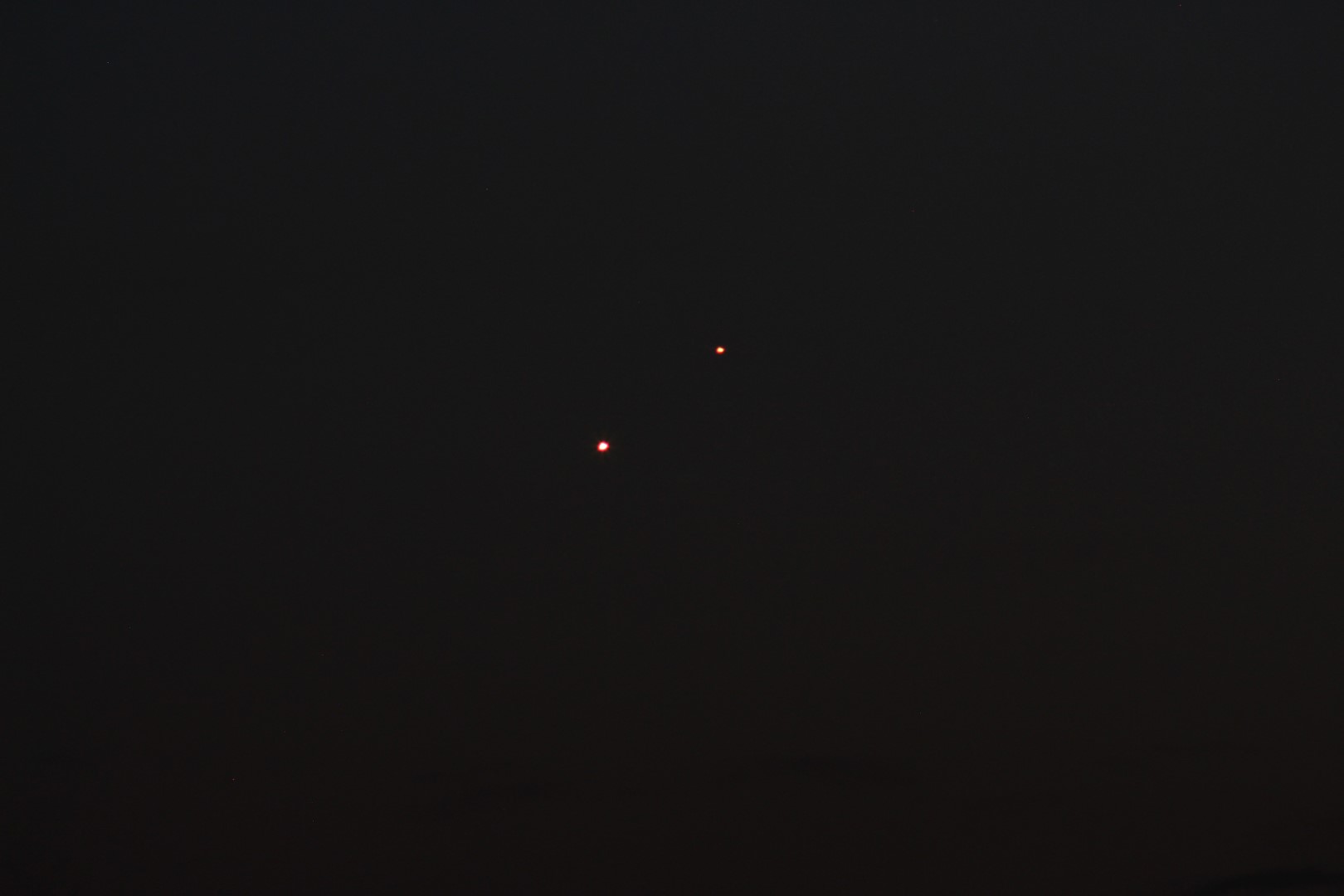
1st July 2015. Bingo = conjunction; though one day later Jupiter has now moved to the right of Venus.

1st July 2015. Bingo = conjunction; though one day later Jupiter has now moved to the right of Venus.

1st July 2015. Close-up of the conjunction using 55mm telephoto setting and ISO 400 - Venus now left & Jupiter right.

1st July 2015. Conjunction close-up using 55mm telephoto setting and ISO 400 – Venus now left & Jupiter right.

Unfortunately I am expecting it will be at least another month before I have recovered sufficiently to consider setting-up Fairvale Observatory again, by which time Astronomical Darkness will thankfully be slowly returning.  In the meantime I’m looking forwards to the next section of The Sleepwalkers which covers Kepler and Galileo and hopefully exciting developments from the New Horizon Pluto fly-by and more from the Rosetta Mission and the re-awakening of its Philea lander.  Given clear skies there should also still be plenty to see without the observatory: The Perseids, Saturn and of course at the centre of our Solar System as determined by Copernicus, the Sun, which will be at aphelion on 6th July – though you wouldn’t think so judging by the high temperatures currently prevailing in the UK and Europe!


Spring Skies

It’s three weeks since the Spring Equinox and two weeks since moving to British Summer Time (BST or daylight saving, GMT+1 hour), the result is that the night sky starts much later in the evening and is rapidly decreasing in length; it is just about six weeks before Astronomical Darkness completely ceases and will not come back until the end of July.  In addition, through a combination of European pollution and fine sand from the Sahara drifting over South East England this week, otherwise clear skies were badly obscured by the resulting haze.  As a result, since shortly before the full Moon on April 4th astronomy has not been possible – until last night.

The march of time and annual movements of the Solar System inevitably lead to a significant loss of quantity and quality of darkness at this time of the year.

The march of time and annual movements of the Solar System inevitably lead to a significant loss of quantity and quality of darkness at this time of the year.

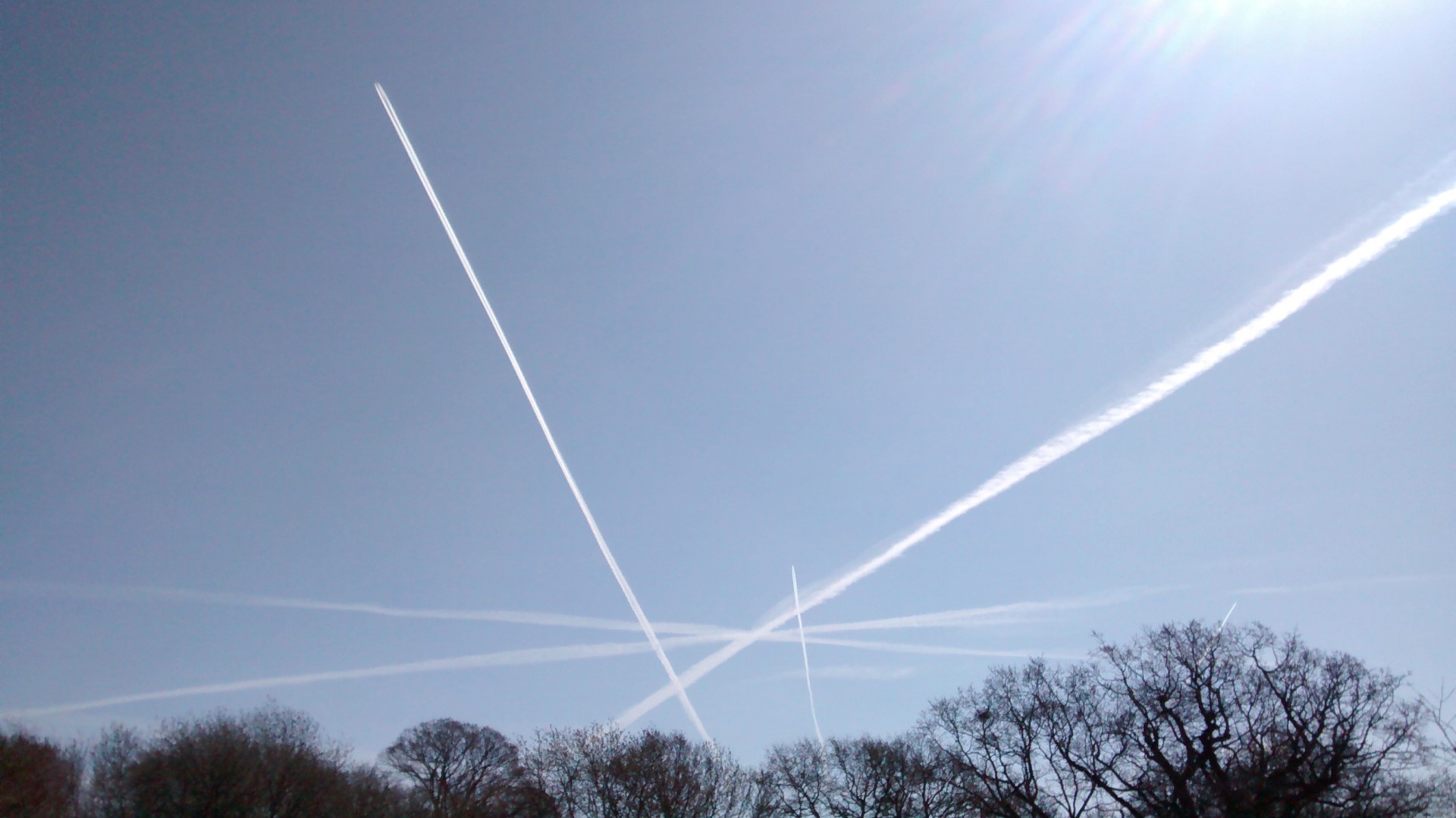
Taken this morning, the contrails over Fairvale Observatory make a striking picture but, together with other pollution are having a significant impact on seeing conditions here at the moment.

Taken this morning, the contrails over Fairvale Observatory make a striking picture but together with other pollution are having a significant impact on seeing conditions here at the moment.

In the early evening twilight sky for a brief period between sunset and astronomical darkness, at the moment Venus is low on the western horizon.  Last night its apparent position was also close to the Pleiades star cluster, making an attractive widefield photograph.  Furthermore, shortly before Venus moved below the horizon and the sky had nearly reached Civil Darkness, the constellation Taurus also became visible to the south west with the bull’s ‘eye’ star Alderbaran and the v-shaped Hyades star cluster clearly evident.

Venus at sunset last night.

Venus at sunset last night: the Pleiades can only just be seen at 2-o’clock to Venus with Taurus on the far left.

Twenty minutes after sunset shortly before reaching Civil Darkness, the Pleiades and Taurus constellation are now quite clear.

Twenty minutes after sunset shortly before reaching Civil Darkness, the Pleiades and Taurus constellation are now quite clear.

Such a picture is a reminder that it is important to consider photography other than telescopic based planetary and deep sky imaging, especially as viewing and imaging conditions become more limited over the forthcoming Summer period.

Two’s Company

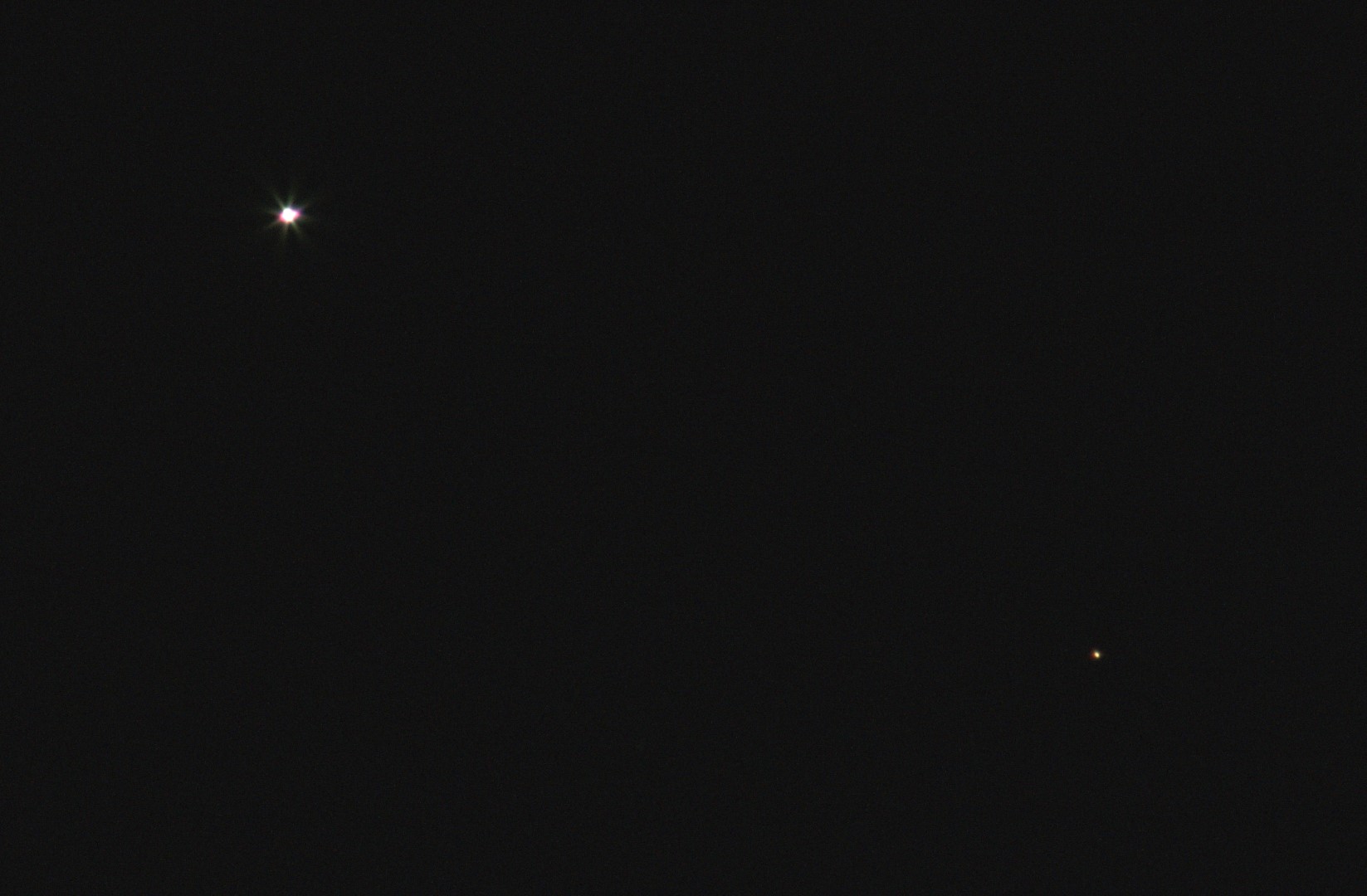
During the late 20th Century planetary relationships took on a new meaning as a metaphor for the difference between men and women, following the publication of John Gray’s book Men Are From Mars, Women Are From Venus.  Making a beautiful view at the moment, Venus is currently flirting with Mars in the early evening sky, for a very brief period low on the western horizon just after sunset. Its appulse with Mars can be easily seen with the naked eye but the view from Fairvale Observatory lasts only about 20 minutes and therefore requires good seeing conditions and quick action to get a picture.

At the weekend the view was even better, with the crescent of the New Moon adjacent to the field of view of Venus and Mars at the same time but my camera was not ready. Ideally I would like to image its apparition with a telescope but having to act quickly, last night I managed to get a quick photograph of the two planets using a DSLR camera and a 600 mm telephoto lens; the International Space Station flew by shortly afterwards but unfortunately too late get a photograph combining all three, timing is everything.

Later in the month the apparition of Venus will also include Uranus, making an even better show but will definitely not be a case of two’s company, three’s a crowd!

Picture saved with settings embedded.

Shining brilliant white, magnitude -3.9 Venus – top left & the smaller, faint magnitude +1.3, red planet of Mars – bottom right

STOP PRESS!

Another good evening sky this evening and tonight I manged to set-up the telescope to take this beautiful picture of Venus and Mars:

IMG_4731crop (Large)

Room With A View

The International Space Station is an amazing achievement and I consider the people who fly in the ISS to be very lucky.

International_Space_Station_after_undocking_of_STS-132

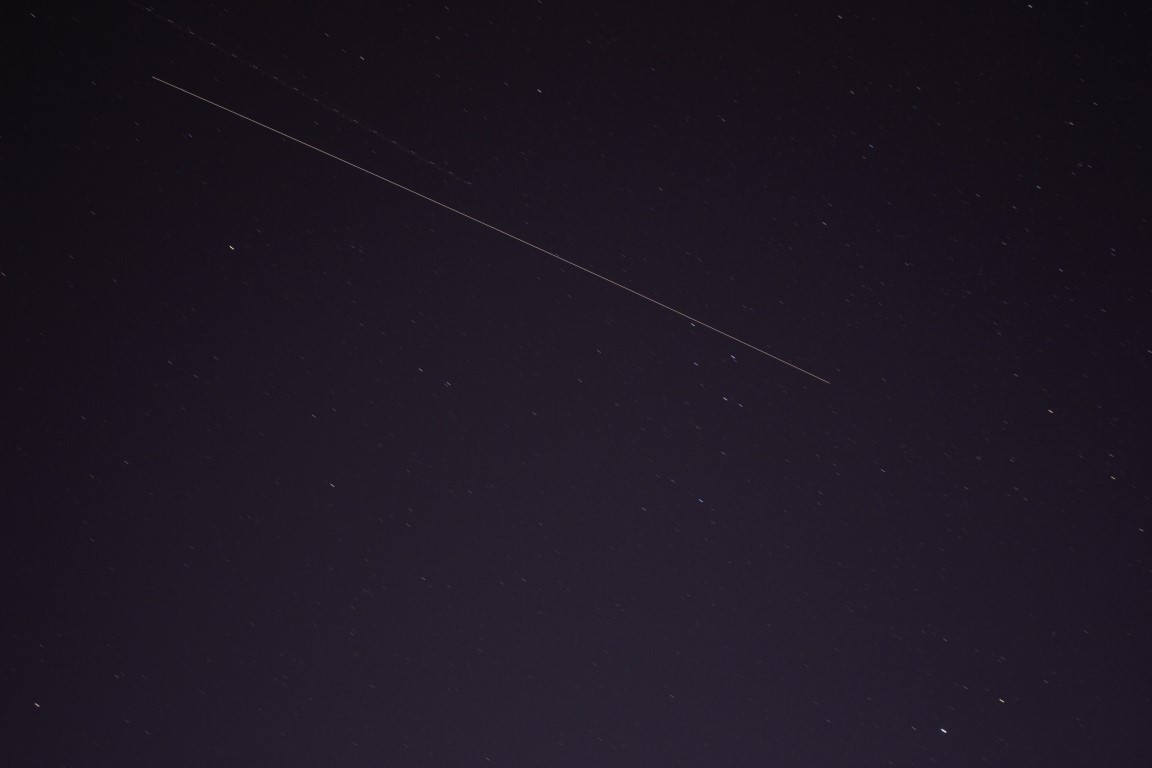
From time to time the ISS flies over Fairvale Observatory and last Christmas Eve was such a moment when, travelling at just over 17,000 mph about 250 miles above Earth, I managed to get a picture of its trail in the sky.

ISS flies over Fairvale Observatory 24th December 2015

ISS flies over Fairvale Observatory
24th December 2014

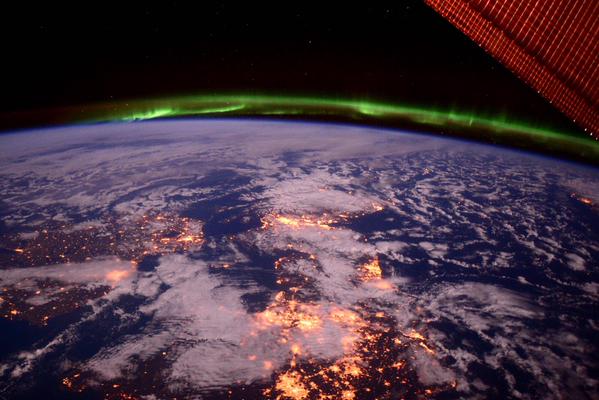
Yesterday US astronaut Terry Virts currently onboard the ISS tweeted this fantastic picture of the British Isles from his vantage point above Earth, set-off by the Aurora Borealis to the north.  Thanks Terry and good luck.

B9kPZt3IMAAumht

Orion in Perspective

Perspective:

  • The appearance of objects relative to each other, as determined by their distance from the viewer, or the effects of this distance on their appearance – The Free Dictionary.
  • Noun: The art of representing three-dimensional objects on a two-dimensional surface so as to give the right impression on their height, width, depth and position in relation to each other – Oxford English Dictionary

I have just finished an Open University MOOC (Massive Open Online Course) on Orion, which it has to be said was mixed in its content and quality.  Notwithstanding, the course provided a useful basic understanding of objects in the Universe, particularly Orion, how they related to each other and as a whole. Through my professional experience I am used to viewing and understanding objects in 3D, all the more so since computer modelling has provided a tool with which to visually illustrate such spatial shapes and relationships.  Although it is obvious that such relationships also describe the astronomical space in which we exist i.e. the Universe, and commonly describe the location of stars and other heavenly bodies by their distance, RA and DEC, I have seen very few of these objects visually modelled for common asterisms or constellations.

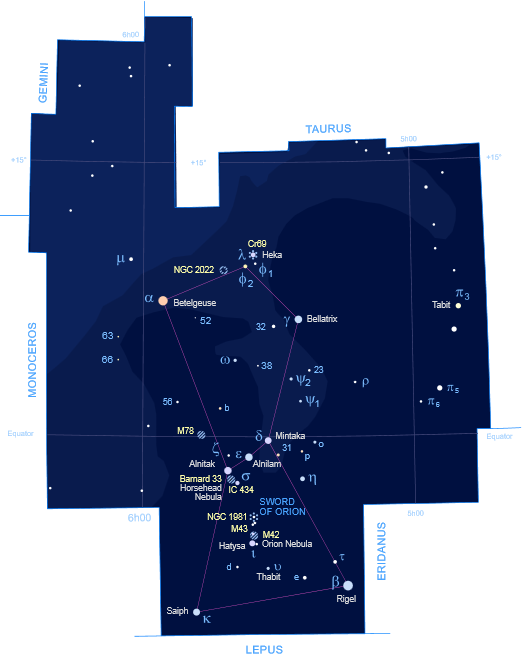
The constellation of Orion is probably the main feature of the winter night sky and it is certainly my favourite, particularly when looking at its rich content: M42 the Great Orion Nebula, the Running Man Nebula, the Horsehead and Flame Nebulae, M78, Barnard’s Loop and many more.  Sadly after more than 4-months imaging these objects for the first time, Orion is now starting to rise very early in the evening and by 11pm is well past the Meridian – it will not be long before this magnificent feature will be gone for another year, until on the very early mornings of next October it will reappear again, can’t wait!

orion

With my new found interest in astroimaging I have almost exclusively used a DSLR camera and focused my attention on DSO features, using a telescope and GoTo mount, somewhat neglecting the use of the camera for basic widefield photography.  Apart from the attraction of playing with my new toys, I was put off by the lack of a suitable camera attachment and a wide angle lens; because of the inherent crop factor associated with the cropped digital sensors employed in most DSLR cameras (except very expensive full frame cameras), the real focal length of a camera lens will be extended and hence the field-of-view narrowed – in my case with a x1.61 crop factor, a 50mm lens operates at an apparent focal length of 80mm!  However, using the top off an old camera tripod I recently I managed to jerry rig the camera onto the GoTo mount, thus providing tracking and enabling longer exposures.  It’s only a start but there is great promise in such photography, as seen on this excellent website, and I intend to pursue more of these images with a better way of attaching the camera and decent wide-angle lens when I can.

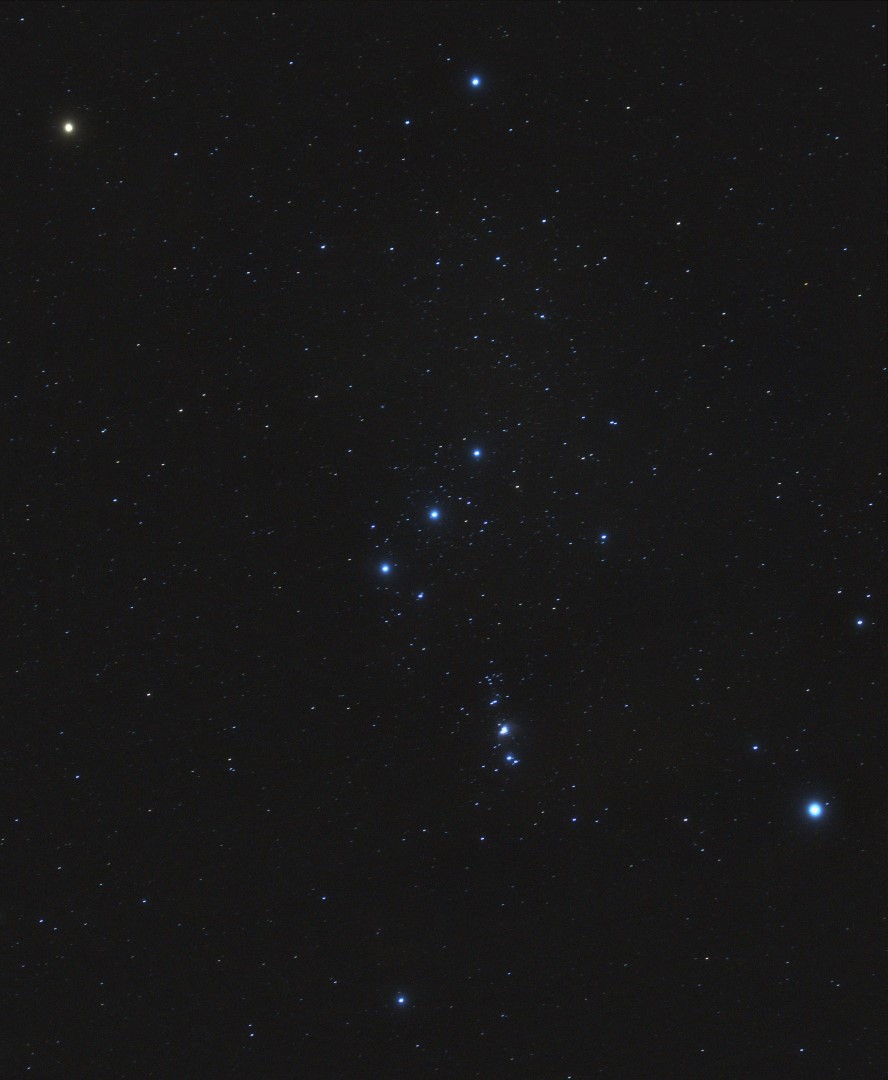
As a result, on Christmas Eve I obtained my first reasonable image of the whole Orion constellation, which with better exposure shows the detail, beauty and context of the numerous DSO items contained within and images previously noted.

The Orion Constellation Canon 700D | 27 x 10 secs @ ISO 1,600 & calibration | 24th December 2014

The Orion Constellation
Canon 700D & Telephoto 200 mm | 27 x 10 secs @ ISO 1,600 & calibration | 24th December 2014

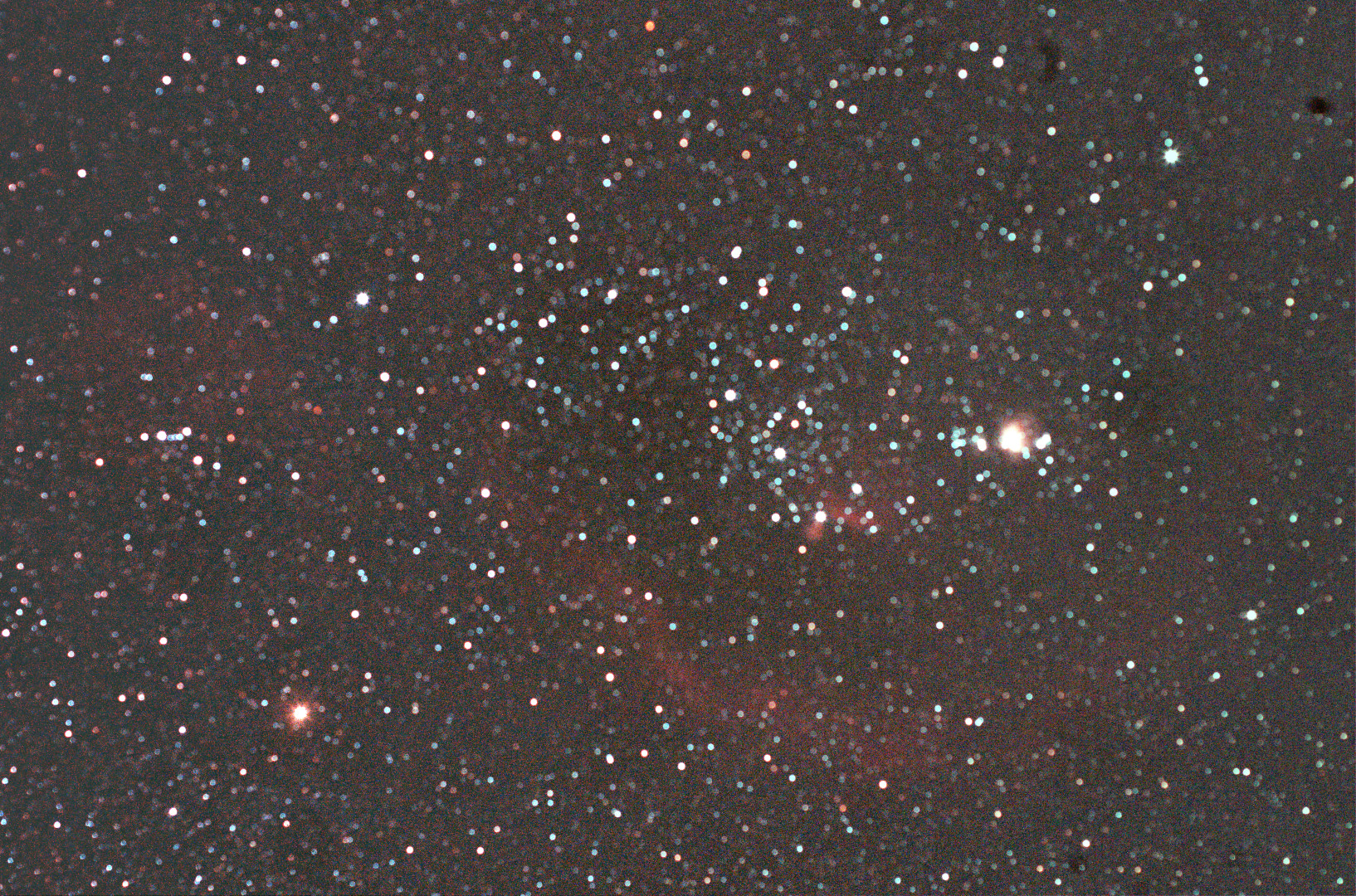
In the early days of my astroimaging about 12 months ago, I found focussing something of a challenge but, with the assistance of the wonderful Bahtinov mask and Live View on-screen computer focusing, I thought that had become a thing of the past, unfortunately not!  Guided by the infinity mark on the camera lens for focussing, I set out to image some of Orion’s more elusive nebulosity, in particular Barnard’s Loop, with which I am fascinated – its enormous size of some 10o or 600 arcminutes and complete absence from ordinary view are both intriguing, exciting and challenging.  I had tried to photograph this feature before, which completely envelops Orion’s Sword and extends up towards Betelgeuse, but to no avail.  With my bodged but useable camera set-up I tried again two weeks ago.  This time the problem was once again focussing; it turns out that with widefield astroimaging using a standard camera lens, infinity does not necessarily mean infinity, as there is some leeway either side.  The out-of-focus images that resulted could therefore not be stacked but, using a single image, calibration and extensive post-process stretching in Photoshop, Barnard’s Loop was finally revealed and even Lambda Orionis above Betelgeuse and Bellatrix, albeit very noisy and out of focus.  Notwithstanding, I am pleased with this enticing glimpse and will return another day to rectify the problems.


The Orion Constellation & Barnard's Loop (up / north is left) AZ-EQ6 Mount + Canon 550D & 200mm Telephoto | 180 secs @ ISO 1,600 & calibration | 22nd January 2015

The Orion Constellation & Barnard’s Loop (up / north is left)
AZ-EQ6 Mount + Canon 550D & Telephoto 200 mm | 180 secs @ ISO 1,600 & calibration | 22nd January 2015

Since my first decent image of the Great Orion Nebula on a very early morning at the beginning of last October, I have had hours of fun and some frustration imaging various parts of the Orion Constellation.  But despite my new familiarity with the Orion constellation, 3D modelling and, I’d like to think, good spatial awareness, I was still pleasantly surprised and impressed by this wonderful 3D video of the constellation produced by the Space Telescope Science Institute for NASA and used during the aforementioned Open University course, which really does put it all into perspective: The True Shape of Orion.

The absence of light

“Light thinks it travels faster than anything but it is wrong. No matter how fast it travels, it finds that darkness has got there first, and is waiting for it.”  Terry Pratchet, Reaper Man.

dnb_land_ocean_ice.2012.3600x1800

It may seem something of a contradiction that as astronomers we seek very dark places and skies in order to see light, light that may have travelled millions of light years to get here – light travels 6 trillion miles in one year.  For human beings the perception of darkness differs with the mere absence of light, due to the effect of afterimages that are produced by the unstimulated (by light) part of the eye. Typically our eyes will take between 20 and 30 minutes to fully adjust to darkness, at which time the eye becomes between ten thousand and a million times more sensitive than in daylight.

Objectively the Bortle Dark-Sky Scale describes nine levels of darkness and thereby quantifies the astronomical observability of celestial objects and impact of light pollution http://en.wikipedia.org/wiki/Bortle .  With digital photography the colour of a point is described on the camera’s sensor by three RGB (red, green, blue) values, each ranging from 0 to 255.  Thus when each pixel is fully illuminated each colour component measures 255 or for an RGB image 255,255,255.  Conversely when all values are zero or 00,00,00, it appears black.  However, the night sky is not black but measures somewhere between 10 and 30 when imaged.

Night sky image (Eastern Veil) with dark point set at  0,0,0

Night sky image (Eastern Veil) with dark point set at 0,0,0

Dark sky image (Eastern Veil) with dark point set at 20,20,20.  This approximates best to the natural darkness of the night sky.

Dark sky image (Eastern Veil) with dark point set at 20,20,20. This approximates best to the natural darkness of the night sky.

There are even four subdivisions to describe approaching darkness at night:

Civil Twilight: begins at sunset and ends when the sun is 6o below the horizon or more practically, it can be described as the period after sunset during which terrestrial objects can still be clearly distinguished. Normally the end of civil twilight is usually 20 to 30 minutes after actual sunset.

Nautical Twilight: describes the period when the sun is between 6o and 12o below the horizon, during this time it is now possible to take reliable star sightings at sea.  It may more commonly be described as nightfall but it is still not strictly dark yet.

Astronomical Twilight: defined as the period when the sun is now between 12o and 18o below the horizon.  To the casual observer this may be considered dark but it’s not, only when Deep Sky Objects such as nebulae and galaxies can be viewed is it fully dark.

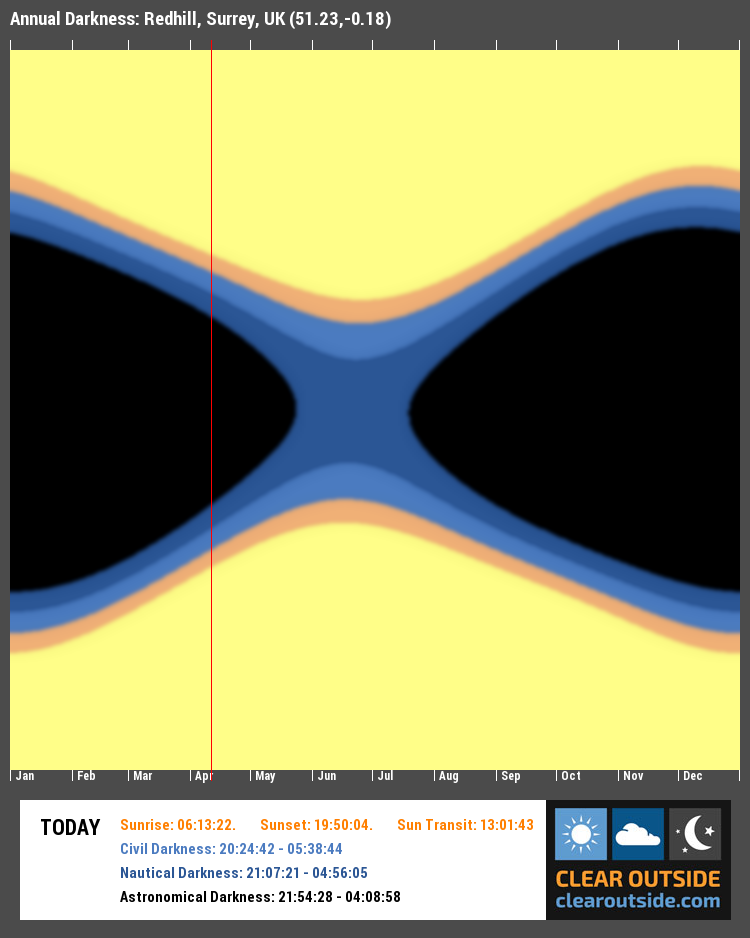
Therefore, only after this sequence is completed, which takes almost two hours after sunset here at Fairvale Observatory at this time of the year, does true astronomical night or darkness occur. The excellent FLO Clear Outside weather forecast website, which is linked on the front page of this website, shows the current timings for each of these periods every day along the top horizontal bar, just below the hourly sub-division headings.

Obviously this has a major bearing for astronomers and perhaps more so for astrophotography.  So sensitive is the camera’s sensor that when using long exposures the cumulative light recorded, even in a dark-sky environment, may result in a bright image that will need to be corrected during processing. Notwithstanding, the holy grail for astronomers is a dark, clear sky and the biggest enemy (other than bad weather and cloudy skies) is light pollution, which is spreading inexorably across the globe.

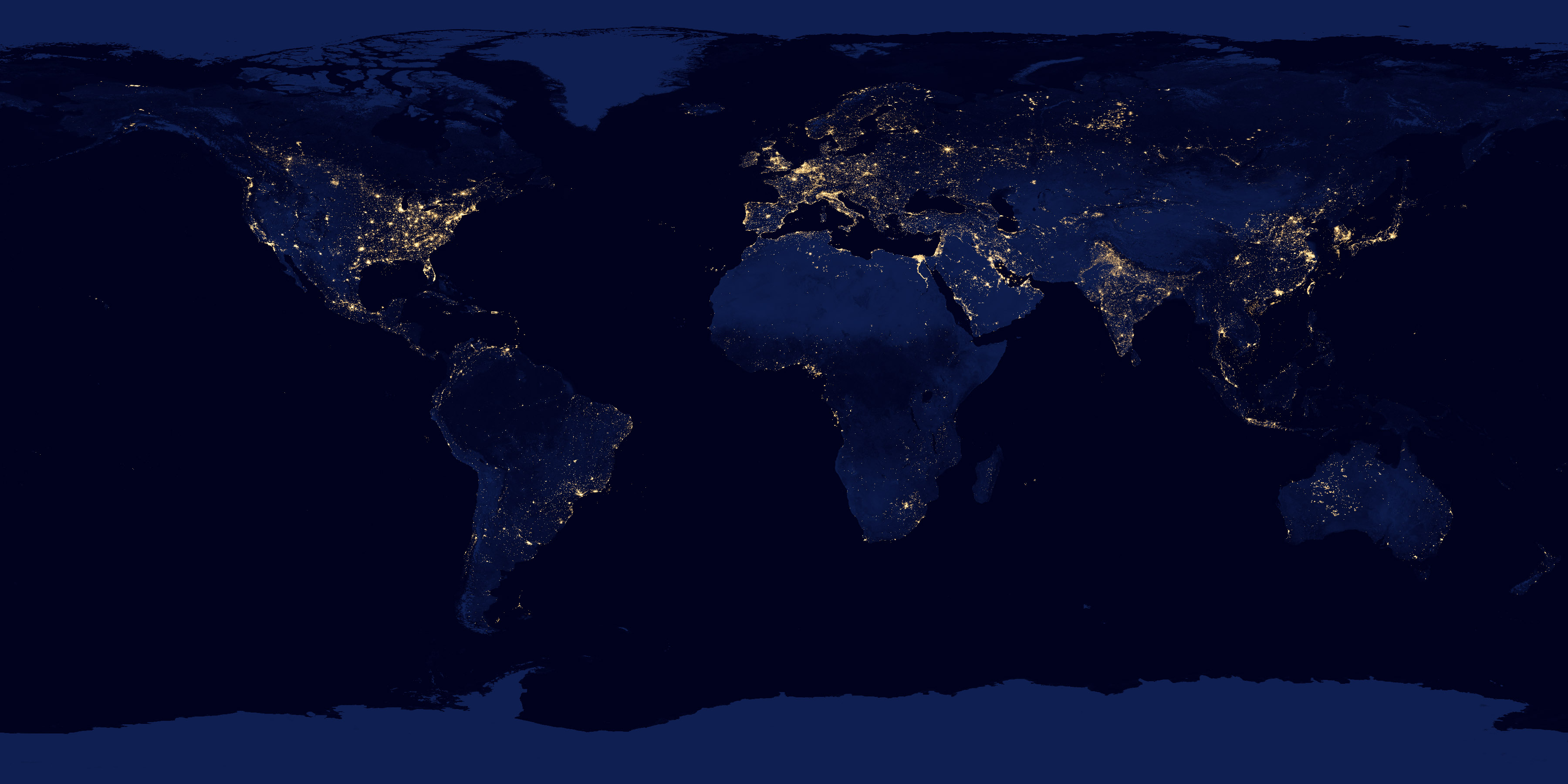
At the beginning of this post is a NASA picture of the Earth at night, produced as a composite of image data from the Suomi National Polar-orbiting Partnership (NPP) satellite, taken in April and October 2012 over a period of 312 orbits.  NPP passes over any given point on Earth’s surface twice every day,  flying 824 kilometres (512 miles) above the surface in a polar orbit, circling the planet about 14 times a day http://earthobservatory.nasa.gov/Features/IntotheBlack/ .  Away from the cities much of the other light from wildfires, fishing boats, gas flares or mining operation is also visible.  Whilst undeniably a beautiful picture, for astronomers it highlights one of the major obstacles we are up against, light, or more accurately light present here on Earth.  The night sky before the invention of the commercial light bulb by Tomas Edison in 1878 must have been a wonderful sight; I doubt that Messier (1730-1817) would have successfully catalogued all his 110 objects as easily with today’s skies.

The dark side of the world: city lights of Europe, Africa, Middle East & Central Asia

The dark side of the world, with light just over the western horizon.

Perspective: A wider view of the Universe

Earlier this year we went to the island of La Palma in the Canary Islands, which is recognised as the best astronomy site in Europe, where more than twelve major observatories have been built at an altitude of 2,396 meters on Roque de los Muchachos http://en.wikipedia.org/wiki/Roque_de_los_Muchachos_Observatory.  One of the engineers responsible for building and maintaining some of these observatories was Joan Genebriera, who subsequently went on to build his own private observatory on the island, which I reviewed in an earlier post https://watchthisspaceman.wordpress.com/2014/08/06/la-palma-nice-one-joan/.  Our trip was in order to undertake a week-long astronomy course with Joan and as part of this, develop (no pun intended) and fast track our knowledge of astrophotography.

Joan’s basic telescope and imaging set-up is, as you would expect, spectacular, with equally outstanding tracking:

  • Catadioptric Cassegrain-Relay 400mm telescope f5.6 (Larrose)
  • APO 120mm refractor f6.5 (Vixen)
  • Camera SBIG ST8300M
  • Camera SBIG CCD ST8XE
  • Camera Starlight Xpress CCD MX716 for use with spectrograph
  • Camera Canon 350 D DSLR

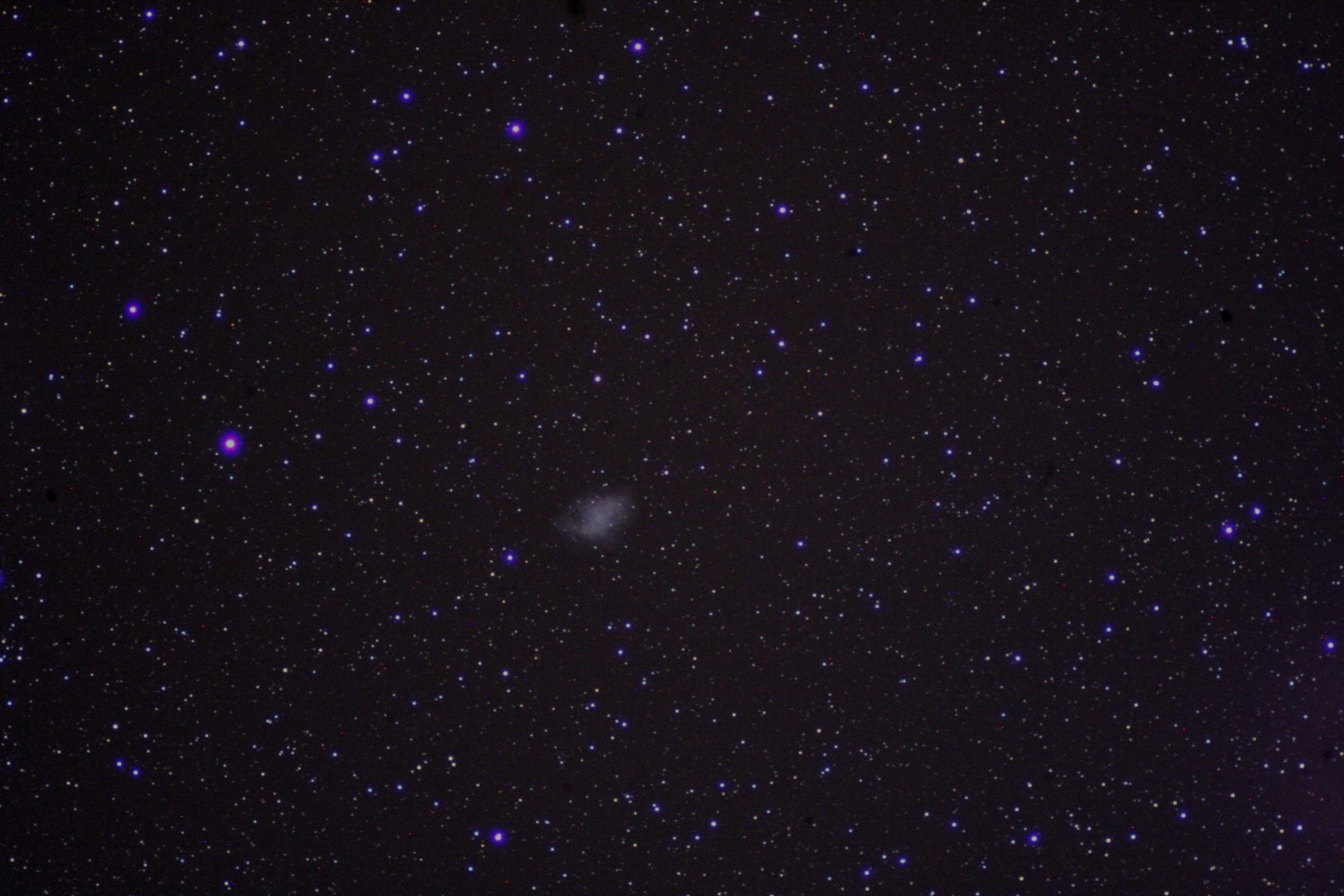
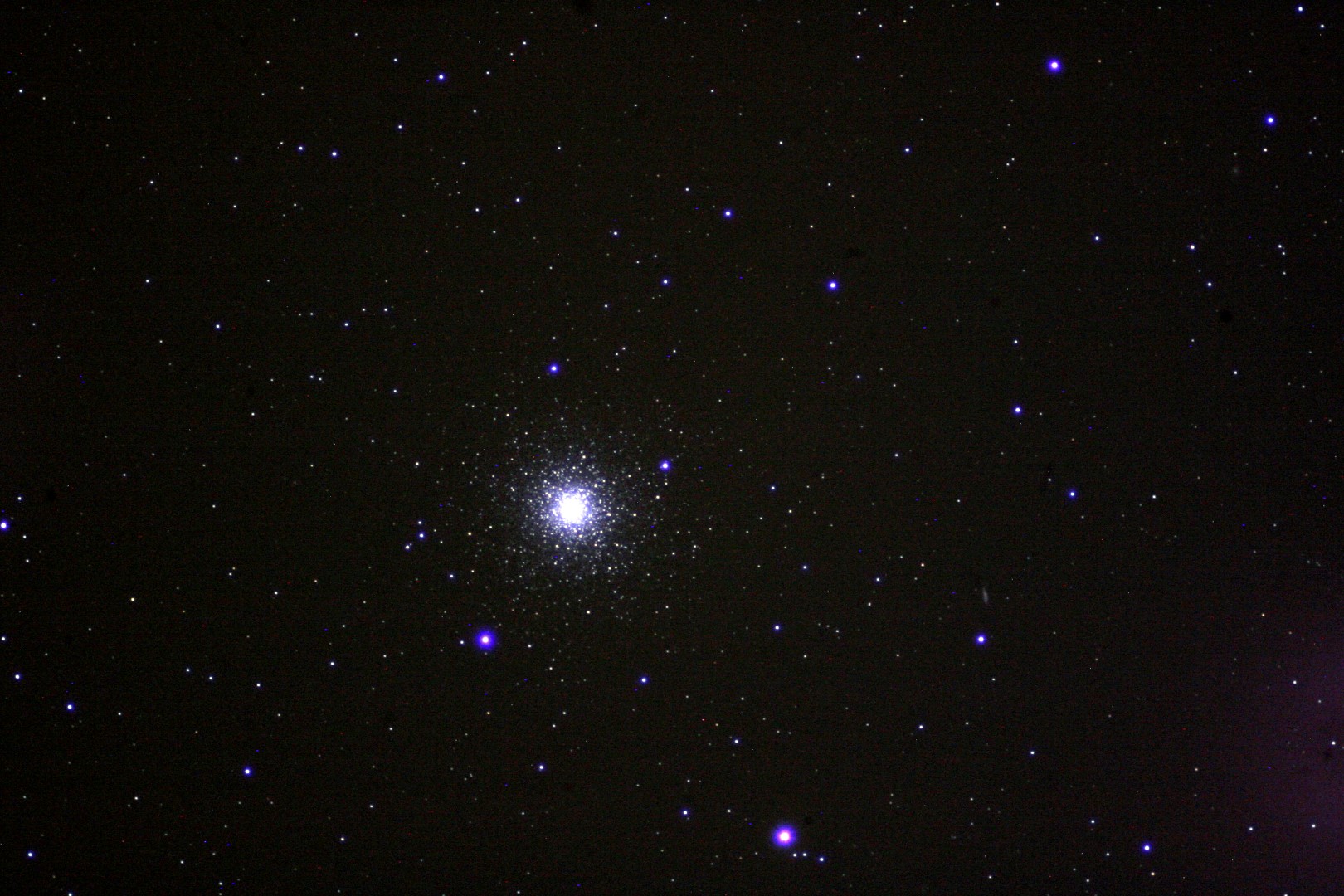
Of course this is just a list of equipment – it is what you do with it that matters and Joan’s expertise more than matched the quality of the equipment.  Over a number if evenings we undertook a series of photographic exercises using the 400mm Cassegrain-Relay telescope and the SBIG ST8XE CCD camera with RGB filters.  At the same time we rigged a Canon 350D camera on the refractor telescope to produce a contrasting, wide-field photograph to compare with the higher powered SBIG configuration.  We brought some of the unprocessed data / images back from La Palma but have unfortunately been unable to process the SBIG ones yet as they as FITS format, for which I have not yet found suitable software (more on this another time).  However, the Canon 350 D photographs are of equal but different beauty, which through the wide-field format show larger areas of sky, sometimes revealing vast groups of galaxies – amazing!

M1 The Crab Nebula Canon 350 D  | 240 secs @ ISO800

M1 The Crab Nebula
Canon 350 D | 240 secs @ ISO800

M3 a globular cluster in the constellation of Canes Venatici Canon 350 D | 240 secs @ ISO800

M3 a globular cluster in the constellation of Canes Venatici
Canon 350 D | 240 secs @ ISO800

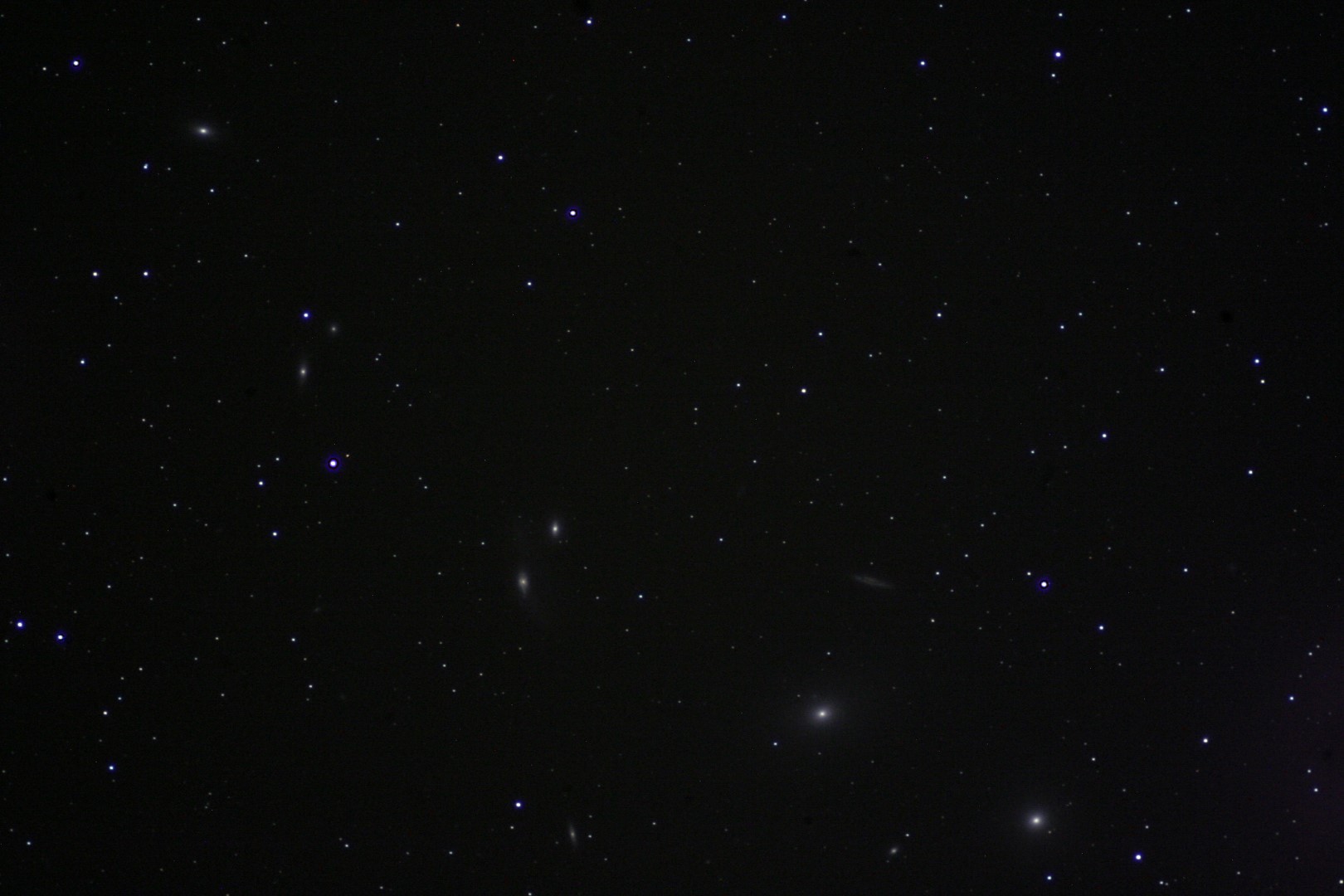
M84 a lenticular or elliptical galaxy located in the inner core of the Virgo Cluster of Galaxies Canon 350 D | 240secs @ ISO 800

M84 a lenticular or elliptical galaxy located in the inner core of the Virgo Cluster of Galaxies
Canon 350 D | 240secs @ ISO 800

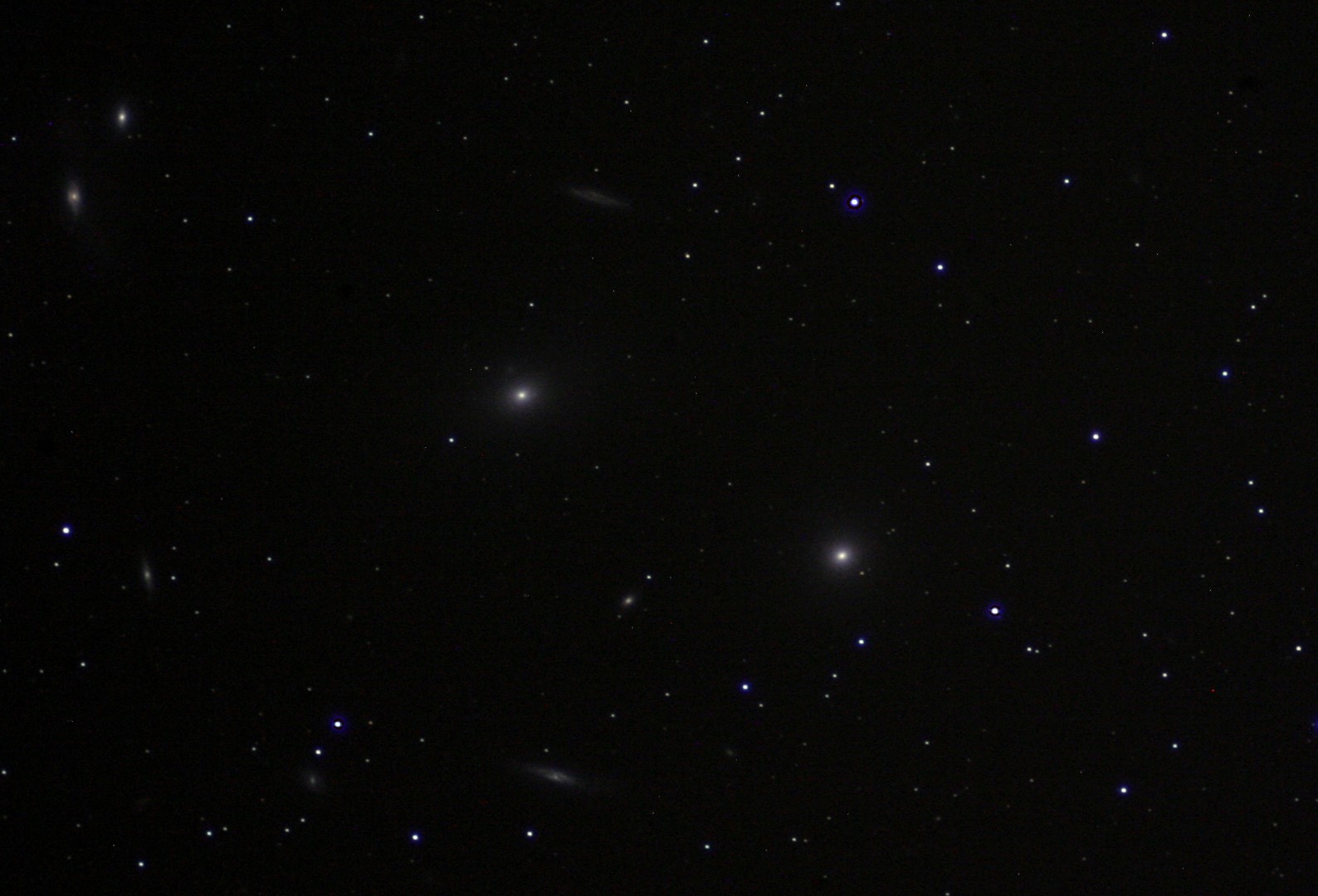
Virgo Group of Galaxies - a field of nine galaxies in the western part of the cluster group of over 2,000 galaxies! Canon 350 D | 240secs @ ISO800

Virgo Group of Galaxies – a field of nine galaxies in the western part of the cluster group of over 2,000 galaxies!
Canon 350 D | 240secs @ ISO800

Moving through space

Astrophotography is difficult, very difficult but probably one problem stands out above all others.  The platform we are taking the images from, Earth, is moving at about 67,000 mph on its way around the sun every 365 days and just over 1,000 mph rotating on its axis every 24 hours, which is tilted at approximately 23o relative to its orbit around the sun.  Over a year the annual journey around the sun, combined with the planet’s tilt provides us with the seasons and the astronomer with a different views of the universe, which despite the overall velocity does not unduly affect imaging over short periods measured in seconds or even minutes.  However, the rotation of the Earth every 24 hours is another matter, particularly when photographing objects over any period of time greater than a few seconds, which is required for most objects, especially more distant DSO.

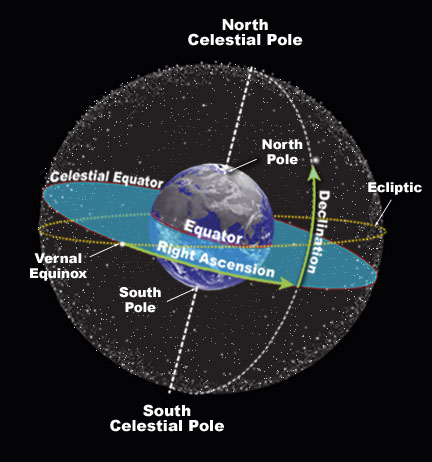
In understanding how this last movement impacts on the nature of the sky we see and in order to photograph objects – as well as forming a basis for navigation around the night sky – we have developed a system that is analogous to that used for navigating across the globe i.e. Longitude and Latitude but now called Right Ascension or RA and Declination or DEC.

For the purpose of establishing lines of RA and DEC a celestial sphere must be imagined of an arbitrarily large radius, concentric with a celestial body – in this case Earth.  In a similar way to Earth, a celestial equator is likewise established, this being in the same plane as the Earth’s equator but projected upwards onto the celestial sphere – as a result if the Earths tilt, it too is inclined at 23.4o with respect to the elliptical plane.  Having established the sphere and the equator, RA is then described as the angular distance along the celestial equator and DEC measures the distance above or below the celestial equator along any RA line in degrees.  This imaginary framework can then be used to describe the positon of any object or its relative position over time in space in the sky that we see from Earth.

The Celestial Sphere - a grid of RA & DEC lines across the sphere can be used to define the position of objects in the sky. Looking south in the Northern Hemisphere, the Celestial Equator is inclined across the sky from east to west and bisected vertically due south by the Meridian line -  the optimal RA line for astromimaging

The Celestial Sphere – a grid of RA & DEC lines across the sphere can be used to define the position of objects in the sky. Looking south in the Northern Hemisphere, the Celestial Equator is inclined across the sky from east to west and bisected vertically due south by the Meridian line (not shown) – the optimal RA line for astroimaging

In order to follow an object for imaging it is necessary to hold the telescope / camera in a stationary position relative to the movement of the object; remember that we are at the same time spinning at 1,000mph relative to space.  This is very difficult but in astrophotography is usually achieved by the means of an Equatorial Mount which, through some very sophisticated software that computes the relative movements of the object and the telescope, gently slews the mount-telescope-camera combination using gears and belts in such a way that the telescope and hence camera, remain fixed upon the chosen object.  The result, when undertaken with care, will be a wonderful sharp image of an almost endless number of features in the night sky, which is the subject of many of the posts on this website

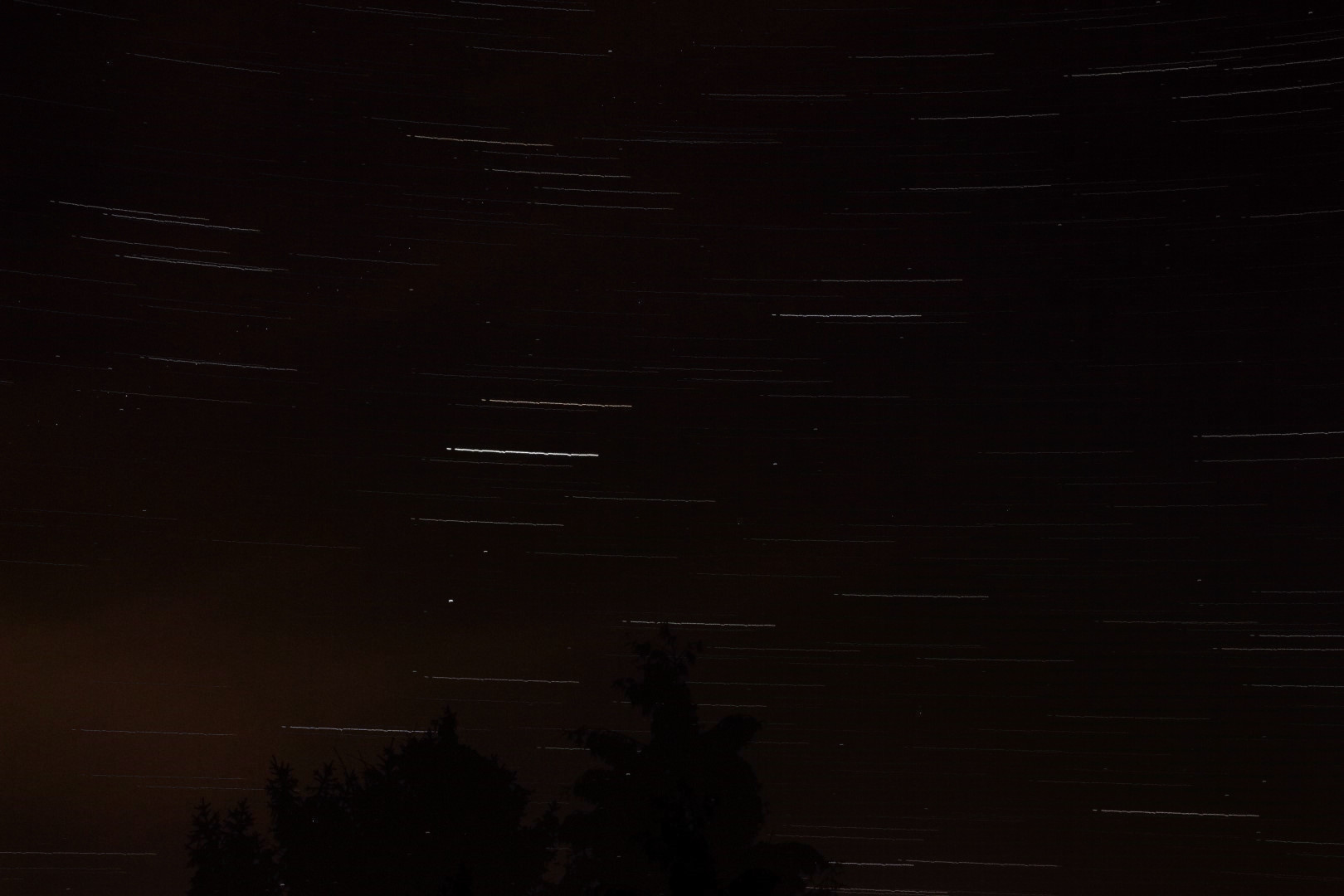
Conversely, what happens if we deliberately do not follow the sky’s objects in this way but hold the camera effectively still relative to the sky’s movement, created by Earth’s daily rotation.  The answer is Star trails, which I set out to obtain the other evening.  In order to achieve such a picture, the DSLR camera is fixed on a tripod and using an intervalometer, a long exposure of the night sky above is taken; alternatively a large series of shorter exposures can be made over a long period of time and then stacked to produce a better quality final image.  As a result the stars trace their respective paths of light across the camera’s sensor, as the Earth moves at 1,000 mph on its axis.  Such movement is normally indiscernible over short periods of time but through this process it is clear to see in the form of wonderful star trails.  Of course the stars haven’t moved at all (at least not in a normal visual sense) it’s us that are moving, very fast.  It is beautiful and clear evidence that we on Earth are continually moving through space!

Startrail Canon 700D | 20 minutes  f4 @ ISO 800

Star trails (inverted colour)
Canon 700D | 20 minutes f4 @ ISO 800

Startrail Canon 700D | 39x30secs f4 @ ISO 400

Star trails
Canon 700D | 39x30secs f11 @ ISO 400