Lace up the Nikes

There is no doubt in my mind that the Orion Constellation is the most spectacular of the year and right now comes into imaging view at Fairvale Observatory at about 11pm, about the same time the waxing Moon disappears over the horizon; for once the timing is perfect.  So before the presence of the Full Moon later this week rules out astrophotography, last Saturday evening provided an excellent opportunity.

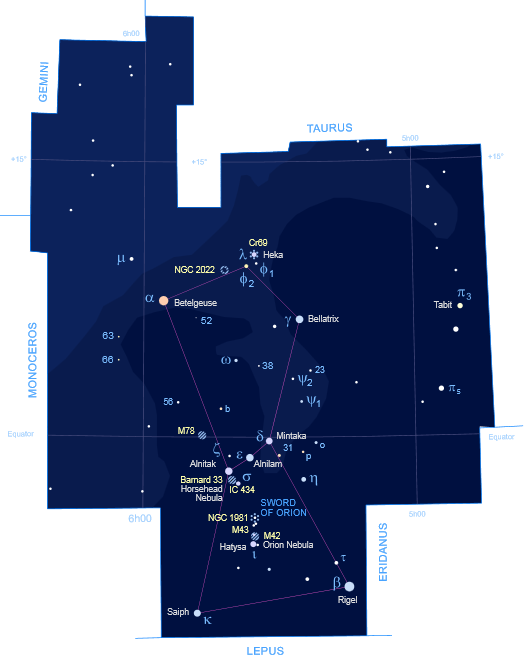
The Orion Constellation

The more I look at the Orion Constellation the more there is to see and image, as well as some other attractive objects that will be around until at least the New Year and in some cases well beyond.  One lesson I have learned early on with astrophotography is the need for good planning: what’s around to image? when is it in the best location i.e. near the Meridian? what equipment is needed and is it working? set it up in good time and ensure good alignment.  Given the aforementioned favourable conditions and the arrival of Orion, my list of objects this month is considerable:

Early evening: M32 Andromeda Galaxy & NGC 1499 California Nebula.

Late evening / midnight: Orion Constellation – NGC 2024 Flame Nebula, IC 434 Horsehead Nebula, M42 & M 43 Great Orion Nebula, NGC 1977 Nebula, NGC 1981 Emission Nebula, NGC 1909 Witch Head Nebula, SH 2-276 Barnards Loop, SH 2-264 Angelfish Nebula, M78 reflection nebula and more.  Other – M1 Crab Nebula, Hyades (Taurus), M77 barred spiral galaxy and Jupiter, which together with its four moons is also looking very nice after 1 a.m. at the moment.

With such an array of possibilities it can be difficult to know where to start but having recently achieved good images of the Great Orion Nebula and the Flame and Horsehead Nebulae, the next target was an easy choice – it had to be NGC 1977, which with the William Optics GT81 field-of-view also takes in NGC 1981 and M42, three for the price of one!

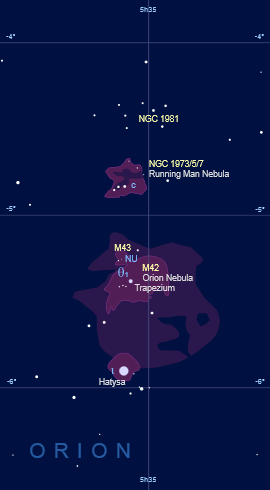
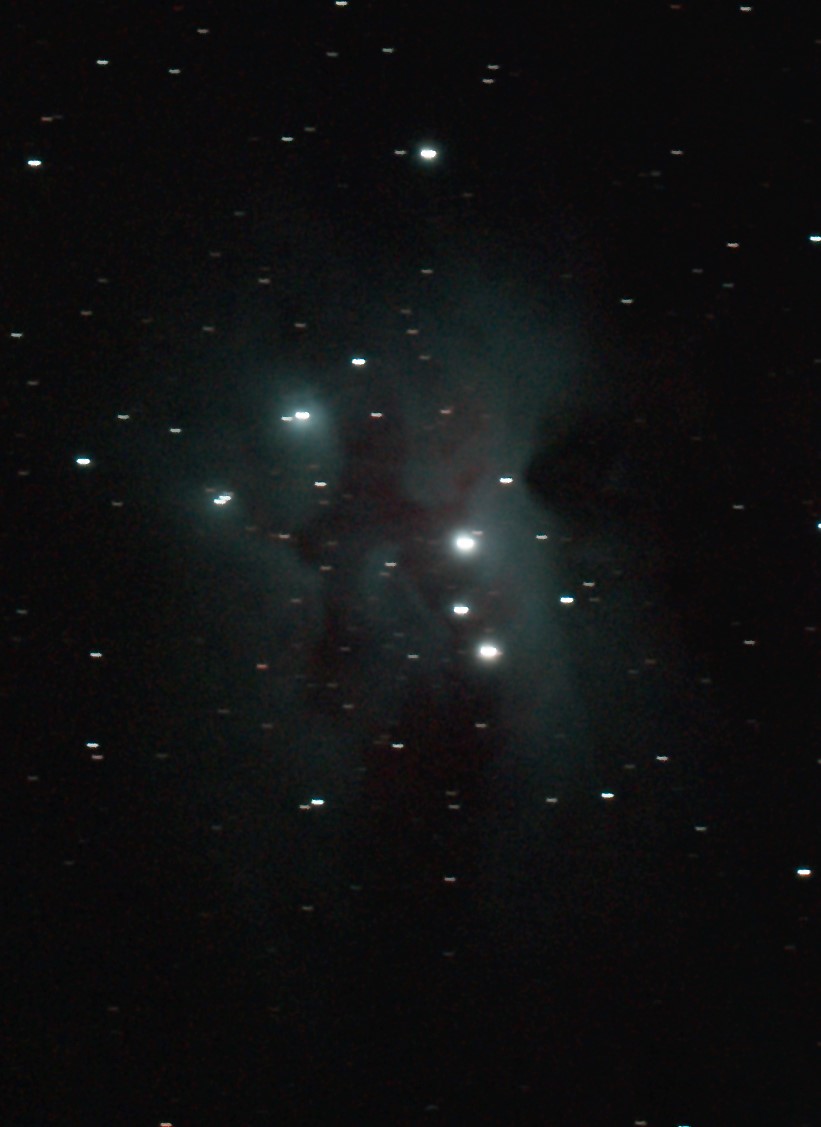
Orions Sword. Top to bottom: NGC 1981 Open Star Cluster, NGC 1973/75/77 Nebulae, M42 & M43 Great Orion Nebula & the binary star Hatsya. WO GT81, Canon 700D + FF | 30 x 120 secs + darks/bias/flats @ ISO 800
Orion’s Sword. Top to bottom: NGC 1981 Open Star Cluster, NGC 1973/75/77 Nebulae, M42 & M43 Great Orion Nebula & the binary star Hatysa.
WO GT81, Canon 700D + FF | 30 x 120 secs + darks/bias/flats @ ISO 800

There is so much going on in this photograph that merits attention.  The view encapsulates all the major components that form Orion’s Sword, notably from top to bottom: the open star cluster NGC 1981, the star Theta Orionis C in the Trapezium cluster – itself within M42 and the star Hatysa (Iota Orionis), which forms the tip of the sword.  Obviously M42, The Great Orion Nebula dominates the scene but two other major features are worthy of attention too.

Orion's Sword - detail

Orion’s Sword – detail

The aforementioned NGC 1981 is an open cluster of about 20 stars located 40 light years closer to Earth than M42.  But it is what’s between M42 and NGC 1981 that was my main target this time:  the reflection nebulae of NGC 1977 and related NGC 1973 & 1975, AKA the Running Man Nebula, so named because it looks like a running man!  The three nebulae are illuminated by the blue light shining from young stars that are forming within each area of nebulosity, which are separated by dark zones of interstellar dust in the form of a man running – not unlike Eadweard Muybridge’s pioneering photographic images of motion taken at the end of the 19th Century, I am sure he would have appreciated the analogy.

NGC 1973/75/77 The Running Man Nebula (rotated - North is left)

NGC 1973/75/77 The Running Man Nebula                     (rotated – North is left)

Eadweard Muybridge's photographic studies of a running man, late-19th Century

Eadweard Muybridge’s photographic studies of a running man, late-19th Century

The Horse & Flame

With the full moon early in the month and some truly awful weather, I have been unable to get out at Fairvale Observatory since October 31st!  Notwithstanding , this has been an opportunity to spend time learning more about the dark art of processing, which can sometimes be more important than image capture itself, so is hopefully time well spent.  Apart from the usual assistance of Mr Google, I have purchased the excellent online ‘book’ of Jerry Lodriguss, Photoshop for Astrophotographers – which I am slowly working through, and watched the equally excellent YouTube tutorials by Doug German on the same matter.  It is often said that a picture is worth a thousand words, and Doug’s tutorials are probably the easiest and most accessible way into the use of Photoshop for astrophotography – I also enjoy his dry sense of humour.  Finally, I am currently trialling Russell Croman’s Gradient Exterminator, which is intended to remove the external light gradient that inevitably creeps into even the best of images; it’s early days but I think I like it – it’s tricky to use and Doug German’s video tutorial is very helpful in this regard too.

The extended absence of clear night skies for astronomy also benefits subsequent viewing as the sky has changed, in this case a lot.  We have now moved on to winter skies, which are best exemplified by the constellation of Orion here in the northern hemisphere.  I was initially successful in imaging the iconic Orion Nebula early in October but only by getting up very, very early.  At Fairlvale Observatory it now comes into view at about 10pm and after 11pm can be imaged.  With clear skies finally arriving last Sunday evening, albeit accompanied by very cold temperatures, I was finally able to get out again – this time to spend more time with Orion.

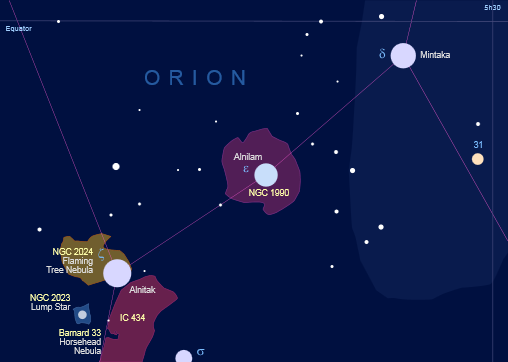
In my ignorance, what has surprised me about Orion is the extensive presence of spectacular nebulae throughout the constellation: M42 Orion Nebula, M43 De Mairan’s Nebula, NGC 1973/5/7 The Running Man nebula, M78 between Alnitak and Betelguese etc, etc.  But, I had also somehow overlooked the ‘Horse & Flame’, located above the Orion Nebula nearby the lower end of Orion’s belt: Mintaka – Alnilam – Alnitak.  In close proximity to Alnitak (a triple star), which with an apparent  magnitude between  +2.0 and +4.0  is a problem for imaging, the sky is full of spectacular nebulae – notably  the Flame Nebula and the iconic Horsehead  Nebula.  Having latterly learnt of their presence in the same part of the sky, I had to try and image them.

orionsbelt

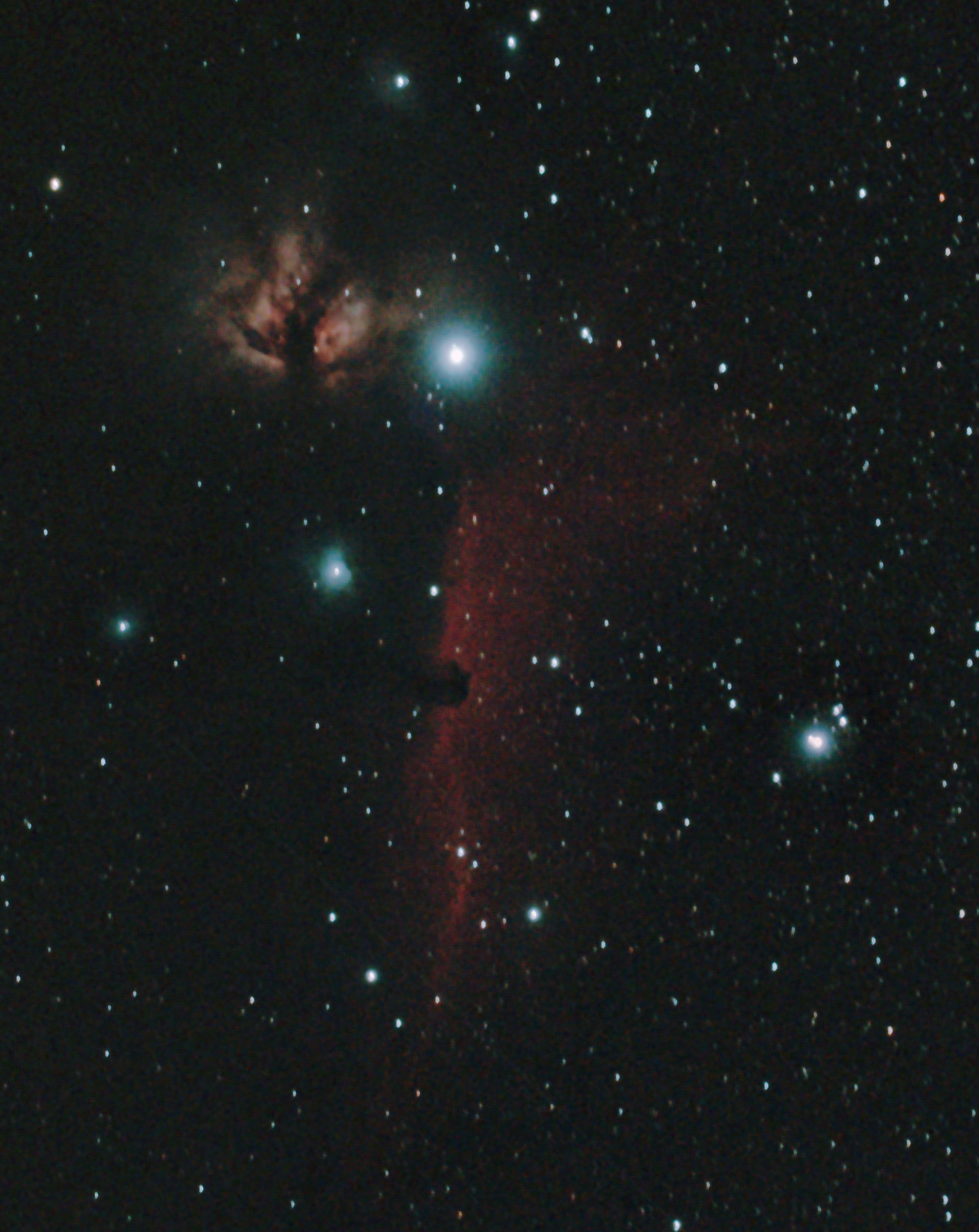
The Horsehead  Nebula is a cloud of interstellar dust and gas that, as a result of it’s density, appears dark against the surrounding red nebulous ‘curtains’.  The resulting shape looks like, well a horse’s head and has therefore become an iconic and well known image.  However, located on the other north-eastern side of Alnitak is perhaps the real star (no pun intended) of the show, the Flame Nebula – NGC 2024.  A combination of dark gas and dust with glowing hydrogen gas, energised by ultraviolet light emitted from Alnitak.  Such is the form of these materials that the resulting effect is that of a burning flame.  I was therefore thrilled that after my enforced indoor sojourn to be able to capture the Horse and Flame (sounds like a pub I’d like to visit!) together in one beautiful picture.

The Horsehead and Flame Nebulae. The Horse is located directly below (south) the large bright star Altinak triple star which forms the eastern end of Orion's belt, about half way down the image, sticking its 'head' into the red curtain nebulosity. The Flame is just to the left (east) of Altinak. WO GT81, Canon 700D + FF | 28 x 90 secs + darks/bias/flats ISO 1,000 | Photoshop processed + Gradient Exterminator

The Horsehead and Flame Nebulae. The Horse is located directly below (south) the large bright Alnitak triple star which forms the eastern (left) end of Orion’s belt, about half way down the image, sticking its ‘head’ into the red curtain of nebulosity. The Flame is just to the left (east) of Alnitak.
WO GT81, Canon 700D + FF | 28 x 90 secs + darks/bias/flats ISO 1,600 | Photoshop processed + Gradient Exterminator

The Kiss

The EU political project has not exactly been a roaring success but, in stark contrast, European science, engineering and technology is second to none and is still pushing the boundaries. In the spirit of centuries of unique European scientific developments, discoveries and vision that are responsible for much of the modern world now around us, today the European Space Agency (ESA http://www.esa.int/About_Us/Welcome_to_ESA/What_is_ESA ) successfully placed a lander on the comet  67P/Churyumov–Gerasimenko .  As if the 10-year journey of over 6.5 billion kilometres wasn’t enough, the spacecraft Rosetta successfully delivered its passenger, the lander Philea, to its landing Site-J (now renamed Agilkia), on the surface of a comet moving at 40,000 mph through space http://www.livecometdata.com/comets/67p-churyumov-gerasimenko/ .  Launched in 2004 its technology is by now well out of date – at the time the iPod had only just been launched – but the accomplishment is nonetheless fully 21st Century.  Science fiction today became science fact, even Major Tom would be impressed, certainly Captain Kirk (William Schatner) Tweeted his best wishes during the landing.

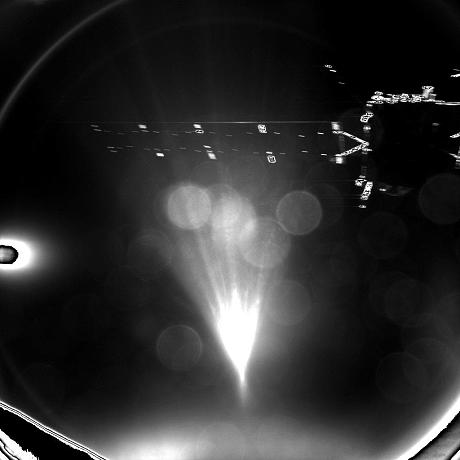
Looking back at the Rosetta spacecraft from the Lander Philea as is separated earlier today and began its 7-hour journey to the surface of the comet.

Looking back at the Rosetta spacecraft from the Lander Philea as it separated earlier today and began its 7-hour journey to the surface of the comet.

In the same spirit of watching the first lunar landing by Neil Armstrong and Buzz Aldrin in 1969, I have followed events live all day.   The suspense was almost as exciting. The control room was in stark contrast to 1969 but with just laptops and flat screen terminals that could have come from PC-World; it looked like a low key trading room rather than the centre of a major scientific space adventure. Such is the distance from the comet to Earth that final confirmation of the landing took 28 minutes and 20 seconds to arrive, 28 minutes of suspense. Touchdown was at 16.02h GMT.

As Philea left for 67P/C-G it was described by ESA scientists to be moving in for the kiss, wow what a kiss.  I can’t wait to see pictures from the comet’s surface and especially the science that will emerge later.  Chapeau ESA!!

https://watchthisspaceman.wordpress.com/2014/11/03/rendezvous/

Philae on its descent from Rosetta to the surface of Comet 67P/Churyumov-Gerasimenko

Philae on its descent from Rosetta to the surface of Comet 67P/Churyumov-Gerasimenko

Time Travel

In my opinion the current 12th Time Lord, Peter Capaldi, is one of the best doctors yet but it’s all just a good yarn, isn’t it?  At the level of quantum physics the potential of time travel has recently been shown to be feasible and even the paradox of Schrödinger’s cat has now been experimentally demonstrated at a quantum level i.e. the same thing can exist in two places at the same time.  Still, intuitively time travel seems unlikely but nevertheless last week I travelled back 400 million years without moving from Fairvale Observatory!

As a result of good viewing conditions and excellent alignment of the mount and telescope, I sought to capture light that left on its journey 300 million years ago.  This time marks the end of the late Carboniferous era, taking its name from the period of worldwide formation of coal deposits, which resulted in the highest atmospheric oxygen levels the Earth has ever experienced (35%) and lead to an abundance of giant insects and amphibians as the first reptiles also appeared on Earth.

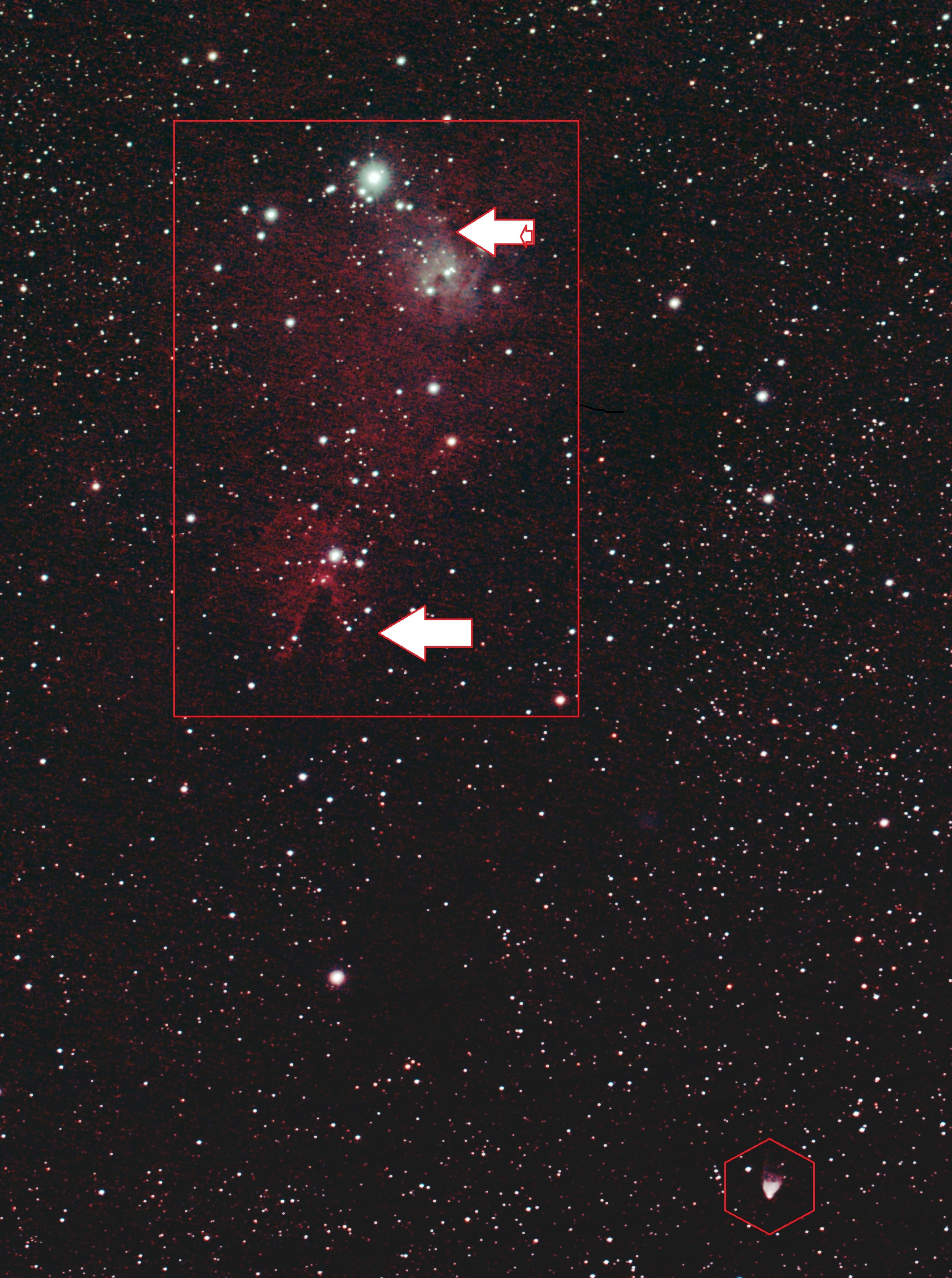
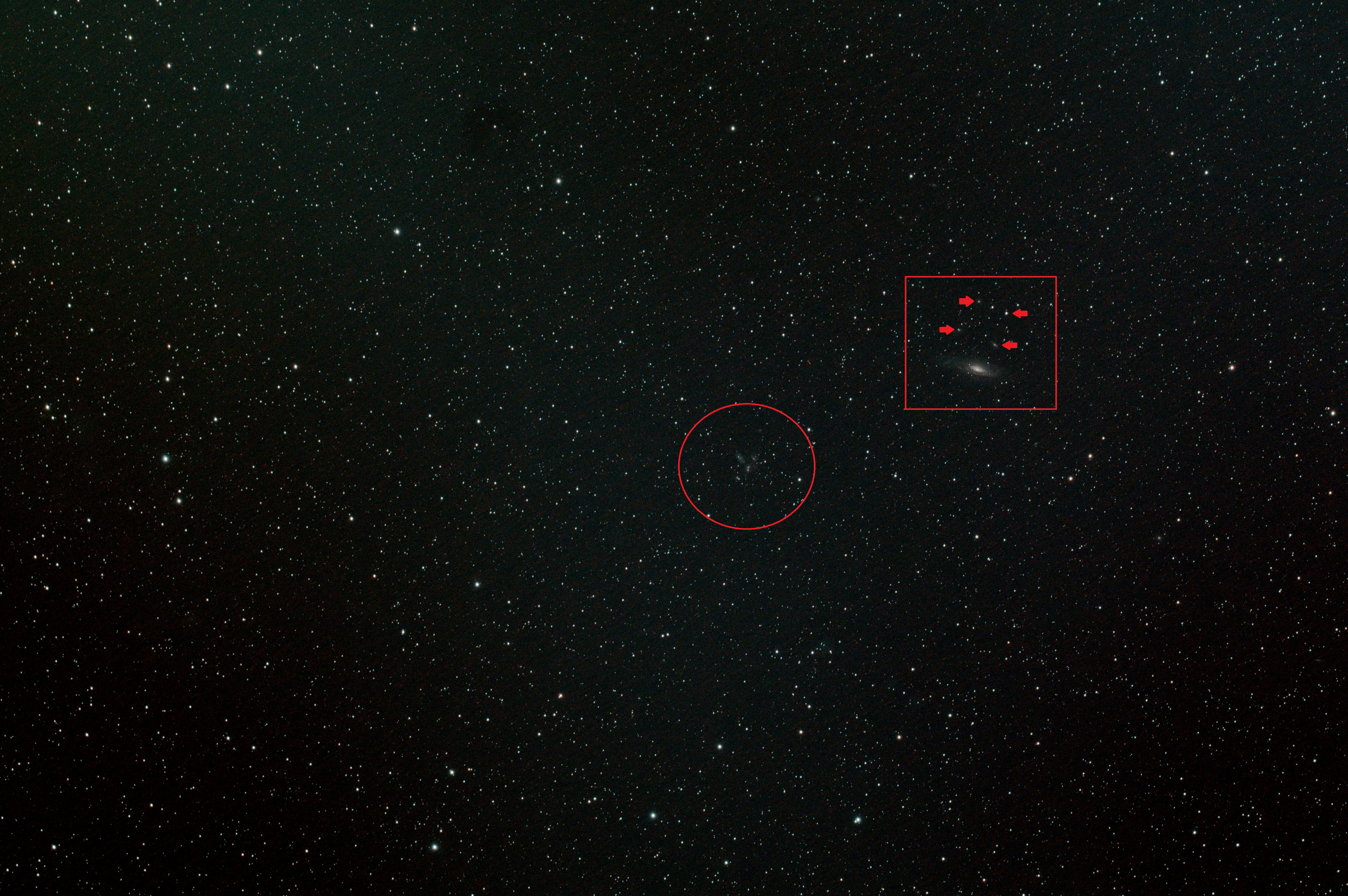
Widefield view of Stephan's Quintet (red circle) and NGC7331 + Deer Lick Group (red box) WO GT81, Canon 700D + FF | 20 x 120 secs + darks/bias/flats @ ISO 1,600

Widefield view of Stephan’s Quintet (red circle) and NGC7331 + Deer Lick Group (red box)
WO GT81, Canon 700D + FF | 20 x 120 secs + darks/bias/flats @ ISO 1,600

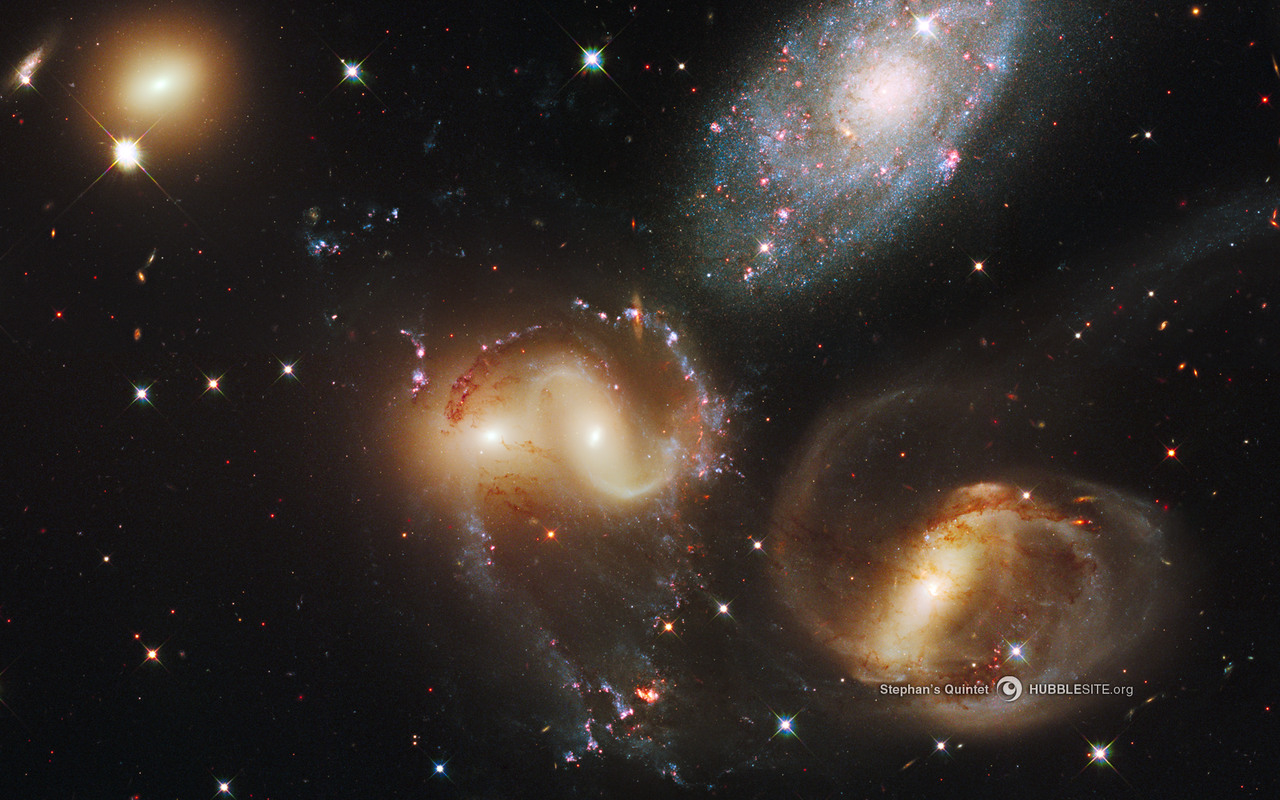
Located in the constellation of Pegasus, Stephan’s Quintet is a group of four galaxies whose respective gravities lock them in a cosmic dance with each other that will inevitably lead to their coalescence.  The fifth and brightest member of the group, NGC 7320, is in fact just 40 million light years away but viewed from Earth appears to be spatially associated with the aforementioned group and thus makes up the fifth member of the quintet. Unfortunately my 80 mm telescope only shows a smudge of light from Stephan’s Quintet but it is light that has just arrived here at Fairvale Observatory after making a 300 million year journey, it is literally looking back in time.  A more substantial Hubble image shows us exactly what was happening to these galaxies at that moment – it seems probable that they have by now come together but we’ll have to wait another 300 million years to see that.

Stephan's Quintet taken by the Hubble telescope

Stephan’s Quintet taken by the Hubble telescope

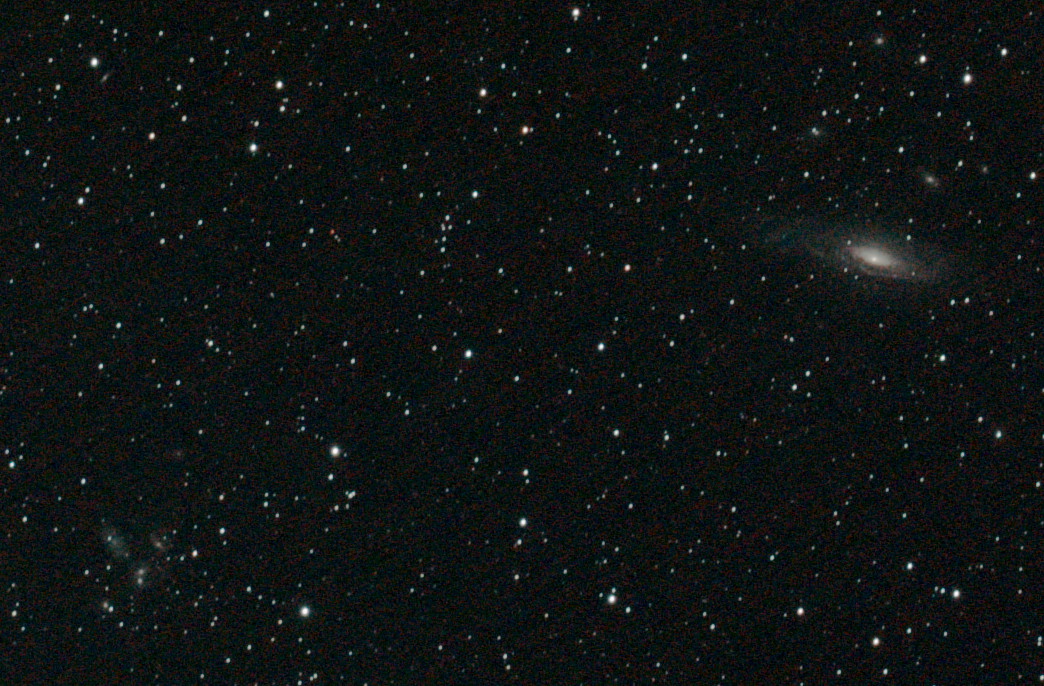
Stephan's Quintet (bottom left) and NGC 7331 & Deer Lick Group (top left)

Stephan’s Quintet (bottom left) and NGC 7331 + Deer Lick Group (top right)

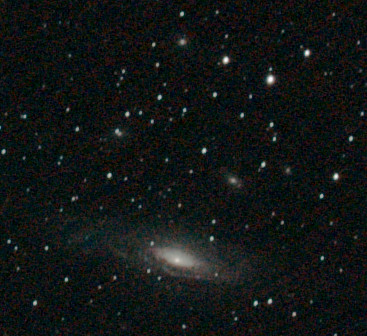
One advantage of the smaller 80mm William Optics refractor telescope is that its field of view is quite large and whilst seeking to capture Stephan’s Quintet, I also inadvertently managed to image another group of galaxies.  In this case the dominant NGC 7331 galaxy with, apparently close-by but actually located up to ten times further away, the Deer Lick Group of galaxies.  The magnificent NGC 7331 is a mere 50 million light years from Earth and is thought to be similar to our very own Milky Way.  The Deer Lick Group (indicated by four red arrows in the main picture above) is however some 400 million light years* away – thus corresponding to the mid-Devonian period or the Age of Fishes; named after the red rocks first identified in Devon, UK and particularly known for its plethora of fish that developed at this time.  I am quite sure that even The Doctor would be impressed by the time travelled by the light from these objects as it arrives here on Earth after such a long journey and provides us with a glimpse of the past, today.

NGC 7331 spiral galaxy (foreground) and Deer Lick Group above (see main anotated picture for detailed location).  Light form the Deer Lick Group of galaxies is 400 million years old.

NGC 7331 spiral galaxy (foreground) and Deer Lick Group above (see main anotated picture for detailed location). Light from the Deer Lick Group of galaxies is over 400 million years old.

* For the record, light travels 670 million miles in one hour or 6 trillion miles in one year.

Rendezvous

Comet_on_28_October_NavCam

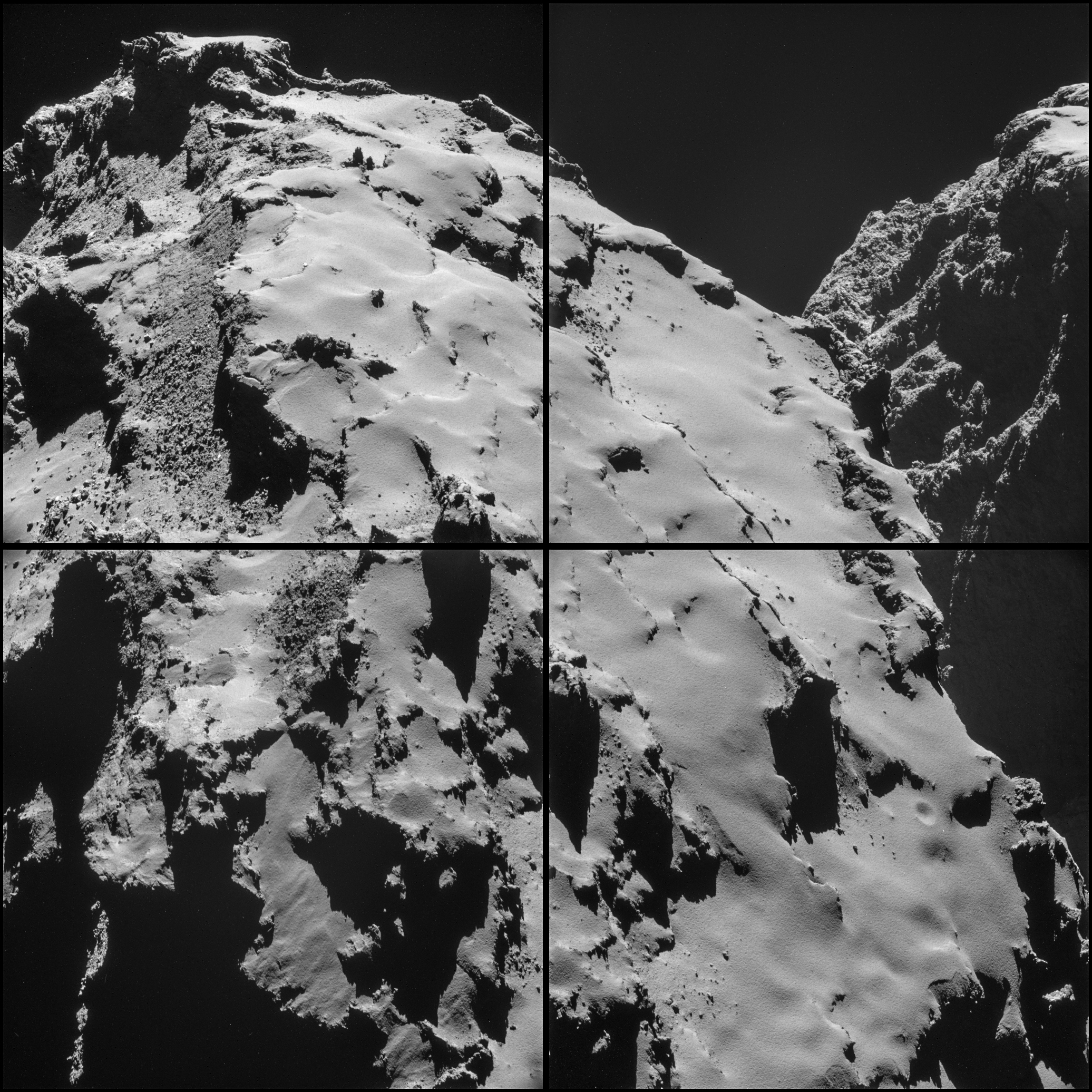
At first this picture looks like something taken whilst walking in the Alps but, look again.  It is a composite photograph taken on 28th October by the Rosetta space probe, currently orbiting the 67P/Churyumov-Gerasimenko comet, approximately 7.7 km from the surface.  I must admit I had been somewhat doubtful about the nature and chance of success of this mission but there’s no denying the science and technology is amazing, almost, but not quite, as exciting as the first Moon landing on 29th July 1969.

The Rosetta probe was launched on 2nd March 2004 and has since taken a circuitous route through deep space to eventually rendezvous with the comet in August this year.  Initially approaching the comet at a maximum relative speed of 19,000 mph, the probe was put into orbit around the comet on 10th September, since when it has been mapping the comet’s surface and sending back some truly amazing photographs. This link provides real time tracking data from the probe, which locked together with the comet is currently travelling at 40,000 mph relative to the Sun. http://www.livecometdata.com/comets/67p-churyumov-gerasimenko/

Even now it sounds like science fiction and the best is yet to come.  In nine days, on 12th November, Rosetta is scheduled to send a lander to the comet’s surface.  After attaching itself to the comet, a scientific mission will be undertaken by the lander in order to study its nature, origin and possible implications for life on Earth itself. Wow, can’t wait!!!

http://www.esa.int/Our_Activities/Space_Science/Rosetta/Europe_s_comet_chaser

Taken on 7th October, Rosetta takes a 'selfie' whist imaging the comet 16 km away.

7th October: Rosetta takes a ‘selfie’ whilst imaging the comet 16 km away.

The Bat

It’s Halloween time of the year and I don’t like it.  My problem is that in the UK this used to be a minor event, treated as a bit of fun for some and ignored by most.  However, it’s been given the North American makeover and pumped up as a big deal, mainly on commercial grounds. Grrrrr!

Less seasonable has been the weather, which thankfully continues to be warm and sunny with occasional clear night skies. Hooray!  A great combination enhanced further by the appearance of winter astronomy objects and since last weekend’s change of clocks 1-hour backwards, darkness from early evening.  What’s not to like for the astronomer?  Starting at 6 pm I was therefore able to spend more than 7 hours on Monday night imaging a procession of DSOs as they approached and passed the meridian.  Moreover, I achieved almost perfect alignment and for the first time was able to obtain good exposures of between 120 and 180 seconds; had I tried I suspect even longer periods could have been achieved.

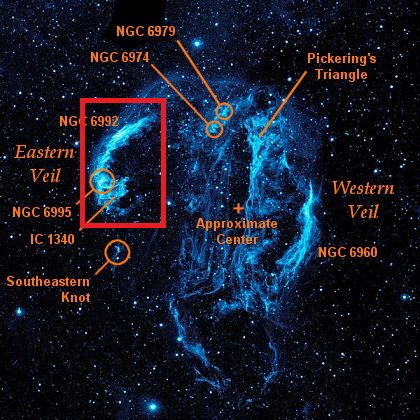
First off the rank was the Veil Nebula, part of the even larger Cygnus Loop, a massive supernova remnant.  Located about 1,470 light years away and between 5,000 and 8,000 years old, much of this this emission nebula is not in the visible spectrum and what is is feint and difficult to image.  I have already obtained a good photograph of the Western Veil of the nebula, also known as NGC 6960 or the Witch’s Broom https://watchthisspaceman.wordpress.com/2014/10/04/the-witchs-broom/ .  Now with such good conditions and my best ever alignment, I decided to turn my attention to the Eastern Limb, or NGC 6992 and NGC 6995.

Cygnus Loop (Veil Nebula)  in untraviolet light. Image area of the Western Veil highlighted by red box.

Cygnus Loop (Veil Nebula) in untraviolet light. Image area of the Eastern Veil highlighted by red box.

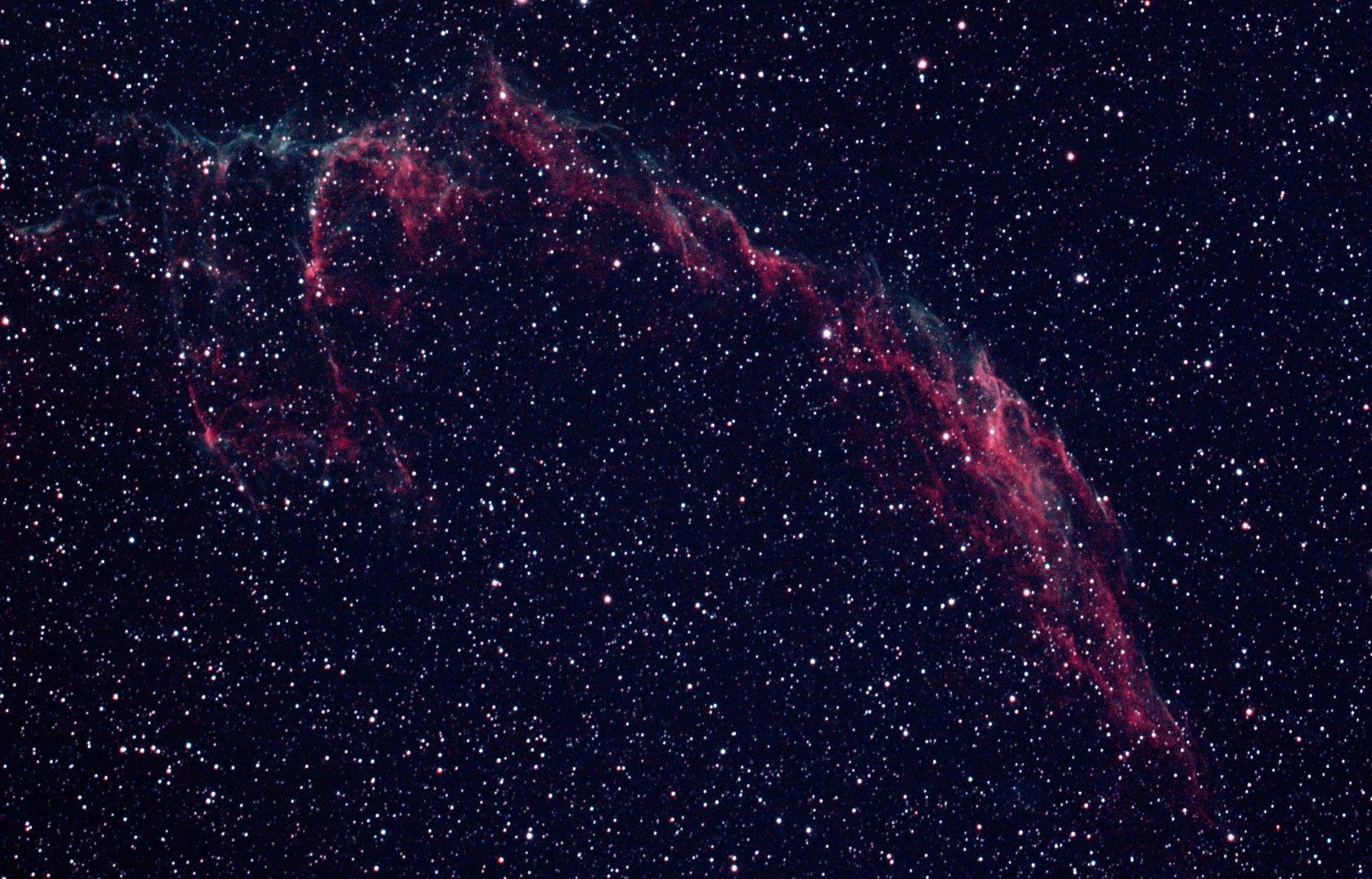
Using the new CLS light pollution filter and 30 x 120 second exposures, the resulting image from the camera immediately showed the full extent of this magnificent object, even before processing. Post processing the feature really comes to life, with large billowing waves of nebulous ionized gas and interstellar dust. The brighter, right-hand side (northern) of NGC 6992 trails off to the left (southerly) section of NGC 6995, also known as the Bat Nebula – well it is Halloween!

Eastern Veil Nebula - NGC  6992 (right) & NGC 6995 (left). WO GT81 + Canon 700D & FF | 29 x 120 secs + darks/bias?flats @ ISO 1,600

Eastern Veil Nebula – NGC 6992 (right) & NGC 6995 (left).
WO GT81 + Canon 700D & FF | 29 x 120 secs + darks/bias/flats @ ISO 1,600

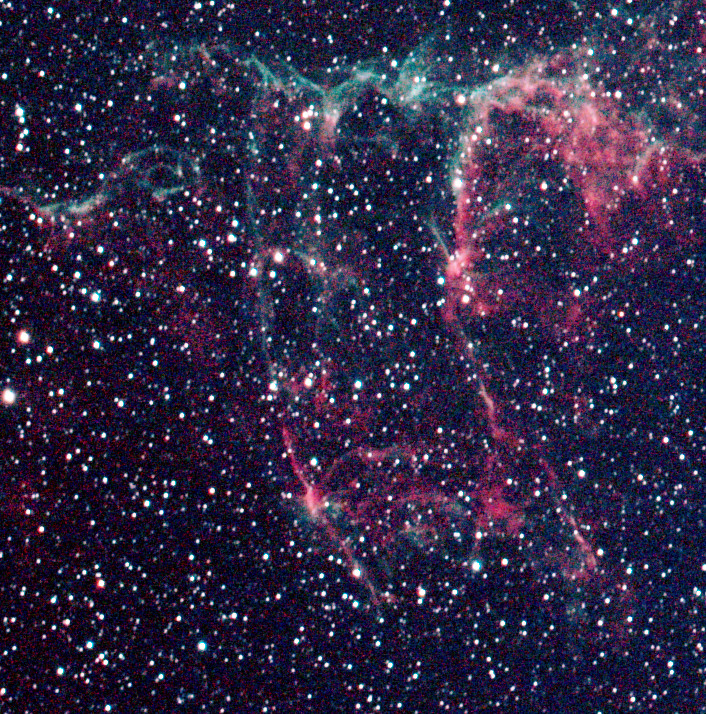
NGC 6995 AKA The Bat Nebula (look carefully and you'll see him!)

NGC 6995 AKA The Bat Nebula (look carefully and you’ll see him!)

Gotcha!

Two of astronomy’s most iconic images are Saturn and the Orion Nebula, M42 – one a highly distinctive planet of our Solar System, the other a trade mark of the winter sky as part of the Orion Constellation.  Both therefore seem quite familiar but still need to be seen or better still captured on camera to personally experience their magic.

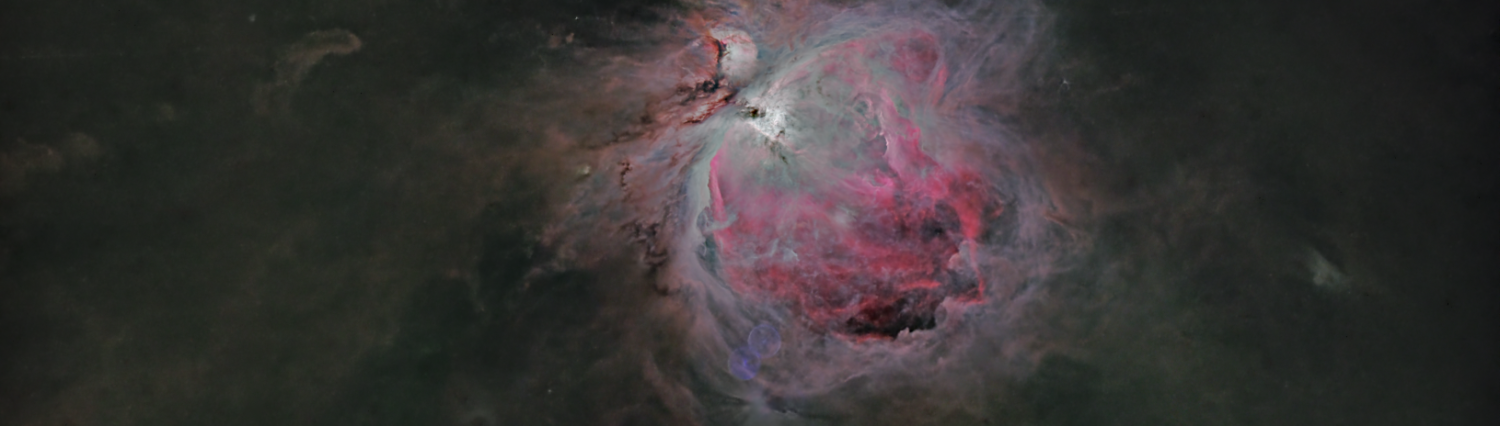
The Orion Nebula or Great Orion Nebula, is a diffuse nebula located just south of Orion’s belt in the constellation of Orion.  It is approximately 1,344 light-years from earth and 24 light-years in diameter, which with an apparent magnitude of +4.0 is visible from Earth.  Studies of the nebula have revealed much about how new stars and planetary systems are formed, indeed it is considered a stellar nursery for new ‘baby’ stars, typically only a few hundred thousand years old.  Some 700 stars have been identified as formed from this nebula, most notably the ‘Trapezium’ asterism in the centre of the nebula, consisting of six bright stars. Spectacular red colours arise from hot hydrogen gas, whilst dust reflects the blue light from hot blue stars within the nebula.

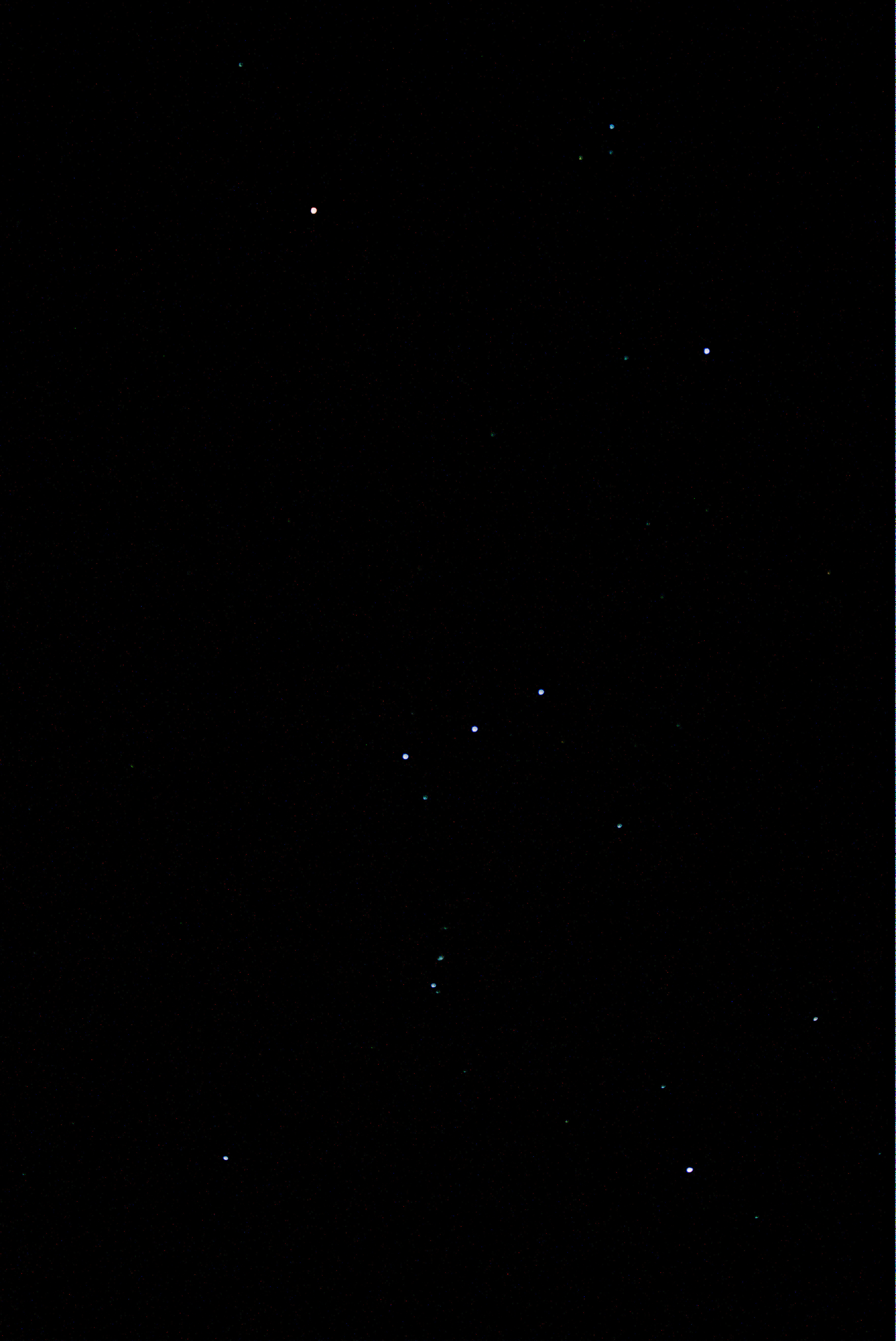
The Orion Constellation from Fairvale Observatory last year  - the Orion Nebula is just below the three central stars (Orion's belt) in the centre of the three lower stars

The Orion Constellation from Fairvale Observatory last year – the Orion Nebula is just below the three central stars (Orion’s belt) in the centre of the three lower stars (Orion’s sword)

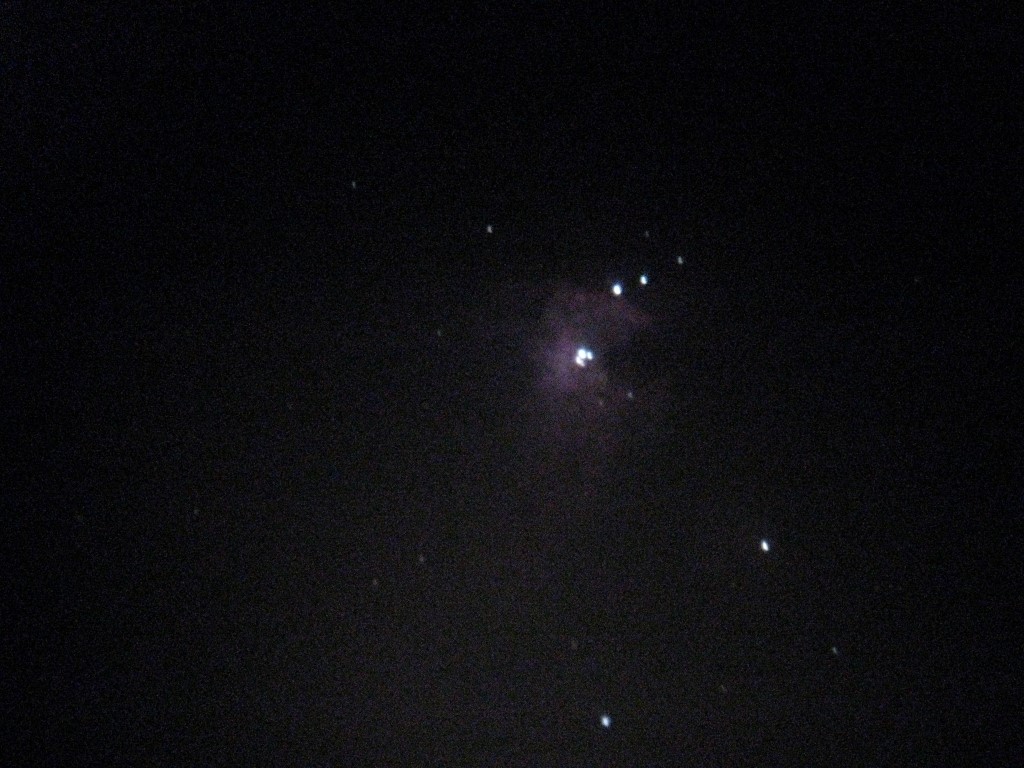
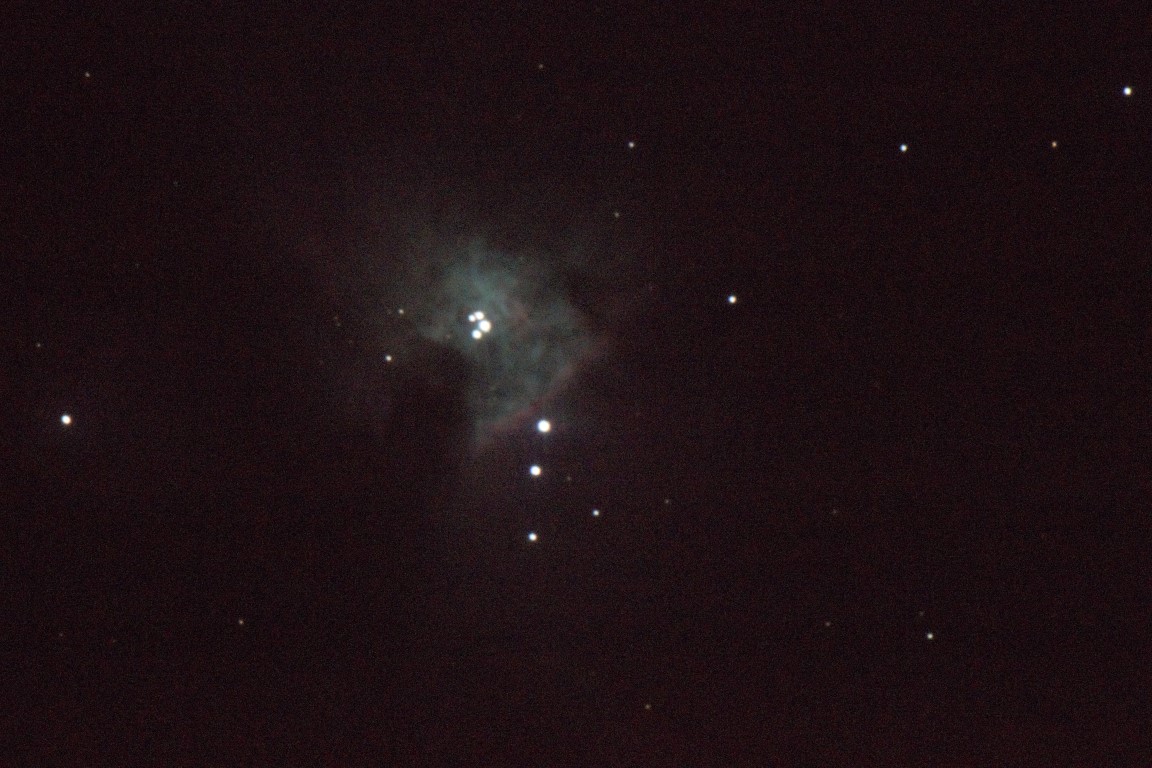
Due to its sheer beauty and notoriety I have previously dabbled with attempts to image the Orion Nebula before, initially by compact camera and subsequently by DSLR on the Skywatcher 150PL telescope, with limited success.  Notwithstanding, the colours of the nebula were evident and even four of the main stars of the Trapezium could be seen – at the time I was quite pleased but equally frustrated as I was unable to capture this magnificent object at its best.

Afocal image of the Orion Nebula in 2013: I was pleased at the time with the colour is showed and even the Trapazium stars

Afocal image of the Orion Nebula in 2013: I was pleased at the time with the colour it showed and even the Trapezium stars

Orion Nebula later in 2013: DSLR & Skywatcher 150PL, single photograph, shows better colour and detail of the Trapezium

Orion Nebula later in 2013: DSLR & Skywatcher 150PL, single photograph, shows better colour and detail of the Trapezium

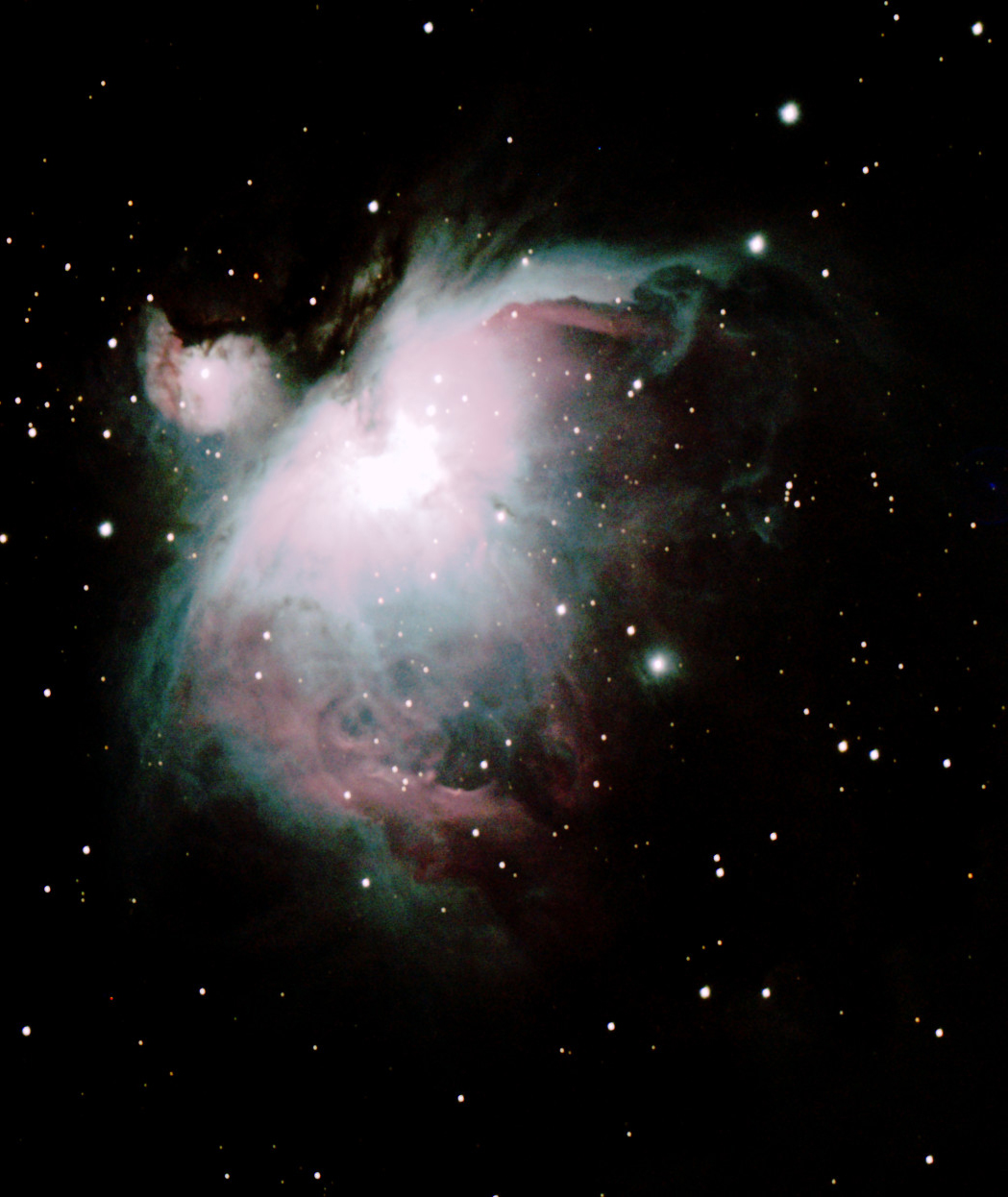
One year on, new equipment, new skills and a dark sky and all that has changed.  Very early on last Sunday morning I succeeded in imaging the Orion Nebula in all its glory, in what must be my very best astro photograph to date. Gotcha!

The Orion Nebula October 2014 - the secondary feature in the top left corner is another nebula, M43.  Orientated with equatorial North up and East to the left. Canon 700D unguided | 20 x 90 secs + darks/bias/flats @ ISO 800

The Orion Nebula October 2014 – the secondary feature in the top left corner is another nebula, M43.   Orientated with equatorial North up and East to the left.
WO GT 81 Canon 700D  + FF unguided | 20 x 90 secs + darks/bias/flats @ ISO 800


Seven Sisters

“I have all the all the seven sisters that I need.

I am from Finsbury Park and am having a lark.”

Public Image Ltd (John Lydon et al), This is PiL 2012

220px-PiL_This_Is_PiL

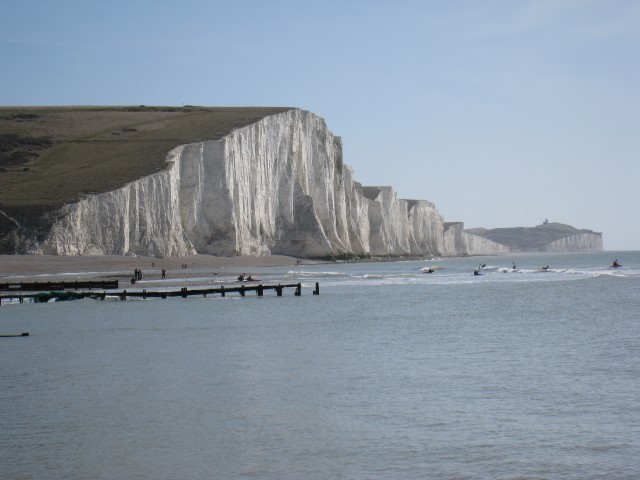
The Seven Sisters chalk cliffs on the Sussex Heritage Coast, one of Britain’s finest unspoilt coastlines.

IMG_2138 (Small)

Seven Sisters London underground station on the Victoria line, in the borough of Haringey

800px-Seven_Sisters_stn_Victoria_line_roundel

Seven sisters – seven major oil companies, which formed the “Consortium for Iran” cartel that dominated the global petroleum industry from the mid-1940s to the 1970s.

fig_002


What is it with seven sisters?  Mr Google returns 1,490,000 search results.

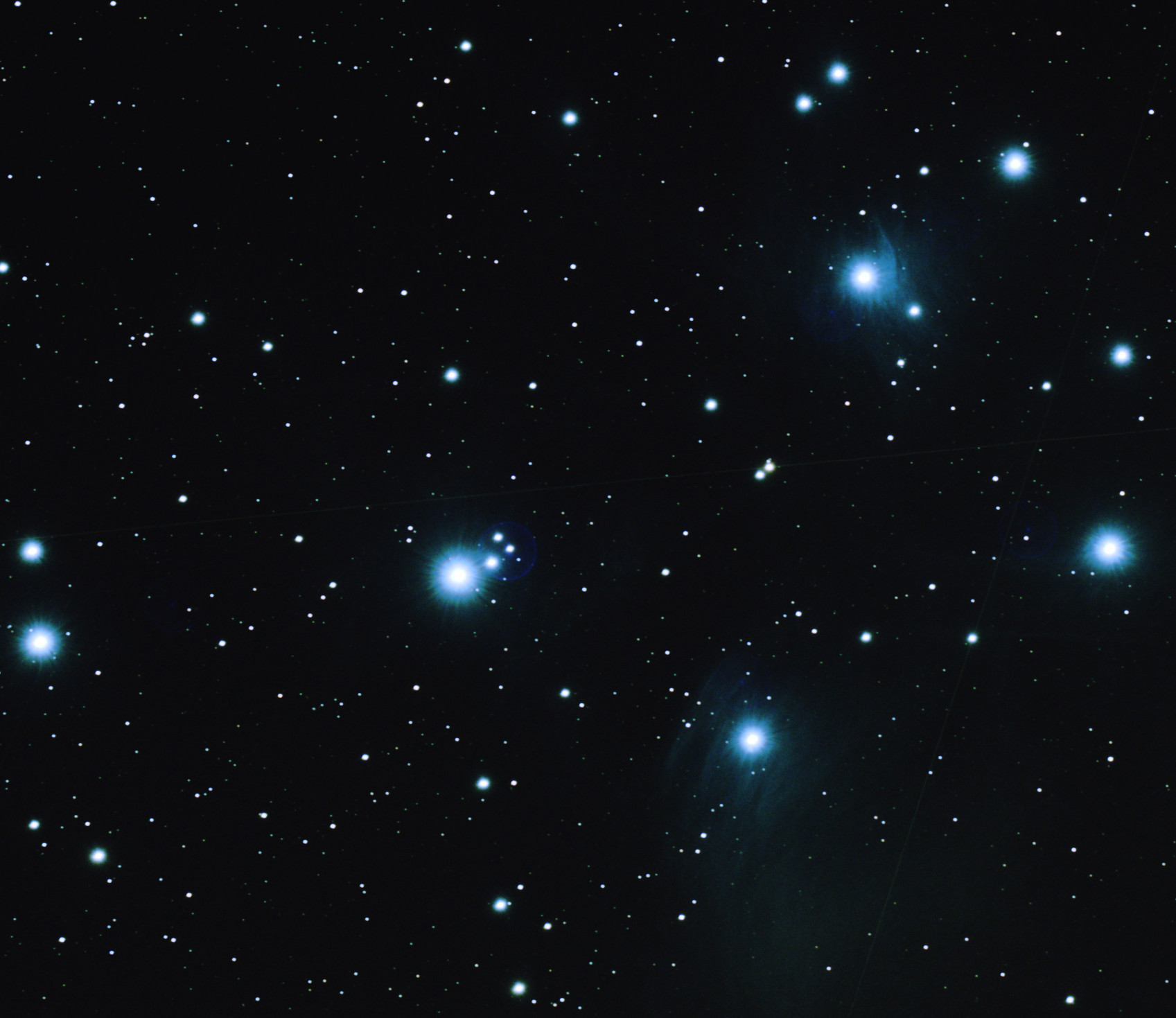
444 light years from Earth in the constellation of Taurus, with an apparent magnitude of +1.6, M45 or The Pleiades is one of the most prominent objects in the sky.  To the naked eye, the Pleiades look like a Little Dipper style asterism and with good eyesight it is possible to identify seven particularly bright blue stars.  This ‘young’ open star cluster actually contains over 1,700 stars, dominated by hot, blue stars.  M45 is currently passing through an interstellar dust cloud within the Milk Way, with the blue light from the brighter stars reflected off the dust, thus forming a distinctive blue nebulosity that can be seen surrounding the cluster.

M45 is generally considered to be a winter object in the Northern Hemisphere but, having just passed the Autumn Equinox at the end of September, it can already be seen in the late night / early morning sky.  Furthermore, as we leave the astronomical twilight of summer behind, the darkening skies are a real benefit to astro photographers; pity about the moon at the moment, which lingers until about 2.30am but thereafter leaves a still black sky, perfect for imaging.

Saturday night was the first time I have had to photograph the Pleiades using the new equipment so, given the prospect of a night long clear sky, there was no alternative but to get up early, very early – but it was worth the effort to capture this beautiful star group at its best: M45, the Pleiades AKA the Seven Sisters.

M45, The Pleiades or Seven Sisters star cluster Canon 700D unguided | 26 x 90 secs darks/bias/flats @ ISO 800

M45, Pleiades or Seven Sisters star cluster
Canon 700D unguided | 26 x 90 secs darks/bias/flats @ ISO 800


The Witch’s Broom

With polar alignment and tracking now working quite well, I have been hunting around for potential new targets before moving on to the next challenges of computer control and auto-guiding.  Within the constraints of my limited sight lines, light pollution, weather and a rapidly encroaching full moon, I decided to tackle the somewhat elusive Veil Nebula.  Although the apparent magnitude of 7.0 is not unduly challenging, the delicate nature and low surface brightness of this very large ionized gas cloud can make it difficult to image.

Located in the Cygnus constellation, the Veil Nebula is a very large but feint supernova remnant about 1.400 ly from Earth that exploded between 5,000 and 8,000 years ago i.e. quite recently.  The Veil Nebula, Cirrus and Filamentary Nebula usually refer to those parts that can be viewed, the rest of the feature not being in the visible spectrum; the Veil is one of the largest, brightest features in the x-ray sky.  So big is the Veil that various sections are recorded as separate NGC numbers: 6960, 6992, 6995, 6974, 6979 and IC 1340.

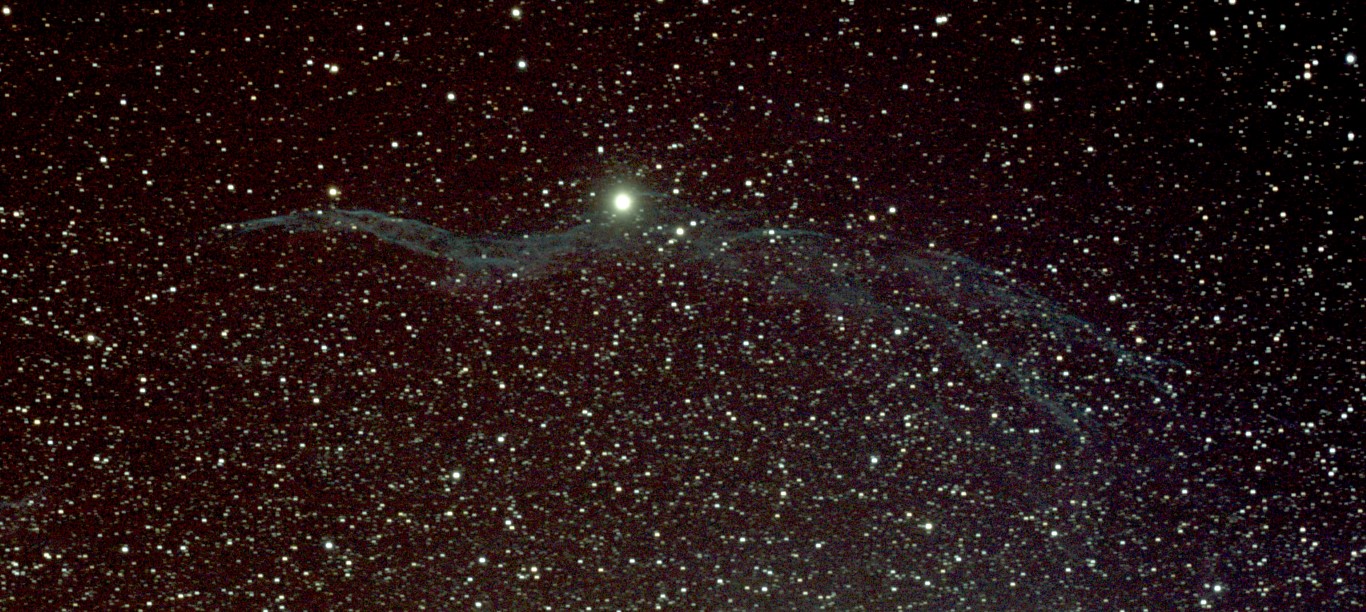
Located close to the binary star system 52 Cygni, the classic view is of the Western Veil or NGC 6960, AKA the “Witch’s Broom”, “Finger of God or “Filamentary Nebula”, which spans across 35 light-years and I therefore set out to photograph.  Following the recent success of the North America Nebula I undertook a test shot at the same settings: 90 seconds at ISO 1,600.  However, the resulting picture looked excessively washed out and so changed to 90 seconds at ISO 800, which seemed to work better – though you never really know until the late stages of post-processing.  Despite forecasts to the contrary, the cloud rolled in after just six shots but two hours later and still tracking, the clouds parted leaving a clear sky and just enough time to take another twenty shots.

Initial processing was not encouraging.  Truth be told there’s still a lot to learn with this part of astro-imaging but, with some difficulty and courtesy of Mrs G, a good image of the Witch’s Broom was eventually teased from the data.

NGC 6960 AKA The Witch's Broom Canon 700D | 20x90 sec + darks.bias/ flats @ ISO 800

NGC 6960 AKA The Witch’s Broom
Canon 700D | 20 x 90 sec + darks/bias/ flats @ ISO 800


Star wars

A big surprise to me since starting astronomy has been star clusters, which I was strangely unaware of before.  They come in two basic varieties – globular and open – their general nature is, as so many things astronomical, mind blowing.  The Milky Way has about 160 globular clusters, with highly elliptical orbits to the galaxy, whilst more distant galaxies such as M87 have over 13,000.  Each globular cluster typically contains hundreds or even millions of stars held together by gravitational forces in a roughly spherical form, generally packed into regions of ‘just’ 10 ly to 30 ly diameter.

Globular cluster stars are considered to be some of the oldest known objects in the Universe, formed just a few hundred million years after the formation of the Universe itself, and appear to be some of the first produced during galaxy formation.  Most of the stars are red and yellow Population II stars or ‘metal poor’, which have formed after a supernova.  More rare blue stars, known as blue stragglers, may also exist in globular clusters and are thought to be formed in the dense inner regions of stellar mergers.  Notwithstanding, the origin of globular star clusters is still poorly understood but research suggests they may be survivors of galactic mayhem 13 billion years ago.

http://www.mpa-garching.mpg.de/mpa/institute/news_archives/news1202_aaa/news1202_aaa-en-print.html

No known globular clusters display active star formation today, which is consistent with the view that globular clusters are typically among the oldest objects in the Universe and were some the first collection of stars to form.

And so the other evening I turned the camera on a globular cluster, M15 or NGC 7078, located by the constellation of Pegasus.  Estimated at 12 billion years old, it is one of the oldest globular clusters, 33,000 ly from Earth and one of the more densely packed clusters in the Milky Way,  containing some 100,000 stars.  Notably M15 contains a number of variable stars, pulsars, one neutron star and also unusually, a planetary nebula.  All-in-all quite a catch though I am still mystified and intrigued by their occurrence!

M15 Globular Cluster Canon 700D unguided | 20 x 90 secs + darks /   bias / flats @ ISO 800

M15 Globular Cluster
Canon 700D unguided | 20 x 90 secs + darks / bias / flats @ ISO 800