I am still struggling to return to astronomy – no longer hampered since July recovering from my knee operation, which though stiff and painful is slowly improving, but now by the weather, a one-eyed cat, my own incompetence and inevitably the Moon.
Taking care of my daughter’s cat in early August, ruled out astronomy as the unfortunate one-eyed cat is not allowed outdoors, thus making the movement of equipment freely in and out the house very difficult. The weather then turned bad before it was time for the full Moon at month end, itself an imaging opportunity, except once more for the presence of thick cloud cover. Shortly afterwards clear nights were forecast but twice after setting-up the equipment under a clear sky the clouds rolled in again. Finally a week ago under a moonless clear sky, I completed the equipment set-up and turned on the mount in order to start the alignment and camera set-up sequences.
I’ve owned the current equipment since last July and after months of busy use felt I was now familiar with all the basic procedures – wrong. Because of my operation it’s been five months since using the equipment and after going through the initial SynScan sequence I started the alignment routine, only to find that each time the scope slewed to exactly 900 east of the target star. I diligently repeated the start-up routine a number of times but with the same result – bizarrely on switching to EQMOD linked with Carte de Ciel, the scope moved correctly to the chosen star. It seemed there was an obvious answer to the problem but I could not work it out and in the end had to give up, missing a great opportunity as the sky continued clear all night – talk about frustrating!
The next morning I went through the complete mount set-up and SynScan start-up routine again, with a clear head and some guidance from SGL members, it took me about 10-seconds to find the problem – I had input the date as day-month-year instead of month-day-year; in this case 06/09/15 was exactly three months or one quarter earlier than the correct date input of 09/06/15, the sky equivalent of 90o. Why is it in the 21st Century that an advanced technologically advanced country such as the USA, uses an uncommon date format and imperial units, they even mix-up themselves and as a result lost the Mars Climate Orbiter in 1999! Notwithstanding, from frequent use I already knew the correct format but after 5-months absence couldn’t see the problem right in front of me, obvious though it was.
In the absence of ‘real’ astronomy I’ve been playing with simple camera-tripod imaging, with some rewarding results; it’s got me thinking about purchasing a smaller, simpler Vixen Polarie or equivalent tracking mount head – watch this space! The same morning after sorting out the aforementioned date format problem, I took the opportunity to take a look at the sun in the east before turning round to see a beautiful waning crescent Moon in the western sky – who needs the night sky?
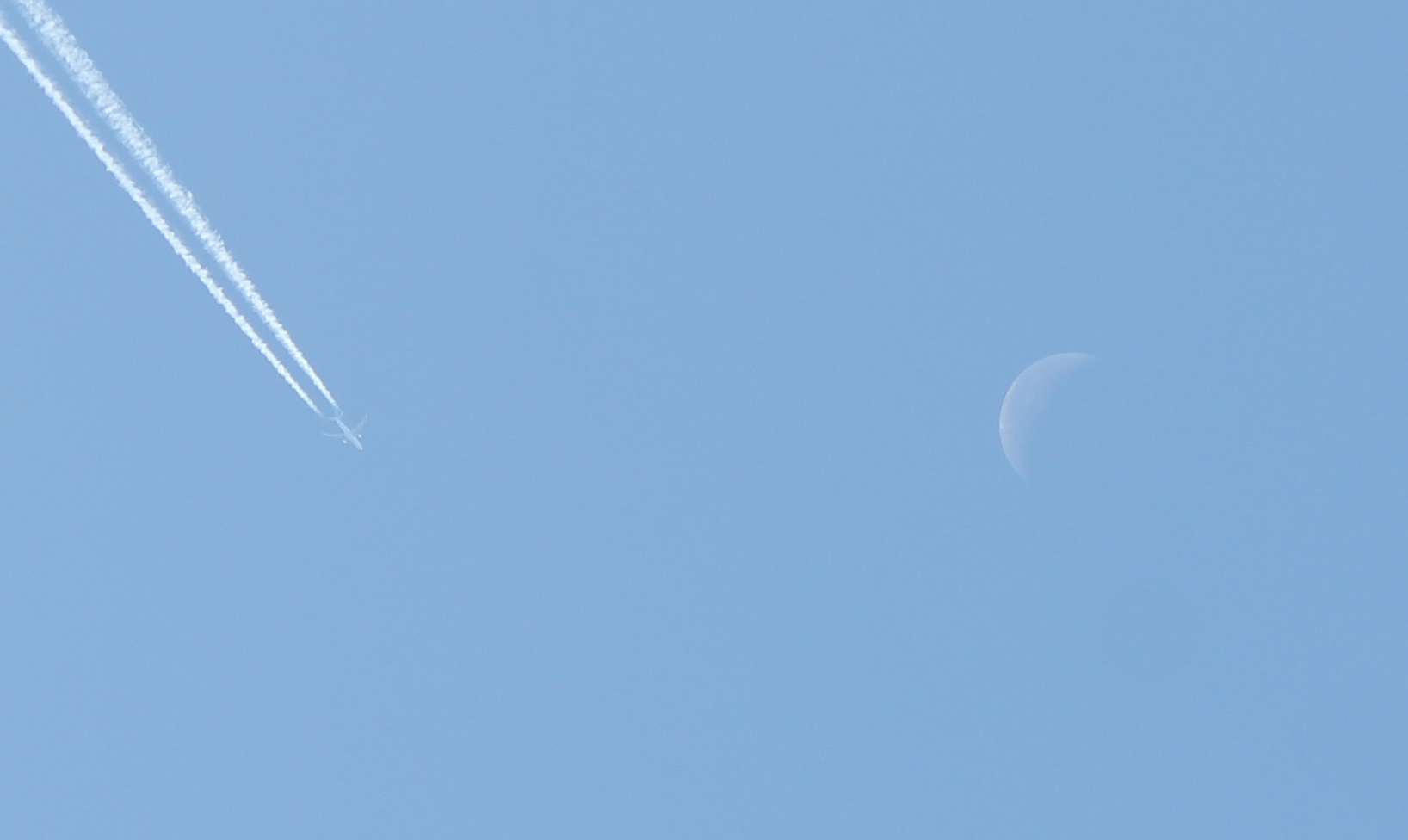
Fly me to the Moon
Too good to miss and after the previous evening’s disaster, I managed to get a pleasing sequence of images tracking an aircraft flying past the Moon – this being a case of making the best of what you have: daytime, the Moon and frequent overflying planes from nearby Gatwick airport and further afield. Being approximately 42,000 further away from Earth the Moon only looks about 4-times larger than the aircraft.

Flight animation
Changing the perspective completely, I was fascinated by last month’s image of the Moon passing in front of Earth, thus also presenting a fabulous view of what we call the dark side of the Moon. The transit was taken from the Deep Space Climate Observatory orbiting at 930,000 miles from Earth, or nearly four times greater than the Moon.
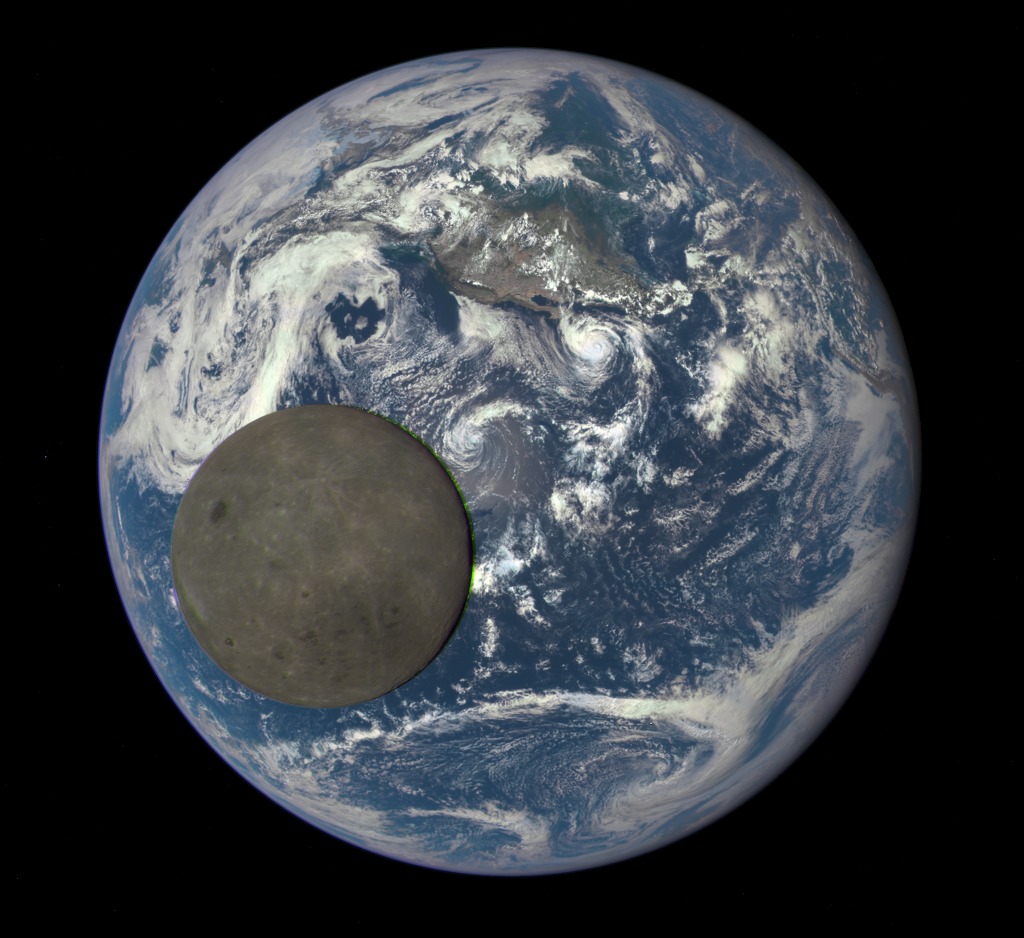
16th July 2015: The so-called dark side of the Moon, seen from the Deep Space Climate Observatory, as it passes across Earth. From our perspective that day it was a New Moon.
Pink Floyd take note – surely this image needs to replace the iconic cover from their 1973 album – it’s all about changing perspective; apart from being a spectacular photograph the image demonstrates the other side of the Moon is anything but dark!
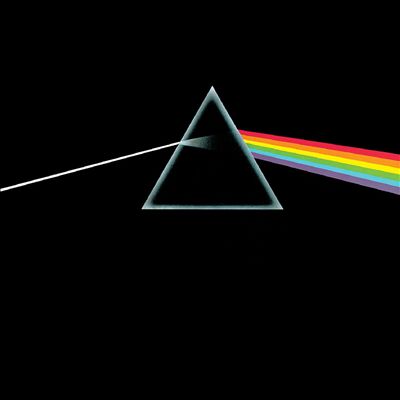
Pink Floyd’s 1973 album cover, now surely obsolete?
 WATCH THIS SPACE(MAN)