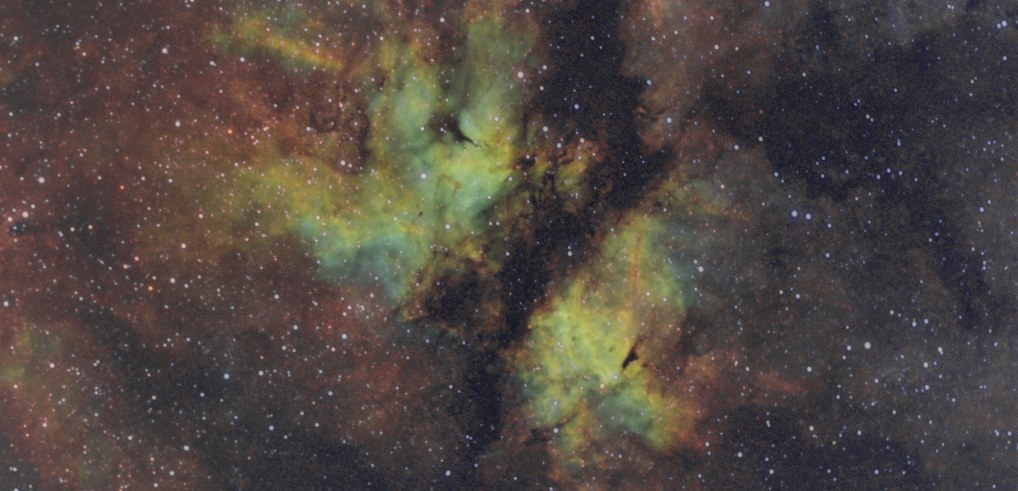
This time of the year is something of a fallow period for astronomers: short nights combined by with the complete absence of astronomical darkness and fewer DSOs. I have personally found this year more difficult than usual as since April 25th, following an operation to replace my left knee, I have been physically unable to set-up Fairvale Observatory and undertake astronomy of any sort. Notwithstanding, once over the initial few weeks of pain, I have tried to use the extra time afforded me usefully.

I have been reading Arthur Koestler’s excellent book The Sleepwalkers, which charts the history of man’s understanding of the universe and astronomy. Speaking of fallow periods, in the book I’m just past the very long period of inactivity and general superstition regarding the cosmos that occurred during the Middle Ages, which followed the more enlightened thinking of the Greeks, particularly Pythagoras; taking account of the Greek’s progress in understanding the Universe, our astronomical knowledge might have been 1,500 years more advanced today were it not for this prolonged medieval hiatus! Fortunately Copernicus (his better known Latin name) finally initiated what has become today’s heliocentric model of the Solar System, although his seminal work On the Revolutions of the Heavenly Spheres was only published just a few hours before his death after a delay of 30-years, such was his reluctance to put forwards such thoughts at that time.
Next, I have just completed the 6-week AstroTech MOOC course organised by Edinburgh University, which covered the scientific logic behind astronomical discoveries and the technology that lies behind them. This was my third astronomy MOOC and provided some interesting insight into telescope and imaging technology, as well as filling time during my recovery.
Finally, as my (limited) mobility has slowly started to improve, the night sky has recently provided a fascinating show of its own that did not require the observatory’s paraphernalia and, furthermore, beautifully demonstrated the principles originally outlined by Copernicus in 1543.
During the latter part of June Venus and Jupiter moved inexorably towards very close conjunction by the end of the month. Reaching just under ¾ of a degree separation on 30th June and 1st July this is a rare event, which with a clear sky could be easily viewed with the naked eye. Better still, I set out to photograph the two planet’s journey during the preceding 12 days, thus illustrating Copernicus’ revolutions around the sun of these two heavenly spheres. Whilst any school child will today understand this process, it is a frightening thought that belief in such a mechanism could once have led to the death penalty!
Obscured from view at Fairvale Observatory as Venus was just 17 ½o above the western horizon, I had to travel to a nearby location which provided a clearer westerly viewpoint of both planets at their low attitude. In order to obtain a series of comparable images and thus show the real spatial changes occurring up to conjunction, all pictures were taken from exactly the same location. With my Canon EOS 700D fixed on a photographic tripod I shot a series of images over a 50 minute period using either the 18mm or 55mm telephoto settings, playing with ISO and speed settings as darkness progressed; this was roughly the time the two planets took to disappear below the Earth’s horizon after achieving Civil Darkness.
The resulting photographs show Jupiter apparently advancing on Venus before at conjunction ‘passing’ close by on the aforementioned days. Whilst Jupiter is the third brightest object in the night sky (after the Moon & Venus) and nearly 12 times the size of Venus or 1,400 times by volume, the planet looks very small by comparison to Venus. This of course is the effect of perspective, with Jupiter currently some 565 million miles distance from Earth, whereas Venus is only 48 million miles; furthermore although at -1.8 the apparent magnitude (brightness) of Jupiter is high, at -4.4 Venus is much brighter.
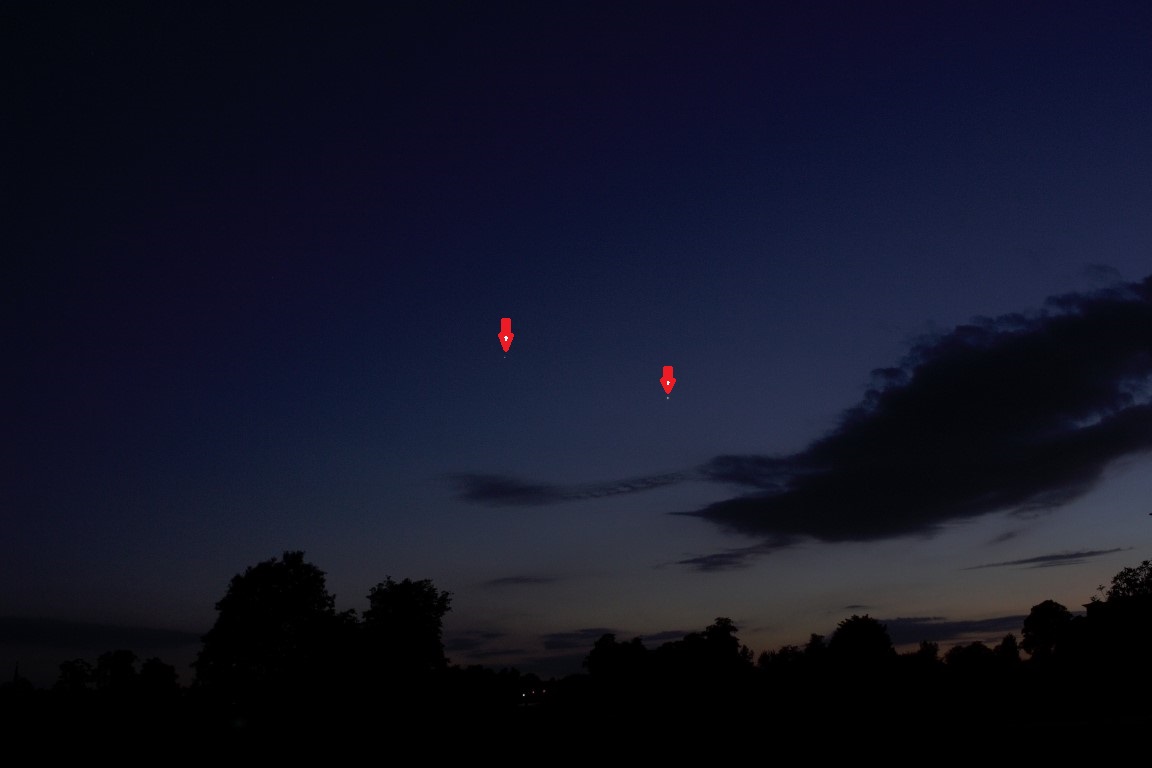
18th June 2015: Jupiter left, Venus right – trees on the horizon provide a reference scale as the planets move towards each other during the month in subsequent photographs.
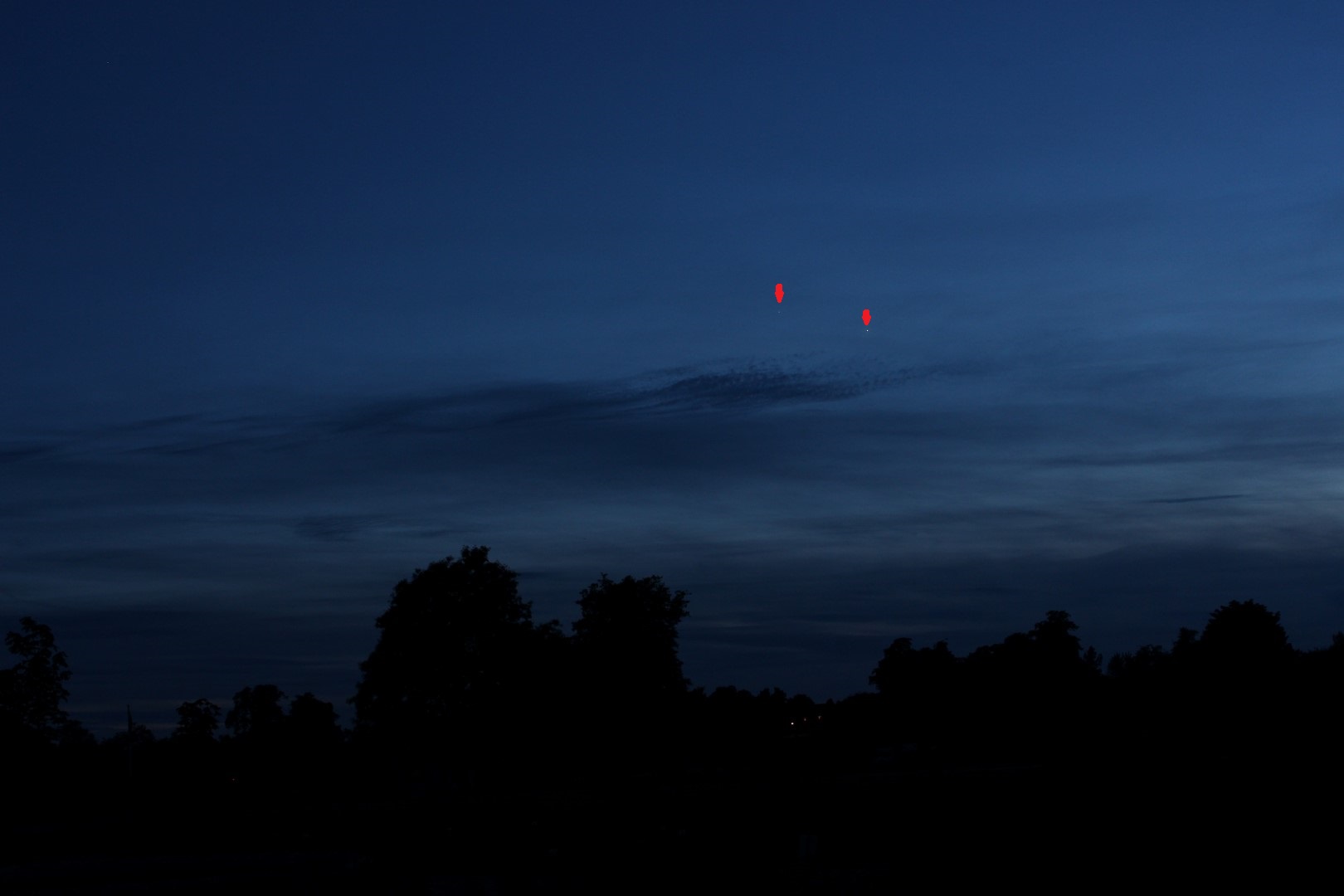
25th June 2015 + 7-days

30th June 2015 + 5 days. Nothing – dark thunder clouds completely obscure the western sky during conjunction!!!
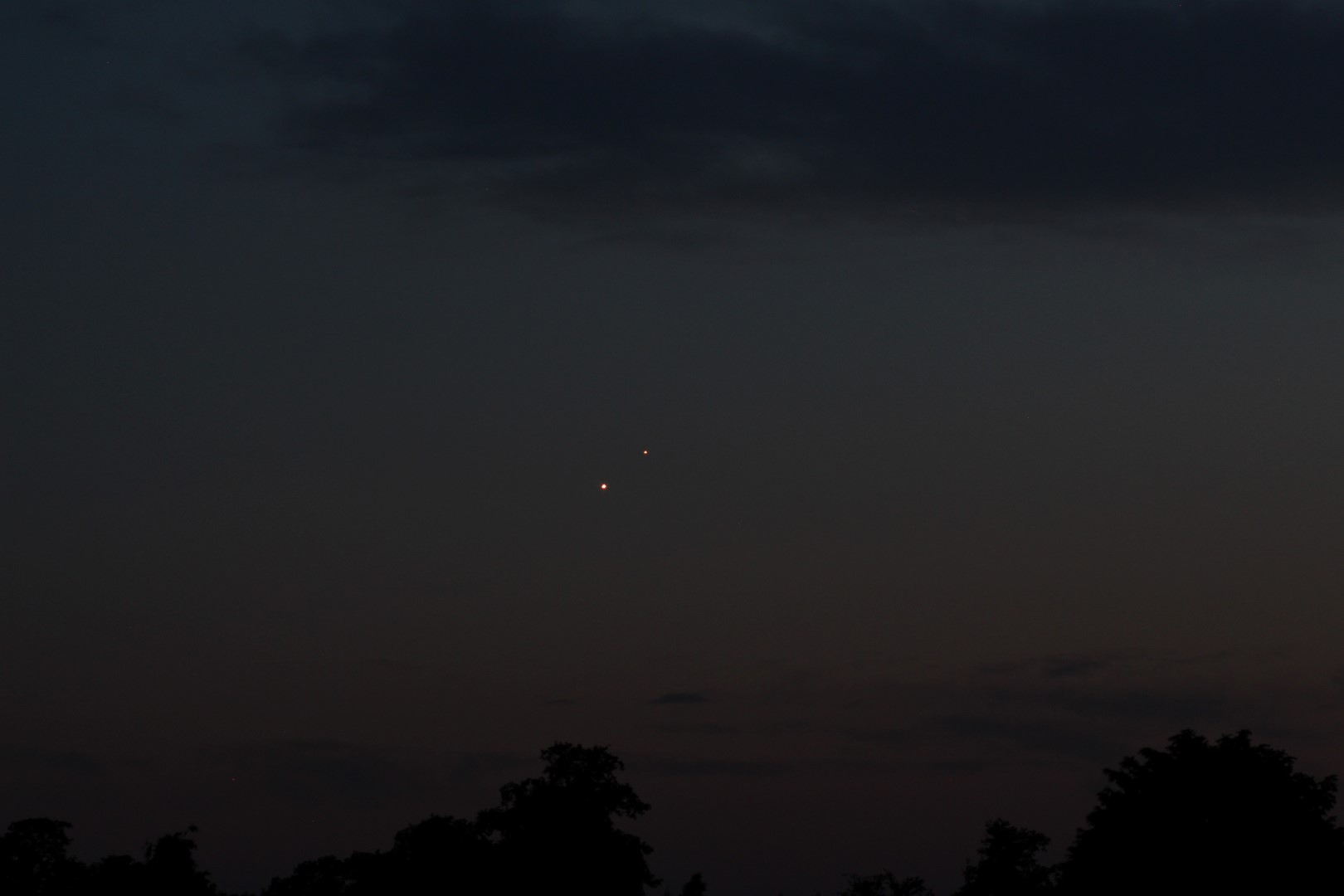
1st July 2015. Bingo = conjunction; though one day later Jupiter has now moved to the right of Venus.
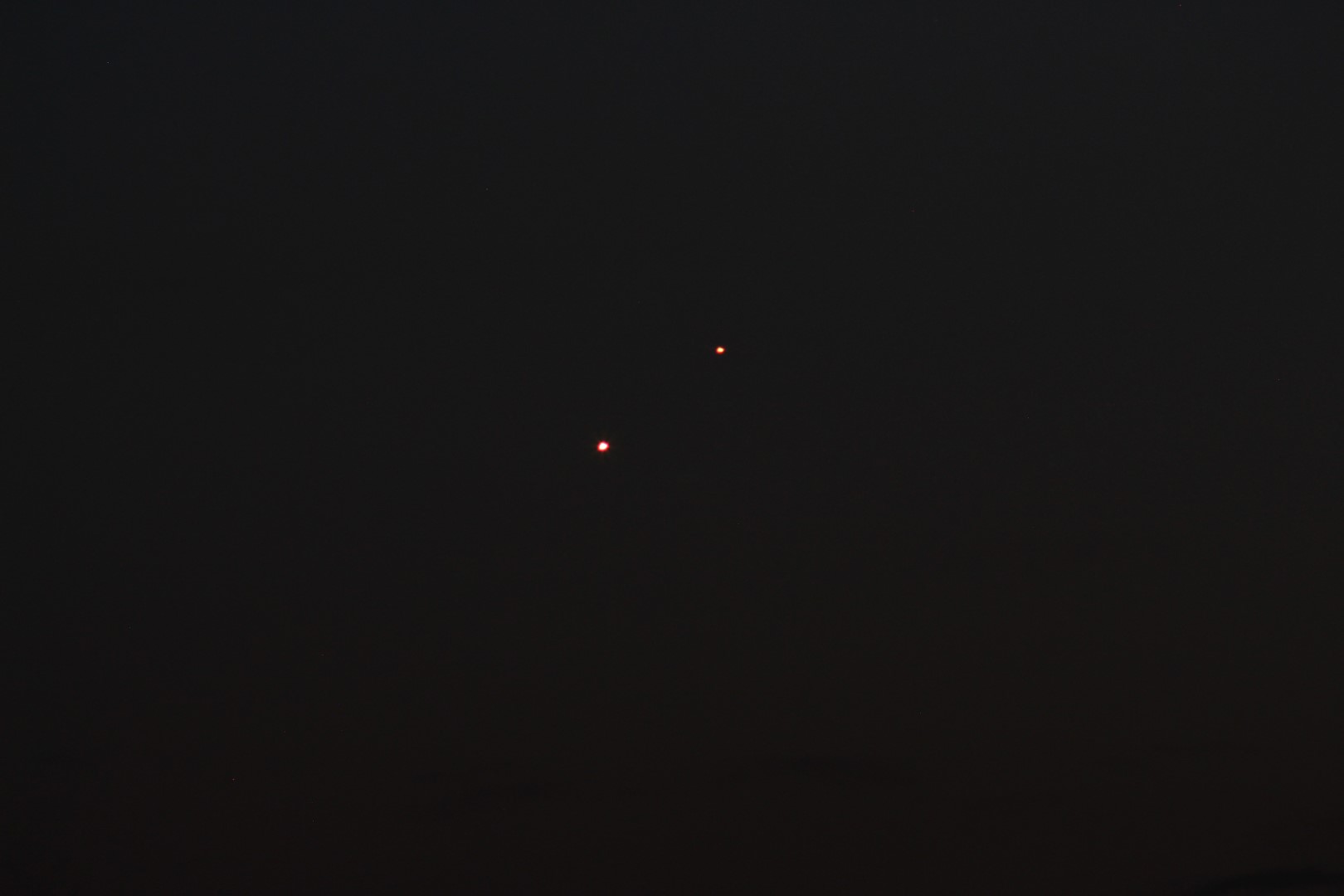
1st July 2015. Conjunction close-up using 55mm telephoto setting and ISO 400 – Venus now left & Jupiter right.
Unfortunately I am expecting it will be at least another month before I have recovered sufficiently to consider setting-up Fairvale Observatory again, by which time Astronomical Darkness will thankfully be slowly returning. In the meantime I’m looking forwards to the next section of The Sleepwalkers which covers Kepler and Galileo and hopefully exciting developments from the New Horizon Pluto fly-by and more from the Rosetta Mission and the re-awakening of its Philea lander. Given clear skies there should also still be plenty to see without the observatory: The Perseids, Saturn and of course at the centre of our Solar System as determined by Copernicus, the Sun, which will be at aphelion on 6th July – though you wouldn’t think so judging by the high temperatures currently prevailing in the UK and Europe!
 WATCH THIS SPACE(MAN)
Pingback: By Jove | WATCH THIS SPACE(MAN)
Pingback: Looking Up | WATCH THIS SPACE(MAN)
Pingback: Fly me to the dark side of the Moon | WATCH THIS SPACE(MAN)
Pingback: The Pelican & The Phoenix | WATCH THIS SPACE(MAN)
Pingback: Reflections – 2015 | WATCH THIS SPACE(MAN)