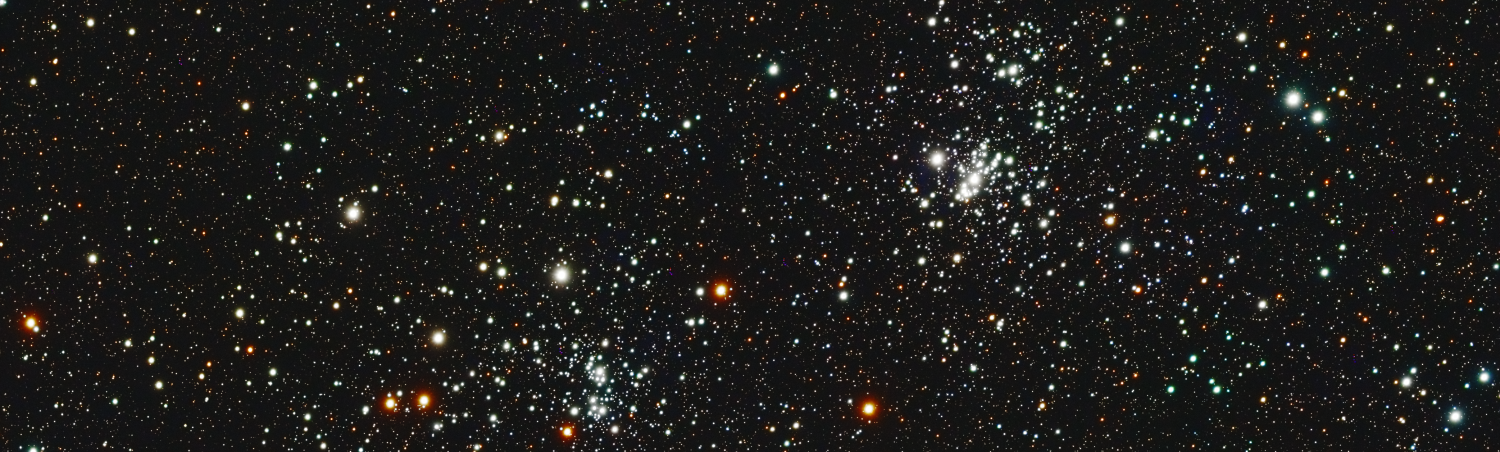
It’s three weeks since the Spring Equinox and two weeks since moving to British Summer Time (BST or daylight saving, GMT+1 hour), the result is that the night sky starts much later in the evening and is rapidly decreasing in length; it is just about six weeks before Astronomical Darkness completely ceases and will not come back until the end of July. In addition, through a combination of European pollution and fine sand from the Sahara drifting over South East England this week, otherwise clear skies were badly obscured by the resulting haze. As a result, since shortly before the full Moon on April 4th astronomy has not been possible – until last night.
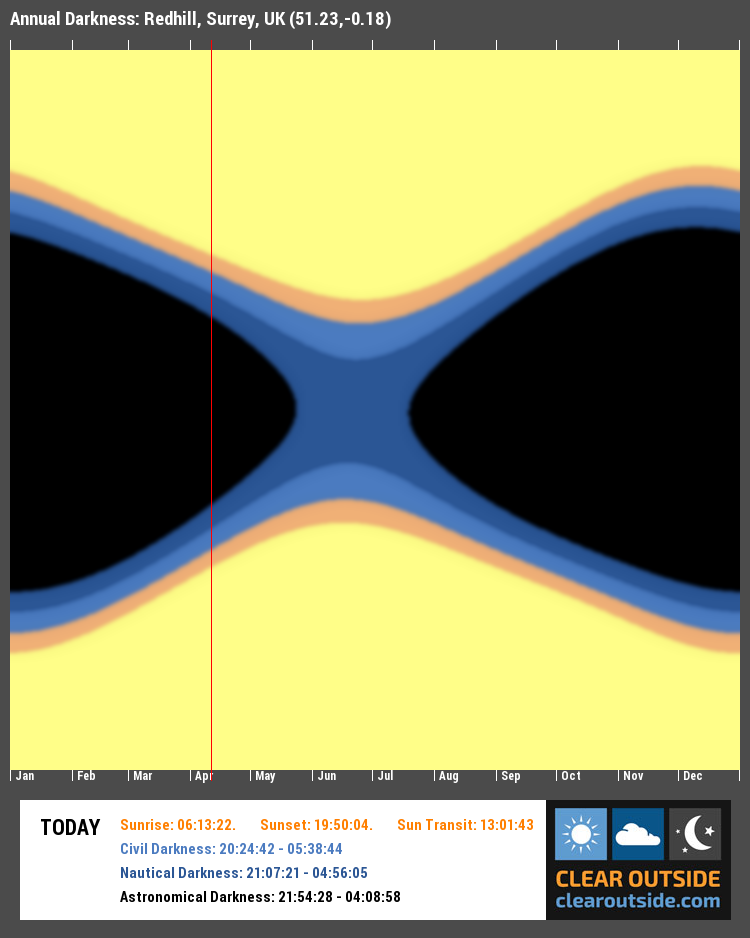
The march of time and annual movements of the Solar System inevitably lead to a significant loss of quantity and quality of darkness at this time of the year.
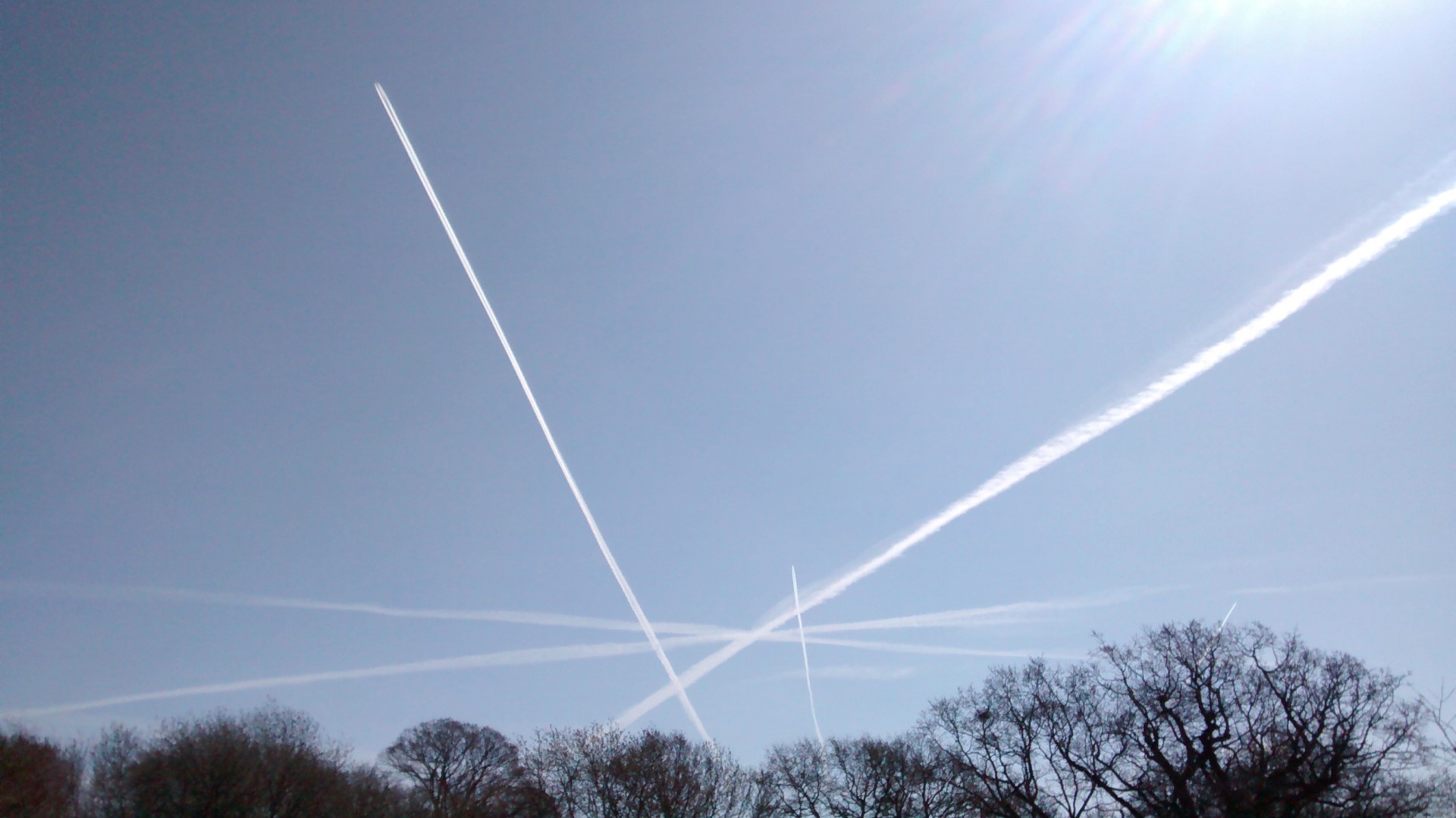
Taken this morning, the contrails over Fairvale Observatory make a striking picture but together with other pollution are having a significant impact on seeing conditions here at the moment.
In the early evening twilight sky for a brief period between sunset and astronomical darkness, at the moment Venus is low on the western horizon. Last night its apparent position was also close to the Pleiades star cluster, making an attractive widefield photograph. Furthermore, shortly before Venus moved below the horizon and the sky had nearly reached Civil Darkness, the constellation Taurus also became visible to the south west with the bull’s ‘eye’ star Alderbaran and the v-shaped Hyades star cluster clearly evident.
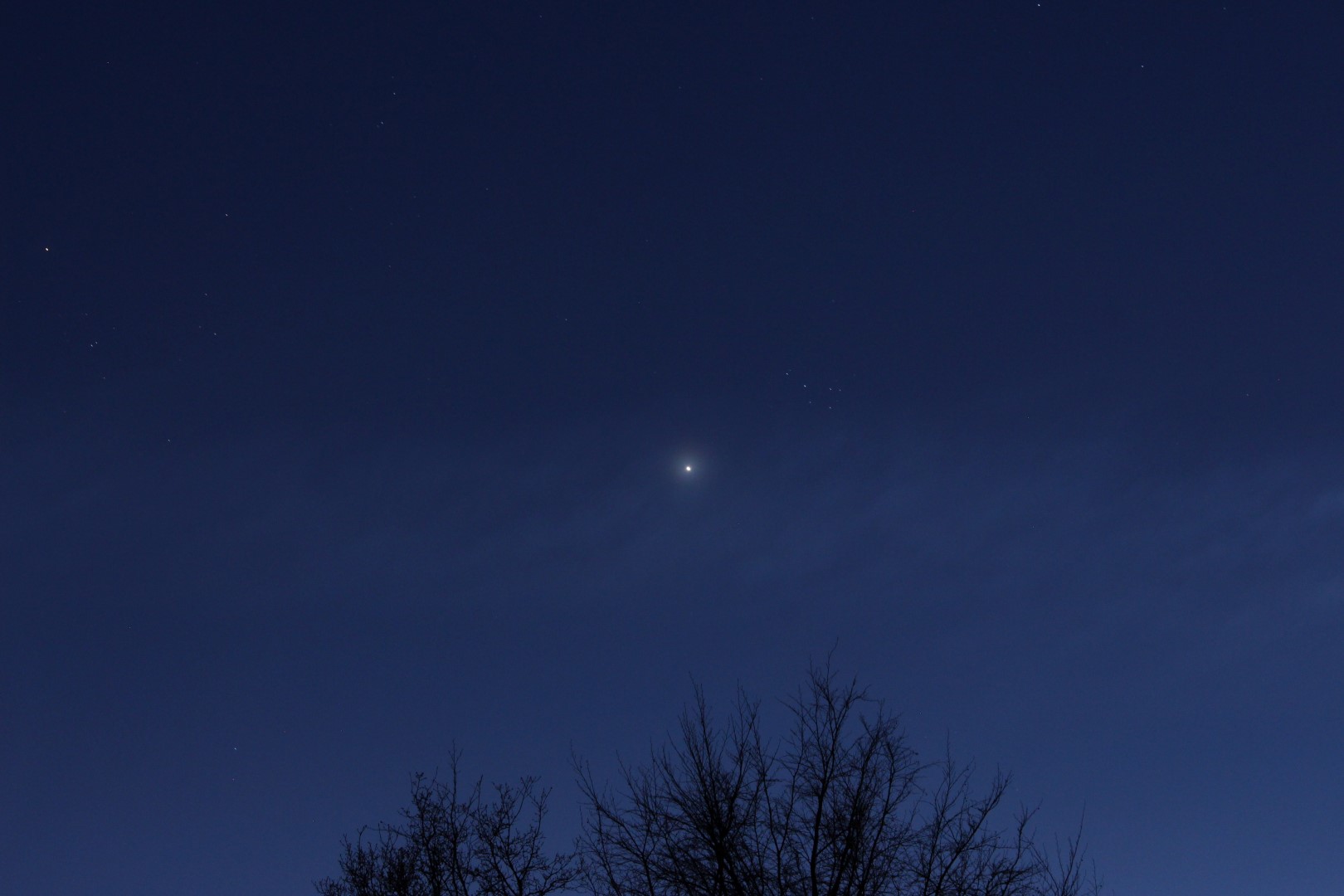
Venus at sunset last night: the Pleiades can only just be seen at 2-o’clock to Venus with Taurus on the far left.
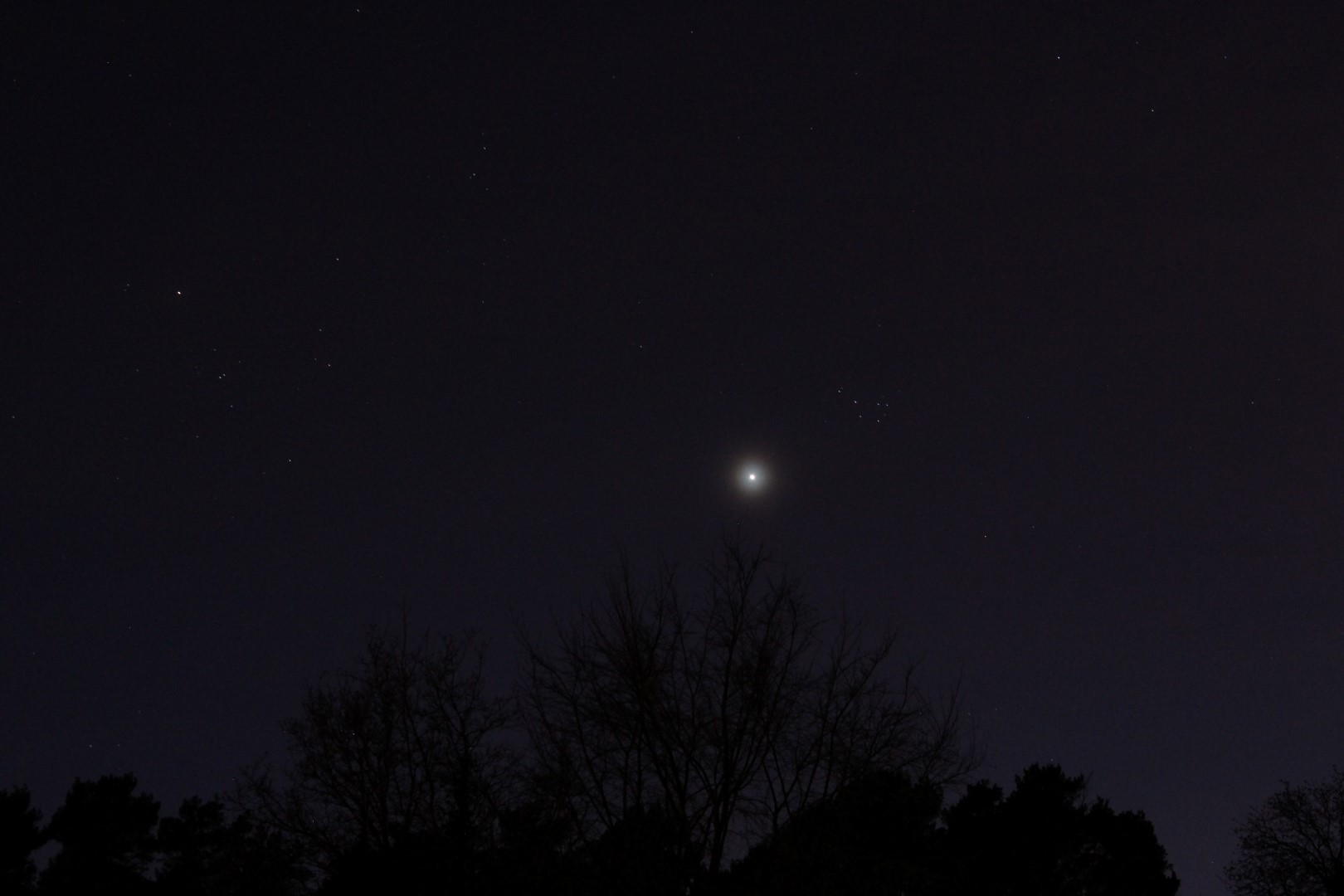
Twenty minutes after sunset shortly before reaching Civil Darkness, the Pleiades and Taurus constellation are now quite clear.
Such a picture is a reminder that it is important to consider photography other than telescopic based planetary and deep sky imaging, especially as viewing and imaging conditions become more limited over the forthcoming Summer period.
 WATCH THIS SPACE(MAN)