Twinkle, Twinkle………

Astronomy is full of surprises, and learning of the mere existence and nature of globular clusters was a revelation to me.  Perhaps less spectacular and much younger but no less interesting and attractive are open clusters. The so-called Double Cluster is something of a highlight of autumn and winter skies that I had not, until now imaged; not by neglect but because until recently moving to Somerset my previous view of the north sky in Surrey was completely obscured by my house!  Their combined luminosity makes the Double Cluster visible to the naked eye from dark locations, appearing as a hazy patch to the east of the Cassiopeia constellation and are excellent imaging objects too.
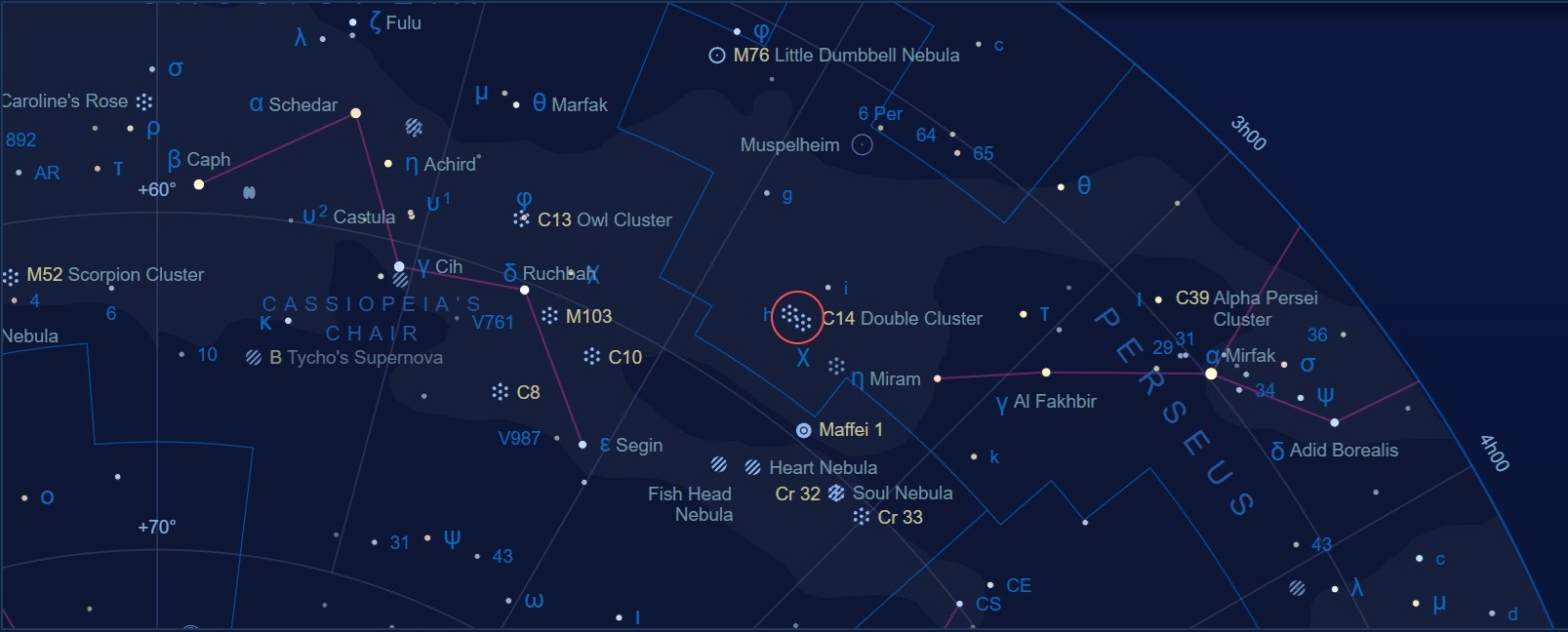
 

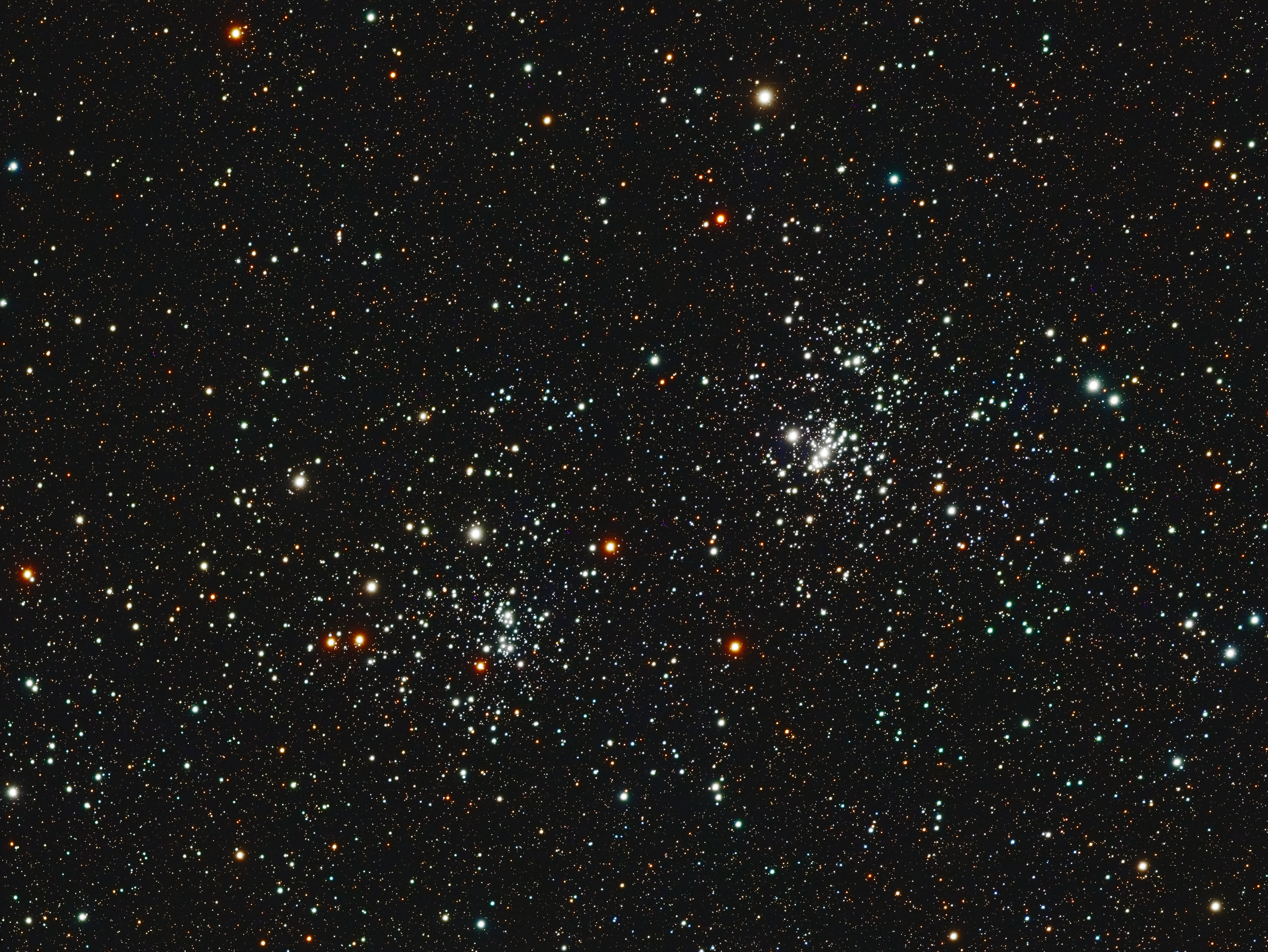
NGC 869 and NGC 884, known as the Double Cluster or h and χ (chi) Persei, is one of the most striking celestial pairings visible in the northern sky.  Located in the Perseus spiral arm of the Milky Way, these two open star clusters are located about 7,500 light-years away but separated by only a few hundred light-years. Their proximity, similar age, and shared motion through space suggests that they formed from the same giant molecular cloud, making them a physically associated pair rather than a chance encounter.
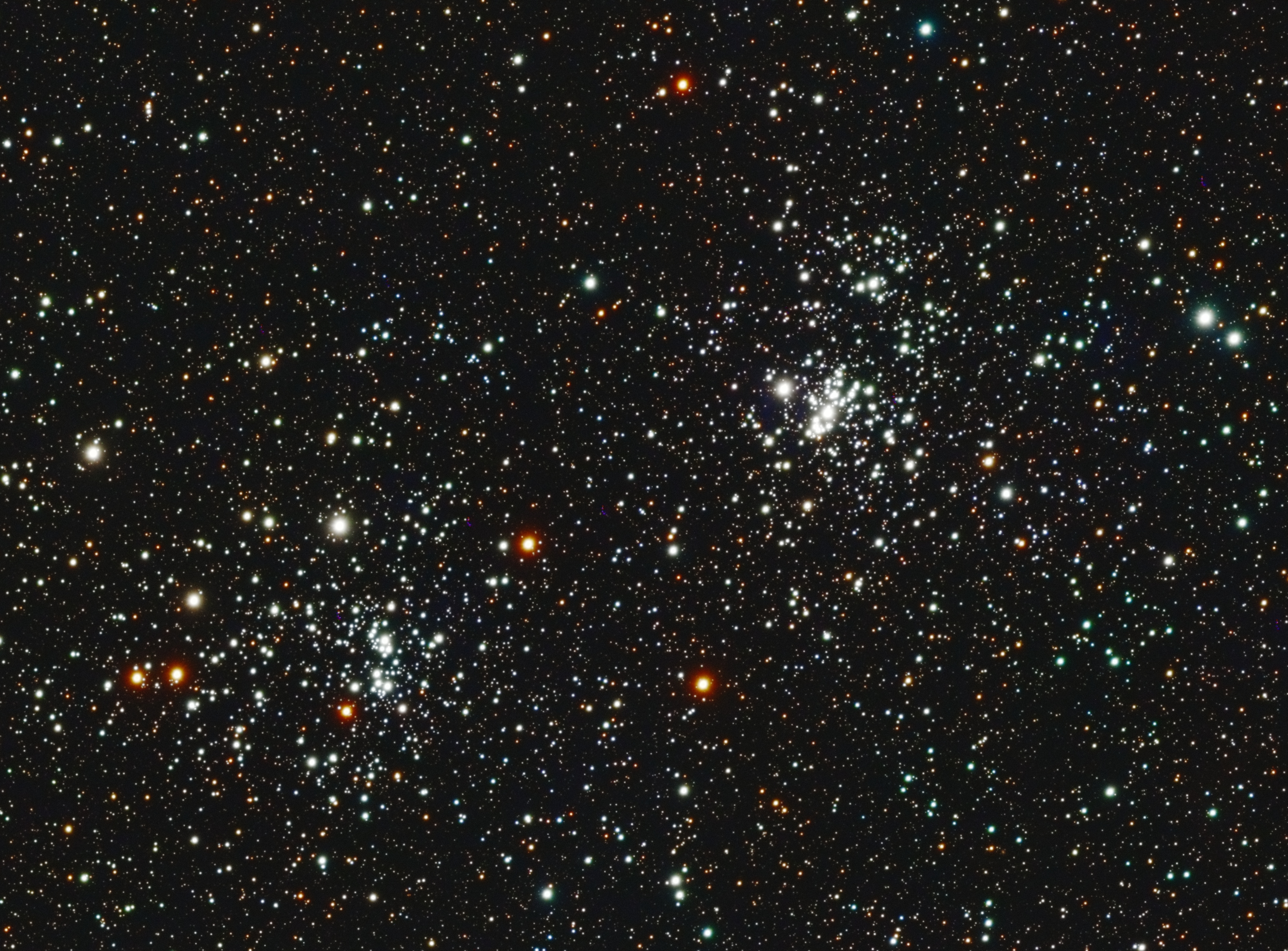
Double Cluster Up Close

Each cluster contains thousands of stars*, many of which are hot, blue and massive, thereby indicating an early stage of stellar development; estimates indicate an age of approximately 12 to 14 million years. Their youth explains the abundance of B-type and even O-type stars—stellar heavyweights that shine intensely but live only briefly.

The resulting image shows the Double Cluster as a dazzling field of stars. NGC 869, slightly denser and more compact, contains a bright core of hot blue stars. In contrast, NGC 884 appears more loosely concentrated, with a distinctive scattering of bright stars across its central region. Both clusters show subtle hints of red and orange from K-type supergiant stars, evidence that even at their youthful age, some massive stars have already begun to leave the main sequence. 

*processing software identified 22,000 stars in the image!

COMPARISON: GLOBULAR v OPEN CLUSTERS
FeatureGlobular ClustersOpen Clusters
Typical StarsOld, metal-poorYoung, metal-rich
Number of Stars10⁵–10⁶+10²–10³
ShapeSpherical, denseIrregular, loose
LocationGalactic haloGalactic disk
Age10–13 billion years1 million–few billion years
LongevityVery long-livedShort-lived (astronomically)

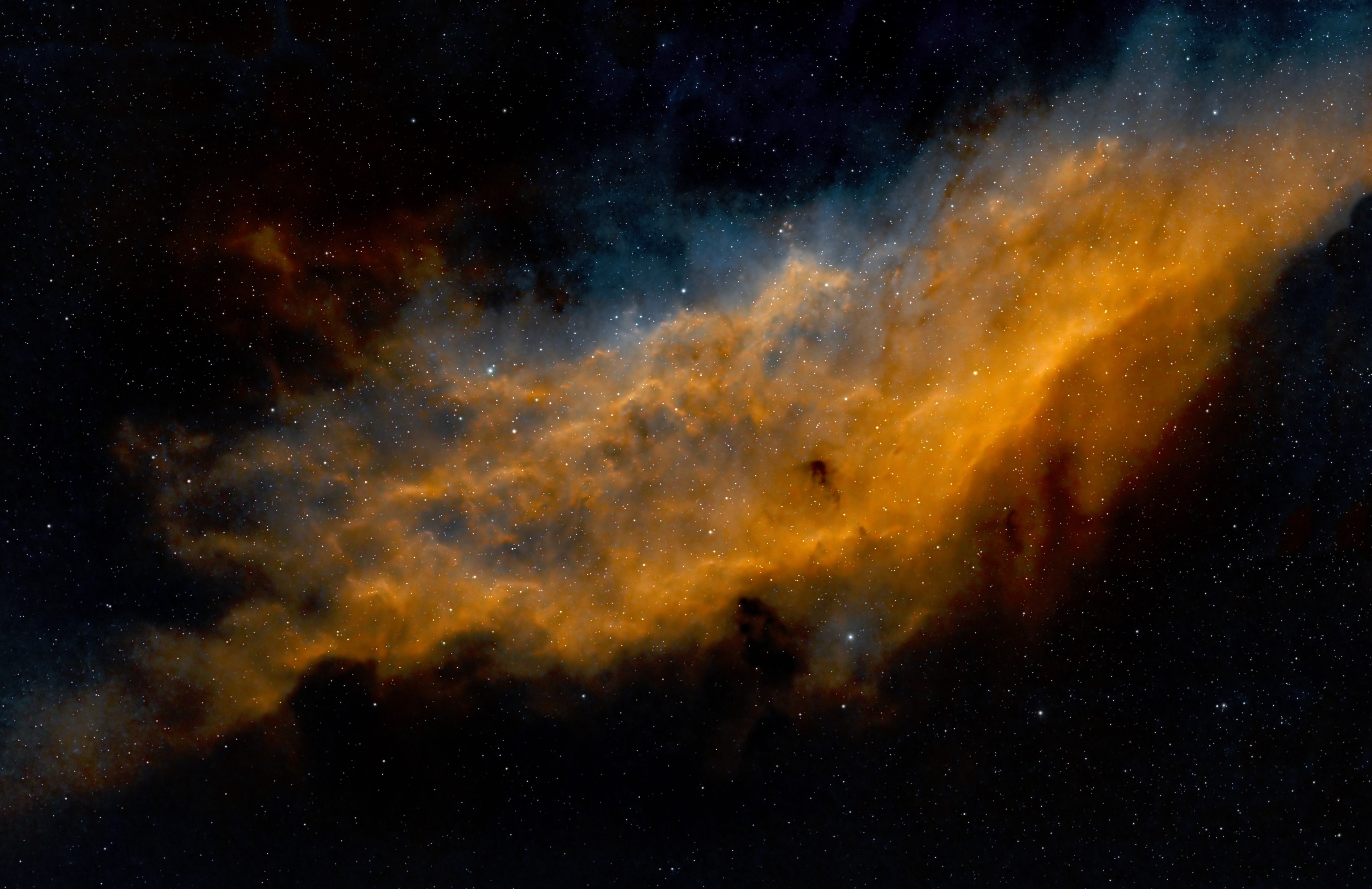
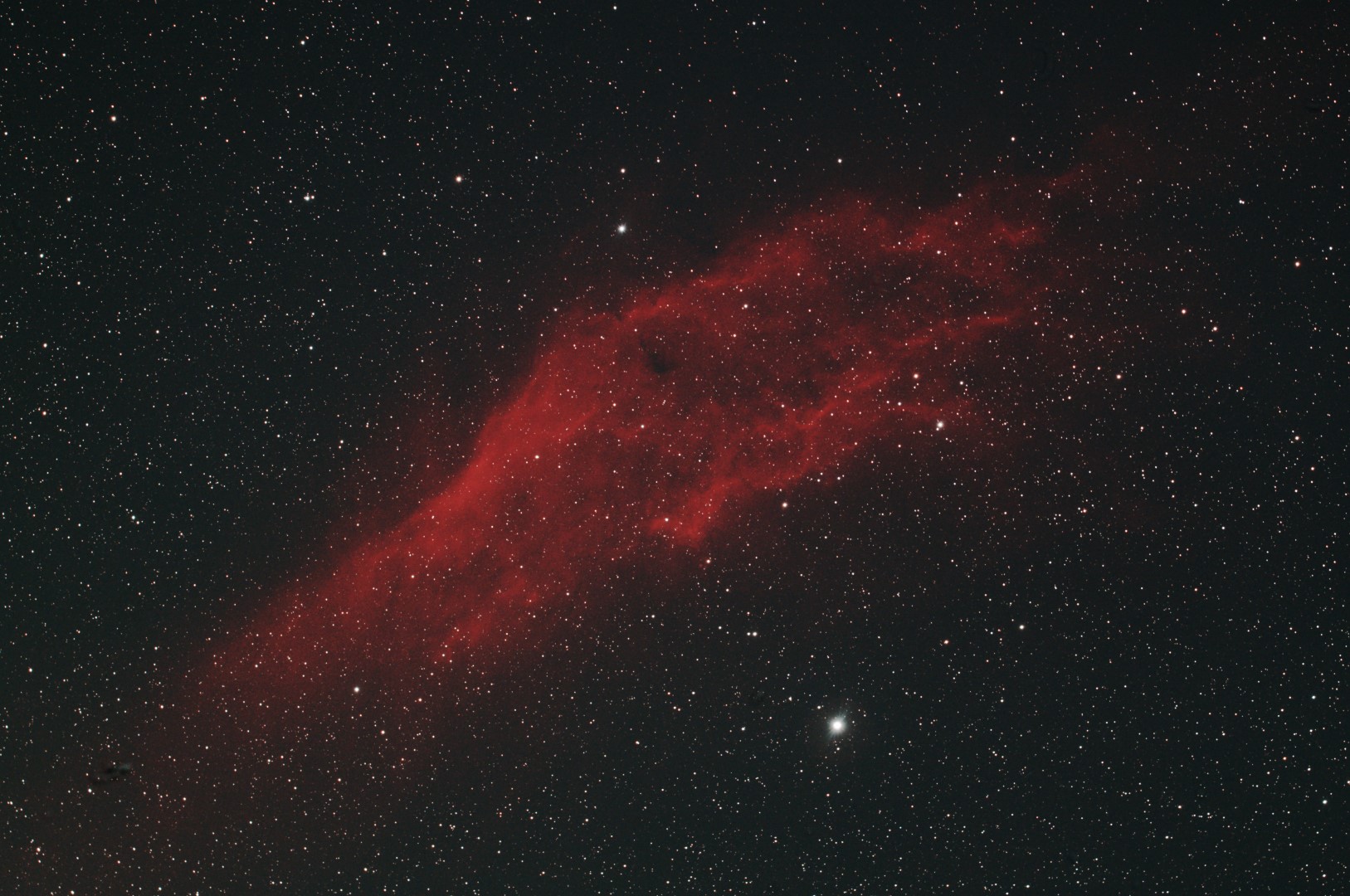
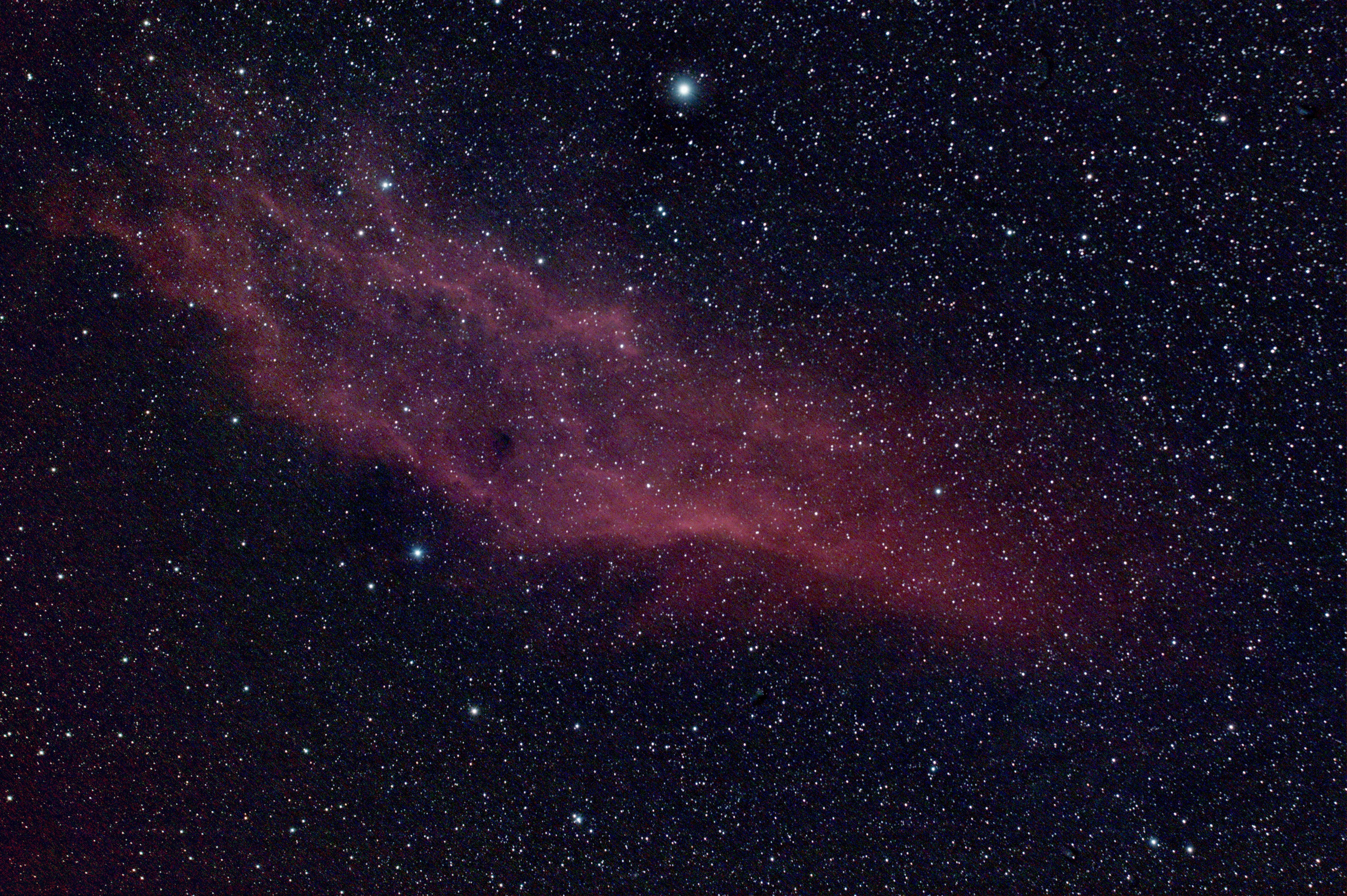
Surf’s Up! The California Nebula – NGC 1499

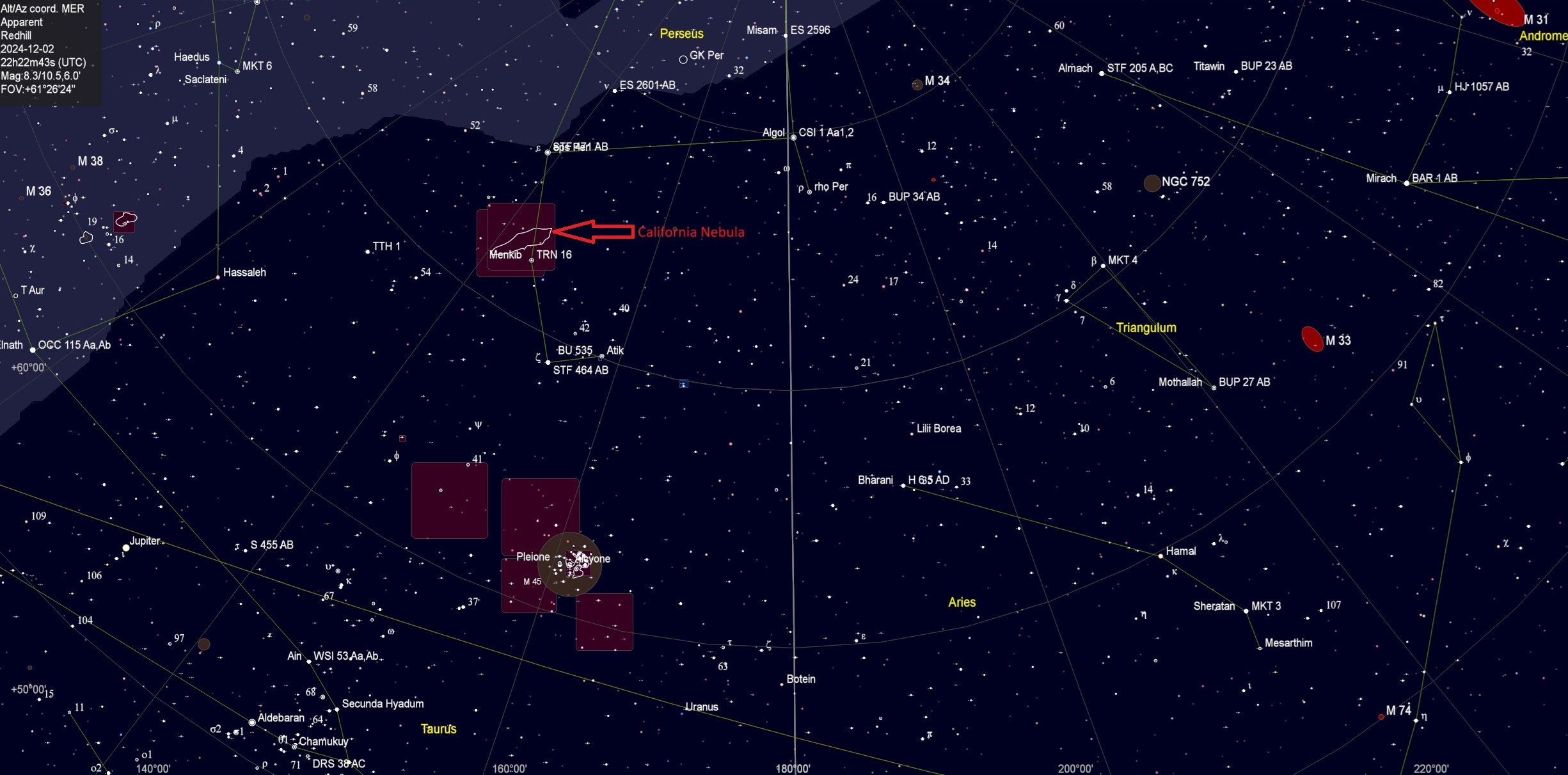
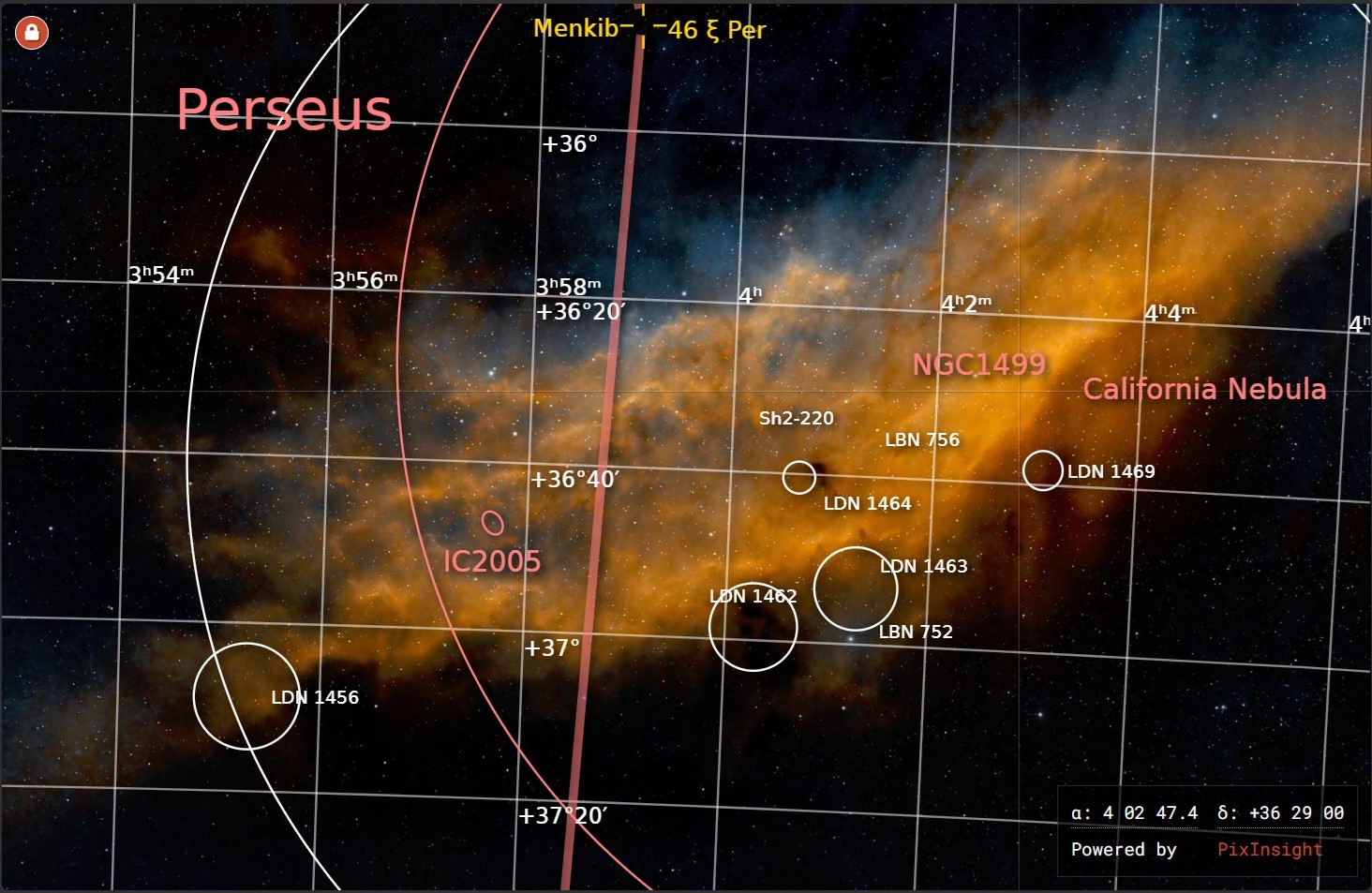
Curving across the Autumn night sky somewhat alone in the Perseus constellation, is the large (100 light-years ~ 2.50o) California Nebula.  Being something of a prelude to the arrival of Orion and all its exciting objects, I have somewhat neglected this astronomical behemoth, only imaging it for short periods from time to time in the past.  Despite continuing poor conditions and with some difficulty, on this occasion I manged nearly 8-hours integration, which with careful processing has brought out the true majesty of this exciting feature.

The final image has been flipped 180 degrees, which for some reason seems to enhance the depth?

An emission nebula located some 1,000 light years from Earth, the billowing clouds of hydrogen and sulphur gases and dust, and the faint, wispy veil of oxygen are clearly evident in this powerful SHO image.  The intense ultraviolet radiation from the nearby massive star Menkib – with a surface temperature of about 37,000 K and radiation 330,000 times greater than our Sun – plays a key role in ionizing the gasses of the nebula, which ultimately brings this majestic monster to life.  

It’s All Relative

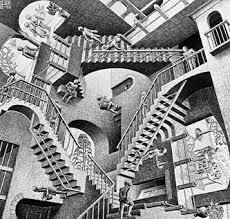
escher

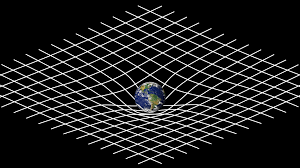
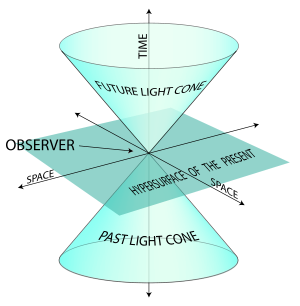
I spent the first half of this year reading Walter Isaacson’s biography of Albert Einstein, which apart from providing a fascinating insight into the man and his work, whetted my appetite to understand better the science.  Following previous success studying astronomy courses online, I set out to find a suitable programme to achieve this goal.  As a result I enrolled for Understanding Einstein: the Special Theory of Relativity run by Professor Larry Lagerstrom of Stanford University, USA, which after two months I have just completed.spacetime

The course is a good mix of qualitative and quantitative information, which at times has been quite challenging but nonetheless proved very worthwhile. The lecturer is very clear and thorough, an essential quality when dealing with this difficult and often bewildering subject.  Einstein’s paper On the Electrodynamics of Moving Bodies outlines the Special Theory and was just one of four published at about the same time in 1905 (“The Miracle Year”) which included: Brownian motion, Mass-energy equivalence (E=Mc2) and The Photoelectric Effect, the latter of which won him the Noble Prize.  At the end I now feel I understand the basics of Einstein’s ground breaking science properly, which apart from being interesting provides valuable insight and understanding of the Universe and related issues of space and time.

300px-world_line-svg

During this period I have also been thinking about how to improve my astrophotography and the way forwards.  I’ll be on the learning curve for years to come and accept that there’s much I can still improve on using current equipment and processes but after more than 2-years astroimaging, mostly with a DSLR camera, I feel I have reached something of a crossroads and need to change tack in order to achieve more meaningful advances once again.  Inevitably this is likely to mean new equipment and most likely a move to LRGB / Narrowband format.  In the interim, whilst I consider the options, I have also been researching suitable capture / sequencing software, post-processing techniques and programmes.  I am concerned that this will result in another level of complexity but I think it has to be done in order to progress – watch this space.

Continuing a trend that’s been apparent for the past year, clear nights have been something of a rarity since mid-September; this is a concern if I am to pursue astrophotography to the next level.  However, high pressure was unusually dominant over Fairvale Observatory during the last days of November and cold, clear skies have provided good conditions for astronomy at last.

img_20161130_234303293

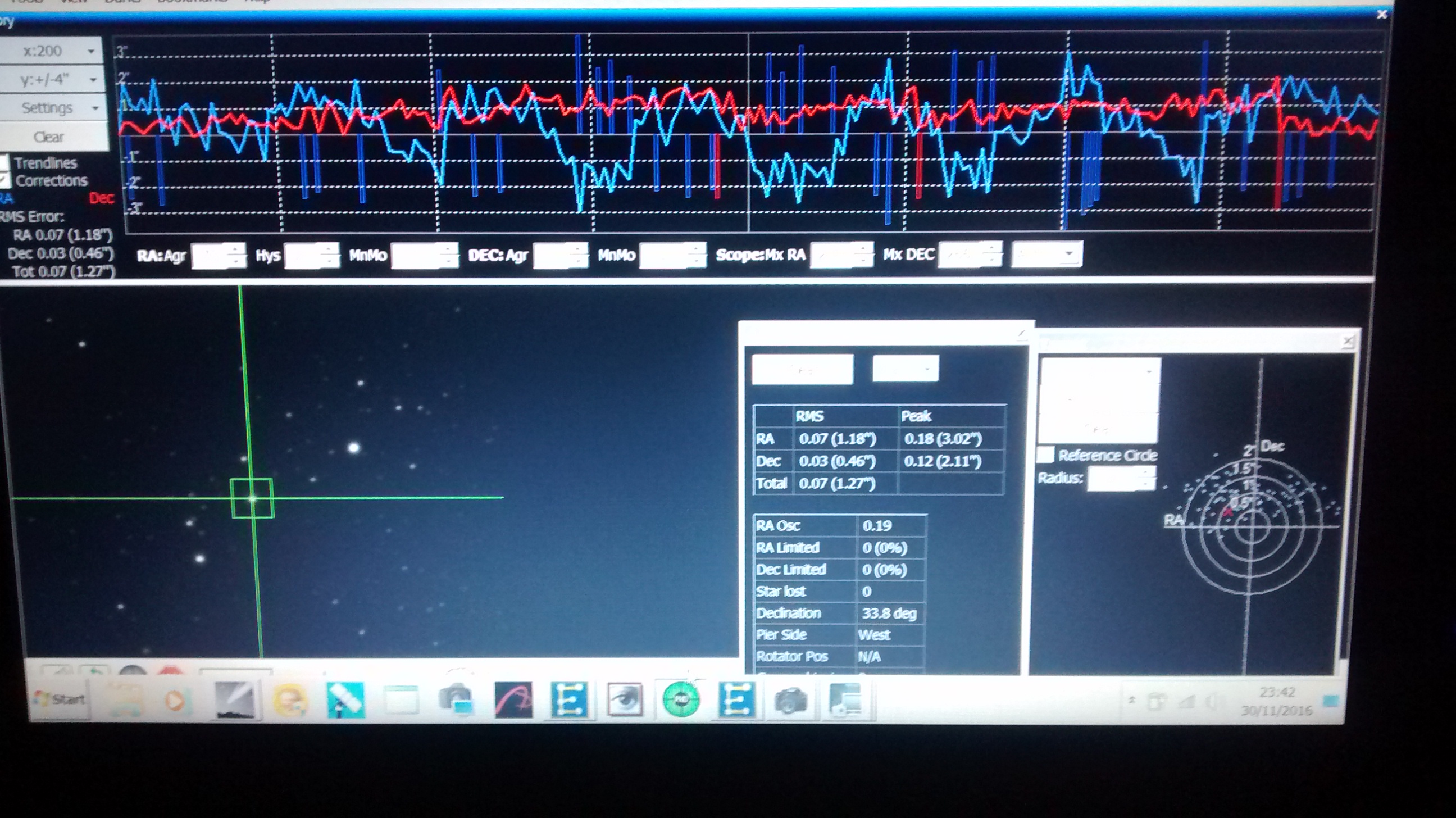
Getting better – PHD2 screen 30th November 2016: DEC is good but room for improvement with the RA settings. The impact on tracking and image quality is noticeable.

Whilst I have certainly not fully mastered guiding I am now routinely using PHD2.  This in itself has probably been the major breakthrough this year, which with the aforementioned clear skies I wanted to take full advantage of.  Hidden within PHD2 I have also discovered and am now starting to experiment with the on-screen drift align routine, with reasonable results; using the gamepad for mount control and a new wireless link with my tablet computer, I can also make focus and alignment adjustments at the mount without returning to the computer each time.

As a result I have dispersed with the SynScan handset for alignment and can now completely set-up and control imaging with the computer and tablet; this is nothing short of a revolution which I am hopeful will greatly increase set-up time as well as improving control and tracking accuracy – yipee!  Even with average guiding results I am now achieving good exposures of 5-minutes or more and therefore decided to put this success to work and re-image some winter wonders over three, yes three, consecutive nights at the end of November.

nov-objects

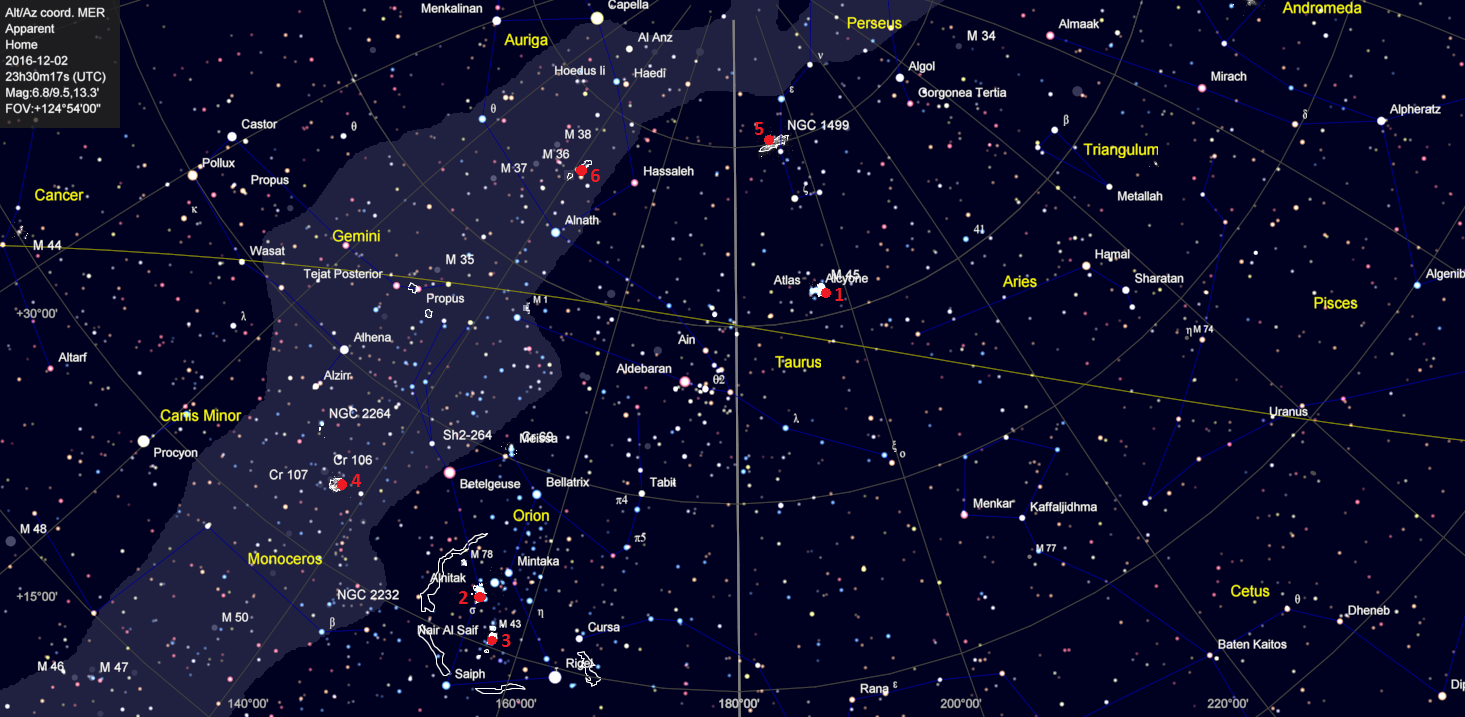
Imaging targets between 28th & 30th of November 2016 – for descriptions & previous images taken of these objects click on the following list of names: (1) M45 Pleiades (2) Barnard 33 The Horsehead Nebula & NGC 2024 Flame Nebula (3) M42 Orion Nebula (4) NGC 2244 Rosette Nebula (5) NGC 1499 California Nebula (6) IC 405 Flaming Star Nebula

The night sky at this time of the year contains many of my favourite objects, but surprisingly I had not imaged some of the chosen targets for more than a year or two and it was both enjoyable and pleasing to reacquaint myself again.  With a new perspective gained from this exercise, the progress I have made with equipment and techniques is more apparent.  Notwithstanding, it’s time to move on – everything’s relative.

Picture saved with settings embedded.

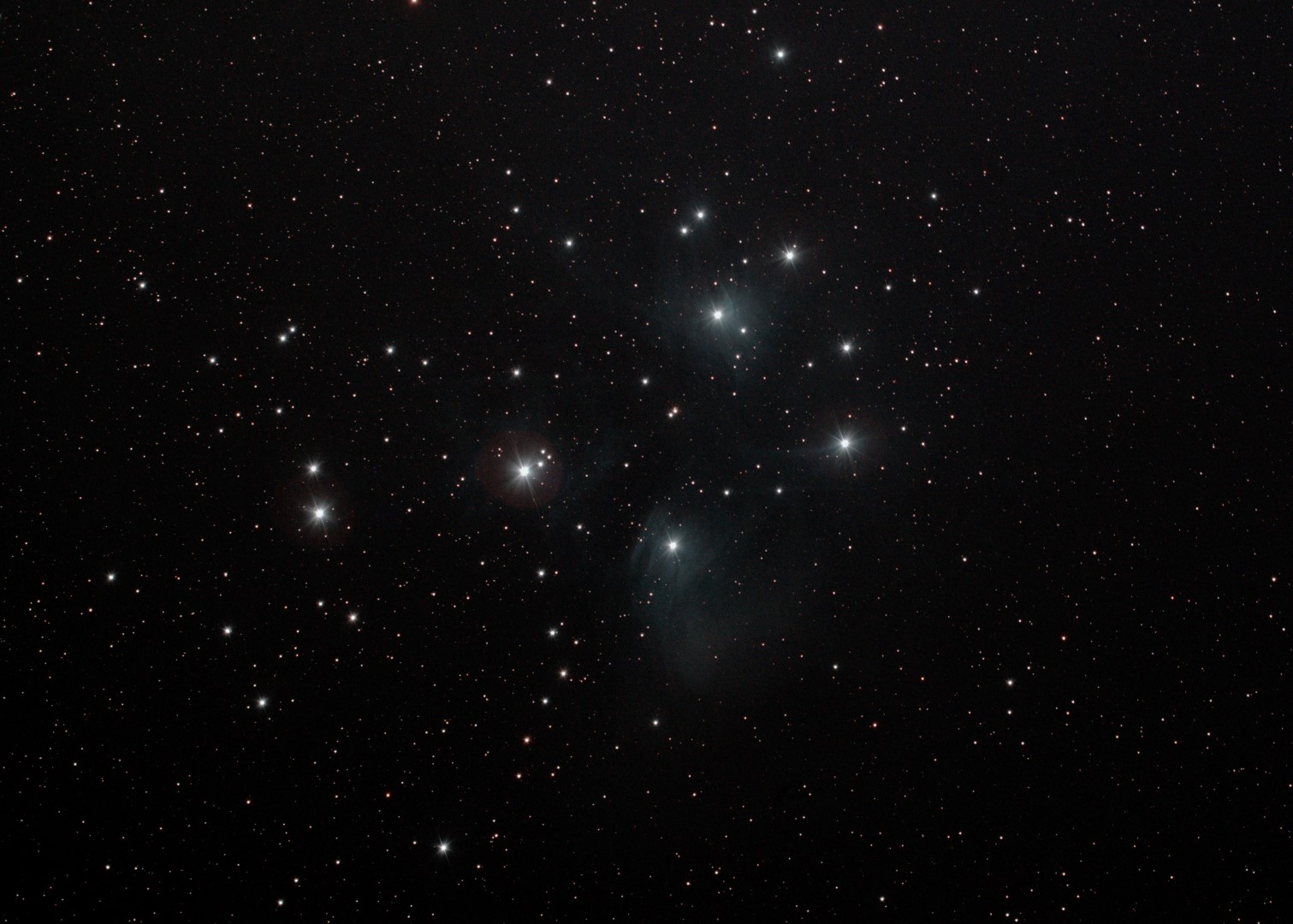
M45 Pleiades, Taurus constellation: 12 x 300 sec @ ISO 800 | 28th November 2016

Picture saved with settings embedded.

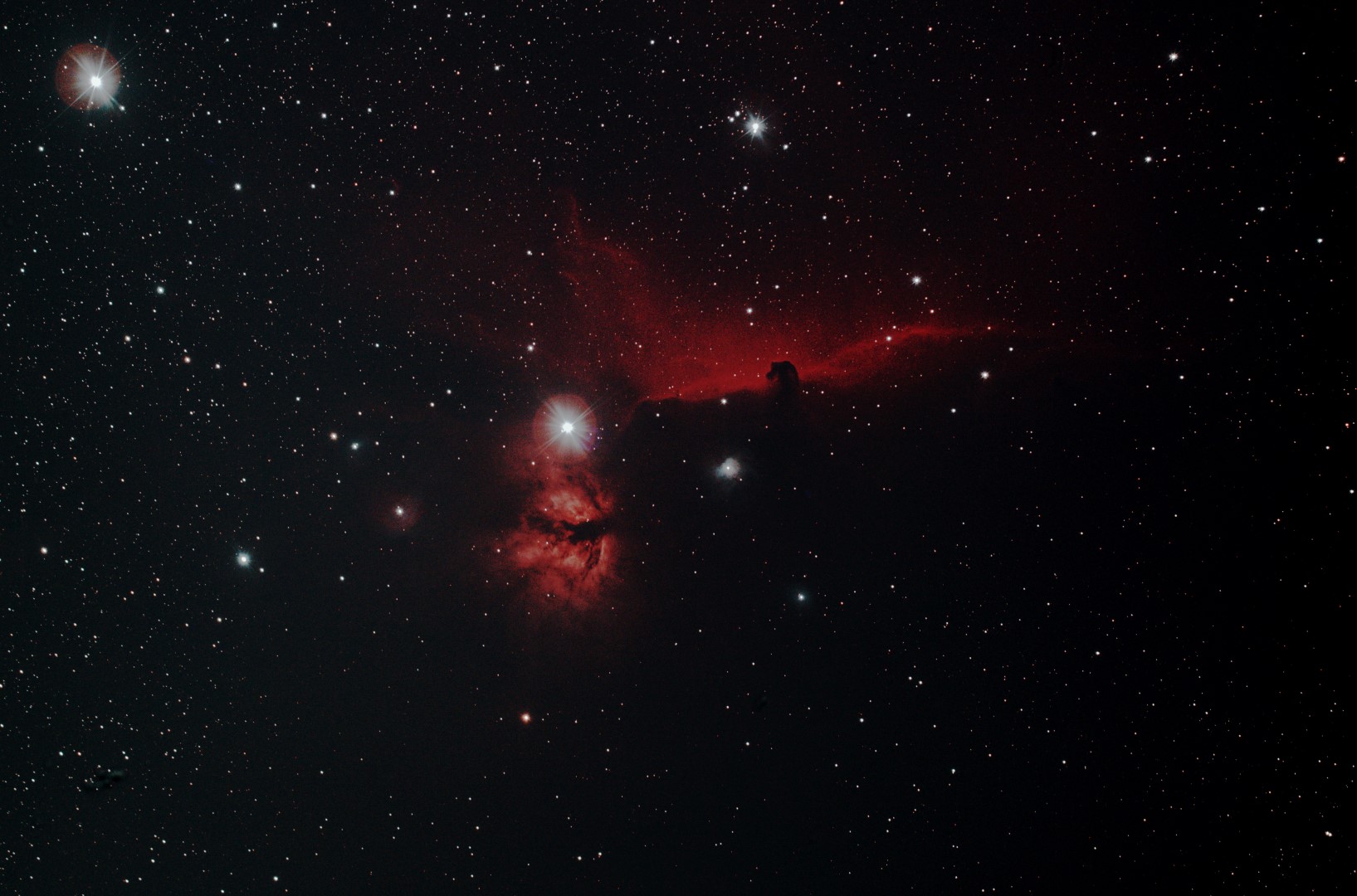
NGC 2014 Flame Nebula & Barnard 33 Horsehead Nebula, Orion constellation: 15 x 300 sec @ ISO 800 | 28th November 2016

Picture saved with settings embedded.

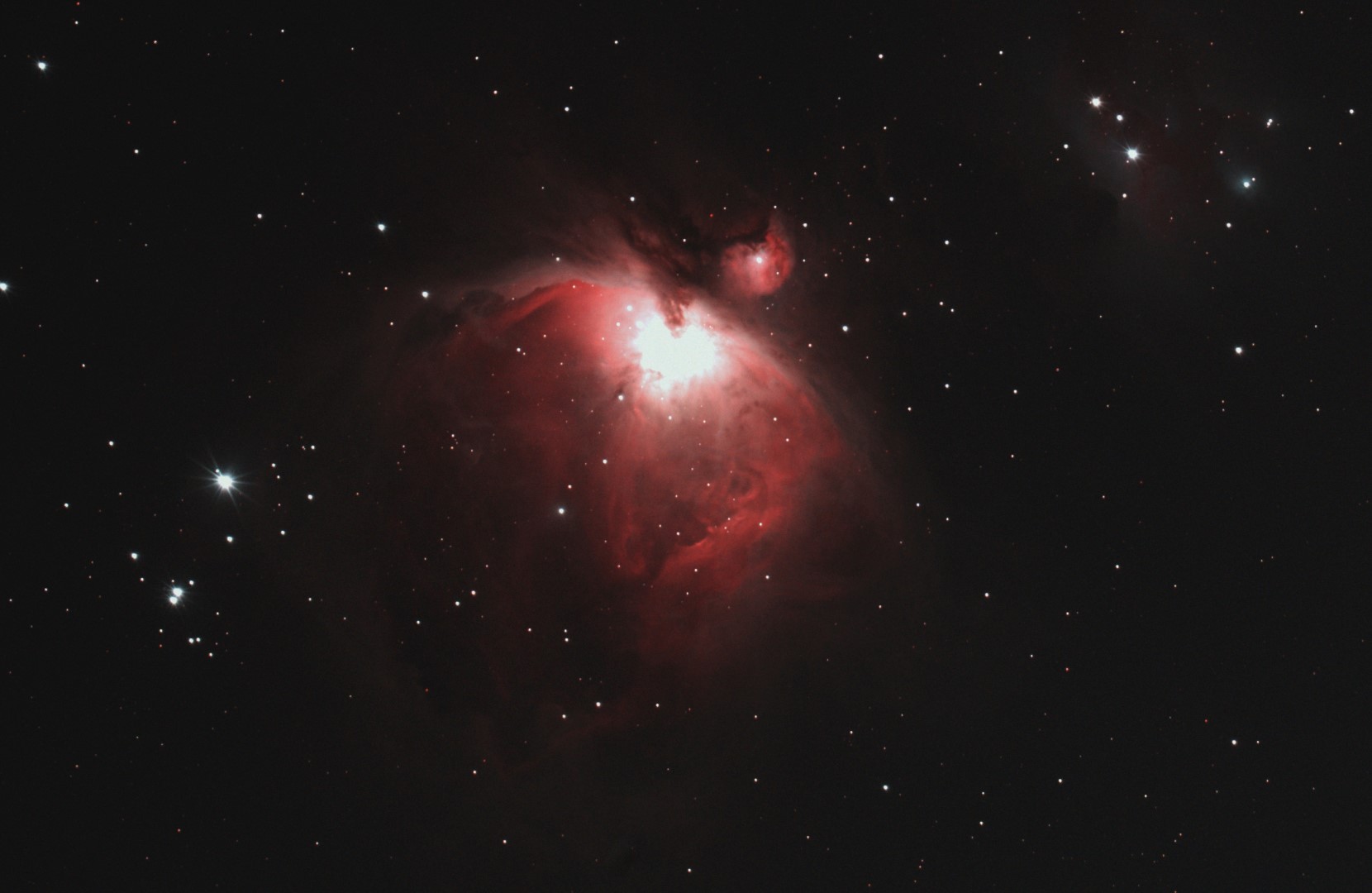
M42 Orion Nebula & M43 De Mairan’s Nebula, Orion constellation: 2 x 300 sec @ ISO 800 | 28th November 2016

Picture saved with settings embedded.

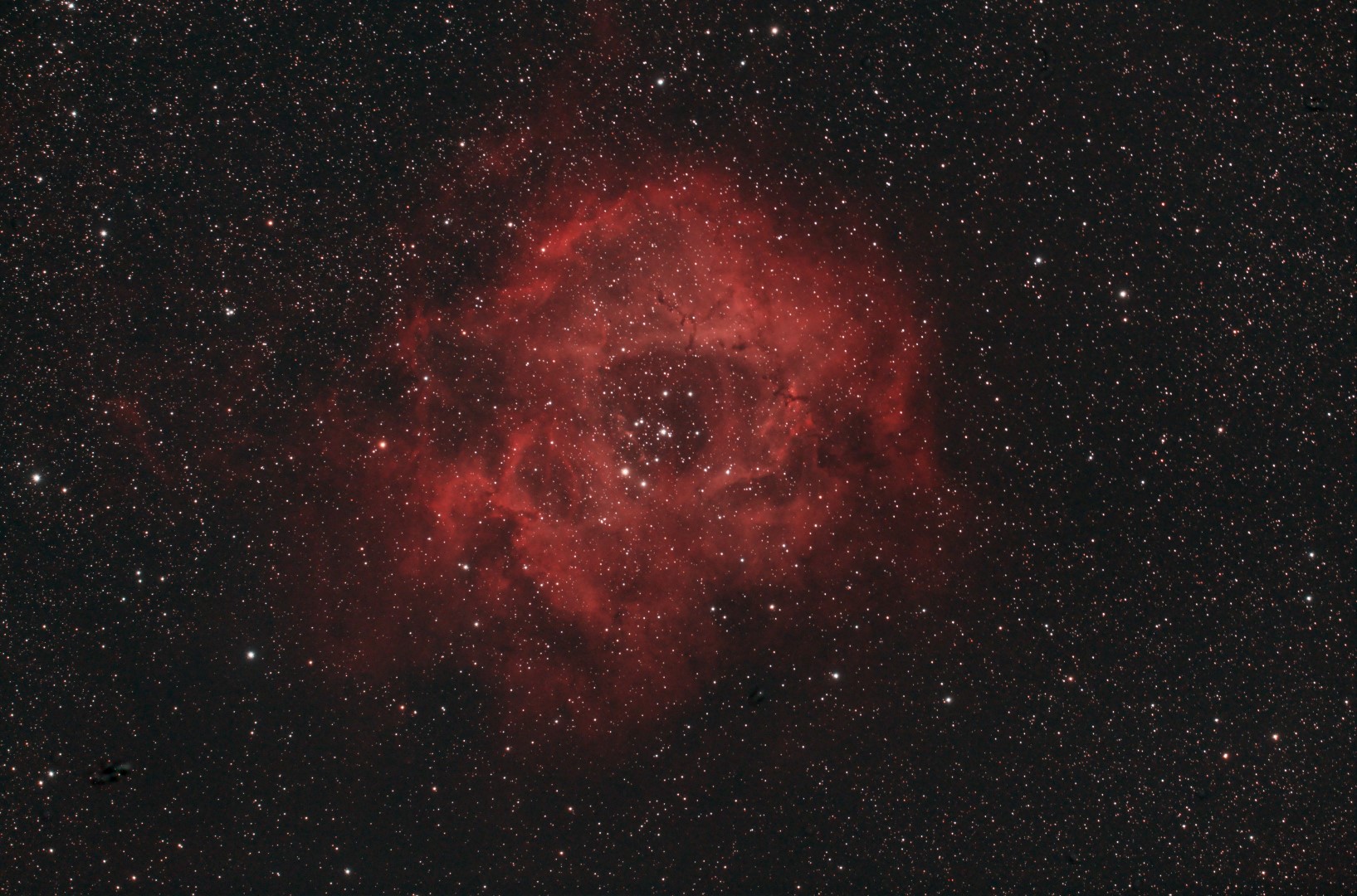
NGC 2244 Rosette Nebula, Perseus arm of Milky Way, Monoceros region: 21 x 300 sec @ ISO 800 | 29th November 2016

Picture saved with settings embedded.

California Nebula, Perseus constellation: 12 x 300 sec @ ISO 800 | 30th November 2016

Picture saved with settings embedded.

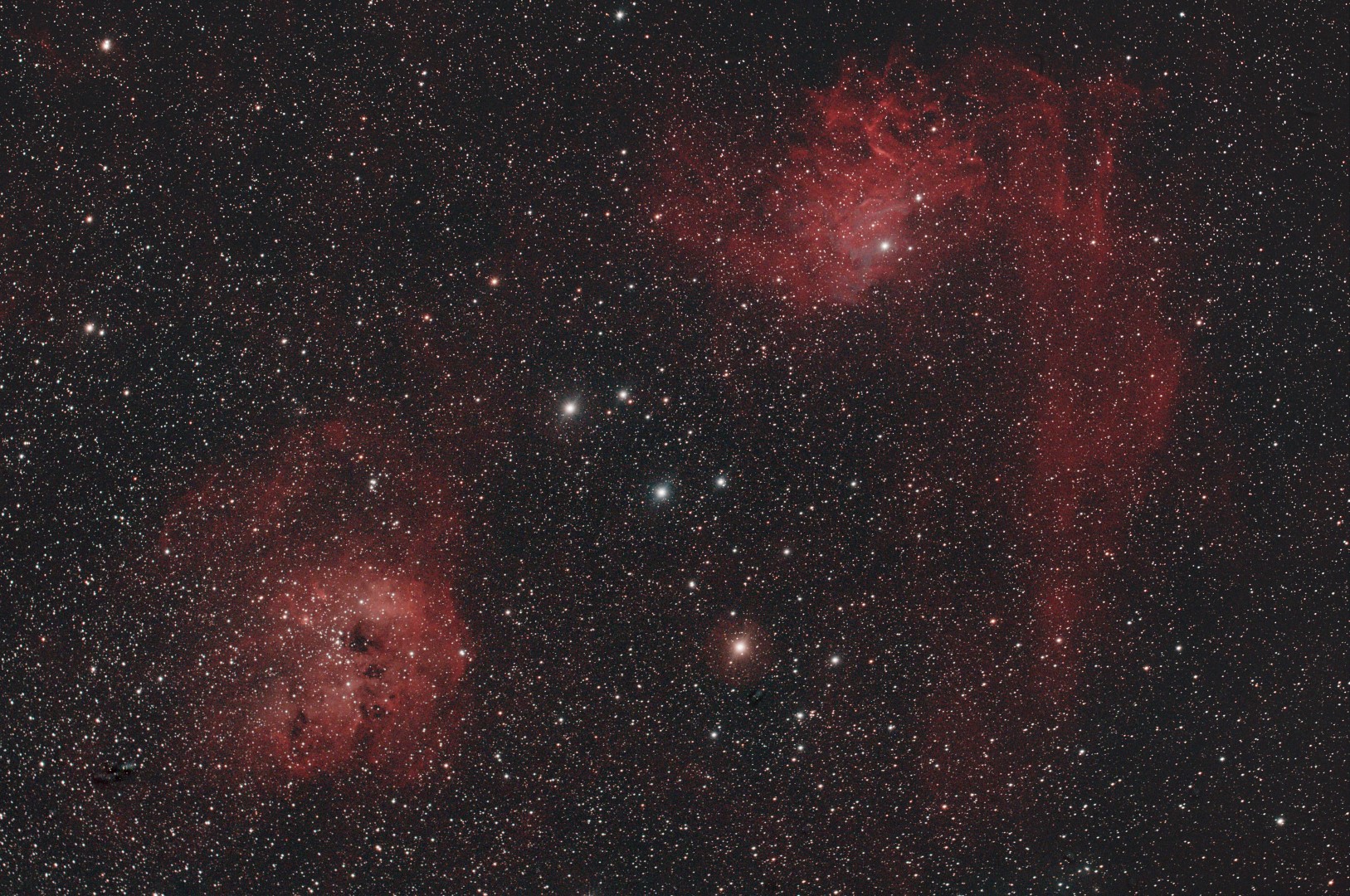
IC 405 & 410 nebulae: 15 x 300 @ ISO 800 | 30th November 2016

Notes: all images taken using a William Optics GT81 refractor telescope + PHD2 guiding + modded Canon 550D DSLR & x0.80 field flattner @ ISO 800 with full darks + bias + flats calibration and processed in Deep Sky Stacker & Photoshop CS2  

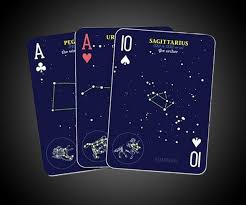
Playing poker with the heavens

cards1

It’s that time of the year when Earth ploughs its way through the tail of comet Swift-Tuttle, resulting in a the Perseids meteor shower. The name is derived from the location of the radiant point within the constellation of Perseus and Greek mythology’s reference to the sons of Perseus.  Such are the orbital paths that Earth’s encounter with the comet occurs around 11th to 13th of August each year and can provide an enjoyable spectacle as the meteor particles rain down through atmosphere.

perseids-e1312951836623

Travelling at some 37 miles-a-second, the sand-grain size particles literally burn up in the blink of an eye, with the energy created producing a bright path of the light path that very briefly shoots across the night sky, sometimes green or red coloured.  Some 16-miles in size, from time-to-time the comet itself actually passes nearby to Earth during its orbit around the Sun, last time being in 1992 and the next in 2126.

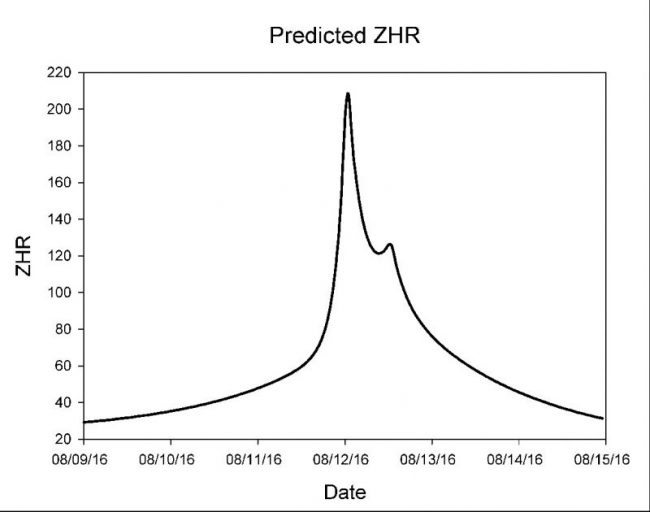
Perseid ZHR 2016

Whilst the timing of our annual encounter can be predicted with good accuracy, a sight of each individual meteoroid particle is entirely down to chance.  Over a period of two or three days the frequency (Zenithal Hourly Rate or ZHR) may vary from a few tens to a few hundred, depending on which section of the comet’s tail Earth is passing through. Of course, observation requires a clear sky – something that’s been notably absent here at Fairvale Observatory for some time now.  Notwithstanding, this year there were three consecutive clear, dark, warm nights, which occurred shortly after a new Moon that provided excellent Perseid observing opportunities.

Viewing is a matter of lying back in a suitable garden chair looking up towards the radiant position, which starts in the north east then moves to the south during the night and just waiting.  This year peak Perseids were on the evening of 11th/12th August between about 11pm and 1am, during which time we probably saw between 20 to 40 hits an hour; the previous and subsequent evenings were also quite good, though with slightly less hits.  Such is the randomness of each meteoroid hit that in practice Perseid trails occurred all over the sky and were easy to miss if outside the peripheral vision.  However, overall it was a very good and enjoyable show but probably  not as good as that from the ISS.

IMG_7024 (Medium)

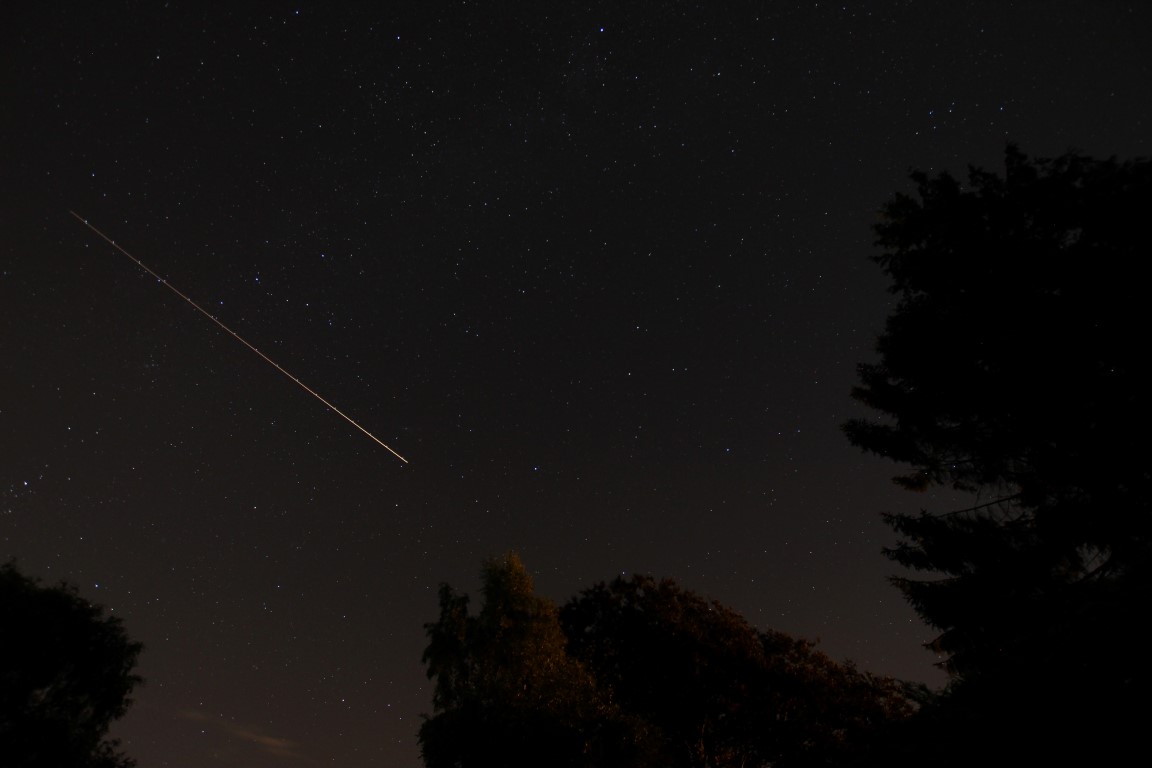
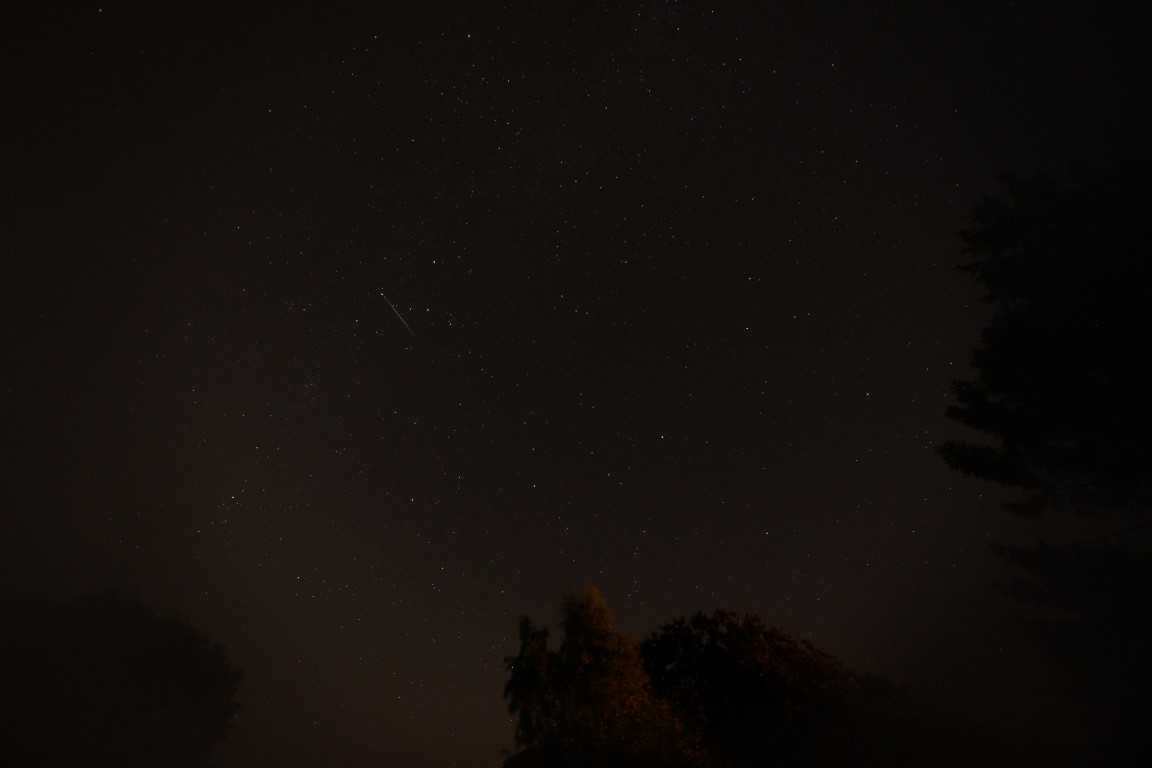
At first this looks great but look again, it’s an aircraft trace – living next to Gatwick airport doesn’t help. The giveaway is in the next shot which shows the track continuing i.e. too long and too far for a meteoroid.

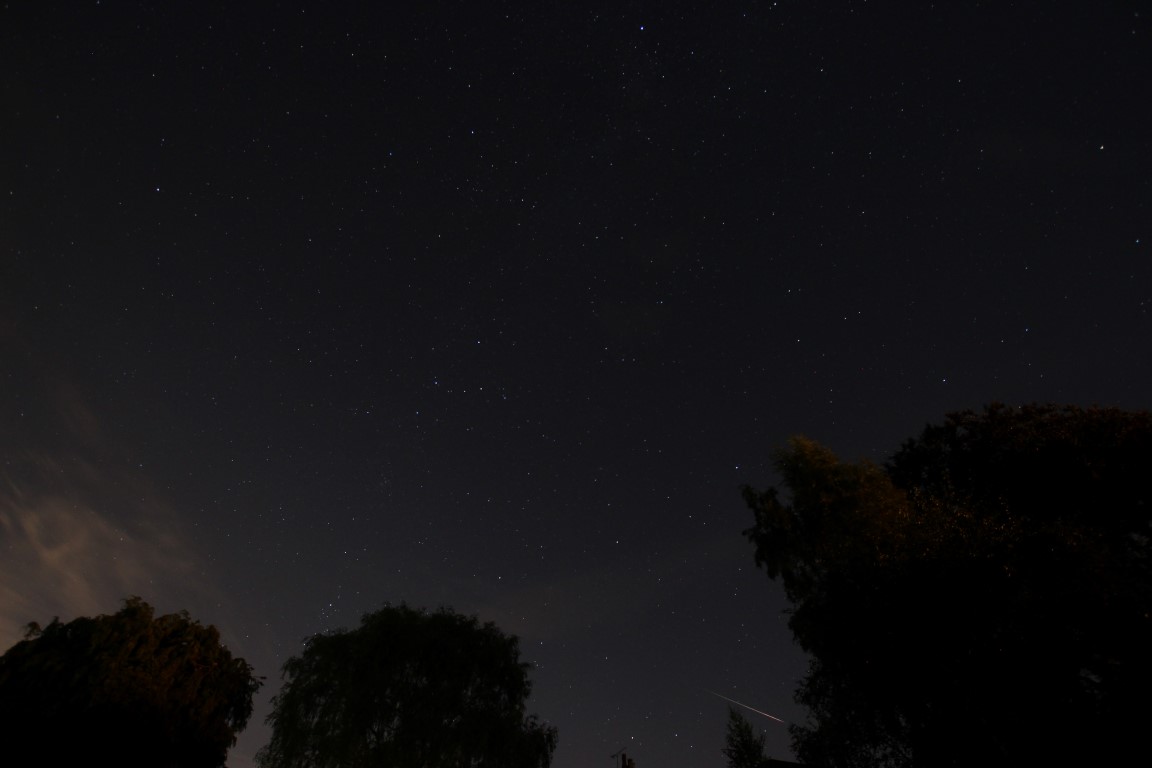
At the same time using the Canon DSLR and an ultra-wide lens, I also attempted to image the Perseid shower.  On the first night using Vixen Polarie tracking, set towards the radiant position and on the second night pointing east, without tracking.  Control was via an intervalometer, with camera settings at ISO 800, 20 or 14 second exposures, and 5-second shot intervals.  Even with such a high incidence of meteoroid hits, obtaining a photograph was still very difficult; mostly the strikes occurred outside the field-of-vision or sometimes in the 5-second pause.  In total I shot over 300 images but obtained just two Perseid hits and more than a few plane tracks!  Even with good preparation and clear skies it really is a case of chance but I was nonetheless pleased to have my share of luck this time and look forwards to another opportunity this time next year, weather permitting.

IMG_7111 (Medium)

Gotcha – the real thing: ISO 800 @ 20 seconds with tracking.


IMG_7303 (Medium) (2)

Only just! This time the Perseid is just sneaking out of view at the bottom of the frame: ISO 800 @ 14 seconds, without tracking.

Good Vibrations

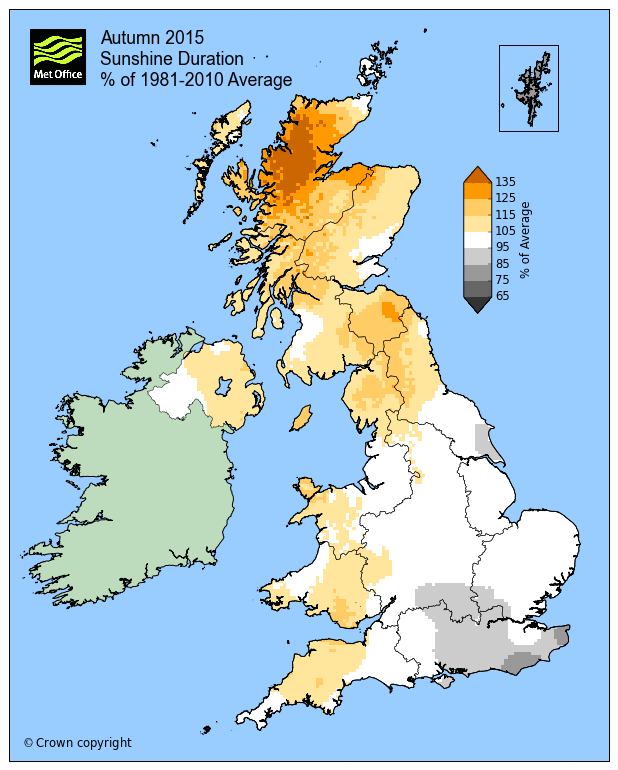
Ever since autumn undertaking astronomy has continued to be very difficult at Fairvale Observatory; except for some periods coincident with the full Moon, I can count on the fingers of one hand the times we’ve had clear dark skies – at this rate I’m going to need a new hobby!  As a result 8th December was the last time the observatory was in action – frustrating but what can I do?  Notwithstanding, on that occasion I was able to obtain decent images of three different objects, two of which were new for me.

2015_15_Sunshine_Anomaly_1981-20101

I live under the grey bit in the South East i.e. cloudy

Apart from persistent cloud, the winter has also been unusually wet and in general I yearn for better weather. In the absence of more desirable conditions I was at least able to image something that kind of reminds us of a better more pleasant climate, NGC 1499 or The California Nebula – so called because being like the shape state of California.

perseus

Located in the constellation of Perseus, within the Orion arm of the Milky Way some 1,500 light-years from Earth, NGC 1499 is a large emission nebula about 100 light-years long, or nearly 4o.  The HII nebula is ionized by the nearby but otherwise unrelated star of Xi Persei (Menkib) but despite its size it is difficult to view and can only be properly appreciated using long exposure imaging, preferably with an Hβ filter (486 Nm) or in my case a modded-DSLR camera and light pollution filter (450 Nm – 550 Nm & 650 – 750 Nm) worked quite well.

Picture saved with settings embedded.

NGC 1499 California Nebula – Xi Persei (Menkib @ top), North down: Wo GT81 & modded Canon 550D + FF | 16 x 180 secs @ ISO 1,600 & full calibration | 8th December 2016

It was a pleasure to finally image the California Nebula, which is an ideal object for the William Optics GT81.  However, being nearly 2-months since imaging NGC 1499 it is now only present during the early evening and will soon be gone from the sky altogether for another year, pointing the way towards the Spring Equinox in a few weeks and hopefully improved weather and astronomy conditions, in every sense leading to good vibrations!