I first had a peek of the North America Nebula shortly after I started my then nascent astronomy hobby in August 2014. With a Skywatcher 150PL Newtonian reflector and DSLR camera, I just managed to capture the edge of this very large nebula. It was a very poor image and obviously navigation and framing were not my strong point but the mere glimpse of such Ha nebulosity was at the time something of an epiphany. Hitherto I didn’t know such things existed, let alone their size and grandeur and the potential to catch even a part of it on camera was very exciting – that excitement has still not left me.
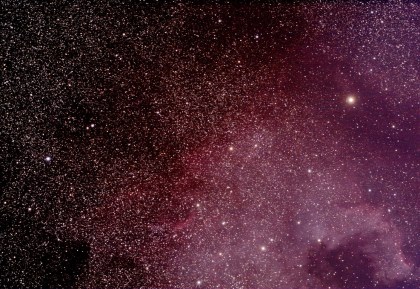
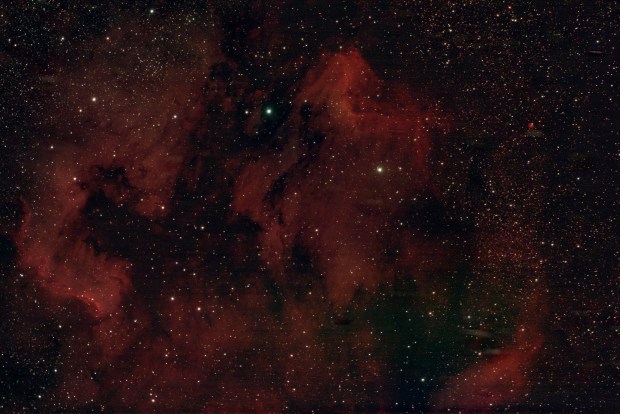
NGC 7000 unmodded Canon 700D DSLR | September 2015
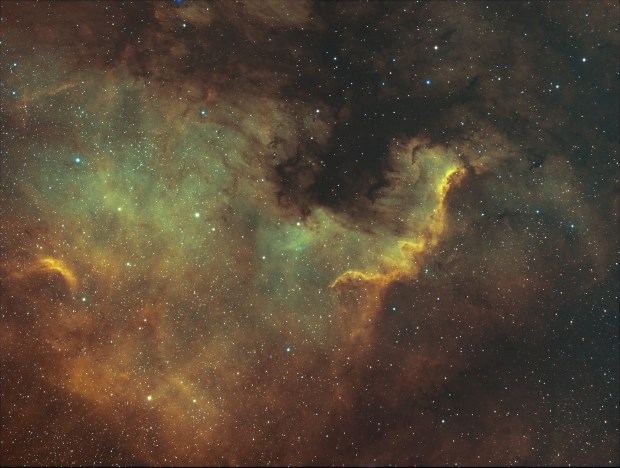
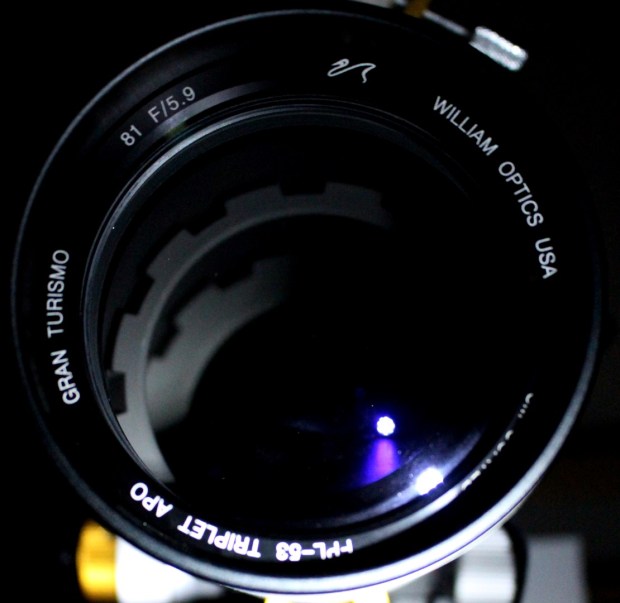
Armed the following year with a AZ-EQ6 GT mount and William Optics GT81 refractor, I managed to image most of the ‘continent’ and ‘Gulf’ (see above), although ‘Mexico’ was still missing; the title of my related blog at the time encapsulated my emotion at the time – WOW! Since then I have often returned to NGC 7000 and with the combination of a modded DSLR, computer control and guiding gradually improved my technique so as to obtain better images. However, the outcome of imaging the North America Nebula this year with the ZWO1600MM-Cool mono camera has been a revelation, resulting in perhaps some of my best images so far.
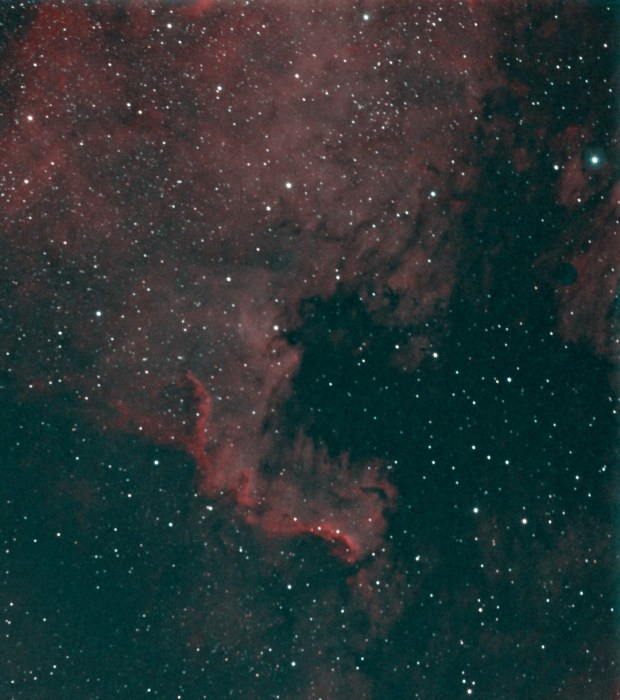
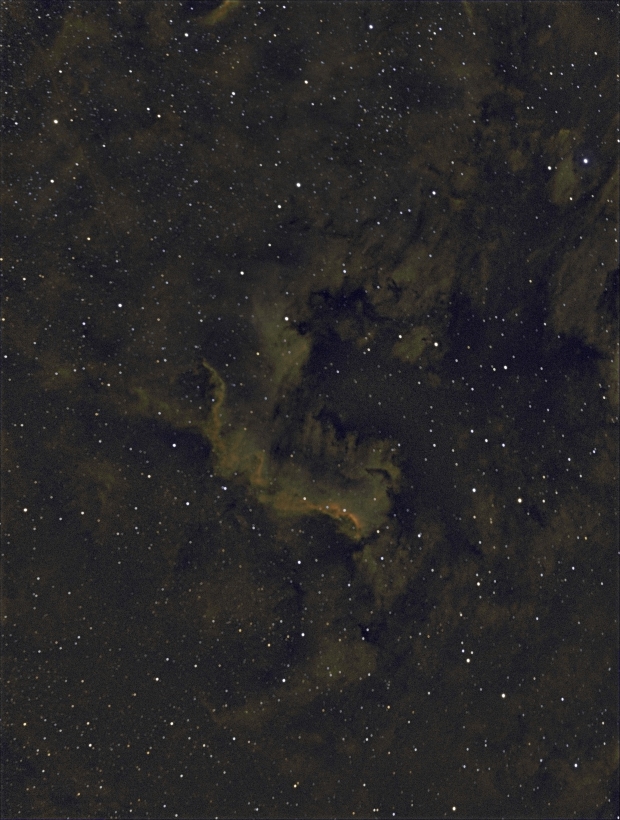
I’ve recently been spending time improving post processing methods, which together with increased knowledge gained from using the new camera for more than 6-months is now starting to pay off. Being a very large HII-region the North America Nebula responds well to narrowband wavelength filters and I therefore took Ha-OIII-SII subs, which have subsequently combined well into Bi-colour (below) and SHO images that far surpass what I’ve previously achieved.
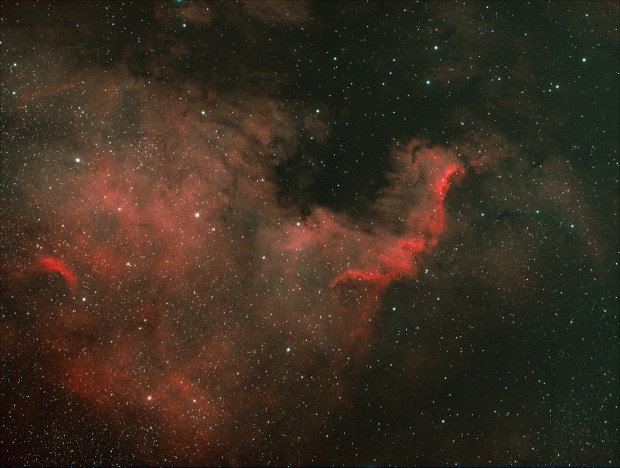
I was particularly keen to capture the Cygnus Wall for the first time, located along the ‘southern California’ and ‘Mexican’ coasts – so to speak. In both cases the Wall shows up very well in detail (below in bi-colour), with its W-shaped edge dramatically illuminated by star forming regions from within. I am particularly pleased with the SHO image (top of the page), which apart from the Wall illustrates delicate details across the entire nebula.
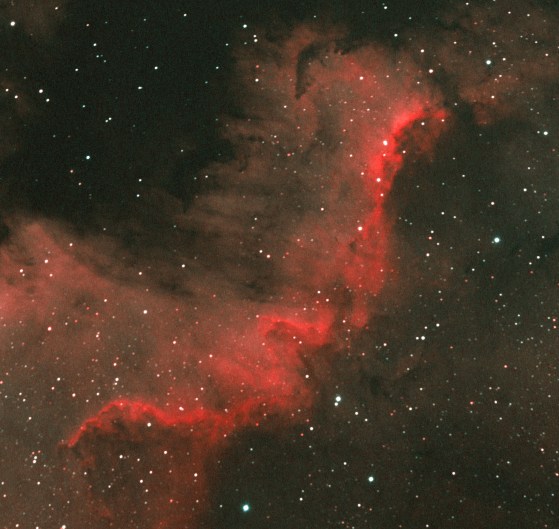
Greater care during processing is improving such images but now that I’ve experienced this new camera across a number of different objects, it is clear that further enhancements are likely to be incremental and more difficult to achieve. The one important factor that I suspect will still provide a noticeable improvement to my images will be longer integration time, which requires plate solving. I’m already starting to learn this process and hope to adopt its use in the New Year. In the meantime I feel recent imaging results and especially these narrowband images of the North America Nebula mark a very satisfying climax to my astrophotography year, progress over the past few years is very evident and I’m eagerly looking forwards to 2018.
| IMAGING DETAILS | |
| Object | North America Nebula – NGC 7000 |
| Constellation | Cygnus – near Deneb |
| Distance | 1,600 light-years |
| Size | Approx. 50 light-years or 2o |
| Apparent Magnitude | +4.0 |
| Scope | William Optics GT81 + Focal Reducer FL 382mm f4.72 |
| Mount | SW AZ-EQ6 GT + EQASCOM computer control |
| Guiding | William Optics 50mm guide scope |
| + Starlight Xpress Lodestar X2 guide camera & PHD2 control | |
| Camera | ZWO1600MM-Cool (mono) CMOS sensor |
| FOV 2.65o x 2.0o Resolution 2.05”/pix Max. image size 4,656 x 3,520 pix | |
| EFW | ZWOx8 + ZWO LRGB & Ha OIII SII 7nm filters |
| Capture & Processing | Astro Photography Tool, Deep Sky Stacker & Photoshop CS2 |
| Exposures | 18 x Ha, 8 x OIII & 8 x SII @ 180 secs (Total time: 102 minutes) |
| @ 300 Gain 10 Offset @ -20oC | |
| Calibration | 5 x 180 sec Darks 10 x 1/4000 sec Bias 10 x Flats Ha, OIII & SII |
| Location & Darkness | Fairvale Observatory – Redhill – Surrey – UK Typically Bortle 5 |
| Date & Time | 27th August 2017 @ 21.50h |
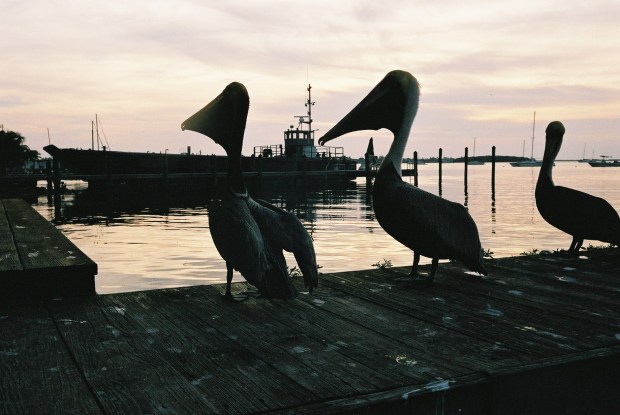
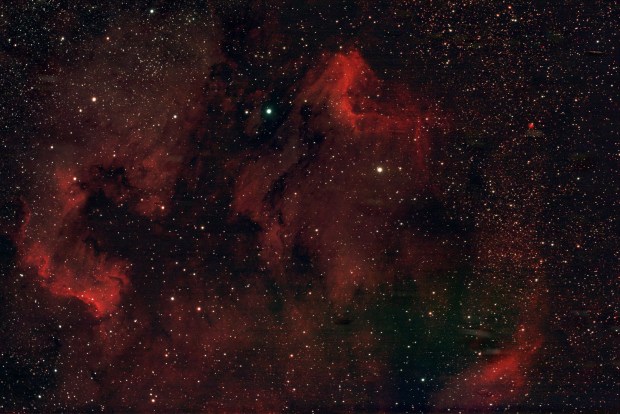


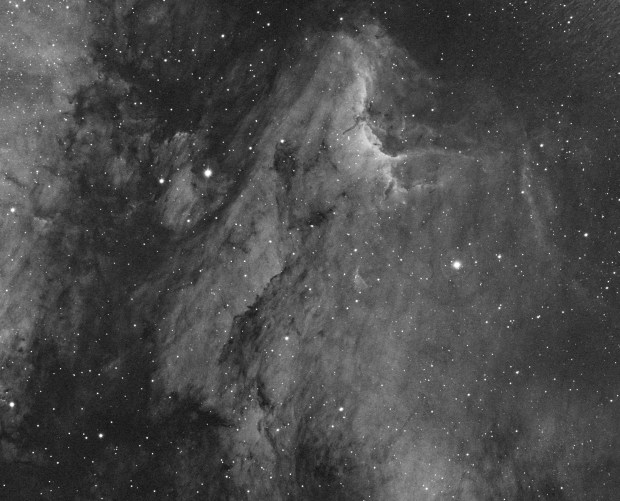
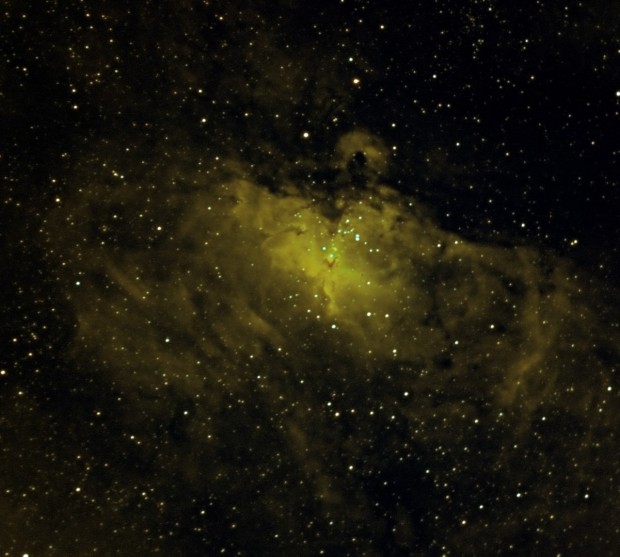
 In this case the Ha-image of The Pelican that was obtained demonstrated the significant improvements that can be achieved with the CMOS based ZWO1600MM-Cool camera compared to a DSLR. I’m still learning about processing and in particular, with the plethora of options available when using LRGB and narrowband subs the issues have now escalated exponentially. Notwithstanding the aforementioned issues I’m very pleased with my ‘new’ bird The Pelican Nebula.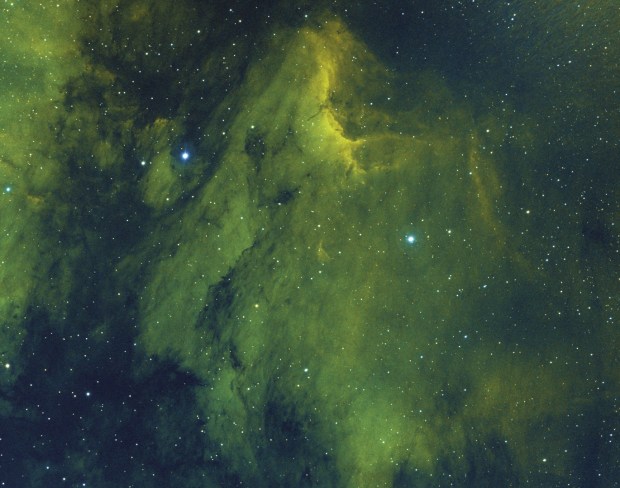



 WATCH THIS SPACE(MAN)