About this time last year I successfully imaged first NGC 6960 the Western Veil, AKA the Witch’s Broom Nebula and shortly afterwards NGC 6992 the Eastern Veil, which includes NGC 6995 AKA the Bat Nebula. In themselves they are both wonderful parts of the larger but perhaps more elusive (photographically speaking) Veil Nebula. Located in the constellation Cygnus, the Veil Nebula or Cygnus Loop is formed from the remains of a supernova that exploded in our galaxy about ten thousand years ago and at a distance of almost 1,500 light-years, now spans a 3o area of the sky or 80 light-years in diameter. At the time I struggled to get these images but was very pleased with the outcome.
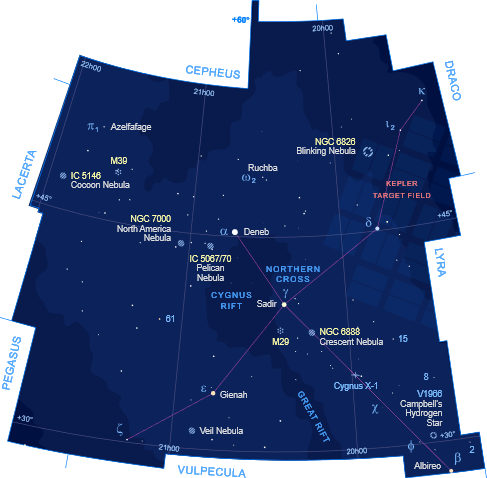
One year on and I was now thinking about other parts of the Veil, in particular Pickering’s Triangle. The Triangle might be thought of as the third central section of the Veil, situated between the Eastern and Western Veils but slightly further north. At some 52 x 35 arcminutes it is itself a significant feature, which surprisingly does not have an NGC catalogue number of its own.
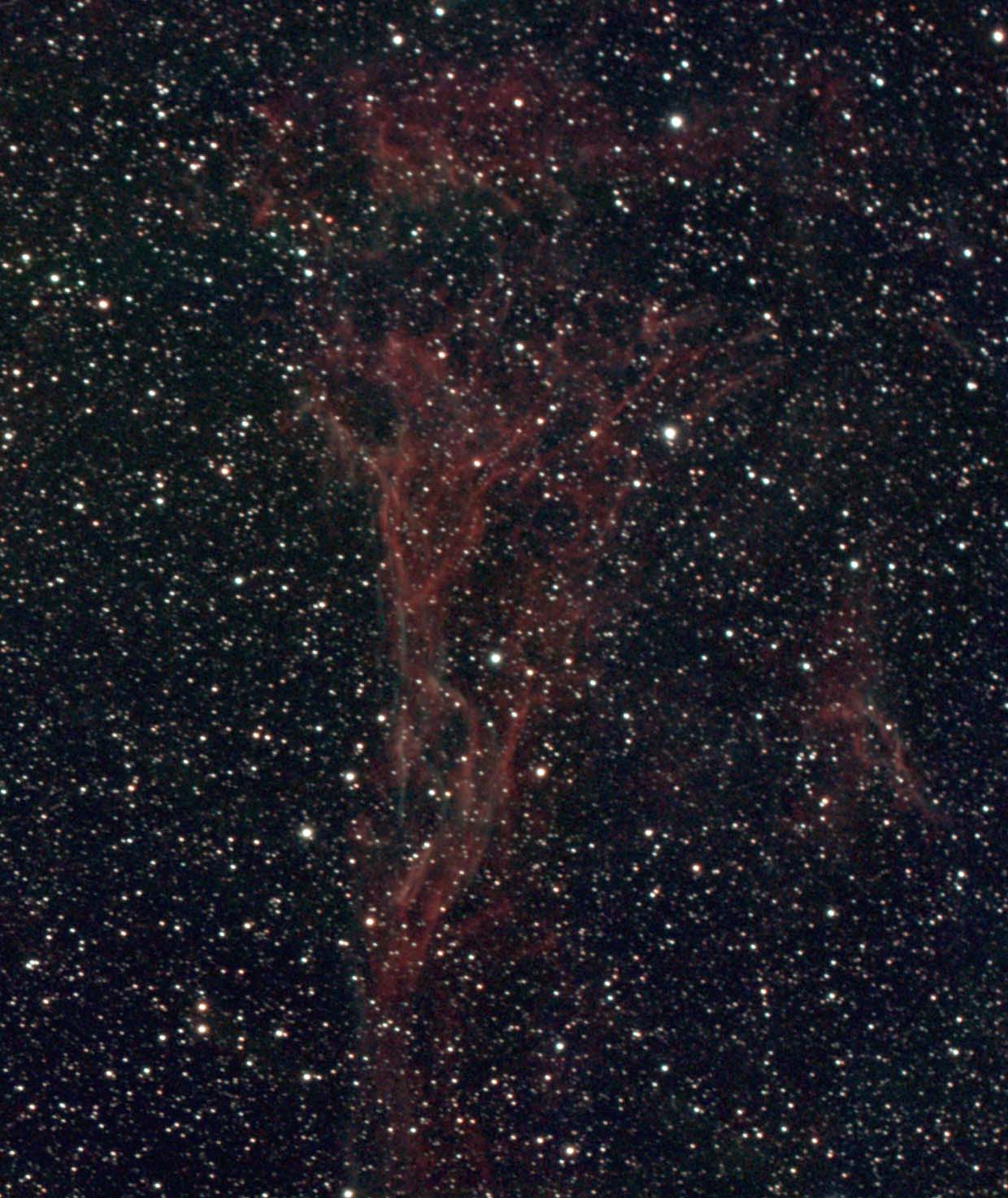
Pickering’s Triangle
Notwithstanding the success of Pickering’s Triangle, in the end I got much more than I bargained for. This time using a modded camera, I was able to capture the entire Veil Nebula in one photograph – progress indeed.

The Veil Nebula AKA Cygnus Loop: Ultraviolet view ref. NASA
Light from the bulk of the Veil Nebula is very faint and notoriously difficult to image, whilst furthermore much of it is Ha in nature – hence this time finding its way to the camera’s sensor having had the IR filter removed. The result is a staggering view of the entire supernova, with the Witch’s Broom in the west (right), the Eastern Veil (left) and Pickering’s Triangle nestled in between. However, in addition extensive regions of delicate, wispy nebulous filaments can be seen flowing everywhere in between – hence the name of Veil.
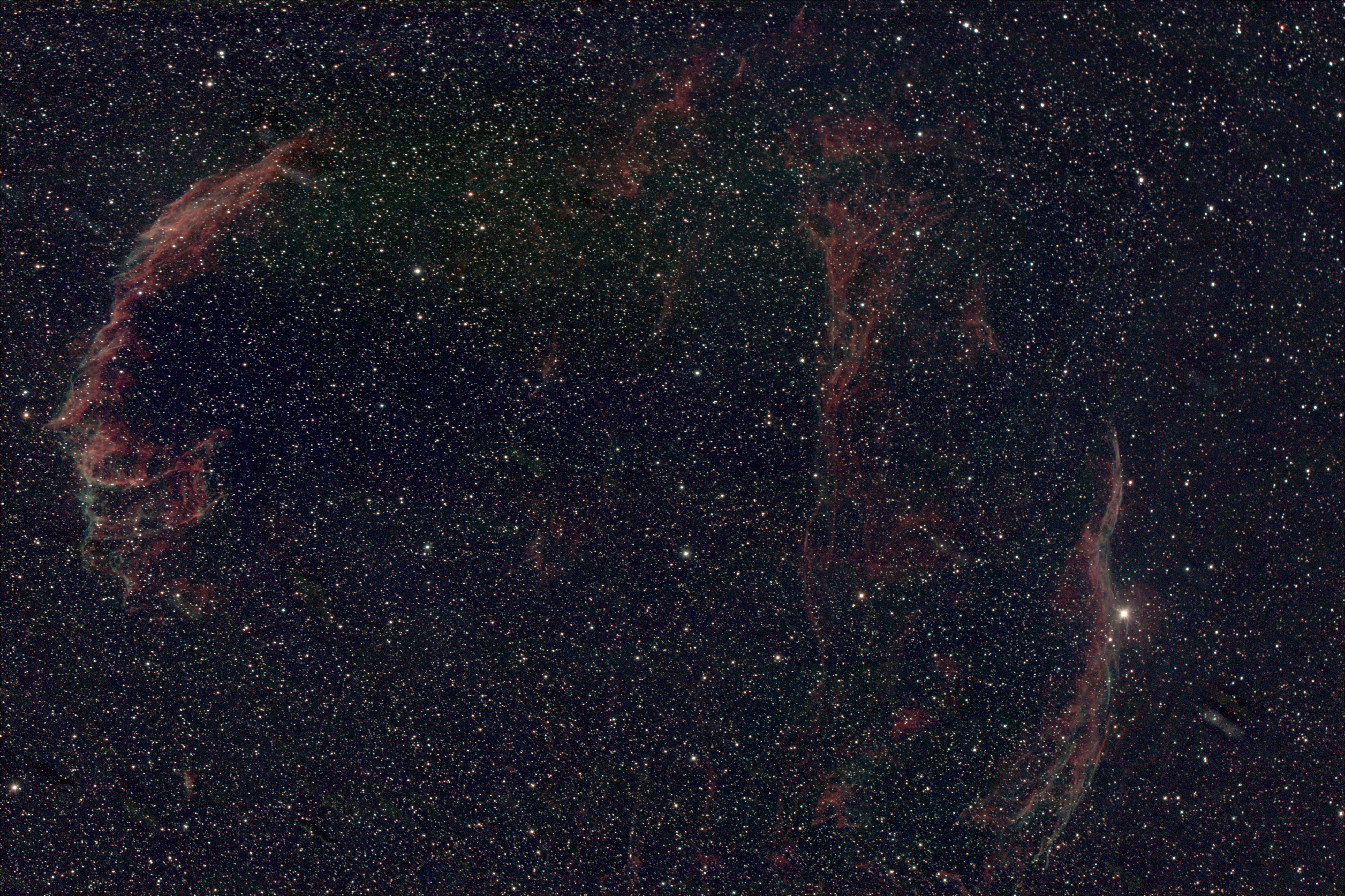
Veil Nebula / Cygnus Loop
WO GT81 & modded Canon 550D + FF | 30 x 120 sec @ ISO 1,600 | 19th September 2015
Whilst I am very pleased with the resulting photograph, there’s still more to achieve another time. Apart for the added potential that would be gained from longer, guided exposures, the use of Ha and OIII filters would also uncover even more of the Veil’s diaphanous beauty.
 WATCH THIS SPACE(MAN)