Tangled In Space

As Douglas Adams succinctly puts it in the Hitchhiker’s Guide to the Galaxies: Space…..is big. Really Big.  If he had lived longer, even he would be surprised to learn how true these words were.  Recent analyses using data from the James Webb Space & Hubble Telescopes, suggests there could be some 2 trillion galaxies.  Notwithstanding, as this applies only to the observable universe, which is about 93 billion light-years across, the entire universe could be significantly larger, with many more galaxies beyond what we can already observe!

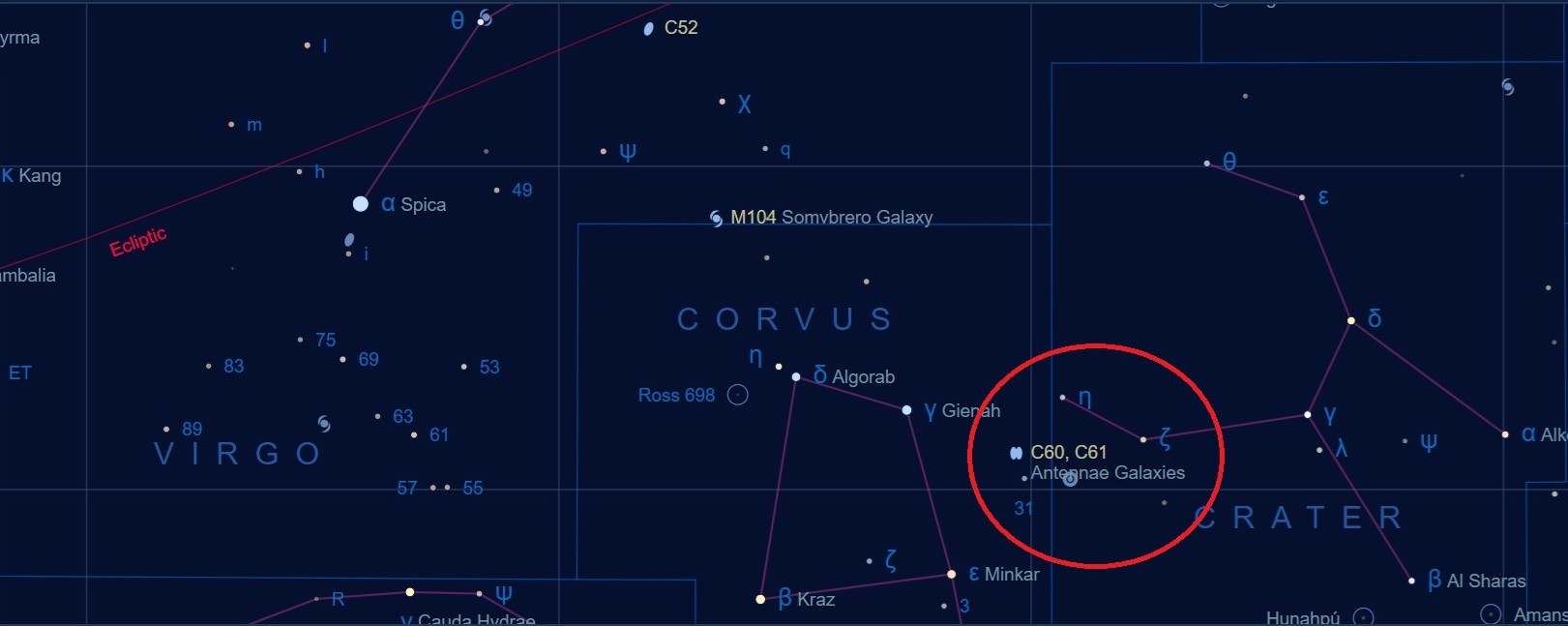
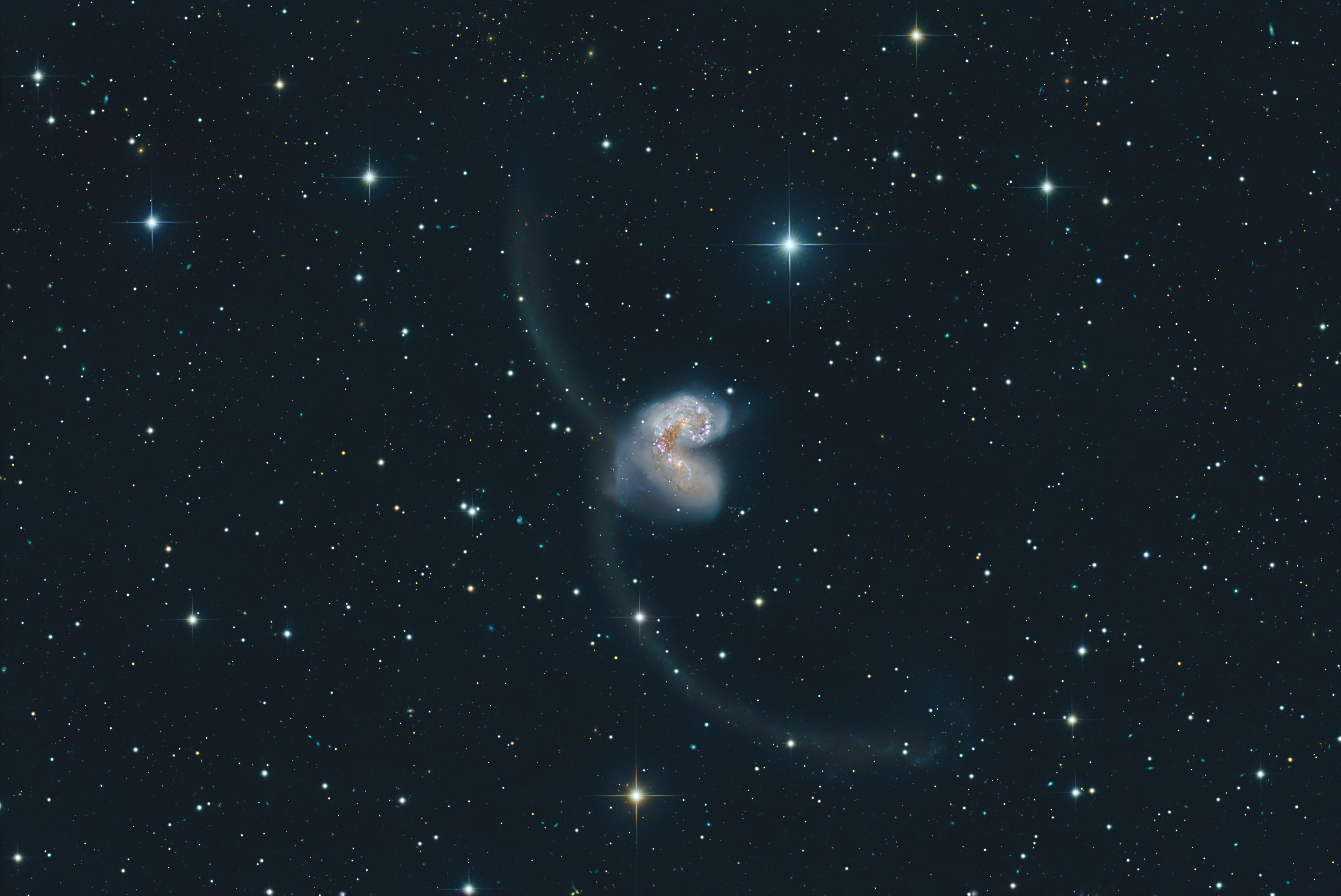
Perhaps then it is not so surprising that from time-to-time galaxies run into each other – our own Milky Way Galaxy is expected to collide with the Andromeda Galaxy in about 4.5 billion years.  But there are already many exciting examples of such phenomena that we can image today, of which the Antennae Galaxies are one of the most famous and visually striking examples of two colliding galaxies.  Located in the constellation Corvus, they provide a striking insight into what happens when massive galaxies merge – a process that reshapes their structure, triggering intense star formation, thereby setting the stage for the eventual creation of a single, larger galaxy, all played out over 100’s or even billions of years.

The Antennae Galaxies earned their name from the long, curved tidal tails of gas, dust, and stars that extend outward from the colliding pair of galaxies (NGC 4038 & 4039), thus resembling the antennae of an insect. These tails were created by the immense gravitational forces at play during the collision. As the two galaxies then pass through each other, their mutual gravity distorts their original spiral shapes, pulling out vast streams of stars and interstellar material. These tidal tails stretch for tens of thousands of light-years, making them some of the most spectacular features of any known galactic merger.

At the core of the Antennae Galaxies lies a chaotic and extremely active region. The violent gravitational interactions have compressed enormous clouds of gas and dust, sparking a burst of intense star formation, at a rate hundreds of times faster than that of our own Milky Way. Many of these newly formed stars are massive but short-lived, destined to explode as supernovae, thus enriching the surrounding space with heavy elements. Within another 400 million years, the Antennae’s nuclei will collide and therafter become a single galactic core with stars, gas, and dust swirling around it. 

Imaging such a feature from Earth requires significant telescopic power, the darkest of night skies and the acquisition of lots of data.  Located at the El Sauce Observatory in Chile, 50 hours of data acquired using the Planewave CDK20 astrograph is such a set-up worthy of the task.  However, despite the excellent data quality, I found processing this complex event difficult so as to both show the complexity of the merging galaxies, whilst at the same time preserving the delicate nature of the tails of galactic debris.  The final image is as profound as it is beautiful, demonstrating the immense forces across the cosmos and the inevitable consequences for the many galaxies that occupy the vastness of the Universe.


The Journey

A year after taking up astronomy as a hobby, at the behest of my elder daughter I started this blog in 2014.  Describing the objective and content of the blog I adopted the strapline “A personal discovery of the Universe through astronomy and astrophotography”, which could also be described as a journey.  In reality it’s been an adventure consisting of two threads: the knowledge and related science of astronomy and the challenge of astrophotography.   As we on Earth pass through space whilst at the same time rotating 360o each year around the sun our view of the night sky changes month-by-month, inevitably returning to the same perspective each 365-days.  Against this background I therefore often return to certain objects every few years hopefully armed with new astrophotography skills in pursuit of an even better image.

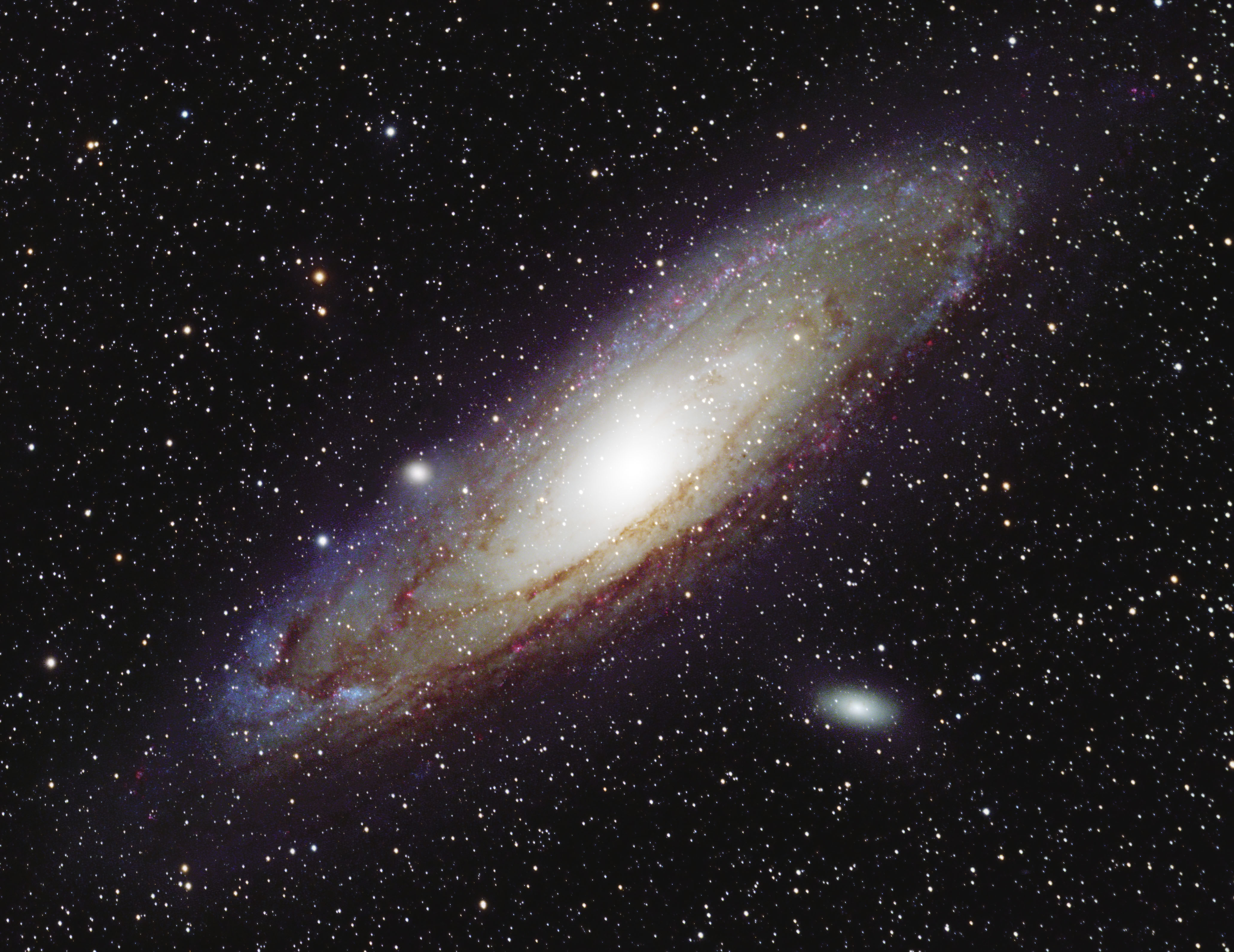
Following such a path I’ve already imaged M31 the Andromeda Galaxy on four separate occasions since 2015, each time enthralled by the majesty and beauty of this barred spiral galaxy.  Notwithstanding, it was clear to me that there was significant scope for improvement of the previous images with both better data and processing. Since the last attempt in October 2019 a myriad of positive developments have taken place of which perhaps three stand out: multi-star guiding, the purchase of Chroma filters and in particular the use of PixInsight image for processing – all have been game changers, so much so that reprocessing that image now also looks good – see below.

 However, whilst the said progress has already been transformative to my astrophotography during the past year, inevitabky it is imaging conditions that play the most critical role, especially in England.   Fortunately during this autumn in both October and November for once the new moon coincided with clear skies, providing no less than six nights over which I was able to obtain almost 12-hours of some of perhaps my best ever data.  Based on this I’ve been careful to apply my best new processing skills and am thankful that the final HaLRGB image has turned out very well.  In particular, the dust lanes stand out against the bright core and surrounding blue intergalactic dust and gases, which are themselves punctuated by the bright red regions rich in Ha light. 

In the blogs that accompanied previous Andromeda images I’ve often referred to the galaxy as a neighbour of the Milky Way but really we are part of the same family known as the Local Group.  Some 10-million light years in diameter, more than 30 galaxies form two collections around the two largest galaxies of Andromeda and the Milky Way.  Gravitational forces play the central role in controlling this group, especially Andromeda which is itself moving towards the Milky Way at about 70 miles per second and is destined to merge in about +/- 4 billion years; recent studies indicate that an outer halo of stars extending up to 2-billion light years from Andromeda may be in the influence of the galaxy, suggesting this event may already have started!

Thereby my personal journey of astrophotography is set to continue somewhat in parallel with that of Andromeda, which will I am sure lead to further hopefully even better images of this exciting deep sky object that is perfect for my equipment – after all we’re getting closer at the rate of 2,207,520,000 miles each year!                     

 IMAGING DETAILS
ObjectM31 the Andromeda Galaxy.
ConstellationAndromeda
Distance2.5 million light-years
Size3.2o  x 1o  or 220,000  light-years  
Apparent Magnitude+3.44
  
Scope William Optics GT81 + Focal Reducer FL 382mm  f4.72
MountSW AZ-EQ6 GT + EQASCOM computer control & Cartes du Ciel
GuidingWilliam Optics 50mm guide scope
 + Starlight Xpress Lodestar X2 guide camera & PHD2 guiding
CameraZWO1600M M-Cool mono  CMOS sensor
 FOV 2.65o x 2.0o Resolution 2.05”/pix  Max. image size 4,656 x 3,520 pix   
EFWZWO x8 EFW + Chroma LRGB & Ha OIII SII 3nm filters 
Capture & ProcessingAstro Photography Tool , Deep Sky Stacker, PixInsight 1.8.8-8, Photoshop CS3 & Topaz AI Denoise
Image Location              & OrientationOriginal image centre  RA 00:42:48      DEC 41:15:05                      Final image rotated 180o  i.e. Bottom = North + 5% crop
ExposuresL 71 x 60 sec  R17  G 20  B  27 x 300 sec  Ha 35 x 600 sec Total time: 11hr 46 minutes   
 @ 139 Gain   21  Offset @ -20oC    
CalibrationDarks 5 x 600 sec + 5 x 300 sec + 60 x 60 sec HaLRGB Flats & Dark Flats  x15 each    @ ADU 25,000
Location & DarknessFairvale Observatory – Redhill – Surrey – UK        Typically Bortle 5-6
Date & Time1st 5th 6th 8th 9th  October & 4th November 2021 @ +/-19.00h  
WeatherApprox. 14o to 5oC   RH >=65% to +85%             🌙 New Moon

Orion In A New Light

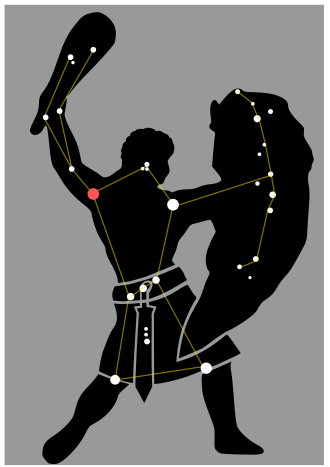
In ancient history Orion’s stars were considered to form a pattern that resembled a hunter holding a club above with his right arm and a shield in front with his left.  The appearance of Orion each year marks the highlight of the astronomy for many including me but for the second year running months of continuous cloud have precluded any astronomy since October; I note from comments online far-and-wide that this phenomenon has prevailed across much of the northern hemisphere, no doubt resulting in a lot of unhappy astronomers.

The Anantomy of Orion

Finally the clouds briefly relented over Fairvale Observatory in February but only for a few hours each time, thus eliminating the possibility of imaging with a CMOS mono camera.  Faced with these problems I therefore returned to my somewhat neglected modded Canon 550D camera and suitable lenses for appropriate widefield compositions, in order to image some classic targets around the Orion constellation in a broader context.  Having first whetted my appetite with the Samyang 135 f2 and its large 9.45o x 6.30o FOV to successfully image the iconic area that encompasses Orion’s belt, the Horsehead Nebula and M42 (see Going Big), it was time to go really big in order to capture the entire constellation literally and figuratively in a new light.

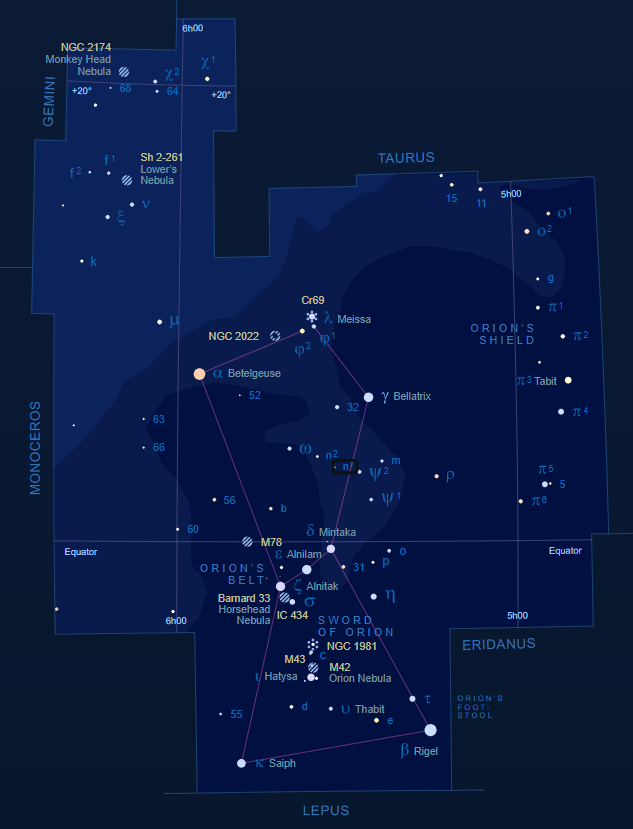
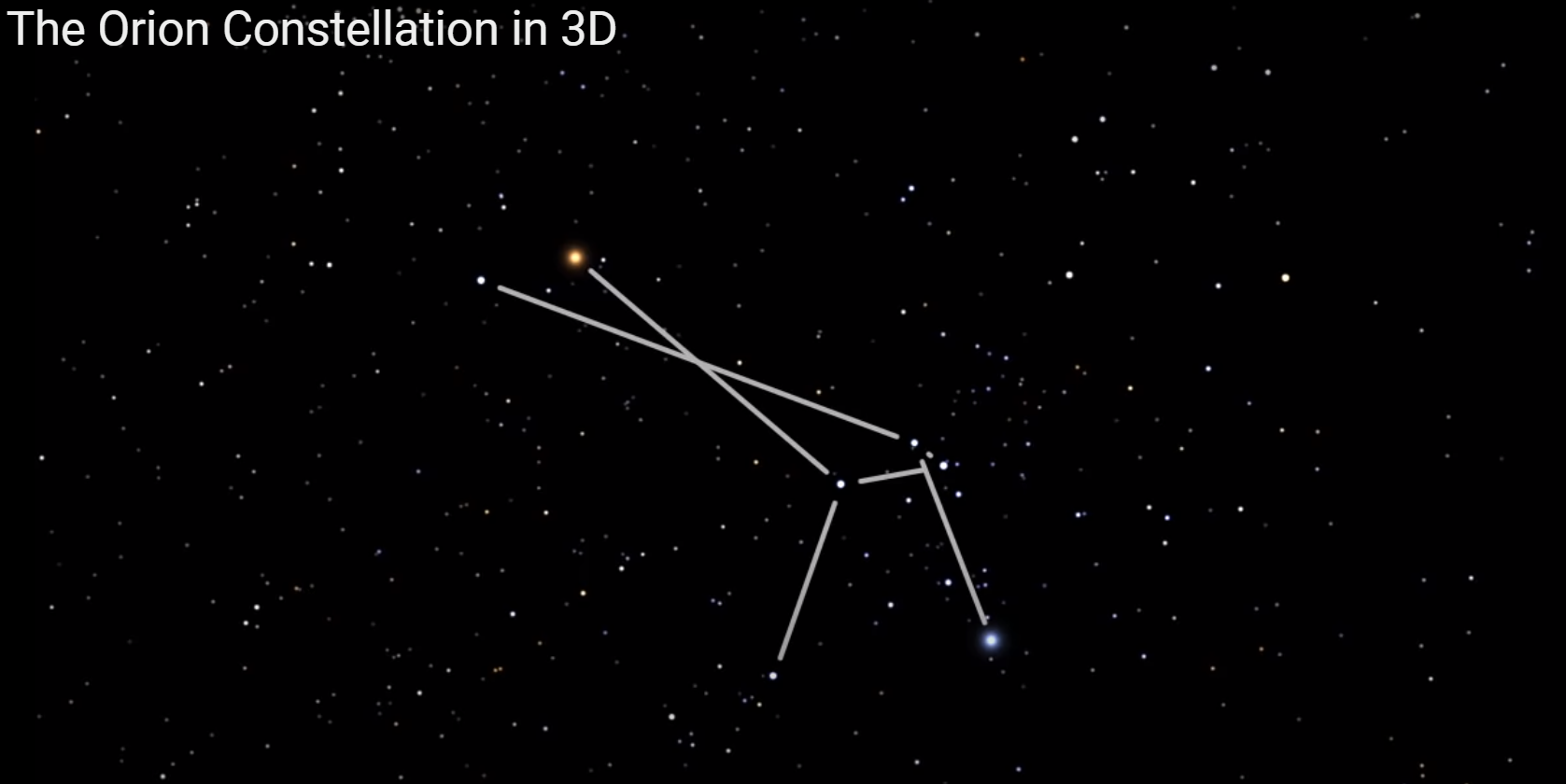
Seven bright stars define the area which outlines the torso and upper legs of Orion the Hunter: Betelgeuse, Bellatrix, Rigel and Saiph at the top and bottom, connected across the centre by his ‘belt’ formed from Alnitak, Alnilam and Mintaka.  The H-shape thus created by these stars is a familiar sight over the winter months but like so many asterisms of the night sky all is not what it seems.  Plotting the distance from Earth of each star it is immediately obvious that their spatial relationship significantly changes the shape of the constellation compared to what as we perceive by eye.  It is a sobering thought that with the passage of time those asterisms familiar to astronomers today will look very different in the future as the stars move though space and therefore continue to change their relative positions, look and shape.          

StarBetelgeuseBellatrixRigelSaiphAlnitakAlnilamMintaka
Distance from Earth* (light years)  643  243  772  724  800  1,359  900
*Source: Royal Greenwich Observatory

Click HERE for annotated version of the Orion Constellation in 3D ref. Space Science Telescope Instititue

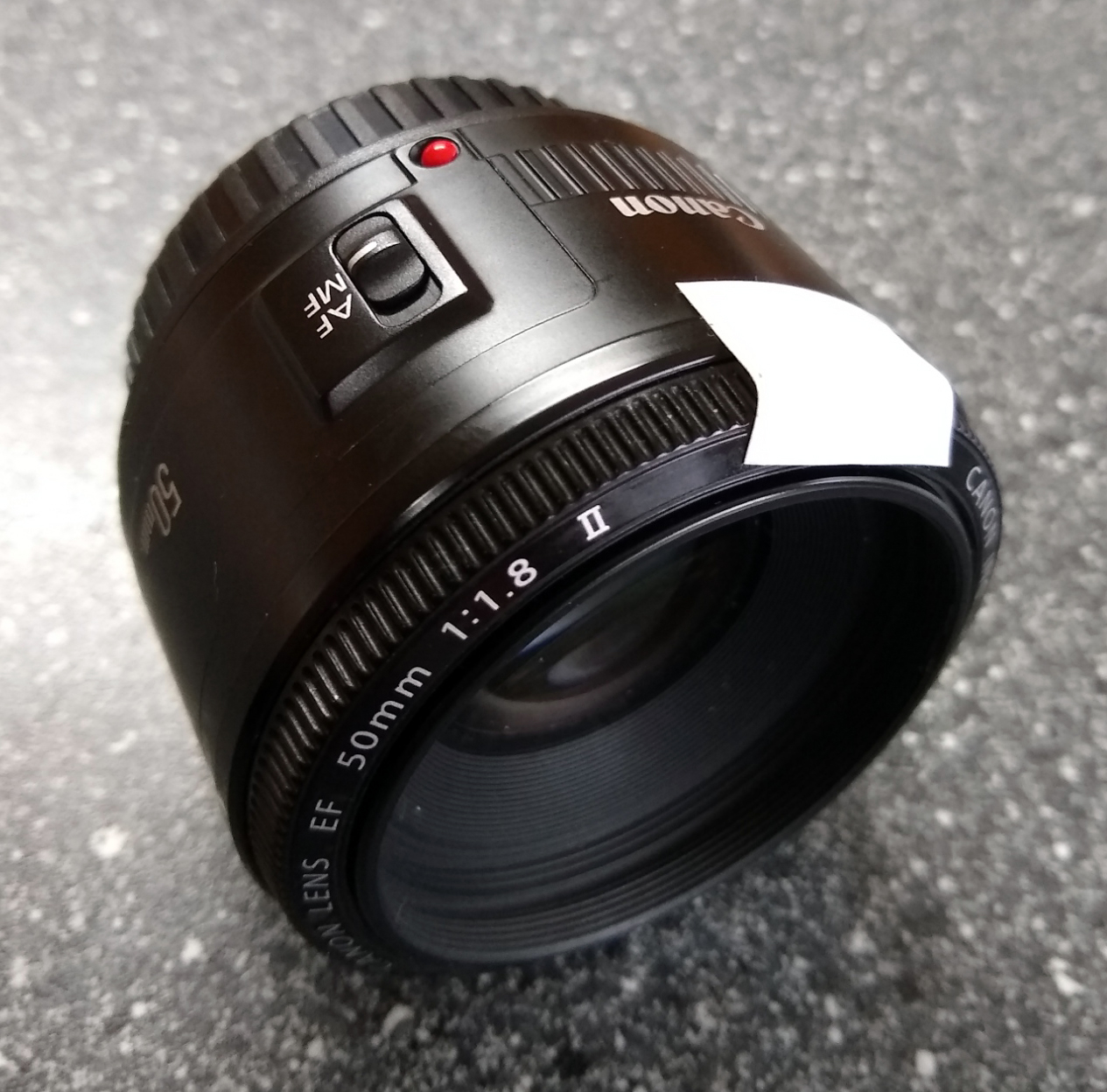
The Canon ‘Nifty Fifty’ 50mm f1.8 fixed aperture lens is perfect for an ultra widefield image of Orion. Whilst the glass is excellent, focus leaves a lot to be desired and once achieved needs to be secured with tape

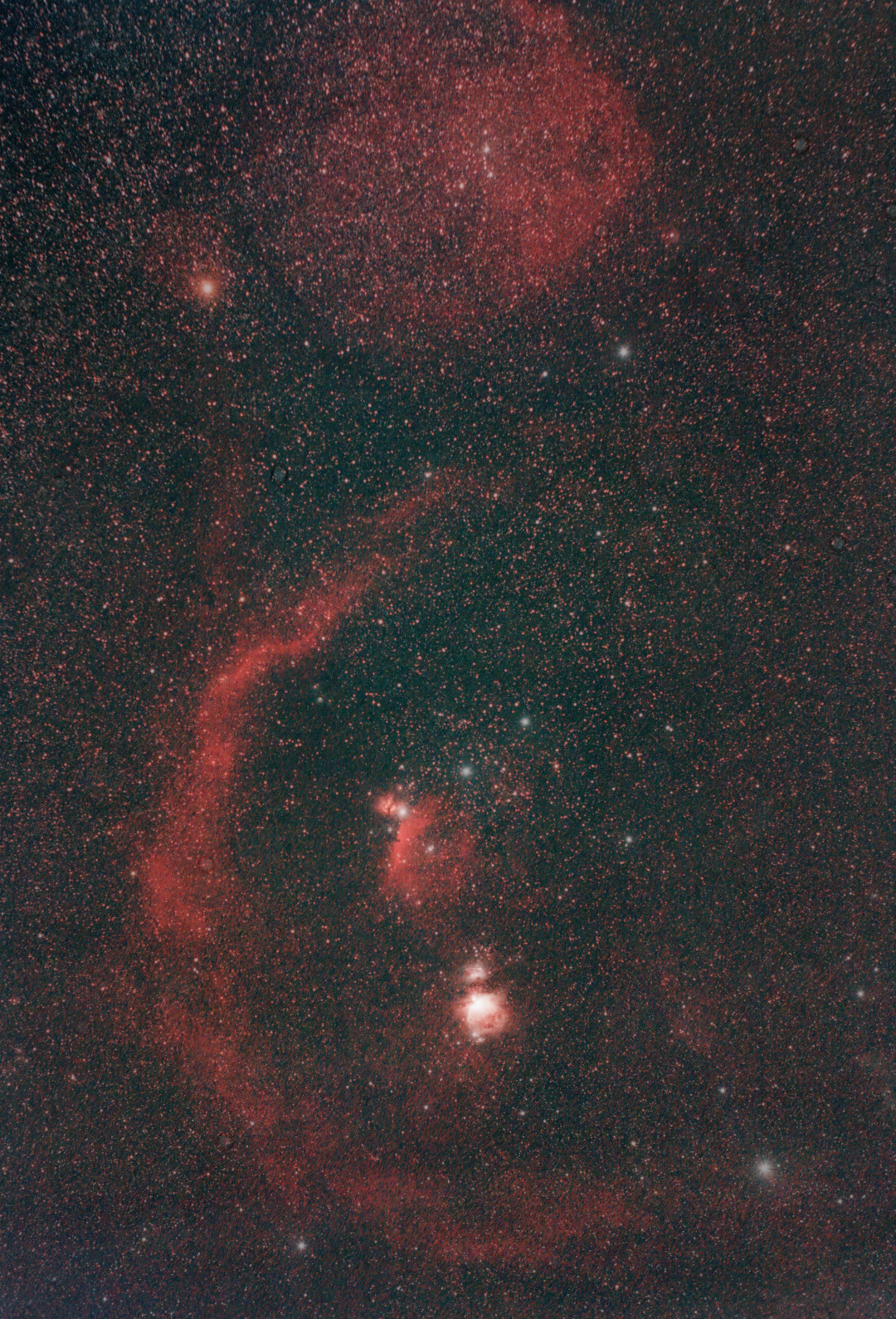
Aside from the said visual perspective of Orion, like so much of space we only see a fraction of what is really present in the Universe but can nevertheless often be disclosed by astrophotography.  And so I next decided to image the entirety of Orion, this time with a basic Canon 1.8 50mm lens – the so called “nifty fifty”- with the purpose of capturing in one shot the constellation with which we are all familiar, together with vast spectacular HII-regions that encompass much of the constellation but usually remain unseen. This camera-lens combination provides an enormous 25.5o x 17.0o field-of-view (x7 > Samyang lens, x83 William Optics GT81!) albeit with lower resolution, which perfectly encompasses most of Orion and therefore the entire arc of Barnard’s Loop on the left and the Angelfish Nebula (Orion’s “head”) located above and between Betelgeuse and Bellatrix. 

Above: Orion constellation from Fairvale Observatory 24th December 2014 (Left) compared with long exposure image + modded camera 10th February 2020 (right)

Barnard’s Loop is an emission nebula, forming part of the Orion Molecular Cloud Complex which also contains the dark Horsehead and bright Great Orion Nebulae M42.  The Loop is believed to have originated from a supernova explosion about 2 million years ago, which is now ionized by stars from within and around the Orion Nebula and takes the form of a large arc centred approximately on the Orion Nebula. Discovered and photographed by E. E. Barnard in 1894, this vast feature extends over some about 600 arcminutes when viewed from Earth or physically up to 300 light years across, depending on the distance from Earth.

The Angelfish Nebula SH2-264 is centred on the young star cluster of Lamda Orionis, of which Meissa is the brightest. An HII-region with an apparent size of 5 degrees and actual size of 150 light years, it is also an emission nebula that is energised by the aforesaid star cluster and is considered to form the so-called head of Orion.

Having previously imaged notable parts throughout Orion, I’ve long wanted to capture the full extent of this wonderful constellation in all its glory and am very pleased with the outcome on this occasion.

DSLR IMAGING DETAILS*
ObjectOrion Constellation
ConstellationOrion
Distance243 to 1,360 light-years
Size594o2
Apparent MagnitudeVaries
  
Lens / Scope Canon 50mm f1.8  
MountSW AZ-EQ6 GT + EQASCOM computer control & Cartes du Ciel
GuidingNo Guiding
CameraCanon 550D modified
 FOV 25.5o x 17.7o Resolution 17.72”/ pixel      
Capture & ProcessingAstro Photography Tool + PHD2 Deep Sky Stacker, PixInsight, Photoshop CS3 & Topaz Denoise AI
Image Location &        OrientationCentre  RA 05:37:37.3      DEC +00:48:50.26         
Top = North    Right = West     
Exposures & Aperture42 x 120 sec  @ ISO800 Total: 1hr 24 min F1.8   
Calibration5 x 120’ Darks,  20 x 1/4000 sec Bias  20 x Flats         
Location & DarknessFairvale Observatory – Redhill – Surrey – UK        Typically Bortle 5-6
Date & Time10th February 2021  @ +21.00h  
WeatherApprox. <=0oC   RH <=65%                  🌙 NEW MOON

*For higher resolution and plate-solving data go to Astrobin HERE and click on image

Galactic Bloom


M63 HaLRGB FinalCropRotate3 (Large)-denoise-denoise

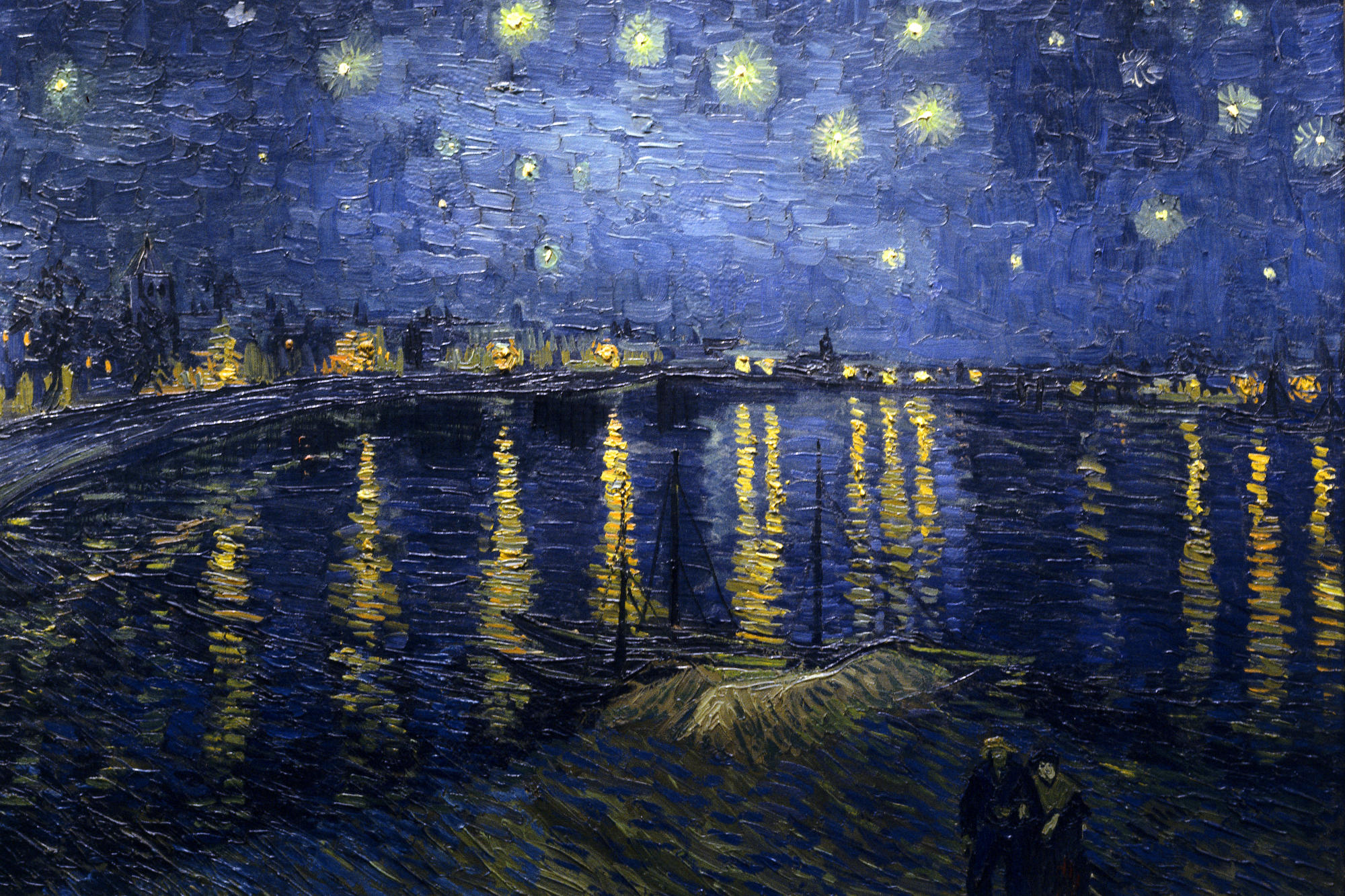
You don’t have to be an astronomer to appreciate Van Gogh’s wonderful evocation of the night sky in his 1889 painting Starry Night.  He knew a thing or two about sunflowers too and I’ve often stopped by the National Gallery in Trafalgar Square to take a peep at his famous painting of them.  However, it was still more than thirty years after completing these paintings that we first learned that such features as galaxies and the rest of the Universe even existed beyond our own Milky Way.  Since then our knowledge of the cosmos has expanded considerably and today provides no end of imaging opportunities for the astrophotographer, subject to clear skies!

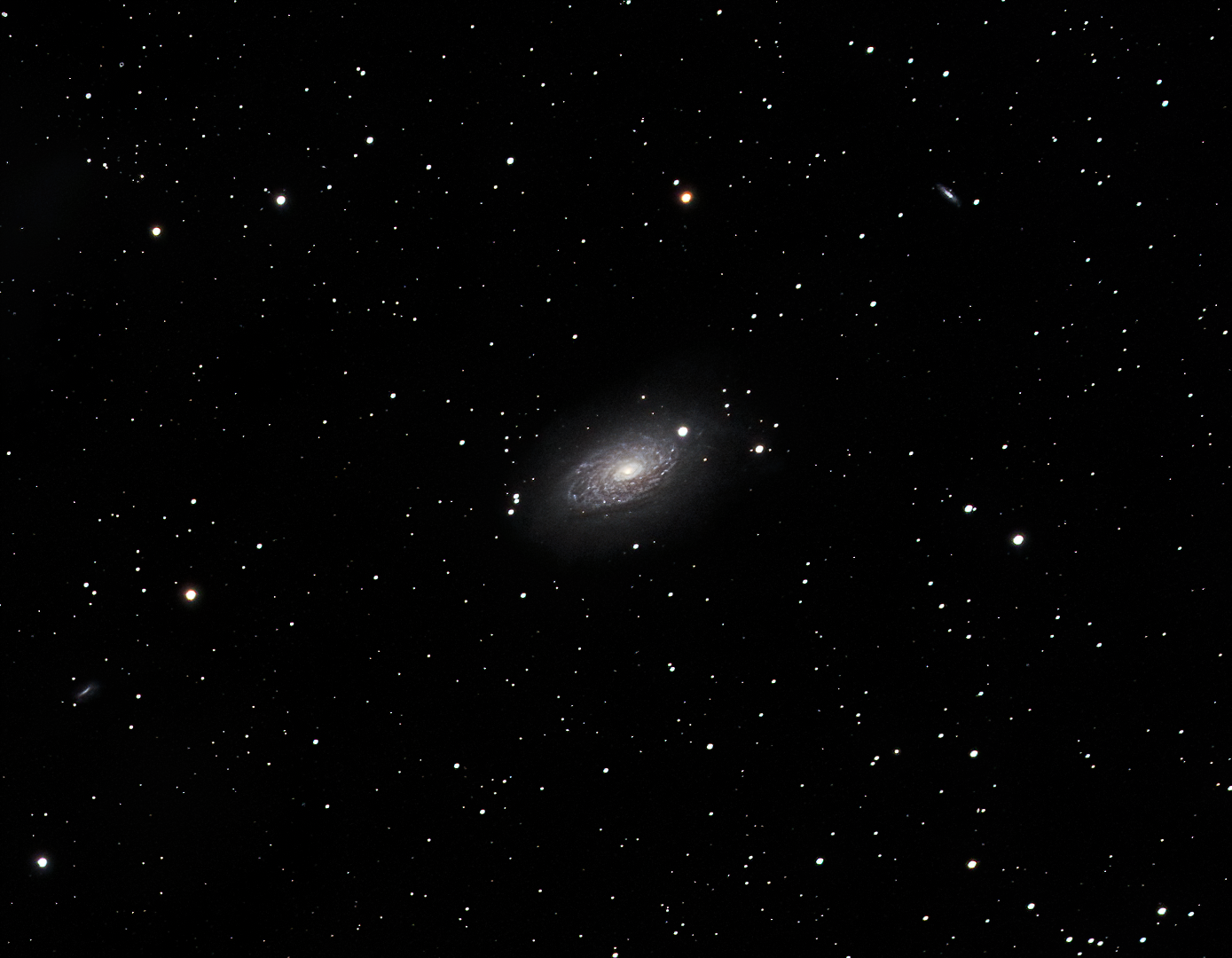
Having started the galaxy season with M106 and, given the excellent conditions that prevailed throughout much of Spring this year, I chose to return to the same area of the sky again to image M63, AKA the Sunflower Galaxy.  M63 has a spiral form but with no apparent central bar and in visible light lacks large scale spiral structure, although two-arm structures are noticeable in near infra-red.  Instead the dust lanes are extensively disrupted producing a patchy appearance and is thus classified as a flocculent galaxy – in this case looking something like a sunflower.

As previously discussed, most galaxies are a real challenge for my equipment but an earlier experiment indicated it might just be possible to image M63, the trick would be obtaining sufficient integration time.  Fortunately three clear nights approaching a new moon in April provided over 8-hours of good subs, which I’m pleased to say resulted in a decent final image after all.  The background sky is less busy than I would wish but there’s nice colour in the stars and also a few very small faint fuzzies on close inspection.  Notwithstanding,  M63 is clearly the star of the show (no pun intended) with the so-called flocculation clearly evident and numerous random dust lanes criss-crossing the entire galactic disc.

Although in 1924 Edwin Hubble’s recognition that galaxies, such as our own, existed outside the Milky Way, M63 was discovered by Pierre Méchain and catalogued by Charles Messier in 1779, long before Van Gogh’s paintings.  He might conceivably have known of its presence therefore but not what it was and would surely be inspired to see and know about the Sunflower Galaxy as we do today.

IMAGING DETAILS
Object M63, NGC 5055 AKA Sunflower Galaxy
Constellation Canes Venatici
Distance 29 million light-years
Size 12.6’ x 7.2’
Apparent Magnitude +9.3
 
Scope  William Optics GT81 + Focal Reducer FL 382mm  f4.72
Mount SW AZ-EQ6 GT + EQASCOM computer control & Cartes du Ciel
Guiding William Optics 50mm guide scope
  + Starlight Xpress Lodestar X2 camera & PHD2 guiding
Camera ZWO1600MM-Cool mono  CMOS sensor
  FOV 2.65o x 2.0o Resolution 2.05”/pix  Max. image size 4,656 x 3,520 pix   
EFW ZWOx8 + ZWO LRGB & Ha OIII SII 7nm filters 
Capture & Processing Astro Photography Tool + PHD2 +  Deep Sky Stacker & Photoshop CS3
Image Location              & Orientation Centre  RA 13h 15m 49.47”      DEC +42o 01’ 45.62”                     

Top = North approx..     

Exposures 30 x L  17 x R  18 x G  23 x B  12 x Ha x 300 sec

Total Time:  8hr 20 min    

  @ 139 Gain   21  Offset @ -20oC    
Calibration 5 x 300 sec Ha + 10 X 300’ RGB  Darks,  20 x 1/4000 sec Bias  10 x  HaRGB Flats               @ ADU 25,000
Location & Darkness Fairvale Observatory – Redhill – Surrey – UK        Typically Bortle 5-6
Date & Time 14th 15th & 16th April 2020  @ +22.00h  
Weather Approx. <=8oC   RH 60 – 70%                  🌙 40% waning

Photons & Photography

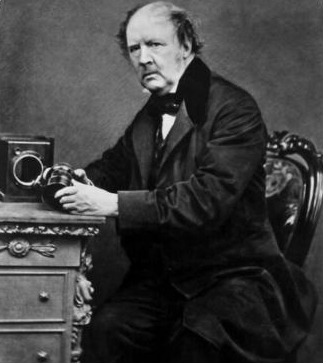
william-henry-fox-talbot-with-camera-141697035181903901-141210123557

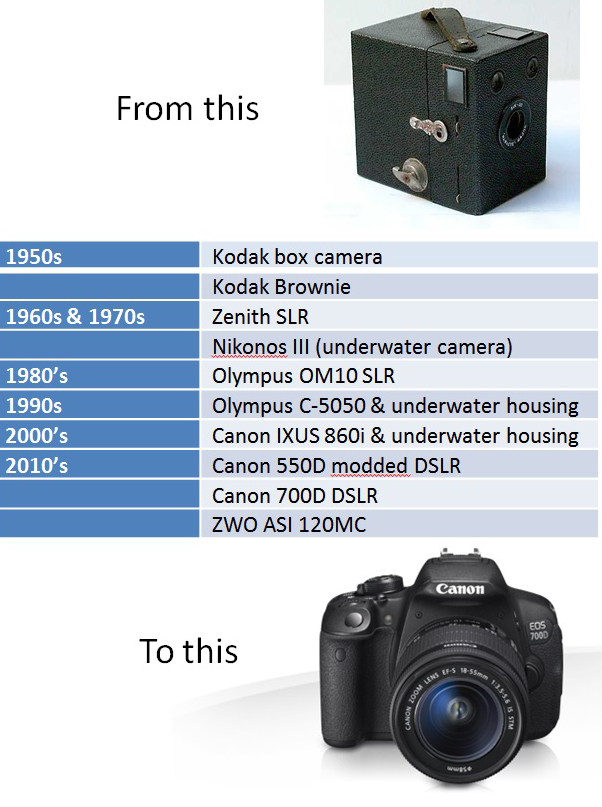
I’ve been interested in photography from a young age.  As I child I played with my parent’s Kodak box camera and, as far as I can remember, my first camera was a Kodak Brownie at the age of about nine. It’s a wonderful medium that I have now experienced for over 50-years, on land, underwater and now for astrophotography.

cameras

My cameras

I’d like to think I know a thing or two about photography by now; underwater photography and digital astrophotography have been particularly challenging in different ways but the latter is a real eye opener that has expanded my knowledge of digital imaging significantly.  Capturing images of distant objects that can only be seen with the use of sophisticated equipment and complex processing also requires an in-depth understanding of light itself.

Having spent the first half of this year reading Einstein’s biography, I have recently started an online course at Stanford University on his ground-breaking Special Theory of Relativity.  Einstein’s many insights into the physical world are profound, which more than 100-years on still challenge most of us to understand.  Light was at the core of his famous 1905 paper, in particular it’s duality as a waveform and light quanta, or photons – defined as a quantum of electromagnetic radiation.  His concept of the photoelectric effect has enabled the development of today’s digital camera sensors and CCDs.  The core principal is the production of electrons as light shines onto a material, whereby the light (photon) knocks out an electron which can then be collected electronically – the basis of digital photography.

In September I visited Lacock Abbey in Wiltshire, initially a 13th century nunnery which is now run by the National Trust.  Today it is better known as the home of William Henry Fox Talbot (1800 – 1877) – mathematician, astronomer and archaeologist but most famously the inventor and pioneer of photography, notably developing, fixing and printing.  The window photograph below (left) was taken at Lacock Abbey in August 1835 and is recognised as being from the oldest ever camera negative produced by Fox Talbot, on the right is the same window in 2016.

In the early 19th century Thomas Wedgwood had made photograms – silhouettes of leaves and other objects – but these faded quickly. In 1827, Joseph Nicéphore de Niepce produced pictures on bitumen, and in January 1839, Louis Daguerre displayed his ‘Daguerreotypes’ – pictures on silver plates – to the French Academy of Sciences. Three weeks later, Fox Talbot reported his ‘art of photogenic drawing’ to the Royal Society, which subsequently became the de facto basis of modern film photography.

img_2566-medium

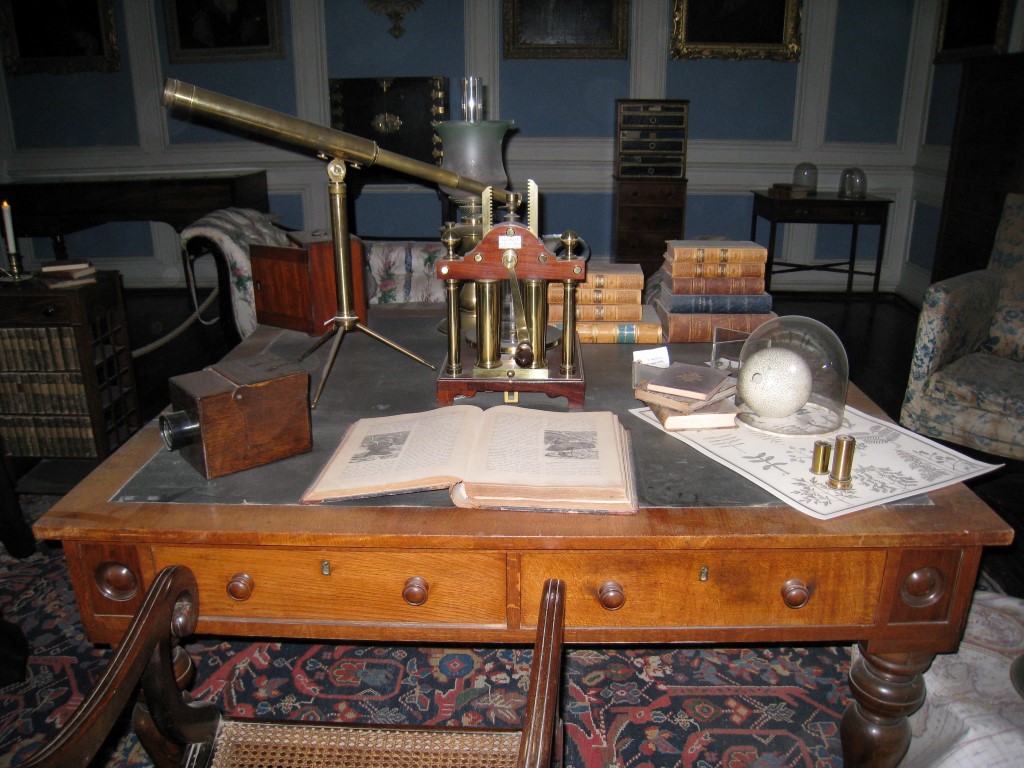
Fox Talbot’s desk in his study at Lacock Abbey

Fox Talbot lived and worked at the Abbey for most of his life.  As well as an excellent museum, which details the history of photography and photographic processes, the house contains his rooms where he developed (no pun intended) the aforementioned inventions and is surely a ‘must do’ visit for any keen photographer.  Like many at that time he was a polymath, with notable friends and accomplices who worked in similar and other scientific fields:

Sir John Herschel – astronomer, mathematician, botanist & chemist, Gold Medal winner and founder of the Royal Astronomical Society, son of William Herschel who discovered Uranus.

Charles Babbage – mathematician, philosopher, mechanical engineer, considered “the father of the computer”;

William Whewell – leading 19th century scientist, recognised in the fields of architecture, mechanics, mineralogy, moral philosophy, astronomy, political economy, and the philosophy of science;

Sir Charles Wheatstone – physicist, inventor of stereoscopic photography, the telegraph & accordion;

Sir David Brewster – physicist specialising in optics, mathematician, astronomer & inventor of optical mineralogy and the kaleidoscope;

Peter Roget – physician, theologian, lexicographer and publisher of Roget’s Thesarus.

This particular group are now remembered by a table setting in the Abbey’s dining room, where they gathered for dinner; the mind boggles at the conversation!

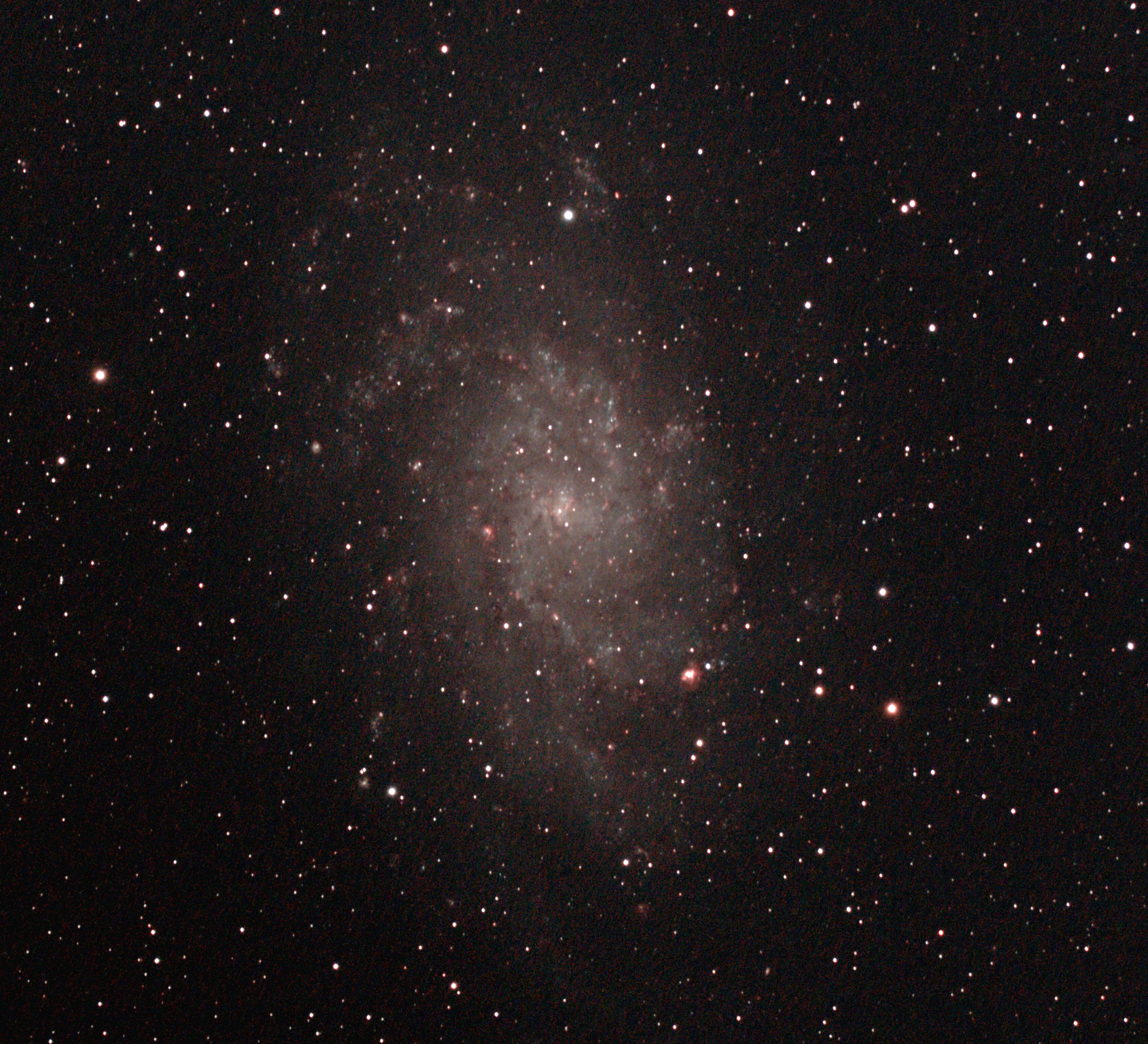
Fox Talbot’s pioneering photography work preceded the early 20th century understanding of light that arose from Einstein and its more recent application in semi-conductors as camera sensors, of which I am sure he would have approved.  At that time the Universe outside of our galaxy was also unknown and he would have marvelled further at the thought of imaging other such distant galaxies such as M33 below; like photons, photography has come a long way since his death in 1877.

Picture saved with settings embedded.

M33 Triangulum Galaxy – consisting of some 40-billion stars, the photons in this image have travelled 3-million light years to reach my camera’s sensor! | WO GT81 + modded Canon EOS 550D & FF guided | 18 x 300 secs @ ISO 800 & full calibration | 22nd October 2016

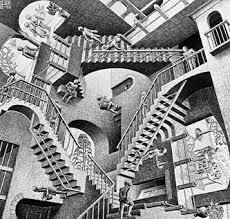
It’s All Relative

escher

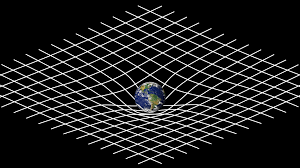
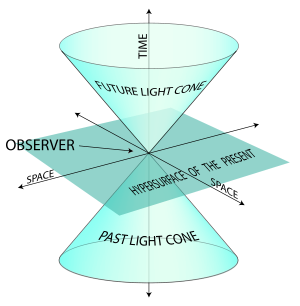
I spent the first half of this year reading Walter Isaacson’s biography of Albert Einstein, which apart from providing a fascinating insight into the man and his work, whetted my appetite to understand better the science.  Following previous success studying astronomy courses online, I set out to find a suitable programme to achieve this goal.  As a result I enrolled for Understanding Einstein: the Special Theory of Relativity run by Professor Larry Lagerstrom of Stanford University, USA, which after two months I have just completed.spacetime

The course is a good mix of qualitative and quantitative information, which at times has been quite challenging but nonetheless proved very worthwhile. The lecturer is very clear and thorough, an essential quality when dealing with this difficult and often bewildering subject.  Einstein’s paper On the Electrodynamics of Moving Bodies outlines the Special Theory and was just one of four published at about the same time in 1905 (“The Miracle Year”) which included: Brownian motion, Mass-energy equivalence (E=Mc2) and The Photoelectric Effect, the latter of which won him the Noble Prize.  At the end I now feel I understand the basics of Einstein’s ground breaking science properly, which apart from being interesting provides valuable insight and understanding of the Universe and related issues of space and time.

300px-world_line-svg

During this period I have also been thinking about how to improve my astrophotography and the way forwards.  I’ll be on the learning curve for years to come and accept that there’s much I can still improve on using current equipment and processes but after more than 2-years astroimaging, mostly with a DSLR camera, I feel I have reached something of a crossroads and need to change tack in order to achieve more meaningful advances once again.  Inevitably this is likely to mean new equipment and most likely a move to LRGB / Narrowband format.  In the interim, whilst I consider the options, I have also been researching suitable capture / sequencing software, post-processing techniques and programmes.  I am concerned that this will result in another level of complexity but I think it has to be done in order to progress – watch this space.

Continuing a trend that’s been apparent for the past year, clear nights have been something of a rarity since mid-September; this is a concern if I am to pursue astrophotography to the next level.  However, high pressure was unusually dominant over Fairvale Observatory during the last days of November and cold, clear skies have provided good conditions for astronomy at last.

img_20161130_234303293

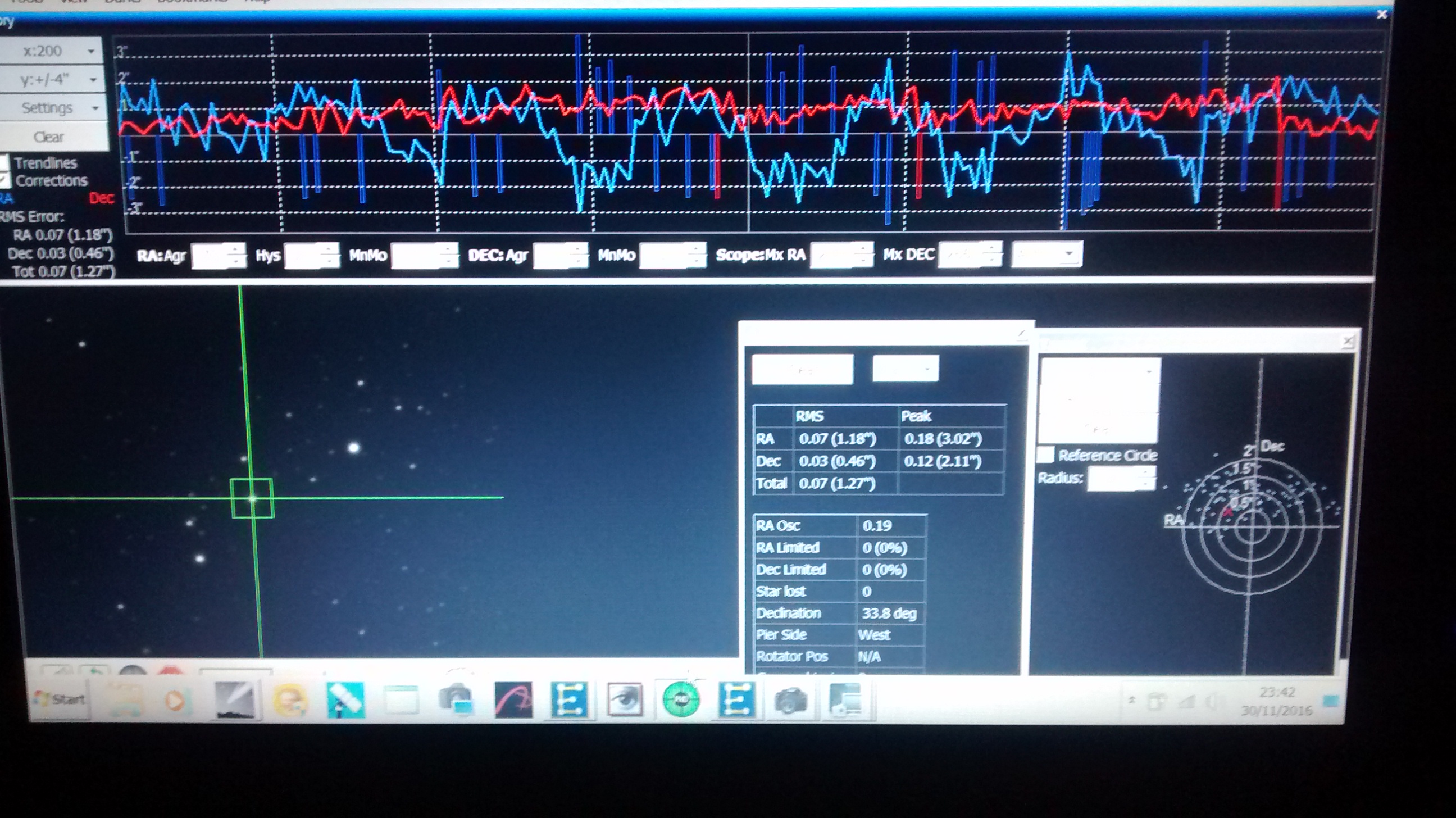
Getting better – PHD2 screen 30th November 2016: DEC is good but room for improvement with the RA settings. The impact on tracking and image quality is noticeable.

Whilst I have certainly not fully mastered guiding I am now routinely using PHD2.  This in itself has probably been the major breakthrough this year, which with the aforementioned clear skies I wanted to take full advantage of.  Hidden within PHD2 I have also discovered and am now starting to experiment with the on-screen drift align routine, with reasonable results; using the gamepad for mount control and a new wireless link with my tablet computer, I can also make focus and alignment adjustments at the mount without returning to the computer each time.

As a result I have dispersed with the SynScan handset for alignment and can now completely set-up and control imaging with the computer and tablet; this is nothing short of a revolution which I am hopeful will greatly increase set-up time as well as improving control and tracking accuracy – yipee!  Even with average guiding results I am now achieving good exposures of 5-minutes or more and therefore decided to put this success to work and re-image some winter wonders over three, yes three, consecutive nights at the end of November.

nov-objects

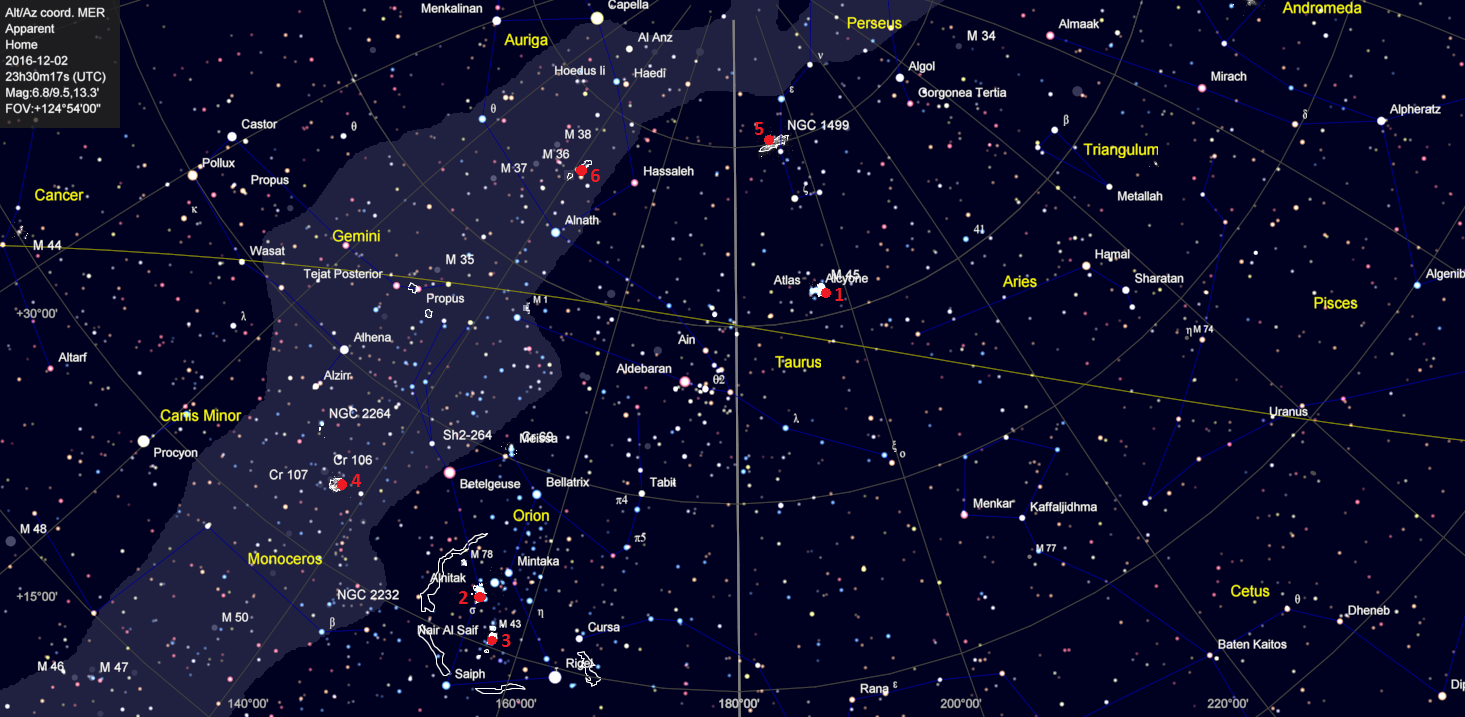
Imaging targets between 28th & 30th of November 2016 – for descriptions & previous images taken of these objects click on the following list of names: (1) M45 Pleiades (2) Barnard 33 The Horsehead Nebula & NGC 2024 Flame Nebula (3) M42 Orion Nebula (4) NGC 2244 Rosette Nebula (5) NGC 1499 California Nebula (6) IC 405 Flaming Star Nebula

The night sky at this time of the year contains many of my favourite objects, but surprisingly I had not imaged some of the chosen targets for more than a year or two and it was both enjoyable and pleasing to reacquaint myself again.  With a new perspective gained from this exercise, the progress I have made with equipment and techniques is more apparent.  Notwithstanding, it’s time to move on – everything’s relative.

Picture saved with settings embedded.

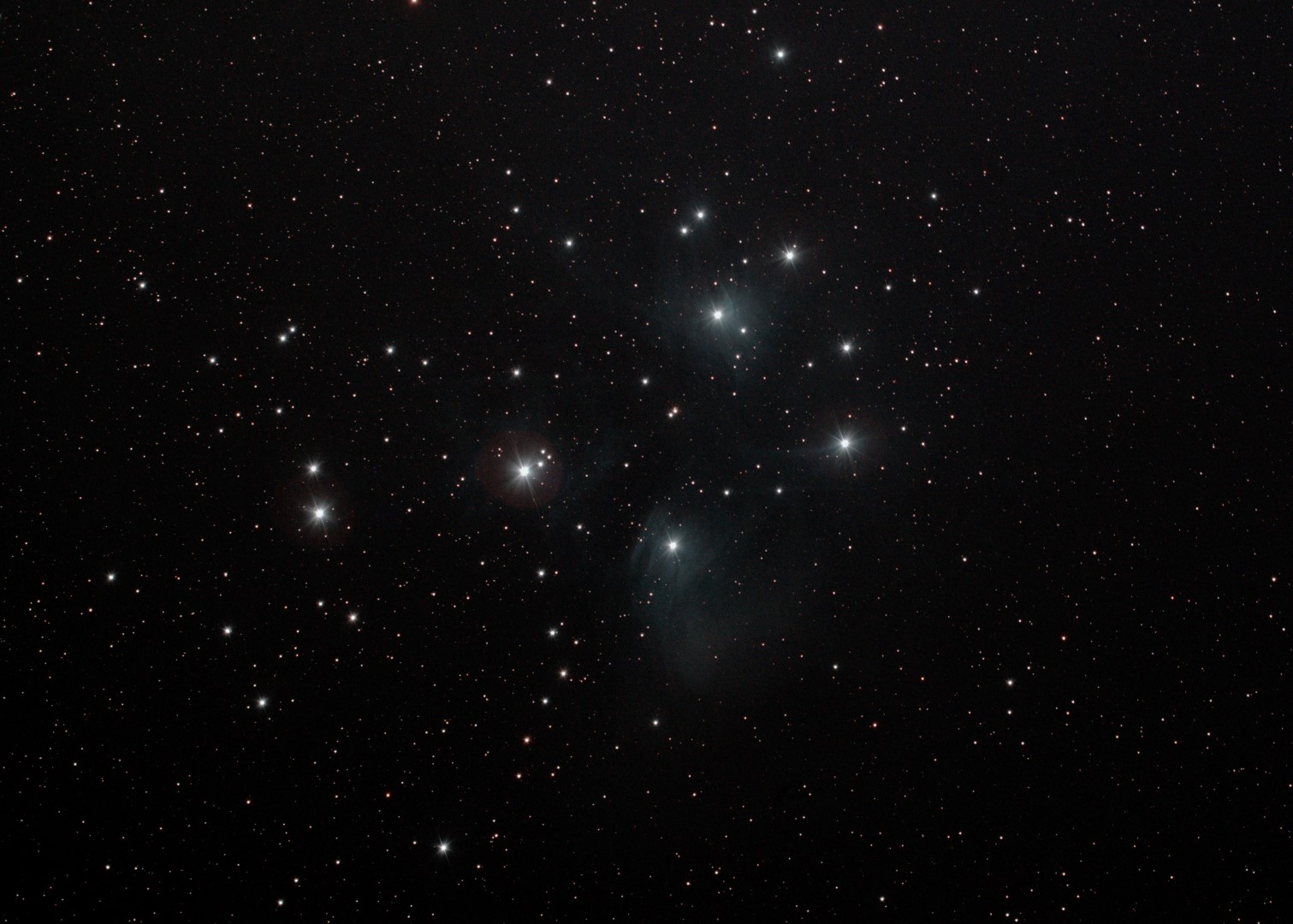
M45 Pleiades, Taurus constellation: 12 x 300 sec @ ISO 800 | 28th November 2016

Picture saved with settings embedded.

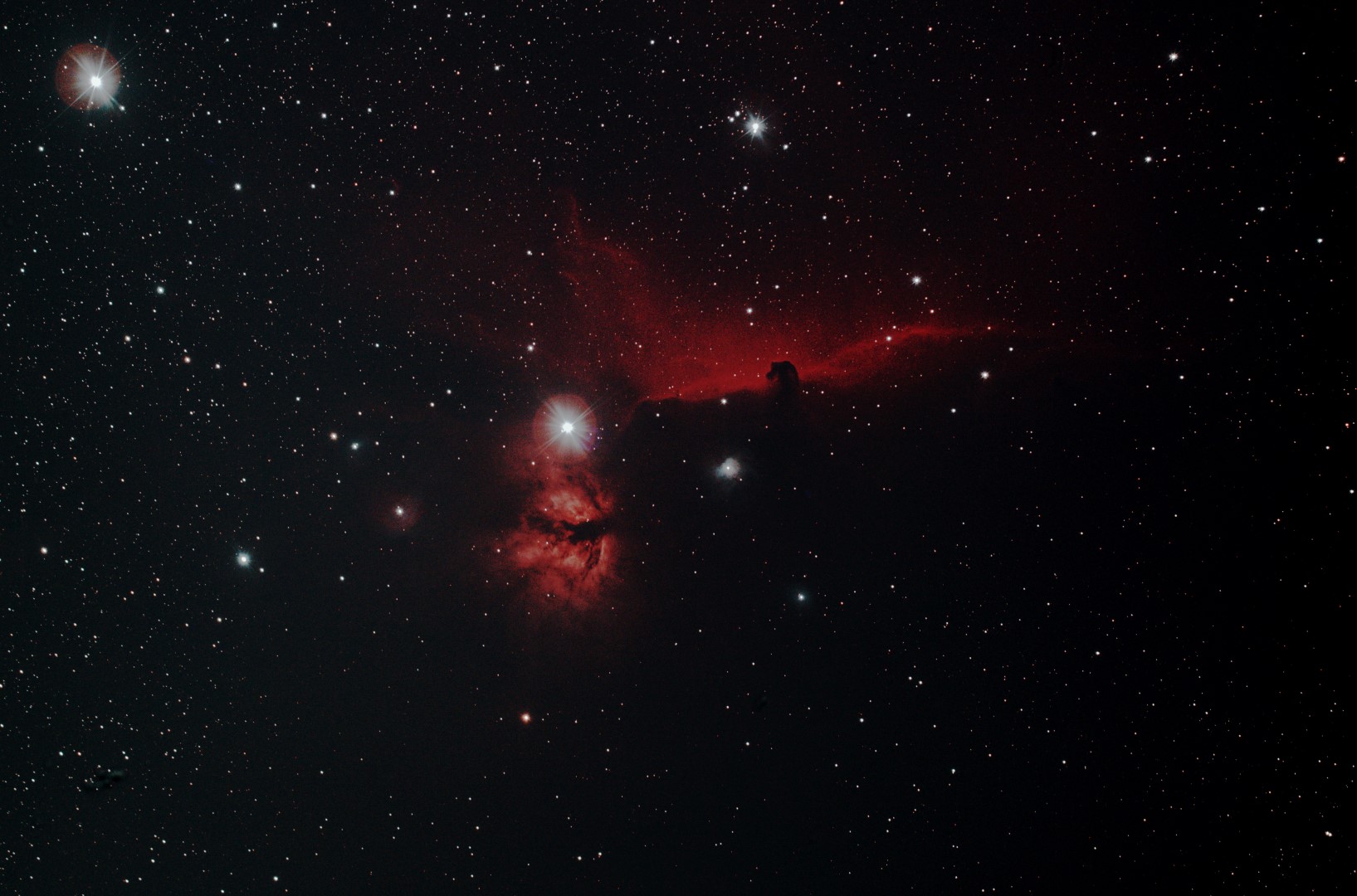
NGC 2014 Flame Nebula & Barnard 33 Horsehead Nebula, Orion constellation: 15 x 300 sec @ ISO 800 | 28th November 2016

Picture saved with settings embedded.

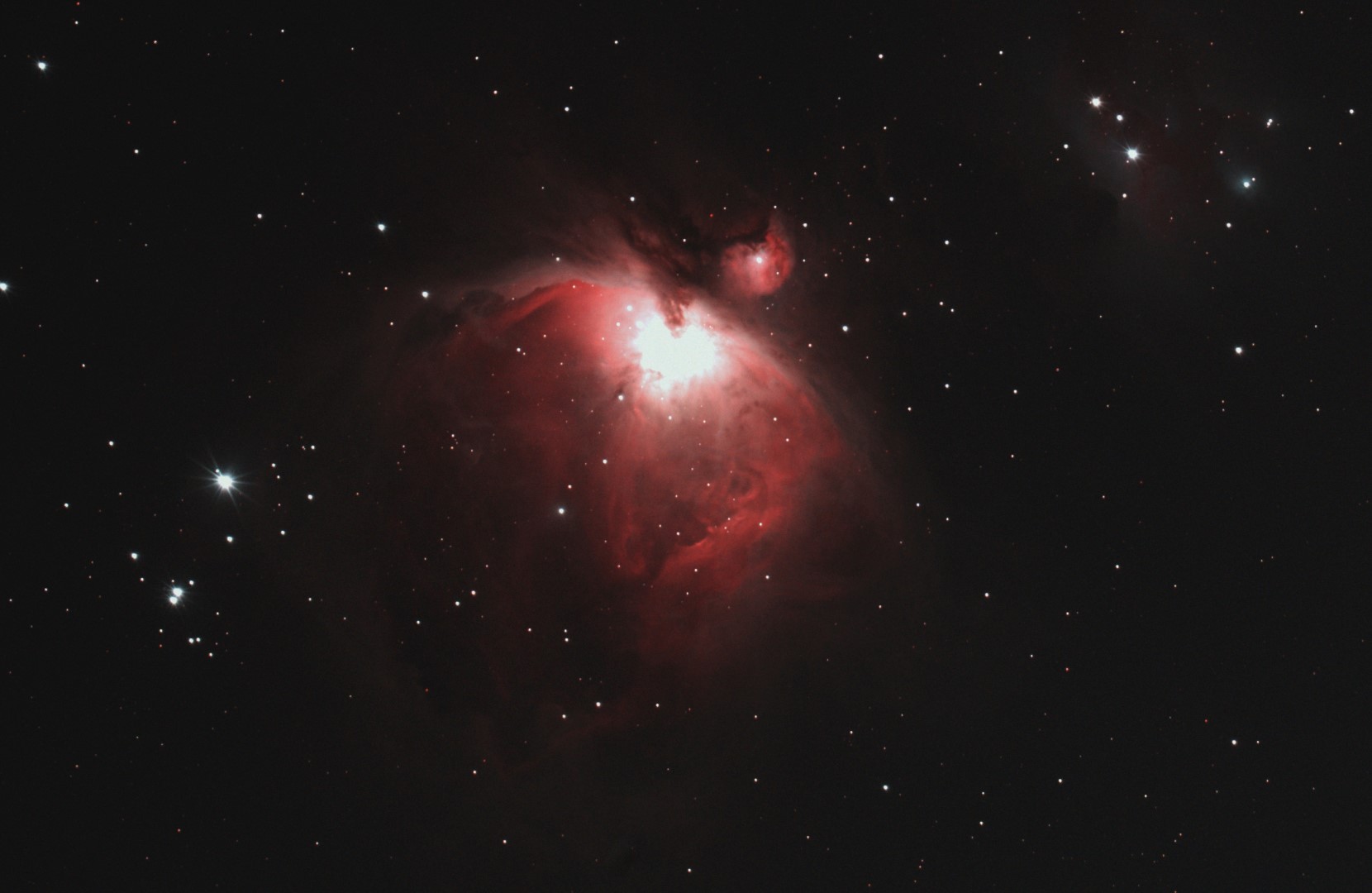
M42 Orion Nebula & M43 De Mairan’s Nebula, Orion constellation: 2 x 300 sec @ ISO 800 | 28th November 2016

Picture saved with settings embedded.

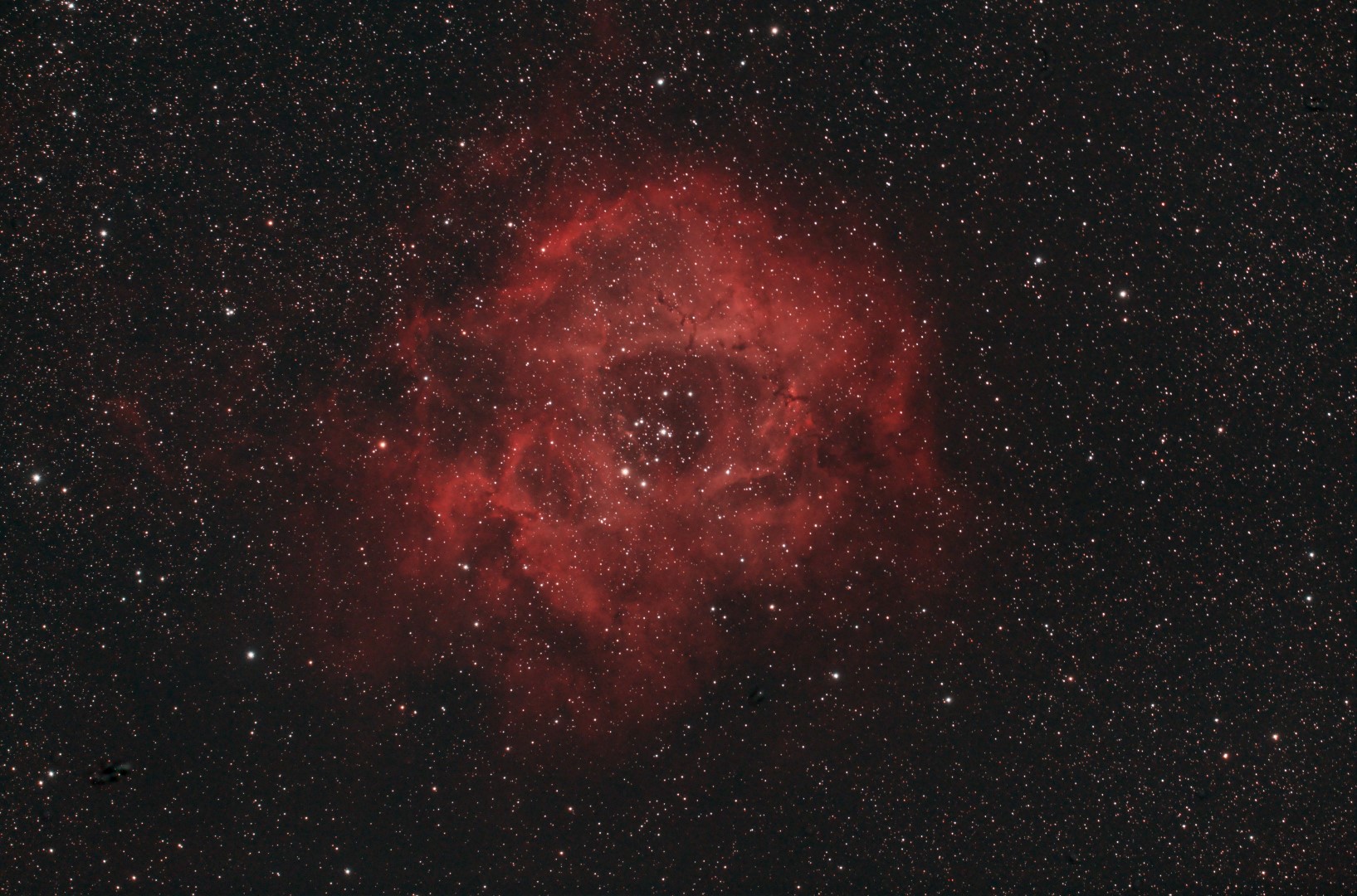
NGC 2244 Rosette Nebula, Perseus arm of Milky Way, Monoceros region: 21 x 300 sec @ ISO 800 | 29th November 2016

Picture saved with settings embedded.

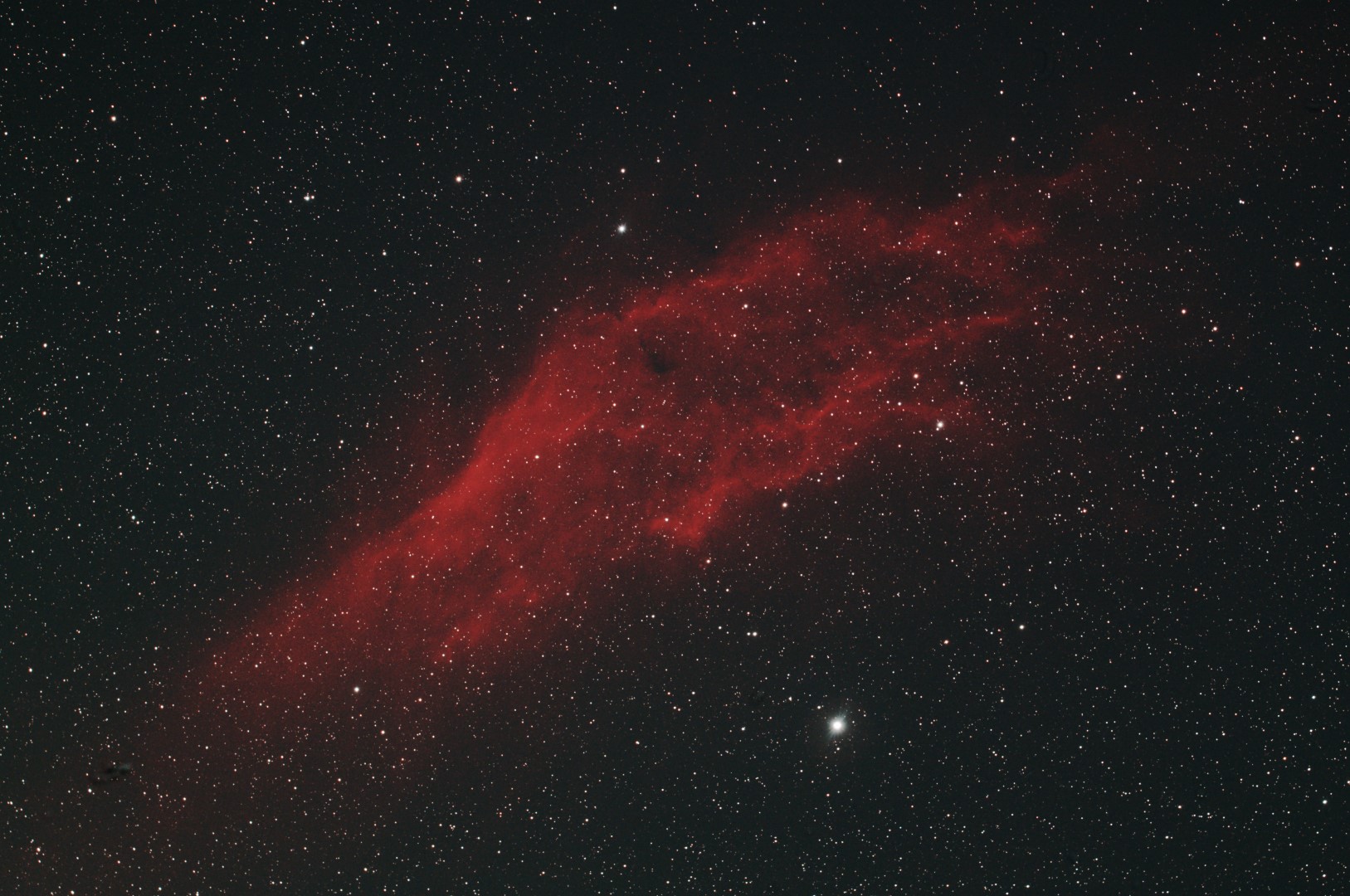
California Nebula, Perseus constellation: 12 x 300 sec @ ISO 800 | 30th November 2016

Picture saved with settings embedded.

IC 405 & 410 nebulae: 15 x 300 @ ISO 800 | 30th November 2016

Notes: all images taken using a William Optics GT81 refractor telescope + PHD2 guiding + modded Canon 550D DSLR & x0.80 field flattner @ ISO 800 with full darks + bias + flats calibration and processed in Deep Sky Stacker & Photoshop CS2  

Dark Matters

download

After some months I have just finished reading Walter Isaacson’s outstanding biography of Albert Einstein.  I don’t know how the author, as far as I know a scientific layperson and writer of the equally good Steve Jobs biography, is able to pull together Einstein’s thoughts and theories in such an engaging and comprehensible manner that provides both insight and understanding into his scientific thinking, life and personality.

Besides the implications his work already has for nuclear physics and astronomy, even in the 21st Century we are only just starting to understand and confirm concepts that were either predicted or implied by his work of uniquely pioneering theoretical physics in the early part of the last century – much of which is still difficult even to comprehend, let alone understand.  In the world of astronomy two of Einstein’s predictions have only recently been shown to actually exist, with very exciting implications for our understanding of the Cosmos: gravitational lensing and earlier this year, confirmation of the presence of gravitational waves – ripples in the fabric of space-time itself!

abell370_hubble_960

Einstein vindicated: In the constellation of Cetus, the galaxy cluster Abell 370 abounds with evidence of gravitational lensing – imaged here in 2009 by the Hubble Space Telescope

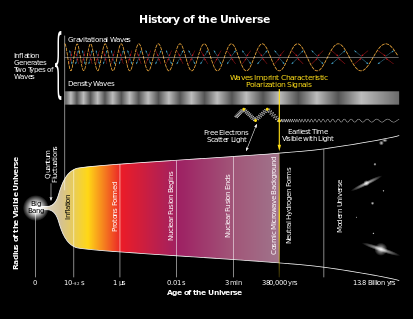
During his early work Einstein battled with 19th Century scientists who continued to believe in the presence of the so-called ‘aether’, as proposed by Isaac Newton in 1718 – an undefined substance that supposedly filled the void in space and was responsible for the transmission of electromagnetic and gravitational forces.  Subsequently Einstein’s Special Theory of Relativity was able to explain such effects without the presence of the aether but there remained problems that were finally borne out in 1924 by Edwin Hubble’s evidence that contrary to the prediction of Einstein’s work and previous astronomical theories, the Universe was in fact expanding.  However, though serious these observations did not prove to be the end for Einstein’s work, merely the beginning of even more incredible theories that have even greater and more profound implications for the Universe.
History_of_the_Universe.svg.png

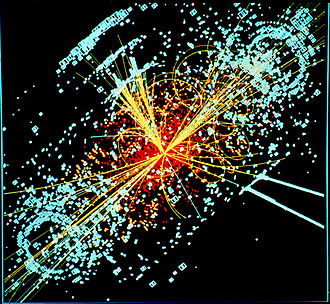
As a geologist by training, my background is scientific and I continue to follow with interest related developments across a broad spectrum.  My perception, which I think is justified by facts, is that we are again experiencing something of a quantum change in our understanding of physics at the moment.  No ‘new Einstein’ has yet emerged, though Stephen Hawking perhaps comes close and there are many bright minds still struggling to understand what it all means – certainly we seem no closer to a unified theory.  At the ‘very small’ scale the increase in particle types since I last studied science in the 1970s is staggering, recently culminating in confirmation of the Higgs boson at the Large Hadron Collider (LHC) in Geneva; almost certainly there’s more to come from the LHC but I’ve already lost track (no pun intended) of what makes up matter.
330px-CMS_Higgs-event

In the meantime, ever since Hubble’s expanding Universe bombshell, the world of physics has struggled to provide an explanation of what’s happening, except to say that for expansion to happen 95% of the Universe must consist of stuff we don’t know about, that is arbitrarily (and misleadingly) called Dark Matter (27%) and Dark Energy (68%), which have theoretical properties of mass and energy that would explain why the Universe is expanding; I find this exciting and even amusing.
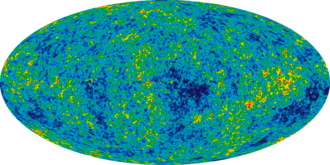
Ilc_9yr_moll4096

Our earliest view of the Universe – the Cosmic Microwave Background, formed some 380,000 years after Big Bang 13.8 billion years ago.

As I get older I look upon the world with increased wonder and ask all the same big questions as everyone else.  I still find science itself exciting as we continue to unlock nature’s wonders but have increasingly had a suspicion that despite the incredible discoveries made by mankind, we are really only scratching the surface of what’s going on.  The prospect that there is still so much we do not know also provides many possibilities for what is really happening; a consoling thought as I move towards old age!  I believe it’s humbling for science that they (we) only know what 5% of what the Universe is made of.  Notwithstanding, like Deep Thought’s answer to the question “what’s the meaning of life the Universe and everything?” in Hitchhiker’s Guide to the Galaxy (answer = 42), it will keep thousands of scientists, their computers and the media gainfully employed for many years to come.  In the meantime, perhaps I can already help them?

download (1)

Early on in my astroimaging odyssey I discovered an interest in Deep Sky Objects, in particular nebulae. I find their very nature beautiful, as the birthplace of new stars and matter itself their science is also fascinating – as Moby puts it We Are All Made of Stars. There are numerous types of nebulae of equally diverse origin, with a complex variety of delicate forms that can be both enthralling and beguiling.  Generally they are made of gases and dust that emit types of light that often cannot be properly seen with the naked eye and only captured by photographic methods using various sophisticated imaging techniques, such as modified cameras or narrow band filters; their very elusiveness is part of the attraction.  I have been fortunate to photograph a number of these features and never get tired of their science and beauty.  However, there are other types of nebulae that are quite different.

Whereas the ‘common’ nebula is fundamentally based on activity that results in the emission or reflection of light, their other ‘ relations’ are the result of a quite opposite process.  In this case so-called dark or absorption nebulae are clouds of dense interstellar dust that obscures or scatters light from nearby objects behind, such as stars or emission and reflection nebulae, resulting in large, unusually dark patches in the sky.  I’ve imaged a few of these features before, where in the case of Orion such a process has produced Barnard 33, better known as the Horsehead Nebula – a dark interstellar dust region in the shape of yes, a horse’s head.  Recently I set out to image another less famous but equally exciting dark nebula.

Other than resorting to solar astronomy, the period of summer sometimes seems like something of a barren period, further compounded by short nights and the absence of astronomical darkness.  Notwithstanding, look closely and there’s plenty happening and, if you’re lucky, it’s possible to work into the night enjoying the warmth of the season too; I’ve recently been able to stay out in a shorts and T-shirt until past 3.00 a.m. – compare that to January – apart from the comfort there’s also no sign of the astronomer’s enemy, dew.  This year my wife has grown and strategically placed two night flowering plants close to my equipment, which on warm evenings produce pleasant aromas that waft across Fairvale Observatory whilst I’m working.  What’s not to like?

IMG_20160823_212657779 (Medium)

Night Phlox (Zaluzianskya Capensis). Though quite this small plant produces a strong smell of violets at night.
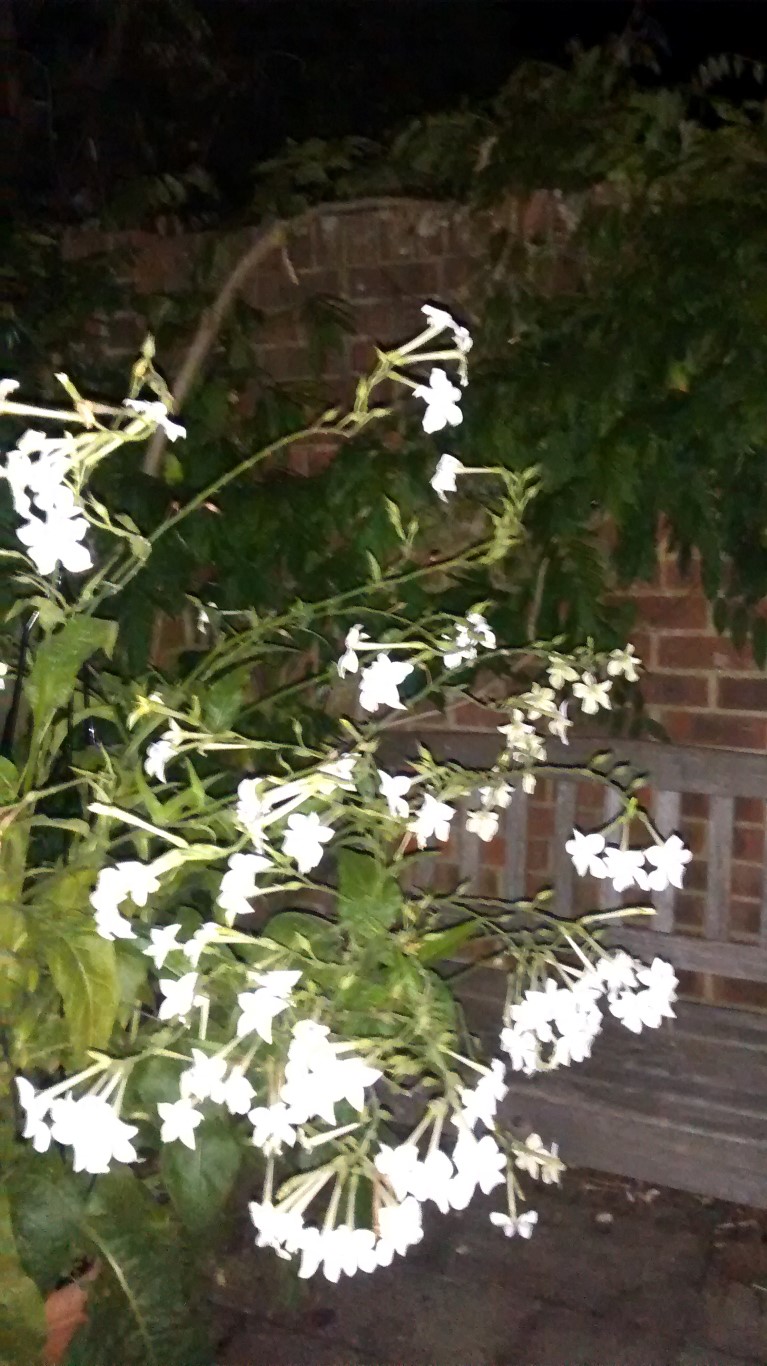
IMG_20160823_212515224 (Medium)

Nicotiana Alata. This large plant produces a strong, fragrant smell.

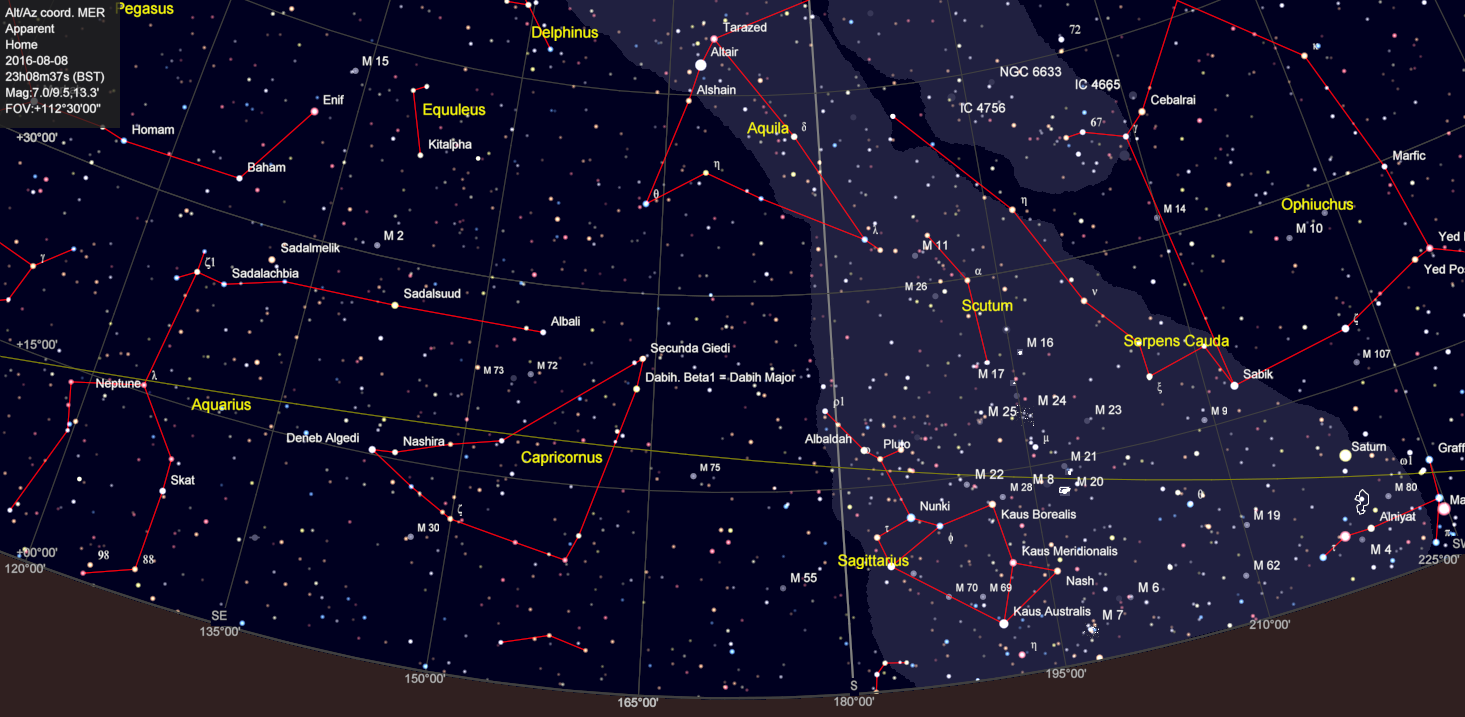
Whilst there’s no Orion (though it has made an appearance in the east from at about 3.00 a.m. since late August) or Taurus (also rising shortly before Orion) with all their iconic features, instead the summer arm of the Milky Way passes across the sky from about 8.00 p.m. presenting numerous opportunities of its own in the early part of the night.
Aquila b142

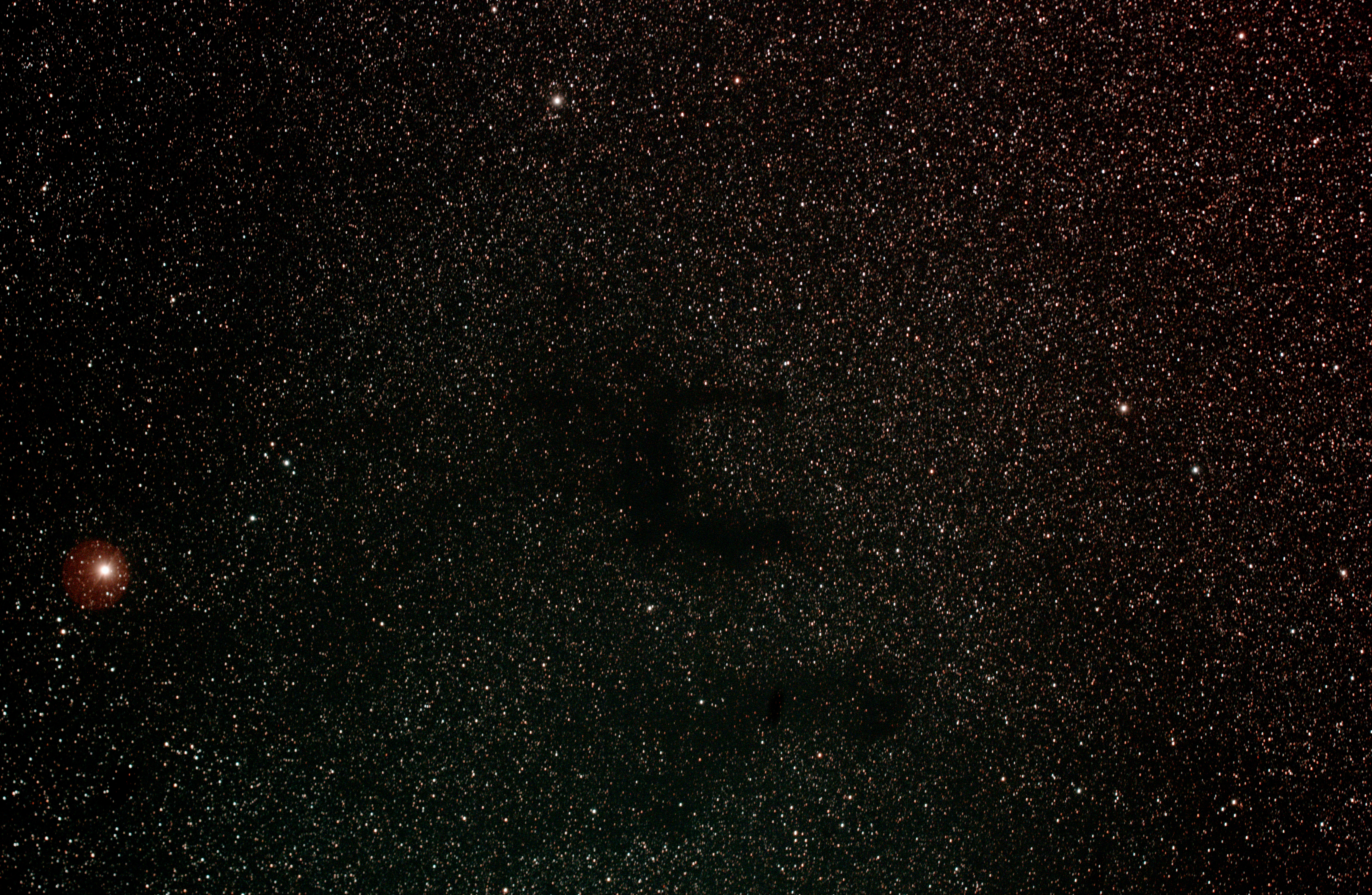
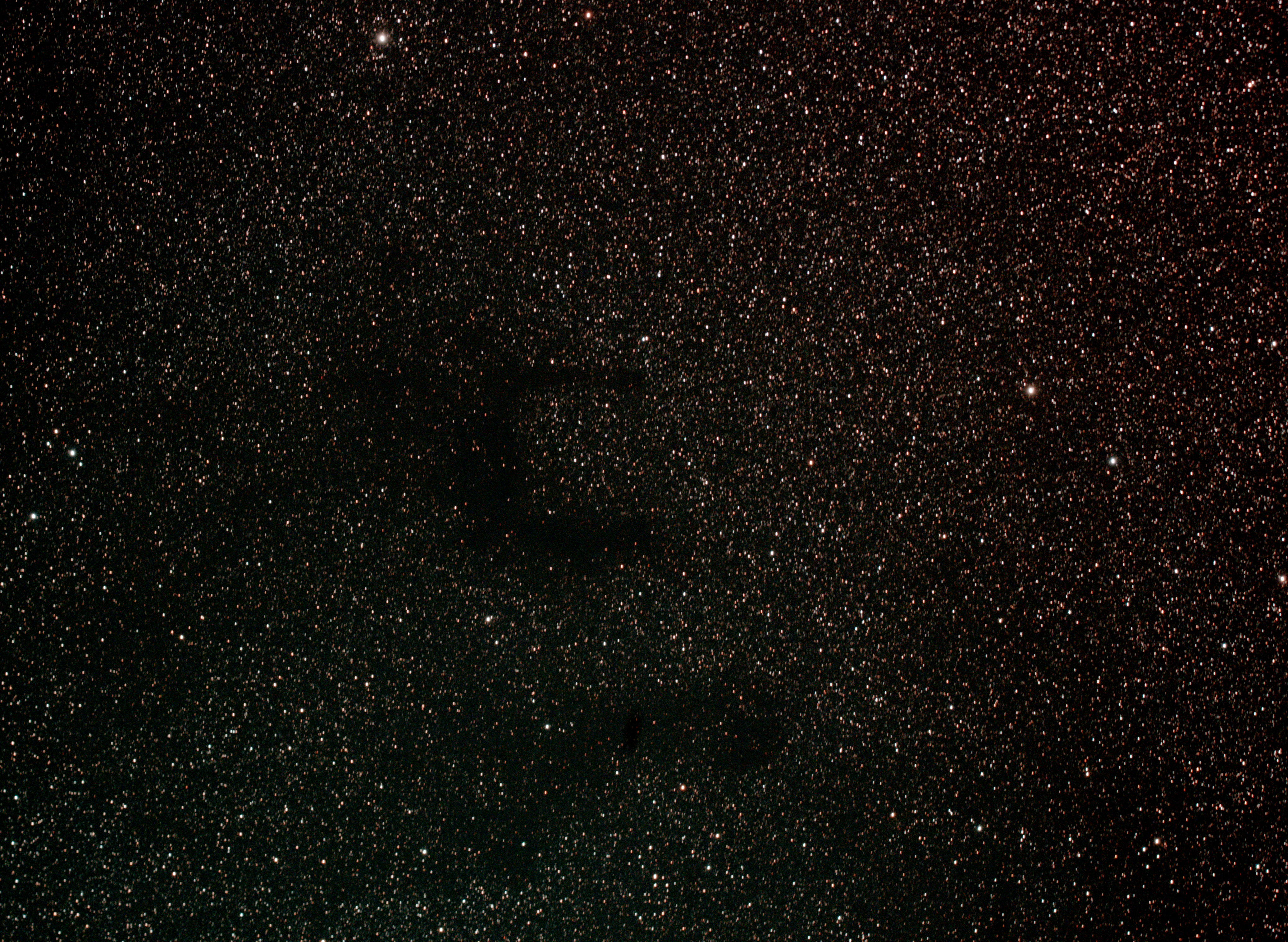
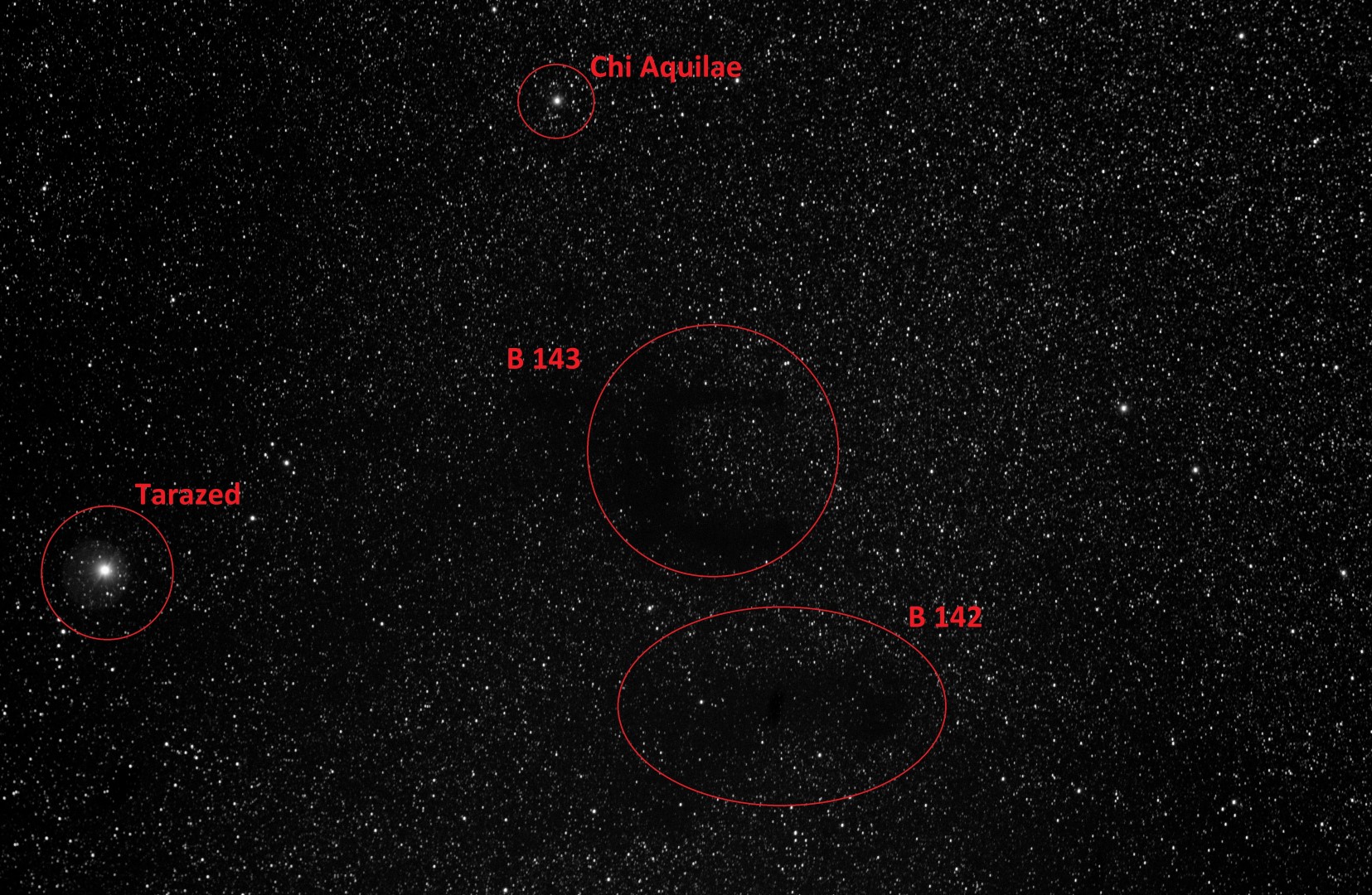
This time my targets were Barnard 142 & 143, located just west of the star Tarazed in the Aquila Constellation.  Roughly equivalent to the full Moon in size distance and some 2,000 light years away, both are dark nebulae which viewed together against the dense background of stars in the Milky Way clearly make the shape of the letter E – shown first below in inverted colour.
Picture saved with settings embedded.

Previously I’ve been too busy looking for the more conventional DSOs but at some 30 arc minutes, the E Nebula – as it is known – is another excellent imaging target for the William Optics GT81 field-of-view.

B142_143 Stacked  080816L3CL.jpg

E Nebula, AKA Barnard 142-3 in the Aquila Constellation.  William Optics GT81 FD & modded Canon 550D + 0.80x Field Flattener | 15 x 180 sec @ ISO 1,600 | 26th August 2016

B142_143 Stacked  080816L3CLcrop.jpg

E Nebula, Barnard 142-3 Dark nebulae

It turns out there are many such dark nebulae, so I hope to be imaging others in the future. I wonder what Einstein would have made of these and moreover, the hypothesis of Dark Matter & Energy?  It seems that once again he may have foreseen such developments and their possible existence may ironically even be found to relate to the cosmological constant used in his original General Theory of Relativity.

It’s all in the stars

Starry_Night_Over_the_Rhone

After 24-weeks I have just completed Imagining Other Earths, a Coursera MOOC presented by David Spergel, Charles A. Young Professor of Astronomy at Princeton University – soon to become Director of the new Computational Centre of Astrophysics, NY – and cannot speak too highly of the course.  In my quest to better understand what I am seeing and imaging, I have participated in five astronomy courses and this is by a country mile the best; how many country miles in a parsec I wonder?  There was very little not covered about astronomy in the course, including related geology and life itself but it was outstanding for three reasons:

  • Frequent use of easy-to-understand equations to explain and link various processes responsible for the Universe and everything in it;
  • It is very comprehensive, thorough and well produced, and…
  • David’s lecturing is just very good – easy to understand and well delivered.

For some while now the trend in my astrophotography has been increasingly directed towards seeing the big picture and by coincidence the course followed a similar scientific theme in order to Imagine Other Earths throughout the Universe; a metaphor for life itself and possibilities across the Universe.

download

The ultimate question starts at the beginning – where do we come from?  Moby and astrophysicists seem to have the answer: we are all made of stars.  How we get from that to here may be an even bigger question and like the philosophers in The Hitchhikers Guide to the Galaxy looking for the meaning of life (answer = 42!), should keep many astrophysicists gainfully employed for aeons.

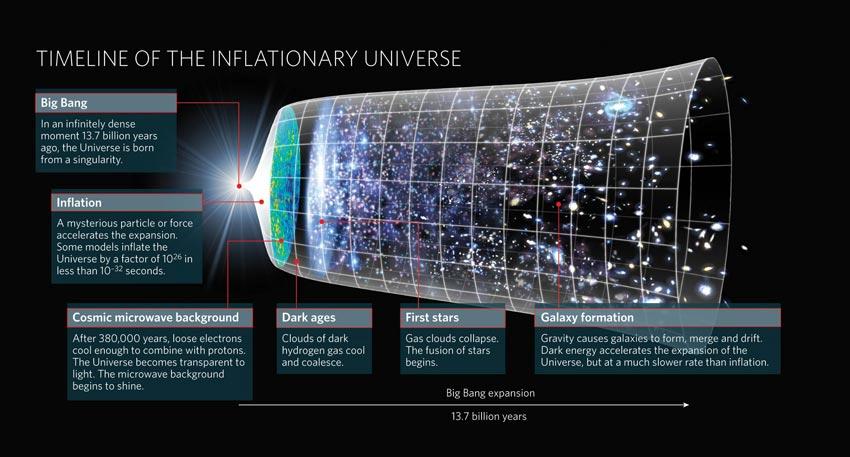
inflation

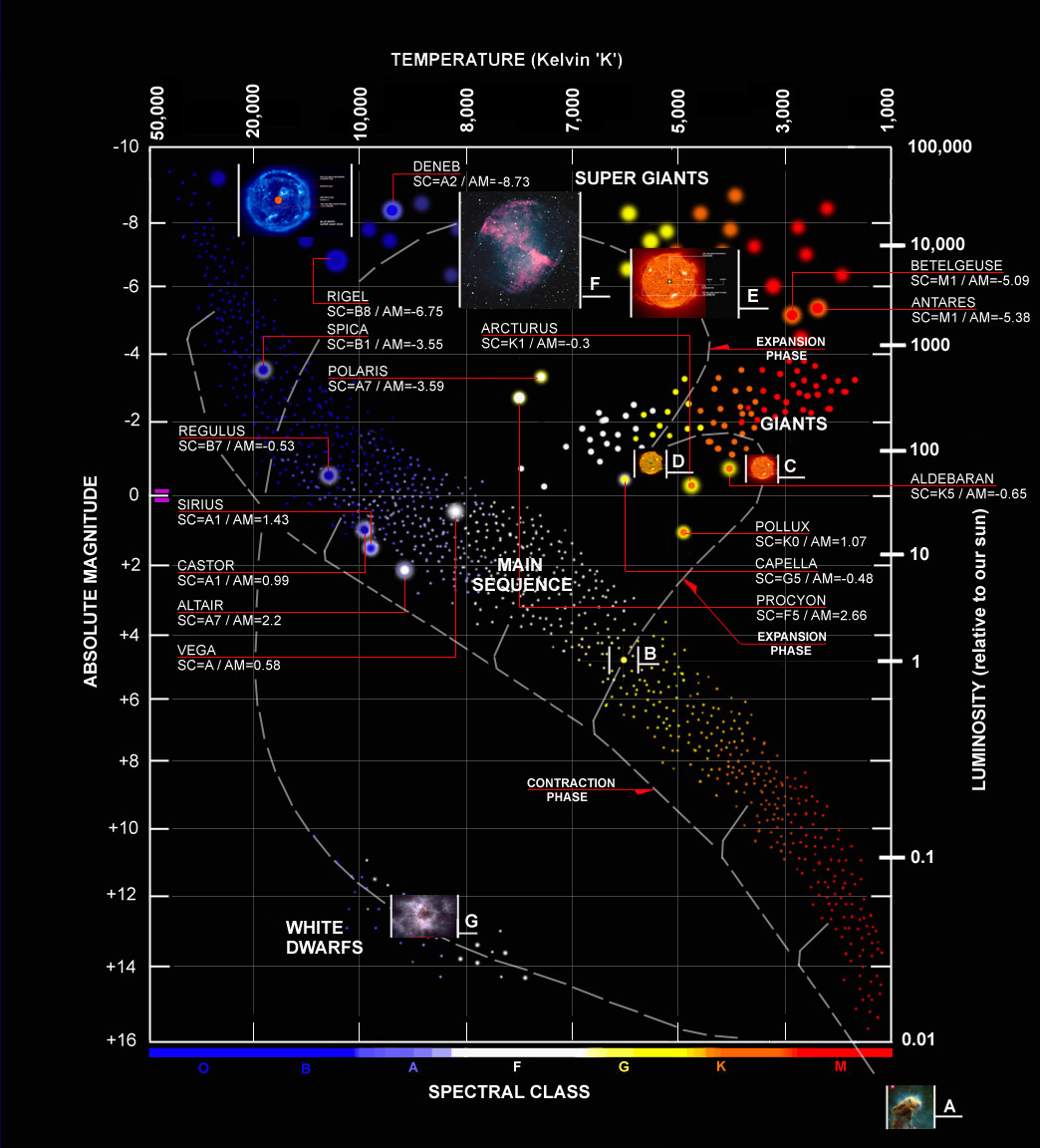
In the meantime there is strong evidence that we do indeed come from stars and their evolution through the process of nucleosynthesis, which is responsible for all but a few man-made elements that we find on Earth.  Through the action of nuclear fusion a star burns its way through the periodic table, first from hydrogen to helium then carbon-oxygen-magnesium-silicon and eventually iron.  Thereafter the other, heavier elements require even more extreme conditions – heat & pressure – that can only be found in the late or final stage of a star’s life such as a Super Nova.

hr_fancy

When the Periodic Table was initially formulated in 1863 by Dimitri Mendeleev there were 53 elements, which through subsequent discovery have now grown to 118.  I find it wonderful and exciting that almost all of these can be attributed to stellar evolution, which can be viewed and imaged in the night sky.
Nucleosynthesis_periodic_table.svg

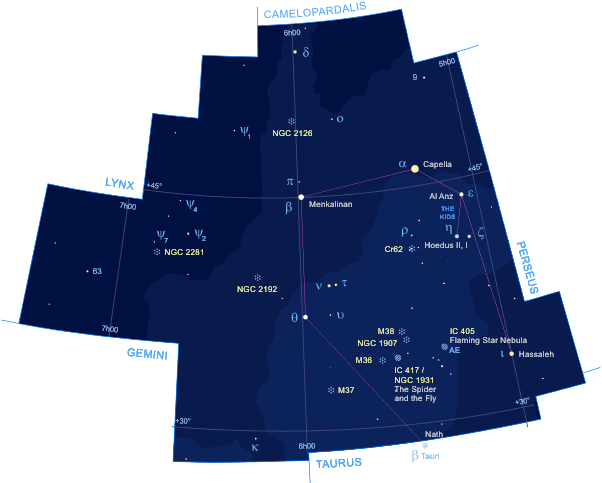
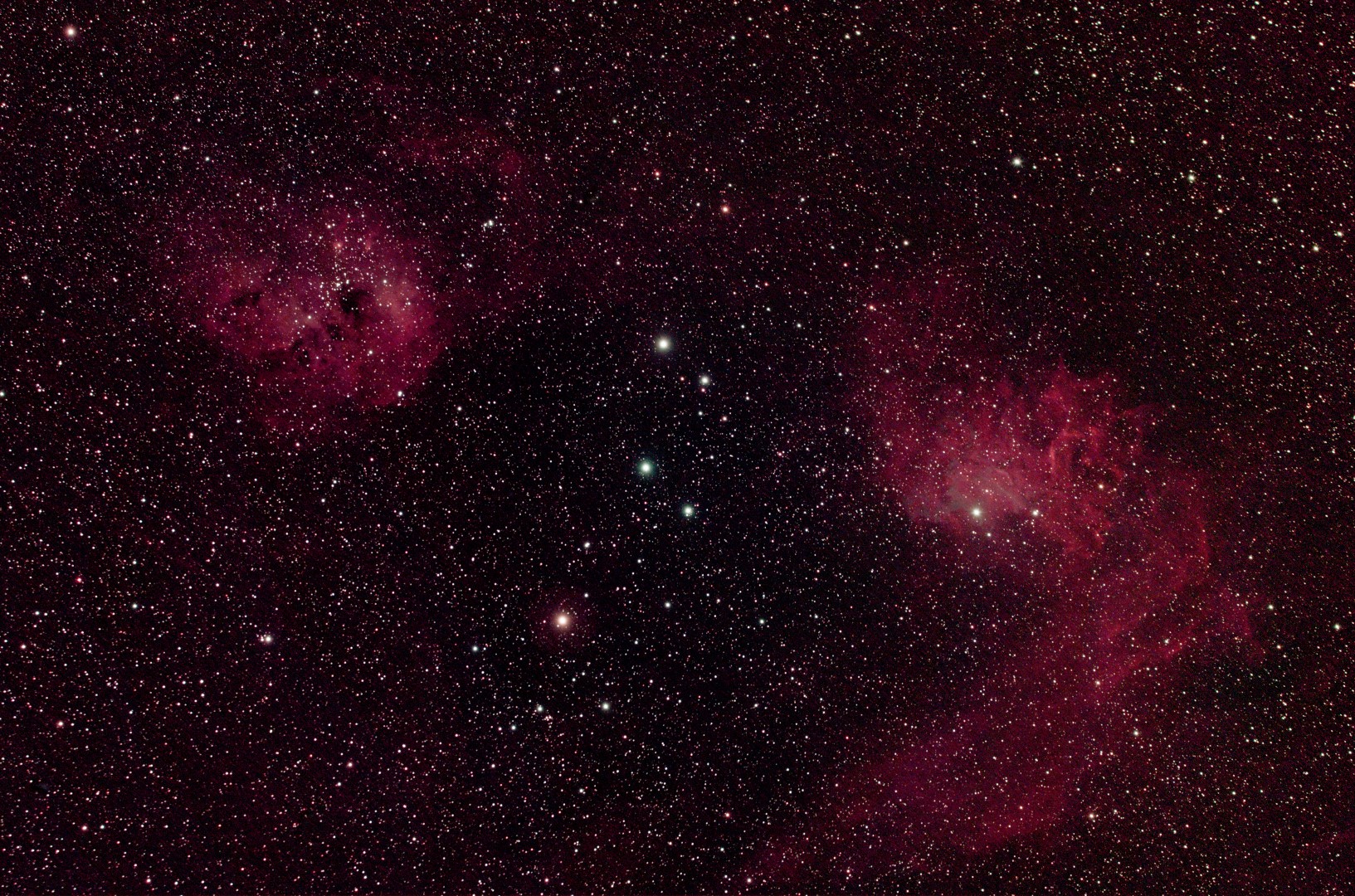
At this time of the year the Milky Way is a dominant feature passing across the winter night sky which provides numerous, sometimes spectacular objects that are favourable for imaging.  Located close to the western edge of the Milky Way in the constellation of Auriga about 1,500 light-years from Earth, is IC 405 or Flaming Star Nebula and nearby (visually) IC 410 or Tadpole Nebula, itself at 12,000 light-years distance.   Located across the central area between these objects is a star field, notable of which and actually within the IC 405 is the O-type blue variable star of AE Aurigae, that is responsible for illuminating the nebulae.

auriga

IC 405 is formed of two sections, consisting of an emission and reflection nebula. Radiation from the variable star AE Aurigea, that is located in the lower part of upper-east (left) lobe, excites the hydrogen gas of the nebula which then glows red, while carbon-rich dust also creates a blue reflection from the same star.

Picture saved with settings embedded.

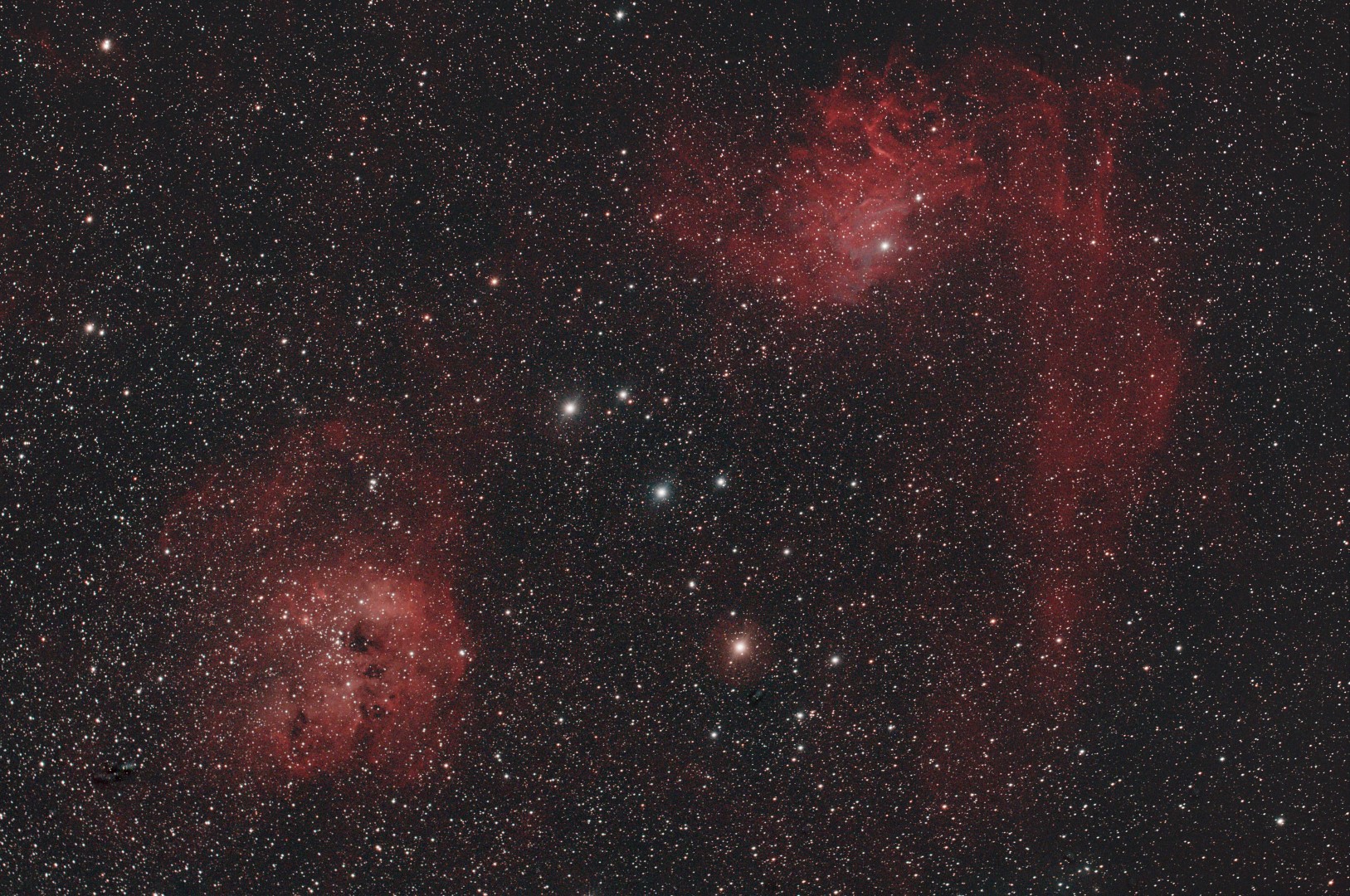
IC 405 (right)-The Flaming Star Nebula inc AE Aurigae varibale star & IC 405-The Tadpole Nebula: WO GT81 & modded Canon 550D + FF | 15 x 180 sec @ ISO 1,600 & full calibration | 8th December 2015

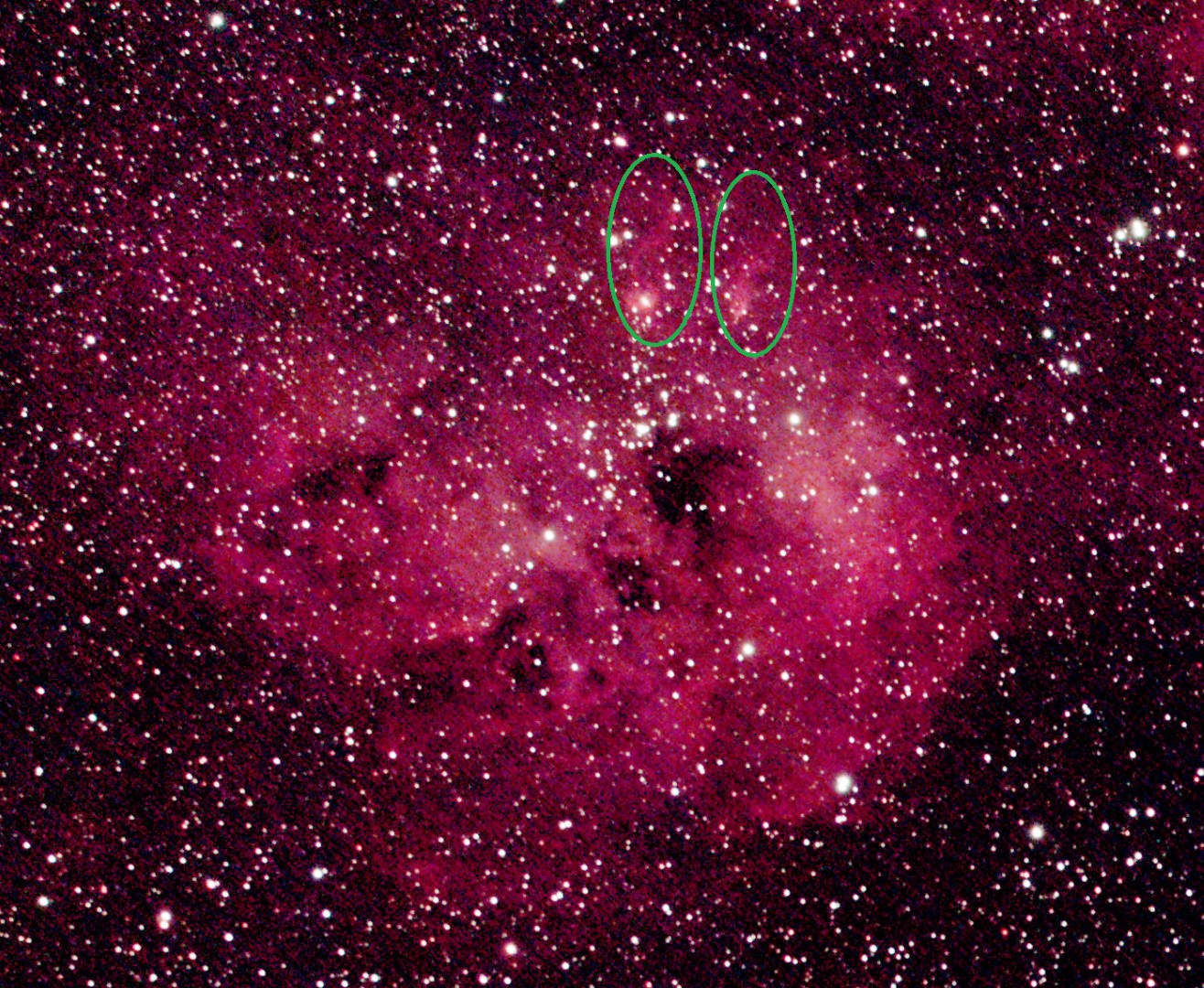
Located within the nebula IC 410 and partly responsible for its illumination is an open cluster of massive young stars, NGC 1893.  Being just 4-million years old these bright star clusters are the site of new star formation and therefore are just starting their creation of new elements.  The so named ‘tadpoles’ are filaments of cool gas and dust about 10 light-years long.

IC 410Canotate (Large)

IC 410-The Tadpole Nebula: Illuminated from within by the NGC 1839 star cluster.  Image cropped and forced to highlight the two ‘tadpoles’, which can just be seen indicated in the green ellipses (‘tails’ upwards)

Each nebula is large, respectively 30’ x 20’ and 40’ x 30’, with an apparent magnitude of +6.0, which combined with the star AE Aurigae makes an excellent target for the William Optics GT81.  I find it thrilling to consider the processes taking place in these objects that I have captured in the photograph, which surely represents the ultimate Big Picture?