
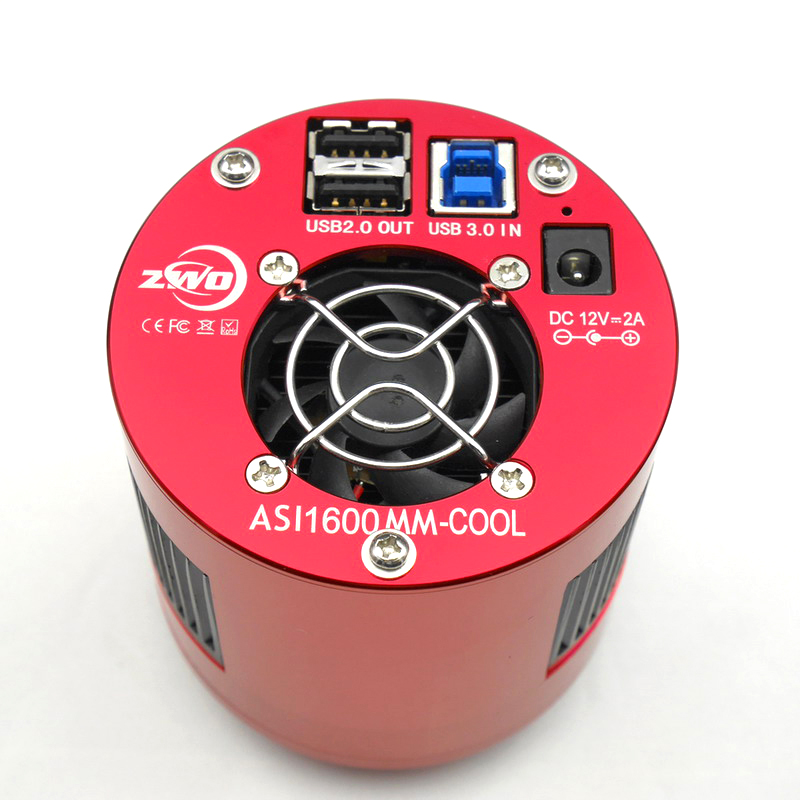
It’s been over 5-years since I acquired the revolutionary ZWO ASI1600MM-Cool camera, which went on to completely transform my astrophotography. In the real world such iconic products come along only very occasionally, such as the Mini, Nokia mobile phone, computer mouse & GUI, iPod & Dyson Vacuum cleaner, all have characteristics which redefine a product and went on to literally change the world. Although by comparison astrophotography is something of a niche hobby the development of the ZWO1600 camera has had a similar impact, so much so that it too has redefined the way forwards for astrophotography cameras.
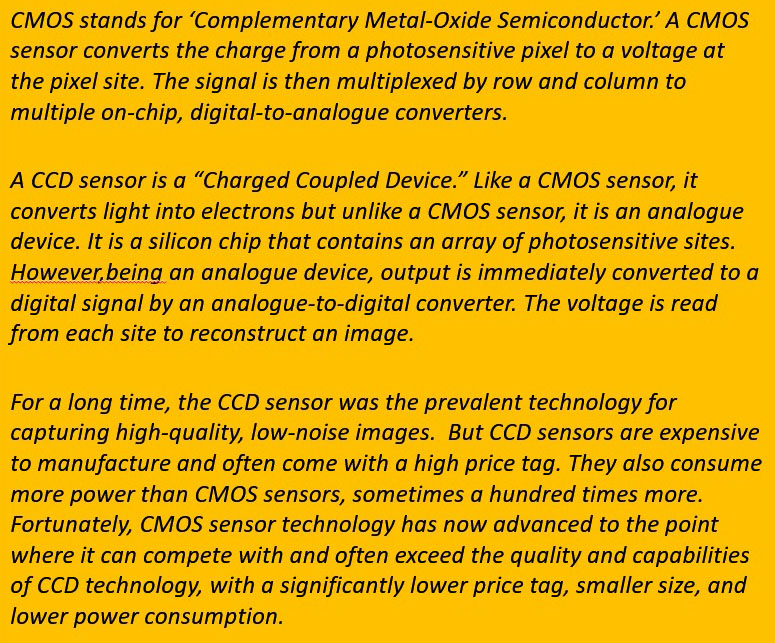
With the move from film to digital, CCD-sensors became the definitive mono camera of choice for “serious” astrophotography but the arrival of the ZWO ASI600MM-Cool camera in 2016 was set to change all that, so what made it so important? At the heart of this transformation is the CMOS sensor. Common to most conventional digital cameras CMOS technology is well proven but for the purist the CCD maintained the edge in astrophotography, until the ZWO1600 and eventually other similar cameras like it came along (see box below for CCD v CMOS background information). Perhaps three features underpin the success of CMOS-based astrophotography cameras, of which the ZWO1600 is considered the first and most successful to-date.
Very low read noise and good well depth both contribute to much shorter exposure times than CCD cameras require, which for the amateur with limited time and light pollution to tackle was a game changer. Moreover, because CMOS-based sensors were already being made for the mass market they cost much less than CCD sensors and therefore so were the cameras, making them a viable choice based on their technology and cost.
It was fortunate that when I was looking to move from DSLR to a mono astrophotography camera at the end of 2016 I was able to purchase a ZWO ASI1600-Cool, just 7-months after its initial release (See First Light for more information). Although an experienced photographer, including +30-years of underwater photography, the difference between what might be called conventional photography and mono astrophotography cameras was like night and day, which took some time to understand and eventually pick-up. Notwithstanding the learning curve, it’s been worth the effort as the impact on my images has been profound. During the intervening period since I brought my camera only a few minor developments have been made (now sold as the Pro version), until in September 2020 a much-anticipated successor to the ZWO ASI1600MM-Cool camera was finally released, the ZWO ASI294MM Pro (see images below).
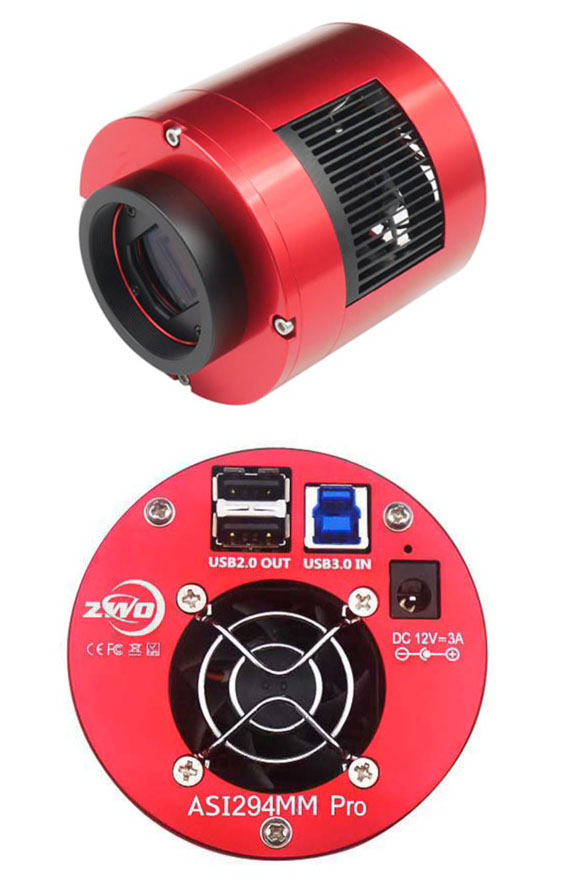
I waited until now to purchase this camera because at the time I just didn’t need it (the ZWO1600 served my needs very well and still does) and I also wanted to see how the new camera worked out with early users. Apart from a few niggles, the overwhelming response has been very positive and as I now have another use for my ZWO1600, I finally purchased a ZWO ASI294MM Pro and obtained First Light in early April.
| CAMERA | ZWO ASI1600MM-Cool* | ZWO ASI294MM Pro |
| Sensor – CMOS 4/3” | Sony IMX492 | Panasonic MN34230ALJ |
| Sensor Size + Diagonal | 19 x 13mm 23.1mm | 18 x 13mm 21.9mm |
| Pixel Size | 4.63nm (Bin2) or 2.135nm (Bin1) | 3.80nm |
| Resolution | 4144 x 2822 px Bin1 8288 x 5644 px Bin2 | 4656 x 3520 px |
| ADC | 14bit | 12bit |
| Full Well Capacity | 66,000 | 20,000 |
| QE Peak | 90% | 60% |
| Readout Noise | 1.2 -7.3e | 1.2 – 3.6e |
| Sensor Illumination | Back Lit | Front Lit |
| Cooling | -35C | -40C |
| Data Buffer | No | Yes |
| File Size | 22MB (bin1) 85MB (bin2) | 32MB |
| Back Focus | 6.5 / 17.5mm | 6.5 / 17.5mm |
Before commenting on my albeit limited experience of this new camera so far, it’s worth comparing the main features of each camera that are summarised in the accompanying table. Not surprisingly there are many similarities, which make for an easy swap of the two cameras when using the same optical train but there are also some important new developments which make this camera a real step-up from the ZWO1600.:
- Greater quantum efficiency (QE) means that 90% of the total light that reaches the sensor is converted into data, compared with 60% with the ASI1600. Thereby for the same integration time the ASI294MM Pro will gather 50% more light than the ASI1600 or put another way in half the time!
- Increased full well capacity from 20ke to 66ke means longer exposures without saturation.
- Higher 14bit ADC provides more dynamic range of two more stops compared with the ZWO1600.
- A choice of Bin1 or Bin2 changes the equivalent pixel size from the basic 4.63nm (Bin2) to 2.315nm.
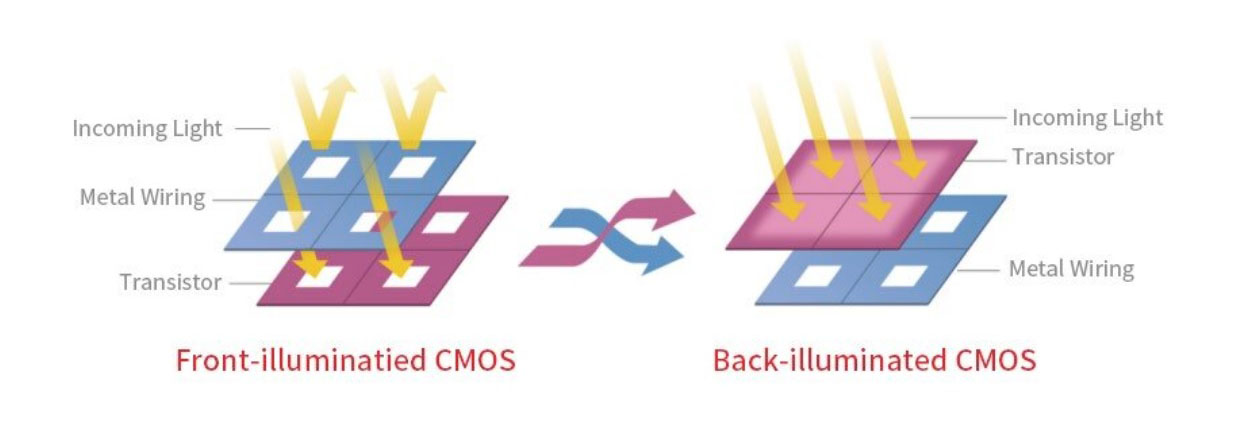
- Sony’s back-illuminated CMOS image sensor (see below) improves sensitivity and noise reduction but perhaps more importantly stops microlens diffraction artifacts of bright stars which has been one of the biggest bugbears of the ZWO1600, particularly when using ZWO’s own filters.
Physically the new camera is identical to the ZWO1600 and changing the cameras over is essentially just a swap, in my case using the same setup of a William Optics GT81 & 0.80 focal reducer + ZWO x8 EFW & 31mm Chroma Filters + just a minor focus adjustment. Using the excellent Astro Photography Tool (APT) for image capture I did encounter some issues setting up the new camera but after some liaison with other users and the APT developer Ivo it was sorted quickly and ready to run!
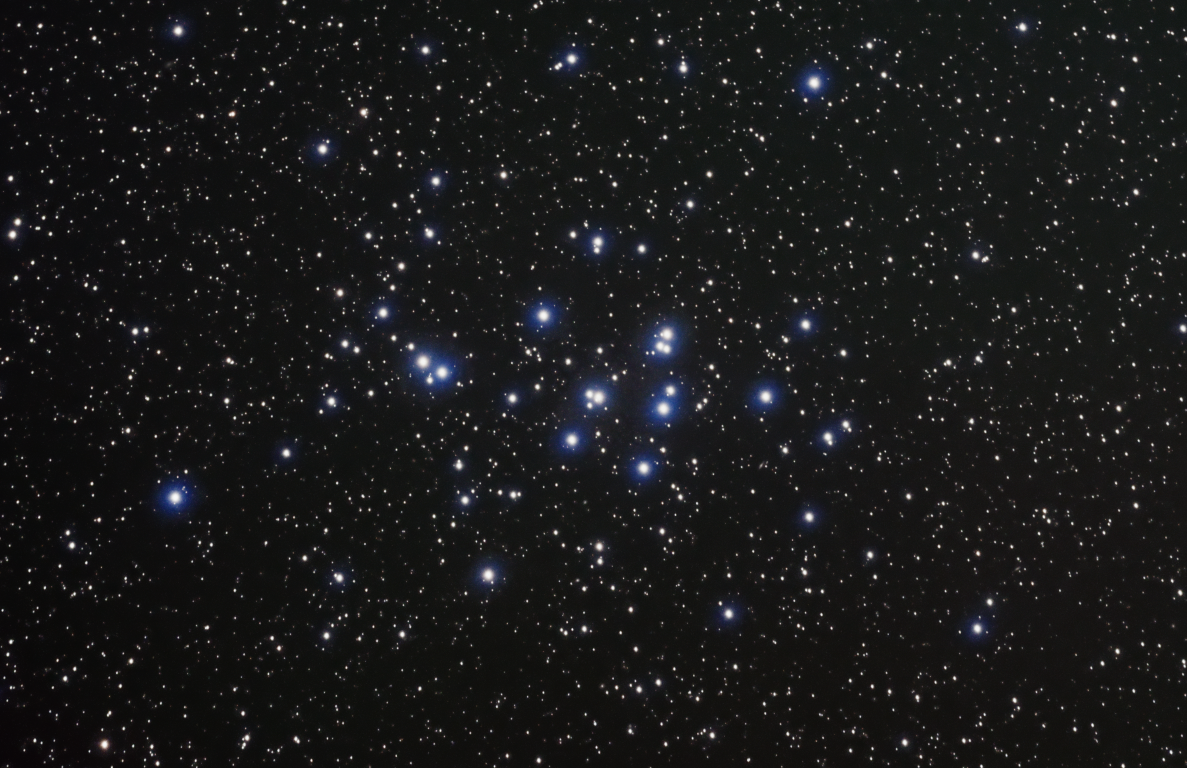
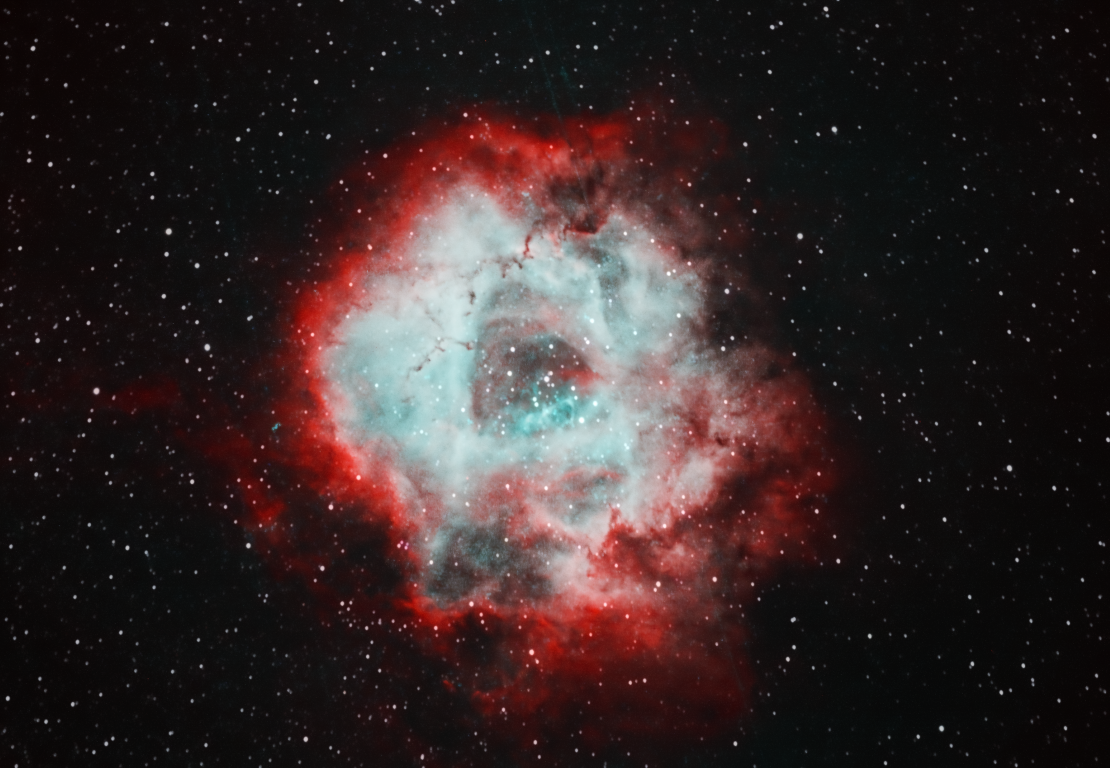
Unfortunately, by late March / early April most of winter’s exciting objects have moved on but I did manage to quickly grab 60 minutes of the Rosette nebula (HOO + dark calibration only, below) and later the M44 Beehive open cluster (top of the page: 40mins 10x 60secs LRGB + fully calibrated ), the results of which were good clean images that did not disappoint and hold great promise when better objects become available again.
Because of the subsequent seasonal change of clocks and diminishing presence of astronomical darkness as we approach the summer solstice, I’ve been unable to continue using the ZWO ASI294MM for now but at least I know it all works well. As has become normal in recent years, I’m therefore taking a short break from imaging, though have a plan to repurpose the ZWO1600 which I’m working on but that’s for another day – Watch this Space!


 WATCH THIS SPACE(MAN)