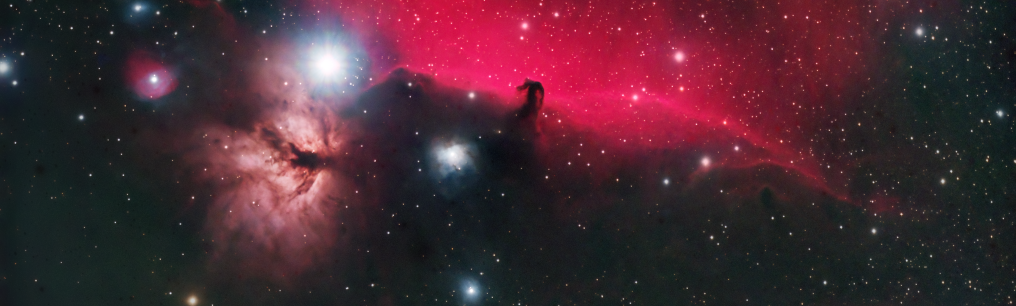

If I’m honest my astrophotography has so far often been – never mind the quality feel the width! That is to say, I have tended to chase objects – nebulae, galaxies, planets, solar – in order to learn about my equipment and the night sky as well as just have fun recording images of these distant worlds. Nothing wrong with that is there? It’s not that I don’t aspire to obtaining the best image possible and I have made good progress since starting out but I’ve often felt constrained by circumstances.
Although I’ve generally been happy with my images, it’s a fact that there are a number of factors that altogether make astrophotography difficult, especially here at Fairvale Observatory:
- Poor weather & persistent cloud cover
- The Moon
- Buildings & trees obscure sightlines
- Light pollution from Gatwick airport
- Numerous aircraft passing overhead
- Equipment problems
- Software problems
- Equipment and software failures
- Equipment limitations
- Need to assemble equipment each time
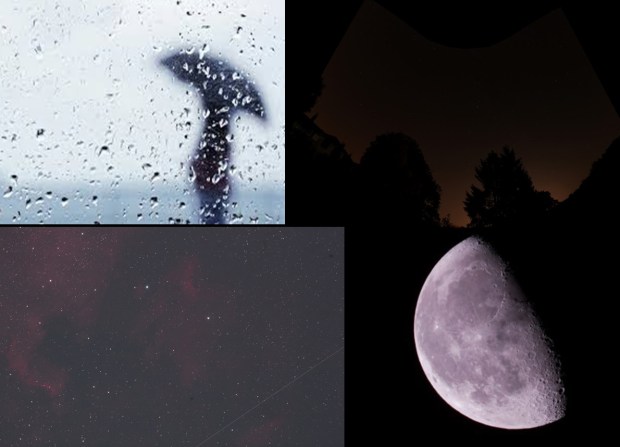
Bad weather, frequent cloud cover, limited sightlines, aircraft trails and the inevitable monthly occurrence of the Moon limit imaging opportunities here.
Under these circumstances I usually need to grab what I can, frankly it’s a miracle I’m able to achieve anything sometimes; Met office statistics for the six-months period from September 2105 showed cloud cover was a record 68% compared with an historical average of 32% for that time of year, as a result it was unusual to be able to undertake astrophotography more than once month, if that! Wherever possible I therefore have to target those items that I can improve easily, quickly and cheaply dealt with, which is mostly equipment. Buoyed by renewed enthusiasm from my recent autoguiding success, I now intend to concentrate on changing some key items that I hope will eventually bring about more noticeable improvements.
 For a while I have been thinking about getting a larger telescope, in order to get to those faint fuzzies that are beyond the capabilities of the otherwise excellent William Optics GT81. As usual the choice is a minefield of possibilities, each with inevitable imaging pros and cons! I started thinking about a Ritchey Chrétien or Schmidt Cassegrain but I have really appreciated the qualities of the aforementioned WO GT81 and am now erring towards a larger refractor. However, after further consideration I am now considering a change of priorities.
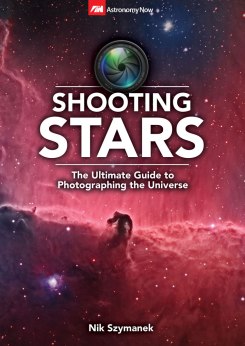
In September I was fortunate to attend a presentation on image processing by Nik Szymanek who, it has to be said, really knows his onions when it comes to astrophotography; I was intrigued and impressed to find out he also hails from my neck of the woods when I was a teenager in Essex and is an accomplished rock drummer – something I also used to meddle with in the past – what a geezer, as he would say. The talk was very instructive and I am now ploughing my way through Nik’s fabulous book on the subject called Shooting Stars (published in magazine form by Astronomy Now). Such personal, first-hand and relevant guidance is difficult to find in astroimaging and the book has a wealth of really practical information and useful advice that I wished I’d known sooner. Good equipment is important but in the world of digital imaging the significance of processing cannot be overstated. It’s a dark art alright (no pun intended) but Nik’s work has strengthened my resolve to improve my processing knowledge and I’m even more determined to raise the bar during the forthcoming winter.
 Following Nik’s talk and listening to others, the penny that has now dropped is that for the moment it’s not the telescope but the camera that needs changing. After careful thought it’s apparent that I already have very good set-up, yes a bigger aperture would be good for those smaller fuzzies but the 81mm apochromatic refractor I already own is an outstanding telescope that still has much potential when combined with the AZ-EQ6 mount and now autoguiding.
The addition of a modded DSLR at the beginning of last year had a significant impact on my images, especially with Ha dominant DSOs which I literally saw in a new light using this camera. I have continued with the DSLR for a number of reasons but mainly because I am familiar with such cameras which are relatively easy to use and produce reasonable results when starting out with astrophotography. However, listening to Nik and reading the forums and elsewhere, I have come to accept that the best way forwards should now be a CCD-type camera. As a result I am deep in my research of CCD issues and possible cameras – this could take some time and won’t be cheap!
The operation of CCDs is quite different to a DSLR and I’m sure will involve a whole new period of pain but it’s clear that this is the best route for now if I am to significantly improve my astrophotography. Other than the technical challenges CCD imaging presents, I am however concerned about the greater number of frames needed for LRGB + calibration and how that’s going to work with the weather restrictions and other problems I have but it’s got to be worth a try.
However, before setting out on this daunting task I first slewed the camera towards a few familiar objects just to experiment with guiding and assess the benefits it might bring to my imaging in the interim. A spell of unusually good weather in late August – early September was too good to miss and with guiding I was able to achieve exposures of up to 8 minutes. However, for the moment I continued to limit the number of Subs and calibration frames just to ensure I could shoot more objects in the available time, plus you never know when the next bank of cloud will roll in – old habits die hard!
Looking at the results below demonstrates my progress when compared with earlier images but the limited number of frames and calibration has probably restricted the full benefit of what might be gained from guiding and some shots remains quite noisy. Nonetheless, I now have high hopes that the potential is within my grasp to make real progress in achieving better image quality. I am not convinced I have yet reached a turning point but I am well positioned to navigate the tasks required to get there, which are now more clearly understood and in my sights or should that be RDF – watch this space!
M31 Andromeda Galaxy
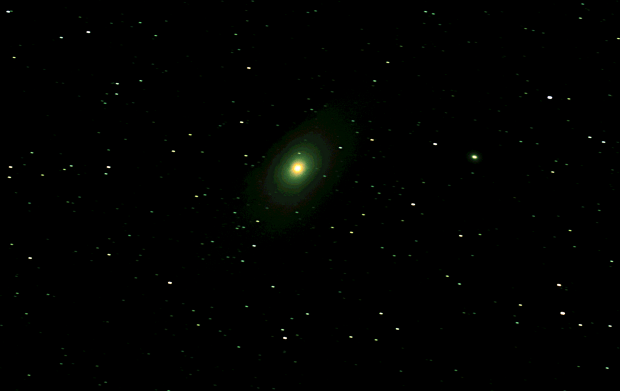
WO GT81 + unmodded Canon 700D & FF| 10 x 30 secs & ISO 800 | August 2014
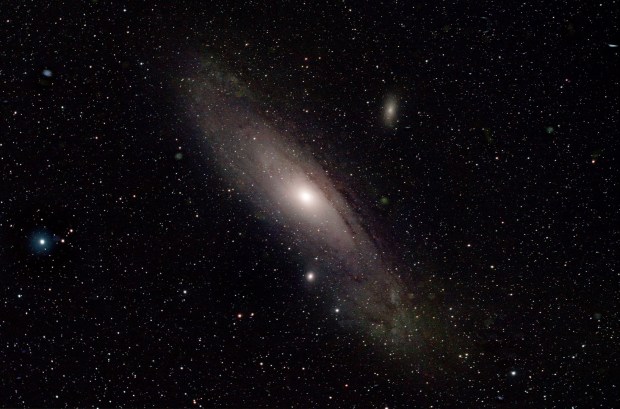
WO GT 81 + modded Canon 550D + FF | 9 x 120 secs @ ISO 1,600 | 19th September 2015
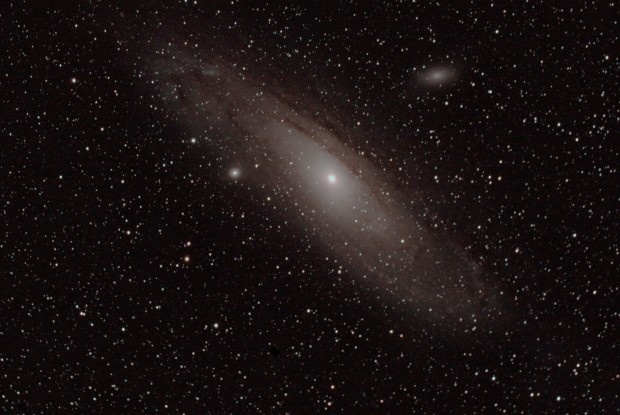
WO GT81 + modded Canon 550D & FF & PHD guiding | 10 x 300 secs @ ISO 1,600 calibration | 8th September 2016
NGC 6905 Western Veil Nebula – The Witch’s Broom
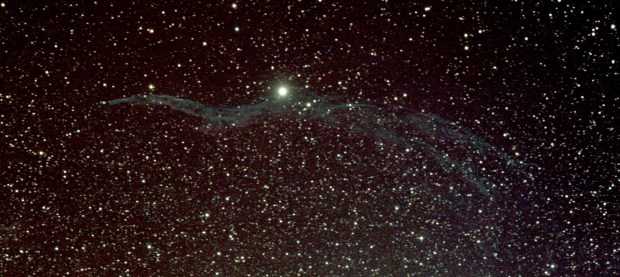
Canon 700D | 20×90 sec + darks.bias/ flats @ ISO 800
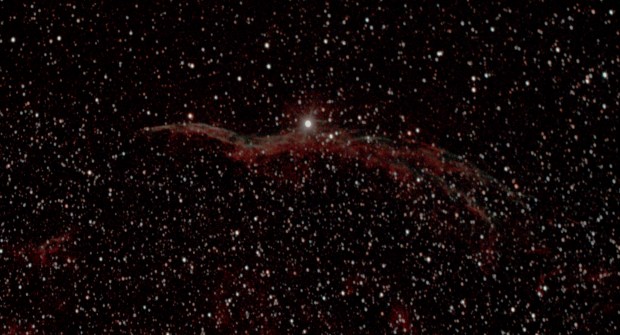
WO GT81 + modded Canon 550D + FF & PHD guiding | 5 x 300 secs @ ISO 1,600 & calibration | 8th September 2016
NGC 6888 Crescent Nebula
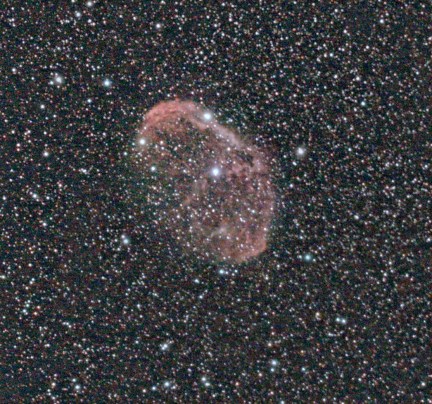
WO GT81 + modded Canon 550D + FF | 19th October 2015
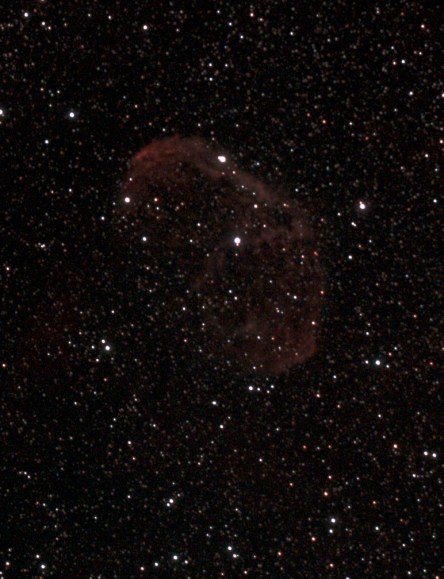
WO GT81 modded Canon 550D + FF & guiding | 10 x 300 secs @ ISO 1,600 & calibration | 11th September 2016
NGC 6992 Eastern Veil & Bat Nebula
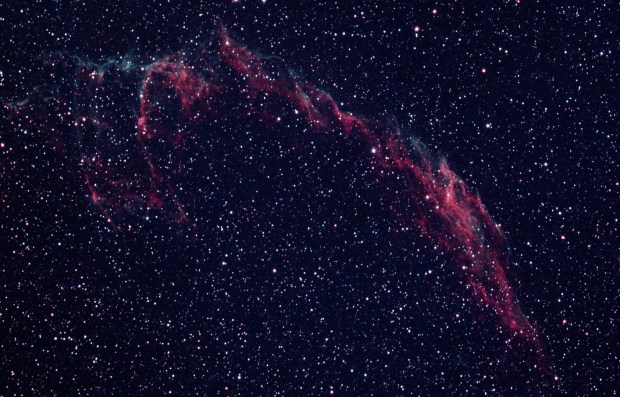
Eastern Veil Nebula – NGC 6992 (right) & NGC 6995 (left). WO GT81 + Canon 700D & FF | 29 x 120 secs + darks/bias?flats @ ISO 1,600
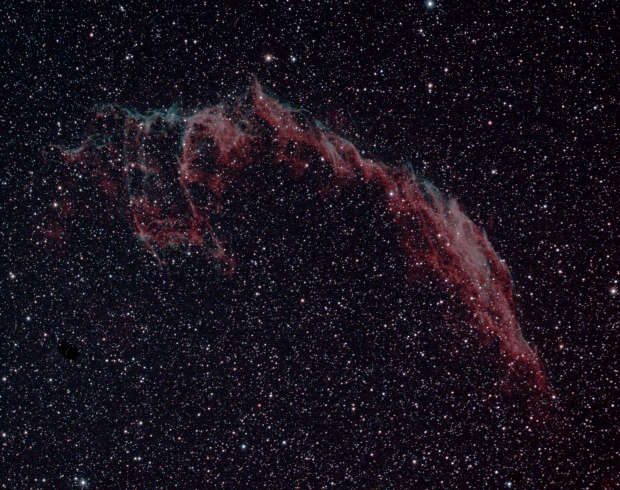
Eastern Veil Nebula (NGC 6922 & 6995): WO GT81 & modded Canon 550D + FF & guiding | 10 x 300 sec @ ISO 1,600 + darks | 11th September 2016
 WATCH THIS SPACE(MAN)