Having been unable to set-up Fairvale Observatory since April, it has been frustrating with almost no hands-on astronomy taking place. However, last night the march of time and serendipity played their part; by chance I glanced out of the window and lo and behold saw the International Space Station (ISS), which was then scheduled to pass almost directly overhead again 90-minutes later at 11.17 p.m. Now six weeks past the Summer Equinox sunset is coming increasing earlier, currently 8.45pm and by the time the ISS would be back the night sky was almost at astronomical darkness. This would provide a favourable setting for viewing and imaging – furthermore, the sky was almost clear and the temperature a comfortable 180C, far from the sub-zero conditions back in February.
I have just purchased a second-hand EFS 55 – 250mm Canon IS telephoto lens, so what else was there to do but get outside and get ready to image the ISS next time round, thereafter one thing led to another! Being a more mobile set-up I was able to venture further from the house than usual and thereby obtain images of some constellations and asterisms which I cannot usually achieve from the Observatory.
Though not as spectacular as the Planets and DSO images, I found the simple sky photographs satisfying to shoot and enjoyable to look at. The beguiling night environment, exciting subjects, improving darkness conditions and my increased mobility, suggests things are looking up – in more than one way.
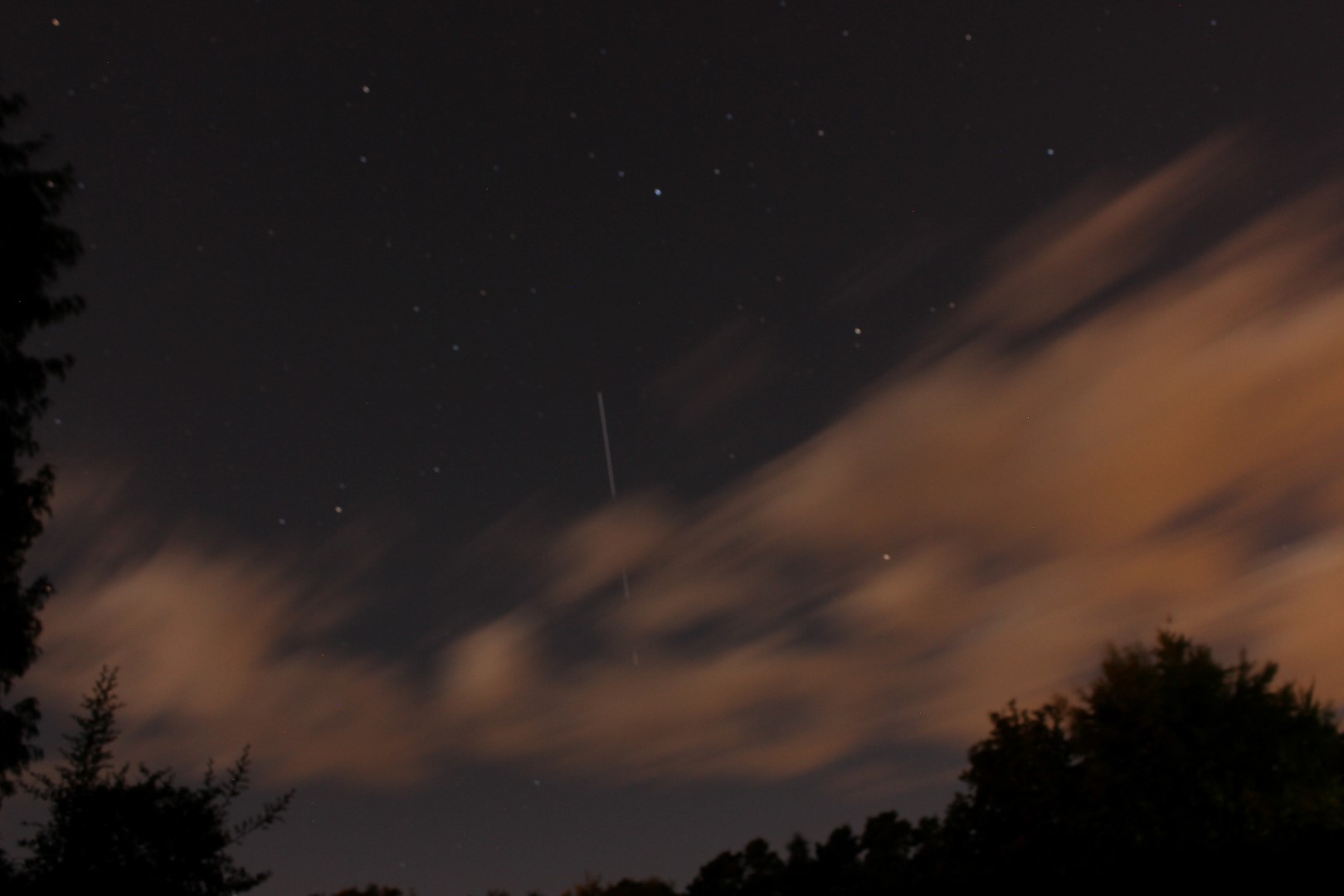
ISS Western view: 6 minutes total transit time from West to East at 85 degrees elevation.
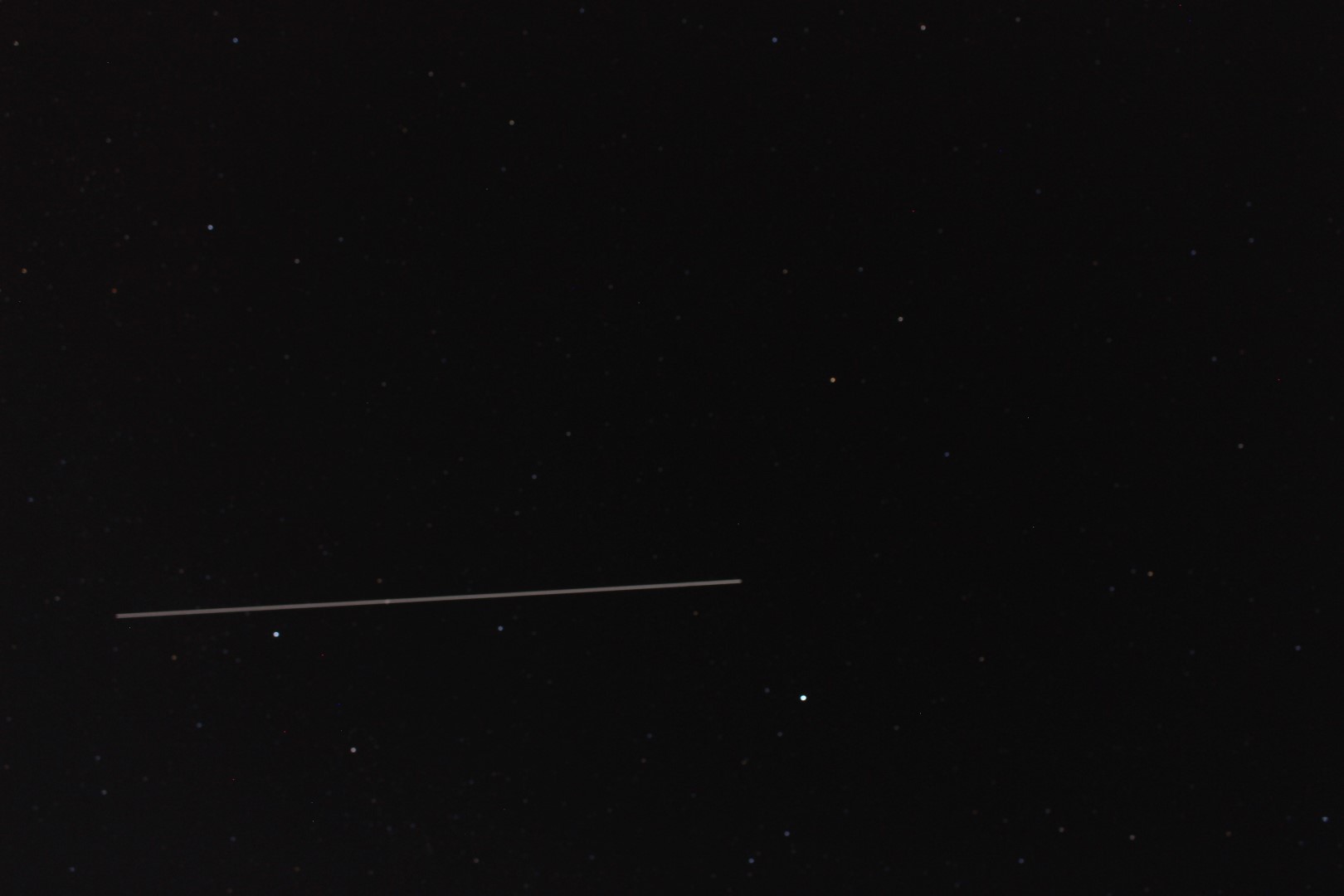
ISS Overhead view
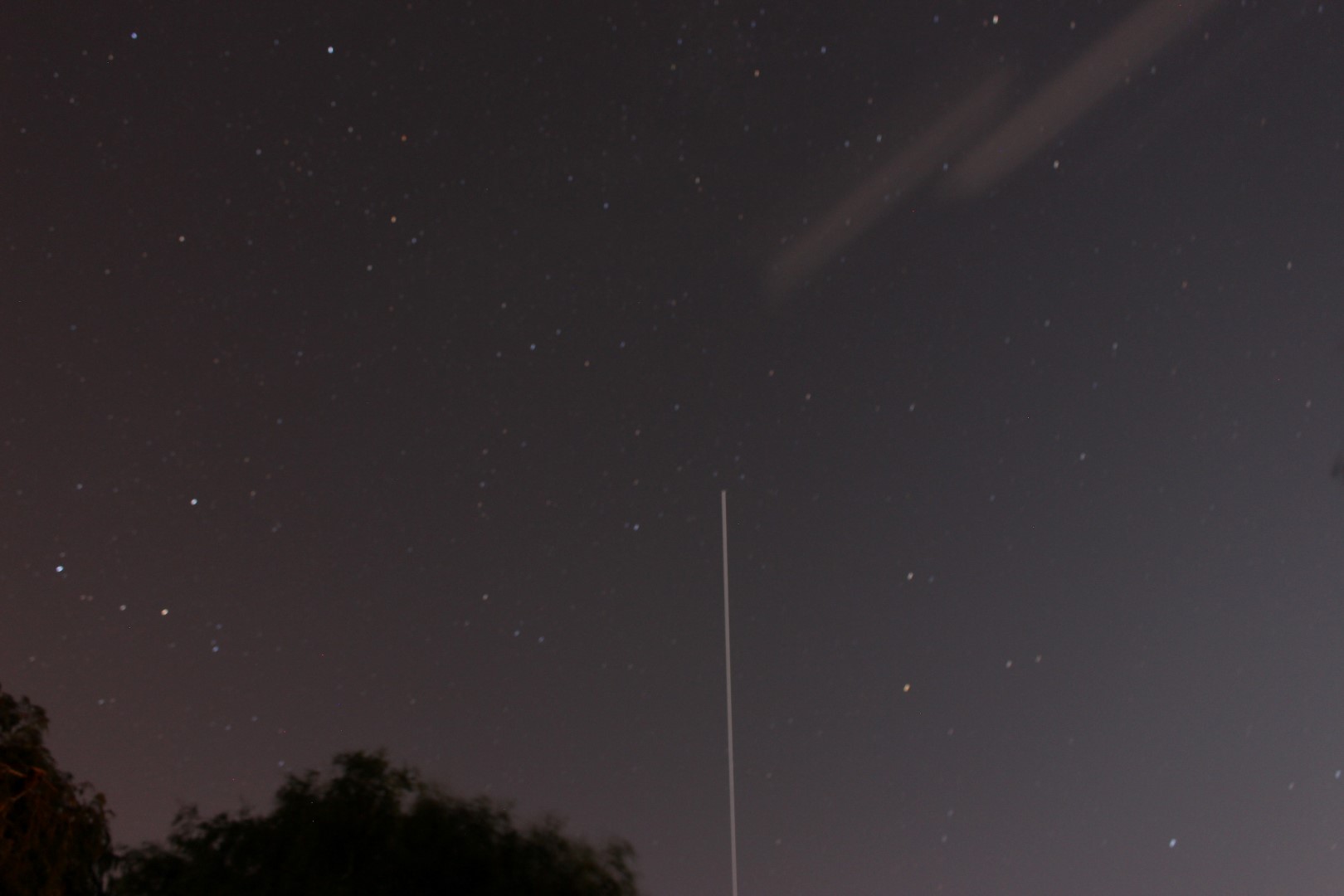
ISS Eastern view
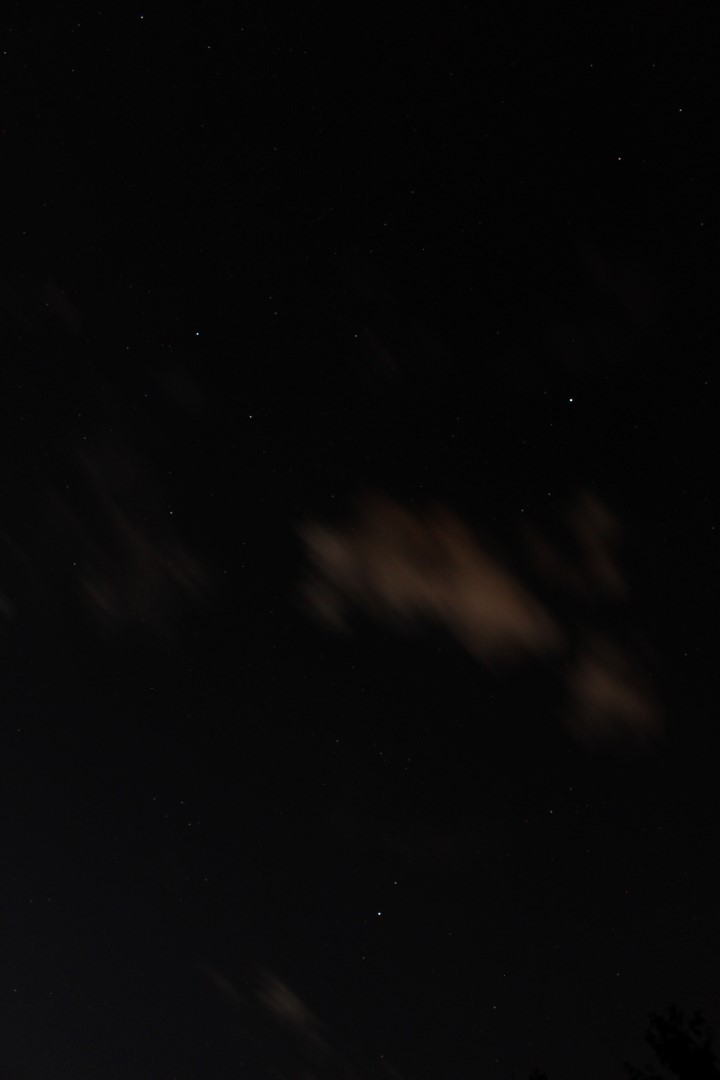
Summer Triangle – signature asterism of the summer night sky: clockwise from top left: Deneb – Vega – Altair.
The W-shaped asterism of the Cassiopeia straddles the Milky Way in the northern sky and is made of 5-stars: Segin, Ksora, Cih, Schedar and Caph. The constellation contains a number of star clusters, most notable being M52 and close to Ksora, M103.
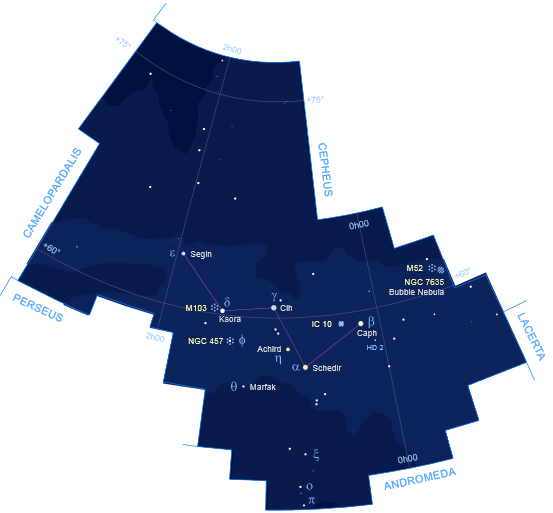
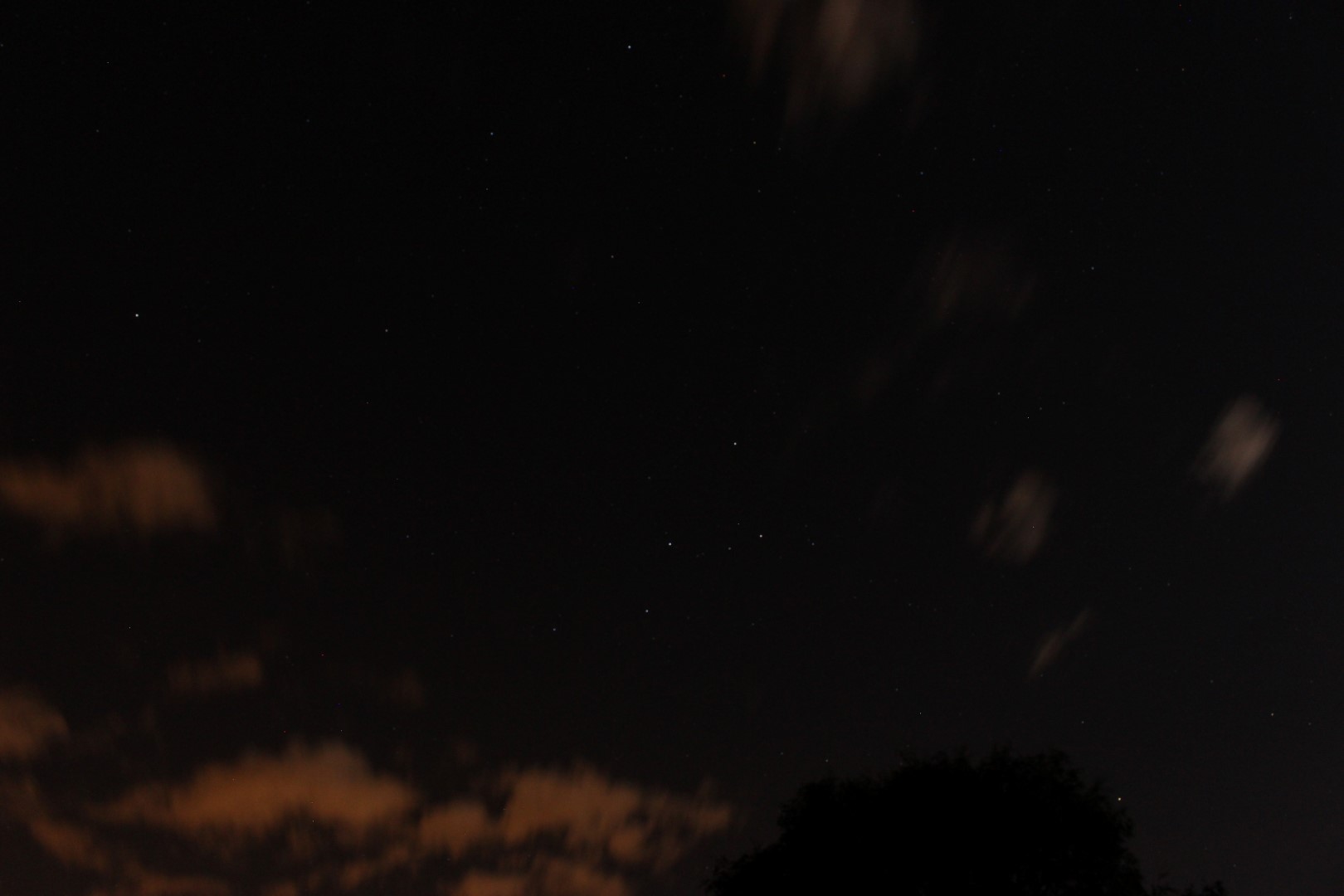
Cassiopeia
Ursa Minor – Like the Plough in Ursa Major, Ursa Minor has a ‘dipper-like’ shape and they are therefore respectively known as the Big and Little Dippers. Ursa Minor’s main significance is the North or Pole Star, AKA Polaris. Situated very close to the Celestial Pole, alignment of the telescope mount with Polaris is essential to achieve accurate tracking; unfortunately Polaris is obscured from Fairvale Observatory but can be seen from the garden.
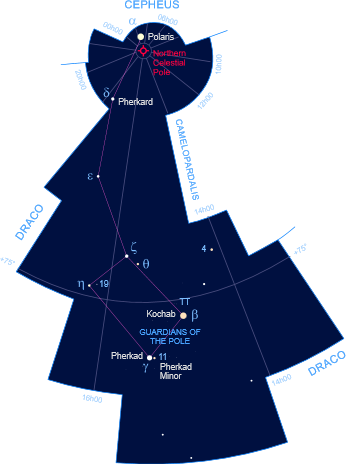
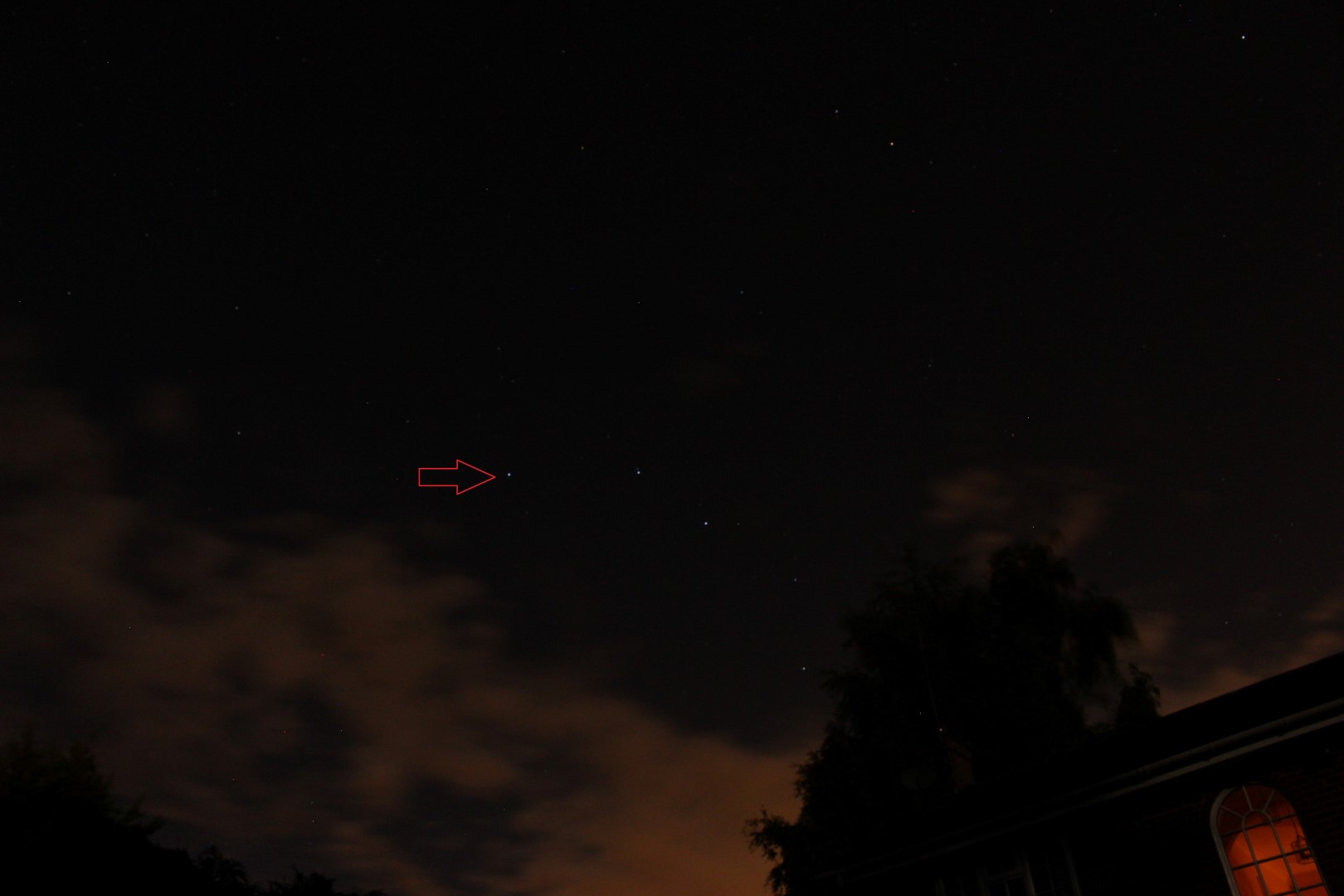
Ursa Minor – Polaris star indicated by red arrow, with the ‘dipper’ to the right.
 WATCH THIS SPACE(MAN)