
I first became acquainted with C/2014 Q2 Comet Lovejoy just before Christmas and have since been keen to obtain my own image of the object from Fairvale Observatory; at the time I was fortunate to obtain a photograph of the comet from a fellow astronomer in La Palma. Despite the comet reaching its best positon on January 7th, some 44 million miles from Earth and with the apparent magnitude (brightness) improving throughout January to less than +4.0, unfortunately nature and life prohibited me from attempting this task: Christmas, New Year, travel, bad weather, full Moon etc. A couple of clear skies did present a good visual sighting through binoculars but no image.
Last week, on Thursday evening, I eventually got my first opportunity but due to very strong winds (hence the clear sky) was unable to even set-up the equipment. The following evening a cold but clear sky again occurred and this time I took my chance.
Photographing and processing a comet is not straightforward. Since my last post, Comet Lovejoy has tracked west (to the right) of the Orion constellation and at the time of imaging was located just above the western end of Taurus, before it passes west of Pleiades on 19th January. The first problem is therefore obvious – it’s travelling very fast, about 82,000 mph. Fortunately Livecometdata.com provides real time information on the comet’s journey, which is both impressive (how does it do this?) and very useful. Inputting the real time RA and DEC location data into the SynScan handset, the mount slewed straight to the comet, which was just off-centre of the field of view. And thus I had my first, proper live view of a comet – fantastic! Now for the tricky part: how to get an image?
I had already posed this question on Stargazers Lounge and had a number of useful suggestions. Of course, whilst the mount tracks the celestial sphere, the comet is making its own way through the sky, which is not the same path as the stars seen from Earth; I believe it is possible to track the actual comet but that’s too difficult for me. Therefore, it is necessary to err towards lots of shorter exposures to avoid blurring; the longer the exposure the more likely it is the comet’s tail can also be captured in the image but it is a fine line between achieving this and blurring. In the end I took two sets of images at 20 seconds and 60 seconds – probably too cautious but I was happy with the result and will be better prepared for my next comet, whenever that is.
Then came the next obstacle – stacking and processing. I had not thought about this before but in the world of stacking, the software is unable to distinguish the comet from stars. As a result it is necessary to identify the comet in each light frame by manually tagging it; at this point I regretted taking x40 exposures! Deep Sky Stacker will then stack using one of three procedures which basically prioritises either the comet or the stars or a combination of both – I chose the latter. As usual post processing in Photoshop is then used to improve the final image.
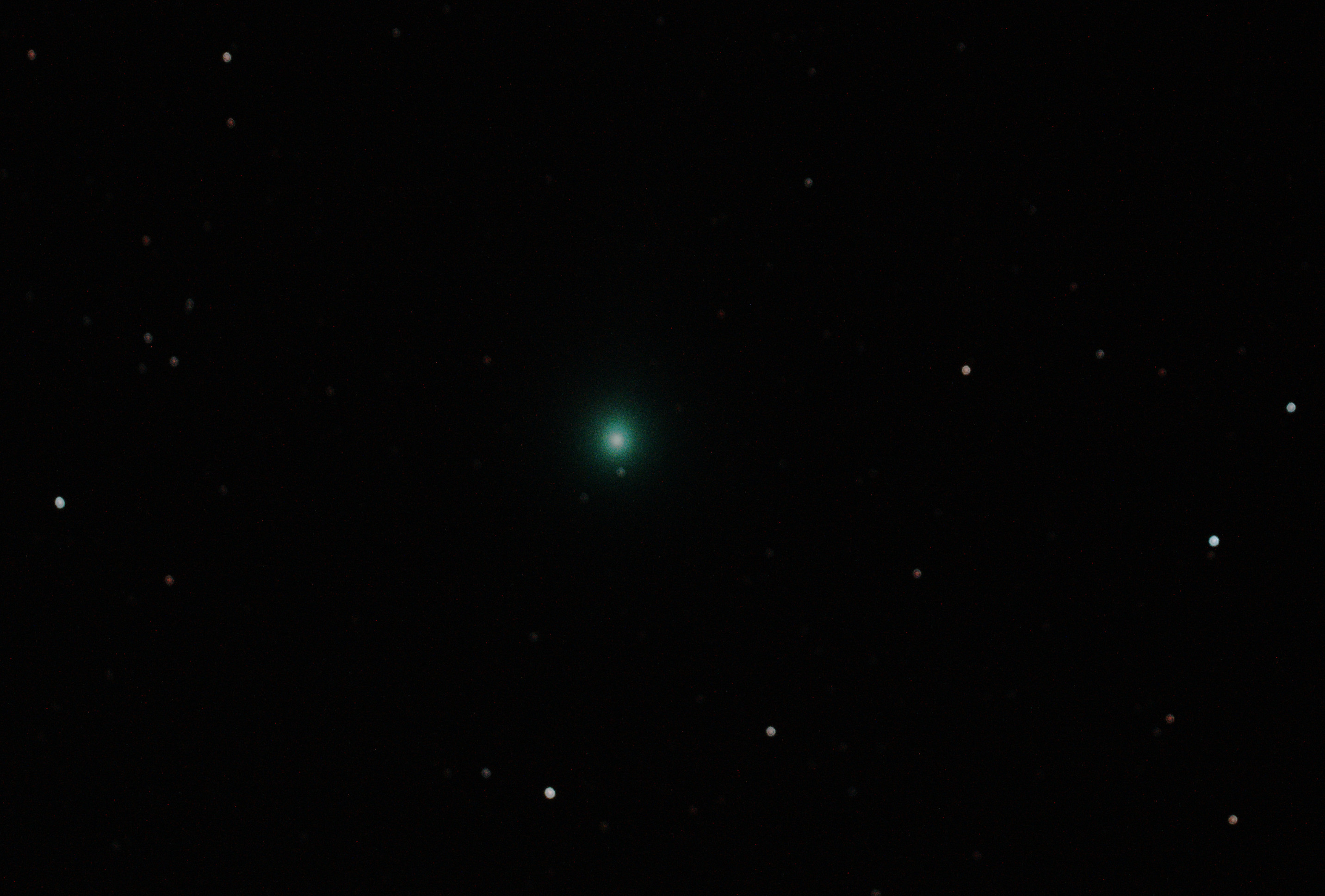
C/2014 Q2 Comet Lovejoy
WO GT81 + Canon 550D (modded) & FF | 40 x 20secs @ ISO1,600 + darks | Fairvale Observatory 16th January 2015
Whilst I am very excited to have successfully photographed Comet Lovejoy, I was less than impressed by the stacked image and actually prefer the original. Processing comet images takes the dark art of processing to a new level and I feel I’ve only reached the learning foothills so far.
Lovejoy will be in the sky for some weeks to come as it tracks across Andromeda and Perseus during February and into Cassiopeia in March. Whilst the best may be almost past, I certainly hope to follow its progress and, subject to conditions, might even attempt to image it once again before it continues its 8,000 year orbit into deep space. However, for now I’ve got my comet and am well satisfied – I will spend the intervening winter days practicing my comet stacking.
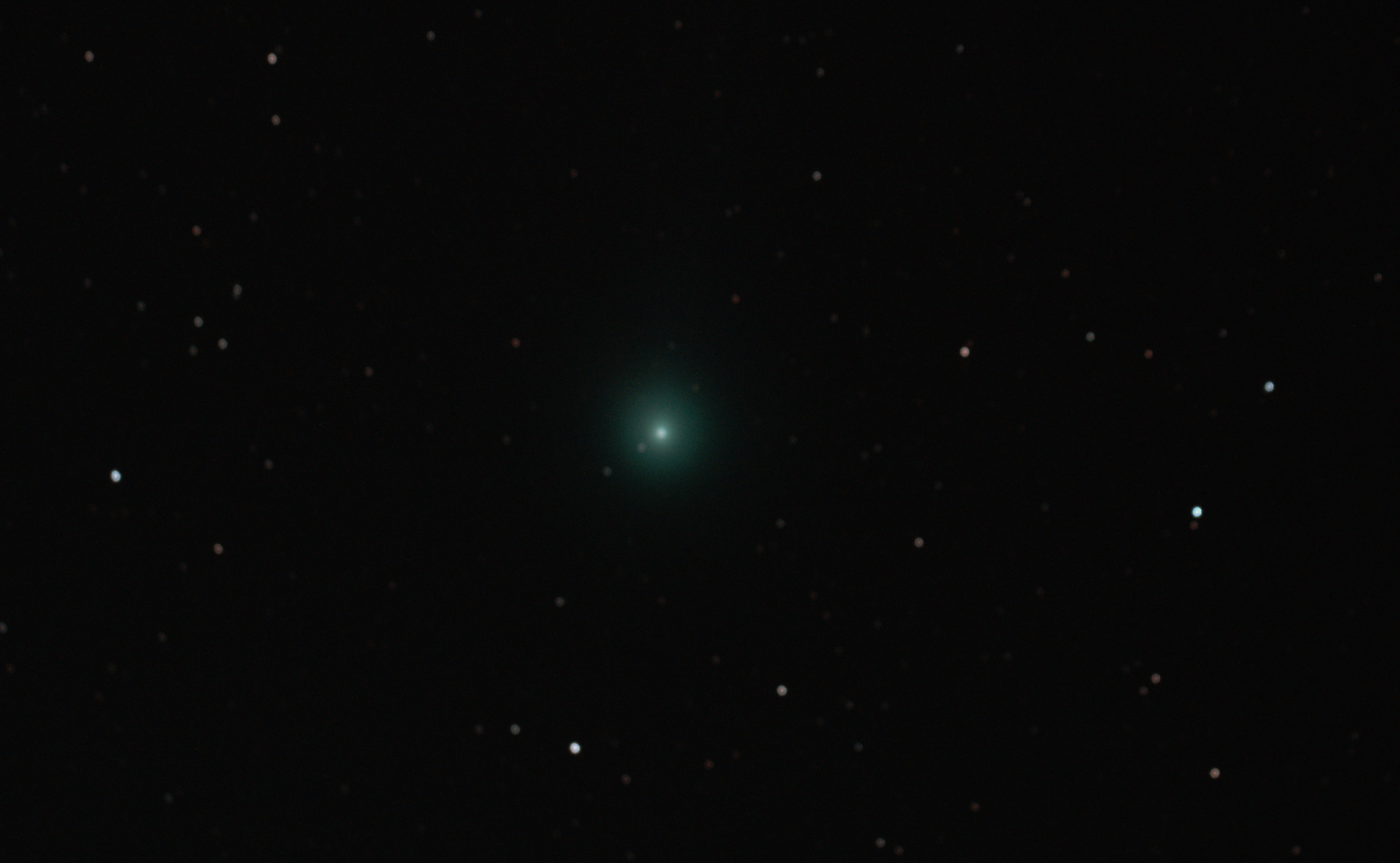
Comet Lovejoy
WO GT81 + Canon 550D (modded) & FF | 15 x 60 secs @ ISO1,600 + darks| Fairvale Observatory 16th January 2015
 WATCH THIS SPACE(MAN)
Pingback: Reflections – 2015 | WATCH THIS SPACE(MAN)