Last night was the so called “Supermoon” of 2014 as, in its eliptical orbit, the Moon passed at its closest point to Earth for this year. Its relative closeness to Earth, plus atmospheric lensing, caused by the Moon’s location in the southern part of the Zodiac, means that for observers in the higher latitudes of the Northern Hemisphere the Moon appears particularly large at Full Moon on 10th August. As a result it is possible to get good photographs without the use of a telescope so, in my case, I shot this using a 200mm telephoto setting:
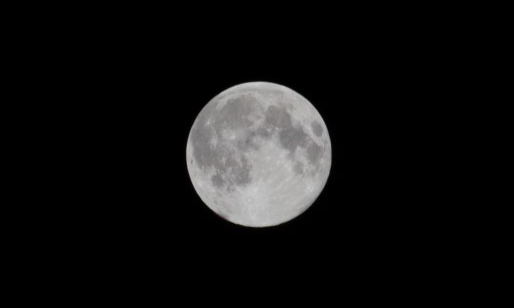
Supermoon from Fairvale Observatory 10th August 2014
Canon 700D | 200mm telephoto | 1/160th f11 ISO200
Of course, since getting my telescope last year the Moon has been a frequent subject for viewing and imaging, with some very close-up results in some cases almost seeming to take you there. Viewing the Moon is best during the early stages of a new “waxing” Moon, particularly along the edge where the dark section meets the light section – the so called “terminator”. Views of this can be stunning, with the WO GT81 and a x2 Barlow an 10mm eyepiece it almost seems like you are about to land on the surface! Very soon after first looking at the Moon I got a Moon filter, which I have found essential as the Full Moon approaches and the light is almost otherwise blinding; the filter reduces the glare and makes observing more comfortable.
Whilst a good view of the entire Moon can be obtained, such is the optics of the 150PL (and I think the WO GT81) that to get focus the DSLR camera has to be used in conjunction with a Barlow lens. Unfortunately this results in such magnification that the Moon can only be imaged in parts, rather than as a whole but the image is nonetheless exciting:
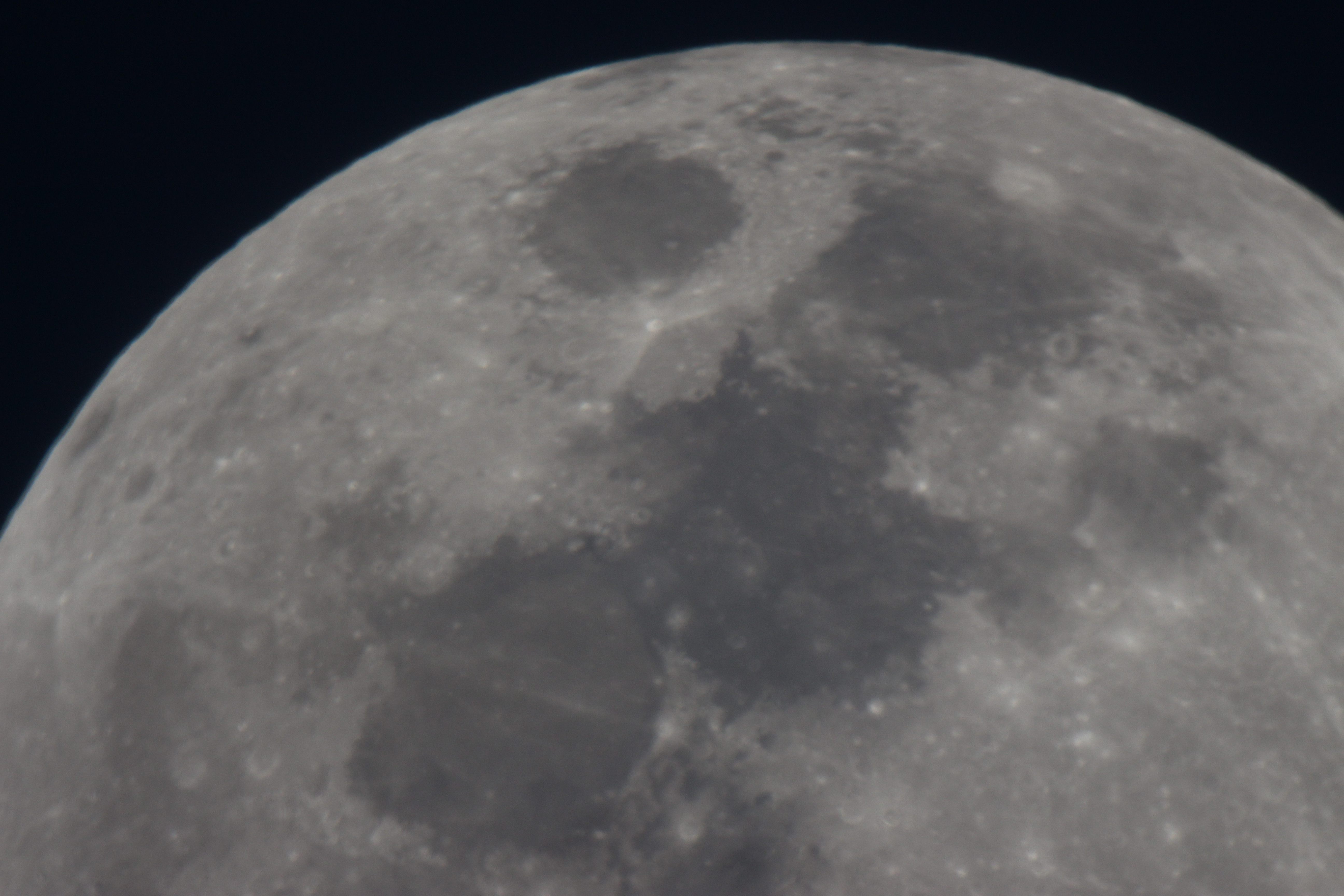
The Moon 11th February 2014
Canon 700D | SW 150PL 2xBarlow | 1/100th ISO 400
Notwithstanding, using a suitable computer programme these individual images can be stitched together to produce a photo mosaic, such as this one made from x6 separate sections of the Moon. The result is impressive:
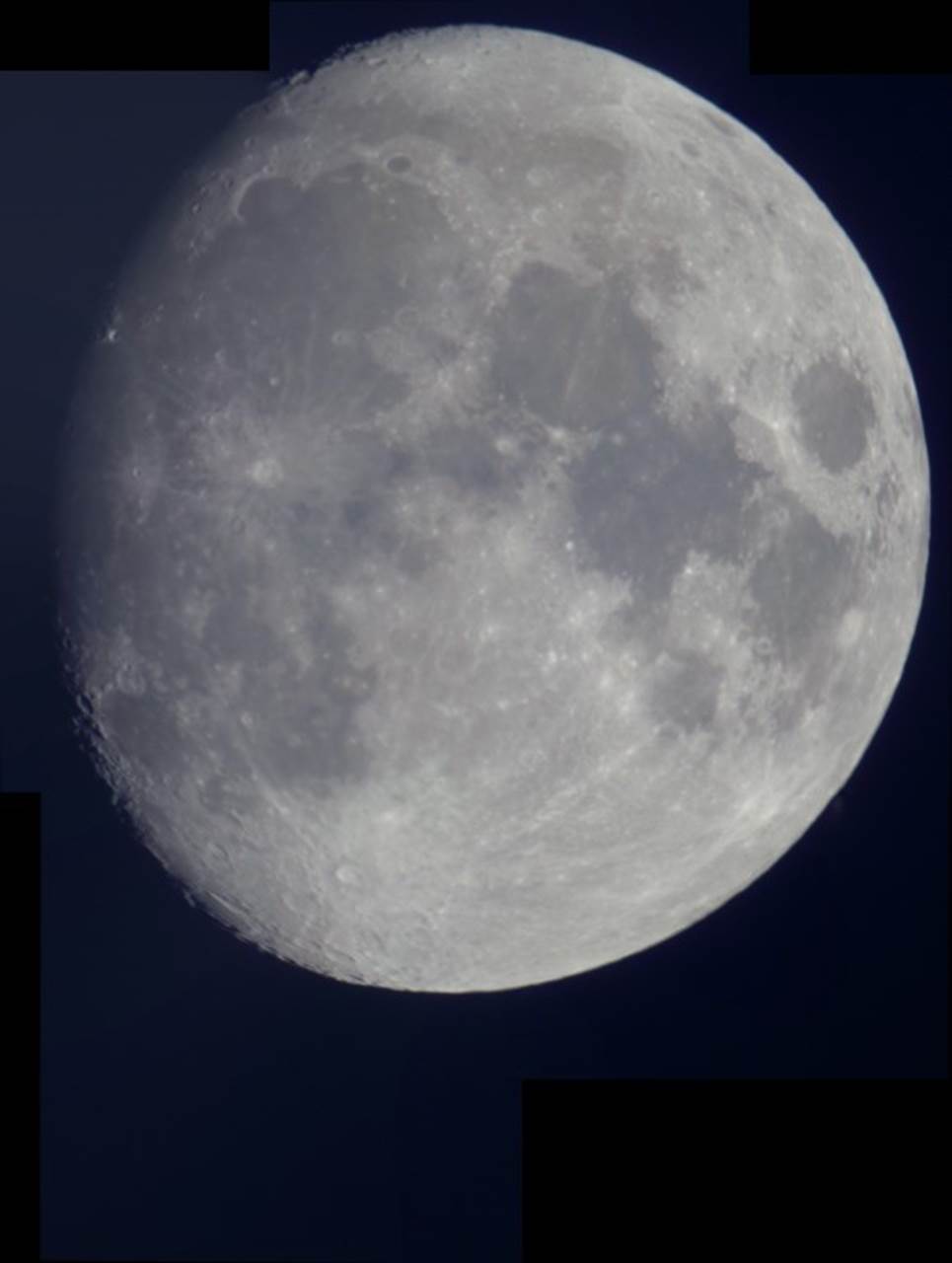
Photo mosaic 11th February 2014
Finally and probably most amazing is using a webcam / CCD to video the Moon. Once again this needs to be undertaken using a Barlow and the resulting magnification is even higher but with spectacular results as can be seen with this video taken with the ZWO 120 MC in May this year(the shimmering effect is the Earth’s atmosphere): https://www.youtube.com/watch?v=13Nb_lBBaxk&feature=youtu.be
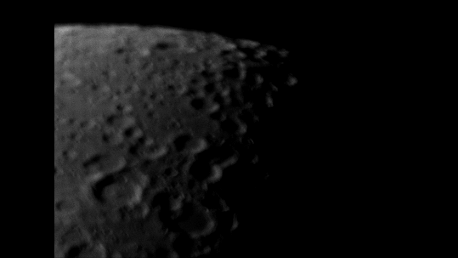
Snapshot of Moon video (see above link)
ZWO 120 MC
 WATCH THIS SPACE(MAN)