Galactic Stepping Stones

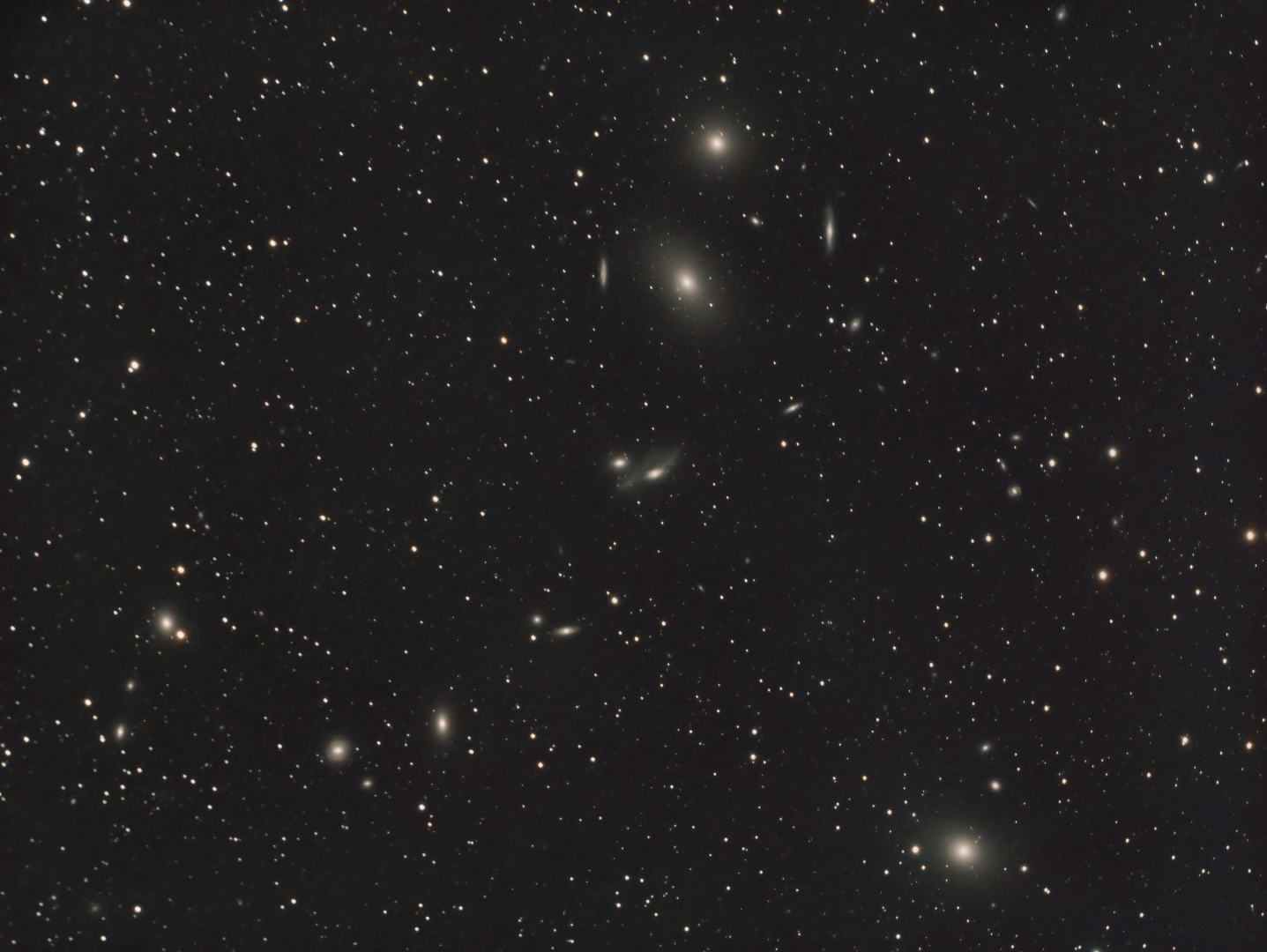
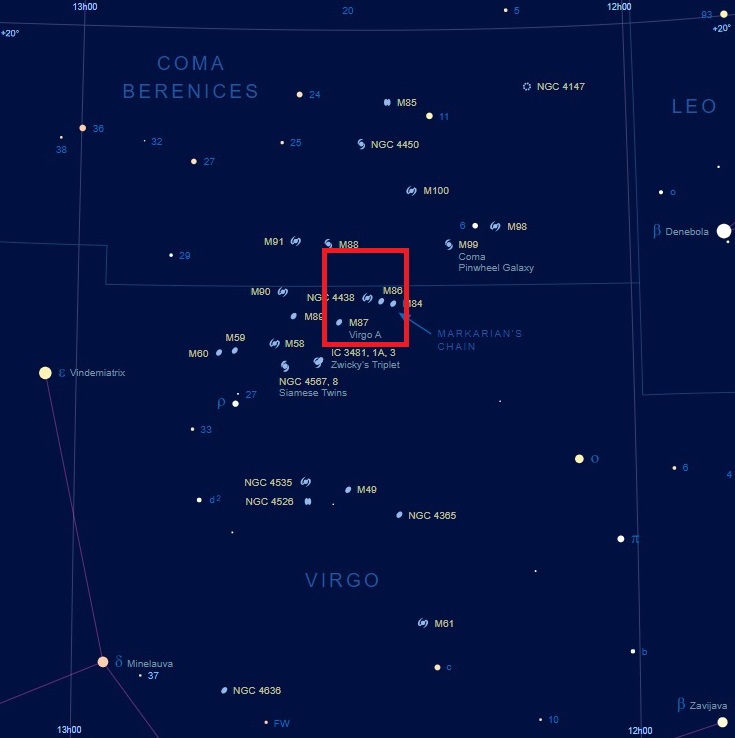
The Virgo Cluster consists of more than 2,000 galaxies, which unfortunately are optically too much for my small William Optics GT81 telescope individually.  However, one of several sub-groups within the Virgo Cluster forms a striking J-curve shape that does make for a pleasing LRGB image.  Discovered and named after the Armenian astrophysicist Benjamin Markarian, Markarian’s Chain is a string of bright galaxies that share a common motion through space.  I first imaged the Chain in April 2015 using a modded DSLR and then again in April 2017, as my first LRGB image with the then new ZWO ASI1600MM-Cool camera but with integration times of less than 1-hour on both occasions, the resulting images were far from ideal.  On this occasion using my new Chroma LRGB filters for the first time I was determined to do better.
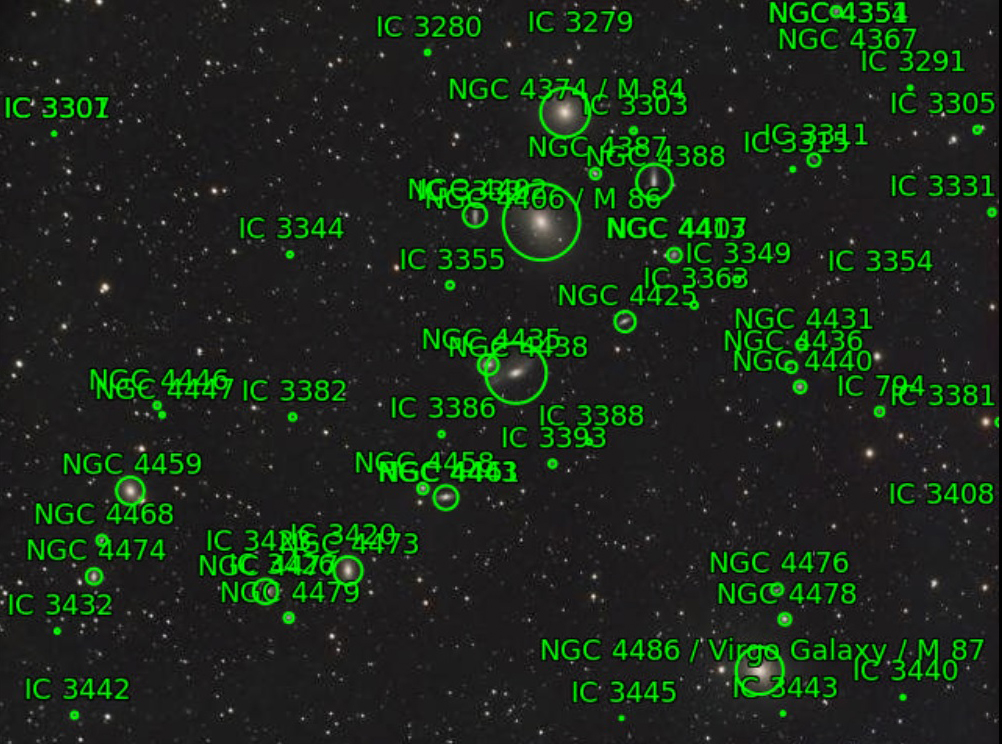
The new filters and nearly 7-hours integration time has resulted in a much more dynamic and detailed image, which I believe now does justice to this spectacular group of galaxies.  Analysis of the image using Astrometry.net shows just how crowded this area of Virgo is with galaxies (see annotated image above) but it is Markarian’s Chain that inevitably stands out together with a few other adjacent galaxies.
  • Large 10th magnitude M84 & M86 galaxies at the western end of the Chain dominate the image.  M84 is the object with the highest blue shift in the Messier catalogue, which is a result of its rapid movement (244km/sec) towards the centre of the Virgo Cluster and us.  At the centre of M84 is a 1.5 billion solar mass black hole.
  • NGC 4420 & NGC 4388 – by comparison these edge-on galaxies together with even smaller NGC 4413 & NGC 4425 seem to frame the larger M84 and M86.   
  • Next along the Chain is a pair of interacting galaxies, the smaller round shaped NGC 4435 and NGC 4438 with its distorted disk, known as “The Eyes”.                             
  • As the Chain starts to turn, some 20’ along is NGC 4458 and its partner, the 11th magnitude elliptical NGC 4461.
  • The final section of the Chain consists first of NGC 4473, its brightness generated by a supermassive black hole – at 100 million solar masses its diameter of 4.46au which would stretch from the Sun to the asteroid belt!  Thereafter the 11.4 magnitude barred lenticular galaxy NGC 4477 defines the north eastern extremity of Markarian’s Chain.
  • As previously noted, there are many other galaxies in this part of the Virgo Cluster.  Perhaps most notable though is M87, from which the first ever image of a black hole was the obtained in 2019 – consisting of some 6.5 billion solar masses.


All-in-all Markarian’s Chain makes for a rewarding image using my small telescope combined with the new Chroma filters.  Such is the nature of the image the galaxies might also suggest a string of pearls or perhaps galactic stepping stones – metaphorically leading to the next phase of my astroimaging journey.

 IMAGING DETAILS
ObjectMarkarian’s Chain
ConstellationVirgo & Coma Berenices
Distance50 – 55 million light-years
Size  ~2.5o total
Apparent MagnitudeVaries +10 to +12 approx.  
  
Scope William Optics GT81 + Focal Reducer FL 382mm  f4.72
MountSW AZ-EQ6 GT + EQASCOM computer control & Cartes du Ciel
GuidingWilliam Optics 50mm guide scope
 + Starlight Xpress Lodestar X2 camera & PHD2 guiding
CameraZWO1600MM-Cool mono  CMOS sensor
 FOV 2.65o x 2.0o Resolution 2.05”/pix  Max. image size 4,656 x 3,520 pix   
EFWZWOx8 EFW & 31mm Chroma LRGB filters 
Capture & ProcessingAstro Photography Tool + PHD2 +  Deep Sky Stacker, PixInsight v1.8.8-7, Photoshop CS3, Topaz Denoise
Image Location &           OrientationCentre  RA 12:27:46.65      DEC +13:03:06.44  @21.30h                      Left = North     
Exposures100 x 60 sec L , 54 x 60 sec R,  55 x 60 sec G&B Total Integration Time: 6hr 44 min     
 @ 139 Gain   21  Offset @ -20oC    
Calibration10 x 60 sec Darks  15 x  LRGB Flats & Dark Flats         @ ADU 25,000
Location & DarknessFairvale Observatory – Redhill – Surrey – UK        Typically Bortle 5-6
Date & Time5th & 6th April 2021  @ +21.00h  
WeatherApprox. <2oC   RH >=45%                  🌙 30% waning

Rosette Nebula – Chroma First Light

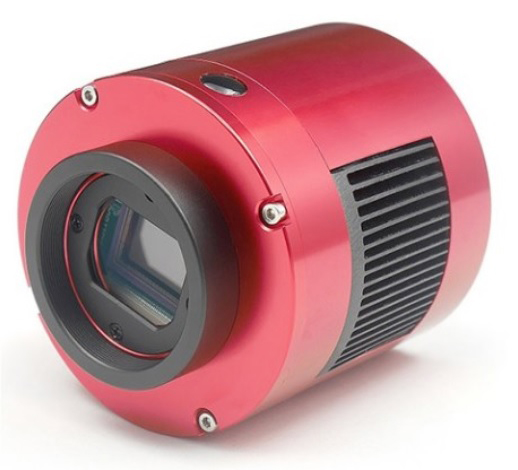
The history of astrophotography will record a period of rapid innovation during the past decade, amongst which one of the stand-out developments has been that of the CMOS sensor based camera, notably the ZWO ASI1600MM-Cool (see below).  Just look at any astrophotography website such as Astrobin and it won’t take long to find an image taken with this camera such is its popularity.  It is this very camera that I was fortunate to purchase in December 2016 shortly after its release and has been the core of my astrophotography set-up ever since. 

I have generally been very happy with the results achieved with the ZWO camera, although an issue sometimes occurs when imaging large stars, so called ‘star bloating’.  There are a number of theories discussed ad nauseam online why this might occur, of which microlensing and / or diffraction seems most likely and probably relates to either – the sensor, sensor cover or filters.  Since beginning with the ZWO camera I’ve used their excellent matching EFW with LRGB and 7nm narrowband filters.  Notwithstanding, the filters are considered to be somewhat ‘low end’ by the aficionados of such things and after living with the ZWO filters for some time, at considerable cost I recently decided to upgrade to a set of Chroma 31mm filters – LRGB + 3nm narrowband.  Together with Astrodon, Chroma filters are generally considered to be the best and my expectations were therefore high.

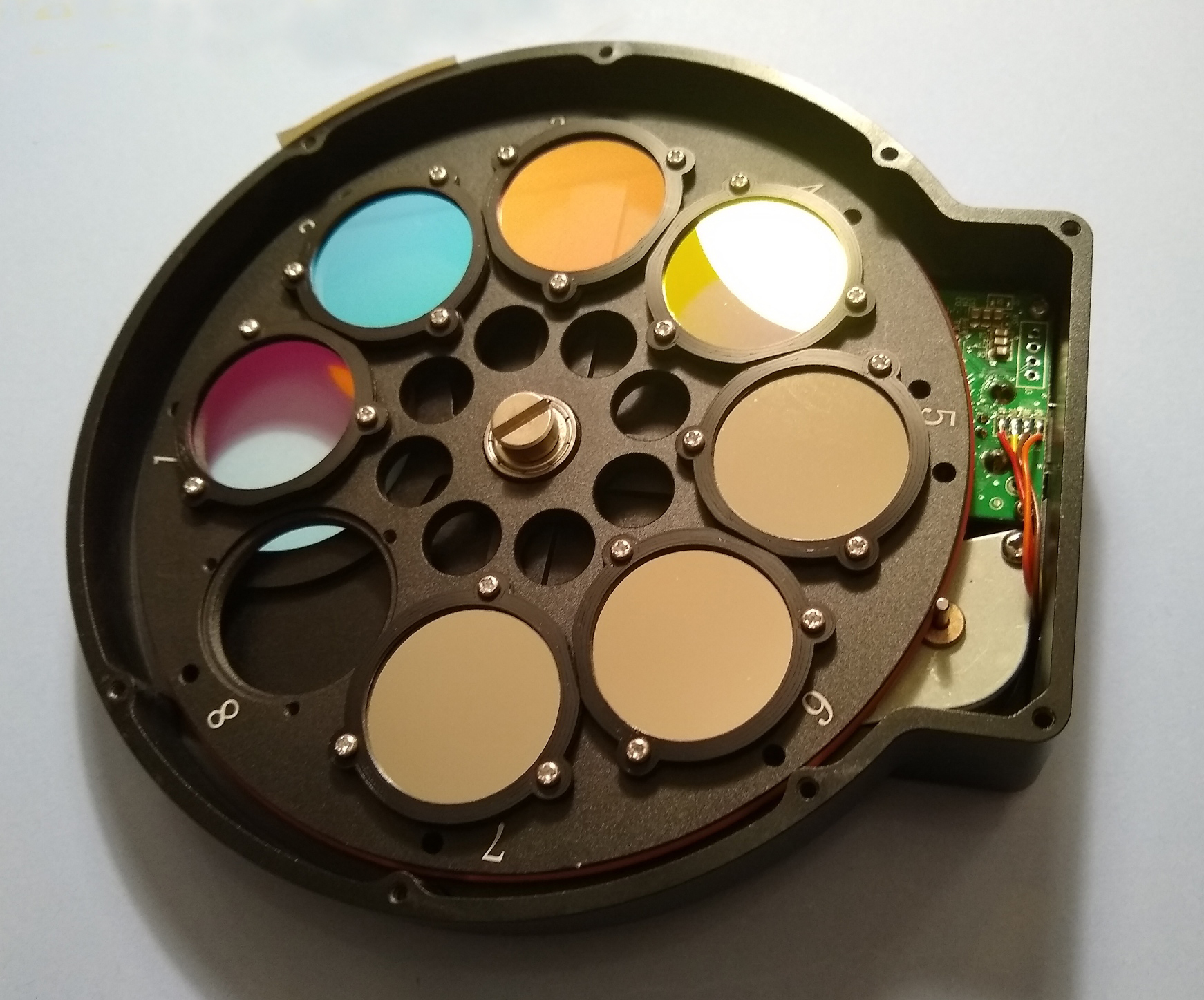
Being unmounted I’d previously found the ZWO filters tricky to install using the small screws and fibre washers supplied.  At 3mm Chroma are physically 1mm thicker than ZWO filters and also need to be fitted in a specific direction, which is ‘letters up’ or with top of the ID letters on the side of the filter facing towards the sensor; this is disputed by the manufacturer but there’s substantial first-hand experience online that suggests otherwise.  With these issues in mind I sought out bespoke filter masks and longer M2 6mm screws to hold the thicker filters firmly in place.  The 3D printed masks from Buckeyestargazer in the USA did a great job securing the filters and are better than those from ZWO – the internal edge of the mask forms an L-shaped ledge into which the filter fits snuggly.  Ready to go, I then had to wait nearly 4-months before the clouds parted to try out these expensive pieces of glass and then it was a full moon – I often wonder if astrophotography is a good hobby to choose in the United Kingdom but it’s too late now?

Chroma filters secured with Buckeyestargazer masks and ready to go

Given the presence of the moon it therefore had to be suitable narrowband target and after three years since I’d last imaged this object it was an opportunity to have another go at NGC 2244 AKA the Rosette Nebula, though being late February there was limited time each night before the object sunk low behind trees on the western horizon; coincidentally the ZWO ASI1600MM-Cool First Light in early 2017 was also the Rosette.  Before starting serious imaging I first tried some test shots to make sure everything worked OK and immediately discovered that the change from 7nm to 3nm had a significant impact on light gathering, thus requiring greater exposure times of an unprecedented 10 minutes.  Not surprisingly this was also apparent when taking flats which increased exposure time of up to x10 longer in duration compared to the ZWO filters; conversely preliminary but limited tests on the broadband filters seem to indicate greater transparency and thus shorter exposures, time will tell if this is correct.

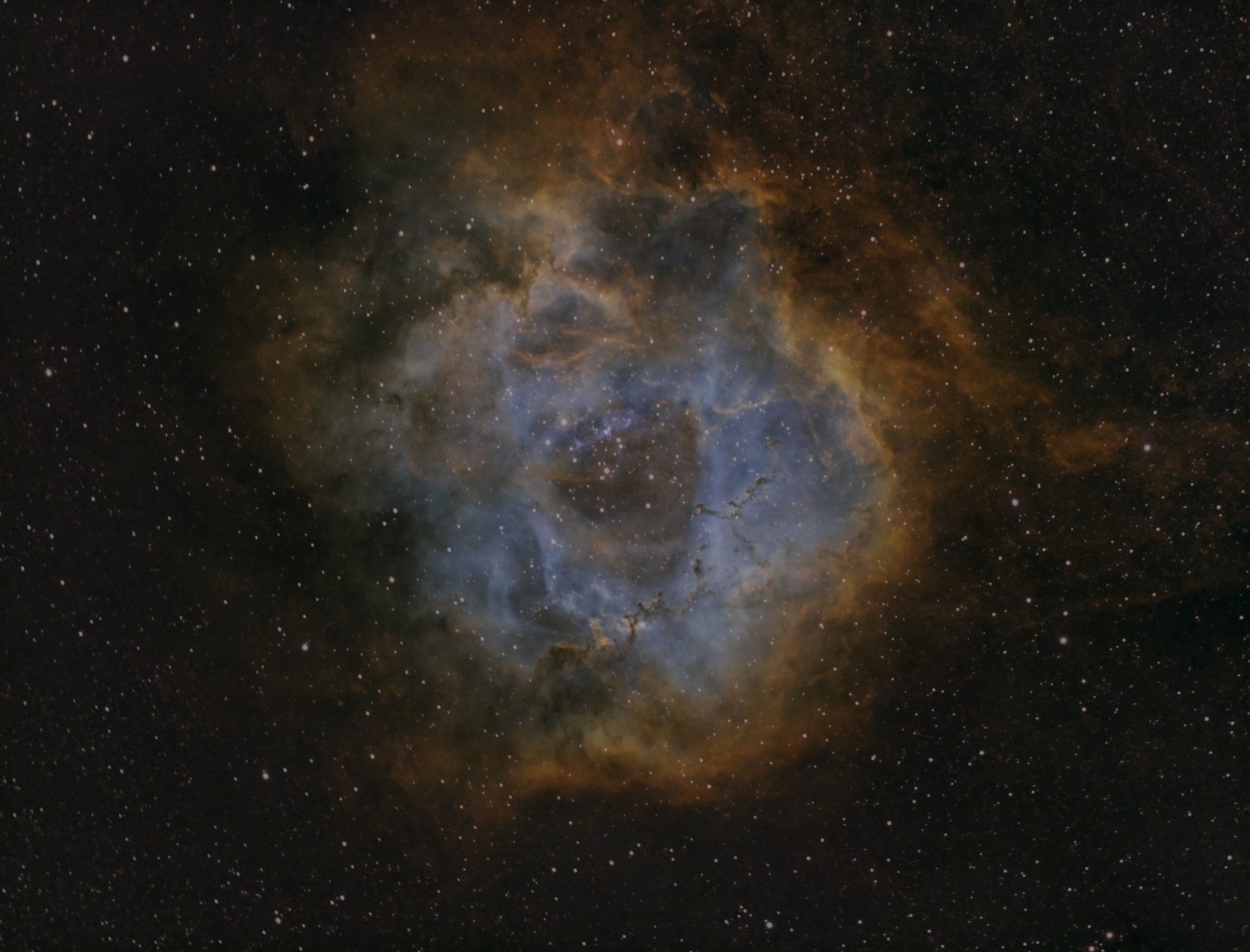
So was it all worth it?  I’m very pleased with the final image which was processed using the SHO Hubble Palette with PixInsight and Photoshop (see top of the page).  There are a number of significant bright stars in and around the Rosette which the Chroma filters have handled well but overall it is the more delicate tone that has been achieved which is most pleasing.  Fundamentally the 3nm filters have produced a more subtle quality to the overall image and in particular the nebulosity.  In addition, applying Hartmut Bornemann’s excellent colour calibration script AutoColor for the first time (see Visible Dark’s video tutorial here) has resulted in a soft but exciting colour palette. 

Subsequently I have focussed on the inner region of the nebula which contains the so-called ‘Carnival of Animals’ (see above), which has been cropped and reprocessed individually to show-off the ‘animals’ or Bok globules –   named after the Dutch-American astronomer Bart Bok, who in 1947 proposed that these dark nebula indicated clouds of dust undergoing gravitational collapse as part of the process of new star formation, which has since been confirmed.  In conclusion I’d therefore say that despite the obstacles, issues and long wait, on the evidence so far the addition of the Chroma filters to my set-up has been very successful – transformative in fact.  Now I wonder if they make something that removes the clouds?  

 IMAGING DETAILS
ObjectNGC 2244 + 2337 + 2238 + 2239 + 2246  AKA the Rosette Nebula
ConstellationMonoceros
Distance5,200 light-years
Size65 light-years
Apparent Magnitude9
  
Scope William Optics GT81 + Focal Reducer FL 382mm  f4.72
MountSW AZ-EQ6 GT + EQASCOM computer control & Cartes du Ciel
GuidingWilliam Optics 50mm guide scope
 + Starlight Xpress Lodestar X2 camera & PHD2 guiding
CameraZWO1600MM-Cool mono  CMOS sensor
 FOV 2.65o x 2.0o Resolution 2.05”/pix  Max. image size 4,656 x 3,520 pix   
EFWZWO EFW + Chroma Ha, OIII & SII 3nm filters 
Capture & ProcessingAstro Photography Tool + PHD2 +  Deep Sky Stacker & Photoshop CS3
Image Location              & OrientationCentre  RA 06:31:52.688      DEC 04:58:11.11                        Top = North     
Exposures12 x 600 sec  Ha & SII  11 x 600 sec OIII Total Time:  5hr 50 min   
 @ 139 Gain   21  Offset @ -20oC    
Calibration5 x 600 sec Ha + OIII + SII   Darks 20 x 1/4000 sec Bias  &  15 x  Ha + OIII + SII Flats & Dark Flats               @ ADU 25,000
Location & DarknessFairvale Observatory – Redhill – Surrey – UK        Typically Bortle 5-6
Date & Time26th 27th 28th February 2021  @ +21.15h  
WeatherApprox. <5oC   RH >=65%                  🌙 100% Full Moon