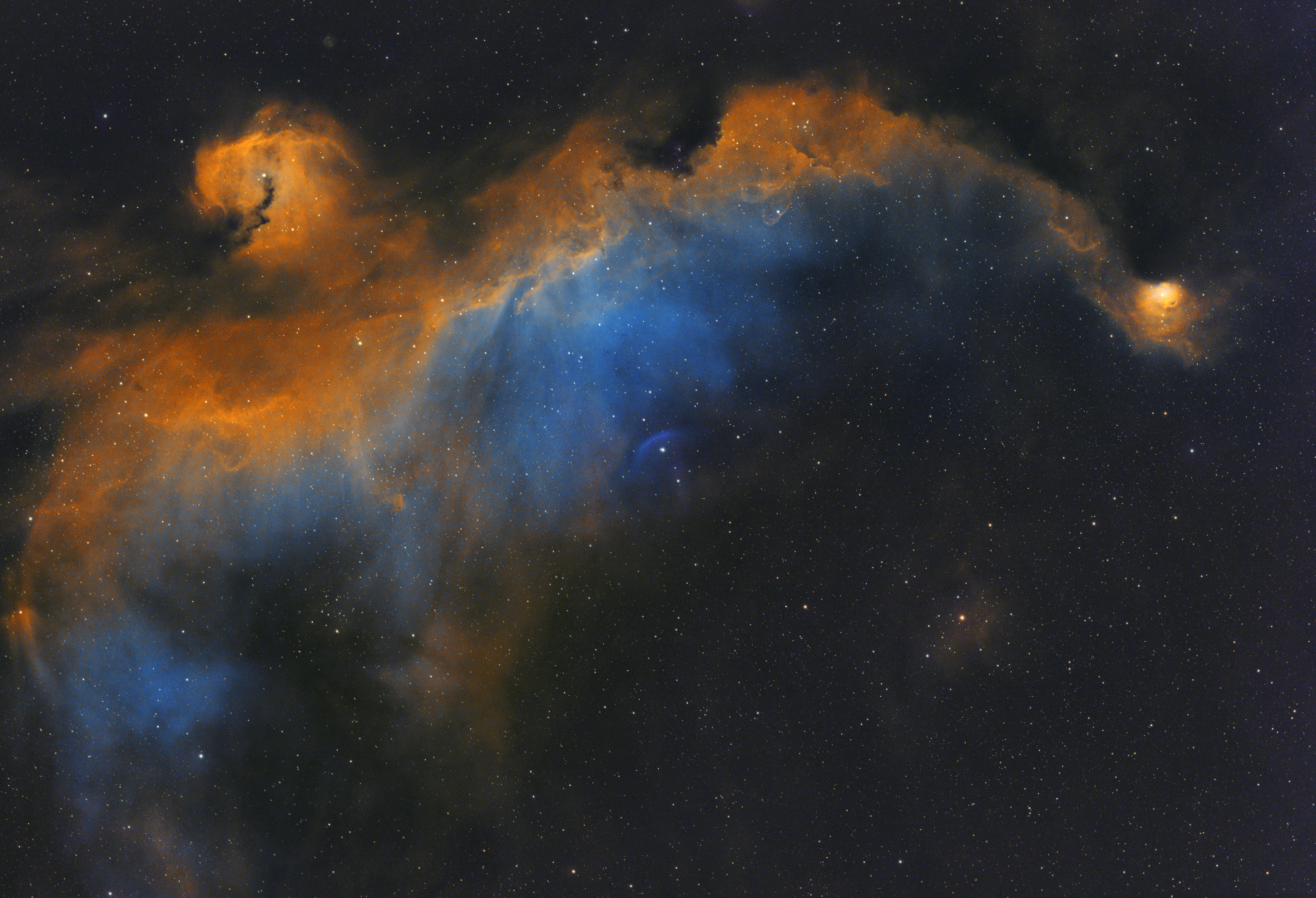
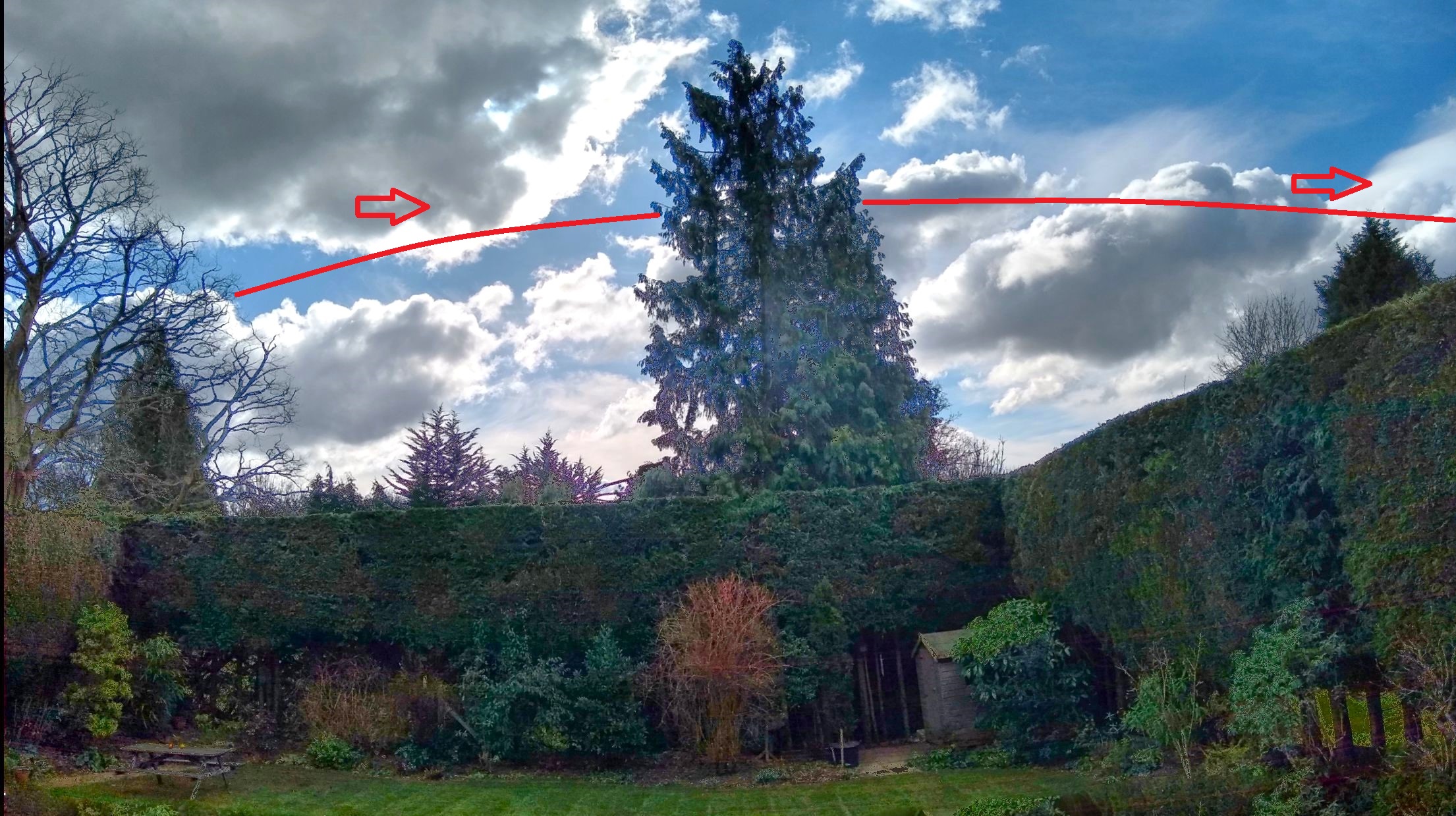
Located 3,650 light-years from Earth, in the area between the Monoceros and Canis Major constellations, is the emission and reflection nebulae complex of the so-called Seagull Nebula. It’s been 8-years since I last briefly dabbled with imaging this exciting object and for good reason. From my position, this bird flies at a maximum 28o above the southern horizon (-11 DEC) and, furthermore, spends much of its time behind houses, trees, and tall hedges, thus providing just two short windows for imaging; combined with this winter’s terrible weather it made for a tough but ultimately rewarding target.
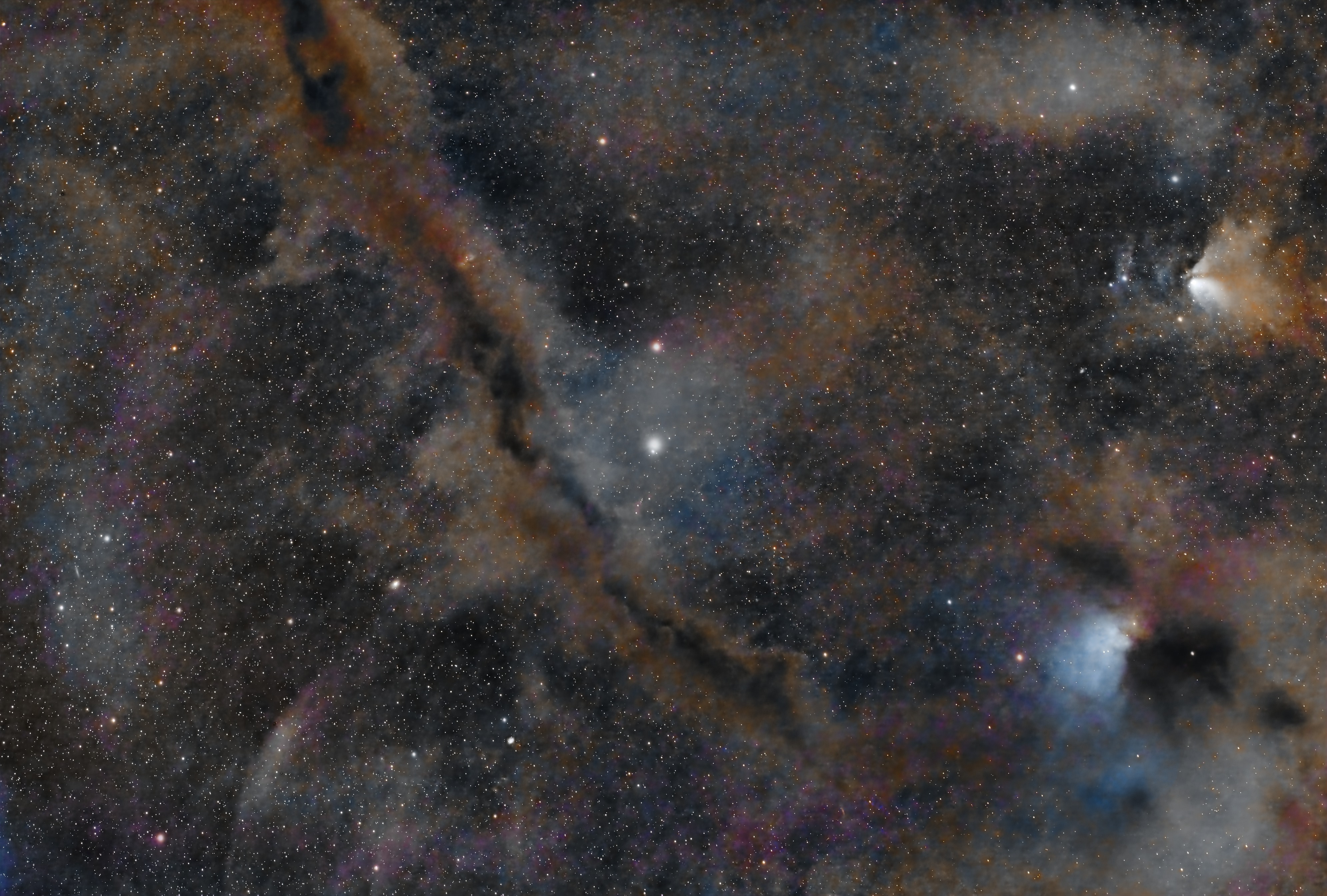
Whilst popularly known as the Seagull Nebula, the bird consists of a number of fabulous objects spanning some 200 light-years in their entirety: the Seagull’s head (SH2-292) and wings (IC 2177), the large open star cluster along the leading edge of the left wing (NGC 2335) and a smaller cluster on the edge of the right wing (NGC 2327), the nebula at the tip of the right wing (Sh2-297), as well as many other named features (Sharpless and LBN) that are highlighted in the following plate solved image (below).

Despite the difficulties posed by the low transit of the bird in the night sky, each of the Ha, OIII and SII wavelengths are strong, making for good data acquisition and a very pleasing final SHO image.
| IMAGING DETAILS | |
| Object | Seagull Nebula (SH2-292, IC2177 etc.) |
| Constellation | Monoceros |
| Distance | 3,650 light-years |
| Size | Approx. 200 light-years |
| Apparent Magnitude | Various |
| Scope | William Optics GT81 + Focal Reducer FL 382mm f4.72 |
| Mount | SW AZ-EQ6 GT + EQASCOM computer control & Cartes du Ciel |
| Guiding | William Optics 50mm guide scope |
| + Starlight Xpress Lodestar X2 camera & PHD2 guiding | |
| Camera | ZWO ASI294MM CMOS sensor |
| FOV 2.87o x 1.96o Resolution 2.50”/pix Max. image size 4,144 x 2,822 pix | |
| EFW | ZWOx8 EFW & 31mm Chroma Ha, OIII, SII filters |
| Capture & Processing | Astro Photography Tool (APT), Deep Sky Stacker & PixInsight v1.8.9-2 |
| Image Location & Orientation | Centre = RA 07:06:42.425 DEC -11:18:53.372 Left = North Top = West |
| Exposures | Ha x16 + OIII x13 + SII x14 @ 600 sec Total Integration Time: 7hr 10 min |
| @ Gain 120 & 30 Offset 21 @ -15oC | |
| Calibration | 5 x 300 sec Darks 10 x NB Flats & Dark Flats @ ADU 32,000 |
| Location & Darkness | Fairvale Observatory – Redhill – Surrey – UK Typically Bortle 5-6 |
| Date & Time | 18th 19th January 11th 12th February 2023 @ +20.30h |
| Weather | Approx. <2oC RH >=70% 🌙 <+55% Waning |


 WATCH THIS SPACE(MAN)