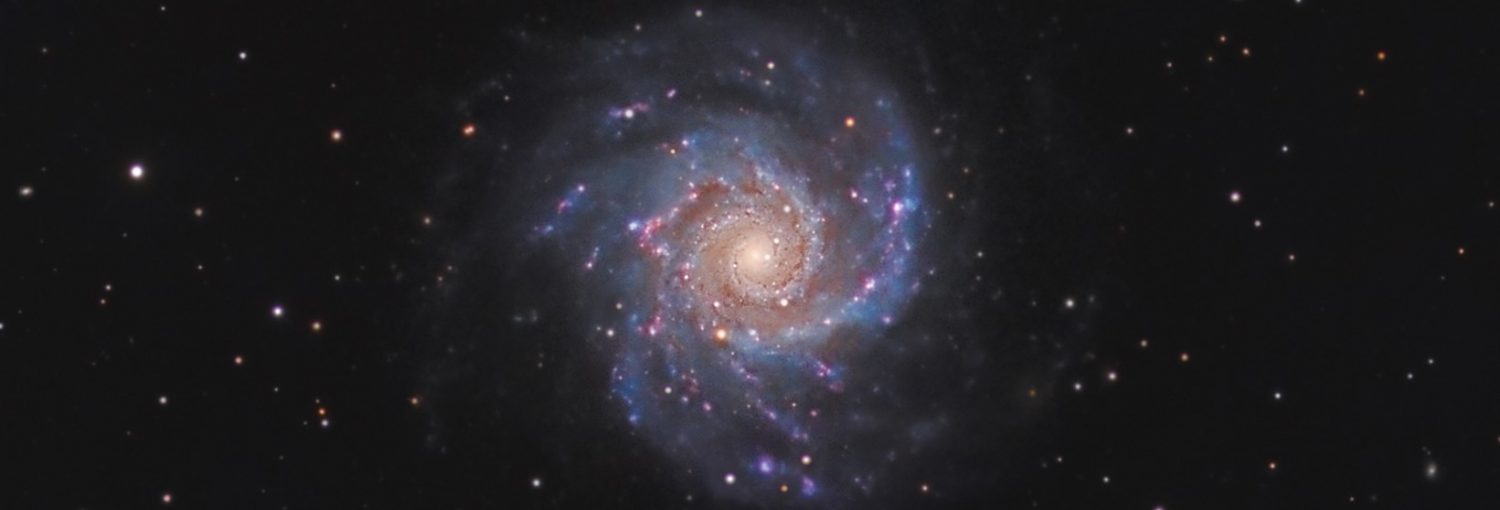
Although some time back I lived and worked in Southern Africa for five years and subsequently spent much time visiting and working in many other countries south of the equator, since taking up astrophotography 12-years ago I’ve had no opportunity to work with data from the southern hemisphere, until now. The benefit of obtaining data remotely, which has become very popular in recent years, is that it provides access to different objects and better sky conditions. I did work with a telescope based in New Mexico, USA a few years ago, which was a fun experience but being in the Northern Hemisphere most targets were much the same as here in the UK, except they did have more than 250 clear skies each year. However, this time I’ve moved to what is widely considered to be the holy grail for astronomy, Chile, where night skies are rated as the best in the world!
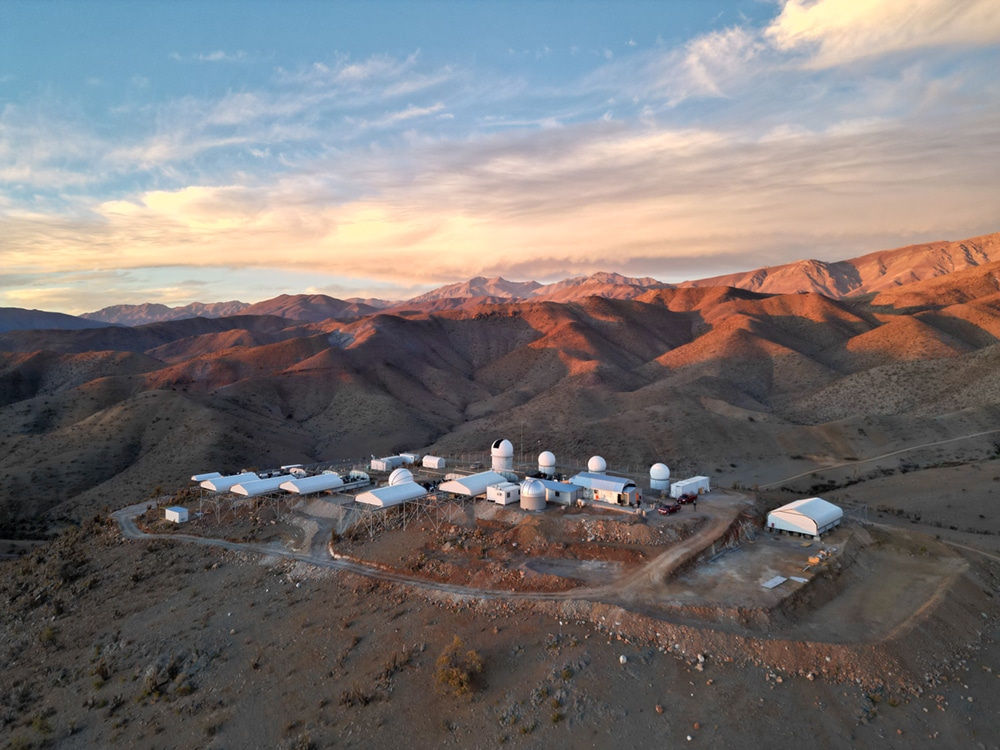
The dataset was obtained from the famous El Sauce Observatory located in the Rio Hurtado Valley, south of the Atacama Desert, using a Planewave CDK20 astrograph telescope; currently retailing at First Light Optics for just over £42,000! Unsurprisingly, the combination of location and this telescope resulted in the best of the best datasets, which has been nothing less than a privilege to process.
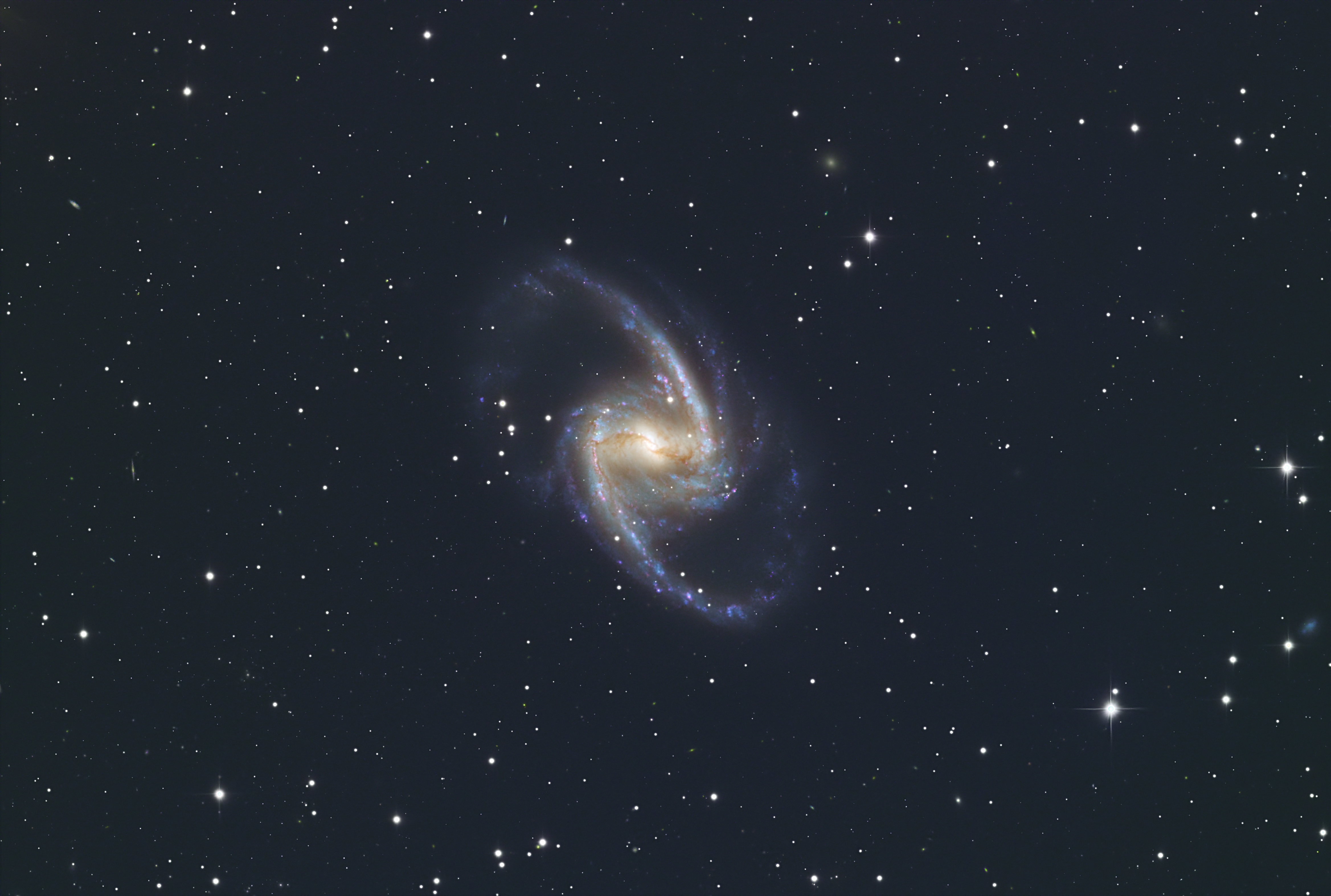
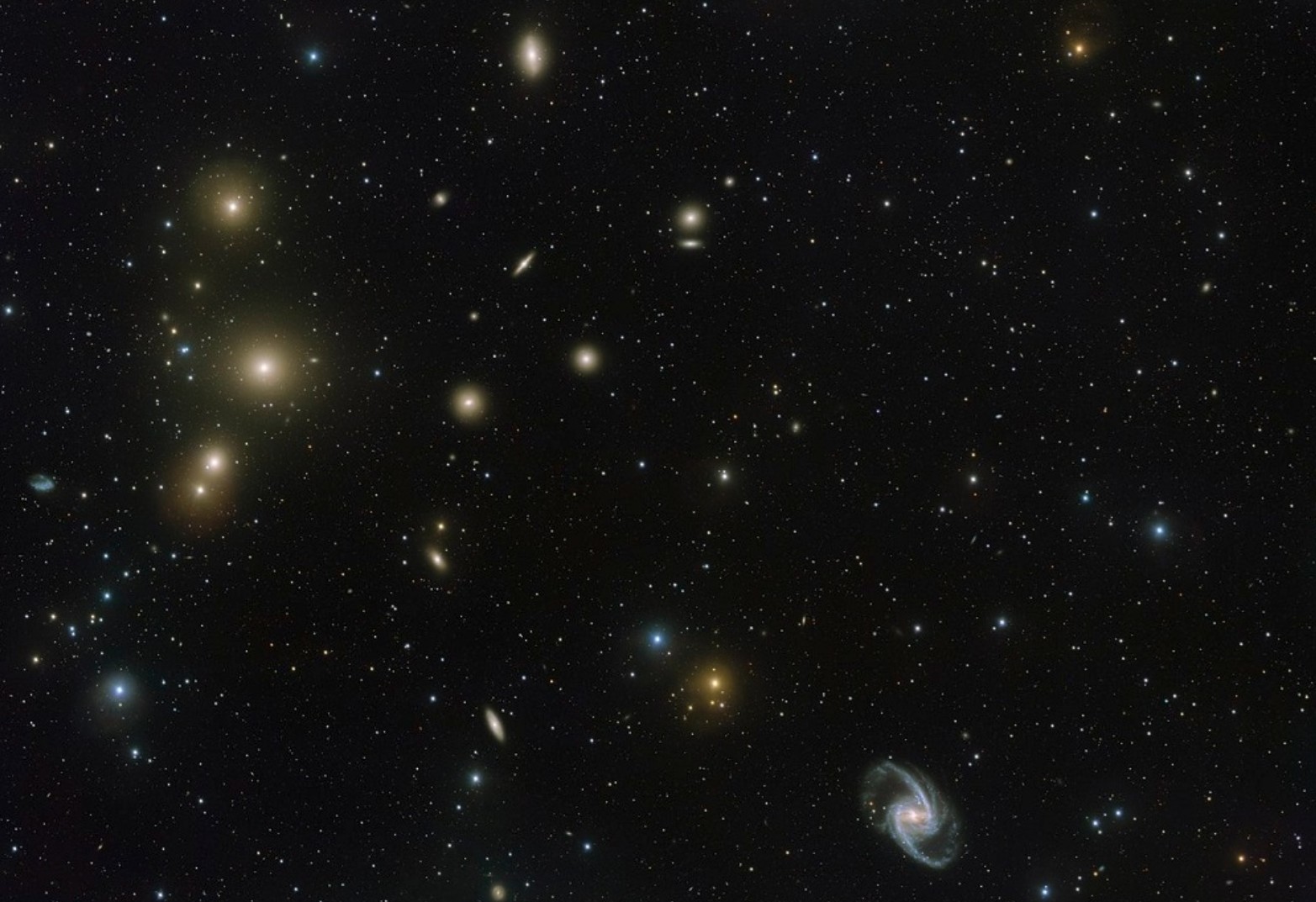
My first target from the Southern Hemisphere therefore had to be something special and NGC 1365, also known as the Great Barred Spiral Galaxy, is just that. A double-barred spiral galaxy, it is located some 56 million light-years away in the Fornax constellation and spans over 200,000 light-years across, making it nearly twice the size of the Milky Way. The Great Barred Spiral Galaxy is also a dominant member of the Fornax Galaxy Cluster group of 58 galaxies.
The most distinctive feature of NGC 1365 is its massive central bar, which plays a crucial role in channelling gas and dust into the galactic core. This inflow of material fuels both star formation and the activity of the galaxy’s central supermassive black hole, which is estimated to be some 2-million solar masses. Various observations in X-rays, infrared, and visible light wavelengths, reveals numerous star-forming regions along the spiral arms, particularly where they connect to the bar, giving the galaxy a luminous appearance.
NGC 1365 is also classified as a Seyfert galaxy, whereby the nucleus is extremely bright due to energetic processes around its black hole. Studies also indicate that the outer edges of the galactic disc are moving at about 84% of the speed of light!
| IMAGING DETAILS | |
| Object | NGC 1365, AKA Great Barred Spiral Galaxy or Fornax Propellor Galaxy |
| Constellation | Fornax |
| Distance | 56 million light-years |
| Size | 11.2 x 6.2 arc minutes (201,700 to 306,800 light years) |
| Apparent Magnitude | +10.3 |
| Scope | Planewave CDK20 |
| Mount | Planewave L500 |
| Focuser | Optec Gemini |
| Camera | QHY600PH-M |
| Filters | Chroma LRGB + Ha 3nm |
| Processing | Deep Sky Stacker & PixInsight v1.9-3 |
| Image Location & Orientation | Centre: RA 03:34:34.323 DEC -36:08:30.36 Up = North |
| Exposures | Ha x 62 10 mins, L x 78, R x 78, G x 71, B x 70 @ 5mins Total Integration Time: 35hr 5min |
| Location & Darkness | Obstech El Sauce Observatory, Chile |
| Date | August 2024 |
 WATCH THIS SPACE(MAN)