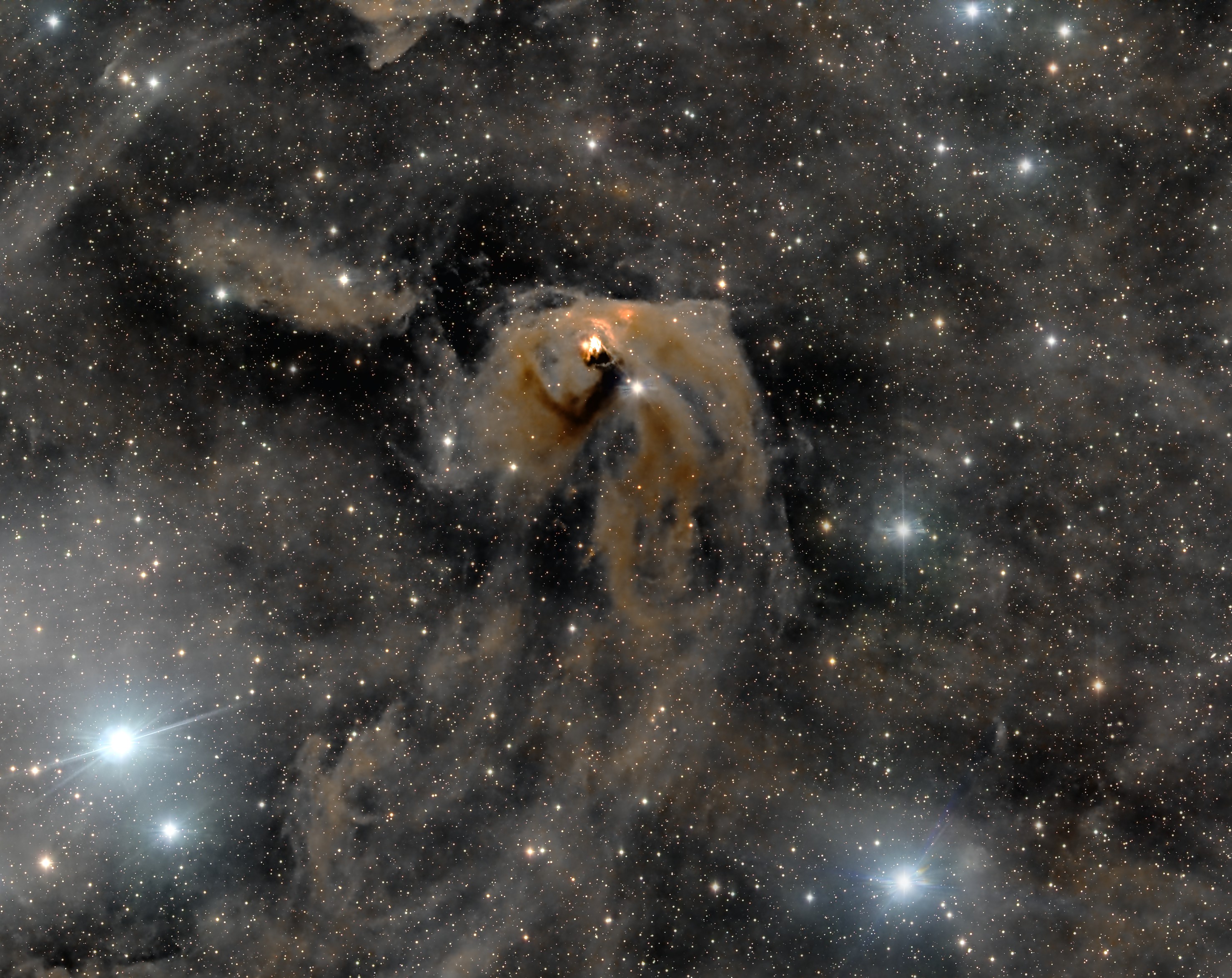
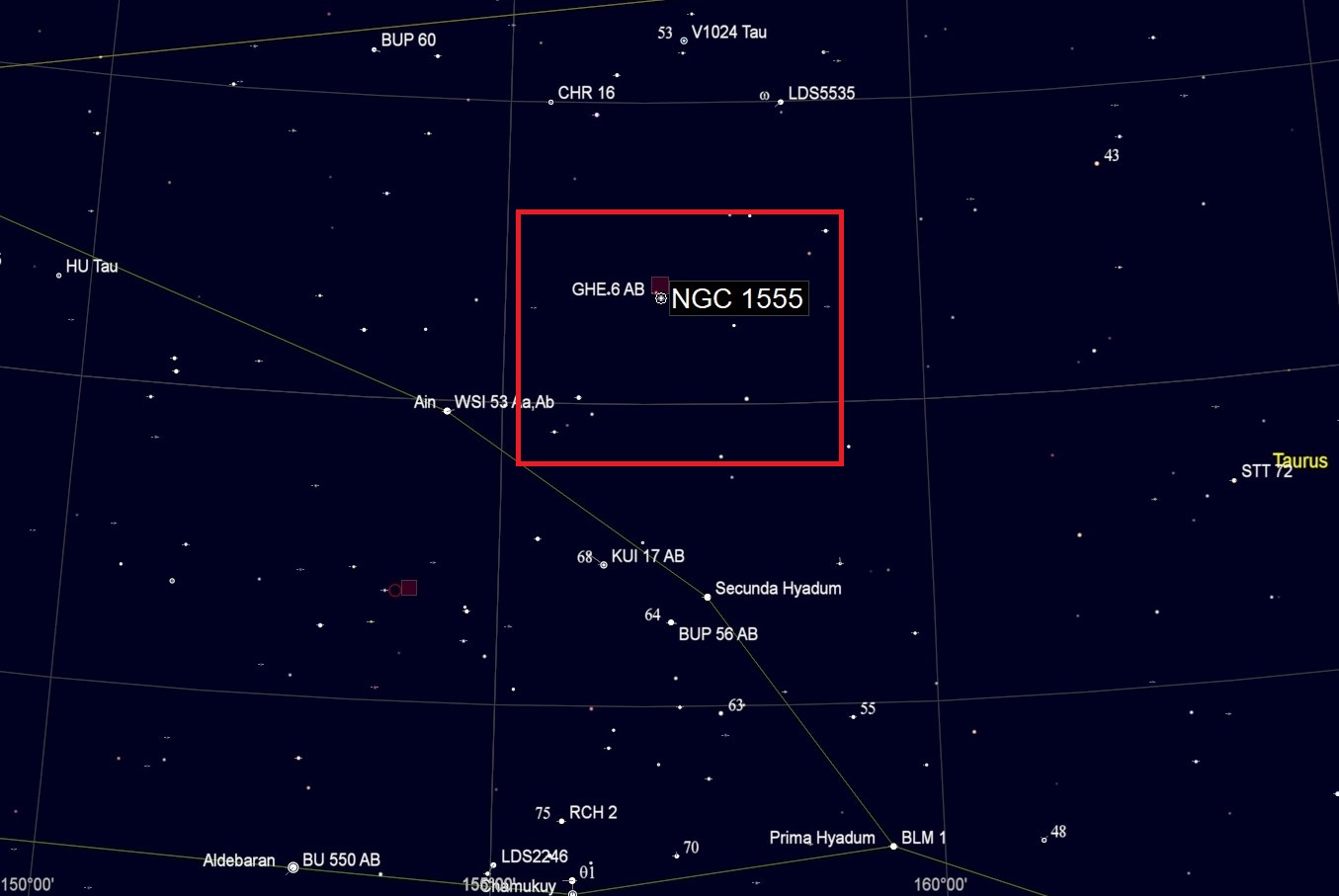
Hind’s Variable Nebula (NGC1555) is situated 400 light-years away in the region between Aldebaran and the Pleiades, in the constellation Taurus, in the same area as the Hyades (see below). The nebula is a Herbig-Haro object – a bright patch of nebulosity in which new stars are forming – which changes in apparent size and brightness. It is illuminated by the young pre-main sequence triple star system T-Tauri and was discovered by the English astronomer John Russell Hind in 1852.
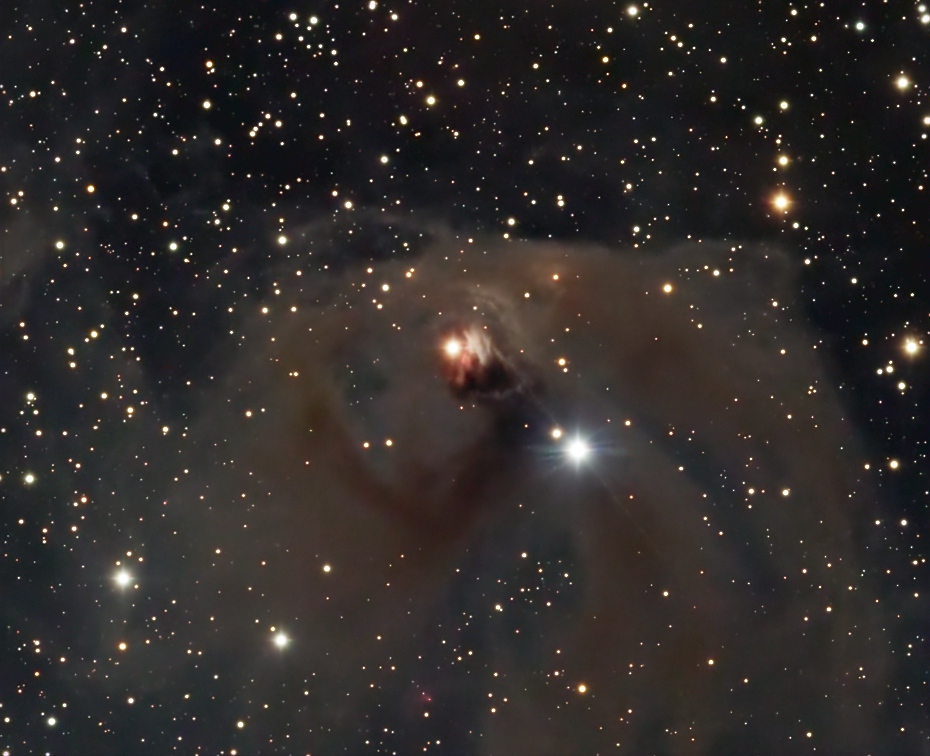
The data for this image was obtained from the Deep Sky West (DSW) site in New Mexico using a Takahashi FSQ 106 paired with a QSI 683-WSG8 camera, which provides a widefield view of the nebula (see top of the page), thereby including many colourful bright stars that dominate this area. The addition of Ha data further highlights the complex nature of the region which is not fully seen in an LRGB image.
| IMAGING DETAILS | |
| Object | NGC1555 Hind’s Variable Nebula & Hyades |
| Constellation | Taurus |
| Distance | 400 light-years + Hyades 153 light-years |
| Size | 4 light-years ~5.908 arc secs |
| Apparent Magnitude | +9.98 |
| Scope | Takahashi FSQ 106 FL 530mm f/5 + Moonlight Nightcrawler focuser |
| Mount | Paramount MyT |
| Guiding | Yes |
| Camera | QSI 683-WSG8 KAF-8300 full frame CCD sensor 5.4nm pixels |
| FOV 1.94o x 1.46o Resolution 2.1”/pix. Image array 3326 x 2,507 pix | |
| Processing | Deep Sky Stacker, PixInsight v1.8.9-2 |
| Image Location & Orientation | Centre – RA 04:21:53.55 DEC +19:19:49.3 |
| Exposures | L x31, R x14, G x19, B x19 x 15 mins + Ha x16 x 30 minutes @ -20C Total Integration Time: 28hr 45min |
| Calibration | 20 x 900 sec & 20 x 1800 sec Darks x56 Bias & x20 LRGB Ha Flats |
| Location & Darkness | Deep Sky West – amateur hosting facility near Rowe, New Mexico – USA SQM Typically >= 21.7 |
| Date & Time | Q1 2019 |
 WATCH THIS SPACE(MAN)