
As we move closer to the Spring Equinox, the winter sky is already rapidly disappearing towards the western horizon and I have been left wondering what next? I was concerned that after successfully imaging the Orion constellation and all its spectacular parts over the past four months, it would be a difficult act to follow, I needn’t have worried. Already starting to appear from late-evening, a series of constellations are about to proceed across the night sky over the next few months which will provide an equally spectacular but different kind of show to Orion.
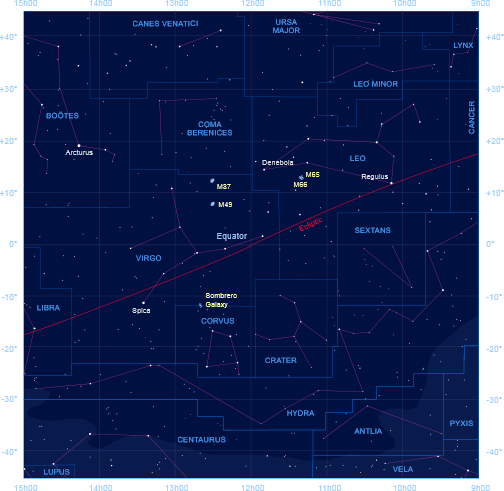
First of these is the constellation Leo, the celestial Lion, which it turns out is packed with galaxies and double stars. The asterism of Leo is in the shape of a lion which, being dominated by various groups of galaxies holds much imaging promise, with my 81mm telescope providing an ideal field of view.
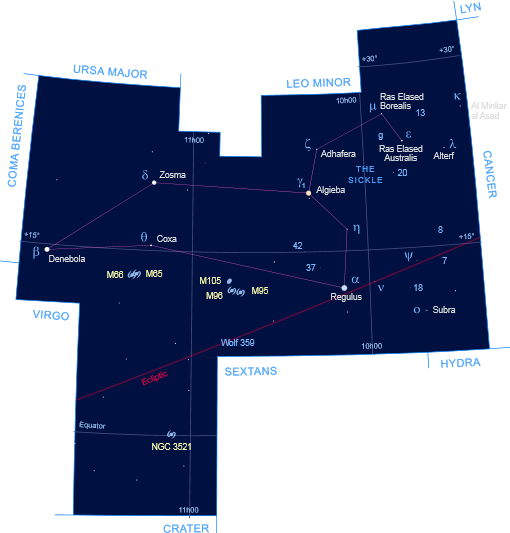
Located behind Leo’s rear ‘leg’ is the best of these, known as the Leo Triplet or M66 Group, which consists of three galaxies: M66, M65 and NGC 3628. Evidence suggests that these are linked in a gravitational dance with each other which, in the case of NGC 3628, has created a disturbed, unbarred galaxy with a faint 300,000 light-year star to the east. M66 is an intermediate spiral galaxy, with a diameter of about 95,000 light-years and is the largest and brightest of the trio. M65 is a smaller, barred intermediate galaxy. The field of view has also captured other galaxies as well as the orange giant star 73 N Leonis. All-in-all a wonderful image which I hope to return to in order to achieve even better detail using longer exposures, guiding and hopefully a larger telescope one day.
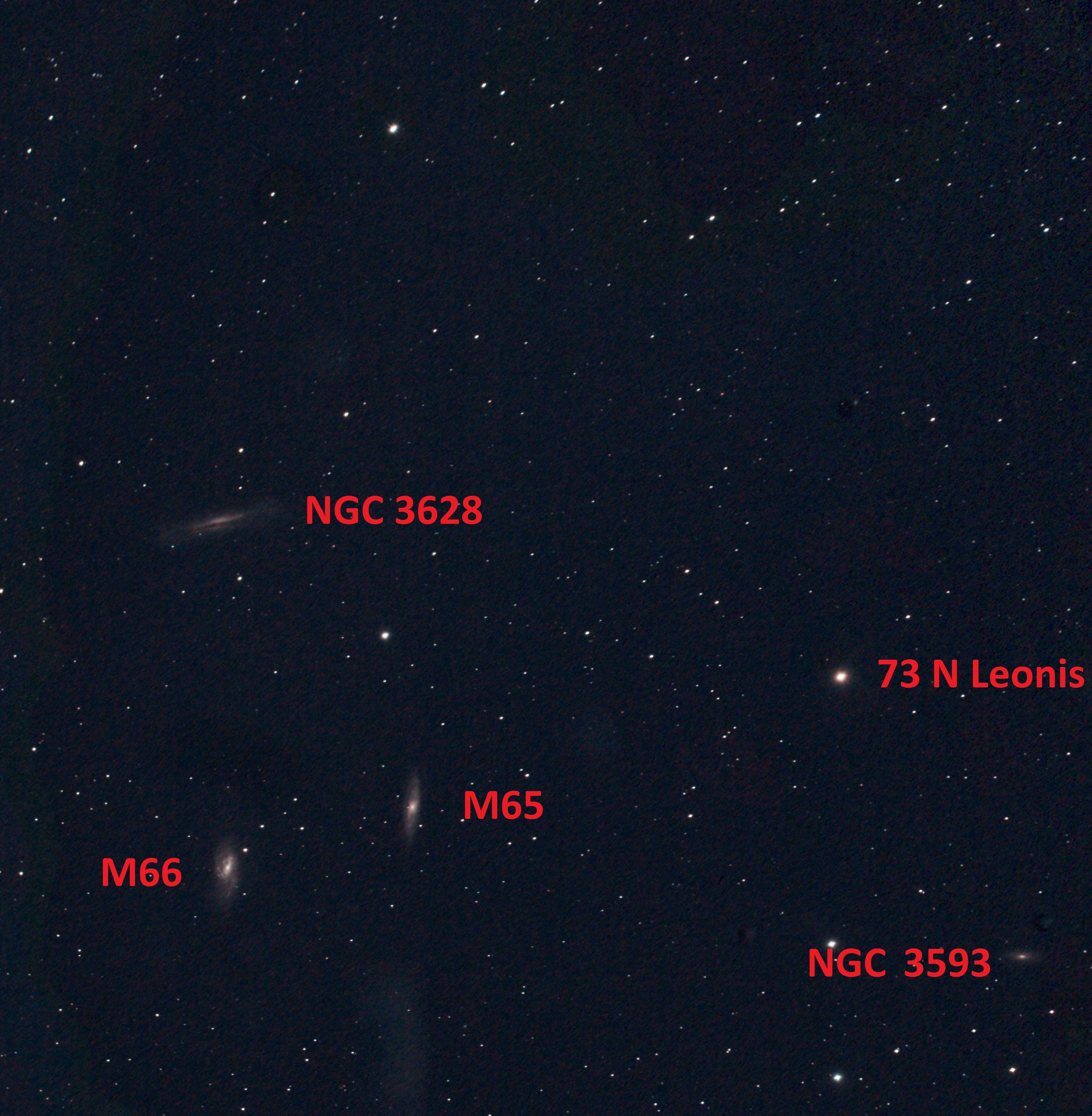
Leo Triplet: M66, M65 & NGC 3628
WO GT81 + modded Canon 550D & FF | 10 x 180 secs + calibration @ ISO1,600 | 21st February 2015
To the west of the Leo Triplet, in the direction of Leo’s dominant star Regulus, is another triple collection of galaxies called the M96 Group. While a little fainter that the Leo Triplet, the M96 Group nonetheless makes a wonderful image accompanied, as it is, by numerous other galaxies and stars. Of the latter, the giant orange 52 K Leonis star dominates the scene.
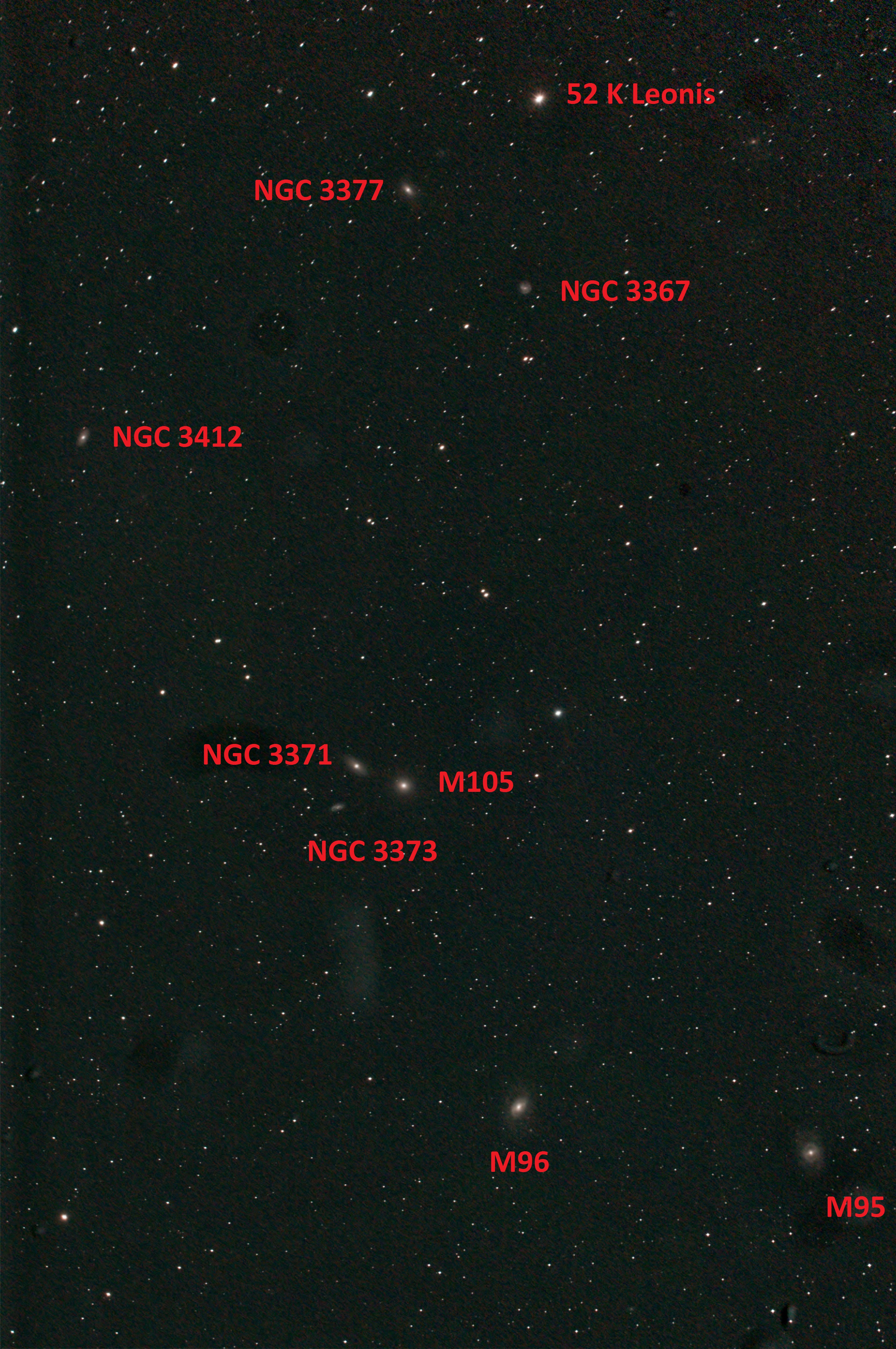
M96 Group: M95, M96, M105, NGC 3373 & NGC 3371 + other galaxies and orange giant 52 K Leonis
WO GT81 + modded Canon 550D & FF | 10 x 180 secs & calibration @ ISO 1,600 @ 21st February 2015
It’s fair to say that the results of my big cat hunting around the constellation Leo have been a pleasant and successful surprise, with further promise still to come as Spring develops. Watch this space!
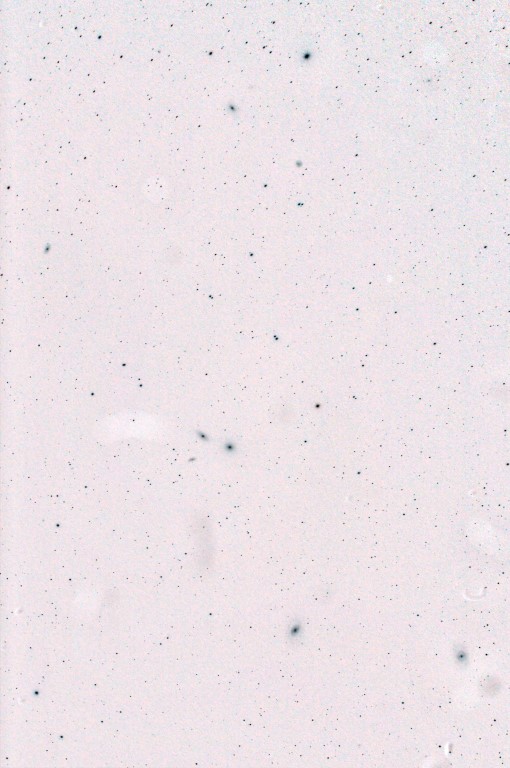
Inverting the M96 Group image helps show better the galaxies and other significant features.
 WATCH THIS SPACE(MAN)