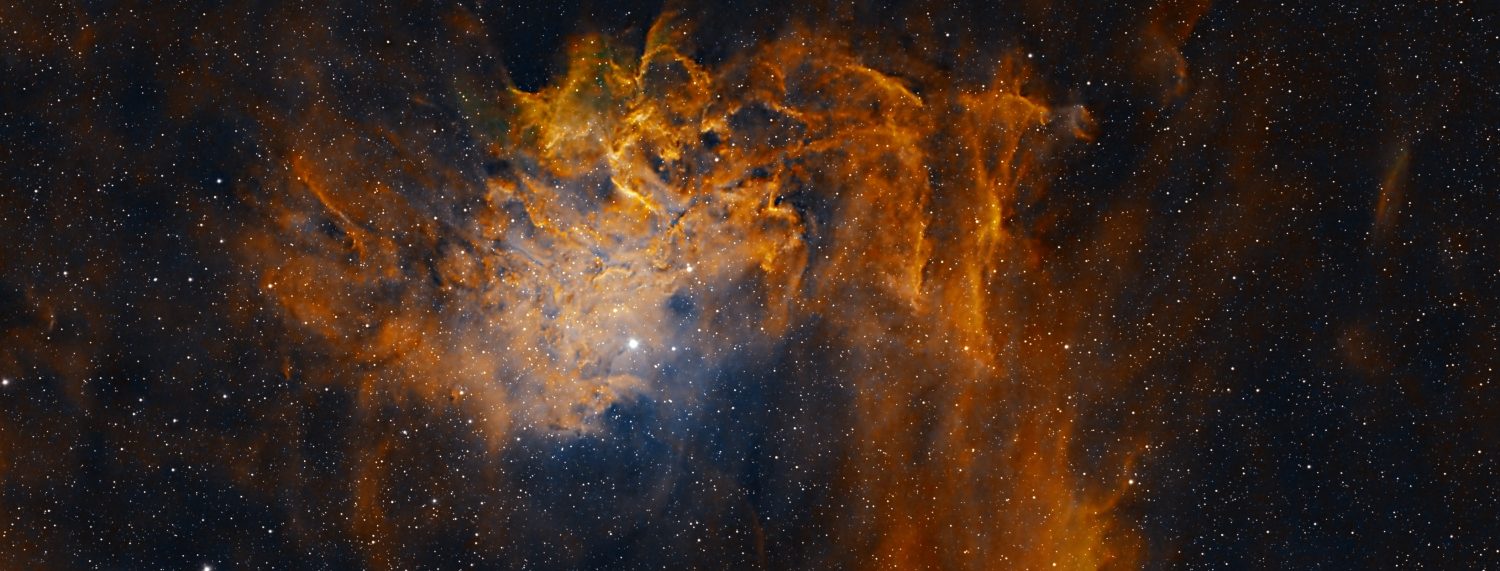
Before the cloud rolled in the other night and already successfully imaged the Rosette Nebula in Monoceros and M35 in Gemini, I decided to turn my attention once again towards Orion – it’s addictive! Having previously imaged M42 the Great Orion Nebula and other features of Orion’s Sword, the Flame and Horeshead Nebula, Orions belt and a basic widefield image of the constellation – alas without Barnard’s Loop and the Anglefish Nebula – it was time to tackle some of the more elusive objects.
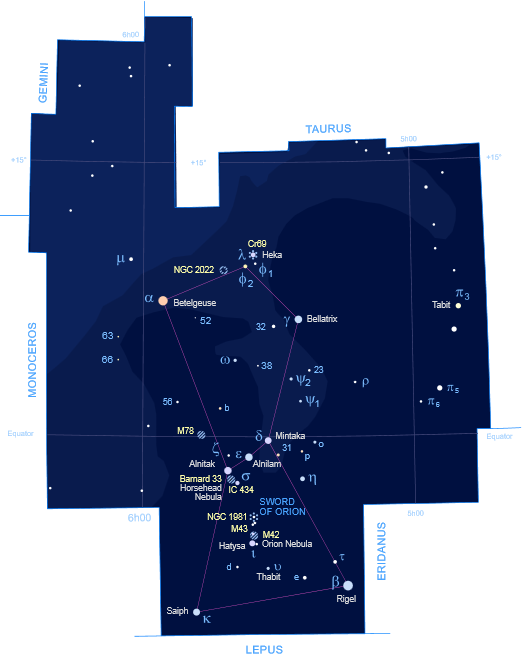
This time the challenge was size – less than 6 arc-minutes overall and located nearby to Alnitak – the reflection nebula M78 would be difficult for my telescope. Whilst the mount was well aligned and I was confident the GoTo software would accurately point towards the chosen target, as is often the case, the original image was not promising. However, after stacking and some delicate post-processing, the nebula became apparent. Peering out of a hole in a misty patch of interstellar dust were two ‘eyes’ formed of 10th magnitude stars, thus illuminating the nebula.
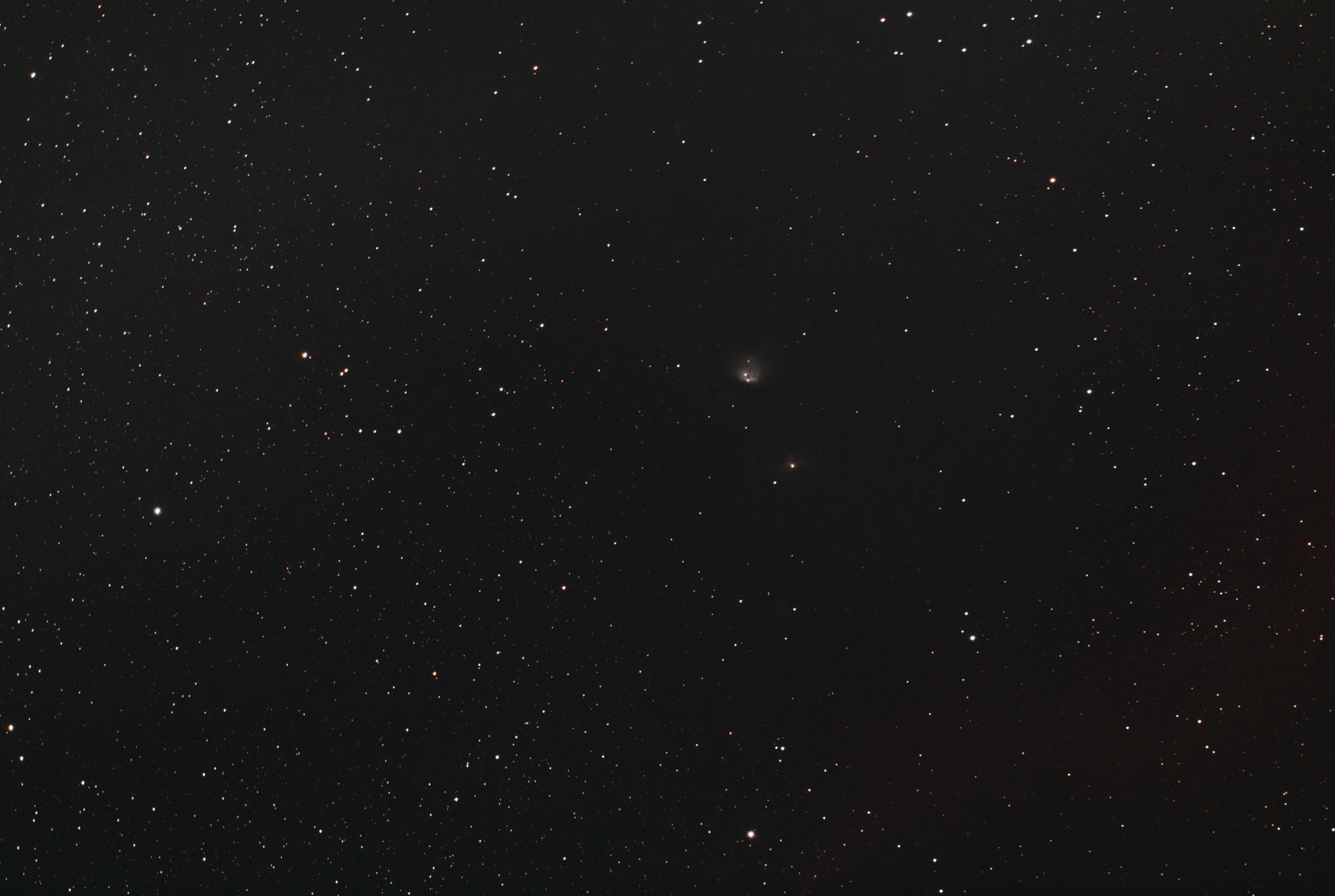
Section of sky located just above Alnitak – not promising but look closer.
At this magnification further detail is not possible but nonetheless, the image is intriguing. M78 (NGC 2068) is the brightest (+8.3 magnitude) portion of the dust cloud which also includes NGC 2071, NGC 2067 and NGC 2064, all (just) visible in the image. Together with the Flame Nebula, all these nebulae are associated with the LDN 1630 molecular cloud, part of the larger Orion complex. I’ll need something like a 10” or bigger scope to reveal better detail but at the end of an already successful night, the image was pleasing – I look forwards to looking into those eyes again one day.
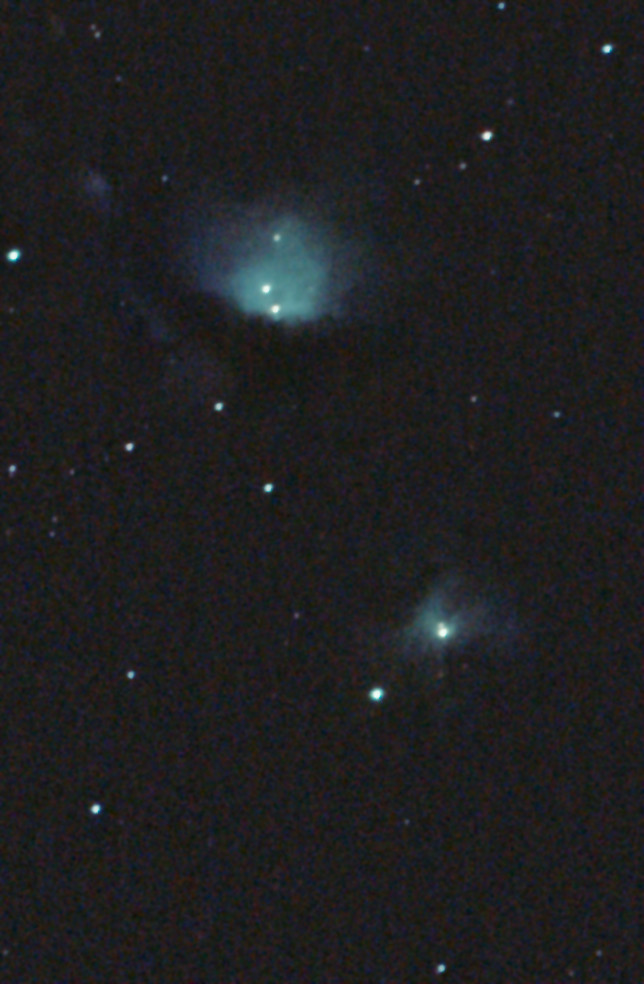
M78 (top left) with NGC 2071 (lower right)
WO GT81 + Canon 700D + FF | 15 x 120 secs @ ISO1,600 | 30th December 2014
 WATCH THIS SPACE(MAN)