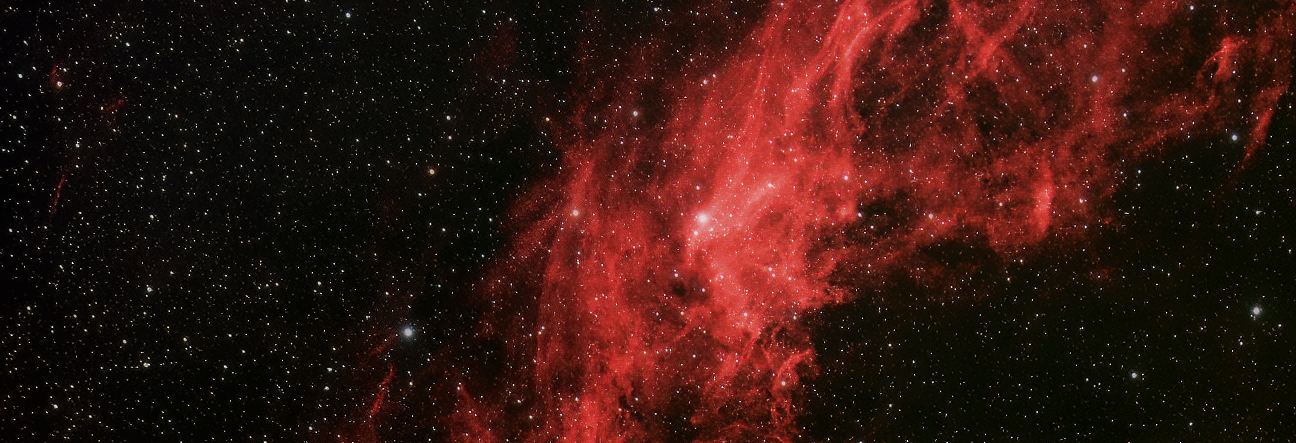
Being that time of the year and with my new interest in astronomy, the possibility of imaging the Christmas Star seemed like a good idea. However, looking into the matter it becomes apparent that there is much controversy over what the actual object might have been: a star, a supernova, a shooting star (meteor), Venus or Jupiter etc. Furthermore, it even seems that we don’t know for sure when Jesus was born. Apparently due to an error by a Church cleric hundreds of years later, it is thought the birth could be up to 4 years later than believed and almost certainly was not on December 25th! This is all news to me and makes a timely image of the night sky difficult but then, on a rare clear night last Friday, I turned the telescope and camera on NGC 2264 in the constellation Monoceros, or the Unicorn, itself within the Orion arm of the Milky Way Galaxy. 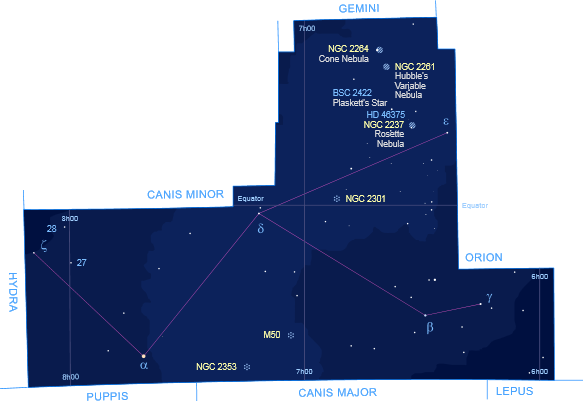 Situated on the Celestial Equator to the east of Orion and above Canis Major, Monoceros is something of a new name to me. Considered a ‘modern’ constellation, since being discovered more recently than many others in the 17th Century, it turns out to be abundant with many exciting objects. But at this time of the year it has to be NGC 2264 or the Christmas Tree Cluster which is most worthy of attention.
At first, whilst the images from the camera looked very promising and the ‘tree’ showed up well, it’s equally interesting partners were nowhere to be seen – notably the Cone Nebula and Fox Fur Nebula. Notwithstanding, following more aggressive processing adjustments they appeared, albeit smaller in my image than expected and very noisy. Technically, lessons arise from this: (i) whilst the William Optics GT81 is a great telescope with outstanding optics, it is a small telescope, and only the very largest features will fill the image (ii) in this case and probably more importantly, in order to achieve an acceptable signal to noise ratio, only longer exposures will work – I am currently working on this, with the goal of starting to autoguide as soon as possible in the New Year. Furthermore, the nebulosity is mostly Hydrogen Alpha (Ha) emission type, which my unmodded sensor therefore responds to poorly due to its inbuilt UV/IR filter; something else to deal with in the future.
Notwithstanding, I am still pleased with the result which in the end does show most of the main features, albeit with plenty of room for improvement; I also know how but getting there will not be easy. For obvious reasons the star of the show (no pun intended) is the Christmas Tree Cluster. The bright star at the bottom of the picture is Monocerotis 15 or S Monocerotis, which forms the tree’s ‘pot’ and is a quadruple system of four brilliant white stars. A little confusing, the view we get from earth of the ‘tree’ is upside down, so the following image has been inverted and is before post-processing, so as to make the stars that form the outline of the tree more clear.
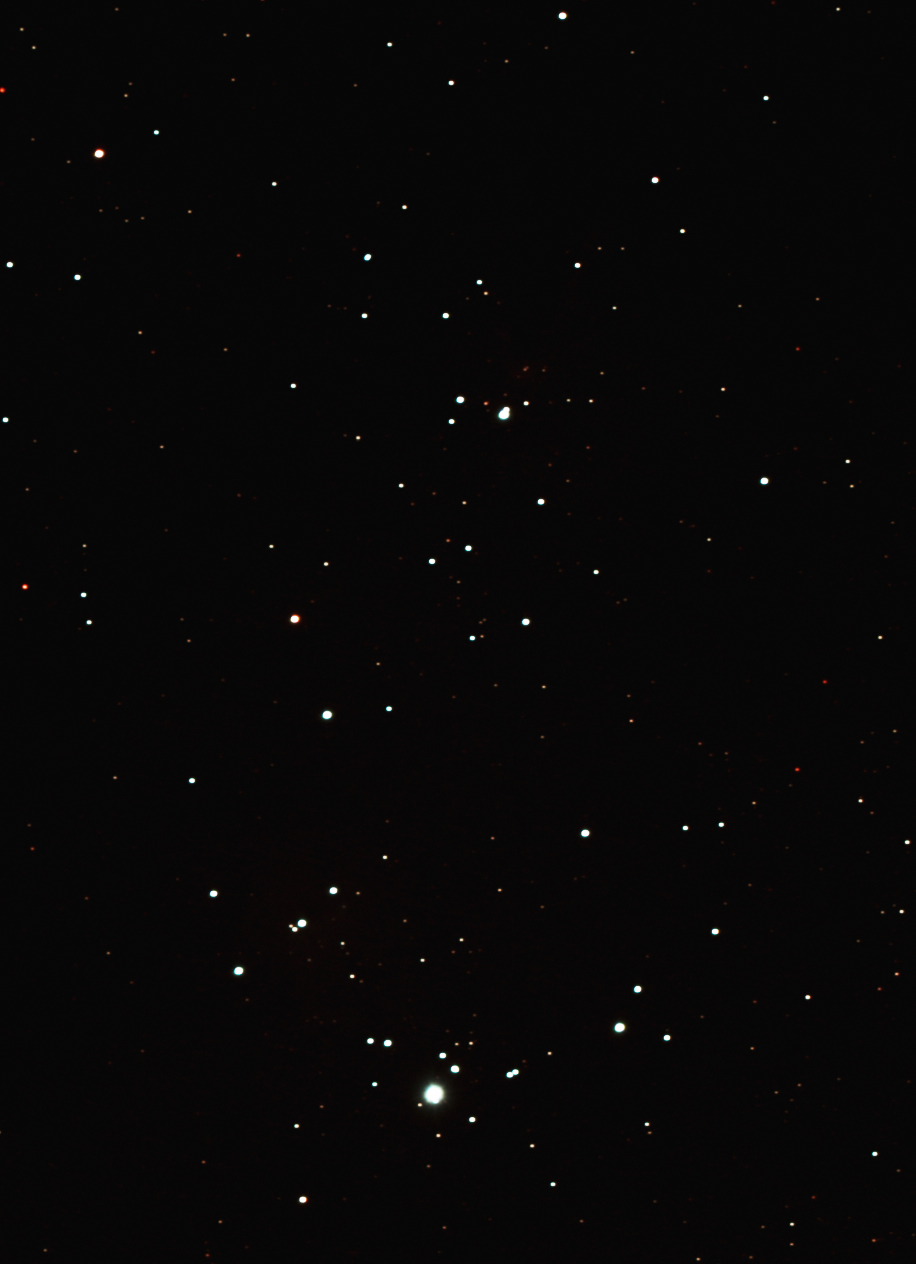
NGC 2264 Christmas Tree Cluster, before post-processing and inverted to show the ‘tree’ shape i.e the top is south. The large, bright star, 15 Moncerotis, marks the base of the ‘tree’.
However, the Christmas Tree Cluster is only part of NGC 2264’s glorious nature, most notable of which is probably the Cone Nebula. Located below (south) of the Christmas Tree, the Cone Nebula is a towering, triangular shaped column of cold, dark molecular hydrogen gas and dust, which appears to be flowing out from the young stars located close to the top of the cone. Some 2,200 light-years distant from Earth and 900 light-years further than the Orion Nebula, the Cone is quite small in the original picture but is in fact 60 arc seconds or 40 light-years in size!
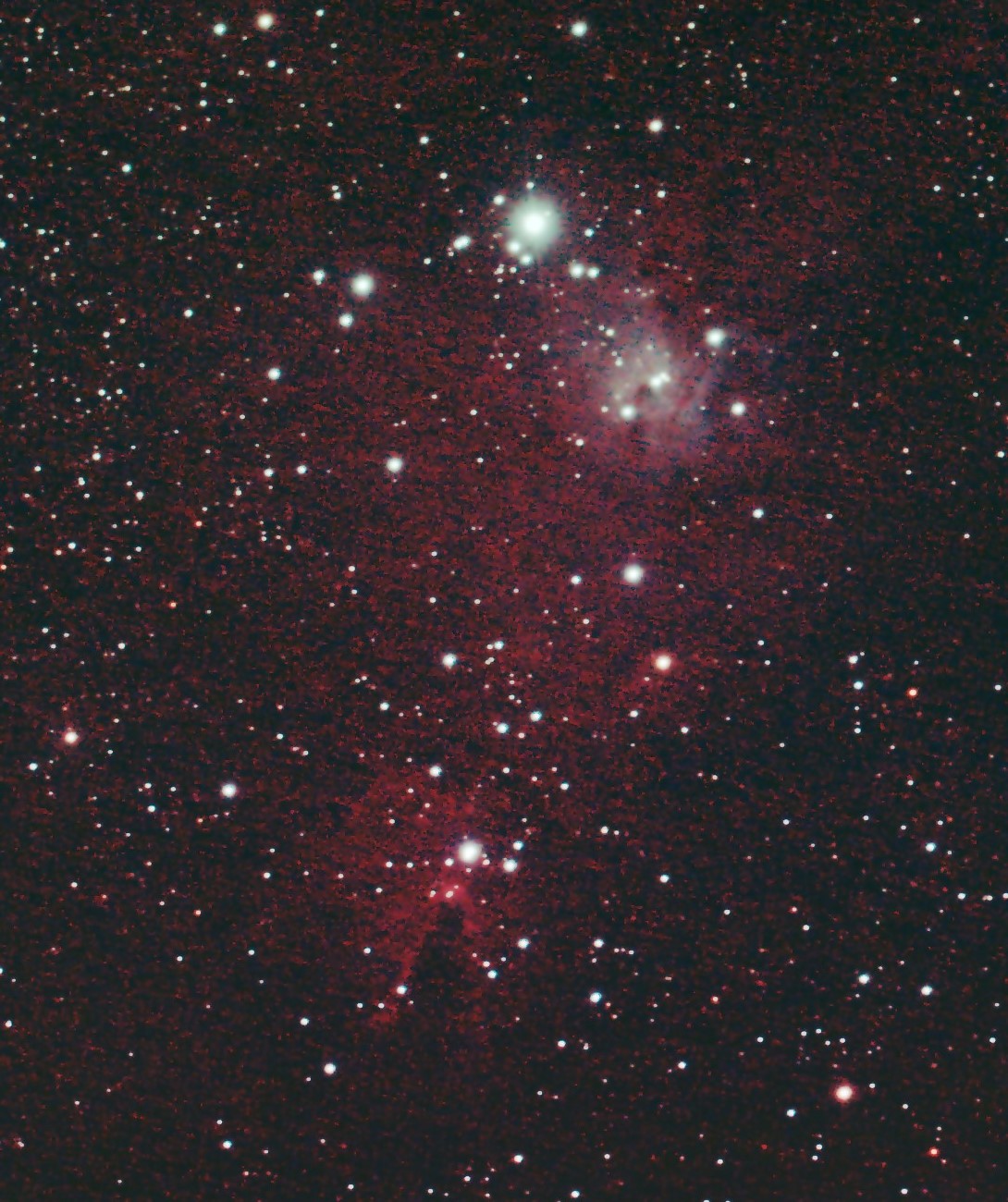
NGC 2264 (actual orientation): Cone Nebula at the bottom, Monocerotis 15 now at the top, with the Fox Fur Nebula to the right but not visible. The outline of the main stars and associated nebulosity defines the (upside down) Christmas Tree Cluster – 15 Monocerotis is now at the top.
WO G T81, Canon 700D + FF | 30 x 120 secs + darks/bias/flats @ ISO 800
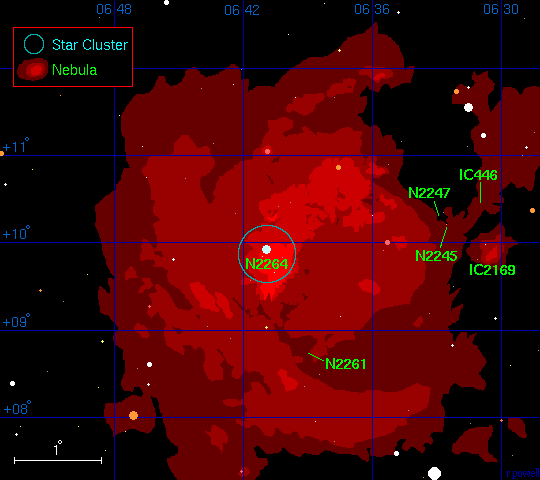
Map of Cone Nebula
Also included in the NGC 2264 region is the wonderfully named Fox Fur Nebula, so called as it is said to look like the head of a stole made from red fox fur. Combined with the aforementioned Ha light issue, my equipment cannot do this feature justice at the moment but, using an image from elsewhere, when viewed close-up (and you get your eye in) it is a very convincing feature.
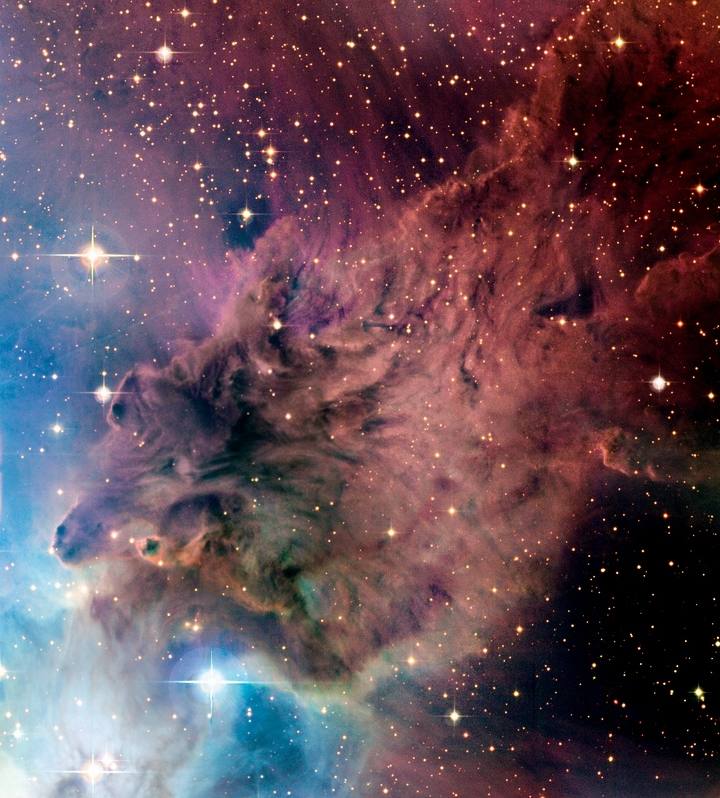
Fox Fur Nebula
In addition to the above, NGC 2261 or Hubble’s Variable Nebula is worthy of mention. Located nearby to NGC 2264 this fan shaped nebula is illuminated by the star R Moncerotis.
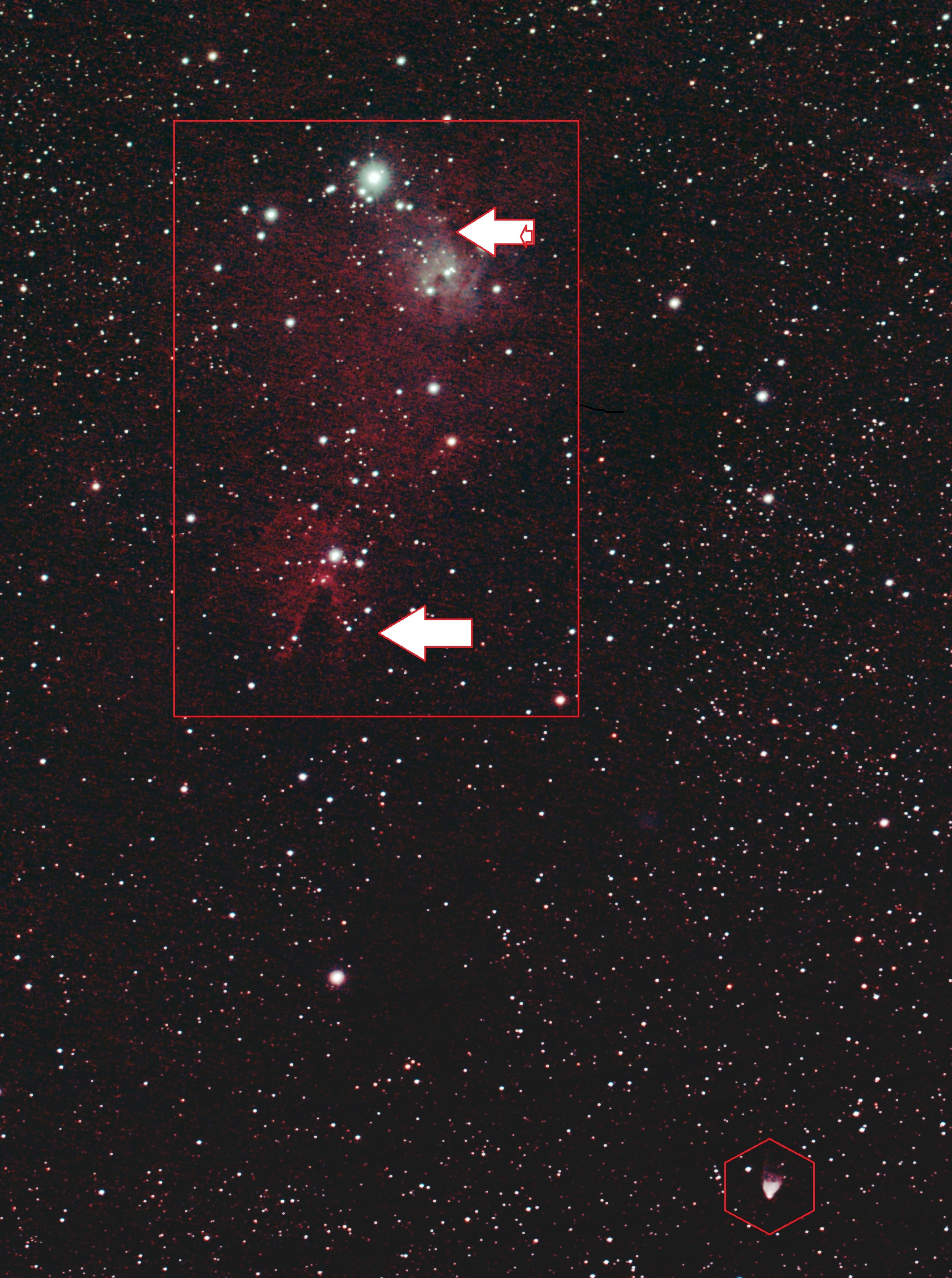
NGC 2264 Christmas Tree Nebula shown by red box. Lower arrow points to the Cone Nebula, upper arrow indicates location of the Fox Fur Nebula. NGC 2261 Hubble’s Variable Nebula shown by red hexagon.

NGC 2261 Hubble’s Variable Nebula, illuminated by R Monocerotis star
Altogether there are more than seven nebulae to be found in this region of the sky, which has turned out to be something of a pleasant surprise to me and will be revisiting once I can achieve longer exposures and deal with Ha light better. The constellation of Monoceros is also itself something of a surprise, with the prospect of some other great images that deserve further attention in the New Year – can’t wait for Christmas to finish.
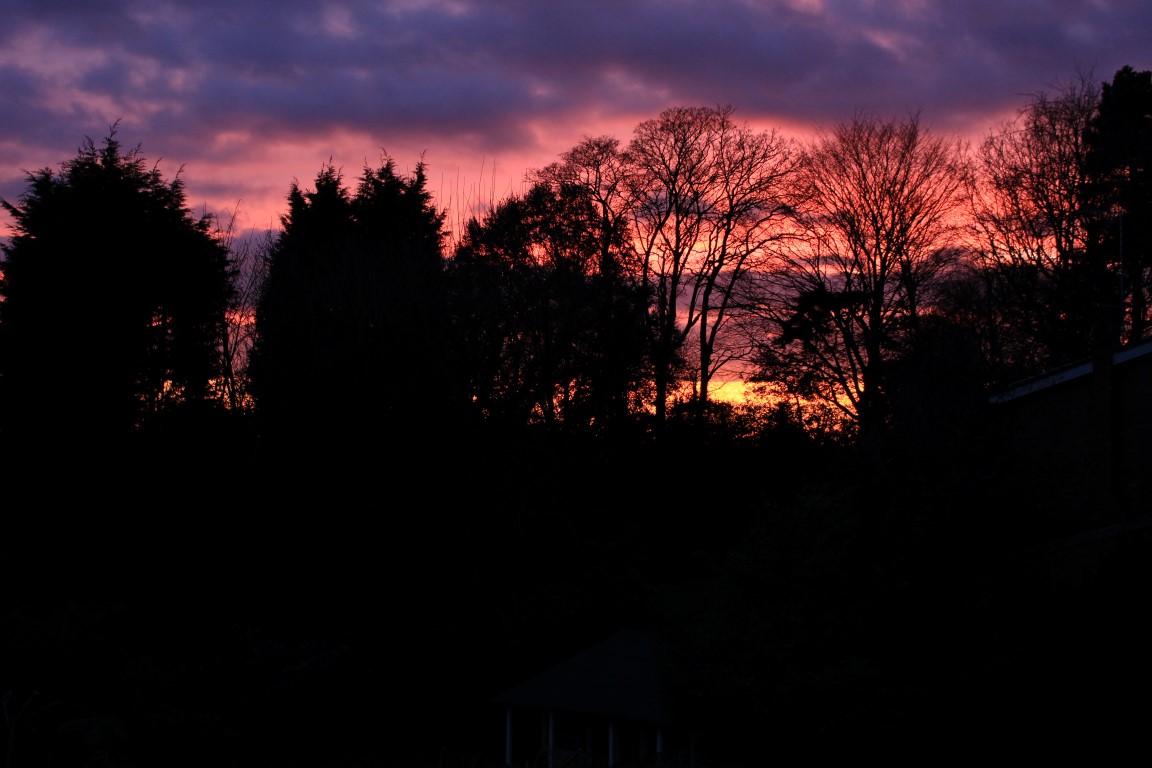
Sunset later the same day at Fairvale Observatory, the evening before the Winter Solstice
 WATCH THIS SPACE(MAN)
Pingback: Seeing Red | WATCH THIS SPACE(MAN)
Pingback: Spaceship Earth | WATCH THIS SPACE(MAN)
Pingback: The Fox & Cone | WATCH THIS SPACE(MAN)
Pingback: The Cone, Fox Fur & Christmas Tree | WATCH THIS SPACE(MAN)