
For the moment, putting aside the duality of light as a wave-particle (quantum) form, the behaviour of light in the visible spectrum can be both fascinating and a problem for the astronomer. As my tracking has improved (and hopefully will get even better) it has been possible to increase exposure times from a maximum of 40 seconds (and that was pushing it), to comfortably 90 seconds and sometimes more. The impact is that more light is gathered by the camera’s sensor and the outcome is greater detail and more colours – this all helps, a lot, when the light may travel for thousands or even millions of light years before hitting the sensor.
Unfortunately Fairvale Observatory is located on the southern edge of London and about 8 miles north of Gatwick airport, the result is that all that lovely light that has travelled from distant objects in the Universe has to compete with man-made light pollution. Last week I therefore invested in an Astronomik CLS filter http://www.astronomik.com/en/, which clips inside the camera, just behind the lens, and blocks the spectral lines of mercury and sodium-vapour lamps, letting the remaining part of the visible spectrum and H-alpha through.

- The horizontal axisis the Wavelength in Nanometers (nm). 400nm is deep blue, at 520nm the human eye senses green and at 600nm red. At 656nm is the famous “H-Alpha” emission line of hydrogen.
- The transmission in %is plotted on the vertical axis.
- The redline shows the transmission of the filter.
- Visual filters: The greyline in the background shows the relative sensitivity of the human eye at night. The maximum is at ~510nm and drops to longer and shorter wavelengths. You can easily see, that you can´t see anything of the H-alpha line at night (even if you can during daylight!) The sensitivity at 656nm is 0% at night!
- Photographic filters: The grey line in the background shows the sensitivity of a typical CCD sensor.
- The most important artificial emissionlines are shown in orange. The artificial light pollution is dominated by see mercury (Hg) and sodium (Na), which are used in nearly all streetlights.
- The most important emission lines from nebulasare shown in green. The most important lines are from ionized Hydrogen (H-alpha and H-beta) and double ionized oxygen (OIII).
The major emission lines of artificial light pollution:
| Hg 435,8nm | Hg 546,1nm | Hg 577,0nm | Hg 578,1nm |
| Na 589,0nm | Na 589,6nm | Na 615,4nm | Na 616,1nm |
The major emission lines of nebulas:
H-β 486,1nm | OIII 495,9nm | OIII 500,7nm | H-α 656,3nm
Since my recent success imaging the Orion Nebula I’ve been frustrated by bad weather, cloudy skies and a full Moon. With a brief gap in the clouds last night I therefore couldn’t resist the opportunity to try out the new filter with the camera but without using the telescope. Shooting two sets of pictures, with and without the filter, and using a telephoto and 50 mm standard lens, the results were both successful and perplexing.
As expected it darkens the sky, a lot, but also skews the resulting image towards blue which subsequently has to be adjusted during processing, complicating the question of what is the right colour even more. It is a known fact that despite the obviously very large distances of astrophotography subjects, some camera lenses need to be focussed just short of the lens‘s infinity position. However, with the standard lens the focus point was very different when using the filter, noticeably less than without the filter. This seems quite strange and I have not quite worked out why this should be so, except the loss of and therefore change in wavelength of the light?
It will be interesting to see how the filter works when imaging deep sky objects using the telescope once the weather clears but the preliminary tests are promising. Certainly the ‘loss’ of light incurred will require longer exposures so I had better sort out autoguiding soon, my next challenge.
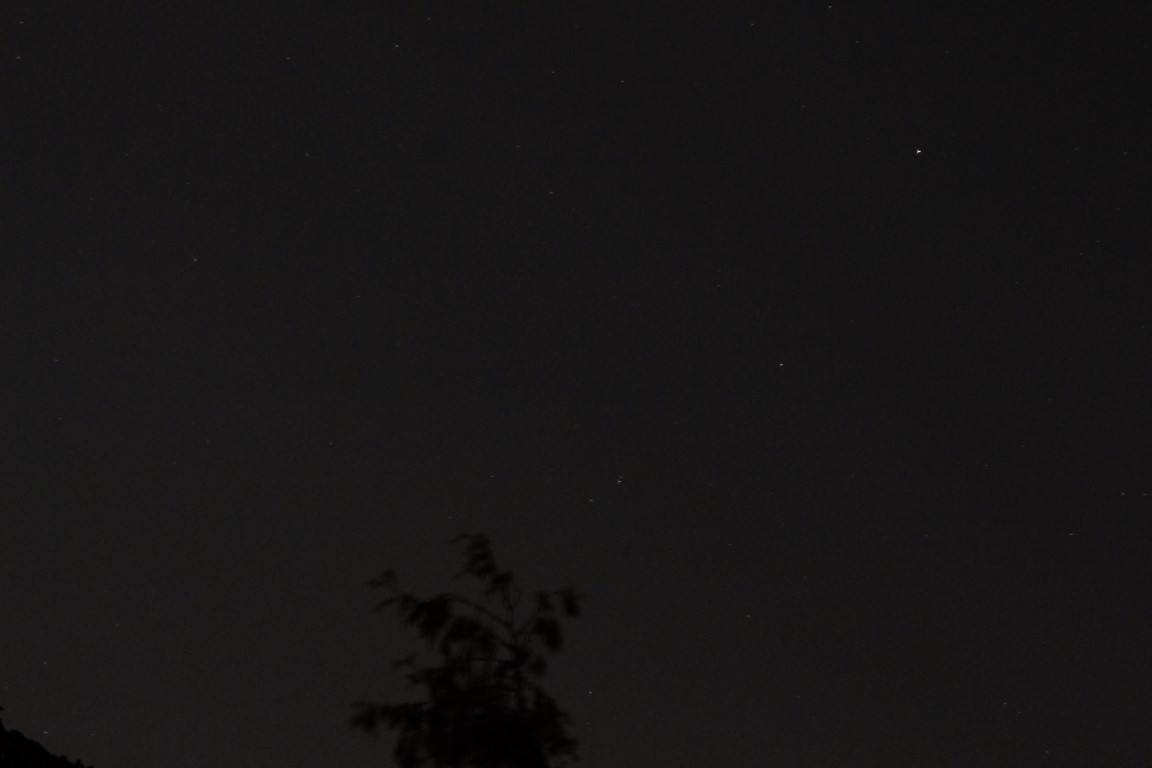
Without CLS filter, 8 secs @ ISO 800
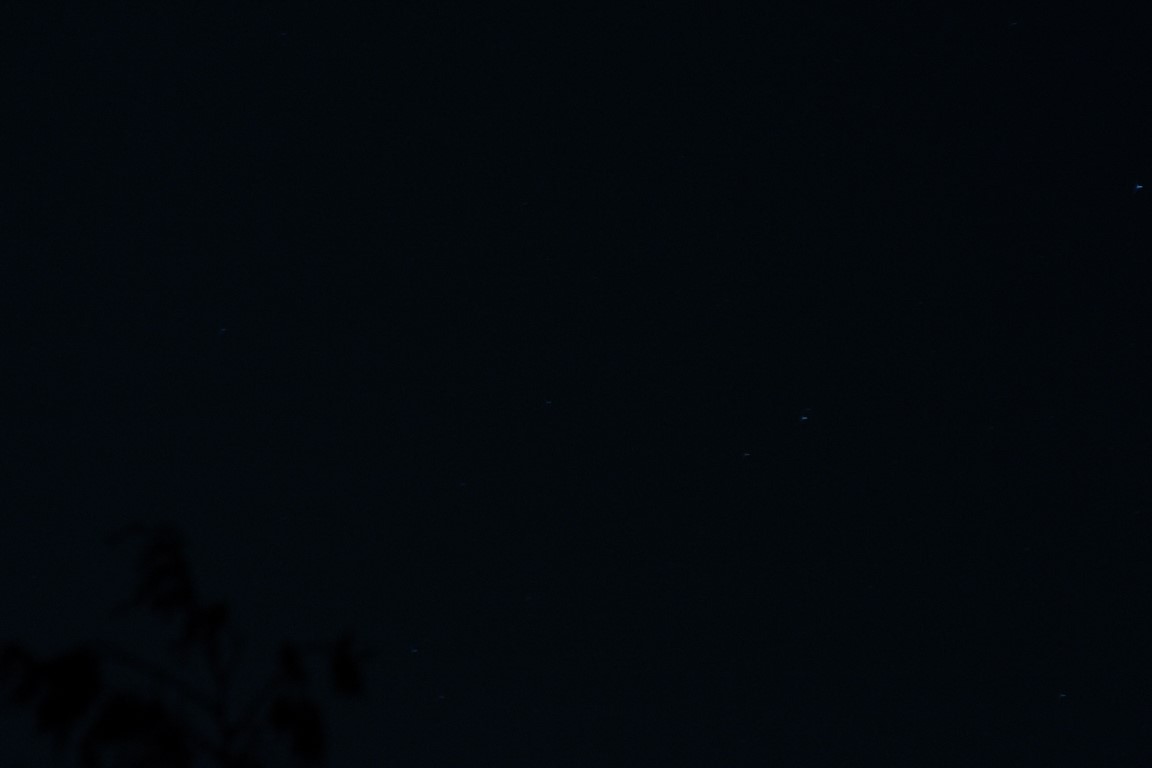
With CLS filter, 8 secs @ ISO 800
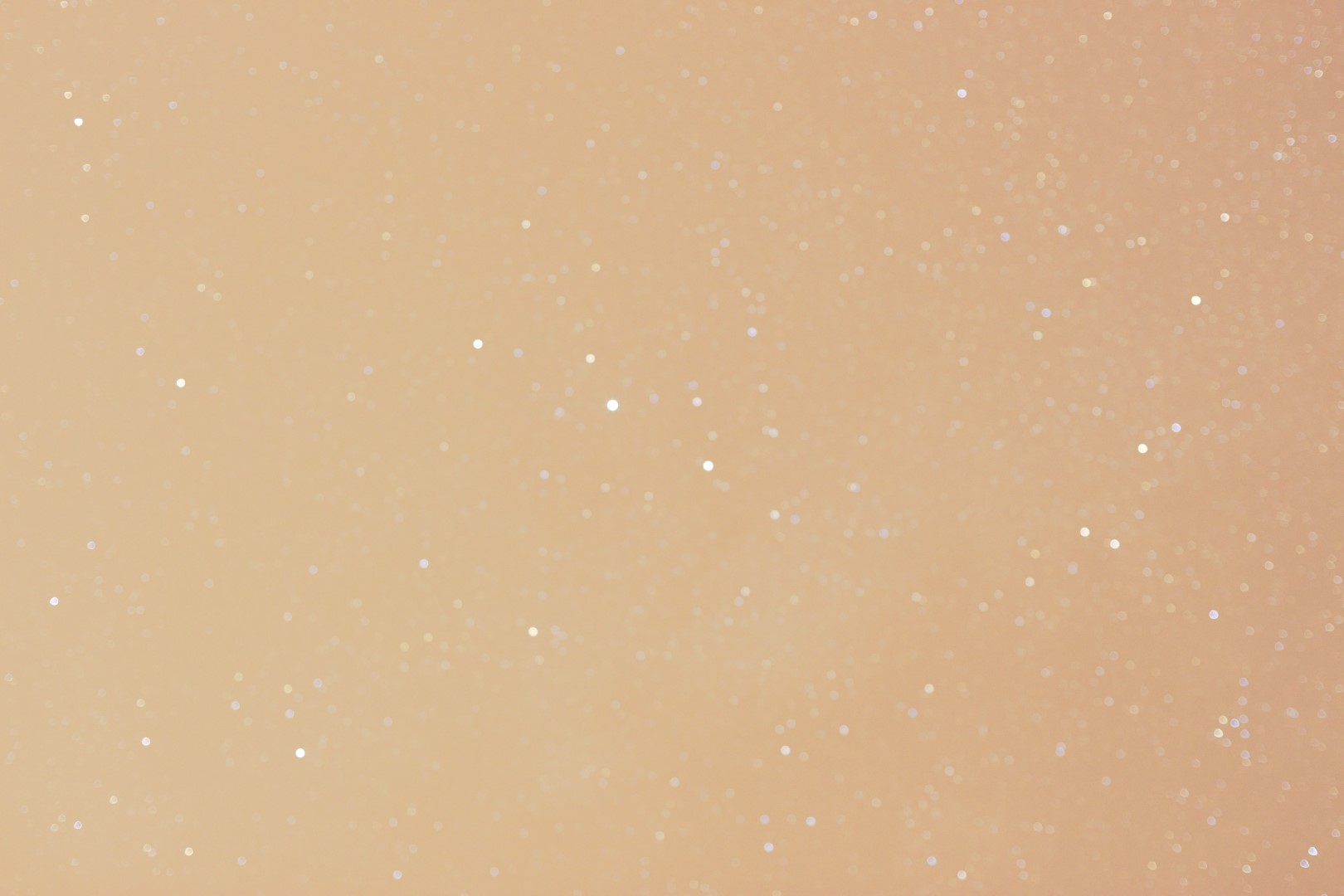
Milky Way (Tarazed region) without CLS filter 60 seconds (only!) @ ISO 800
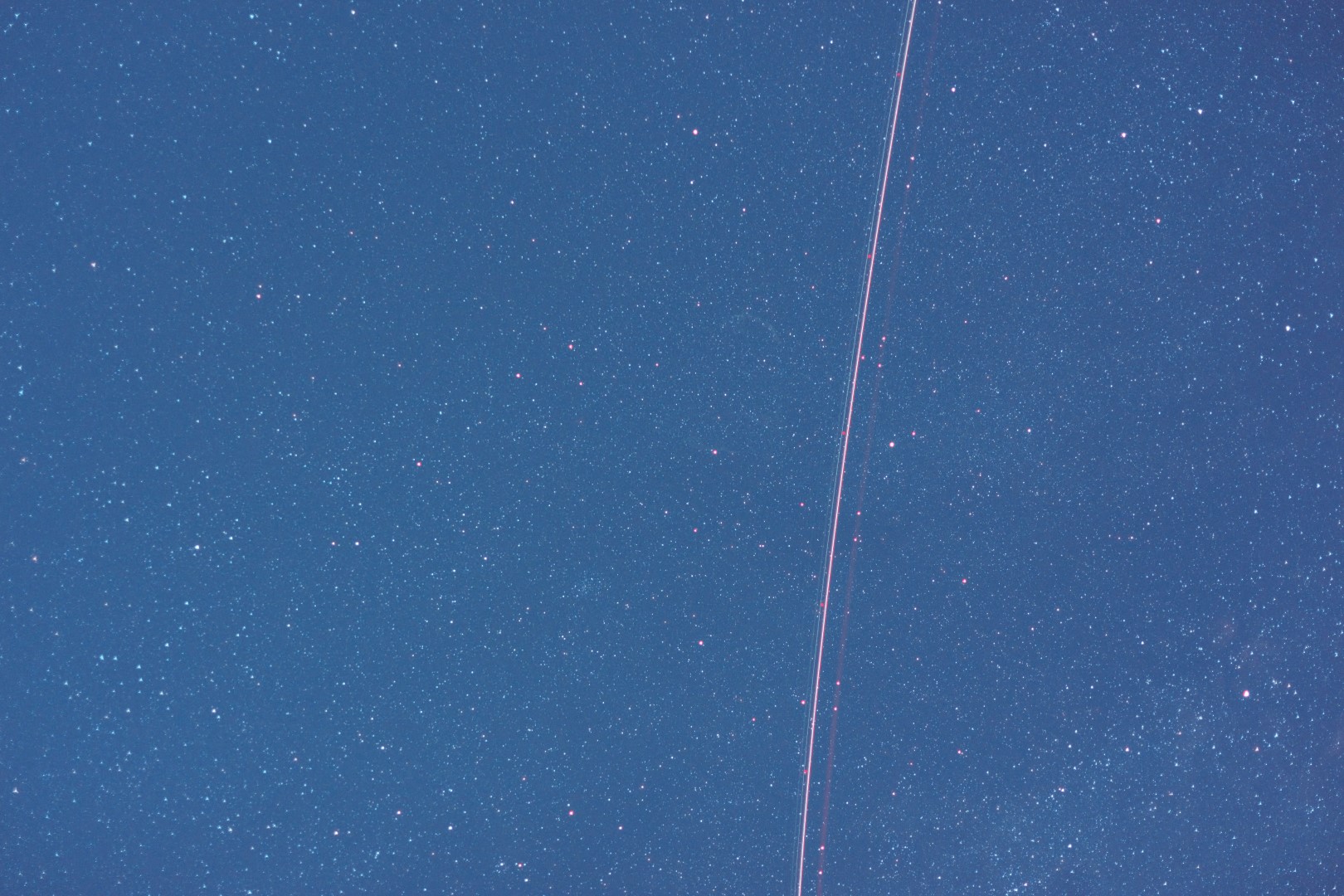
Veil Nebula (and aircraft trace!) with CLS filter 90 secs @ ISO 800 – unprocessed
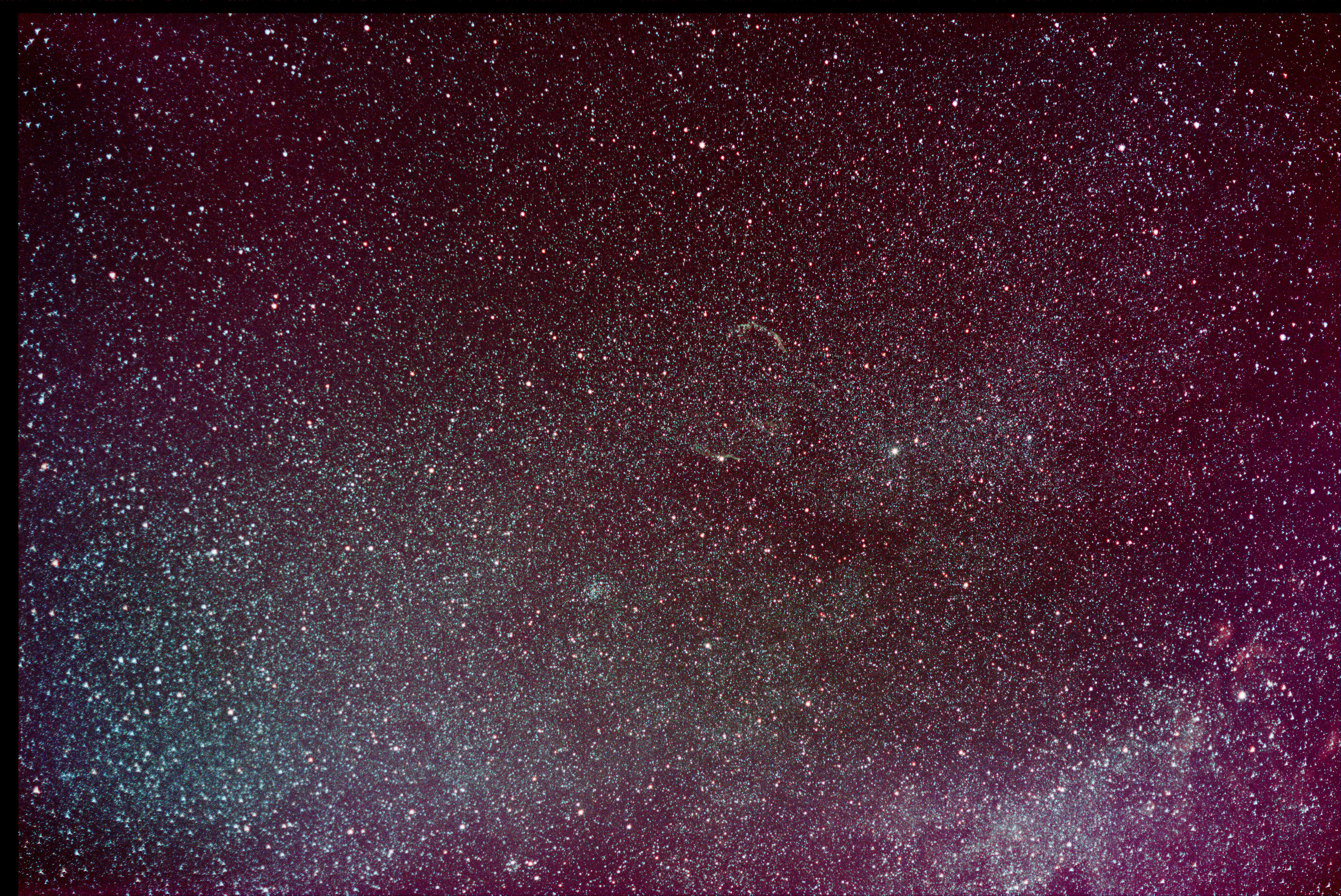
Veil Nebula
Canon 700D + 50mm lens with CLS filter, tracking, unguided & processed 15 x 90 secs @ ISO 800
 WATCH THIS SPACE(MAN)