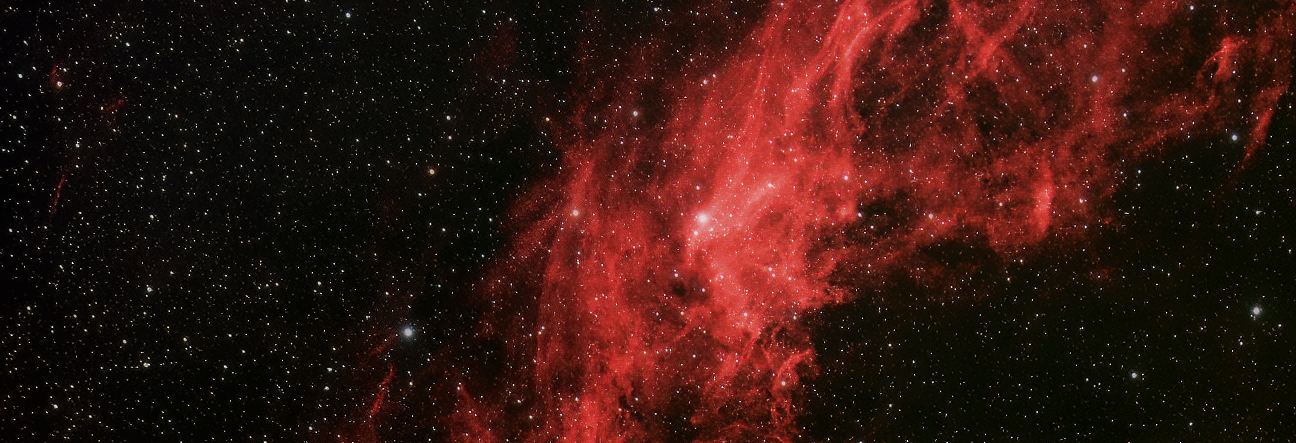
Two of astronomy’s most iconic images are Saturn and the Orion Nebula, M42 – one a highly distinctive planet of our Solar System, the other a trade mark of the winter sky as part of the Orion Constellation. Both therefore seem quite familiar but still need to be seen or better still captured on camera to personally experience their magic.
The Orion Nebula or Great Orion Nebula, is a diffuse nebula located just south of Orion’s belt in the constellation of Orion. It is approximately 1,344 light-years from earth and 24 light-years in diameter, which with an apparent magnitude of +4.0 is visible from Earth. Studies of the nebula have revealed much about how new stars and planetary systems are formed, indeed it is considered a stellar nursery for new ‘baby’ stars, typically only a few hundred thousand years old. Some 700 stars have been identified as formed from this nebula, most notably the ‘Trapezium’ asterism in the centre of the nebula, consisting of six bright stars. Spectacular red colours arise from hot hydrogen gas, whilst dust reflects the blue light from hot blue stars within the nebula.
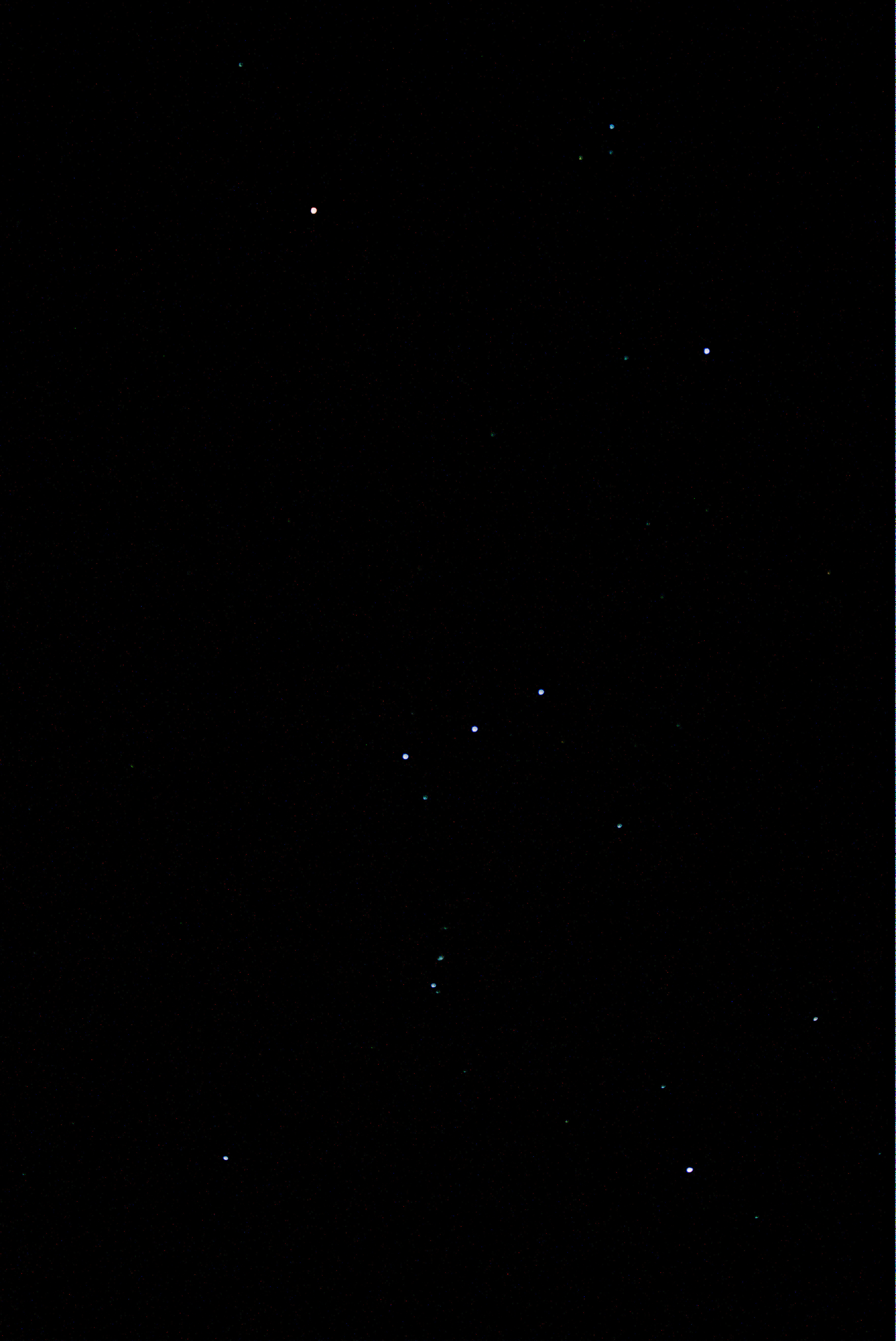
The Orion Constellation from Fairvale Observatory last year – the Orion Nebula is just below the three central stars (Orion’s belt) in the centre of the three lower stars (Orion’s sword)
Due to its sheer beauty and notoriety I have previously dabbled with attempts to image the Orion Nebula before, initially by compact camera and subsequently by DSLR on the Skywatcher 150PL telescope, with limited success. Notwithstanding, the colours of the nebula were evident and even four of the main stars of the Trapezium could be seen – at the time I was quite pleased but equally frustrated as I was unable to capture this magnificent object at its best.
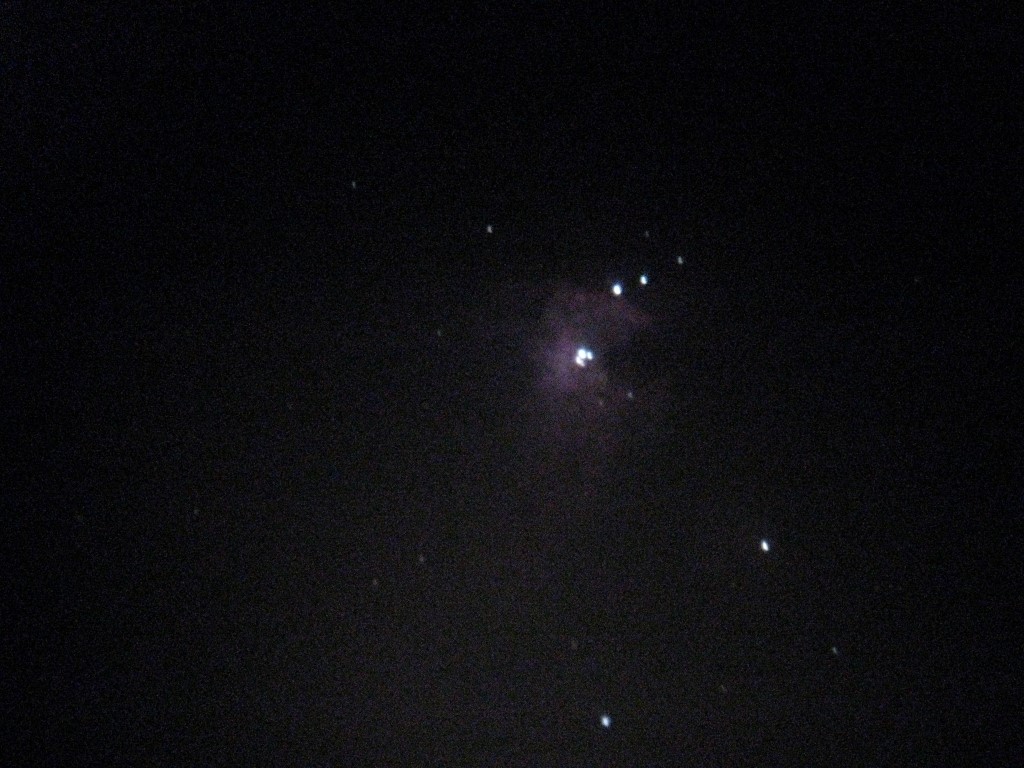
Afocal image of the Orion Nebula in 2013: I was pleased at the time with the colour it showed and even the Trapezium stars
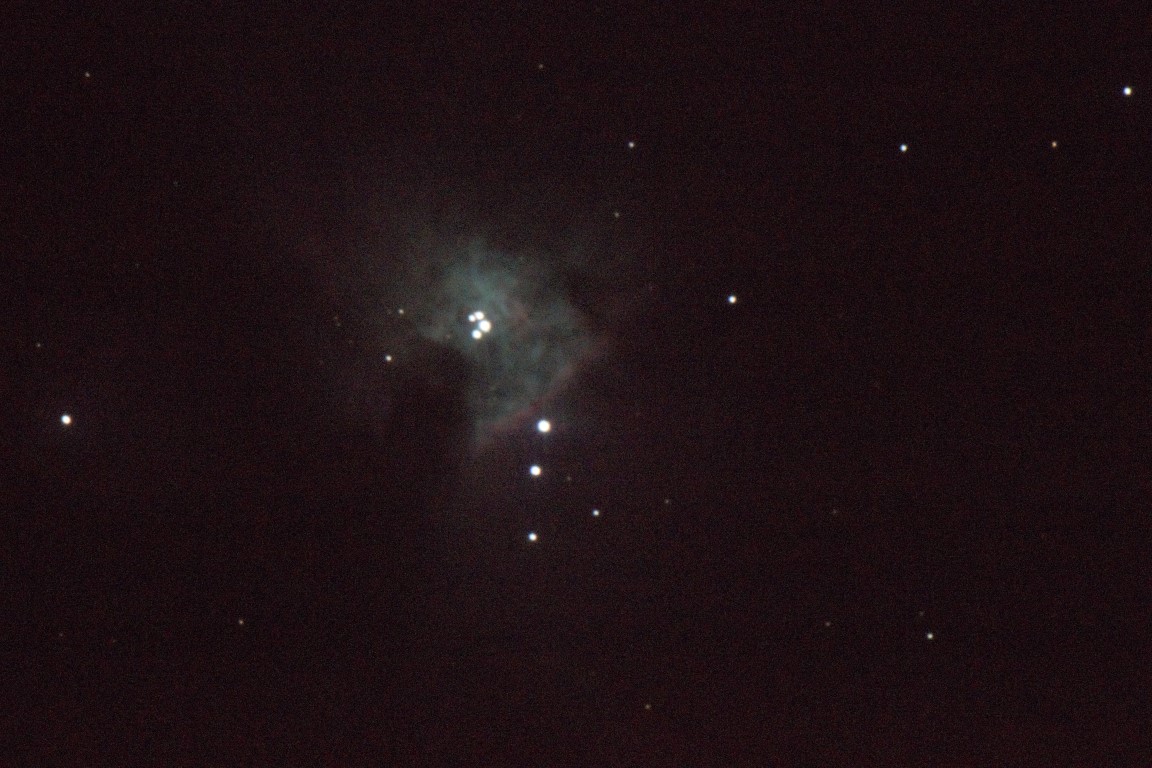
Orion Nebula later in 2013: DSLR & Skywatcher 150PL, single photograph, shows better colour and detail of the Trapezium
One year on, new equipment, new skills and a dark sky and all that has changed. Very early on last Sunday morning I succeeded in imaging the Orion Nebula in all its glory, in what must be my very best astro photograph to date. Gotcha!
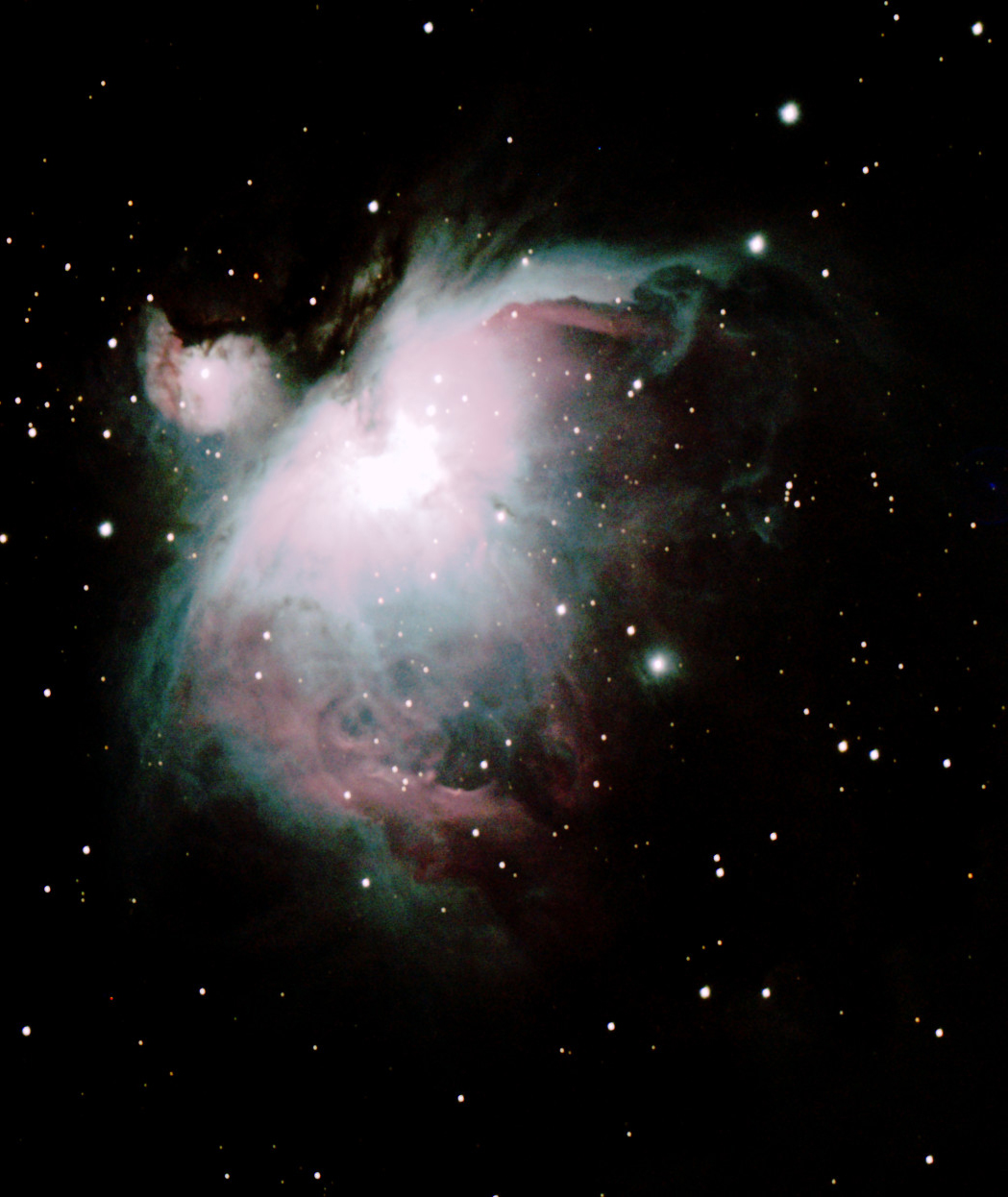
The Orion Nebula October 2014 – the secondary feature in the top left corner is another nebula, M43. Orientated with equatorial North up and East to the left.
WO GT 81 Canon 700D + FF unguided | 20 x 90 secs + darks/bias/flats @ ISO 800
 WATCH THIS SPACE(MAN)