
What a difference a day makes. Following the difficulties of polar alignment the previous day and faced with another great night of clear sky, the only thing to do was to get back on the horse and try again. I was a little more careful with the basic set-up using two star alignment (Vega & Markab) before attempting the polar alignment again (without the polar scope) using Rasalhague; with the sight-lines at Fairvale Observatory blocked by houses, hedges, trees and the inevitable light pollution, even finding suitable stars is proving difficult and requires some pre-planning. Following the previous confusion between the Manual and the SynScan handset on this matter, this time I decided to ignore the Manual sections dealing with separate adjustment of latitude and azimuth and, as the SynScan handset instruction prompted, carry out both procedures at the same time.
Having not previously owned the mount’s more basic brother, the EQ6, I am not able to say what all the differences are but, having read reviews of the AZ-EQ6 GT before purchasing, it is my impression that the T-bolt altitude combined with the more traditional azimuth knobs are a new invitation, making simultaneous adjustment of both easier. For this reason I also suspect that the procedure has been changed in the SynScan firmware (V 3.33), which is not reflected in the Manual; Skywatcher and others please note – these apparently small anomalies can cause great confusion for leaners such as me. And so it was that this time the polar alignment worked, reducing the error from about +/-30 to less than 10. Furthermore and notwithstanding my previous point on ignoring the Manual, having re-read the final part of the instructions, it is made clear that on repeating the process the accuracy can be reduced even more. Therefore after two alignment routines – star and polar alignment – the latitude (MEL) and azimuth (MAZ) polar errors were reduced to a mere few seconds. This was by far the best I have ever achieved, which was subsequently reflected in the operating accuracy of the mount’s search function (so-called GOTO) and tracking.
I had already experienced the wonder of punching in search objects using the AZ-EQ6 mount – solar, Messier, NGC etc – but with mixed results due to poor alignment. Now, for the first time with very good alignment, having entered in the desired object the mount slewed gracefully to its location so that on a test camera exposure the object was dead centre in the resulting picture and perfectly focussed. Another seminal moment in my pursuit of astronomy and imaging the Universe and all its wonders. I was thrilled, and still am.
Having established this set-up and with a clear sky overhead most of the night, what else was there to do but dial up the Universe using SynScan and start taking pictures, lots of them. SynScan has an object database of over 40,000, so it might take a while.
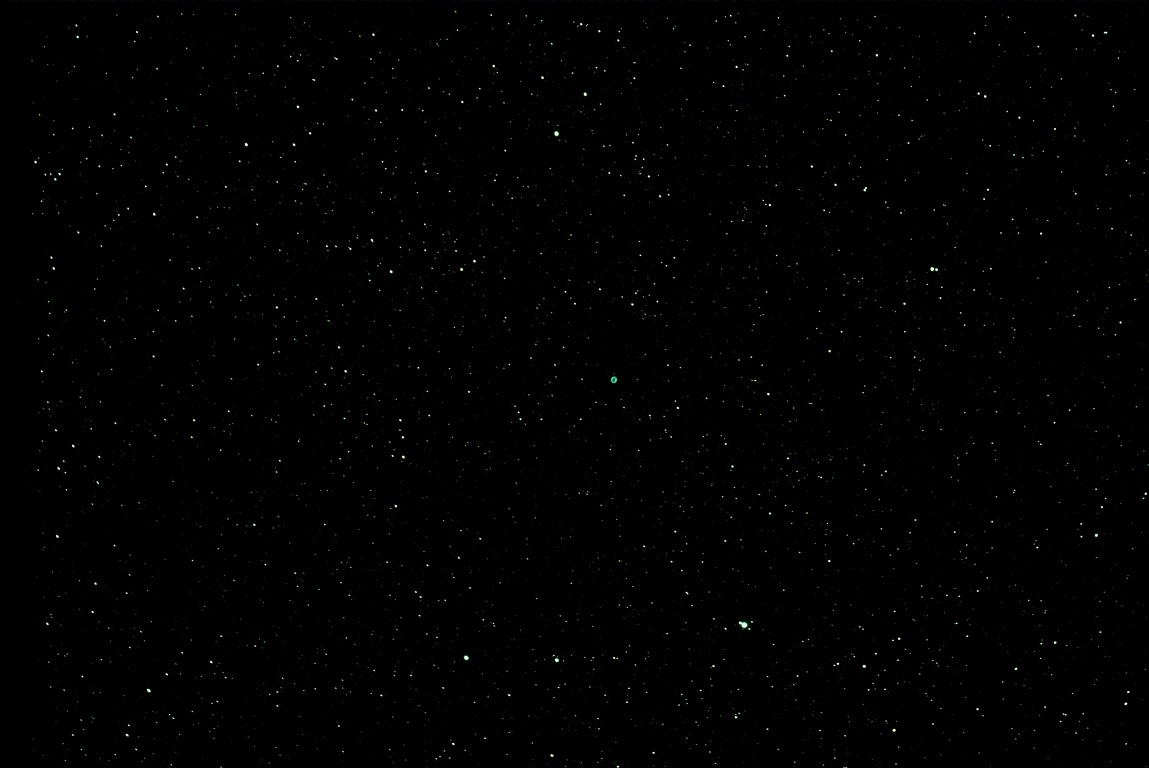
M57 Ring Nebula, wide-field view, with polar alignment.
Canon 700D | 24x30sec @ ISO1600
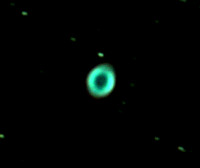
M57 Ring Nebula, close-up with polar alignment.
Canon 700D | 24x30sec @ ISO 1,600
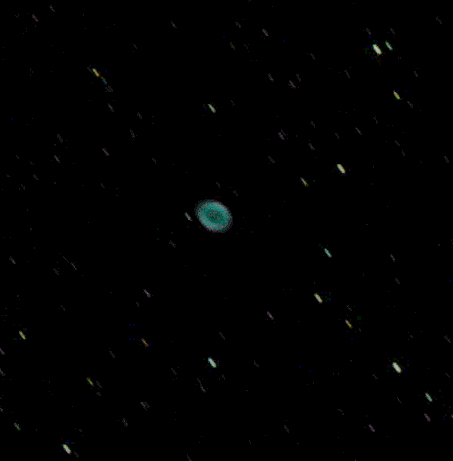
M57 The Ring Nebula, without polar alignment.
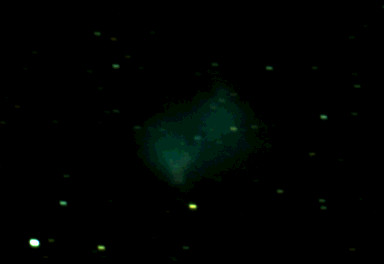
M27 Dumbbell or Apple Core Nebula, with polar alignment.
Canon 700D | 20x40secs @ ISO800
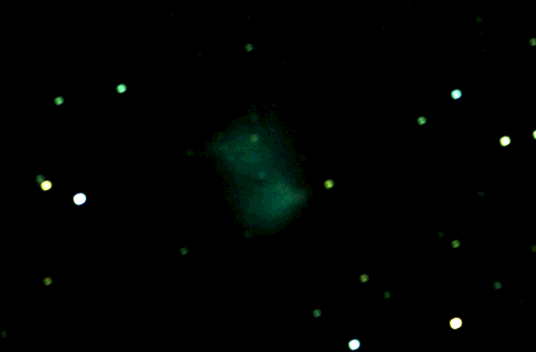
M27 without polar alignment
 WATCH THIS SPACE(MAN)