
Earlier this week we were fortunate to have good sky conditions at Fairvale Observatory and I was therefore able to locate and image a new nebula, M27 the Dumbbell or Apple Core Nebula https://watchthisspaceman.wordpress.com/2014/08/20/astronomers-do-it-in-the-dark/ and for the first time, a galaxy. As the birthplace of stars nebulae are almost beyond our comprehension, with their almost ethereal nature making them somewhat intangible to mere humans. By comparison a galaxy has taken on what might seem a corporeal form, something that strangely seems more familiar and it should do, it is where we live.
It is for this this reason that I have been keen to capture a picture of my first galaxy from Fairvale Observatory; the picture at the top of the Home page on this site, which shows the Sombrero Galaxy, was taken in La Palma earlier this year so doesn’t count https://watchthisspaceman.wordpress.com/2014/08/06/la-palma-nice-one-joan/. I’m not sure why but despite my enthusiasm for galaxies they have until now proved elusive; maybe the 150PL just wasn’t up to it or more likely, I was just finding them difficult to locate in the sky. The Synscan feature on my new AZ-EQ6 mount has put an end to that, just dial it up! And so it was that this week I got to meet the neighbours, in this case the closest spiral galaxy to our own Milky Way Galaxy, the Andromeda Galaxy.
As previously discussed, Earth is located on the edge of the spiral Orion Arm of the Milky Way, about 25,000 light-years from the centre.
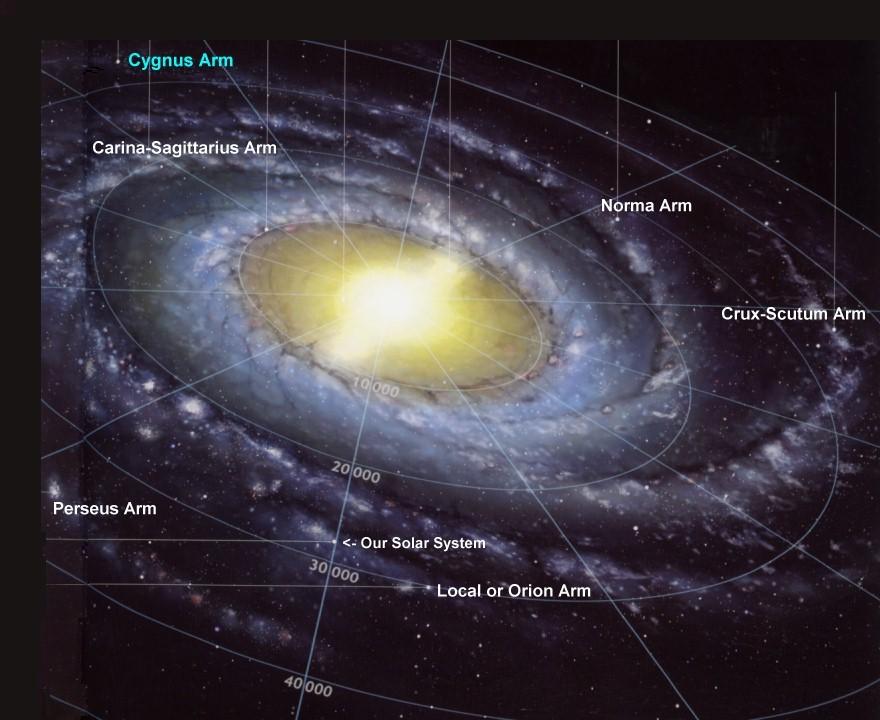
The Milky Way & Location of the Solar System i.e Earth
Some 2.5 million light-years away is the similar and beautiful spiral form of Andromeda, or M31. Andromeda is the largest spiral galaxy of the so-called Local Group, a group of 54 galaxies, with its gravitational centre somewhere between the Milky Way and Andromeda and herein lies a problem. Andromeda is approaching the Milky Way at 110 k per second or 300 k per second relative to our Sun i.e. us, due to its orbit around the centre of our galaxy – thus also making it one of the few blueshifted galaxies we observe on Earth. As a consequence we are destined to get to know our neighbour Andromeda a lot better in the future, as both galaxies are likely to collide and merge in about 4 billion years, forming a giant elliptical galaxy.
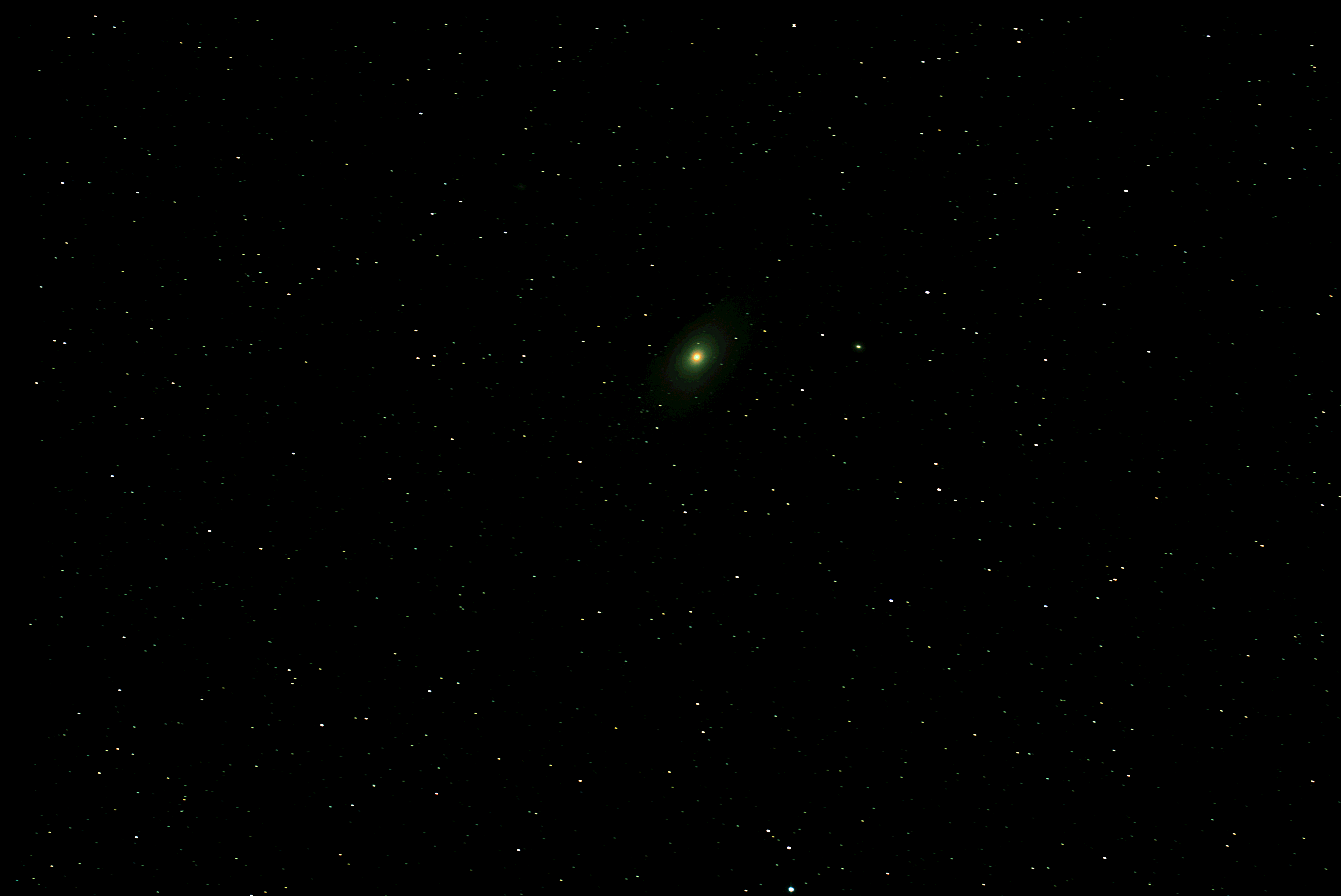
M31 – Andromeda Galaxy Canon 700D | WO GT81 + FF | 10x30sec @ ISO800
In the meantime enjoy this great spectacle in the night sky. From Fairvale Observatory Andromeda has only just become visible in the eastern night sky at about midnight, so I am hopeful that as it moves across the sky over the coming months I will get even better opportunities to image the galaxy; by which time I have hopefully improved my alignment, tracking and exposure abilities and thus can obtain greater photographic detail of this beautiful galaxy.
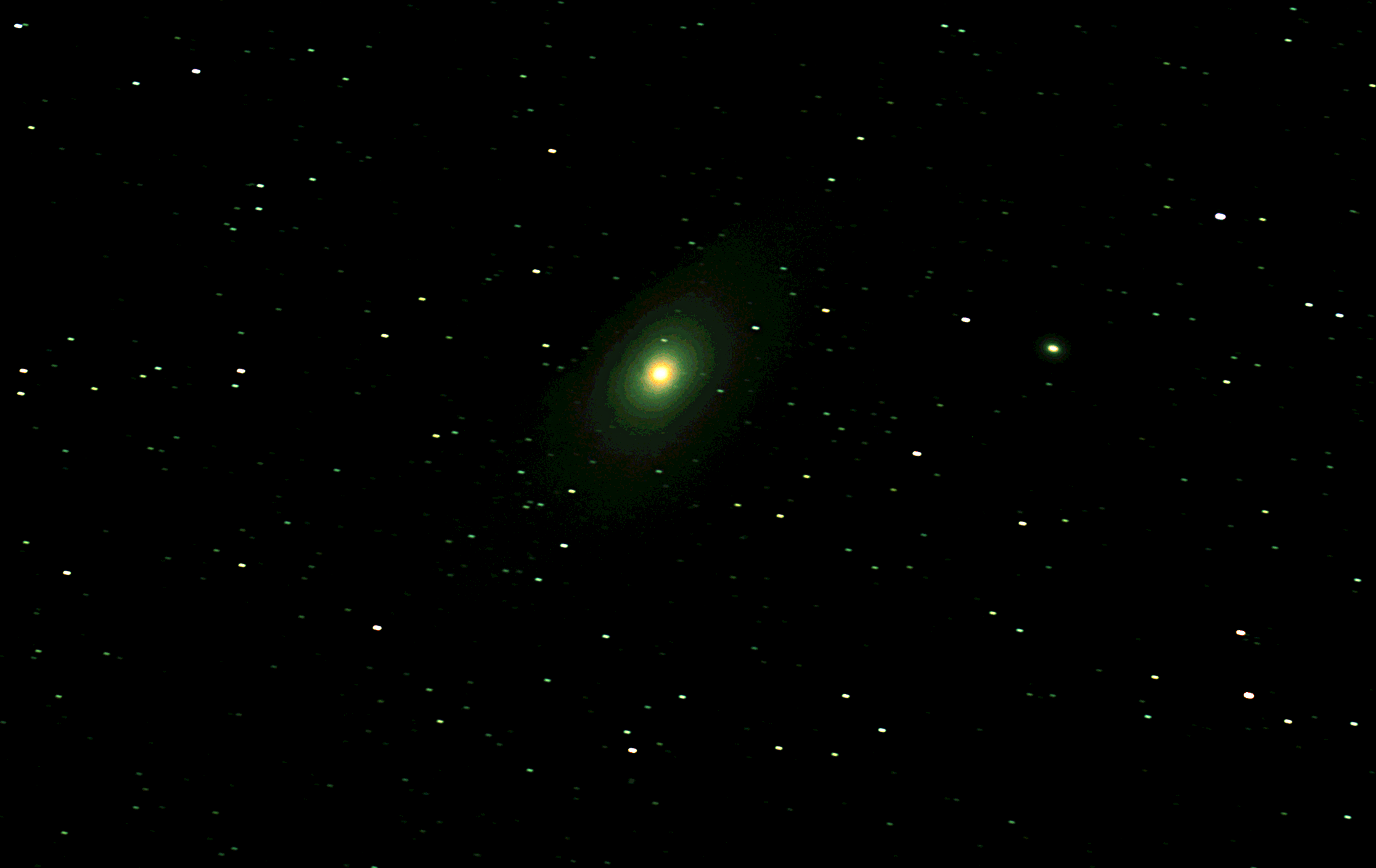
M31 Andromeda Galaxy – Cropped & ‘stretched’ in GIMP from main picture
 WATCH THIS SPACE(MAN)
Pingback: Space Odyssey | WATCH THIS SPACE(MAN)
Pingback: One In A Trillion | WATCH THIS SPACE(MAN)