
FOCUS: The state or quality of having or producing clear visual definition – Oxford English Dictionaries.
Splashed the cash and got the equipment, done the reading and asked all the right questions on the astronomy forums, got a clear night, time to catch those images – what can go wrong? Having recently purchased and got a new AZ-EQ6 mount and WO scope working OK visually, it was time to embark on my new DSO photographic quest. Not for the first time I unfortunately underestimated just how difficult this astrophotography is; forgetting that I’d already battled before to image with the Newtonian 150PL using both the DSLR and ZWO webcam (more on that another time).
This time the challenge was using the new WO Field Flattener http://www.williamoptics.com/accessories/flattener6A_features.php. So – set up scope, align mount/scope, find object, centre and visually focus. Then attach the field flattener (FFL) to the DSLR and slide directly into the focus tube, focus and take images – easy? No! Even now I am not sure what went wrong but after three evenings and numerous questions on the Stargazers Lounge forum (SGL), I was completely unable to get a clear picture through the camera, let alone an image. Initially I just thought the set up was wrong (whilst all the WO various equipment is excellent, none of it comes with instructions. I am told this is par for astronomy but, when you are forking out this kind of money I find that quite unacceptable) or I needed yet another piece of equipment to achieve focus (surprisingly the ‘expert’ dealer from where I bought it wasn’t even sure on this!), spacers perhaps? By now I was very concerned.
Another clear warm night soon came and with perseverance low and behold a result. This time I was much more meticulous: visually focusing on the bright star Arcturus, then switching to the DSLR + FF. Using the Canon EOS Utility and Live View, with the ISO set very high I was at last able to see something on the screen, which with very fine adjustment came into focus as a small, very bright dot. Placing my other recently discovered brilliant invention, the Bahtinov mask http://en.wikipedia.org/wiki/Bahtinov_mask
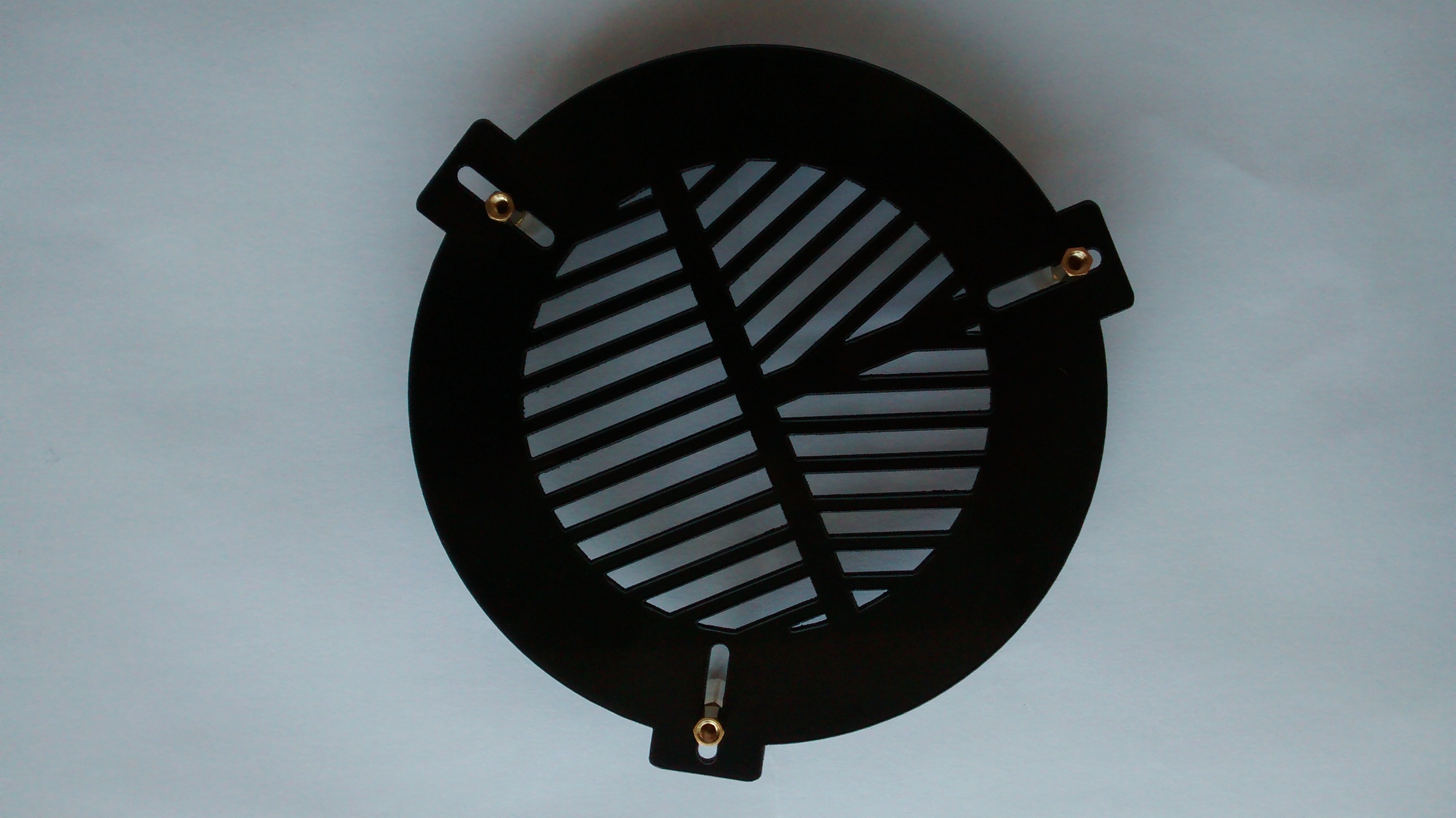
over the objective lens I was able to refine the focus perfectly:
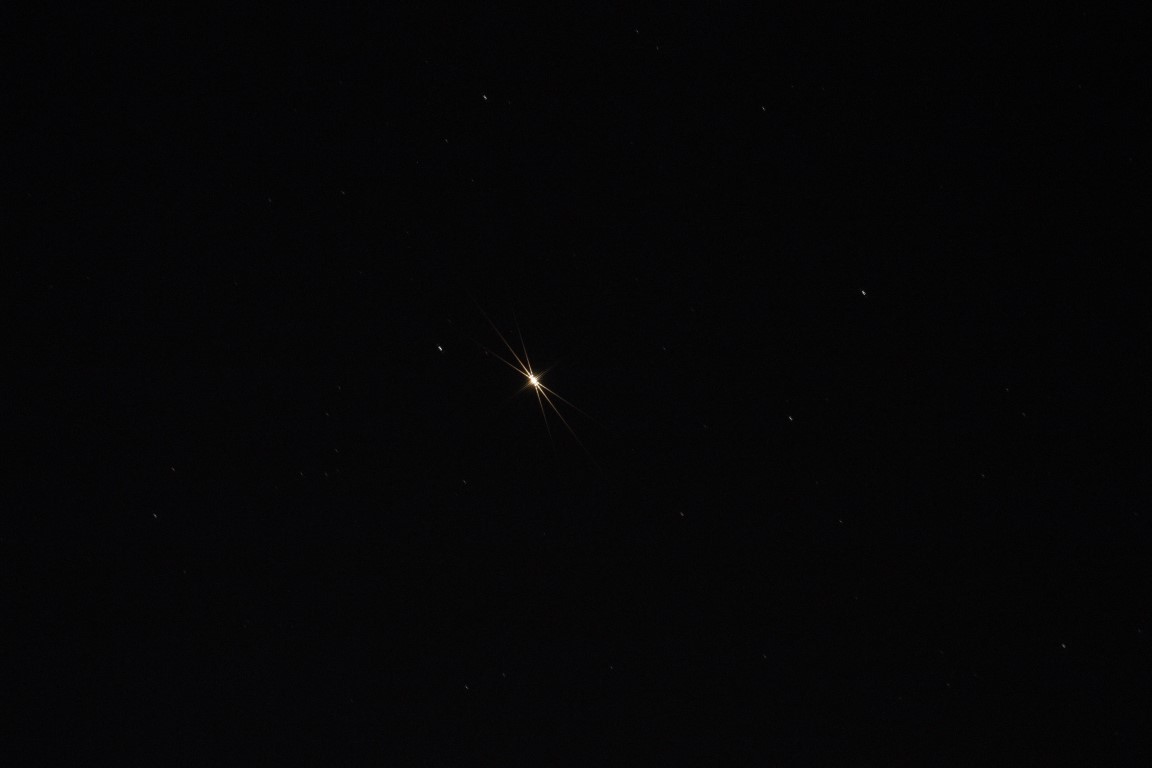
Now carefully transferring the scope and refining the position via Live View I was ready for a serious attempt on my first DSO, M13 The Great Globular Cluster in the constellation of Hercules:
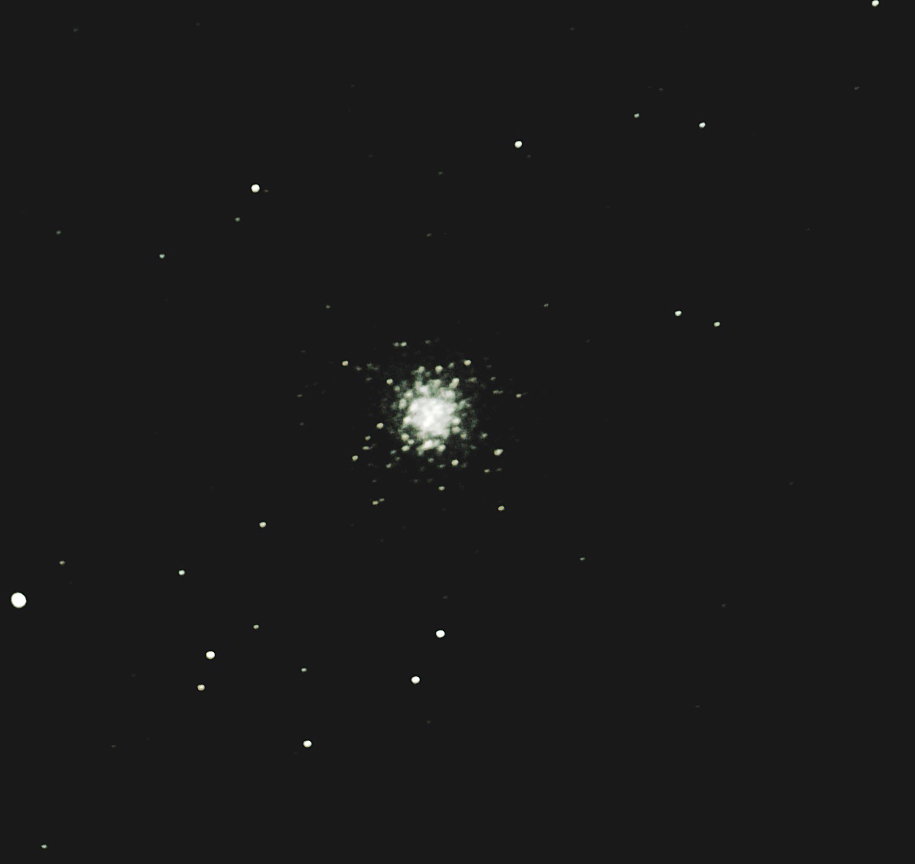
WO GT 81 + FF 10x16sec at ISO800
Bingo + what a relief! Like my first crude afocal image of the Orion Nebula last year, getting the picture was exhilarating. OK it’s not brilliant and I have seen the image in numerous publications and online but, it was mine, having captured those photon’s which had been travelling for the past 25,000 light-years on my camera, just outside my back door. WOW!
http://apod.nasa.gov/apod/ap120614.html
I hope to improve on this one day, once I have mastered all the other software, guidescope etc but I doubt I’ll feel quite the same next time. In the end, focus was everything, it is very difficult to achieve and only goes to show just how difficult this astrophotography is but after the light spent so long getting here, the least I can do is focus it right on my camera sensor, which requires a fraction of a millimeter accuracy.
Later on the same night I also captured M57, the Ring Nebula (more another time). Apart from refining this process (which I can see will take what ever’s left of my lifetime) my next ambition is to capture a galaxy out my back door, I can’t wait!
 WATCH THIS SPACE(MAN)